
Translated material
"You are actually alone behind bars"
"You are actually alone behind bars"
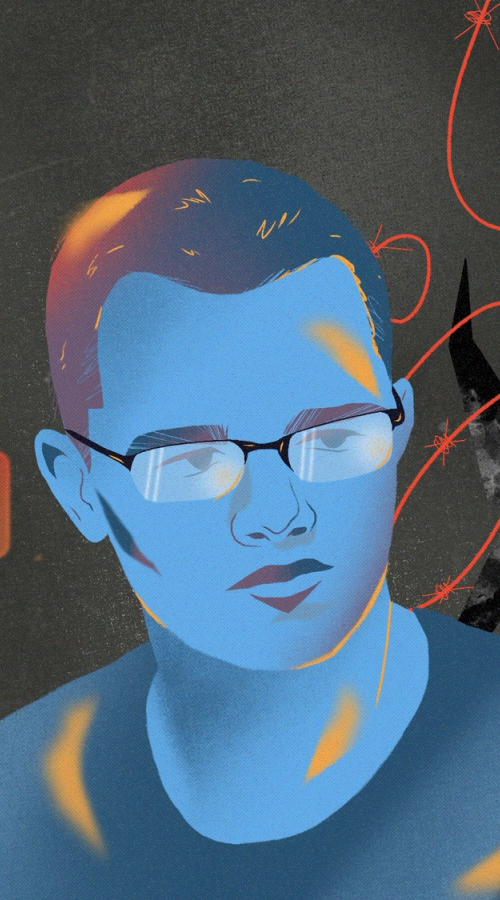
Ex-genus “The affairs of the“ new greatness ”” Vyacheslav Kryukov about provocateurs in opposition chats, life in the colony and recruiting prisoners to war
On January 25, 2024, Doxa was recognized as an “unwanted organization”.
If you are in Russia or plan to return to it, you can not replace our materials on social networks, refer to them and publish quotes.
Read more about what is possible and impossible, read in the cards .
In 2018, the 19-year-old student of the Russian State University of Justice Vyacheslav Kryukov was arrested as part of the “New Greatness”. He and nine more young people and girls were accused of creating an “extremist community”, the purpose of which was supposedly “forcibly overthrowing the power and constitutional system of Russia”, and participation in it. The case was fabricated with the help of provocateurs who penetrated the opposition chat. The human rights center "Memorial" recognized everyone with political prisoners.
Kryukov was sentenced to 6 years in the colony, he was released at the end of the term on October 14, 2022. After the release of the political prisoner, a restriction of freedom and administrative supervision were appointed Within the framework of administrative supervision, a mandatory mark in the police is assigned from 1 to 4 times a month. In addition, the following restrictions can be assigned: the ban on leaving the region, city or district, prohibitions to leave the house at night, the ban on visiting mass events. However, in May 2023, he managed to leave the country. And now he gives his first interview, being outside of Russia.
Editor
Editor
Anton DuanelIllustrator
Illustrator
SandyPublication
July 12, 2023
How open chat has become an "extremist community"
What is "new greatness"?
There were several people, we simply met, talked, discussed some things of a political, news, life nature. But then employees of various services were clung there. With their submission, including the organizational structure, name, and so on For example, a certain “Ruslan D.”, who, as it turned out later, was an FSB agent, offered to gather weekly on weekends from 16:30 to 21 hours so that “meetings were systematic.” He also proposed renting a premises for the meetings and prepared the charter of the organization, in which the following was written: “In the case of popular uprisings or revolutionary actions, in the presence of a wide popular representation, the organization aims to take part in active actions.” . It is in order to bring this to our microsurum under an “extremist association”.
How did the provocateurs end up in your community?
We had an open chat where any people could enter. And, apparently, someone went there, or someone told his friends who turned out to be agents. And so they gradually began to penetrate there. We had nothing serious to be afraid of something: no preparation, no planning [of some actions]-ordinary discussions. At that time in Moscow there were a lot of such circles.
But the introduced [secret] employees began to pour all the nonsense of an “extremist”, more serious plan. At least no one supported them, but from some point at our joint meetings, [hidden] audio and video surveillance began to be made. And all this was driven by the fact that there is a certain cell.
How, in your opinion, can you prevent the appearance of provocateurs in the communities or how can they be identified?
We must take everything seriously. Understand the motives of each person who is he, what is he like? But today in Russia this is all inactive, because now it’s a rather dangerous situation. Thorough operational development [security forces] is no longer needed: people are closed and that’s all.
That is, you will not protect yourself in any way if you engage in real independent opposition activities in Russia. Here the risks will be in any case, even if the activity is completely harmless and peaceful.
Arrest and protest in prison
When you were arrested, you imagined that in imprisonment it would be necessary to spend more than four Since the content in the pre -trial detention center in the event of a sentence in a general regime colony is counted for a day and a half, Kryukov did not have to sit for six years. years?
I was in complete shock. I had my ideas about the essence of the work of law enforcement, investigative and judicial authorities. And I thought that there really someone would understand whether there was a crime or not. On the first day, when I talked with the investigator, I told him: “You understand, I have no composition, I have no intent, motives? What he waved his hand and said:“ This is not necessary ”.” That is, they simply do not observe the law. On the legal side we have an absolutely meaningless matter: there is no argument, the evidence base from the prosecution. But due to resonance, he was already brought to the end.
During the process, there was a feeling that the “deed of“ new greatness ”” had a very powerful support. Did you feel her in a pre -trial detention center?
Of course, I felt some kind of support, especially in the first stages. This is both moral and material support. But, nevertheless, you are behind bars, you are sitting in this cell or in the camp, and you are there alone there. All that happens at large is all a different world. And he does not affect you in any way. You live your life, unfortunately, is not the best.
During the investigation, you announced hunger strikes, opened. Tell me what pushed you to such forms of protest?
From the very beginning, I could not come to terms with the fact that for the absence of some real actions I was sent to jail. This is just really chaos. When I got into a pre -trial detention center, I followed this whole situation and just waited for the moment when I could say my opinion, express a protest, attract attention. I believe that, no matter how you support you, you should also do something within the limits of your capabilities to restore justice.
A few months later, two defendants in our business, Anna Pavlikov and Maria Dubovik, were released from the pre -trial detention center under house arrest. They were released due to the fact that they had crazy support, a "march of mothers" was held On August 15, 2018, in Moscow, the procession disagreed with the authorities in support of the defendants in the “deed of the“ new greatness ”” Anna Pavlikova and Maria Dubovik took place. The participation of the action chanted “Freedom” and “Children have no place in the cell”. Over 1000 people took part in the procession. in Moscow. After that, the investigator apparently received an order, and he transferred them under house arrest. But at that time, our business has already begun to rapidly give up positions in the information space.
It’s good that the girls were released, but what are we worse? Therefore, I believed that I also have the opportunity to ensure that if they did not stop the matter, at least they transferred me to house arrest. Therefore, of course, I tried to achieve this, but, unfortunately, I did not succeed.

We talk about Russia's military invasion of Ukraine, protests and repression. We believe that now, when dozens of media have closed or ceased to cover the war, access to independent information is more important than ever.
But in general, do you think such methods are effective?
I think there is a meaning in them. But taking into account the current situation in Russia, I can not say anything, because now the complete mess is happening now. When I announced a hunger strike, the pre -trial detention center complied with the requirements of the law. I was placed in a separate camera. They did not wear food for me. Every day, observers, human rights activists, employees, bosses, and the leadership of the regional executive body came to me.
That is, they followed me and they could not commit any lawlessness at that moment. And now, I think, if someone does it ... The fact is that when I was sitting, there were almost no resonance affairs, but now there are a lot of them. You can’t keep track of everyone. Therefore, for people who could do something now, express their protest in prisons, this can end very deplorable. Just a person, I think, can even be killed. And this will end.
"Really people beat, people" lower ""
What did the division into castes look like in the places where you were sitting? What caste did you yourself be in?
When I was sitting in Moscow, all this did not show up. When I arrived at the Rostov camp and saw how it really works, I learned a lot for myself. He himself sat an ordinary person, a "man" A man is a representative of the most numerous prison caste, an ordinary prisoner who adheres to prison concepts. . That is, I didn’t climb anywhere, no one climbed to me. But all this atmosphere exists real. And you look at this, and, of course, it becomes sad.
What did it look like? There are 150 people in the hut. 90 percent of them sits "men." Five percent are the so -called "red" Reds are prisoners working for the administration, including household services. . And the rest are “wool”, the lowest caste, “lowered”, “offended” also call them. There are separate huts where only the “red” live. They are engaged in maintenance of the camp: they work in the dining room, sweep the courtyards, work at the headquarters.
There are certain rules of conduct, communication. You can just communicate, discuss something, but you are not allowed to enter into friendly relations [with representatives of other castes], because questions may arise like: “Why are you friends with all sorts of red?”. The vast majority of people in prisons, in the camps live their lives, they do not need this [concept]. But there are simply such rules, and they are observed.
If most is not necessary, then due to which this system continues to exist?
I think, due to the fact that the administration itself is needed and profitable. If we talk about all this ideology, then, as far as I know, it was created during the years of Stalinist repressions to control all this [population of prisons and camps]. Apparently, it showed a test of time, which is why it exists. I think, if desired, of course, the state can destroy all this very easily and quickly, but does not do it.
How did you sit in general? Have you encountered the cruelty, injustice of the system? Did the political prisoner status somehow help?
With torture, with cruelty in the colony did not encounter. Theoretically could have encountered, but, again, within the framework of this [prison] subculture. If I somehow made myself "wrong". Because they really beat people, people are “omitted”. I was lucky, I somehow went around all this, retained neutrality everywhere.
Since I went through an extremist article, upon arrival at the camp, I immediately went to the schizo The penalty area is generally without any grounds for this. They wrote, allegedly bought with the administration, cursed obscenities, spoke loudly. That is, there is no evidence base for this. Nevertheless, they sent immediately for 15 days. Of course, I went awesome from this.
By the way, about the schizo. Prior to this, I sat in a kartsere in a pre -trial detention center - this is, in principle, the same isolation. You have a bed from 06:00 to 22:00, you are sitting in a small room, you can’t do anything there and just go crazy, rudely speaking. But in a schizo, in my opinion, worse, because it can happen that you will sit with scumbags. And now you are sitting 24/7 with some incomprehensible people, you don’t want to communicate with them, I don’t want to interact with them, but you have to, because you are in such a rigid isolation. In addition, it was very cold, as the heating was turned off, and after 15 days my kidneys were sick.
Two weeks later, I am again closed in a schizo without any reason and give 15 days. After 15 days, they do not raise me, but they hold it for another two days illegally, that is, I sit for 17 days. And then they give another 15 days. I already thought, I won’t rise, because in theory I had to give me PKT PCT - a chamber type premises, where I can put up to six months. The PCT cameras themselves are similar to the SIZO cameras, but at the same time a little more is allowed in them. . But, good, I was lucky, I went up to the camp, and already there, in principle, everything was fine. Although I was also periodically summoned to [disciplinary] commission, they gave all sorts of penalties and fines. I had a lot of them. They wrote them so that I would not be released by parole Conditional release. . Although there were no violations at all, they simply sit at home and come up with, perform a certain attitude that is given to them on people in one or another articles.
You said that people were beaten, omitted. Who did it?
This is done by other prisoners. There are many stories. For example, you got to the camp, and then it turns out that you raped girls, young boys, of course, they will beat you. And then they will be determined in this lowest caste. And it will not be very cool to live.
And if you did not rape girls, boys?
There are certain things that are condemned by this system. And I cannot now name the list of all these things in general. But if I began to hold any promotions in the colony, write to all instances, the media, that, for example, they close me in a schizo for nothing, then they would “affect” me very quickly. The administration everywhere or another cooperates with one or other persons from among the prisoners. I would just be brought somewhere a special hut, they could also calmly beat me, do anything with me, because because of me it would supposedly get worse in the camp. And most likely, no one would have recognized about it.
"Prigogine knows how to persuade people to his side"
How did you learn about the beginning of a full -scale war and how did you perceive this event?
All February we had a TV, and we periodically watched what was happening, the news. In February, it was already clear that something would happen. I personally did not fully believe that there would be some large-scale campaign, I did not think that Russia would go to this. How is it possible? For what? However, the situation was heated. And on February 24, at 06:00 we go out into the dining room, there is also a TV, and there is an inscription in large red letters: "Russia began a special military operation." Of course, we are all awesome. On the same day in the evening, we were evacuated from our colony [IK-12 in the Kamensk-Shakhtinsky Rostov region], because we were, as far as I remember, 30 kilometers from the border.
They evacuated us less than a day. By the morning of the next day [February 25], absolutely the entire camp was taken out. And there were 700 of us there. This is a very difficult work: to search everyone, collect everyone, put everyone in autozaki. But all this was quite quickly done.
There [in IK-10 in Rostov-on-Don, where we were brought,] the camp was almost empty. And we all settled there at all without problems.
How did other prisoners perceive the beginning of a full -scale war?
It was simply perceived as a fact that something will be now. Many discussed the invasion, many supported. At that moment I myself did not really follow the reactions. I was generally shocked by the fact that this happened. I thought it would end until the end of the year, but, unfortunately, it still continues.
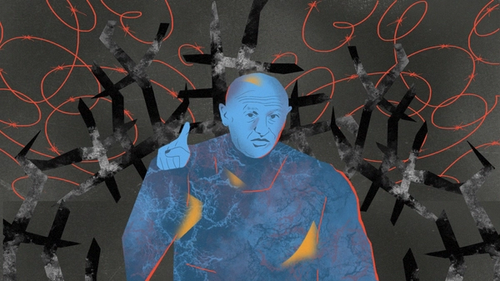
How did Prigozhin visit your colony?
At six to seven in the morning, the whole camp was woken up - quickly everything is on the parade ground Place for constructions. . There were gathered 1000 people, a huge crowd of people. He came to us, and I immediately found out that it was Prigozhin. He began to read his speech, spoke for about 10 minutes. And really made an impression! He spoke without a microphone, just in a voice, like a good speaker.
Prigogine knows how to persuade people to his side. There are a bunch of videos, which he is talking about in the colonies. In our case, he did not say anything new, but a lot of people went to sign up to fight on the side of the Wagner PMC. Of the 1000, 300 people signed up. And I think if Prigozhin continued to speak further, he would have signed up even more people, because people had some kind of euphoria. However, you are not immediately taken to war: you go through some legal procedures, sign different papers, wait for about two weeks. And during this time, 200 out of 300 people refused. So in the end, the person 100 left.
How to support political prisoners?
In an interview with Novaya Gazeta Europe, you said that for the past year and a half, in custody, you did not feel any support and spoke neglect of letters. Why are letters ineffective?
I always tried to rely only on myself. When I went to the colony after the sentence, this was already the beginning of 2021. By that time, Navalny was sitting, new political affairs began to appear, and we practically disappeared from the information space. Therefore, when I got to the camp, the support was minimal there. I didn’t even get letters there. They didn’t wear them stupidly [colonies colonies], they were in a warehouse of 50, 100 pieces. This is a feature of the colony where I got. Therefore, in the camp, I felt alone. I had no opportunity to contact someone. There was no way, in which case, to somehow oppose arbitrariness , because I would not get any support and this would not attract attention.
As for the effectiveness of letters, at first they really supported. But then I don’t know, maybe I had an excess of attention in the form of letters at the first stages: I received a lot of them and did not even have time to answer everything. I received letters, talked with someone, did not communicate with someone. It was more interesting for me to learn the news, about events in the country, in the world. And just communication, when you have such a burden of problems-I don’t know, I somehow already ceased to relate to this joyfully.
What could be support?
Moral support is good, but material is better. When you are in custody, you are deprived of all opportunities. Naturally, you do not earn. In conclusion, a certain amount of funds takes place. And the longer you sit, the more these products are needed for elementary maintenance of health Food in the institutions of the FSIN in the best case provides a person with the necessary amount of proteins, fats and carbohydrates. Vitamins and trace elements in the meager prison diet are almost completely absent, for example, prisoners never receive fresh vegetables and fruits. Therefore, grocery transmission of products and vitamin-mineral complexes from freedom are very important for maintaining the health of the prison_k. , life In domestic plan, the FSIN also provides prisoners only with the very minimum. The issued hygiene supplies cannot be used due to terrifying quality, and soap and toilet paper are simply not enough even with the most economical consumption. Clothing, shoes and bedding also often have to be purchased at their own expense. , to maintain your family. Material support for political prisoners, I think, is a very important point that is even more important than letters.
"The only correct move was to leave Russia"
What struck you most in Russia that you saw after release?
A lot of things struck. Of course, I perfectly understood the trends when our business appeared: the accelerations of rallies were constantly taking place, someone was constantly closed, and so on was forbidden. But with the beginning of this "special military operation" in the country there really was no freedom of speech. Every day there are planting people. And this is really scary. Now, in general, no person in Russia can feel safe, because there is a real threat that sooner or later they will come for you.
What did you do while you were in the Russian Federation? Did you try to participate in anti -war protest?
To go very quickly again to the bars? I perfectly understand that yes, of course, you can participate in some kind of protest, but in my case it will be 100%landing, and landing for a very long time. Because of the background and the restrictions assigned, I was already under the close attention of the relevant services. Any action that compromises before the authorities would threaten me with the most cruel punishment. And in prison I can’t do anything useful.
Therefore, the only, in my opinion, the right move was to leave Russia in order to at least somehow be useful. [In Russia] there is no mass that could express its position. Everyone holds on fear, everyone is afraid. At the moment, protests in Russia are doomed to failure.
In addition to the term in the colony, you were sentenced to restriction of freedom, you were also appointed administrative supervision by liberation - how difficult it was to leave Russia with such restrictions?
There are many cases when people with such restrictions or the worst - with constant supervision - left Russia. Therefore, this is a matter of the technical component. If you, having prepared correctly, do everything, no difficulties will arise. But there is a certain moment of risk, because if they caught me somewhere, then most likely they came up with a new business on me , and I would sit. But I just could not stay in Russia.
What do you plan to do in exile?
Of course, I would like to bring closer to the moment when Russia, as they say, is free. There are certain ideas, but there is no understanding of specific actions yet. Something, of course, can be done, even being abroad, in order to somehow influence the whole situation, working, for example, in volunteer, human rights, media projects. Let's see, in general.
What do you advise to those who remain in Russia, but do not agree with the existing regime?
I will not advise myself once again, going out on a few promotions, because you will be just put in prison very quickly. You will not achieve anything and will not be useful. Unfortunately, in Russia, many are now scared and very many support what is happening now. Therefore, there are two options: either behave calmly and wait, or leave, if I do not agree [with what is happening].
Other materials
How to help detainees while abroad?
Guide Doxa with comments of human rights activist_z
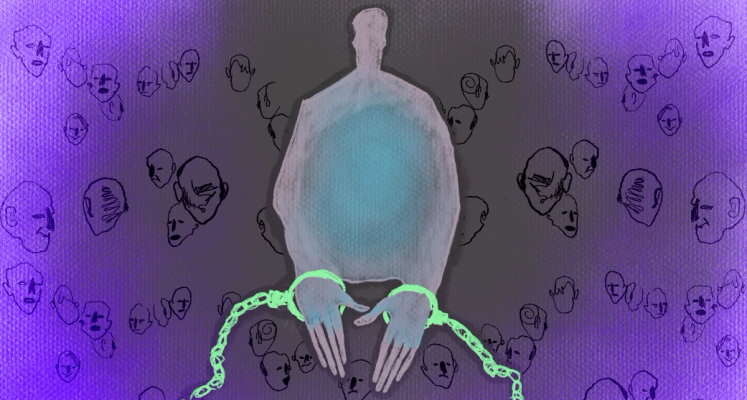

How to write letters political prisoners?

FAQ about a safe and very important form of activism

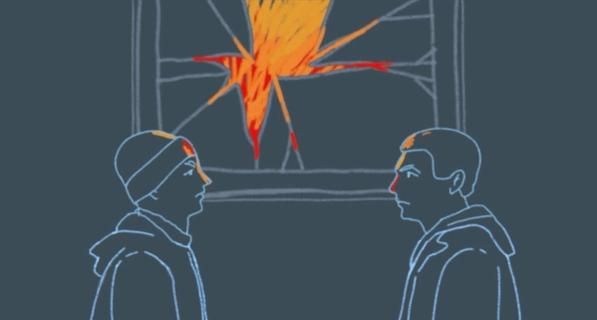
"It's time to start, or die slaves"
The story of a fireman and Rosgvardeis, who decided on anti -war arson and received 19 years for him

"Not only support for people, but also a protest expression"
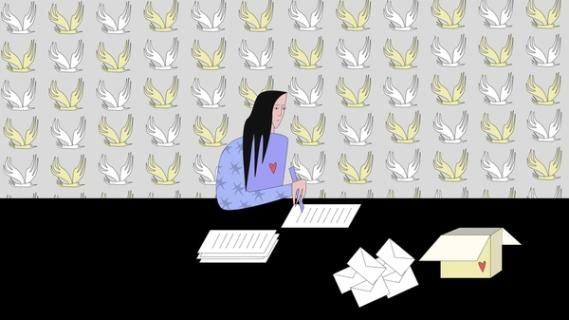
Doxa talked with people who write political prisoners
"I think that saved people"
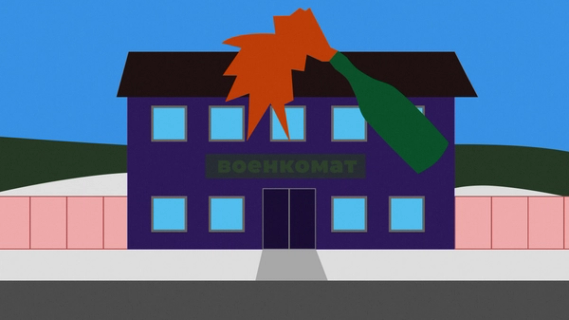
Interview with one of the first arsonists of the military enlistment offices in Russia