
Translated material
Lonely dictator of Europe
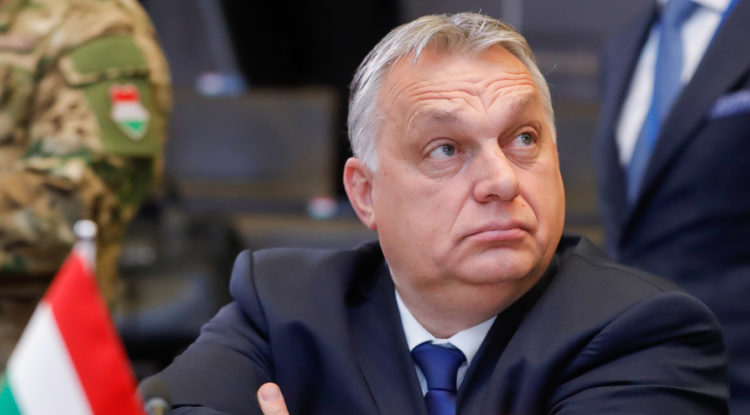
Friendship with Putin turned Hungary into the main outcast of the EU. How does she manage to interfere with the whole West?
Hungarian Prime Minister Viktor Orban united all the conservatives of Europe around him: he fought with migration, defended traditional values and criticized the European Union, Donald Trump praised his merits to Hungary. After February 24, Orban went to opposition to all the EU. The only one of Europe, he does not support Ukraine and believes that Russia can only win in a fairy tale. Orban criticizes all the EU initiatives: he does not want to give weapons to Ukraine, weakens anti -Russian sanctions, does not let Sweden into NATO. The Hungarian conservative-populist prevents the European Union from pursuing his policy, but the EU can not do anything with it. However, the rhetoric of Orban was too radical even for his right -wing allies - the conservatives of Poland and Italy turned away from him. But the handshake with Putin in China helped strengthen friendship with Russia, which Orban had recently condemned for the war with Georgia. The political outcast of Europe is in the material "Cold".
In order not to miss the main materials of the "cold", subscribe to our Instagram and telegram .
Orban is an old -timer of European politics. In 2022, he and his Party Party won the parliamentary elections and Orban went to the fifth premier term. “Fides” took 135 seats in parliament of 199. Orban said that to win the elections, he had to fight “left -wing forces”, “with all organizations of the Soros empire”, with Brussels and even with the President of Ukraine Vladimir Zelensky. Successfully in Orban’s elections, his chief political friend of recent years was congratulated - Russian President Vladimir Putin.
In previous elections in 2018, Fides also received a parliamentary majority. Then the migrants became the main enemy of Orban, on the fight against whom he concentrated his election campaign. In that year, his allies-conservatives from Poland congratulated Orban’s victory-they stated that the victory of Orban is an emancipation of Central Europe, and Hungary itself was following the “pro-relay rate”.
Middle finger for all Ukrainian soldiers
The "provetope" course of Orban is regularly called into question. Hungary has been entering the European Union for 20 years, but recently it has been increasingly diverging with it in key issues. In October, Orban compared Hungary membership in the European Union with the occupation of the Soviet Union in 1956. The head of the EU diplomacy, Josep Borrel, sharply answered this: "No one forces Hungary to be a member of the EU."
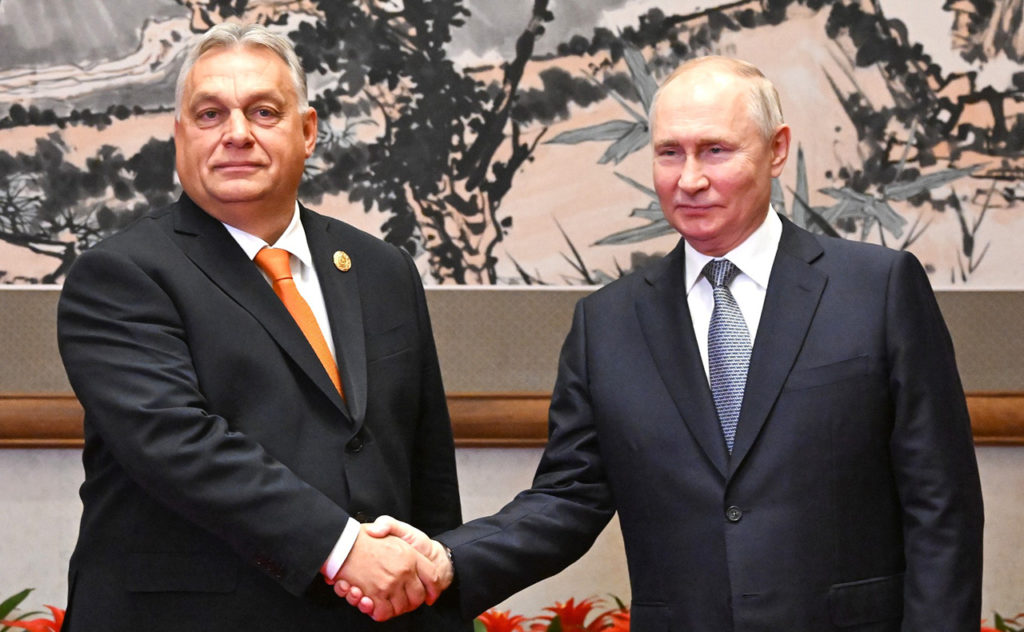
Orban was not in everything in everything, I agreed with the EU, but after the outbreak of war in Ukraine, Hungary finally contrasted itself with neighbors. Since the beginning of the war, Orban broadcasts Putin’s rhetoric and tries to prevent EU sanctions against Russia. In October, Orban flew to China, where he met with the Russian president and shook his hand. This gesture greatly angry the leaders of the EU countries, because for the first time since the beginning of the war in Ukraine, Putin met with the head of the European Union.
“What Orban did with Putin,” showed the middle finger to all the soldiers, all Ukrainians who die every day and suffer from Russian attacks, ” said the Prime Minister of Luxembourg Xavier Bettel after the news of Putin and Orban in Beijing. The Prime Minister of Estonia Kai Callas , who asked how to shake the hand of the criminal, is held by a similar opinion. The President of Lithuania agrees with her.
Disagreements of the prime minister of Hungary with the left and centrists in Europe are explainable and understandable. The conservative and EuroSceptic Orban was looking for support not from them, but by his like -minded people - Italy and Poland. Italian Prime Minister George Melony, who is similar to Orban in relation to LGBT and migrants, always defended the Hungarian regime. Orban, in her opinion, is not a dictator. For the support of the Hungarian colleague, she was criticized in Italy. “Hungary is not a democratic country, and Meloni does not know what liberal democracy is,” said , for example, the leader of the Italian Party “Action” by Carlo Calendy.
But the pro -Russian position of Orban in Ukraine greatly distinguished the Hungarian prime minister even from his right -wing allies. From the very beginning of the war, Poland actively supports Ukraine and criticizes Russia. Even the conflict due to grain exports did not ruin the friendly relations of Warsaw and Kiev. The head of the Polish Party "Law and Justice" (PIS) Yaroslav Kachinsky said that Poland would cease to cooperate with Hungary because of Orban's attitude to the war in Ukraine. Another ally of Orban - Melony - announced that she was ready to sacrifice even the ratings of her party to support Ukraine.
“His policy in Russia was simply too toxic. Almost everyone wanted to stay away from him, ”says Slavomir Debski, director of the Polish Institute of International Relations funded by the state.
Poland moves away from Hungary, not only because of Ukraine. In October, the elections were held in Poland: the ruling party PIS - like -minded Orban - could not gain the majority and did not receive the right to form the government.
Recently, politicians sympathized with the eyes of Orban, defeat throughout Europe. Right populists failed in the elections in Spain , Slovenia and the Czech Republic . The parties of Orban was not there with anyone to cooperate. In the European Arena, Fides is also isolated and for the most part lonely: the Party of the Hungarian Prime Minister left the Bloc of the Right -Cocentrics in the European parliament back in 2021. If Fides did not make a decision on the breakdown of cooperation, then the Hungarian party would most likely be excluded . Since then, the Orban party has not fled to any other political bloc in Europe.
It even infuriates NATO
Another point of the clash of Hungary and its allies is the issue of Sweden accession to NATO. Hungary and Türkiye were the only countries of the North Atlantic Alliance that were against expansion. The process of including Sweden in the alliance was complicated by unresolved issues with Turkey: Ankara was sharply against the new member of NATO because of the supporters of the Kurdistan Workers' Party (considered terrorist in Turkey, the USA and the EU), which were hidden in Sweden. In addition, relations were complicated due to shares in the burning of the Qur'an, which were allowed by the Stockholm police.
Turkey’s position on Sweden in NATO could have negotiated, but it turned out to be easier to agree with Erdogan than with Orban. Sweden made concessions: because of the requirements of Ankara, she had to change her anti-terrorism legislation. At the end of 2022, Sweden nevertheless transferred Turkey to the first convicted person for membership in the Kurdistan Workers' Party, and on October 23, Erdogan finally signed the protocol on the entry of Sweden to NATO-and the last word remained for Hungary.
In the summer, Hungary twice promised that she would not delay the process of Sweden entry into NATO: Orban promised this personally to the Swedish prime minister, and then his words were confirmed by the Foreign Minister of Hungary Peter Siyyarto.
“If there is any progress with Turkey, then we, of course, will fulfill our promise, and Hungary will not delay the entry of any country,” he said.
However, in the fall, the opinion of the Hungarian leadership changed sharply: the Orban party blocked the vote at the request of the Scandinavians, and Siyyarto predicted the complexity with the ratification of the application due to criticism of Hungarian democracy by Sweden.
The Secretary of State in Public Diplomacy and Hungarian public relations Zoltan Kovach listed the reasons why Budapest does not want to accept Sweden in NATO: Stockholm constantly criticizes the Hungarian leadership, considers himself better than others and does not show proper respect. However, there is another version: Orban is extremely angry due to the fact that the European Union did not give Hungary money. The EU froze the financing of Hungary due to the identified problems in the field of the rule of law and the protection of human rights. In total, Budapest did not receive almost 22 billion euros.
Sweden in March convicted Hungary in double standards. Tobias Billstrom, the head of the Sweden Foreign Ministry recalled that Finland, exactly like the EU, criticized Hungarian politics. However, Finland, which applied for joining NATO along with Sweden, has been a member of the alliance for more than six months.
“Orban is trying to blackmail the EU through NATO question. He sees in this his last chance to have some influence on the EU and wants to show that he will not give anything for free, ”said Peter Kreko, director of the Hungarian research group Political Capital.
Blackmail Putin and a suitcase with money
Orban, who was going against all, has nevertheless acquired one ally in Europe. The recent elections in Slovakia, on which Robert Fitzo won, gave Orban a new friend. Fitz, like the Hungarian prime minister, opposes the supply of weapons to Ukraine and criticizes the United States and the European Union. However, Slovakia, with a fitness, is unlikelyto replace Orban with such an ally as Poland - a much more significant and large political force in Europe. “The size matters,” Peter Krekohinted .
But outside the European bloc, Orban has a strong and unchanging ally - Vladimir Putin. For the first time they met in 2009 at the Congress of United Russia in St. Petersburg. In 2010, a few weeks before the parliamentary elections in Hungary, two old friends of Orban - Zholt Niergesh and Lyosh Simitska arrived in Moscow. In the Russian capital, they met with senior officials from the FSB. The trip was unofficial, was not covered in the press and served more for acquaintance between the leadership of the two countries. In those elections, I won the "Fides" of Orban.
Prior to this, when Orban was the prime minister in 1998, he tried to avoid trips to Russia and was considered the most anti -Russian politician in Central Europe. In the rhetoric of Orban of the late 2000s, it is not at all to recognize the head of the Hungarian government today: in 2008, he condemned Russia's military invasion of Georgia and called for Georgia and Ukraine as soon as possible.
After the 2010 elections, Orban’s position changed: he decided that Hungary should act independently and play a leading role in the new block of Central and Eastern Europe, and the “Western domination” in the world is decam. He also found advantages in cooperation with Putin: close relations with Russia could strengthen his position in the world arena and solve a number of economic problems.
There is another version explaining such a sharp change in the Hungarian premiere. According to the version of businessman Ditmar Claudo, who in the 1990s headed the section of the Chamber of Commerce and Industry of Hungary. In 1994, Orban allegedly received a bribe in the form of a suitcase with a million German brands. The money then another 30-year-old Orban was transferred through the intermediaries from the Boss Bosses Russian-Ukrainian criminal groups Semyon Mogilevich. The process of transmitting a suitcase hit the video - it was these incriminating personnel, according to Claudo, Mogilevich handed over to the Kremlin in return for his exemption from prison in 2009. The Kremlin could use compromising evidence against the future Hungarian leader. It is noteworthy that Orban's first visit to Moscow happened just after the arrest of Mogilevich. However, this story still remains unconfirmed.
Today, Orban can be loyal to the Kremlin without incriminating evidence. Putin can affect Hungary in a different way: with the help of gas and oil: the Russian Gazprom supplies fuel over the volumes provided for by long-term contracts. For Hungary, delayed gas payments will also apply . At the same time, Hungary refuses to replace Russian gas with alternative supplies (for example, buying more fuel from Azerbaijan). The EU believes that such a Budapest policy only helps to feed the Kremlin’s “military machine”.
Disagreement with the western line and friendship with the Kremlin brought Orban to isolation inside the EU. The former liberal and the opponent of Russia becomes non -browning. However, Hungary still does not plan to leave the European Union. Budapest can still put sticks in the wheels of European initiatives: without the approval of Hungary, the EU will not increase financial assistance to Ukraine. Orban’s support can cost the EU about 13 billion euros, which were allocated for Hungary. In the second half of 2024, Budapest will preside the EU Council, so that Orban will have even more levers of pressure on Europe.