
Translated material
Beautiful Russia of the future
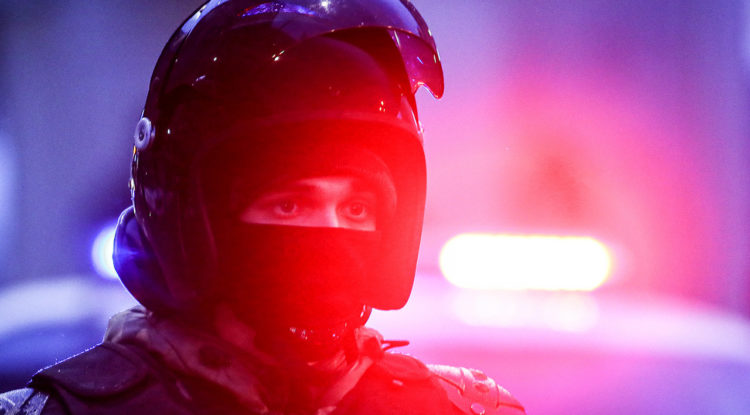
Exit visas, death penalty and Internet on the passport. How will the Putin regime change in the coming years?
A full -scale military invasion of Ukraine introduced Russians with military censorship and brought political criminal cases to a completely new level. The Chinese and North Korean scripts became much closer than before. In the coming years, Russians are at risk of a ban on leaving the country, as well as with the final destruction of freedom on the Internet, an increase in the number of political affairs and total censorship. It is such a future that draws the human rights project “Network Freedom” in its “necrofuturistic” forecast for 2024–2025. "Cold" tells what it is time to prepare for, and what has already begun to come true.
In order not to miss the main materials of the "cold", subscribe to our Instagram and telegram .
When in 2014 the State Duma deputies explained the need to create a register of “undesirable” organizations, they argued that only those foreign legal entities would “pose a threat to the defense capacity, security of the state, or public order or health of the population”. After almost 10 years, it was replenished with Russian independent publications “Project”, “Medusa”, The Insider, the Rain TV channel, and the first -and criminal article is now threatened with the first time for the distribution of their materials.
Since 2022, the stigma of a “foreign agent” can be attached not only to citizens and legal entities who receive foreign financing, but to those who “have foreign influence”. By this maximum blurred term is meant , among other things, interaction with foreign citizens. Russians are often recognized as “foreign agents” for criticism of the Russian authorities.
Of the 614 thousand criminal cases after the outbreak of war, acquittal sentences were carried out in only two thousand cases. In the leaders in the number of political criminal cases - an article on the "discredit" of the Russian army. And for the first half of 2023, more than 80 criminal cases were instituted in Russia about the Stateizer, espionage and cooperation with a foreign state on a confidential basis - the last article appeared in the Criminal Code only in the summer of 2022. Rallies in Russia are virtually prohibited - any protest shall be stumbled upon “covid restrictions”. In the coming years, the situation will only be worse, in any case, it is predicted by human rights activists from the “Network Freedom” project - there will be more restrictions and repression.
Censorship
Human rights activists expect that the authorities will begin to recognize the popular publics in social networks "extremist" according to the script of Belarus, after which they will be blocked. For a subscription to the prohibited resource will be introduced, as well as punishment will follow information about the bypass of blocking, refusal to unlock the phone, use VPN, Tor and proxy. At the same time, power encryption systems will be hacked through the technology of quantum calculations.
Any mention of “undesirable” organizations and “foreign agents” will threaten a fine and blocking. For participation in the activities of “foreign agents”, according to the forecast, they will first introduce administrative and then criminal liability. Against journalists will begin to start criminal cases under articles on the activities of extremist and undesirable organizations (282.2 and 284.1 of the Criminal Code of the Russian Federation).
They will introduce criminal liability for scientists and teachers criticizing the Russian authorities. For this, articles on the "discredit" of the army and rehabilitation of Nazism are used.
What has already begun to come true: the Russian authorities have already forbidden to disseminate information about the methods of bypassing blocking - Roskomnadzor can block any resource with such instructions. In the summer of 2023, in Russia, amendments to the law entered into force, introducing liability for third parties for the help of “foreign agents” in the passage of restrictions imposed on them. People can be fined from 30 to 50 thousand rubles, and the legal entity - from 200 to 300 thousand rubles, if the authorities see in their actions a violation of "foreign" legislation. And for the distribution of their materials without marking, the Ministry of Justice proposes to introduce fines up to 500 thousand rubles.
The pressure against scientists and teachers has also begun: in June 2023, the associate professor of St. Petersburg State University and historian Mikhail Belousov was fired from the university for criticizing the Russian war in Ukraine. Then a criminal case on the rehabilitation of Nazismwas opened against him. In October, according to the same article, they sent to a pre -trial detention center in the St. Petersburg local historian and journalist Dmitry Vitushkin.
Chinese Internet
According to the forecast of “network freedoms”, it will not stop to fight the means of bypassing the locks of Roskomnadzor. Censorship will reach YouTube and Telegram-sites where Russians can still get an alternative to the official point of view. The analogue of the Chinese service of WeChat is called to replace them, which the Russian authorities will try to implement on the basis of VK. The state -owned company will combine mail, social network, messenger, as well as entertainment services: video, music and games.
However, the Russian authorities will not stop there either and ultimately can move to the North Korean scenario - the creation of a network completely isolated from the global Internet under the example of Kwanmesen. At the same time, it will even be possible to get into it only by special permission - as is now happening in the DPRK.
What is WeChat and Kwanmen?
WeChat is actually the only allowed messenger in China. In addition to the message exchange function, the application has the opportunity to watch videos, listen to music and use delivery services. Wechat’s maternal company can share data about users with the Chinese authorities and gain access to their location and text messages.
Kwanmen is a national network completely isolated from the world Internet. Access to it has a little more than 100 thousand users, and its main content - training materials, books and several news resources. To get an exit even to such a network, the residents of the DPRK need special passes to use a computer.
Moreover, even access on the Internet visa will be limited - the authorities will introduce profiling, which will determine the functionality available to the user. You will have to forget about the anonymity on the Internet - providers and operators will track subscriptions, correspondence, requests and trips of Russians. For the possibility of surveillance in “24/7”, the installation of taxi applications, banks, public services or delivery services will become mandatory. The authorities will introduce users on the device, the IMEI code will be tied to the name of the subscriber. Internet access will be given only after making a gadget or router in the register of MAC addresses and authentication. To hacking devices of technically savvy citizens, the power will gain access to the Spy program of Pegasus or create its analogue.
What is IMEI and MAC address?
IMEI is an international mobile equipment identifier, or a serial number of a particular phone. According to this code, you can determine the whereabouts if the smartphone is gone or it was stolen.
MAC address is a computer identifier that is assigned to network equipment at the time of manufacture.
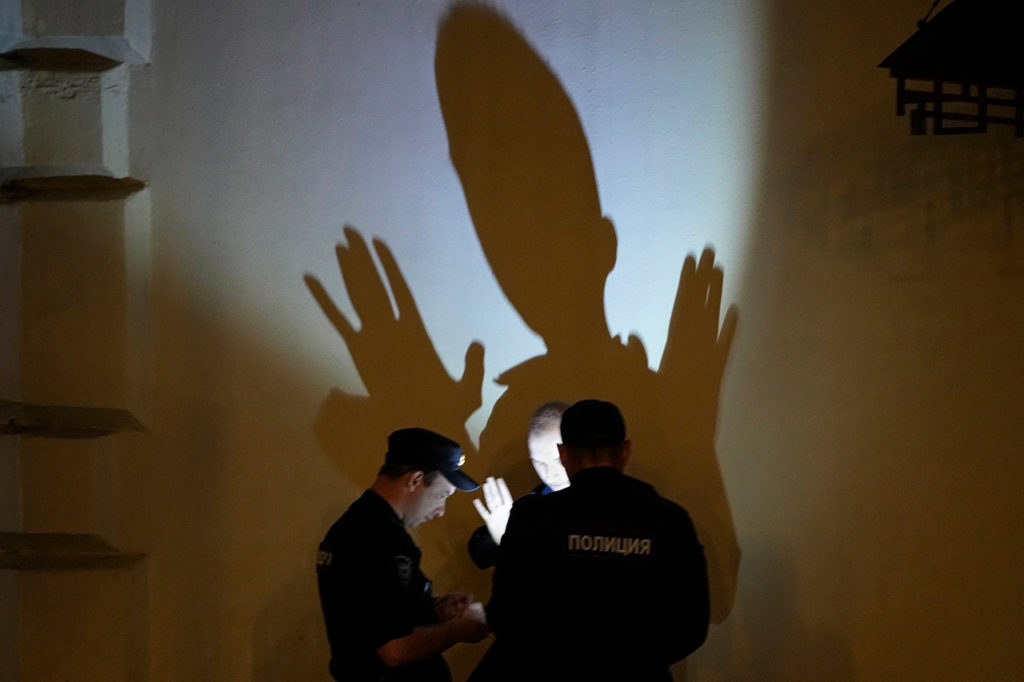
Particular attention will be paid to biometrics and collection of DNA. Biometry will become mandatory for the services of banks, mail and transport, and DNA will gather from all citizens who have even committed administrative offenses. The use of a digital passport and person recognition services will become mandatory during travel. Access to public services, public service, loans, trips and social support will begin to be given by analogy with the Chinese social rating.
What is a social rating in China?
In some cities of China, a social loan system operates : people are charged with points or take them depending on their actions. If a person has no violations of the law or credit debts, he can receive bonuses from the state - for example, get to the doctor without queue. People who have debts or fines are deprived of privileges: for example, they can not fly on airplanes or settled in expensive hotels. The authorities receive information about citizens from the tax service, law enforcement agencies, government structures, registry offices, educational institutions and companies in which they work.
Against the background of total surveillance, responsibility for the use of cryptocurrencies will be tightened. Most of the calculations will transfer to the infrastructure of the digital ruble, and to the instruments of cross -border payments, such as UNISTRIM, the Golden Crown and Contact, will introduce strict restrictions on countries and amounts.
What already began to come true: in November 2023, it was proposed to introduce a law that requires operators to activate the sold SIM cards only after checking the passport data of subscribers in the Ministry of Internal Affairs. Since 2022, Roskomnadzor has been actively fighting the VPN and massively blocks entire protocols, including popular Wireguard and OpenVPN, which Russians use to access blocked resources. In November 2023, the encrypted ShadowsCks protocol for the first time entered the updated list of blocking the VPN services of Roskomnadzor.
In August 2022, the Network Freedom project issued a report that refers to mass police surveillance for residents of Russia. From the leakage of the documents of the “Main Radio Frequency Center” (GRCHC), it became known that Roskomnadzor monitors potential “foreign agents”, the media and the statements of famous people in social networks.
At the beginning of 2023, Vladimir Putin signed a law on the mandatory collection of DNA for all suspects - even with administrative arrests. In September 2023, Vladimir Putin equated the person’s data from the “State Services” application to a paper passport. And the Russian State Social University (RSSU) develops the experimental platform “We”, which forms a social rating for Russians.
Cryptocurrencies are already under the sight of the Russian security forces: in the summer of 2023, a resident of the Khabarovsk Territory was detained on suspicion of Gosizmen. The reason for the case was the donat in favor of the Armed Forces with the help of cryptocurrencies.
Repression
The flywheel will continue to gain momentum. Human rights activists expect that the typology of “terrorist”, “extremist” and “anti -state” cases will expand. The suspects will begin to enter the “terrorists and extremists” of Rosfinmonitoring, block accounts, limit the possibility of transactions, and subsequently confiscate property. The number of fake criminal cases with the help of provocateurs will significantly grow.
The conditional terms for the accused will be banned, prisoners will limit the opportunity to go out at parole. All convicts under political articles will increase terms up to life. “Network freedoms” suggest that the moratorium on the death penalty will ultimately be canceled.
Human rights activities will be minimized - lawyers will be banned from reporting details of criminal cases. There will be almost no ready to defend the “political” suspects, as the authorities will begin to press such lawyers and suspect them of “complicity” of the actions of the clients. For participation in political affairs, they will be deprived of a lawyer status and limit departure from Russia.
What has already begun to come true: thanks to the provocateurs, the authorities regularly initiate criminal cases related to attempts to set fire to the military enlistment offices, join the Legion “Freedom of Russia” or the Russian Volunteer Corps. Repressions against lawyers accused of political affairs have also already begun: October 13, Aleksey Navalny Vadim Kobzev, Igor Sergunin and Alexei Lipzer, were searches. In the evening of the same day, the court sent them to a pre -trial detention center under an article on participation in the "extremist" community.
The boundaries are closed
One of the areas of repressions in the next two years, according to the forecast of “network freedoms”, will be the work on the complication of the life of the left Russians, as well as their relatives within Russia. Human rights activists admit that for administrative and criminal cases against those who have left, the statute of limitations will be canceled. Under the pretext of paying fines, emigrants will begin to remove property. The country's allied Russia will begin to actively extradite “guilty citizens”.
To complicate life abroad, the Russian authorities will use Belarusian experience and begin to limit emigrants in consular services. Many emigrants will organize surveillance, some will try to poison. Relatives of those who have left will begin to press, and visiting visas will be introduced to reduce the outflow of educated citizens abroad.
That already began to come true: in October, the activist of the “Left Bloc” of Lev Skoryakin was stolen in Kyrgyzstan and illegally taken to Moscow, where he was found in a bottle-2 Butyrka. In the fall of 2023, journalists Elena Kostyuchenko, Irina Babeloyan and human rights activist Natalia Arno reported about attempts to poison in Germany, Tbilisi and Prague. As early as the spring of 2022, the First Department’s human rights project reported that the relatives of people who left Russia were invited to polls in the FSB and persuaded to return them. At the end of November, the court in Ufa sent the brother of the emigrated activist Ruslan Gabbasov in the pre -trial detention center. Against the 33-year-old Rustam Fararetdinov opened a criminal case on the promotion of terrorist activities.
Unrealistic and scary
The most fantastic is the prognosis of the complete insulation of the Runet and the output visas on the Internet. But it is precisely such a scenario that is the goal of the Russian authorities, says Stanislav Seleznev, lawyer and senior partner of the network freedom project. Completely block all VPN, hack encryption and finally isolate the Internet is difficult due to insufficient technical development.
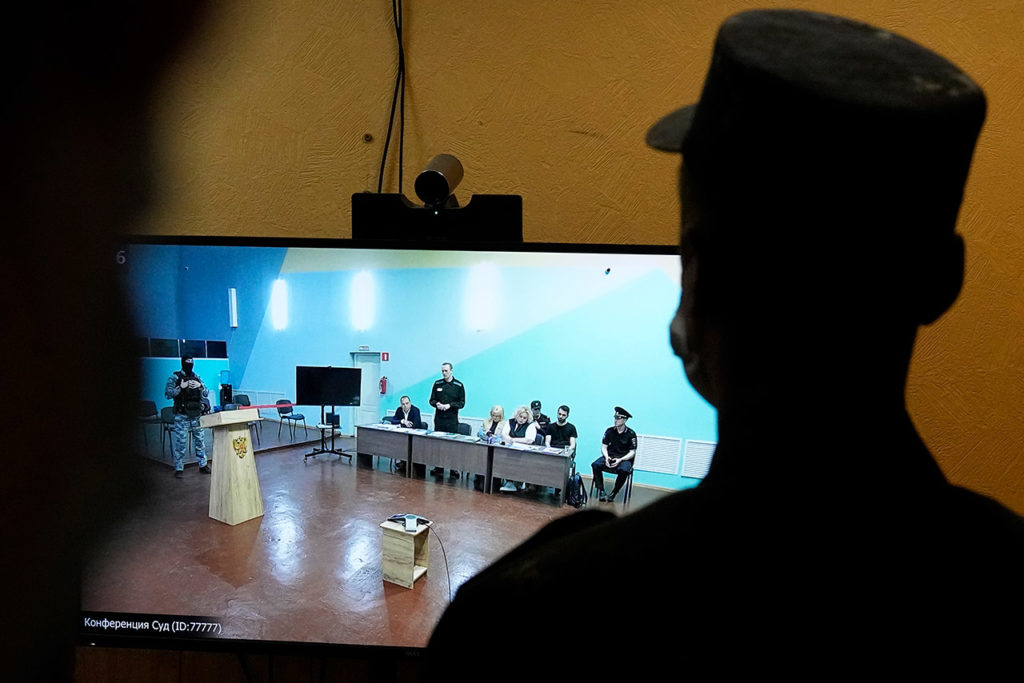
“Nevertheless, we constantly see reports on the development of new technologies, the principle of operation of which is completely different than that of existing computers on semiconductor schemes. And, in fact, encryption experts have been warning for several years that the use of quantum calculations for hacking should be considered as permissible probability. If such a technology appears, then the approach to communications will change around the world. Because any of them can theoretically be opened, ”Seleznev told the cold.
It will not work to achieve absolute isolation of the Internet in Russia, he said. In China, Turkmenistan, Iran, DPRK and other states with rigid censorship there are communities of people who receive information from the outside. However, the Russian authorities can strengthen control with the help of the State Monopolis in the field of Internet communication, which is possible in a couple of years.
“The connection with the outside world will remain, but it will require an increase in self-education, qualifications, readiness to understand how Internet protocols and messengers work. We will have to abandon some popular messengers and switch to distributed protocols and networks, to even more encrypted communication protocols, ”says Seleznev.
According to the lawyer, if the use of the VPN is responsible for the use of the VPN, the Russians will begin to think about how to hide it from tracking or detection during a search or inspection. But people who will be ready to receive information from non -certificate sources will become much less.
The most terrible forecast of “network freedoms” is the abolition of the moratorium on the death penalty. Seleznev explains the reality of such a scenario with the fact that only the Constitutional Court is currently on the path of this decision, which in recent years regularly supports the initiatives of the executive branch and the President of Russia, including in criminal punishments. The abolition of the moratorium is still unlikely, but the risk of this exists.