
Translated material
Freedom is paradise
Memory of the director Otar Ioseliani
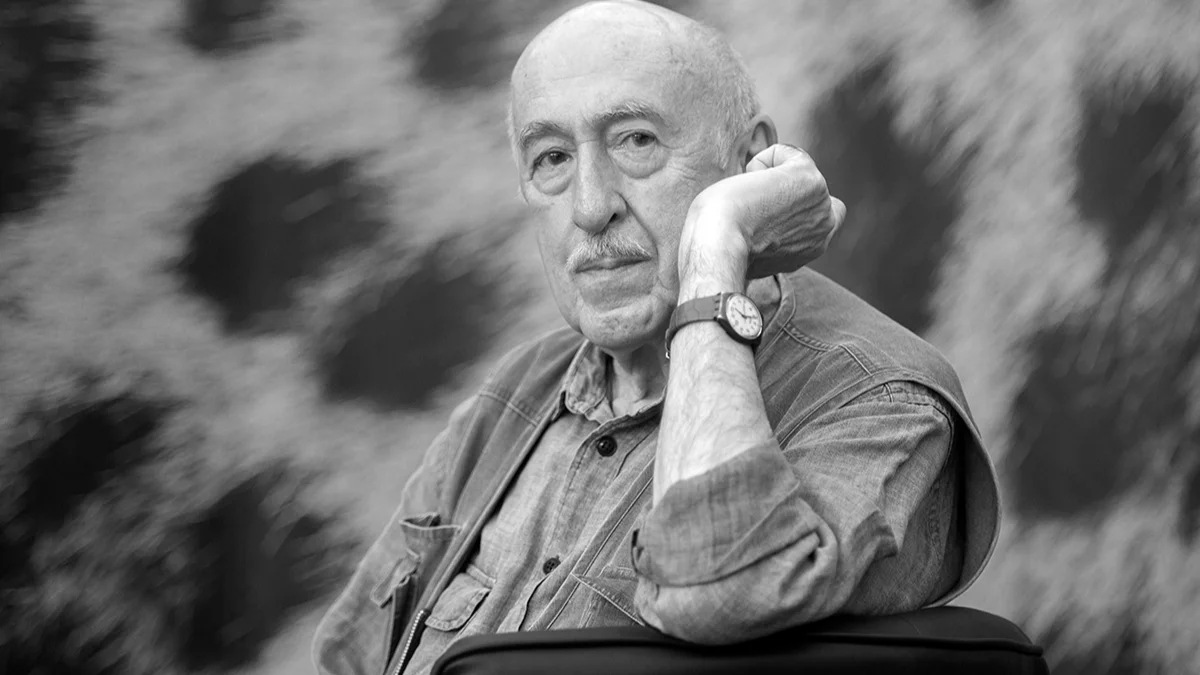
The Georgian-French director Otar Ioseliani poses during the photo shoot of his film "Chant d'Hiver" at the 68th International Film Festival in Locarnano, Switzerland, August 09, 2015. Photo: URS Flueler / EPA
When last Sunday the news of the death of Otar Davidovich Ioseliani came, I immediately remembered how recently in November I watched the Tallinn Festival “Dark Nights” Films of the Yugoslav Black Wave - for example, “when I will be dead and white” Zhivin Pavlovich. Graphically accurate, albeit elegantly careless in terms of scenario, slightly trouble -free and absurd, as befits the Balkan aesthetics, although without the tiring positive that enriched the Kusturitsa, it is not clear how these paintings could be made at the state studios of socialist Yugoslavia. Otar Joseliani was the same phenomenally non -conformer director.
This can especially surprise against the background of the fact that the years of his youth came to the sunset of the Stalin era. Joseliani studied at the MHCAM of Moscow State University and studied five courses. The prospect of working in the so -called mailbox, that is, at the defense enterprise, did not attract it very much. But from the cinema in the early 1950s in the USSR, everything was very bad. In the year when Joseliani entered the university, nine full -length playing films were shot in total at all film studios. It was impossible to even think that absolutely nothing can be removed, it was no longer possible. Such was the final stage of degeneration of totalitarian culture, touched by fear of its own reflection in the mirror.
Joseliani grew up surrounded by educated women, whose men either died or sat in camps. Like many people born in the 1930s, he found those whose traces will finally come over after the Second World War.
These people, in turn, found another life, grew up with her. Just as my generation, which has come into life at the turn of the Soviet and post-Soviet era, is sad that Russian youth does not know any era except Putin, people who raised Joseliani, or, for example, the philosopher of Alexander Pyatigorsky, or director Ilya Averbach in Leningrad, with sorrow, thought about the future of 1920 Walking, making sure that the Communists are seriously and for a long time. They had no choice but to convey to the young knowledge that it happens differently. And often - just intuition.
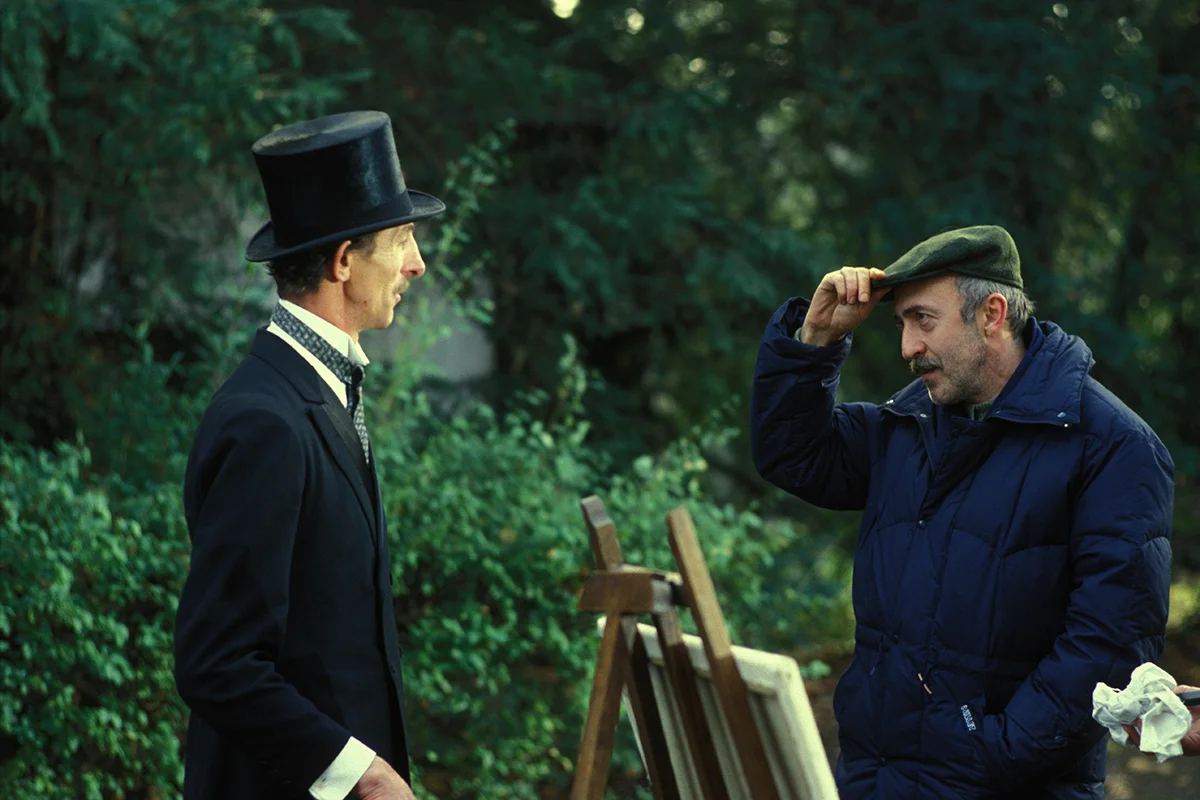
Joseliani approved a kind of “gold standard” of intra -Soviet apoliticality. But it was not a cynical petty -bourgeois opportunism, allowing the nomenclature to live happily under the canopy of red banners. On the contrary, Joseliani consistently defended the human right to be himself, and not making a choice and not defending himself, but surrendering to the elements of life. Sometimes this can lead to a tragic denouement, as in its second large picture “The Singing Drozd” lived, sometimes to the misanthropic conclusions of human nature, as in “butterflies hunting” already removed in France. But before the heroes of Joseliani, as before the subject of his story (most often this is probably himself), there is never some serious problem. All problems are seen something like that in the Sex Pistols song “Problems”: your problem is you, and what will you do with it?
Joseliani took the first steps in the cinema and as an actor. In the film of Mikhail Chiaureli “The Tale of one Girl” (1960), he plays an abstract artist. Of course, this is an artist from the word “bad”, who does not know how to draw, from a number of those informal artists on whom Khrushchev collapsed at that time. But this is the only example of how Joseliani took part in the creation of a Soviet satirical image. You can write off on youth.
In addition, do not forget about the magic of cinema: playing an abstractionist who needs to be scolded by the plot, the actor is temporarily reincarnated.
And it is already impossible to ensure that the abstract art is also mocked over abstract art.
Everything else that already at that time and subsequently came from Joselian-director was saturated with such impudent and undisguised spit in relation to Soviet optics that even now, when revising his films, the deepest bewilderment is enjoying with pleasure. But how dare he, who allowed him this, and it was possible? You can, no one allowed, everything itself. Sit now, look and don't bother ...
Here is the very first short film of Joseliani - “Watercolor”. 1957, he is in the third year of VGIK, where he entered immediately after Moscow State University. Only on the most superficial gaze “watercolor” film a socially colored story by Alexander Green - the vulgar “revolutionary romance” permitted in the USSR. Its story is noticeably modified due to the rearrangement of accents. The hero, a bitter drunkard, running away from his wife with the latest home money, falls into the picture gallery, where the guide grotesquely with an idiotic voice sets out a ridiculous interpretation of art. Soviet turns here into an object of parody. And the hero and his wife overtook, and stand in front of the watercolor, which depicts their house, which now seems so cute and prosperous. In the usual rhythm of Stalinist cinema, which has not subsided into the early “thaw,” the plans of people with axial shifts and the director of the director - Joseliani plays the second guide in the gallery. And this is the very dawn of the “new wave” in France: Godard and Melville in the USSR have not yet been seen.
But if Joseliani’s debut still has a close -up, which he will then refuse, and brave music is typical of Stalin's cinema, then in another short film - it seems that the very species sketch of “SASNELA” (“Flower, which is not”, 1959) has already used ethnic Georgian music, rhythmically organizing the structure of the film. Now, of course, one can be surprised at what this innocent experimental work has been banned.
Nevertheless, it is clear that the authorities were unlikely to be so easy to leave the film, where the beautiful color nature is opposed to dirty road equipment, which crushes flowers and then rolls asphalt in their place.
The film, the editing drawing of which is obeyed by the song in an unfamiliar Moscow authorities, clearly hints that our Soviet improvement is not help to workers, but reprisal against nature!
And here is the first full -length work of Joseliani Listopad (1966), the soundtrack to which is already exceeding the complexity of the acoustic landscape of the fashionable by that time Marlene Khutsiev and clearly anticipates the experiments of Alexei German, who was much later occupied by sound mapping of the stories told. Listopad is deprived of music as a background. Only the noise of the street, scraps of radio programs, lyrical interludes as the camera glides along pre -revolutionary photos on the walls of an old apartment. According to the genre of Listopad, a production drama about the fight against impaired technological process at the Winery, and this is almost comical. Joseliani lovingly sorting out the grains of the surviving Tbilisi life, who remind him of his own childhood, and even the grandmother of the protagonist, escorting his grandson to work, baptizes his forehead everybody. Everything is organic and correct, everything is in their places, and that “production gymnastics” in the language of colonialists sounds on the radio - so this is a life such that you will do here.
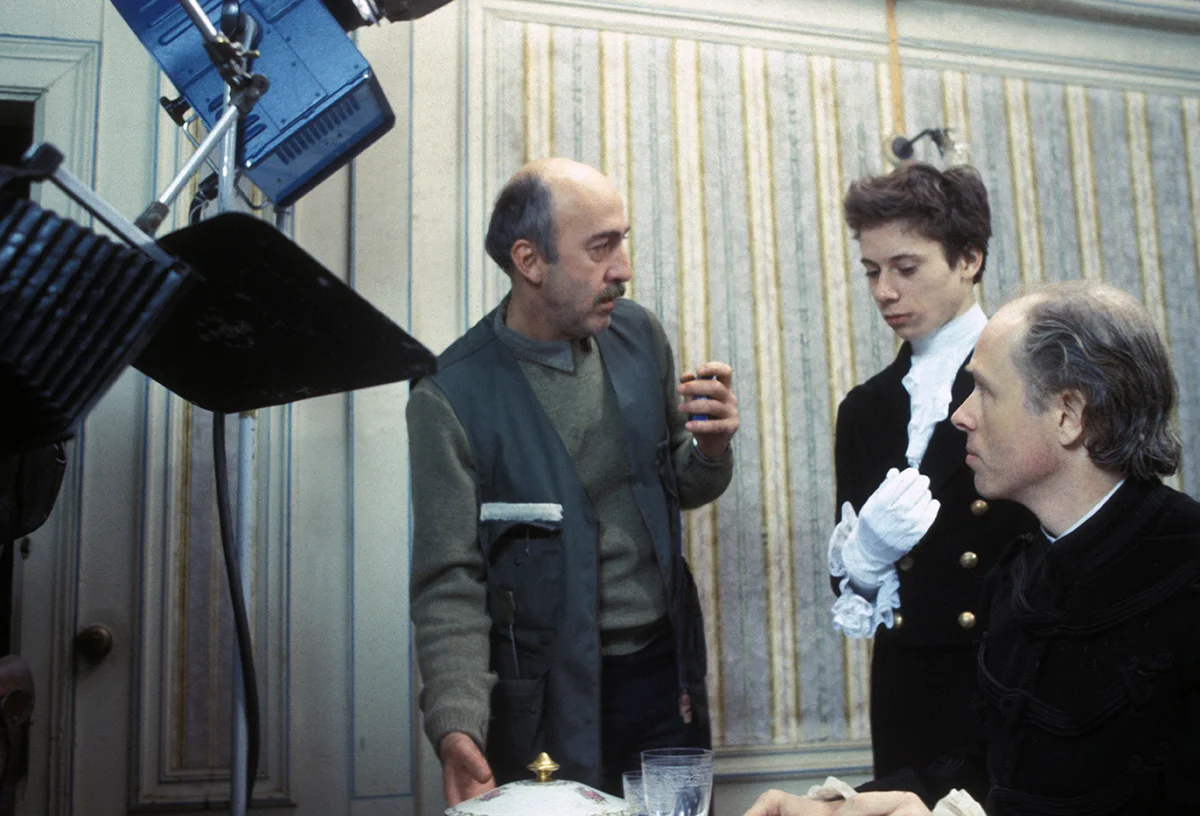
The apotheosis of non -confidence is a mild and sad drama “lived a singing thrush” (1970). The main character, the musician Gia, leads an extremely strange way of life. However, this is nothing more than the grotesque and modernized variation of the behavior of the Tbilisi rage - the so -called kinto, who fundamentally does nothing, lives for his pleasure, walks and dragged after women, but is ready to give everything for friendship (even when they do not ask). This type of irresponsible infantile man, oddly enough, was to varying degrees in the USSR among those who tried to live intentionally “past” the regime. The death of GIA in the final, according to a stupid and at the same time, is a very human reason, according to Kinoveda Vyacheslav Shmyrov, the question: “Why did he live?” But just this question makes the film completely Soviet. Although Joseliani, on the contrary, was the first to abandon the question of the purpose of human life in formally Soviet cinema. In other words, he gave every life the right to being.
Most of all, Joseliani was striking in the Soviet and post -Soviet cinema by the fact that he managed to go around classic emigrant traps.
Having moved to Paris in 1982 after the final break with the Soviet film observation, the director later released his first French painting “The Favorites of the Moon”. There, he deliberately reproduced the principles of the Bess -Great story, which was developed in his last Georgian work “Pastoral” (1975) and which caused the powerless anger of the leadership, comparable to the rage into which it fell from the films hidden under the “homosexual article” by Sergei Parajanov. It looked like Joseliani wanted to say: "Minute, I did not finish!" - And he showed that his tongue is easily transferred to another environment, country, context and so on.
So it was, otherwise he would not have shot nine more paintings abroad. They did not kill him and did not do it stronger, he simply continued to live and work. In the case of Joseliani, this meant speaking in three languages, remaining everywhere not quite his own, in a good stranger, that is, to see everything slightly from the outside-it is this skill that often becomes a condition for internal freedom. Joseliani was neither in the USSR nor in France that was called “fate”, he spat on “morality”. He was occupied by sounds, smells, surfaces of the world, its condition and quality. In this sense, it does not matter at all in what language to convincingly convey them. Joseliani was completely delivered from the obsession of Russian cultural masters - the need to solve ideology issues with the help of the language of art.
However, this does not mean that Joseliani was an opponent of the presentation of thoughts. On the contrary, he wrote books, knew how to pronounce toasts and tell stories - you can’t bear belonging to the Georgian culture by brackets. In an interview with Nikolai Solodnikov, published in October 2019, Joseliani poisoned stories about how he forced the chairman of Goskino Philip Ermash to drink a glass for the Nobel Prize Joseph Brodsky and how he did not let Andrei Smirnov steal a bottle of vodka in the cemetery, bought to drink Tarkovsky’s grave. Along with this, Joseliani slightly criticized the length of the last film by Alexei Herman “It is difficult to be a god” and said: “You still see that this is work, and not the“ war and peace ”of Bondarchuk.” This is his style. An inconspicuous stroke - and the entire coordinate system appears, in which there is a Russian -speaking movie for the last hundred years.
As Natalya Nusinova, historian Kino historian, said on her Facebook, with whose father Ioseliani once worked on the scenario application of the film “The Singing Drozd”, the director died in Tbilisi, revising his first full-length work of Listopad. To what extent this is exactly what matters. If the ring biographies do not happen themselves, they are certainly invented. And they do the right thing.