
Translated material
Santa from the shopping center
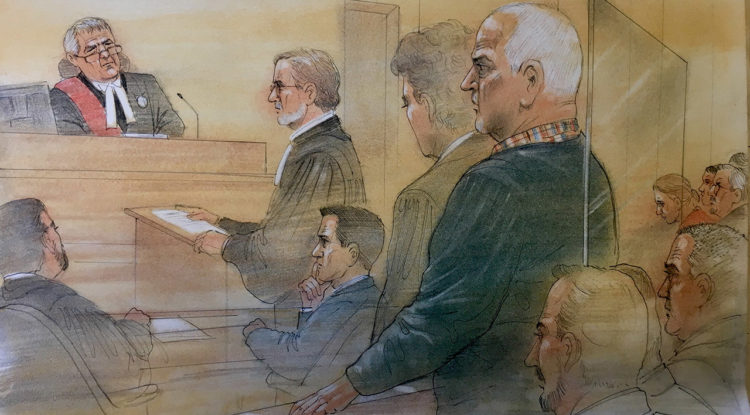
In Toronto, Merry Merry Christmas for many years was congratulated by the serial killer. He prepared cupcakes for neighbors, gave his friends flowers and killed gays
Throughout the 2010s, gays regularly disappeared in Toronto, in the area popular with LGBT-cement. It turned out that they were killed by a man who worked as a part of Santa in a shopping center. "Cold" tells the New Year's Troops the story.
In order not to miss the main materials of the "cold", subscribe to our Instagram and telegram .
72-year-old Bruce MacArthur from Toronto worked as a Santa Claus for several years. On the eve of the New Year holidays, he put on a red suit, boots, a white beard and came to one of the local shopping centers to listen to the Christmas wishes of children and give gifts. In his free time, Bruce baked muffins and congratulated his friends.
In 2019, he was convicted of several life sentences. It turned out that for eight years he killed and divided gays.
A boy from a religious family
Thomas Bruce MacArthur was born on October 8, 1951 in a community near the city of Lindsay in the southeast of Ontario and grew up in a religious family. Bruce’s mother, Ailey, was an Irish Catholic, and his father Malcolm was a Scottish Protestant.
Families from Toronto often sent problematic children to the house of Makanturov. Children worked on a farm, and in return received a room and three meals a day. According to the memoirs of neighbors, at the same time in their family lived from six to ten such boys and girls.
Bruce grew up by a educated child and set an example for his peers. He helped his parents, studied well at school and often took first places at vocal competitions.
School friends described Bruce MacArthur as a calm, unremarkable young man. However, Bruce was not loved - because he was too correct a child and often told the teacher about the tricks of his classmates.
In high school, he began to meet with a classmate named Jenis Campbell. After graduation, they moved together to Oshava, 70 kilometers from Lindsay. MacArthur entered the college for a business program, and then he began to work as a consultant seller at one of the local department stores.
In 1974, when MacArthur turned 23 years old, he and Jenis got married . A few years later, they had a son and daughter. And a few years later they bought a new house.
Family idyll ended in the early 1990s. MacArthur worked as a commander in a large company for the production of socks and often went on business trips to the north of Ontario. Then he began to change Jennis with men.
Bruce told his wife about everything. They lived together for several more years, but in the late 1990s they parted. MacArthur left the house to the family, and he went to Toronto, where there was a large LGBT-comment in the area called Church and Wellage ("Gay Village"). After breaking up with his wife, MacArthur experienced a lot of stress - he turned to a psychiatrist and began to drink antidepressants.
The first attack
At the end of October 2001, MacArthur met Mark Henderson , a former sex worker who lived in Gay Village. According to investigators, he invited MacArthur to his home to show his costume for Halloween.
When they came to the apartment, MacArthur went to Henderson from behind and hit him with a piece of a metal pipe on the head. He struck the blow until Henderson lost consciousness.
Henderson himself later said that MacArthur did not invite, but simply held the door of the entrance, thinking that he wanted to go further along the corridor. But when Henderson turned his back to him to open the door to the apartment, MacArthur attacked him, hitting his head with an iron pipe.
When Henderson came to his senses, he called in 911, and he was taken to the hospital. On his body, doctors recorded a lot of abrasions and a crack on the skull.
While Henderson was in the hospital, MacArthur himself went to the police and talked about what happened. The hearing was held in April 2003. MacArthur found himself guilty of the attack with the use of weapons and injuries. When the judge asked him about the motives, Bruce replied that he did not know why he did it.
During the trial, the judge gave him a positive characteristic: MacArthur was married, pleaded guilty, repented and agreed to cooperate with the investigation. A psychiatric examination showed that Bruce was not inclined to re -commit a crime, and he was sentenced to two years on a conditionally probationary period, and for another two years they were forbidden to visit the Gay Village.
Killer in Santa's costume
After the trial, MacArthur returned to the life of an exemplary citizen. He maintained good relations with his family, took the children to stay on vacation. He also opened a landscape design company called Artistic Design. The business almost immediately began to bring good money.
Friends described MacArthur as a good and sincere person. He was baking cupcakes, gave his friends flowers, was always ready to help, and before Christmas and New Year's holidays he worked as a Santa Claus-he could sit in a shopping center for hours and listen to children's wishes. In parallel, he spent a lot of time in gay bars, often went to parties and was an active user of dating sites.
He returned to violence in 2010. On September 6 of that year, he met at the Zippers bar his former partner , a 40-year-old Srilanian scandaraja Navaranama. MacArthur often visited Zippers, in the bar he even had the nickname "Santa". Despite the breakup, Navaratam and MacArthur continued to communicate and sometimes saw in the bar.
That evening, the witnesses saw Navaranam leaving the bar in the company of two men. After that he disappeared.
According to investigators, he took his home and strangled his former partner Bruce MacArthur. After that, he dismembered his body and took him to the house Karen Fraser and Ron Smith - customers of his company Artistic Design.
MacArthur helped the owners take care of their yard and knew that they would not be in the city. He had the keys to the garage in which he kept the equipment for caring for their yard. He hid the remains of the scandaraj into huge flower pots that stood on the territory of the site. Over the next eight years, seven more people disappeared in Toronto. At the end of December 2010, 42-year-old Afghan Abdulbasir Fayzi disappeared in the Cherch and Welley area. His abandoned car was found in Toronto, but no other evidence was found. At the end of October 2012, under similar circumstances, 58-year-old Majid Kaykhan disappeared.
Investigation and arrest
In November 2012, the Toronto police created a special group to investigate these disappearance. For a year and a half, they interviewed dozens of witnesses, were able to find out that all missing people were familiar with Bruce Macarter, and called him for interrogation as a witness.
He said that he had talked with Skandaraja Navaratnam in the Black Eagle bar, he has been familiar with Majid Kaykhan since 2003 and hired him in his company for one month. He allegedly did not know Abdulbasir Fayzi at all, although Fayzi found the email address MacArthur in the notebook. His story seemed convincing to investigators, and MacArthur was released.
The police could not find the guilty, and the mysterious disappearance continued. In August 2015, 50-year-old Sorush Mahmudi was declared missing. In April 2017, 44-year-old Selim Esen disappeared, and in June of the same year, 49-year-old Andrew Kinsman disappeared.
Kinsman was different from the rest in that he was a native Canadian and a famous person in LGBT-comic. His disappearance forced the gay community to think that all missing people could be victims of a serial killer.
Initially, the police rejected this version, but under public pressure created a new operational group.
During the search of the Kinsman's house, the investigators discovered a calendar in which a meeting with a certain Bruce was planned.
The police also studied records from street surveillance cameras. On the day of the loss, Kinsman approached the 2004 Dodge red car, which, as it turned out, belonged to MacArthur. Some time after the murder, Bruce sent the car to a landfill, but the police managed to find it. In the cabin, they found traces of blood belonging to Kinsman.
In addition, investigators learned that in 2016 a man turned to the police who stated that Bruce tried to strangle him during sex.
During the further investigation, the police discovered MacArthur’s connections with other missing men: Fayzi's car was found near one of the areas in which MacArthur worked. Then the prosecutors issued a warrant for the search of the apartment of MacArthur. The police secretly penetrated his house and was able to download part of the information from his computer. Investigators found more than 100 photographs of Kinsman, including those that MacArthur made after his murder.
Arrest and court
MacArthur was taken red -handed on January 18, 2018: the police burst into his apartment and saw a man chained to the bed of handcuffs.
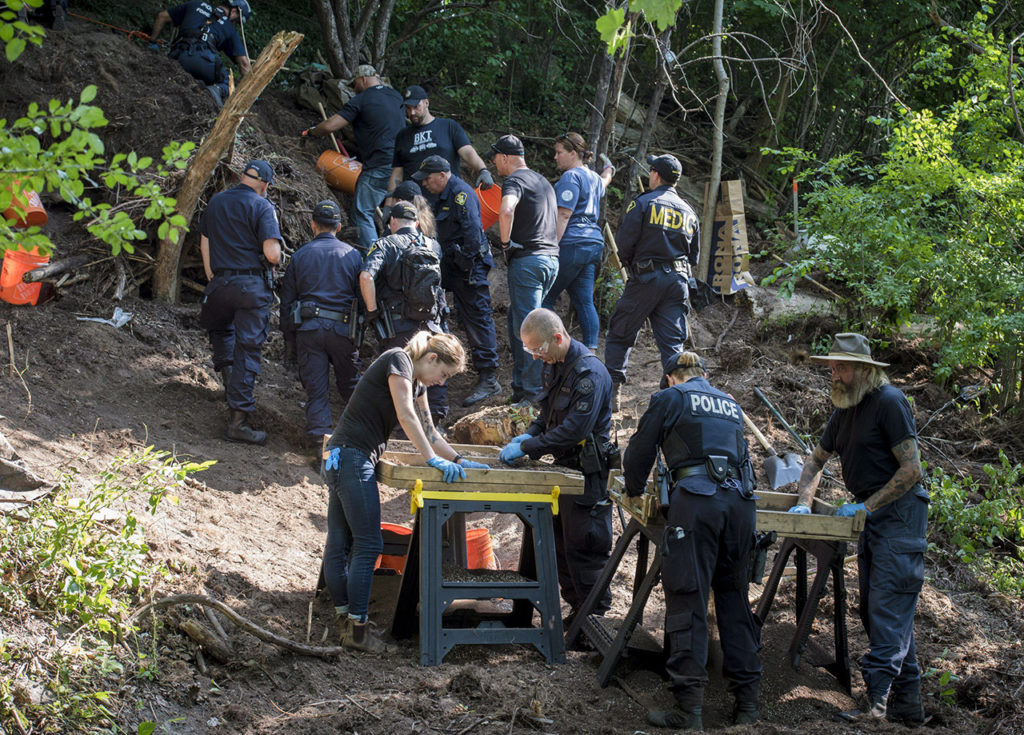
During the investigation, it turned out that Karen Fraser and Ron Smith hid all the remains of MacArthur on the site. The forensics managed to confirm that the remains that Bruce hid in pots belonged to seven men. As the investigators found out, MacArthur buried one of his victims in the ravine in the same court.
In January 2019, MacArthur admitted to the brutal murder of eight people. The next month he was awarded a life sentence. According to BBC, he will not have the right to parole until he is 91 years old.