
Translated material
“Solder 2” - Klim Shipenko is silent, Ivan Okhlobystin fierce
The continuation of the most successful Russian comedy turned out to be bright, but completely stupid
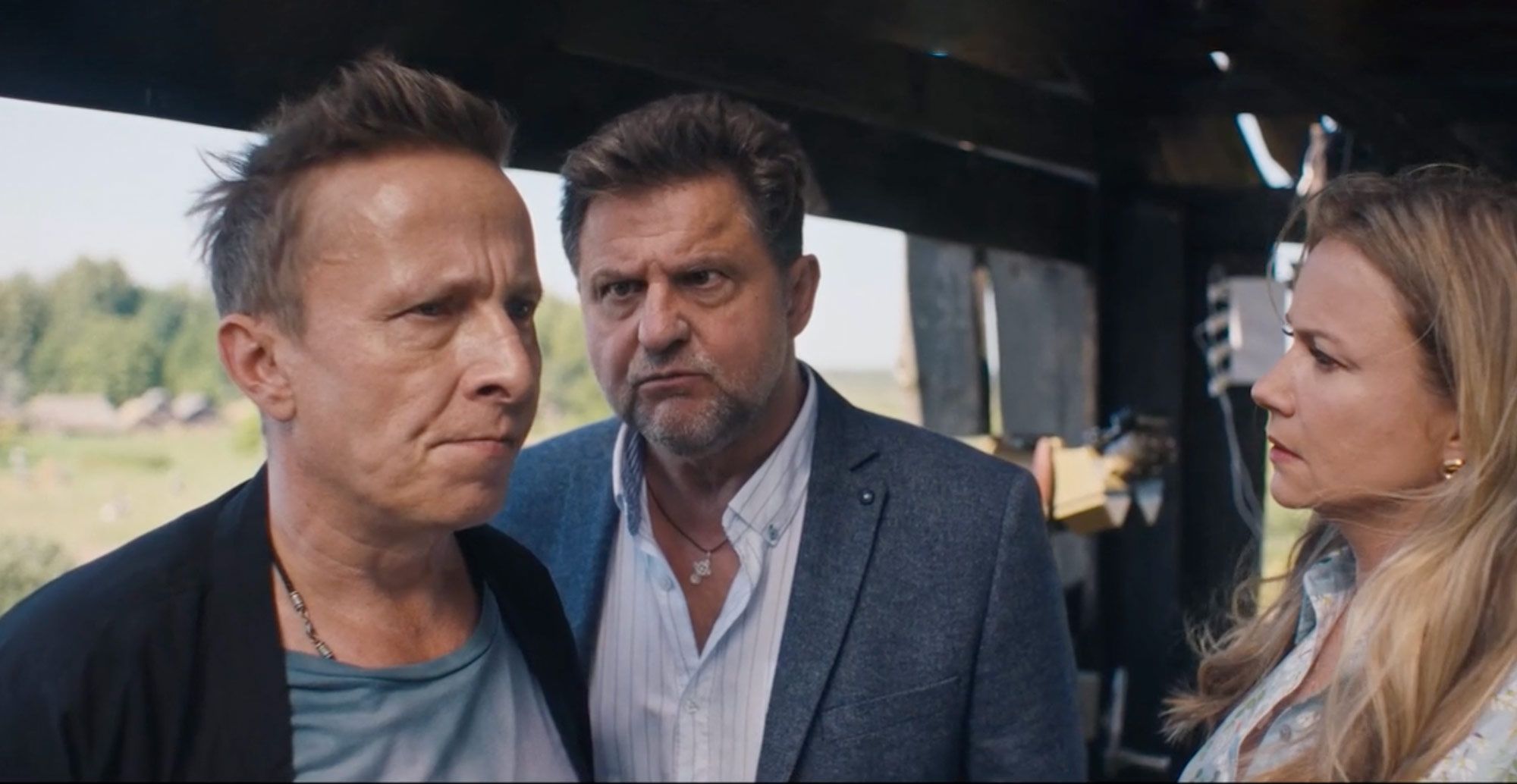
“Solder 2” was released in Russian rental - a continuation of the comedy of Klim Shipenko, who became one of the most box office films of Russian rental. In the first part, the hero of Milos Bikovich, who was insolent son of the oligarch, went to re -education in the 19th century. In the second part, he himself is already raising the daughter of an official - she is played by Aglaya Tarasova. We tell you how this impeccable comedy does not fulfill its main function from a technical point of view - and does not say anything about today.
After the events of the first film, the former slave Grisha (frowned by Milos Bikovich) became serious, but not to the end. The project for the re -education of the rich is abandoned, but as a retreat, the fake village did not bring money. From boredom, Grisha flies into Dubai, where everything is also not that. On the way back, he finds a drunken scandalist Katya (Aglaya Tarasova) in a business jet in a business jet. Grisha knows that she is the “daughter of a federal official” and should now sit for a recent brawl. But mom pulled out.
Seeing that Katya will not correct any of the legal means, the hero abducts the girl, and then everything happens according to the scenario: she wakes up in a stable, turns out to be a peasant woman and is about to go to execution. Grisha’s verdict chooses a spectacular, although not co -shaped era - Katya is preparing to burn at the stake. By rash, the case takes a serious turn, but the old team interferes in time - led by the correctiveman of the souls, psychologist Lev Arnoldovich (Ivan Okhlobystin).

There is an unhealthy irony in the fact that the character who saves the girl from the fire was played by an artist who once proposed - without a shadow of irony - to burn people in furnaces. The case of Ivan Okhlobystin won by the beginning of 2024: “LGBT movement”, against which he expressed back in the early 2010s, is now prohibited in Russia. Since then, Okhlobystin, who played at a rally in support of the annexation of Ukrainian territories, has gained in political weight. His hero in the “slave” also swept - other psychologists are not recognized here. In the new film, Lev Arnoldovich, guided by an independent methodology, “helps” everyone around: abductions, deductions and physical punishments. The incomplete Grishka and the decaying marriage of Paul, his Oligarch father, have to be repaired. In the final, an offer to scale the project “At the State level” will be almost threatened.
If in the first part, the butacher village forced to recall Ilya Khrzhanovsky’s “DAU” , then the second associations are selected even darker: for example, the Nizhny Tagil “city without drugs” or the state stump system.
Already the first film was groping up for an important conversation about violent attempts to rule someone else's soul. In any emergency situation, the hero Bikovich was sleeping-rudely, not to compare even with the reality show about the truman. Even the final “awakening” from the village “sleep” in the first “slave” was accompanied by a new layer of lined lies. If this film was not so swift, let him come to his senses in the carnival Kuterma, and the questions would have crept up: how will the hero now trust the world around? Would you have to treat it for years from derealization for years? And whether the post -traumatic disorder is heals to the wedding? However, one of the leaders of public opinion in Russia - Zakhar Prilepin - has already solved this problem: in his opinion, there is no PTSR.
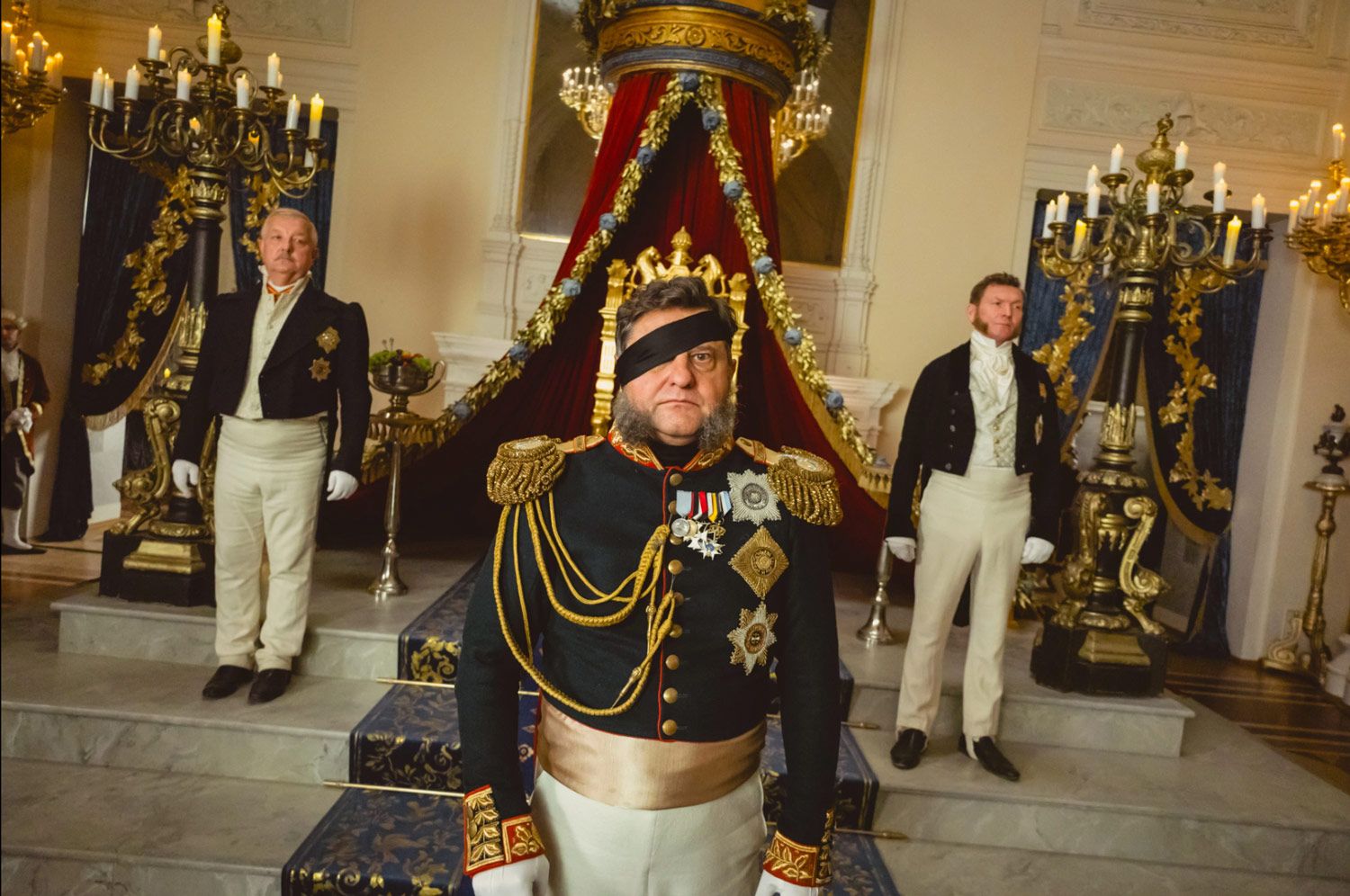
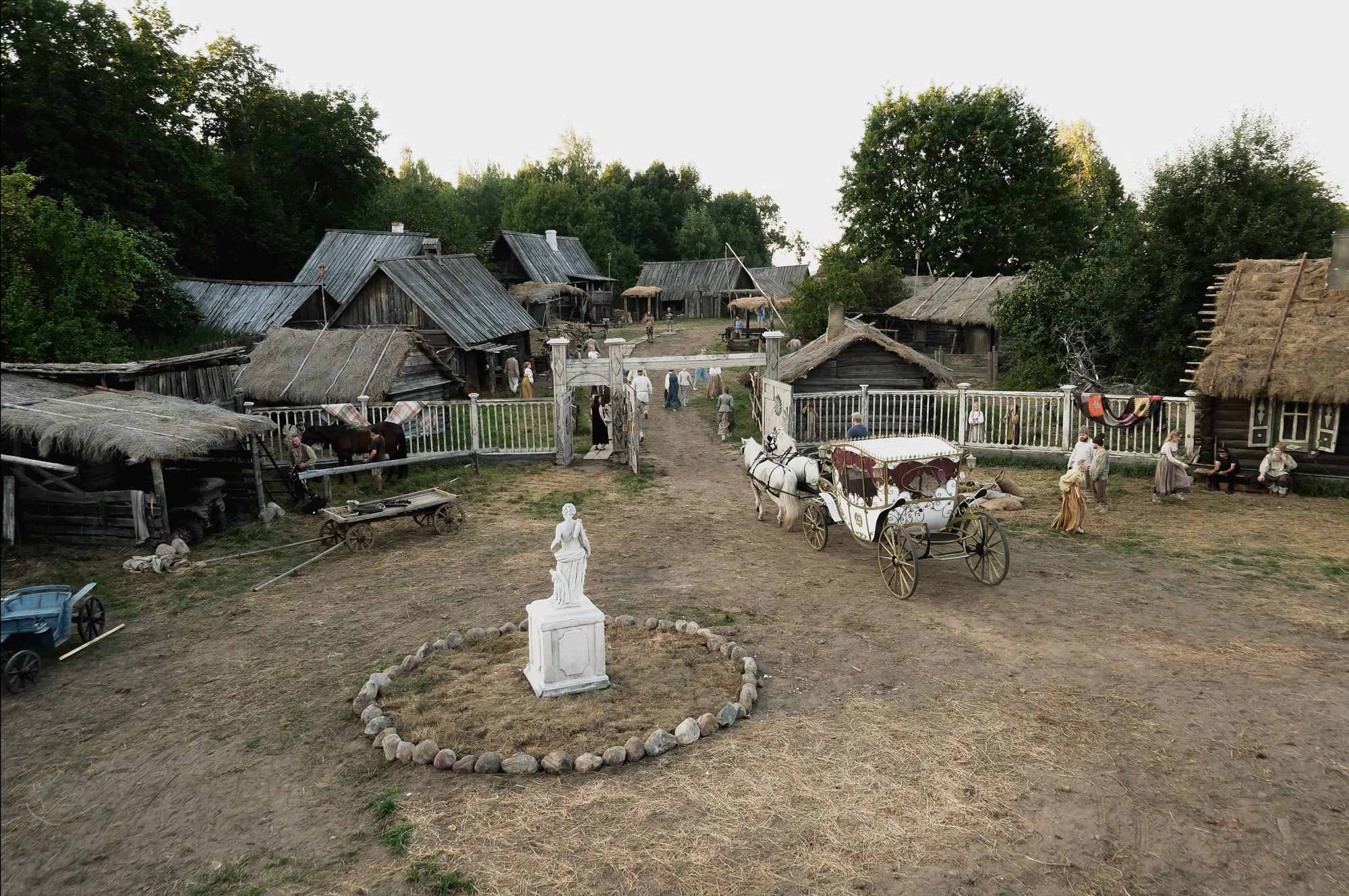
It is hardly the director Klim Shipenko at least some of the rhymes mentioned by reality meant. The slave 2 had all the possibilities to say something about the state of the country, using techniques from the first part. The original “slave” was a system of mirrors, which offered the viewer to catch reflection: having got into a correctional institution, the major saw his actions and words from the side, and the viewer read these rhymes. So the satire works. The reflection at the same time can be an arbitrarily distorted-thanks to this property, even Soviet cinema sometimes managed to smuggle a conspiratorial nod to the viewer to the screen: look, you are not lonely, we also understand something.
In the “slave”, the satirical potential is dictated by the plot device itself: the projection is filled with the oligarch with the oligarch. This is not a real XIX century, but only its recognizable print. A space where you can throw almost any directorial instructions. We are watching a naval film: here is Lev Arnoldovich with his village, and here Klim Shipenko above him. So, over Shipenko there is a director of reality larger.
In this case, what actually means the Potemkin village, into which everyone began to play so joyfully? Escipatical cosplay or cargo culture of post-imperia? The cap of widespread observation (cameras in the “slaves” crawl out of ducks, nests and so on) grew only for Katya or around us too? The official arrested by Leo is an act of civil disobedience or only a harmless feint of a comedy of provisions? And why does the Patriotic War of 1812 arise in the new film? Napoleonic Frenchman - the same Anglo -Sax?
Alas, for this subtext to show its invisible ink, an author would need with a more legible handwriting. Klim Shipenko, who returned from space to Earth, does not dare to be a significant word. On the contrary, the director does not just try not to say too much - he tries not to say anything at all. Insolence is wasted in the first 15 minutes to utter a maxim already envious of the “house arrest”: a presumptuous official in Russia imagines himself to be a nobleman. Fans to calculate the meaning in the text will vaporate into the middle name of the Katina mother. Vasilievna - why not a reference to Evgenia Vasilyeva ?
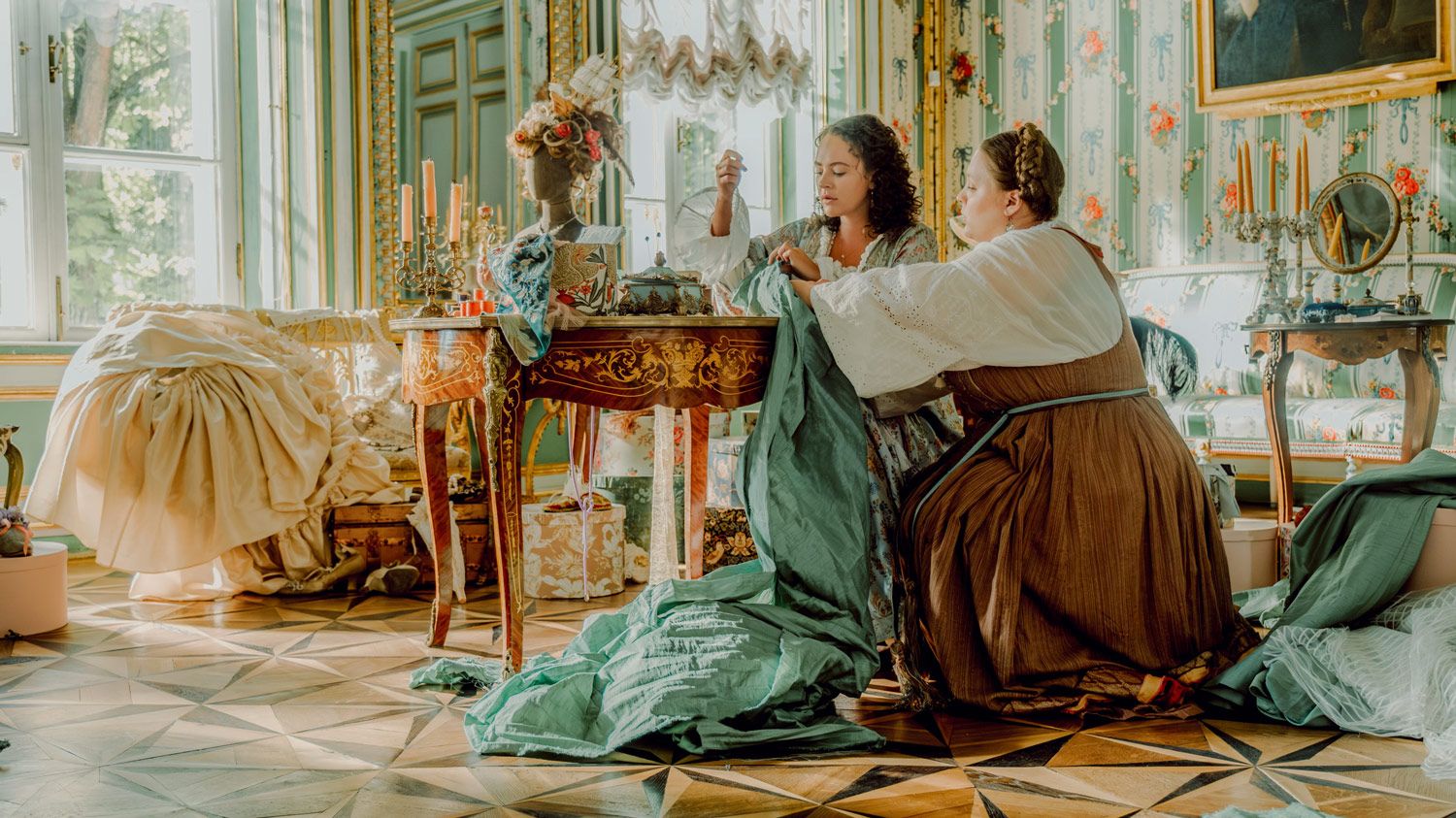

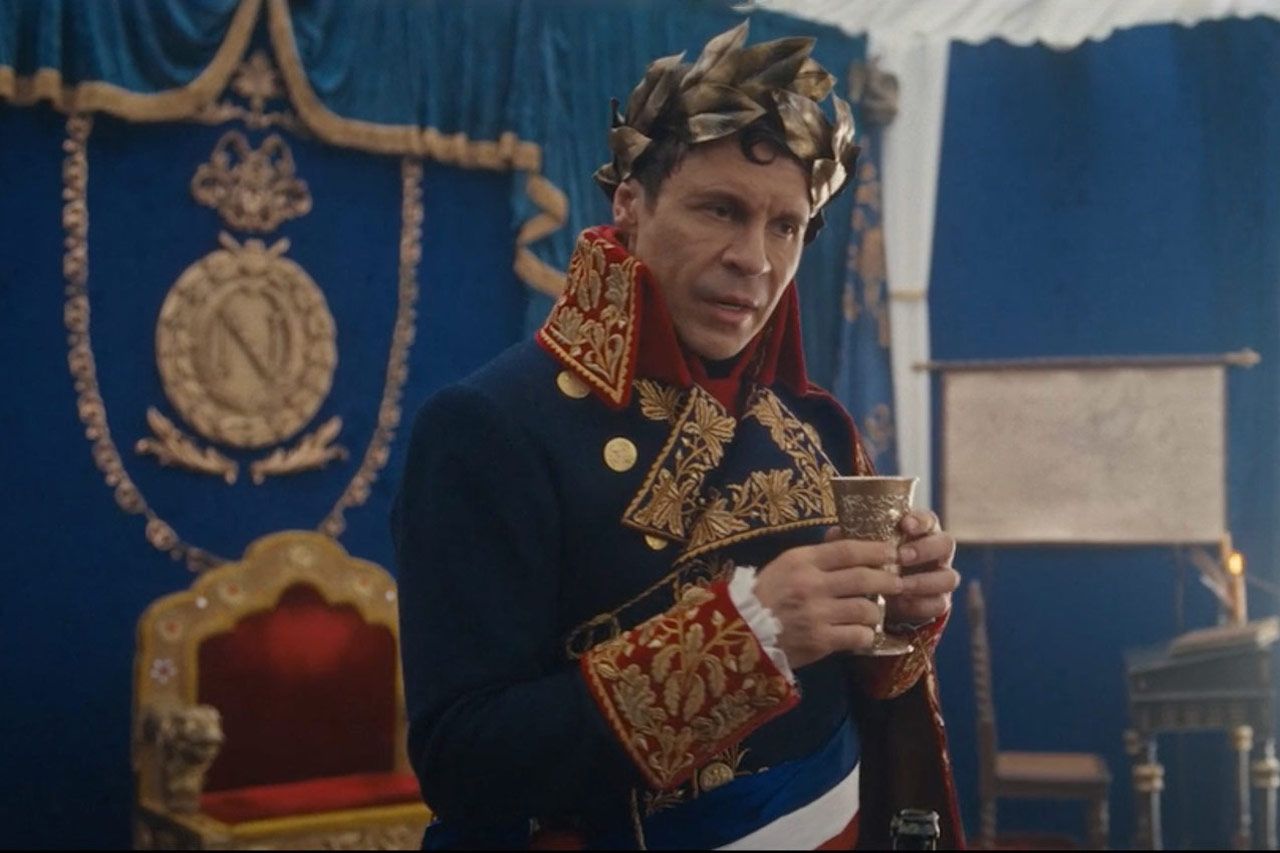
But the meanings, no matter how they fight with them, strive to get into the work. Perhaps the main emotion of the second “slave” is the pain from breaking with the Western world. It is felt both in the plot and in the very style of the picture. Behind the scenes are Beethoven's symphony from the fifth to the seventh. The last frame and a remark of the film is a direct quote from Casablanca. In the noble nest they speak French. The dance teacher discharged from Paris is black, and here, of course, everything falls into place - the rich man Katya says that the French in Paris "all the same recently." The viewer laughs. The key was found: this is longing not just in the west, but in the white and white West. Not us - he turned the wrong way, rejecting Beethoven, national identity and heteronormativity. There was no place in Russia in this new system. It remains to honor the immanent Russian spirituality - and look at the advertising integration of Sberus.
From birth, the “servant” was some kind of example of subtle ideological work. Take at least the figure of businessman Paul, father Grisha (Alexander Samoilenko). This forever imaginary and led person cannot refuse anyone: because of the problems of his son, he already updated the fleet of the “native” police department, and paid for medical bills of ordinary staff. But a simple calculation allows you to understand that this person acquired his condition in the nineties. Which of the virtues helped him to enrich himself? Social responsibility, compassion, inability to answer "no"? This simple invention clearly illustrates how a large cinema protects the one percent , where the ordinary viewer will not enter himself for anything.
All this does not mean that the “slave 2” is completely deprived of advantages. In his craft, Klim Shipenko still remains among the first. For the whole film - one frankly unsuccessful glue among peppy hundreds. Excellent work with rhythm, skillful development of spaces, a series of visual inventions like a polyater, a complex choreography of mass scenes. Actors are all in their places, including successful replenishment. Aglaya Tarasova in places shows the depth that was not enough in the first part of Milos Bikovich. Natalya Rogozhkina in the role of Katya's mother makes the audience squeeze her lips angrily. Ivan Okhlobystin is still a great actor. What is the replica: “Aggressive depressive narcissism. But we stopped! " It seems that the viewer laughs most of all in the rare appearance of Kirill Nagiev and Olga Dibtseva, whose characters from the time of the first part were shifted to the periphery. This humor, however, is not only the audience, but also the workshop: the artist in search of at least some episode is the unhappy beast.
“Read” is the most expensive domestic comedy and, of course, the brightest. The final episode of the battles is removed by long, difficult to arrange personnel. I would like to thank Shipenko for replacing operators in the second film - now it is Yuri Korobeinikov and Philip Yuzhanin - and he took off the agility of the cells a little. The first “slave” was distinguished by a continuous unmotivated movement: copter, stabilizers, everything was used without measure. The first “slave” was called folk, but visually it was provincial. And the new grew up, settled down, acquired a multi -plate in the final. It sounds like a threat, but we can withstand this blow.
"Jellyfish"