
Translated material
Silk Road to the Russian military -industrial complex. How the supply of Western components through China is arranged
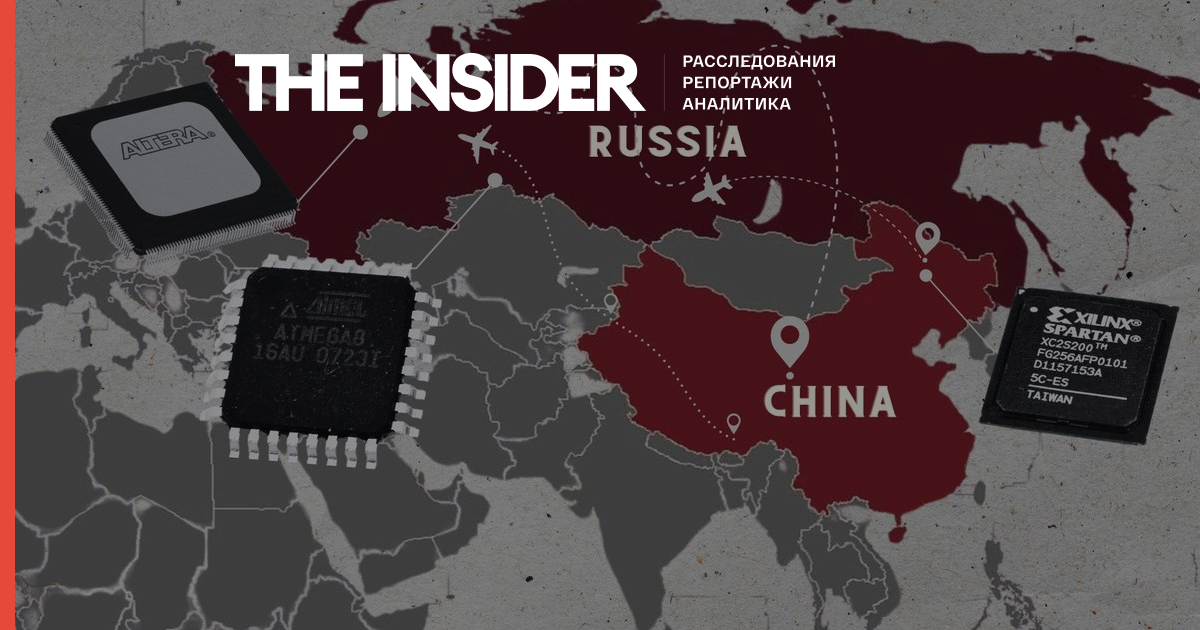
The Insider has studied about a hundred images of imported microcircuits that Russia uses in the war against Ukraine. Some of them were taken from open sources , and part of the list of electronic components, which experts from the Ermak-Makfol group managed to install (for the most part, are microcircuits found in Russian missiles falling in Ukraine or in a broken equipment). As a result of a multi -month investigation, The Insider set the routes that 98 microcircuits got to Russia, but not all of them are known for suppliers after the start of a full -scale invasion (the customs data does not always indicate the specifications of the goods, sometimes only indicate that these are “integral microcircuits”).
Among these 98 microcircuits, The Insider paid special attention to those that relate not to household or industrial, but rather to special (military) microcircuits. The line between the one and the second is vague, but it can still be set by the totality of parameters: price, complexity, prevalence, narrowness or breadth of functionality, the range of operating temperatures. For example, civil microcircuits differ from similar military temperatures in which they can work (for the military it is wider), resistance to errors, the completeness of testing (military microcircuits are tested stricter). This leads to the fact that, in principle, “equally made” microcircuits receive different categories and are different.
And if the suppliers of household chips could not have guessed about the final recipient, then when delivering specialized microelectronic components, the supplier could not help but understand how they would be used. As it turned out, almost all exporting companies that will be discussed below are Chinese intermediary companies. At the same time, Western manufacturers did not make any effort so that their products would not get to Russian gunsmiths.
James Hodson, member of the International Working Group on Sanctions, told The Insider that without introducing a more strict regime of “Know your client”, it will be almost impossible to deal with the bypass of the sanctions regime:
“The ability of Russia to maintain and increase the import of critical components is a sign of a not well -working market economy, but a completely standard military economy in which focus of interests and incentives are sent from the center. With the exception of import substitution, it will be fair to say that Russia's ability to innovation has suffered greatly as a result of the war, and the strengthening of the centralization of power and normative regulation by the government (and increasing supervision of all sectors) will probably make the Russian economy less capable of strategic long -term adaptation. - Especially if the revenue from the sale of fossil energy carriers will be appropriately reduced by the governments, allied Ukraine.
What can the American government do? The much stricter KYC modes (“Know your client”) should become the norm, as American banks are used to, and law enforcement efforts should lead to quick and large negative incentives when making errors in the future. Companies whose products are identified and removed from the battlefields should face unpleasant consequences. This will make you make much more detailed control with a standard procedure. American companies and intermediaries saw explosive demand in various gray markets. They enjoyed filling this excess demand with their proposal and should have understood that this is a sign of Russian demand that passed through the third part (basic mathematics). The restriction of demand in these markets would seriously reduce the opportunity for Russia to receive critical components. ”
These are the key examples of what ways in Russian weapons after the beginning of a full -scale invasion were foreign microcircuits.