
Translated material
WSJ: Due to sanctions, the number of incidents related to the safety of air transportation in Russia has almost doubled
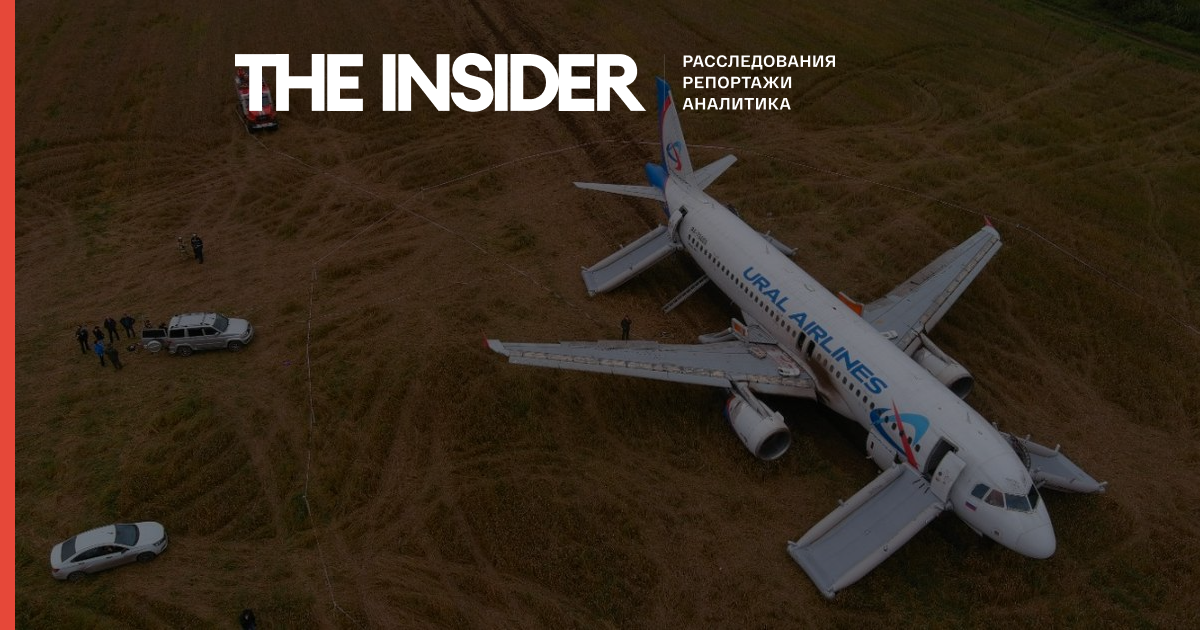
Due to sanctions in Russia, the number of incidents related to the safety of air transportation has significantly increased, writes The Wall Street Journal.
So, according to information from the German aviation database of the JacDec, in which such cases are monitored, if 36 of such incidents were registered in 2022, then in 2023 - 74. At the same time, 9.9 violations of the security rules were noted for an average of 9.9 departures, while in 2022 this indicator was 5, and in 2019 - 4.5.
An example is a case on flight 1383 of the Ural Airlines, which was sent to Omsk. Having discovered the malfunction, the crew decided to send the plane to another airport, but seeing that because of this the plane was quickly losing fuel, they put it in the field in the south of the Russian Federation.
It is noted that although the serious disasters of the sanctions, as a result of which spare parts to Western aircraft are not delivered to Russia, the software is not updated and the necessary maintenance is not carried out until they have brought, but mechanical problems really pose a serious threat to flights and create a load on pilots. It is concluded that in the near future this state of affairs can lead to more serious incidents.
Due to the restrictions imposed, the state allowed Russian airlines to extend the maintenance intervals, as well as independently engaged in the overhaul of aircraft. In particular, the Russian sector of air transportation feels the lack of chassis and brakes, which is why it is forced to distill the planes to Iran for repair work.
At the same time, the only opportunity to rectify the situation is the transition to Russian -made aircraft, but experts believe that this process is unlikely to begin until 2030. Thus, Russian air carriers still survive due to the “cannibalization” of the Western aircraft park, using some of them as donors of spare parts. Because of this process, by 2026, their park should double.
Earlier it became known that Russian “imported” spark plugs for Superjet aircraft serve ten times less Western ones. Despite their comparative cheapness, they have to change them much more often, and in the end, airlines still have to pay much more for them.