
Translated material
"Garden", "Gomora" and "Modern Ukraine". How psychologists will teach “the basics of spiritual security” and resistance to the West
The course proclaimed by the Russian authorities on traditional values is manifested in a variety of ways. Today, the curriculum “Spiritual personality safety and traditional Russian spiritual and moral values in the work of a psychologist” was published, which will be introduced in Russian universities. It is claimed that the course was developed that the participants in the war in Ukraine or their relatives do not encounter a psychologist who does not share priorities certainly or is fond of astrology. Mediazon briefly talks about a new academic discipline, which, among other things, refers to the corrupting influence of unfriendly countries in moral decline.
New discipline
In January last year, deputies asked Deputy Prime Minister Tatyana Golikova, who oversees the social sphere in the government, to create centers of psychological assistance to the participants in the war in Ukraine and their relatives.
A couple of months later, in April, the Defenders of the Fatherland Foundation was created, which should engage in personal support of the military and their families, including providing them with psychological assistance. At a government meeting, in September it was discussed that there are not enough psychologists working at the Center for Assistance, so third -party specialists need to be involved in work.
In addition, the meeting participants decided that not all psychologists can work with war participants in Ukraine and their relatives: firstly, many of them position themselves as specialists in tarot or astrology, and secondly, up to 40% of university graduates “adhere to values that are opposed to traditional Russian spiritual and moral values.” This became known from the annotation to the curriculum “Spiritual security of the individual and traditional Russian spiritual and moral values in the work of a psychologist”, which was developed on behalf of Golikova.
Today the program was published on the portal of federal state educational standards. The reader of the DOXA publication drew attention to the document.
The Ministry of Education and Science notes that the new subject was developed for students in the specialties of “Psychology” (bachelors and masters), “Clinical Psychology” and “Psychology of official activity” (specialty).
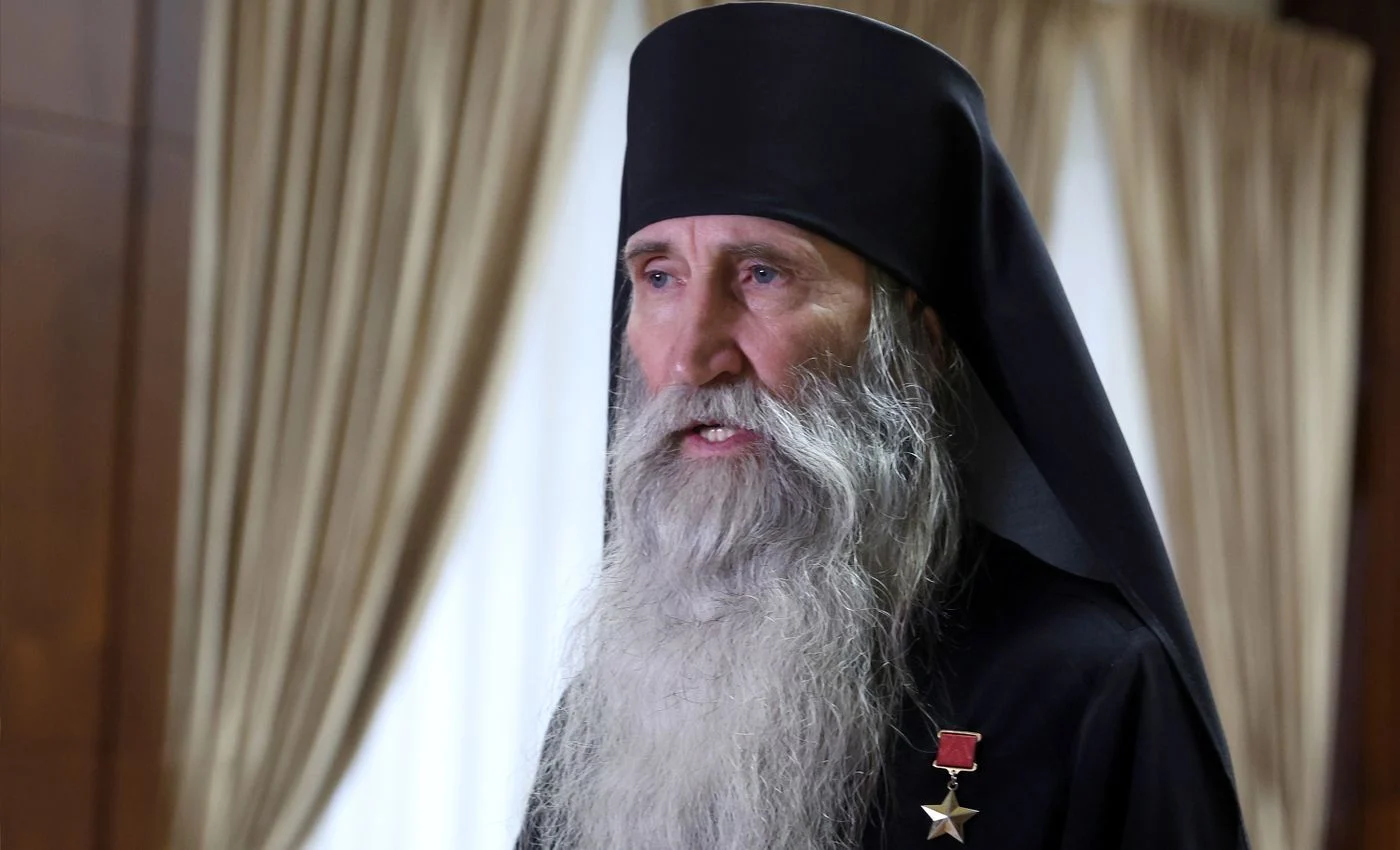
One of the two authors of the program is the monk of Cyprian (according to the passport of Valery Burkov), a former military pilot, a war veteran in Afghanistan and the performer of songs about this war, the Hero of the USSR, the Master of Psychology, the inhabitant of the high-Petrovsky Stavropigial Monastery, the President of the Scientific and Practical Institute of Religious-oriented Psychology and Psychotherapy, a participant in several funds and Soviets. In response to the request for a commentary, Burkov asked the correspondent of Mediazone about the attitude to mobilization and the “special military operation”. Having learned that the attitude is sharply negative, the monk refused to talk.
His co -authorship is Anna Gladkova, the deputy head of the Heroes of the Fatherland Foundation and the head of the psychological service of the Center for Spirit and Medical psychological rehabilitation in honor of the icon of the Mother of God “all mourning joy”. The document itself was signed by Alexei Levchenko - in it it is indicated as the acting director of the Department of State Policy in the field of higher education of the Ministry of Education and Science, but on the website of the department is listed as his deputy.
Victoria Kanyshkin, the head of the department of this department, is indicated as a contact person. She said “Mediazone” that this manual has already been sent to educational institutions. When asked whether she will be mandatory for universities, the official replied: “Of course, universities take into account all our method recommendations and are taken into account when acting educational programs.” At the request to clarify at the expense of what subjects to students will introduce a new discipline, Kanyshkina suggested sending an official written request.
Mental wars
At the beginning of the document, the authors retell the theses already familiar in Russian educational institutions about the importance of traditional values, mention concepts like “spiritual security of the individual” and note that it is important for psychologists to know about “mental wars that are waged against every citizen of the Russian Federation”.
It is emphasized that the program of the new discipline does not imply “training in religion”, but the study of traditional views characteristic of “state -forming religions”. According to the plan, 72 hours should take this training module for psychologists, 48 of them are lectures and practical classes, and another 24 hours are intended for independent work.
Among the tasks are the formation of knowledge about the “basics of spiritual security”, including the threats of occult technicians, the development of “internal needs of students in a healthy lifestyle, in creating a family and strengthening personal vitality” or “understanding by students of modern threats to preserve traditional Russian spiritual and moral values in Russian society”.
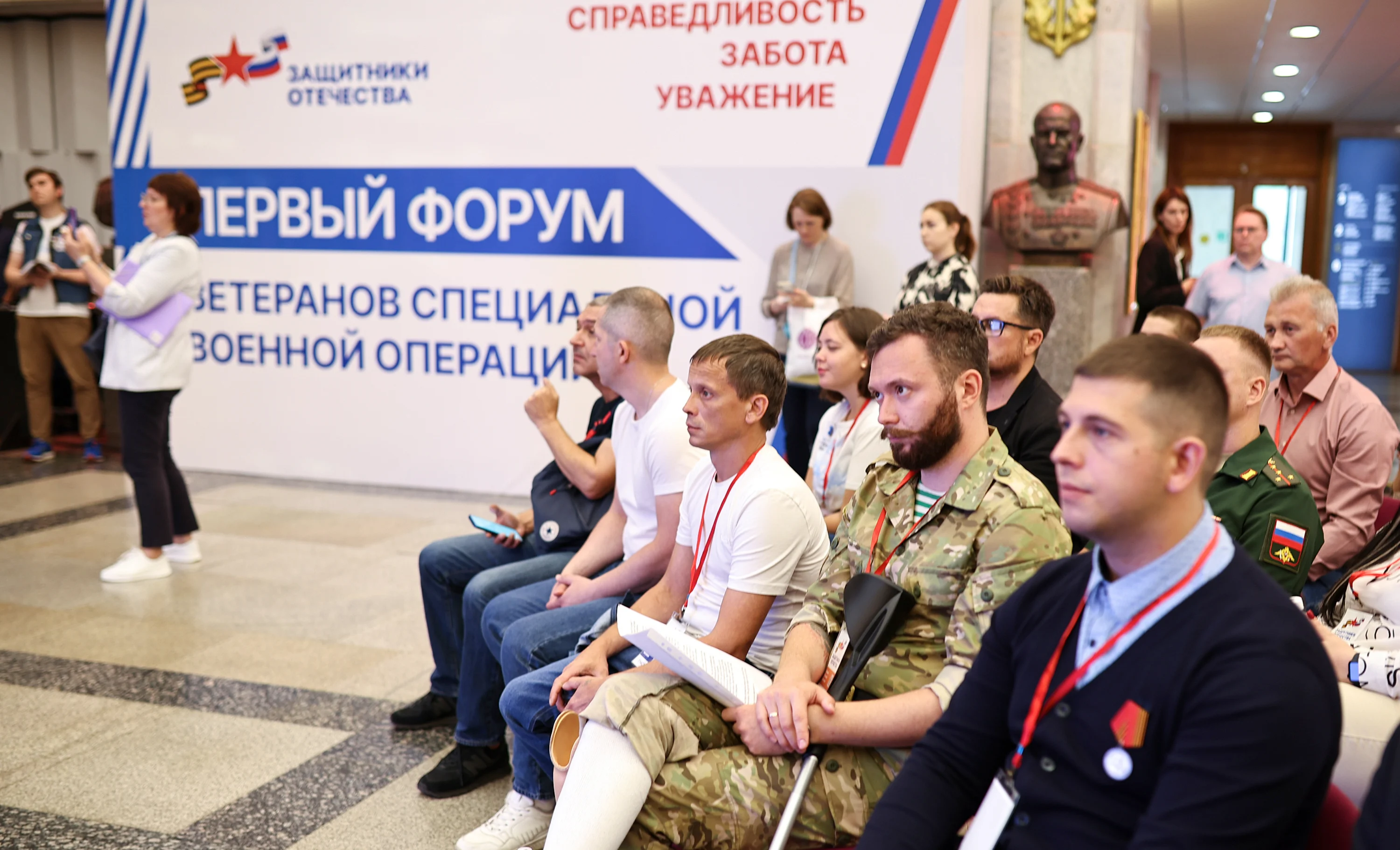
The stand of the Defenders of the Fatherland Foundation in the Museum of Victory on Poklonnaya Gora. Photo: Mikhail Tereshchenko / TASS
The program has two sections. The first is called the “spiritual safety of a psychologist and client (patient) in their interaction” and consists of nine topics. For example, one of the topics is called “Anthropology of a person. Two nature of man. Materialist and religious views, ”and the following subsections are mentioned in its content:“ The spiritual and material nature of man: soul and body, their relationship, hierarchy in the arrangement of man ”; “The doctrine of the soul in the historical perspective”; “The substitution of the doctrine of the soul by the doctrine of the psyche”; "The concept of the psyche, the place of its location in a person, the location of the soul."
Separately, students will have to study the topic called “spiritual threats to human health”. In it, the authors propose to discuss “spiritual, mental wars that are waged by unfriendly countries” with the help of “propaganda of alien spiritual values”. “An example of this is Ukraine,” the compilers of the program note. In addition, students should tell about psychics, fortunetellers, various manipulative or occult techniques and the state of trance.
The content of other topics lists the “spirituality and mental disorders”, “ways of protecting against destructive spiritual, psychological and information influences” or historical examples of how the decline in spirituality in society leads to degradation.
The second section is called “Traditional Russian spiritual and moral values as a foundation in the work of a psychologist with clients (patients)”, it consists of 14 topics. Teachers will tell students how Prince Vladimir has become an example of "the transformation of a immoral person in the highly moral as a result of the adoption of Christian spiritual values."
When studying this section, students should show negative examples of peoples who have departed from traditional values: “World Flood, Garden and Gomor, Modern Ukraine” - or tell about degradation in the West. The developers of the program hope that thanks to this, students will understand the “current situation in the world and an attempt to replace traditional Russian values with non -traditional Western.”
The ninth theme is devoted to existing threats: it is about sectarianism, “destructive cultures” and how the state fights with them. It is conceived that graduates will have to be able to "justify the existence of the above terms as a threat to the state and personality."
Another topic is dedicated to marriage, the other directly to the war, it should reveal the concepts of pacifism, patriotism or military feat. Students will need to "be able to consider violations of the health of participants in hostilities from the point of view of moral or immoral behavior in the war."
Then the program provides examples of control issues:
- Why does the state are of great importance to the preservation of traditional Russian spiritual and moral values?
- What is a moral law and how does it affect the formation of a person’s personality?
- How can a psychologist influence the preservation of traditional family values?
Students are invited to analyze several hypothetical situations, one of them is described as follows: “A young pair of non-traditional orientation turned to a Christian baker to order a wedding cake for their wedding and asked to decorate the cake supporting gay culture, the baker refused to fulfill this order.” Pupils should reflect whether the baker acted correctly and how he had to lead himself at all.
Another example concerns the war, which has become a direct occasion to create the entire program: “At the reception of a psychologist, a woman. She received news of her son’s death on her. The son died as a result of a projectile hit, practically nothing left of the body, but death is confirmed by witnesses. Mother does not believe that the son died, is not going to bury the "remains of a stranger" and wants to go to look for his son. "
Editor: Maria Klimova