
Translated material
What to do in the elections?
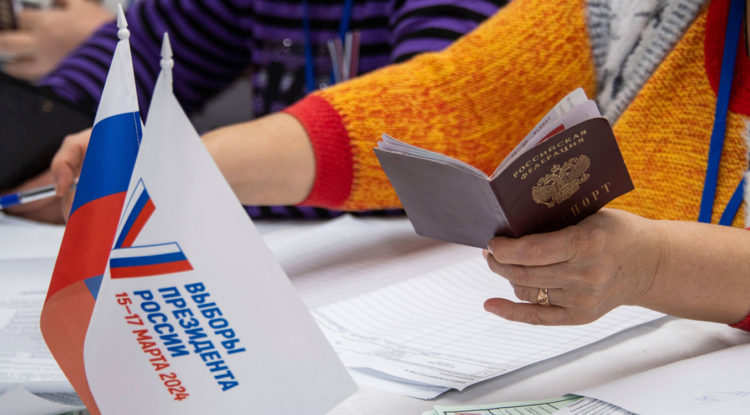
Boycot, damage to the ballot or a voice for Davankov. Options from the opposition for those who have not decided
In Russia, a three -day vote began in the elections of the President of Russia. The results of these elections are predetermined : almost no one doubts that Vladimir Putin will re -recover for a new six -year term. Nevertheless, the Russians still have the opportunity to make disagreement with the current political situation and influence the results of the vote. The "cold" has analyzed different voting strategies and tells what they can lead to.
In order not to miss the main materials of the "cold", subscribe to our Instagram and telegram .
In the 2024 presidential election, four candidates :
- Vladimir Putin - the current president of Russia, self -nominated;
- Vladislav Davankov - State Duma deputy, member of the New People party;
- Leonid Slutsky - State Duma deputy, chairman of the LDPR;
- Nikolai Kharitonov - State Duma deputy, member of the Communist Party.
Journalist and activist Ekaterina Duntsova and politician Boris Nadezhdin , who could combine opposition votes in the elections, were removed during the registration of candidates and collection of signatures. Duntsov did not even allow the CEC before the signature collection procedure, saying that 100 errors were allegedly made in the documents that were submitted to her headquarters. Nadezhdin was admitted and, according to his headquarters, was able to collect more than 100 thousand signatures necessary for his participation in the elections. However, the CEC did not allow him, saying that in the submitted signatures an unacceptable percentage of marriage .
Due to the lack of anti-war candidates in recent weeks before the elections in opposition circles there have been a lot of disputes on how and for whom to vote. Maxim Katz and his supporters called for unification of the votes for the candidate of Davankov, and the members of the FBC called on citizens to vote on March 17 at 12:00 (the campaign “Half and Against Putin” , which was supported by Alexei Navalny), and how exactly they will vote (spoil the ballot, choose one of the candidates or even take the ballot from the electoral site), considered less important. On March 14, the Navalny team published a post written by a politician shortly before his death, in which he proposes to use a specially developed application for the choice of a candidate.
According to modern electoral research, a significant part of citizens decides on how to vote at the last moment. On the one hand, this is explained by political apathy and unwillingness to get involved in the political process, on the other hand, it is a desire to get a maximum of information about the possible consequences in the event of the victory of each of the candidates, evaluate risks and choose the best option for yourself. The Russian electorate is no exception: at the moment, up to 20-30% of voters did not decide how to vote .
The legitimacy of the elections during the war and rigid censorship calls into question , and the grounds are called: millions of state employees are forced to vote for Vladimir Putin, demanding to provide a report on the results of voting. Voting among the military takes place under the strict control of the commanders who check the “correctness” of filling the ballot - the entire state apparatus works for the re -election of Vladimir Putin. Nevertheless, Russians can still affect the result if they do not want it.
Boycott
For the political regime, which exists in Russia in 2024, the boycott will not work. The very idea of ignoring voting is to reduce the confidence in the elections, thereby depriving the regime of legitimacy. However, since 2006, the lower threshold for the elections in Russia has been canceled : even if only 15% of voters vote, the result will be counted.
This is exactly what the Kremlin strives for in recent years: not to conduct bright election campaigns, to make sure that no one is particularly interested in the elections, especially from among opposition and neutrally tuned citizens. Then only the most caring activists will come to vote - and employees of budgetary institutions, whom the authorities forced . Based on the experience of observing the elections, most voters will really vote “as it should”. According to the electoral expert David Kankia, state employees who vote on the direction from above are about 15% of the total number of voters in Russia.
Therefore, if the active part of society ignores the election, it will do what is in the Kremlin’s hand. Any other strategies in addition to boycott can be much more effective.
Voice for any candidate except Putin
This option is called “strategic voting” and at different times was used in many countries, including Great Britain, Spain, Belgium and other developed democracies. At the level of emotions, he can cause rejection, because it seems that putting a checkmark in the ballot means to support a specific candidate and his election promises. In fact, in Russia-2024 people who were allowed to be in the ballot have nothing to do with real political competitors for the president of the country. Therefore, it is better to treat the vote for the admitted candidates precisely as to show their disagreement with the current political situation.
Imagine: you are a member of the election commission, you are in front of you empty lists of voters and a bunch of clean ballots. You can do anything with them. Now imagine another situation: hundreds of people have come to vote, they put their signatures in the voter lists, are constantly on the territory of the voting site, and on a large number of ballots are not a signature for the “necessary” CEC of the candidate. In the second case, of course, it will be more difficult to falsify the resulting result.
Damage of the ballot
Strategically, damage to the ballot in the presidential election-2024 has the same meaning as voting for any other candidate except Putin. To spoil the ballot, you need to put boxes opposite two or more candidates.
According to the election law , the ballot spoiled by the voter during the vote count will be considered “invalid”. The commission should summarize all invalid ballots and enter them with a separate line into the final protocol. This leads to a decrease in the percentage of votes for each of the candidates.
Opposition politicians invited the Russians the action “Half of the Putin” , the purpose of which is to collect a large number of voters who disagree with the current policy of the Kremlin, at the polling stations on March 17 at 12:00.
“It is afternoon that makes it possible to demonstrate the principle. You may not have a candidate, not to have a site, if you are abroad, but you always have noon. We have chosen two things that do not depend on the Kremlin: the place and time of the meeting is impossible to change them, ”the author of the campaign“ Half and against Putin ”, politician Maxim Reznik, told the cold.
A couple of days before the voting began, police officers presented Maria Andreeva, a mobilized wife, an active participant in the “Home Home” movement, and a warning . It states that the action “Half and Against Putin” is “an inconsistent event” containing “signs of extremism”. The warning was written out by the Moscow prosecutor's office. The document also says that the action may prevent the election and threatened with criminal liability. Despite this, both Maria Andreeva, and many other opposition leaders urge to come to the elections on March 17 at 12:00.