
Translated material
The beneficiaries and losers
Russia has money to continue military operations, but it becomes less
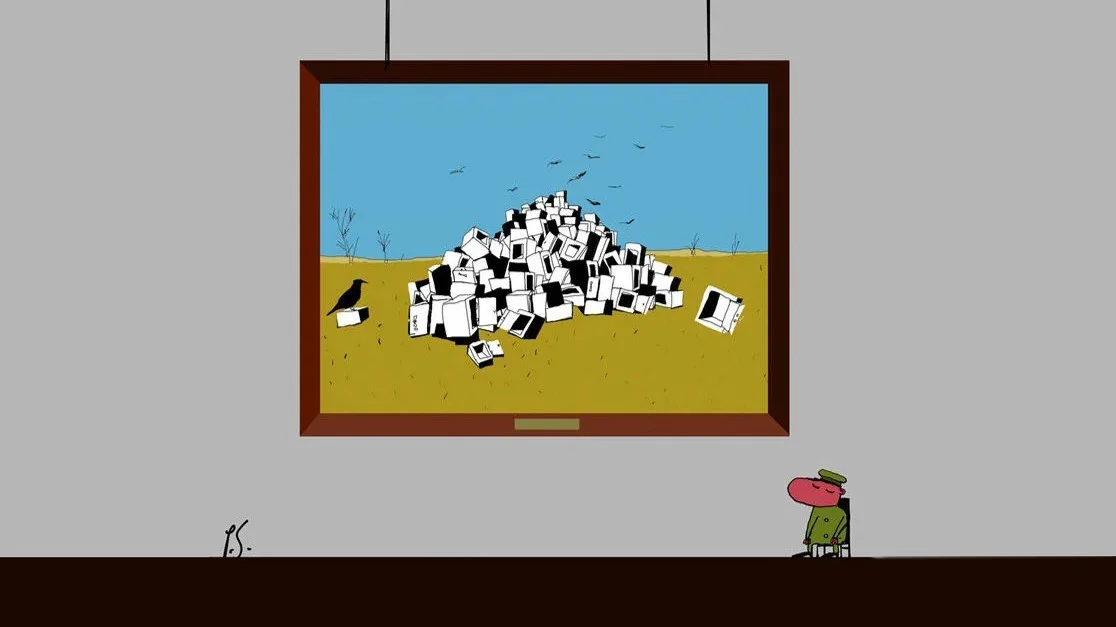
Peter Sarukhanov / "New Gazeta"
Despite the sanctions, the Russian economy grew according to the results of 2023. But civilian consumers will not feel this: the budget and the whole economy were reoriented to supply the front. Military operations turned out to be expensive: the state spends reserves on them and increases taxes for them. The military -industrial complex and residents of depressed regions became the beneficiaries, and the losers became residents of large cities.
In 2023, the Russian GDP increased by 3.6%. Unpretentent sanctions did not cause a strong economic recession in 2022 (GDP fell by only 1.2%). A sharp cliff of economic relations with developed countries that supported Ukraine did not lead to a financial or budget crisis. Industrial production (by 3.5%) and investments (by 10.5%) increase. But only the production of industrial products, the necessary armies are growing: overalls, electronic and optical products, “other vehicles and equipment”, “finished metal products, except for machines”, etc. In total, according to BOFIT, which work on the "military" industry, 35% increased compared to the previous level.
But in the welfare of the population this does not affect. So it was already in the Soviet economy: the number of coal mined in the country, the smelting of steel and aluminum, more combat missiles rose on duty annually. At the same time, the queues for consumer goods became longer, and the quality of the goods became worse.
In Russia-2024 there are no queues and is not expected. The modern country is ready for a protracted confrontation with the West is much better than late -Soviet. With a similar foreign policy, she built a market economy.
This allows you to use competition and cash incentives to replenish the army and combat arsenals. So much more effective than only in order and according to planned ordering, as in the USSR. Private entrepreneurs help to purchase and import into the country the components needed for the production of weapons. Money motivates the inhabitants of poor regions to replenish the army.
As a result of budget subsidies, the economy is divided into important (what is needed for the army) and secondary (for private consumption) industry: the former receive state offices, preferential loans and budget infusion. The latter face worsening credit conditions (the Central Bank increases the rate to reduce inflation and stop the fall of the ruble), growing taxes and a shortage of labor. For the needs of the army, the state quickly reoriented budget expenses.
The expenses for the military, security forces and investments in the attached territories reached almost 40% of the budget. Prior to the start of the special operation, comparable expenses amounted to about 15% of the government. Exists on the army compared to the previous level increased almost three times.
The redistribution of a quarter of the budget for launched targets, completely unthinkable in developed countries, did not cause bankruptcy of the budget sphere. While many NATO countries still cannot increase the expenses of the army to 2% of GDP, Russia calmly brought them 5.6% of GDP, and along with expenses for military purposes, which are recorded for other budget sections, about 8–10% of GDP. The budget withstood this transformation - its deficit on average in 2022–2023 amounted to 2% of GDP.
The large maneuver was a success due to the accumulations made in advance: all the previous Putin 2000–2021 years spent the budget extremely carefully. But now budget balance is set aside, and accumulations are spent. In 2022–2023 and January 2024, the liquid part of the National Welfare Fund, which contrary to its name is actually spent on military operations, decreased from 8.9 to 4.9 trillion rubles. Export income in 2023 was 28% lower than a year earlier, so budget reserves will continue to be spent.
Until now, the state had enough funds for military operations and a moderate increase in pensions and salaries. But now you have to raise taxes.
Large companies are already familiar with this: in 2022–2023, they paid an increased income tax and an increased export fee, and Gazprom - increased production tax. The officials explained the need for increased tax by the fact that the business has formed a profit due to the fall in the ruble (30% to the dollar for 2023). But they did not promise to compensate companies from the growth of the ruble. Now the issue of increasing income tax after the election has been almost resolved.
Monetary pumping, required for the growth of arms production, pushes economic indicators up. The mechanism is clear: the enterprise of the military-industrial complex, from 2022, littered with work, were forced to attract new working hands and raise salaries. Since at the same time a lot of workers were taken by the army, unemployment fell to a record low level, and civilian enterprises felt personnel hunger and also raised salaries. In 2023, their growth was approximately overtaking inflation, compensating for part of the losses of 2022, when prices rose faster.
Increased salaries to employees of defense plants, payments to contractors and families of the dead - all this money is returned to the economy. As a result, consumer demand is restored and investments are growing. Having survived the shock from partial mobilization, the Russians gradually increased expenses. The expectations of the new mobilization decreased. If at the beginning of 2023, as in 2022, about 50 thousand new cars per month were sold, then by the end of the year it was more than twice as much (and in general over the year, car sales grew by 70%). True, cars are now almost entirely Chinese.
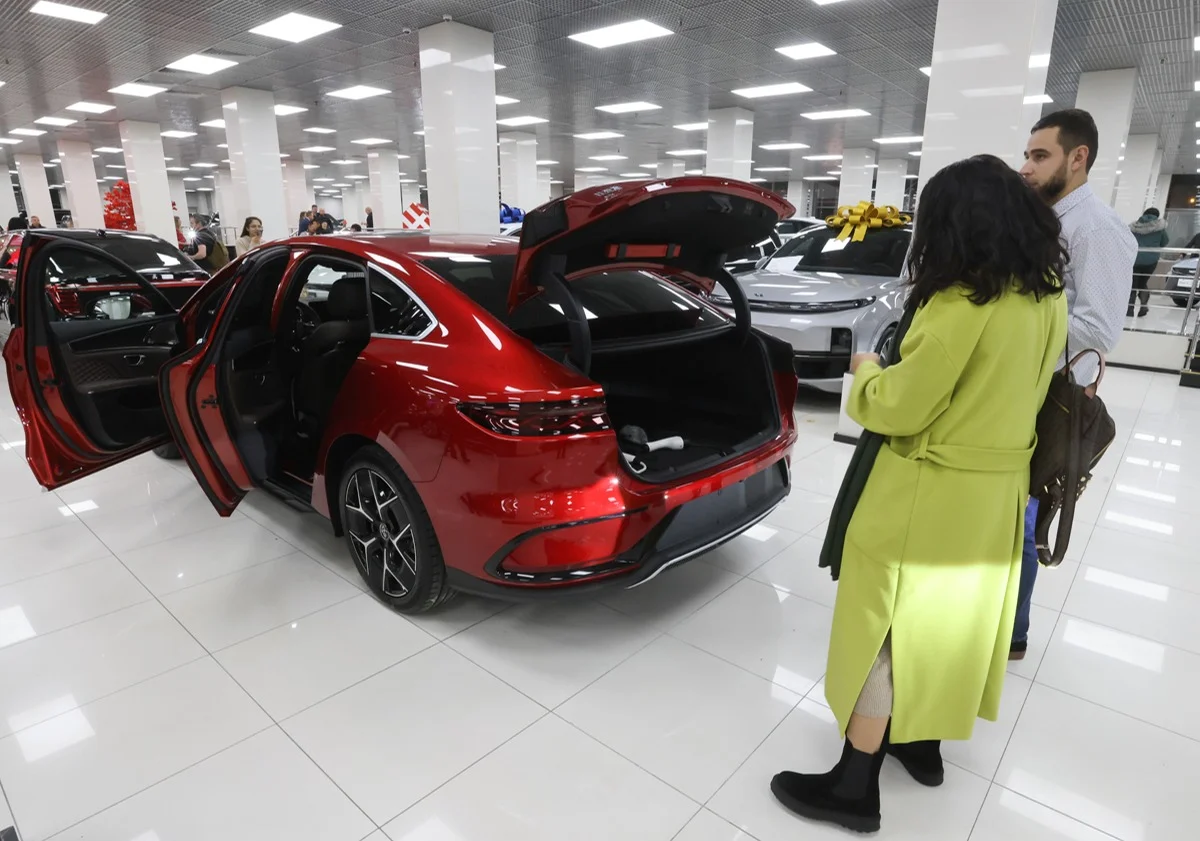
In the wave of consumer rise, the growth of loans, especially mortgages, accelerated. The debt of the population on consumer loans over the year increased by about 17%, and on mortgages - by 30%. This also spurred the growth of construction. At the end of the year, the state tightened the terms of a preferential mortgage in order to reduce its expenses and stop the dangerous increase in debt. Therefore, in January-February 2024, the growth of mortgage loans has slowed down , and from July the issuance of a preferential mortgage will be discontinued.
At the micro level, everything is not felt as rosy as in statistics. Largely because Rosstat as usual underestimates inflation. For example, the personal consumer prices for everyday goods calculated by Romir at the end of 2023 was 24% higher than a year earlier. This is three times higher than official inflation and approximately corresponds to the sensations of consumers.
Nevertheless, in comparison with 2022, consumer sentiments improved markedly, especially east of the Urals and in terms ofassessments of their future prospects. Consumer optimism is also visible in the structure of expenses: people began to spend more on food outside the house, entertainment, gifts.
For two years, Russia broke many threads that associated it with the economies of developed countries, and greatly increased trade and financial dependence on China. The share of calculations in the yuan for Russian export and import exceeded 35%. The proportion of Asian countries in export exceeded 70%, and the EU, supplies to which were three times, fell to 20%. Back in 2022, Russian exports to Europe and Asia were approximately the same in value. The same situation with imports: deliveries from Asia grew to 2/3 of imports, and from Europe - fell to 29%. Until 2014, the EU accounted for more than 40% of Russian imports.
But growing economic ties with Asia countries are less intense than torn ties with Europe. Therefore, the attitude of Russian exports to GDP has fallen to 21% - Russia has not been such a low integration of Russia since 1996. Direct foreign investments were practically reset.
From all this it follows that Russia has resources to conduct a special operation, but their value is reduced.
Meanwhile, money is needed. First of all, in order to recruit new soldiers. This is greatly facilitated by the redistribution of income in favor of the center. Many regions have become unpromising areas of stagnant poverty, where it is impossible to find a good job and where the habitat can not be called favorable.
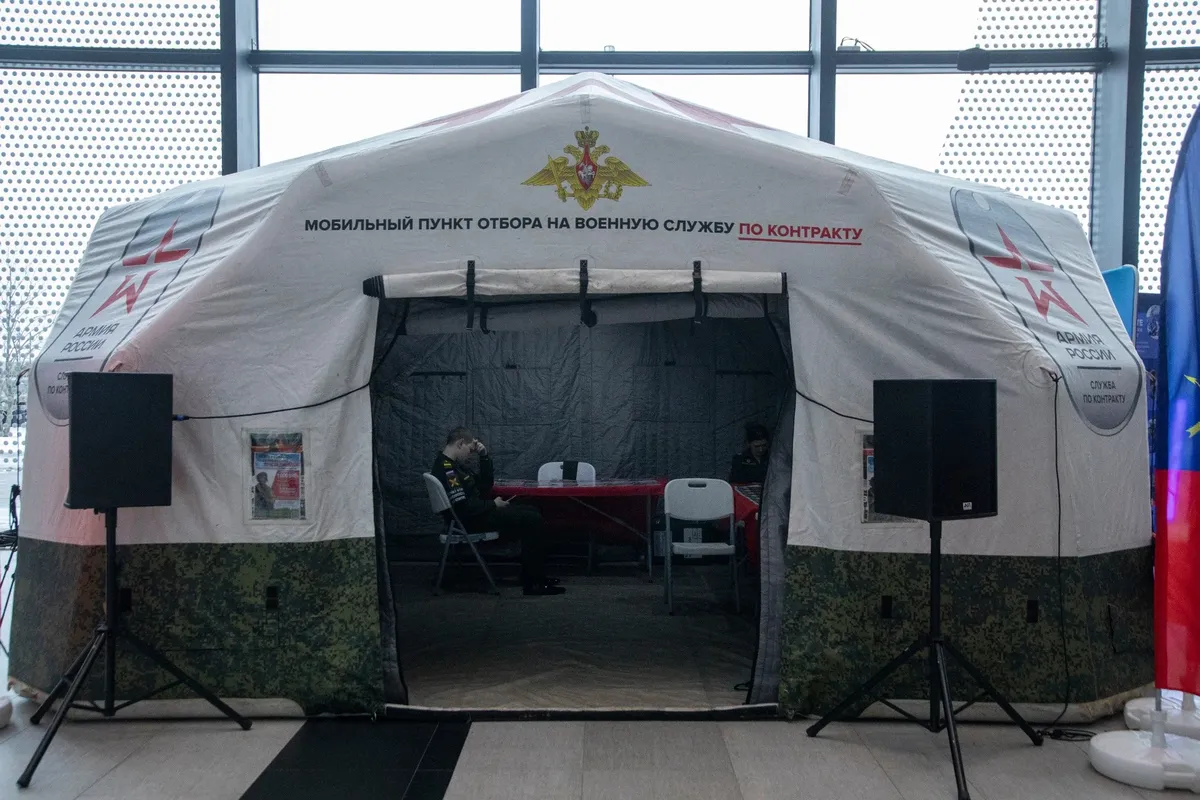
For voluntary participation in a special operation in 2022, a bonus was paid in 700 thousand rubles. A median Russian can earn such money in a year and a half: the median salary is 40.4 thousand rubles. It is not surprising that the most contractors were collected by the regions, where the median salaries are approximately 30 thousand rubles: there, for a lump -sum payment by the departers to the front, would have to work for two years. These payments are well monitored by the dynamics of deposits of the population in banks. After the start of hostilities, the rate of increase in deposits on the same period last year decreased from 8-12% to 4-5%. But from the end of 2022, a rapid increase in deposits has begun, and now it has reached 20%. At the same time, in Tuva, for example, the growth of money on bank deposits was generally unprecedented: 53%.
Among other record holders, as BOFIT calculated: the Republic of Altai, Adygea, Buryatia, Chechnya, Trans-Baikal Territory, North Ossetia, Mari El, Dagestan, Chuvashia, Kabardino-Balkarian and Karachay-Cherkess Republics, Kalmykia. This is a list of poor remote territories with the non -Slavic population, where people are more willing to recruited into the army.
Unlike other regions, where many people went into the special operation zone, the growth of deposits is not related to increasing salaries - people took precisely the money that they received for participation in hostilities.
Military operations also create a list of beneficiaries (the military-industrial complex, poor regions that have received large army payments, medium-sized businesses that no longer have to compete with foreign companies), and a list of losers (large cities that suffered from the transfer of the Russian economy into a state of “besieged fortress”, and again poor regions-due to loss of labor resources). In part, the list of beneficiaries and losers coincides - therefore, it will be very difficult to finish military operations and adapt to a “normal life”.
The whole report on the website of "Novaya Gazeta"
Boris Grozovsky. Russia has money to continue military operations, but it becomes less
Valery Shiryaev. Armed forces and special services: boundless financing, hardware intrigues and new challenges
Vasily Zharkov. Domestic policy in Russia : development models, challenges, goals and methods of achieving them
Arkady Dubnov. Freezing on foreign policy fronts , collective West and global south
Elena Panfilova. Why did we release this report
Listen the report entirely in the PDF version- here .
Support the New Gazeta ! Without our accomplices, this report would not be.