
Translated material
Diplomacy without obligation. The West communicates more and more actively with Armenia, but is not ready to guarantee its safety
Diplomacy without obligation. The West communicates more and more actively with Armenia, but is not ready to guarantee its safety
Alexander Atasuntsev 16 march 2024 This week, the Armenian leadership for the first time directly announced the possible withdrawal of the country from the organization of the collective security agreement (CSTO). The crisis in relations with Moscow forces Yerevan to look for other guarantors of security in case of new aggression of Baku . Strengthening cooperation with Western partners, including the military, gives observers a reason to talk about the foreign policy of the country. However, the likelihood that the EU or the United States in a critical situation will intercede with Armenia is extremely small.
Content
Reasons for discontent
Allies in the West - conversations without guarantees
Zero
Reasons for discontent
On March 12, Prime Minister Nikol Pashinyan said that Armenia will leave the CSTO if the organization does not fulfill its obligations, and thereby raised the conflict with Moscow to a new level. Before that, Yerevan never spoke directly about the possibility of leaving the military bloc, it was only about freezing membership in it. Both Pashinyan himself and other members of the Armenian government at the end of last year answered questions about the possible exit from the CSTO ambiguously , leaving themselves space for the maneuver. Now Armenia put forward an ultimatum.
The threat to leave the alliance headed by Russia is not the only resonant statement of the Armenian prime minister. He questioned the country's participation in the EAEU. The question of whether to remain Armenia in the Eurasian Union or strive for a European one should be decided in a referendum, Pashinyan said. “In this situation, we consider various scenarios. And when we have a ready -made offer for society, we will present it, ”he added.
Most of all, Yerevan is dissatisfied with how Moscow has been fulfilling its allied obligations in the last four years. Moreover, the point is not in the Nagorno -Karabakh and the failure of the peacekeeping mission. The main stimulus is the inaction of Russia and the CSTO in response to Azerbaijani aggression in the universally recognized territory of Armenia.
The main stimulus for Yerevan is the inaction of Russia and the CSTO after Azerbaijani aggression in the universally recognized territory of Armenia
In 2021 and 2022, battles flashed several times on the Armenian-Azerbaijani border. Yerevan claims that Azerbaijan entered the territory of the country and occupied about 140 square kilometers of border regions. Armenia repeatedly turned to the CSTO with a demand to take measures: according to the 4th article of the charter of the organization, the attack on any of its members is equated with an attack on everyone. However, neither Blok nor Moscow agreed to recognize the aggression of Azerbaijan. “The question remains - where, according to our colleagues from the CSTO, is the sovereign territory of Armenia and where its zone of responsibility in Armenia,” Nikol Pashinyan formulated the main claim.
Allies in the West - conversations without guarantees
Russia's reluctance to support an ally forces Armenia to look for other guarantors of security. So, Over the past few months, Yerevan has been negotiating military cooperation with Greece, France and India. Last week, a visit to the Armenian capital was visited by the Minister of Defense of Greece Nikos Dandias, who also mentioned the possibility of creating an alliance:
“We created a successful tripartite defense cooperation between Armenia, Greece and Cyprus. But there may be other tripartite or four -sided relations - with France and India. ”
The fact that the parties discussed “the possibility of cooperation in multilateral format with other friendly countries” was confirmed by the head of the Ministry of Defense of Armenia Suren Papikyan.
The nature of these statements shows how far the parties are far from the creation of a full -fledged alliance. And certainly he will not be able to replace the guarantees that Moscow provides Yerevan - even with all the accumulated problems.
We are more significant in the negotiations on the supply of weapons. In the past three years, France and India began to play a big role from the point of view of military imports in Armenia. Last fall, Paris agreed to put Yerevan 50 Bastion armored vehicles , as well as air defense systems. From India, the country has already received dozens of RINAKA and howitzers and awaits self -propelled artillery installations. However, the volumes of these supplies are still too small to help the Armenian army in repelling the possible Azerbaijani aggression.
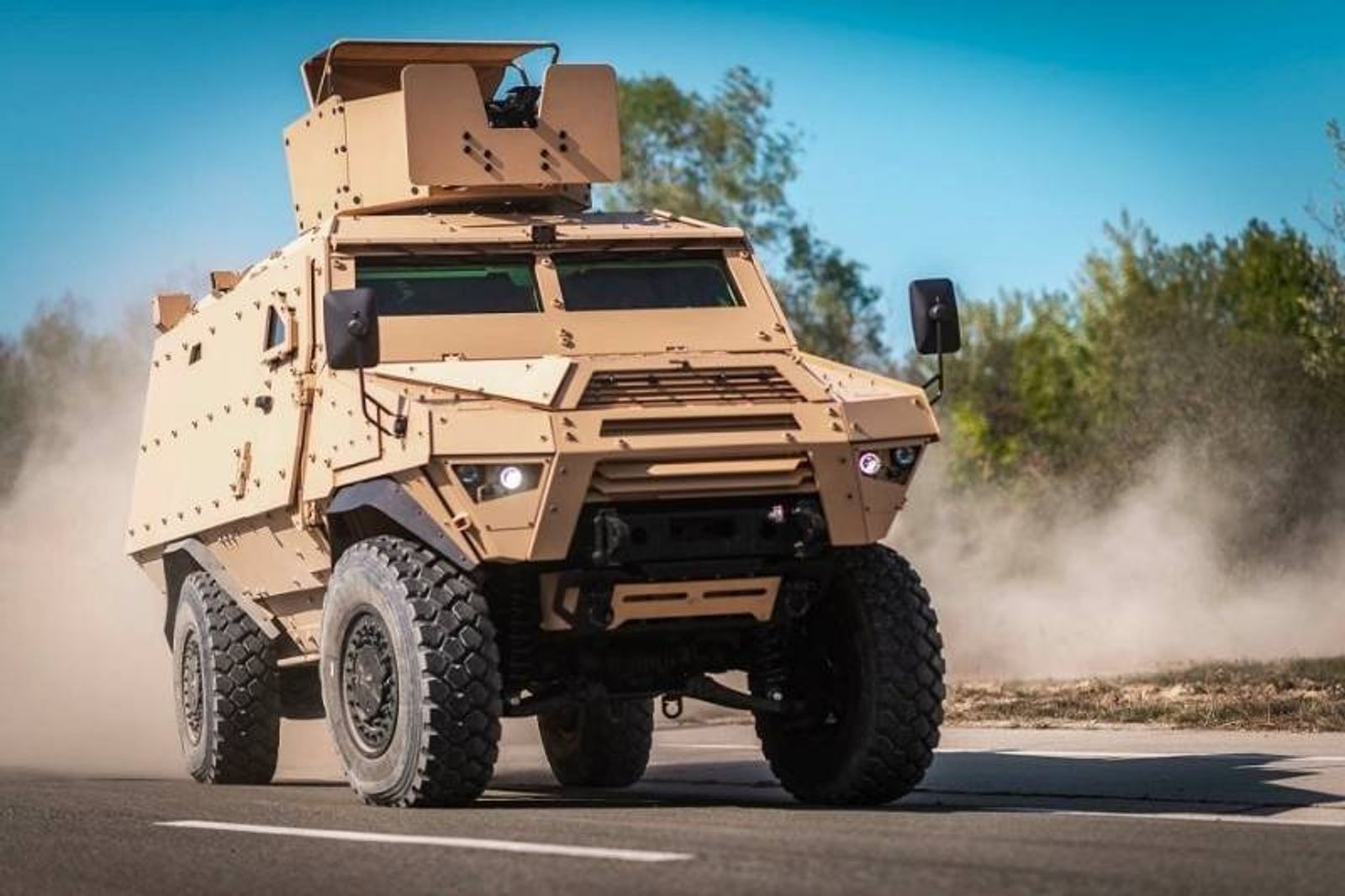
Bastion armored car
It is difficult to imagine that Yerevan can get any guarantees from Western countries, said in a conversation with The Insider the director of the program of the international crisis group in Europe and Central Asia Alissa de Carbonell:
“There is a large gap between the rhetoric of Yerevan and its ability to limit the connections with Russia, which, at least in the field of trade, were only strengthened after Russia's full -scale invasion of Ukraine.”
The expansion of security guarantees for Armenia is now not included in the plans of the European Union, the expert says: it is enough to look at the current crisis with European assistance to Ukraine to understand the EU limits. The strengthening of defense ties between Armenia and France is important and “annoying Baku, which has a difficult history of relations with Paris,” but it cannot be called a replacement for Russian guarantees.
The expansion of security guarantees for Armenia is not included in the European Union plans
This year, Azerbaijan is preparing to adopt the UN Climate change conference (COP29), and this can become a stabilizing factor, adds Alissa de Carbonell. But at the same time, she believes, the chances of military escalation are still preserved. Baku continues to put forward territorial claims to Yerevan and requires the transfer of four villages in the border areas. Earlier, US intelligence services in the annual report with an assessment of threats for 2024 warned that Azerbaijan could attack Armenia, but "confrontation will probably be limited in duration and intensity."
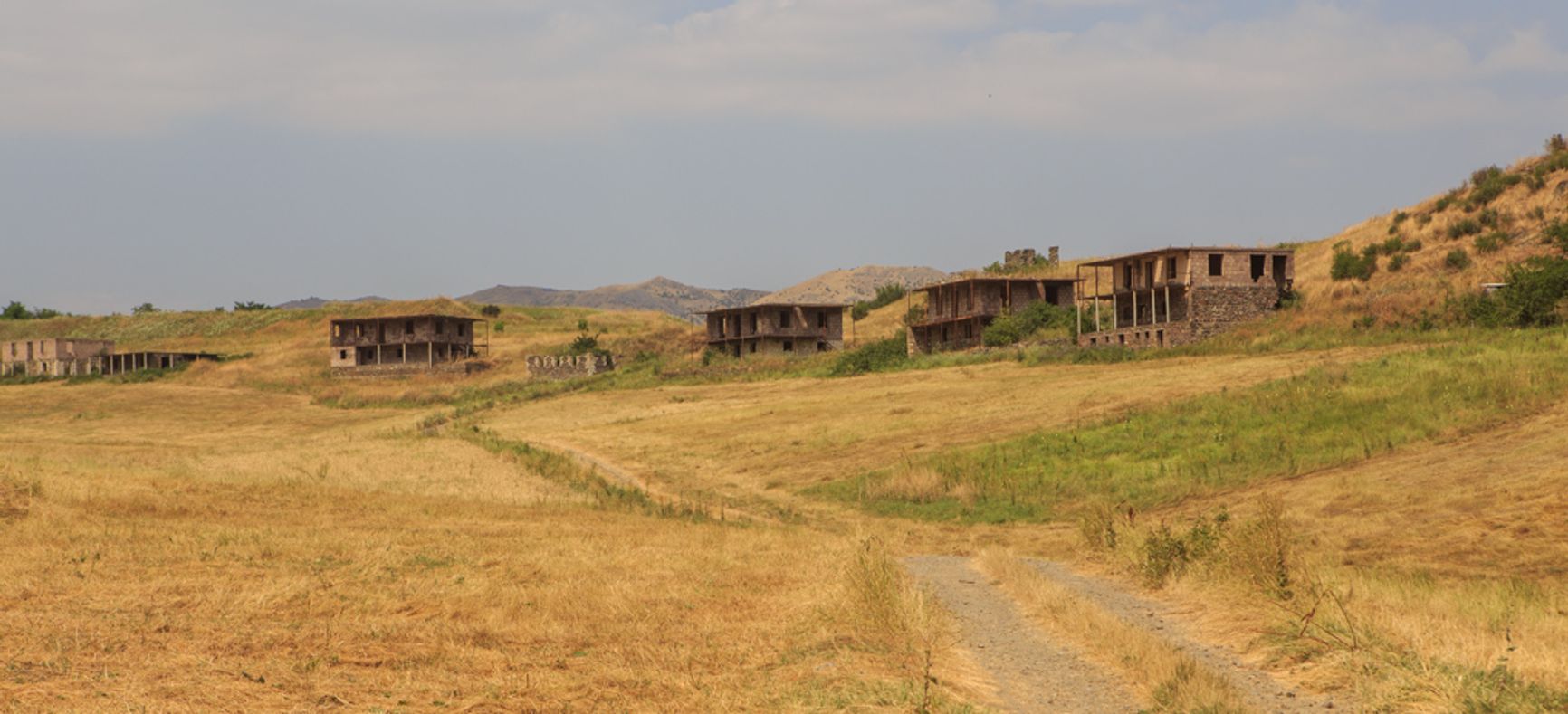
The abandoned village of Ashagi Askipara (Armenian name is Waxpar), the transfer of which Azerbaijan achieves among the other three
Disappointment in Russia is understandable, the de Carbonellus summarizes, it is combined with the feeling that Moscow was a mistake, but many are concerned both in Yerevan and in the Western capitals that the Armenian government “goes too far”, turning away from Russia.
Zero
The difficulty of the situation in which Armenia was also, lies in the fact that when the political vector is changed, it risks only to worsen its position. Now the Russian military presence in the country does not hold Baku from the “small and medium escalation”, said Sergei Melkonyan, a researcher at the Institute of Applied Political Research (APRI). But it still does not allow Azerbaijan to start a full-scale invasion. “If there is an offensive, who is ready to stop Baku within two days? After all, we do not have the strategic depth that Ukraine had, ”the expert says, bearing in mind that Armenia is a small country, which, with unsuccessful defense, can be quickly captured. “The probability of a“ march on Yerevan ”is less, while there are Russian guarantees and while Russia is not hostile to Armenia.”
Until now, the reaction of Moscow to Yerevan's statements has been quite restrained. “We need contacts both in the framework of the CSTO and at a bilateral level with our Armenian partners. We will clarify and talk in the line of the statements that the Prime Minister [Armenia] made, ”Dmitry Peskov, spokesman for the Kremlin, commented on Pashinyan's speech. Nevertheless, last week in the Armenian media there were unconfirmed reports about possible problems with the export of the Armenian agricultural products to Russia.
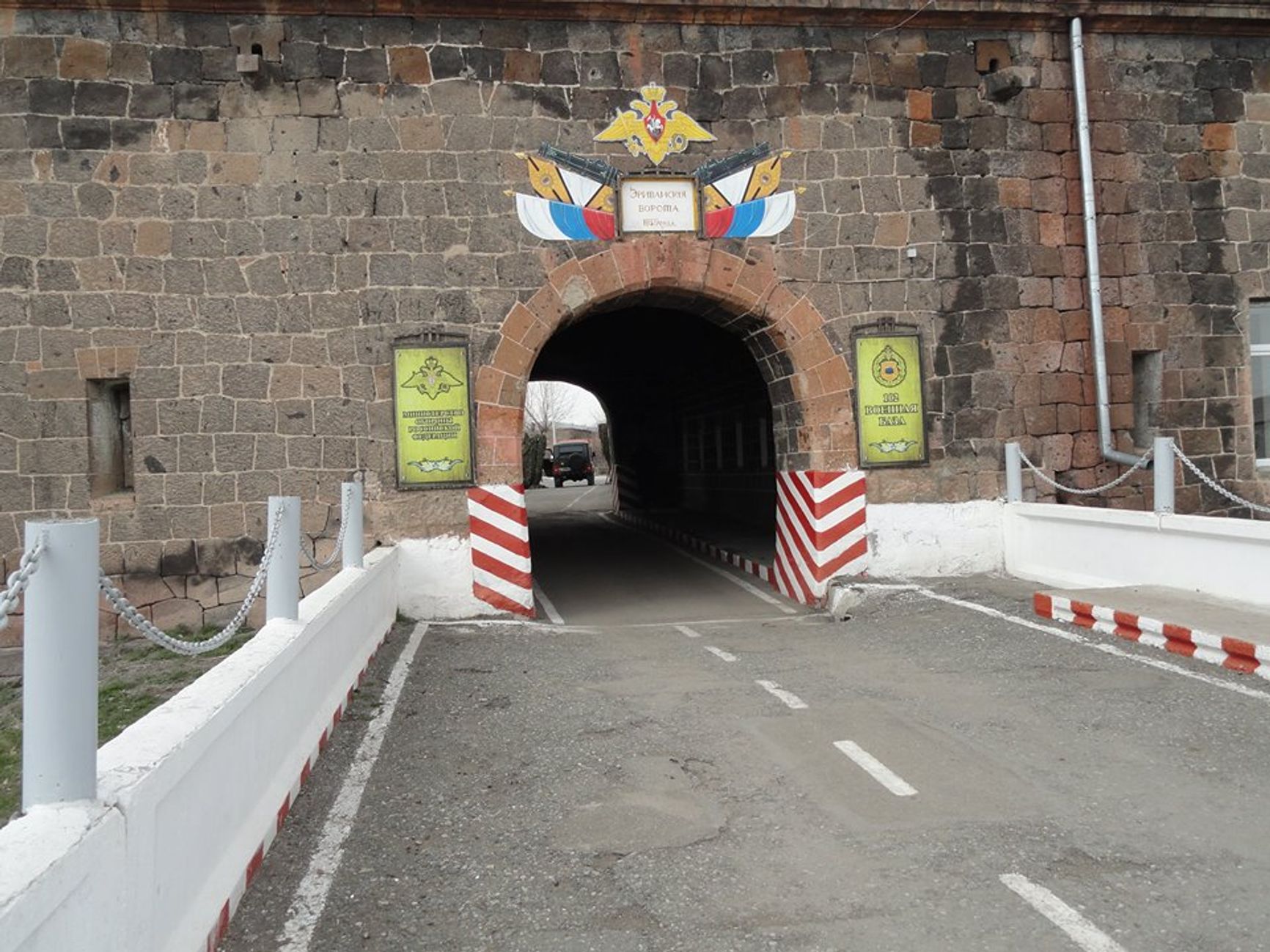
Russian military base in Gyumri
Sergei Melkonyan is convinced that in the event of an attack by Azerbaijan, Yerevan cannot count on Western military assistance. All because neither Brussels nor Washington consider Azerbaijan as their opponent. And in the EU they emphasize this in every possible way:
“The head of the European Commission Ursula von der Lyain calls Azerbaijan“ a reliable energy partner ”. EU President Charles Michelle, after completely fictitious presidential elections in 2024, congratulates Ilham Aliyev on the victory, despite the fact that journalists and public figures are planted in the country. ”
Both the EU and the United States are now more focused on the conflict between Armenia and Azerbaijan to resolve the negotiating table, says Alissa de Carbonell. “Now that negotiations are underway directly, without the mediation of the EU or the USA, the Western strategy is to threaten to limit relations with Azerbaijan and expand them with Armenia in the event of a new escalation,” she explains the Western policy in relation to the region. While negotiations are moving towards a peace agreement, neither Brussels nor Washington will take someone's side.
Armenia also has a third path - Iran, who emphasizes that he will not tolerate geopolitical changes in the region and violation of the boundaries of Armenia. The rapprochement of countries was facilitated by a change in the balance of forces after the defeat of Armenia in the Second Karabakh war.
Iran emphasizes that he will not tolerate geopolitical changes in the region
Tiegran’s threats to cut the threat of Baku to cut through the southern regions of Armenia the Zangezur corridor, which, as planned, should connect the bulk of Azerbaijan with its exclamus Nakhichevanya. With this scenario, Iran would be cut off from Armenia, having lost access to the Black Sea transit through the Armenian territory.
However, while Yerevan avoids discussing security issues with Tehran, focusing primarily on economic interaction, said Sergey Molkonyan. And in this sense, the deepening of cooperation with the EU and NATO bears additional risks. The same red line as violation of the borders of Armenia, Iran considers the placement of non -regional forces at its borders, especially the Western ones.