
Translated material
The harbinger of the fracture
After the elections to the European Parliament, the ultra -right factions will be seriously intensified. So much so that the centrists can include them in the coalition. How did it become possible?
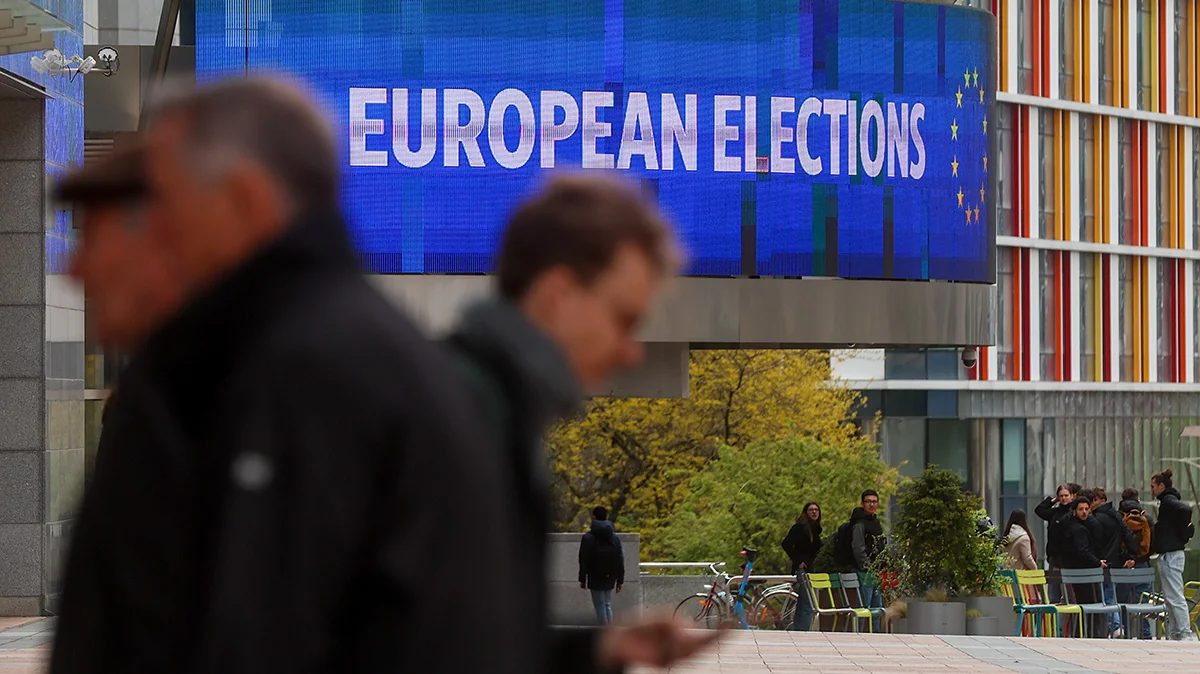
Banner of upcoming elections to the European Parliament in Brussels, Belgium. Elections to the European Parliament will be held from June 6 to 9, 2024. Photo: Olivier Hoslet / EPA-EFE
This week, the European Parliament adopted a resolution in which the EU leadership urged and other countries not to recognize the legitimacy of the presidential election in Russia. And although this resolution does not oblige either the European Commission or the national governments of Europe, a significant part of the deputies from the ultra -right parties preferred not to vote or vote against.
In the current composition of the European Parliament, the voices of the ultra -right ones do not affect anything: there are simply few of them. But the situation may change after the upcoming Europe in June. The fractions of EuroSceptics and nationalists are preparing to get up to a quarter of places on them, which will make them the third most important force in the European Parliament. This strengthening will lead not only to the fact that the position of ultra -right forces will be more audible, but also to the fact that the mainstream, pro -European parties can begin to include the right in the coalition and promote them to important places in the committees. In what chances of the existence of such a right-center coalition do after the elections in June and how this will affect the EU position in the war in Ukraine-political scientist Denis Lven was specially understood for the New Evrope.
Already almost a month, June 6–9, elections to the European Parliament will take place. This time, from 27 EU countries, 720 deputies will be elected, who, after summing up the voting results, will join one of the pan -European parliamentary groups.
Before the previous elections in 2019, more than half of the places in the European Parliament were occupied by the two largest pro-European factions: the European People’s Party (EPP, Right-Cocentat) and European socialists and democrats (S&D, Social Democrats). But according to the results of past elections, EPP and S&D received less than half of the mandates, which made them agree with other groups and join situational coalitions.
These were mainly smaller, but pro -European political forces: liberals from Renew Europe, as well as green and extremely left. With two ultra -right fractions - the alliance of European conservatives and reformists (ECR) and the group “Identity and Democracy” (ID) - even situationally formed coalitions of the two largest factions.
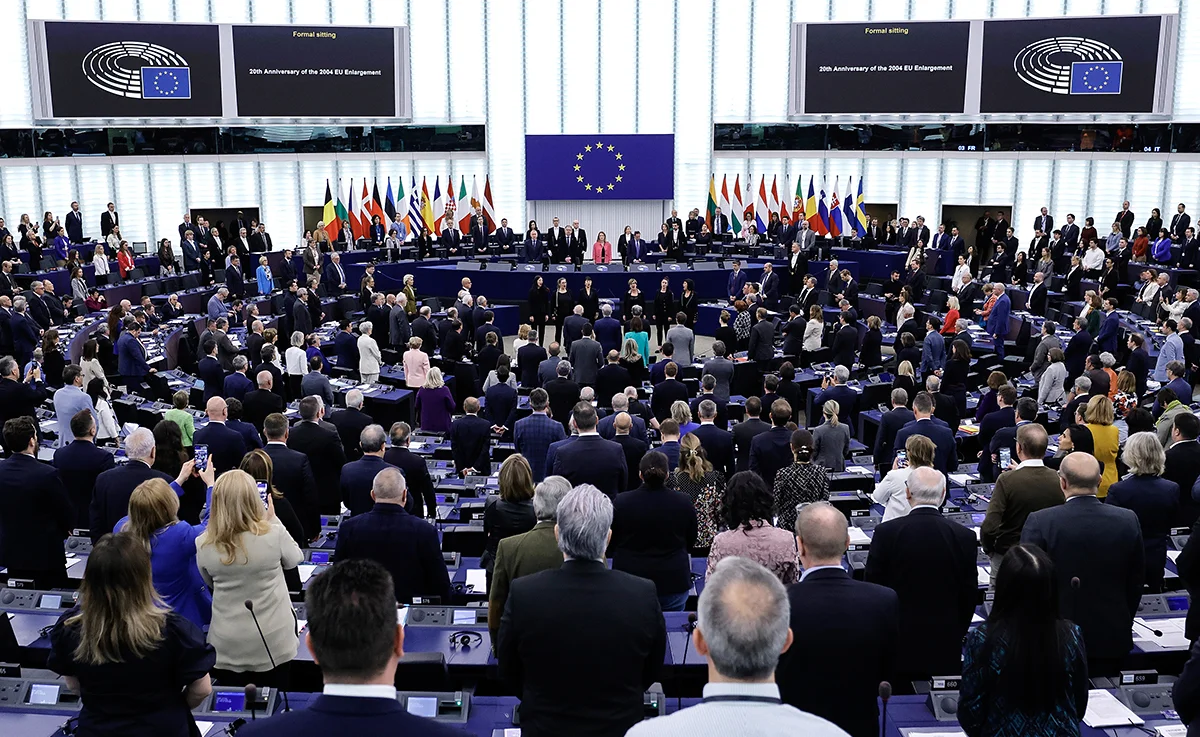
However, according to the latest forecasts , the ultra -right ECR and IDs, which previously took about 17% of seats in the European Parliament, can increase their representation in the upcoming elections to up to 25%.
And this is already seriously changing the alignment.
Having become such a powerful force, the right ones will be able to much more affect political processes in the European Parliament, and the legal entities will more often enter into tactical unions and coalitions with them.
Read more about ultra -right groups in the European Parliament
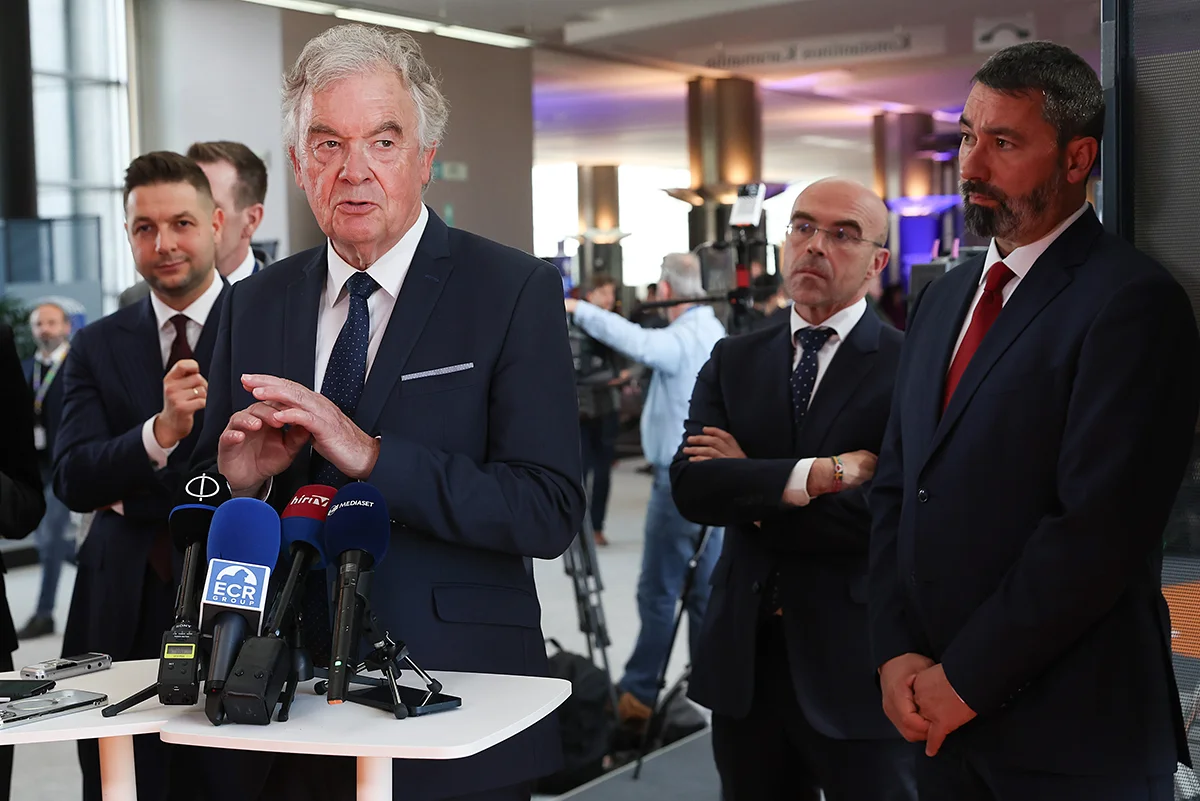
The ultra -right in the European Parliament is represented by two factions - the alliance of European conservatives and reformists and "identity and democracy."
The alliance of European conservatives and reformists (ECR) is the most moderate of two groups. He opens against the expansion of the influence of Euroburacia and European institutions, for strengthening control over migration and a moderate policy in the field of environmental protection.
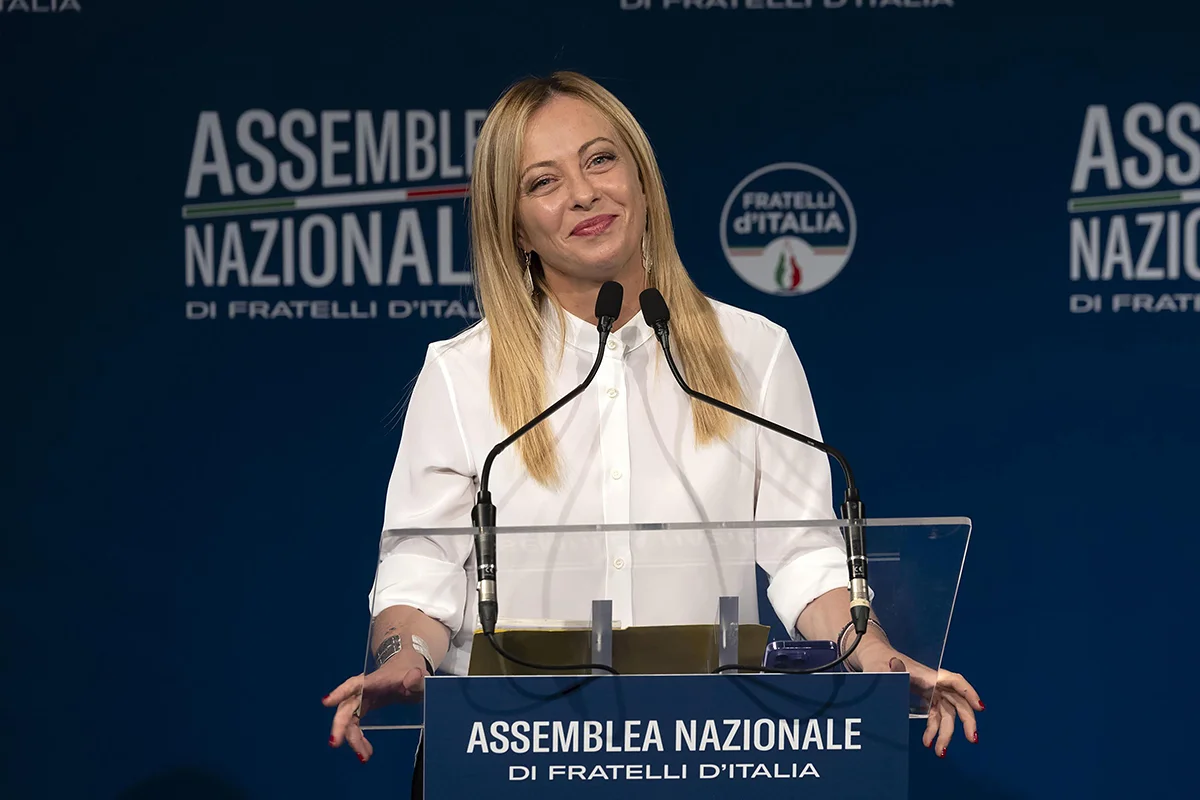
ECR is headed by the current Prime Minister of Italy George Meloni, although her party of the “brothers of Italy” has only 7 mandates. The main supplier of the Euro-deputies for the alliance in the current composition of the European Parliament is the Polish law-conservative party “Law and Justice” (PIS)-25 people. The group also includes the Spanish VOX (4 mandates), the Belgian “New Flemish Alliance” (3 mandates), the Finnish party “True Finns” (2 mandates) and “Swedish democrats” (2 mandates).
In total, the group is now forming 68 euros deputies.
“Identity and Democracy” (ID) is a group that is much more radical in their views, and the parties included in it can be considered not just Euro -digitical, but nationalist.
The most important priority for the parties of this group is the preservation of national identities in European states. Mass migration into European countries, as well as the potential entry into the EU "non -European" countries - for example, Turkey, is considered as the main threats.
In addition, the group advocates strengthening national sovereignty of EU member countries. That is, ID participants want not only to stop the increase in the powers of European institutions, but also to turn this process back - towards the expansion of the power of national governments and parliaments.
Finally, ID require the restoration of the control of national governments over the state borders of the EU member countries-also as an integral part of the country's sovereignty.
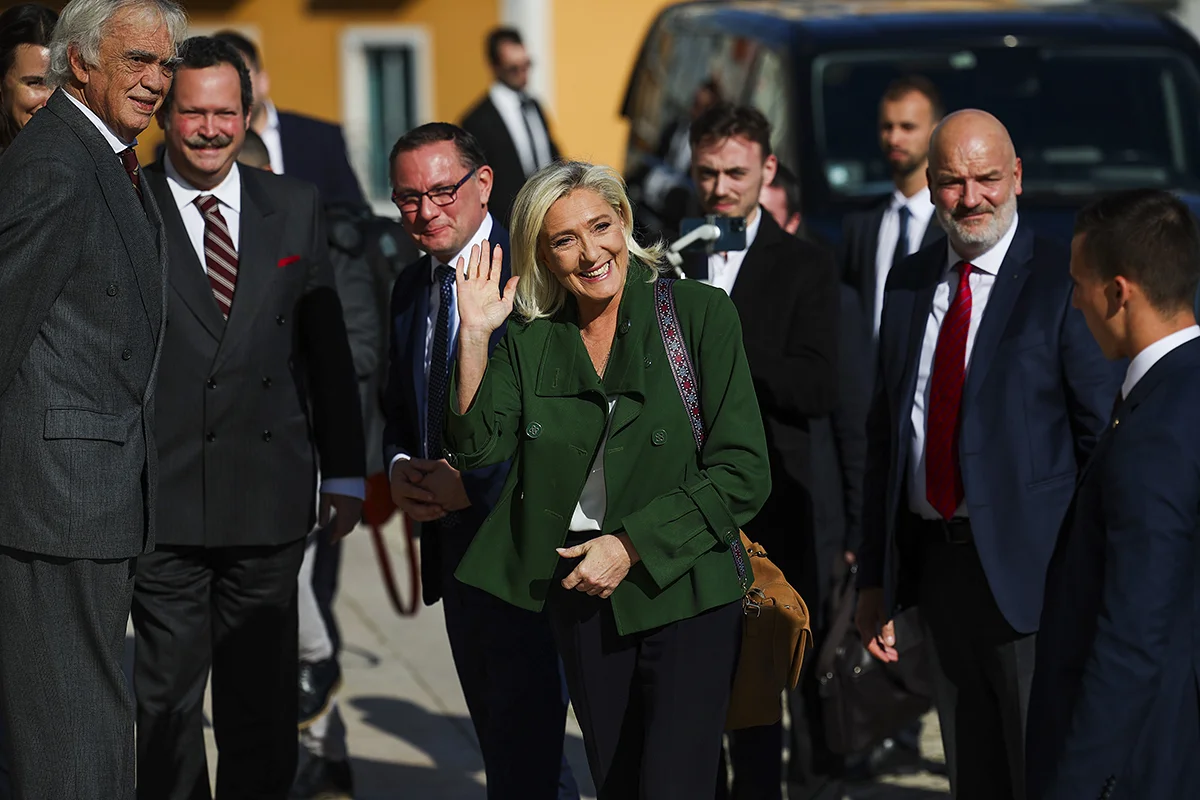
In the European Parliament, the group is led by the Italian politician Marco Dzanni from the extreme right -right Liga party. He has two deputies: Zhordan Bardell - one of the most popular politicians in France and the leader of the Ultra Party of the National Association, which is also led by Marin Le Pen, and Gunnar Bek , a representative of the Alternative for Germany.
Actually, these three parties make up the current Kostyak of ID in the European Parliament: the League has 23 mandates, 18 of the National Association - 18, and the “alternative to Germany” - 9.
In total, the group includes 59 euros deputies.
No more marginals
It is still unknown to how exactly the ultra -right ones can strengthen their presence in the European Parliament. But what will happen, there is no doubt.
So, according to the April assessment of the EURACTIV publication, the ID will be able to get 84 mandates, and ECR - 82, and this will provide them with control over 23% of places in the European Parliament. The forecast of the publication Politico gives a little more chances of ID (87 seats) and a little less ECR (78 seats), but in total these are the same 23%. Finally, in accordance with the most pessimistic January assessment of analysts of the European Council for International Affairs, the ID can get 98 seats, and ECR - 85, which will give control over 25% of seats in the European Parliament.
But in any case, control over 23–25% of the mandates of the Eurodutians turns the ultra -right fractions into a force noticeable in the pan -European arena. If earlier they were the smallest in the European Parliament, now they can take the third and fourth places according to the election results, that is, to become the following after the largest pro -European factions of EPP and S&D.
The reasons for this growth of ultra -right are primarily in success at the level of individual EU countries. As the New Europe already wrote ,
In many respects, the growth in the popularity of right -wing forces is associated with the disappointment of the population in the ruling system parties against the backdrop of continuing problems with the EU migration, and the economic difficulties caused by the Russian invasion of Ukraine.
In the case of the ECR, the representative office of the "brothers Italy" Meloni will clearly expand: from 10 mandates to 25 - according to the forecast of EURACTIV, or up to 27 - according to ECFR. In addition, it is expected that deputies from the Fates party Prime Minister of Hungary Viktor Orban, who left the last convocation from the pro-European EPP faction, may join the ECR in the new convocation of the European Parliament.
Now Orban is increasingly participating in ECR events, and is also in good relations with George Meloni and representatives of the Law and Justice party, in particular, with the former Prime Minister of Poland Mateusz Moravetsky . And although the position of Orban in the war in Ukraine and its traditional pro -Russian mood can become an obstacle, probably the desire of ECR will overcome.
Moreover, after in 2023, “Law and Justice” lost the election of the Center Coalition of Donald Tusk, its popularity in Poland fell somewhat. It is assumed that the number of deputies from the party in the European Parliament will decrease and be, according to various estimates, from 13 to 20 seats. And with Viktor Orban, Meloni already has an experience of subtle diplomacy.
The expansion of ID, in turn, is due to the strengthening of the ultra -right in countries that are the main suppliers of deputies in the European Parliament simply due to the magnitude of their population: France and Germany.
So, the most popular party in France “National Association” Marin Le Pen relies on the support of almost a third of the country's citizens. In the current convocation of the European Parliament, it is represented by 18 deputies, after the June elections, an increase to 26 is supposed to increase in a similar way among the “alternative for Germany” - the second most popular party in the country: it can increase the representative office in the European Parliament from 9 deputies to 17.
Finally, the Netherlands will make a noticeable contribution to the ID - now Girta Wilders, who recently won the national elections, has no Eurodevputs, but maybe 9.
The intraspecific struggle is aggravated
In the light of such prospects
Among the centrist groups of the European Parliament-Social Democrats (S&D), legal entities (EPP) and liberals (Renew Europe, Re), conflicts that go beyond the legislative branch of power began to appear more and more.
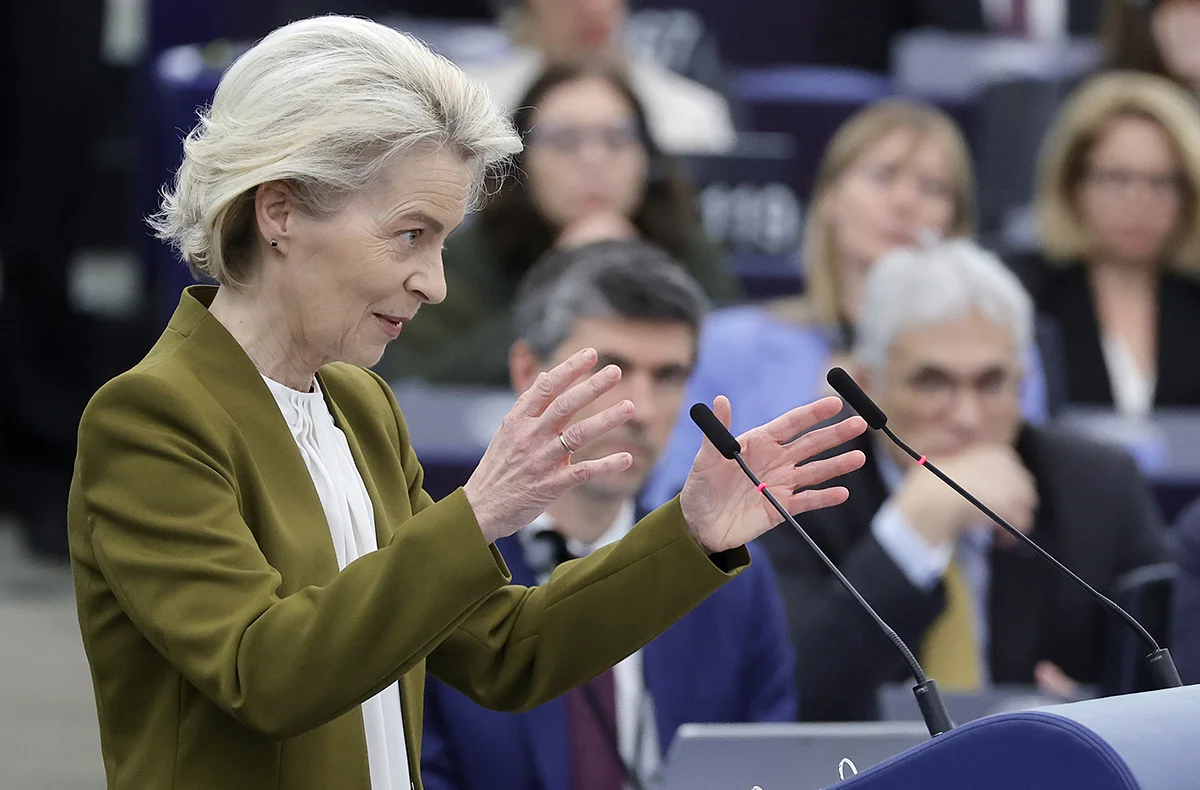
Thus, the European Commissioner Liberal on the domestic market issues Thierry Breton recently achieved the abolition of the important for the right-tonstat and personally the head of the European Commission, Ursula von der Layen, the appointment of the Eurodper from Germany Marcus Piper for one of the EU posts.
Another conflict happened in March between S&D and EPP. After the Qatargate scandal , when it became known that some euro deputies lobbying the interests of Qatar and other countries, it was decided to establish an independent ethics body that was investigated by individual cases of corruption. S&D supported this idea, and EPP opposed . She considered that such a body will violate the rule of law, since it will put legislators under external control. However, on April 22, Social Democrats, supported by liberals, green and left, still took the top in this matter.
Against the background of these disagreements, the threat of right -wing turn in European politics after the upcoming elections becomes even more real. In conditions of strengthening of the ultra -right, the number of conflicts is growing, and system groups are actively looking for partners in future coalitions.
The centrists require victims
There is no government in the EU in the usual sense of the word, therefore, in the European Parliament there is no “ruling coalition”, that is, groups of parties that would form the current cabinet of ministers. Nevertheless, sufficiently stable coalitions are still formed - for example, during voting in certain groups of issues: migration, economics, and expansion of the EU.
After the June election , one of the key researchers of European politics, professor at the European University Institute (EUI), Simon Hicks , shared his forecasts about possible coalitions in the European Parliament after the June elections. In his opinion, there are several most likely coalition options in the new composition of the European Parliament.
The first is the continuation of the existing “large coalition of the Center” as part of EPP, S&D and Re - the same one that ensured the election of von der Layen to the post of head of the European Commission last time. In the current convocation, these fractions control 420 seats, i.e., 60% of the entire European Parliament.
In the new convocation, most likely the majority will also remain behind the centrist fractions, although their share will fall to 56%. The preservation of the coalition in such a composition, even despite the growing contradictions between parties and risks for voting for the candidacy of von der Lyain, will still be most preferable to them.
First of all, because it will allow the centrists to maintain power in the committees of the European Parliament engaged in the legislative process. Now three centrist parties are controlled by 16 out of 20 committees and 4 of 4 subcommittees. And besides,
The centrists in their mass are against the strengthening of the right, and the formation of such a coalition will make it clear that the “right turn” has not happened or at least delayed, but pro -European forces remain in power.
Nevertheless, in order for this coalition to be stable, some topics will have to be sacrificed. First of all, we are talking about those issues that have already split EPP and S&D: migration and ecology.
Ultra -right in the coalition
The second and much more risky coalition option for Europe is a right -centric. It can include the same largest EPP faction and liberals from Re, but one of the ultra -right fractions - ECR will join them. According to the current forecast, this coalition will have a little less than half of the European Parliament (350). However, as we wrote above, the Party of the Hungarian Prime Minister Viktor Orban “Fides” may include the ECR.
According to the latest estimates, Fides can get 10 or 11 seats, which will provide a legal actric coalition either exactly half of the mandates of the European Parliament (360), or the minimum possible majority (361 out of 720 seats). That is why for the places of the Euro -deputies in Hungary , a serious struggle between the forces close to Orban, and the new leader of the opposition in the country, has unfolded right now.
In the case of the formation of a legal actric coalition in the European Parliament with the participation of the Fides party, the strategy of the largest EPP faction will be to bring to itself and make less radical deputies from the ECR group. This plan will rely on the already formed good relations between the ECR head George Melony and the key figures of the European Commission, including von der Lyain. The same will mean that
Part of the posts in the European Parliament committees will be far -righted from ECR and George Meloni herself, which will make their voice more noticeable at the level of all of Europe.
Nevertheless, the right -centric coalition will simultaneously help the mainstream and projuroral forces from the EPP to remote the ECR fraction from another, more radical ultra -right ID faction, marginalizing it. At the same time, according to some bills, part of the ID will organically continue to vote after this coalition - there will simply be no more suitable alternative to them.
Thus, with the EPP legal actric coalition, he will be able to not lose his support, and in addition, to get more loyal than levocentrists, allies.
The best friends of the right are these far -right?
Despite the loud headlines, the occurrence of such a coalition of the legal entities with the inclusion of it, including the ultra -right ones, does not seem incredible at all. First of all, because recently the right and ultra -right parties at the level of countries are more likely to come closer than they are moving away.
In recent years, in several EU states, the formation of governments became possible only thanks to ultra -right:
In Finland, the ultra -rights are included in it, and in Sweden - thanks to the support of the ultra -right, the government was approved by parliament. In Italy, the Ultra-right Melony became the Prime Minister, and moderate right-centers and conservatives became younger partners in the ruling coalition.
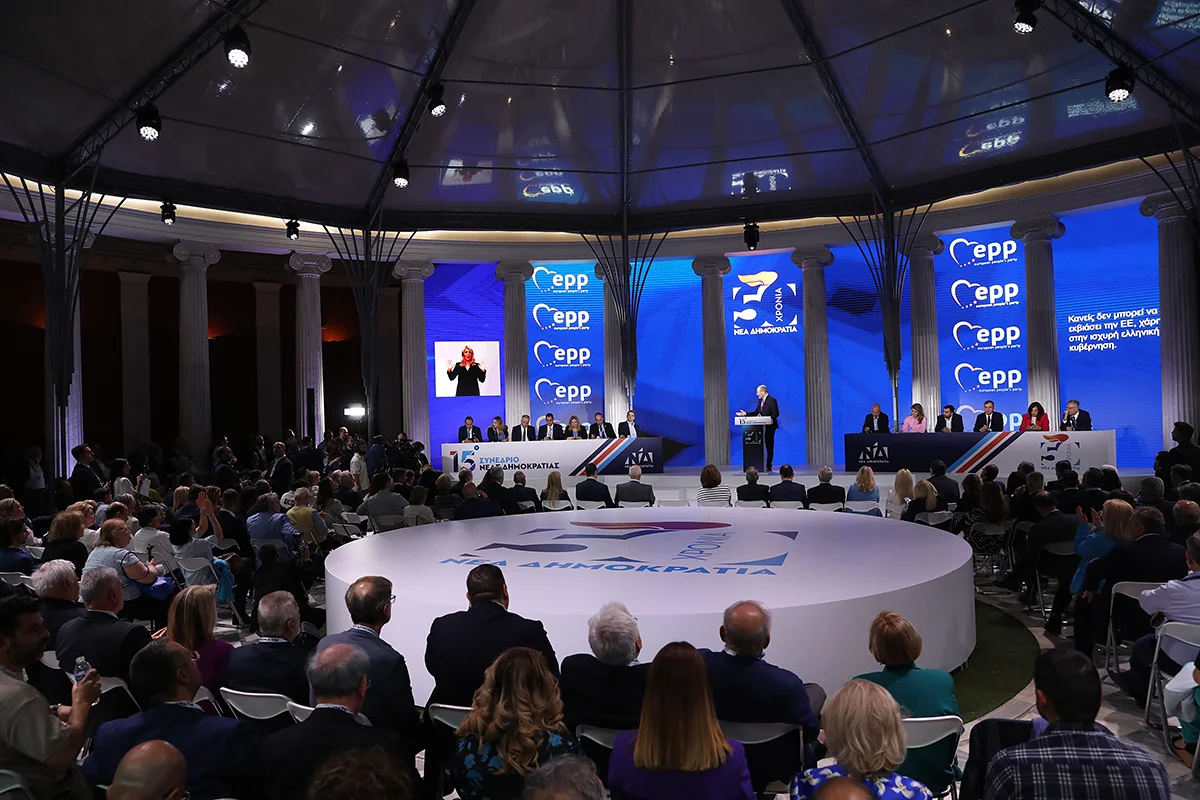
“I hope that we can work with ECR, we can work with liberals. Of course, we should not think that there are only socialists in the EU institutes, ”Italy Tayani, Minister of Foreign Affairs of Italy, told reporters from the right -Processed“ Forward, Italy! ” At the March Congress of EPP, which includes his party.
The rapprochement occurs not only tactical, but also ideological. For example, right -centric parties are increasingly turning to radical rhetoric in the field of migration in order to prevent the output of their voters to ultra -right. Moreover, the legal entities and ultra -right ones have actually voted in a very similar way in all kinds of migration bills.
So, in the spring of 2023, the next round of discussion was a set of bills, known as a migration pact. Социал-демократы, левые и зеленые выступали за более солидарные механизмы распределения беженцев между европейскими странами, а правоцентристы требовали более жестких правил для въезда в ЕС. Тогда EPP внесли на рассмотрение поправку, которая фактически предусматривала выделение больших финансовых ресурсов для «[усиления] охраны границ и инфраструктуры, [закупки] средств наблюдения, включая воздушное наблюдение, и оборудования».
The amendment was adopted by 322 votes. За нее выступили все депутаты от EPP, кроме одного, все депутаты ECR, кроме одного, все депутаты от ID, 32 депутата от Renew и единичные представители других групп. Thus,
уже в нынешнем созыве Европарламенте эта тактика работает: EPP удается заручиться поддержкой всех ультраправых групп, а частичная поддержка либералов обеспечивает победу.
Слабость парламента
В то же время само по себе усиление ультраправых в Европарламенте едва ли может привести к большим практическим последствиям.
На фоне других европейских институтов, таких как Еврокомиссия или Совет ЕС, Европарламент — самый слабый. Как это ни парадоксально, в отличие от национальных законодательных органов власти, у него нет права законодательной инициативы — оно в семействе евроинститутов есть только у Еврокомиссии. Так что, даже собрав коалицию, ультраправые не смогут проводить в жизнь собственные проекты — лишь инициировать в целом мало к чему обязывающие резолюции.
Тем не менее, необходимость заручаться поддержкой ультраправых для голосований снизит амбиции нового состава Еврокомиссии в части важных для Европы, но принципиально неприемлемых для правых сил законопроектов. По оценке Саймона Хикса, после июньских выборов и в случае серьезного усиления правых фракций большинство инициатив по экологии, «зеленой сделке» и достижению климатической нейтральности ЕС к 2050 году можно будет похоронить.
Но более важно даже то, что
в случае формирования правоцентристской коалиции и получения ультраправыми депутатами из ECR значимых постов в комитетах Европарламента это станет мощным символическим ударом по мейнстримным проевропейским силам.
Если раньше они избегали и пытались отмежеваться от любого сотрудничества с ультраправыми, то теперь признание их сделает эти группы менее маргинальными и пошлет соответствующий сигнал избирателям по всему ЕС. После июня в 2024 году выборы в национальные парламенты пройдут в Бельгии, Румынии, Хорватии и Болгарии, а в 2025 году — в Германии и Чехии. В каждой из этих стран ультраправые находятся на подъеме.
Поэтому, в конечном итоге, грядущее и неизбежное усиление ультраправых в Европарламенте не приведет к мгновенному перелому в европейской политике, но станет его самым громким его предвестником.