
Translated material
The last film about The Beatles has not re -released for more than 40 years - both fans and musicians themselves believed that he was too gloomy
Now “Let it be” has reached Disney+ - and was not at all sad
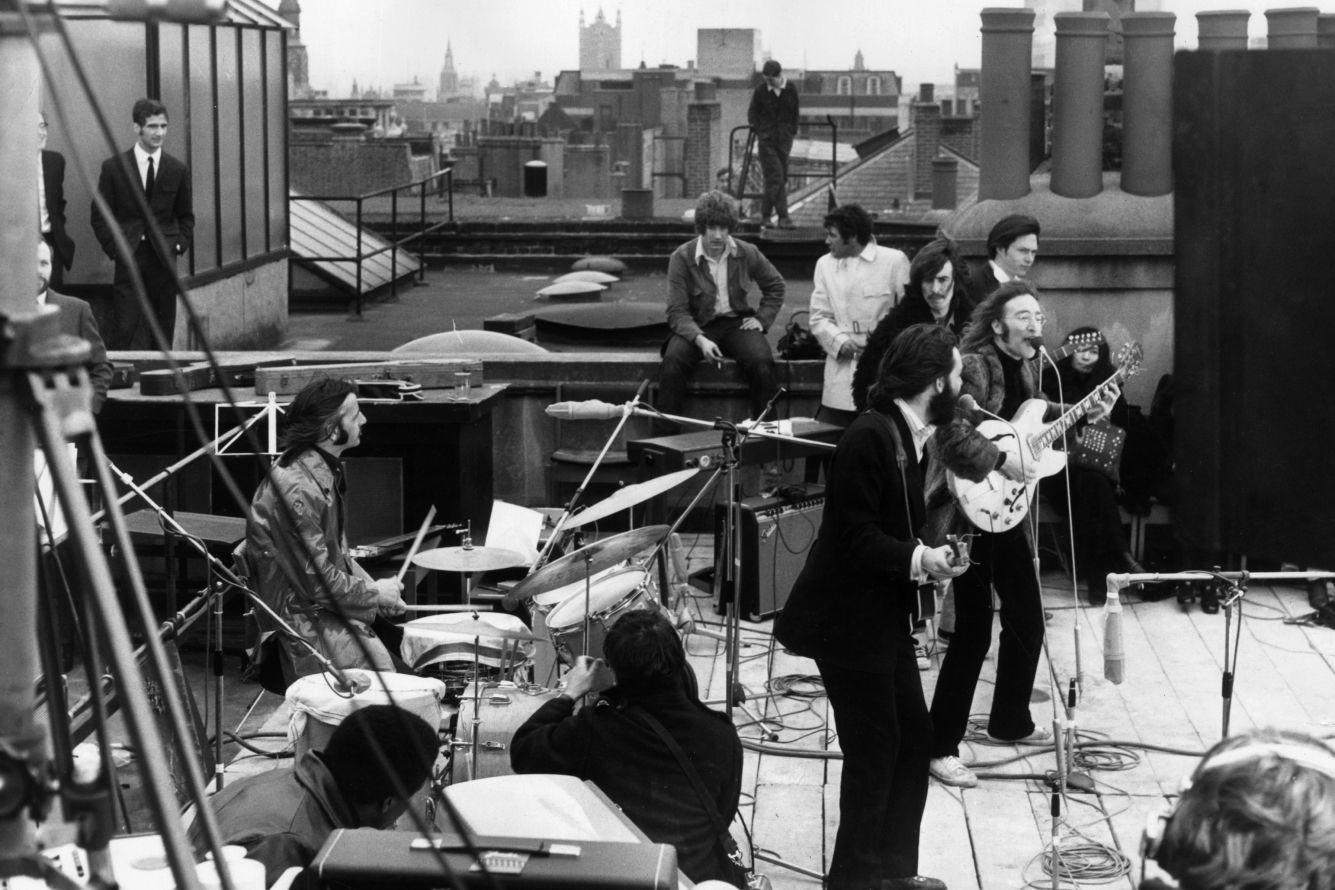
In May, the last film about The Beatles - “Let it be” appeared on the Disney+ platform (“let it be so”). For the past 40 years, it was practically impossible to look legally - unlike other paintings with the participation of musicians, he was not released on DVD and did not publish on streaming services. The picture and the album of the same name were released in 1970 - then The Beatles broke up. Because of this, the film earned a reputation as a gloomy work about the last days of the main group in the history of pop music. But in the updated version of 2024, released with the participation of the director of the previous picture about The Beatles - “Get Back” - Peter Jackson, he looks completely different. "Medusa" tells the story of the creation and restoration of the film "Let it be".
“Let it be” shows how difficult the relations of The Beatles participants were in the late 1960s
“Let it be” was shot in January 1969. Then The Beatles, who by that time for more than two years did not give concerts and worked only in the studio, decided to arrange a living show. It was planned to show it on television and take it as a basis for a new album. About a month was laid on the project, because in February the filming of the film “Wonderworker” with Ringo Starr in one of the main roles began in February. Despite the narrow time frames, the musicians decided not to use the material from the just double “white album” that had just been released - thus, they had to prepare new songs near a month.
Since the beginning of January, The Beatles began to gather daily in the film studio in London and play in the presence of the film crew, led by director Michael Lindsay-Hogg, who had previously shot several clips for them. But the creative process, not like their usual working routine, was not going smoothly - and a week later George Harrison announced that he was leaving the group. He was persuaded to return, but for the sake of this he had to change the concept of the project: they refused the idea of a grandiose show with a television broadcast, and decided to make a film from the captured material.
From the uncomfortable film studio, the musicians moved to the basement of their office, which was adapted for recording. At the suggestion of Harrison, The Beatles was attracted to the work of the American keyboard player Billy Preston, who was in London with tour; It is believed that this significantly improved the atmosphere in the team. Bringing several songs to mind, on January 30–31 The Beatles performed them completely in front of the cameras. They played songs with a heavier sound on the roof of the building, where the office was located (this concert, which gathered many people on nearby streets, went down in history as the last public performance by The Beatles), and acoustic and piano ballads played in the studio.
“Let it be” shows almost all these events, except for Harrison’s departure from the group: the Beatles learn new songs, discuss arrangements, quarrel due to exactly how to work, periodically recall the old rock and roll standards , and then play new songs in the studio and on the roof.
When the group broke up, the film became a sad reminder of the last days of The Beatles for the public and the musicians themselves
The film and album "Let it be" were released only in May 1970. By that time, The Beatles managed to record and release the “Abbey Road” record, quarrel because of the candidacy of the new manager-and start to truly break up: first John Lennon announced to his colleagues that he was leaving the group, and then Paul McCartney, releasing his first solo album “McCartney”, said in a press release that he did not plan to work in the future With The Beatles. This statement made a few weeks before the release of “Let it be” was perceived as an announcement of the decay of The Beatles.
All this left a strong imprint on the reputation of the film - “Let it be” began to be perceived as a documentary evidence of the end of the group, although it shows the events that happened a year before the real decay. “People went to watch“ Let it Be ”with sadness in their hearts, thinking:“ I will never see The Beatles together again, I will never experience this joy again. ” Because of this, the film was perceived as something dark, ” says director Michael Lindsay-Hogg. This attitude towards the picture was also facilitated by the scene in which McCartney and Harrison, discussing the rehearsal process, find out the relationship - this essentially the working moment became a symbol of how strongly the musicians were tired of each other to the end of their cooperation.
The fact that “Let it be” shows the most difficult time in the history of the group, the participants of The Beatles themselves clearly believed - this also affected the fate of the picture. Although in the early 1980s the film was published on video cassettes and Laserdis (though in not very good quality), there was no longer re-release on the latest formats. In the 2000s, they were going to publish the film on DVD (like the rest of the group with the participation of the group), but this did not happen-just due to the fact that for the participants of The Beatles and their heirs “Let it be” became a reminder of unpleasant events.
At the same time, researchers of the history and work of The Beatles have long said that this film should not be so categorical. At their disposal were tens of hours of sound recorded during the filming and later published by audiopirates. So experts found that January 1969, which the Beatles participants recalled extremely negatively, was an incredibly productive period for them: for this month the musicians prepared not only songs for “Let it be”, but also a significant part of the material for Abbey Road and their subsequent solo albums. In addition, while working on the film, the musicians not only argued and boredly rehearsed, but also had fun and fruitfully playing their pleasure.
Peter Jackson inspired these conclusions of researchers - and he decided to participate in the restoration of "Let it be"
The views of the public on the final stage in The Beatles life changed significantly in 2021, when Peter Jackson’s eight-hour film “The Beatles: Get Back”, mounted from the material taken in January 1969, Michael Lindsay-Hogg, was released on Disney+. Jackson's film clearly showed (and the director did not hide that he set himself such a task) that despite conflicts and disagreements, the musicians were still very close.
“Get Back” can be called the film about the film “Let it be”. According to Peter Jackson, the reprint of the 1970 picture is the logical completion of his project: “For three episodes, we showed how Michael [Lindsay-Hogg] and The Beatles shoot a revolutionary documentary-“ Let it be ”and there is this film. Both projects support and strengthen each other: “Let it be” is the climax of “get back”, and “get back” gives the necessary context for “let it be”. ”
Jackson’s role is that the last film with the participation of Beatles will still see the light again, it is difficult to overestimate: he not only advocated the reprint of the picture, but also entrusted the restoration of his team in the Park Road Post Production studio-it benefited the material. The original version of “Let it be” has a low image quality: the film was shot on a 16-mm film, for release in cinemas was transferred with a loss of quality to 35 mm, and the edges of the frame were cut for the release on VHS. As a result, the picture turned out to be very dark and granular, and the sound quality left much to be desired. After the restoration, the film became much more clearly, brighter and simply more beautiful, and dialogs, crossed using the neural network , became selective.
Now “Let it be” does not seem at all that gloomy work as they are used to thinking about it: tense moments are no longer felt so hopeless, and funny are perceived brighter than before. This change is also noted by reviewers. Variety released a review under the heading “Restored and reprinted, Bitlovsky“ Let it be ”appears that full of joy, which he has always been.” The Guardian notes that the atmosphere of this “supposedly gloomy film” is not so different from the positive mood of the Jackson Get Back. “[“ Let it be ”] a masterpiece that was not ignored and not a failure, as he was considered The Beatles and critics. This film finally gets what it deserves, ”the review said.
“For the first time, the film was rejected because the group broke up. People thought it was a farewell film. And from a technical point of view, he was not as good as we wanted. <...> And I felt: "They just did not understand him." Therefore, I wanted him to come out again and that the new people saw him. And this new chance delights me. The second chance does not always appear in life, ” said Michael Lindsay-Hogg Variety.
"Jellyfish"