
Translated material
"We were in love, but we wanted to sleep"
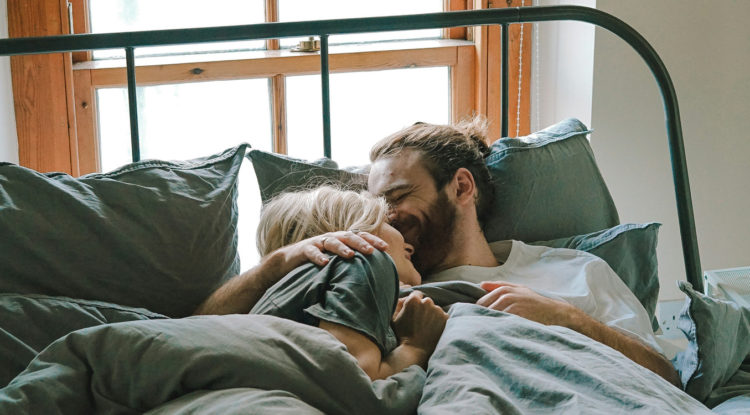
Partners are increasingly choosing to sleep in different rooms. For some, this is a salvation of relations
Before the Second World War, among partners it was absolutely normal to sleep on individual beds. What about separate sleep say modern family psychologists and sleep specialists? How does a dream in different bedrooms affect the proximity between partners, their sex life and psychological state? "Cold" retells the material of The Washington Post .
In order not to miss the main materials of the "cold", subscribe to our Instagram and telegram .
The 42-year-old psychologist Lindsay Gardner and her husband James, a 42-year-old methodologist in college, have been married for 19 years.
In 2018, James caught a cold and slept for several nights in the living room. Since then they have been sleeping separately, because they feel so more rested. Lindsay no longer interferes, that her husband turns in bed, and James is scrolling his wife on the phone. A calm dream has significantly improved the mood of both.
“We spend a lot of time together, so it’s not so important to us when we sleep,” says Lindsay.
More and more people agree with her logic. In 2021, only about two -thirds of the Americans indicated that they wanted to share their bed or bedroom with a partner (more than 12 thousand people took part in that survey, some of them were married, and part were lonely).
Separate sleep is becoming more popular
“The popularity of sleep in different bedrooms is growing rapidly,” says Susan Albers, a psychologist from the clinic who is engaged in family therapy. According to her experience, most often women stand for a separate dream.
The fact that joint sleep is more concerned about women is also being said by the results of the study of Rebecca Spencer, a professor of psychology of Massachusetts University in Amperst. Loud snoring and apnea (respiratory arrest), which are more common in men, are preventing women from sleeping. Women often suffer from insomnia and wake up if their partner wakes up (men, unlike women, most often continue to sleep in such a situation).
Psychologists believe that a separate dream can affect the relationship differently-it all depends on the reason why the partners decided to take such a step. Many couples begin to sleep separately inadvertently: for example, because of the illness, birth of a child, a stressed work graph or snoring. And then they understand that they really like this format.
Family psychologist from Chicago John Hughes says that individual bedrooms themselves do not say that problems arose in the relationship. But if the relationship is already experiencing a crisis, moving to different rooms can aggravate it.
The 2016 study showed that a joint dream "has a tendency to strengthen a romantic relationship." However, the co -author of the study, the head of the Scientific Committee of the German Souncil of Sleep, Knegin Richter draws attention that this effect can be crossed out the minuses of joint sleep. He can negatively affect the quality of sleep itself, physical and psychological health.
The couple did not always sleep in the same bed
The attitude to joint sleep has changed throughout the history of mankind. “From the beginning of the Victorian era to the Second World War, married couples slept in separate beds,” says Hilary Hinds, author of the book “The Cultural History of two single beds”.
After the war, the situation began to change. Hinds explains this by the fact that ideology has changed. “The wife creates a house as a place of comfort and safety for her husband,” says Hinds. At the same time, in mass culture (in the films and television shows of that time) they still showed two single beds that used married couples.
Family psychologist John Hughes says that the attitude to separate sleep changes depending on age: "The older generation very often believes that something is wrong if partners are not sleeping together." At the same time, people are younger than the changes and are ready to discuss all aspects of relations, including separate sleep.
Each couple chooses what is more convenient for them
Soon after the wedding in 2017, the 38-year-old screenwriter Terin Hillin and her husband, 33-year-old Streamer Max Gamble, had to move to her mother. Hillin was diagnosed with a rare form of cancer, and the couple had to be saved so that income was enough for treatment.
Due to the side effects of chemotherapy, Hillin became difficult to sleep at night, and she moved to her children's bedroom. When in 2020, the Hillin therapy course ended with remission, he and Terin decided to buy their own housing with two separate bedrooms. “Sex is a very important part of our marriage. We always had an incredible chemistry, and a separate dream did not affect this in any way. This has never been due to to go to bed together, ”says Hillin.
“Many people are too binary in this matter and do not realize that there are many options between joint sleep and sleep separately,” says a family therapist, sexologist Cheryl Fraser. Fraser recommends some customers a dream in the same bed on weekends and different beds during the working week.
For other couples, a separate dream can be a time step. So, married for almost 20 years 54-year-old Tonya Farmer and 57-year-old Casey Pitts two years ago began to sleep separately because of the loud snoring of Pitts. The decision did not affect their sexual life, but after six months, individual barriers and Pitts realized that they did not have enough proximity. Pitts lost weight, because of which his snoring became quieter. The couple decided to sleep again in the same bed.
Some couples, unlike Farmer and Pitts, sleep separately from the very beginning of their relationship. 58-year-old Jennifer Adams and 56-year-old Fraser McKay, married for 17 years, never slept in the same bed.
“I almost did not sleep because of the snoring,” says Adams, recalling attempts at a joint sleep at the beginning of the relationship. She says that she was in despair, because she was sure that being together - it means to crucify and sleep in the same bed.
“We were in love, but we wanted to sleep,” she recalls. The solution for them was separate bedrooms. “We have been together for 20 years. I think it works, ”says Adams. She wrote about her experience the book “Divorce for the night: how to sleep separately, and not fall apart into pieces”.