
Translated material
How much will housing and communal services tariffs increase and what does Gazprom’s losses have to do with it?
How much will housing and communal services tariffs increase in Russia and what does Gazprom’s losses have to do with it?
Editorial “Layout” May 22, 2024 |Utility prices may rise above the already announced 9.8%
Gazprom has made a loss for the first time in a quarter of a century; to compensate for it, the company will most likely be forced to ask for price increases - for the domestic market they are approved by the Federal Antimonopoly Service. In practice, this means that not only utility tariffs, a significant share of which is the cost of gas, may increase, but also prices for consumer goods, since most manufacturers use gas in one way or another. A former Central Bank employee who wished to remain anonymous told Vorstka about this.
In order not to miss new texts from “Layout”, subscribe to our telegram channel
Gazprom's losses may lead to higher gas prices for thermal power plants, industry and the population
On May 18, the Cabinet of Ministers proposed not to pay dividends to Gazprom shareholders for 2023. The document instructs the Ministry of Energy, the Ministry of Finance and the Federal Property Management Agency, when preparing Russia’s position on the company’s board of directors, “not to provide for the payment” of profits on ordinary registered shares. After this, the price of Gazprom shares on the Moscow Exchange on May 21 fell to around 140 rubles, dropping to the lowest level since October 2022.
Earlier it became known that according to Gazprom’s annual report for 2023, compared to 2022, the company’s revenue decreased by 27% - to 8.5 trillion rubles. This led to the gas monopolist ending the year with a net loss of 629 billion rubles. Before this, Gazprom last lost money at the end of the year 25 years ago - in 1999 it amounted to 79.3 billion rubles.
Explaining the losses, the gas giant refers to the current economic situation. In the report, it is characterized by “volatility of macroeconomic parameters” - variability of inflation, the key rate of the Central Bank and the cost of energy resources. The company also points to “political instability,” “events in Ukraine,” sanctions and uncertainty in the stock and commodity markets.
Simply put, due to EU restrictions on hydrocarbon trade with Russia introduced in 2023, the share of Russian gas in the European import structure decreased from more than 40% in 2021 to 15% in 2023. In addition, after the start of the war, the government raised the mineral extraction tax (MET). If in 2021 Gazprom received 1.3 trillion rubles in mineral extraction tax, then in 2022 – 2.9 trillion, and in 2023 – 2.5 trillion rubles.
In order not to miss new texts from “Layout”, subscribe to our telegram channel
Gazprom is trying to compensate for the reduction in supplies to Europe by redirecting flows to China. Thus, in 2023, Russia supplied this country with 22.7 billion cubic meters via the Power of Siberia pipeline, and in 2025 the volume will increase to 38 billion cubic meters. m. However, the price at which the Celestial Empire is willing to buy Russian gas is much lower than Europe buys it. If in the EU this year 1 thousand cubic meters of gas, according to preliminary data, costs an average of $320, then in China it costs only $257.
In addition, sales volumes to China do not allow the gas monopolist to compensate for the loss of the European market. If before the war, in 2021, Russia exported 206.8 billion cubic meters of gas through the pipeline, then in 2023 - only 99.6 billion.
What do Gazprom's losses mean for Russians?
In reality, housing and communal services tariffs for the population may rise above the threshold announced by the Ministry of Economic Development: 9.8% for housing and communal services tariffs in 2024, 5.7% in 2025 and another 4% in 2026. The Ministry of Economy explains the need to increase housing and communal services tariffs by indexing prices for gas and electricity.
According to Vorstka’s interlocutor, the state will be forced to subsidize Gazprom: “The National Welfare Fund (NWF) is rapidly depleting, which means the authorities will have to look for additional sources of income,” he says.
If by December 2021 the volume of the National Welfare Fund was 13.89 trillion rubles ($185.2 billion), and the volume of liquid, that is, not invested in long-term investments, was 8.5 trillion rubles, then as of May 1 of this year it decreased to 12.75 trillion rubles ($138.9 billion), of which only 5.17 trillion rubles are liquid.
Let us remind you that “Verstka” also counted the losses of the Belgorod region due to the war and talked about why Putin appointed Boris Kovalchuk as the head of control over the expenditure of power.
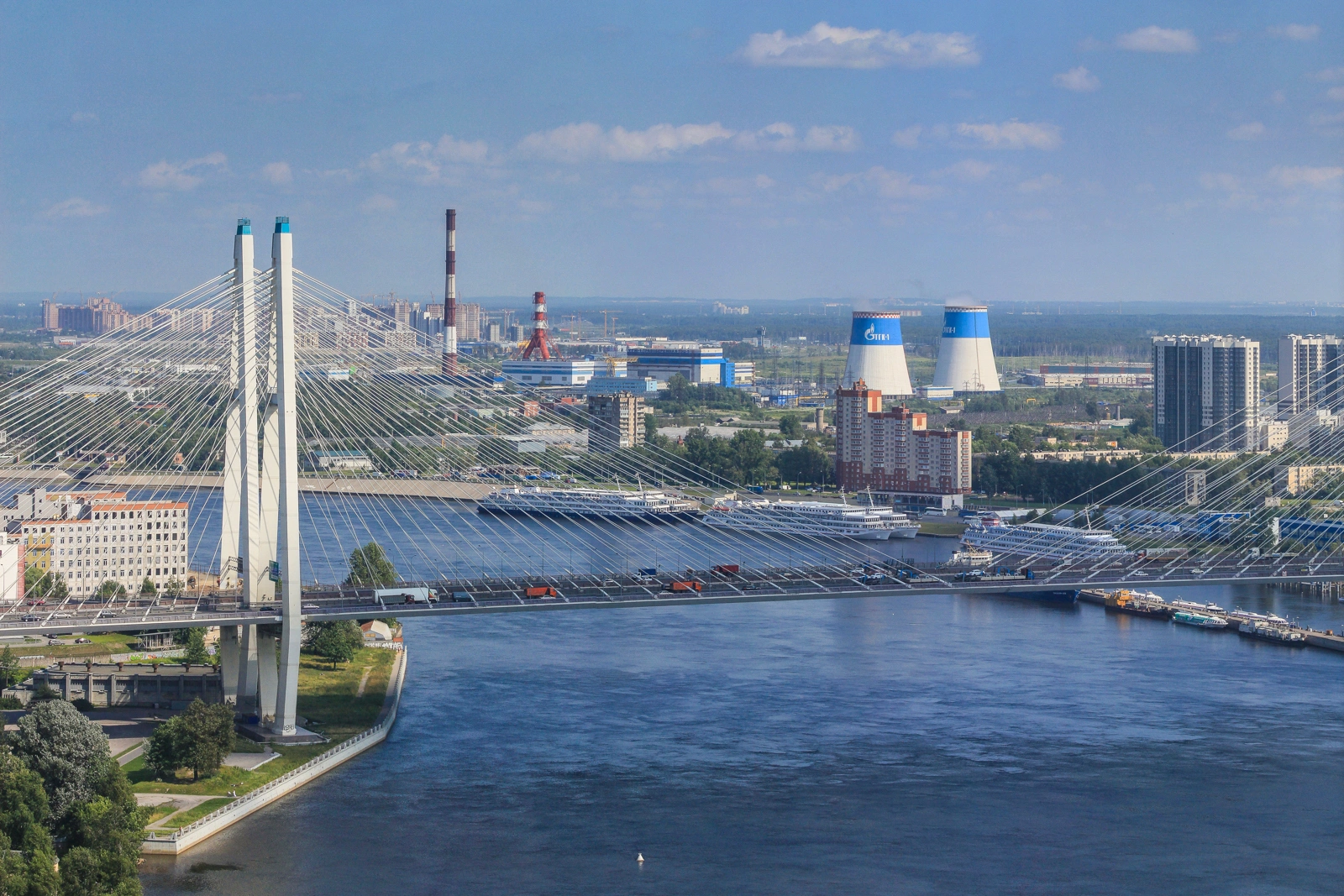
PHOTO: Pravoberezhnaya CHPP in St. Petersburg, tgc1.ru
Support “Vestka” - it’s important and safe →