
Translated material
The strong hand of Arvo Iho. Conversation with the founder of the Baltic Film School
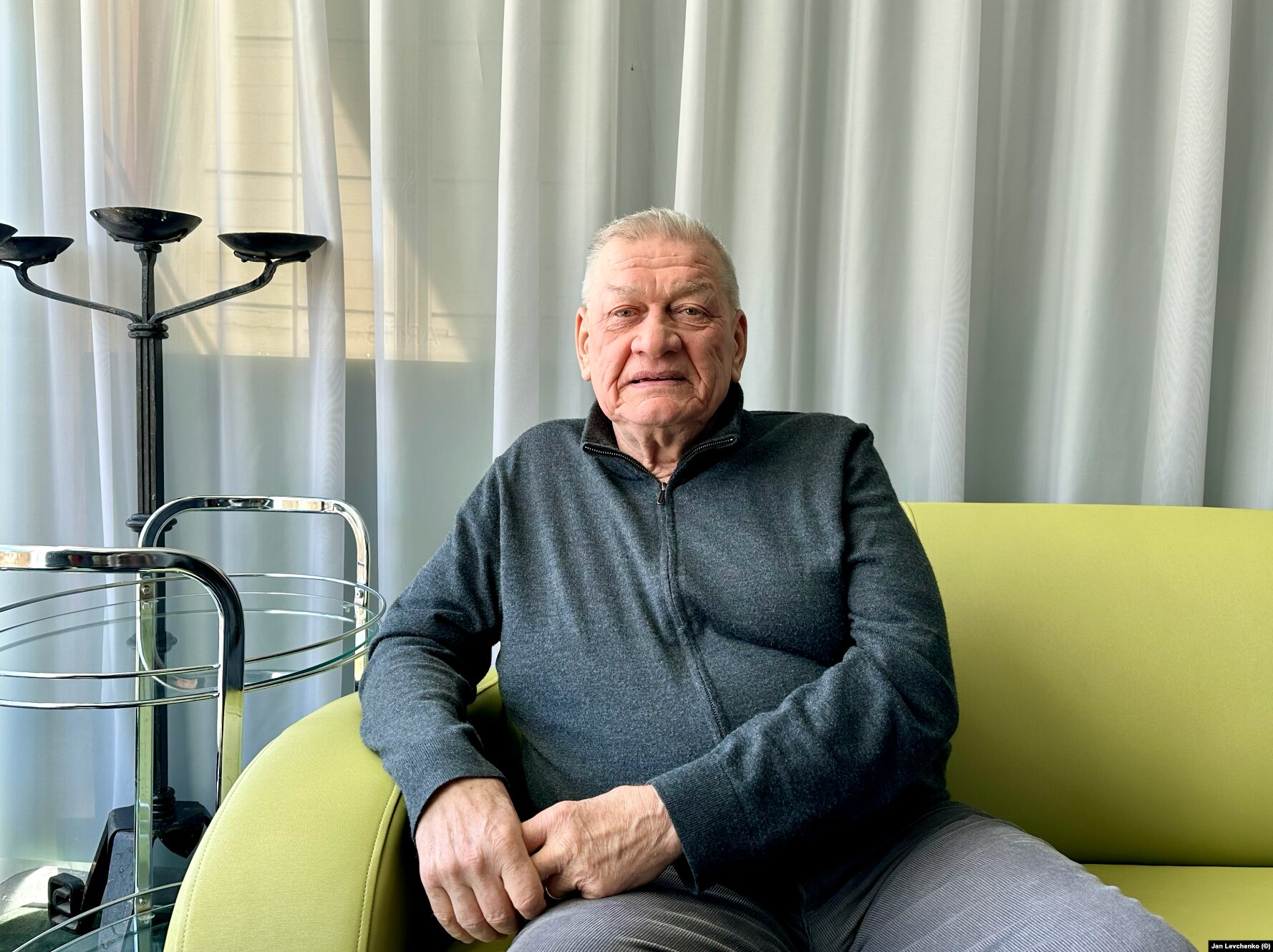
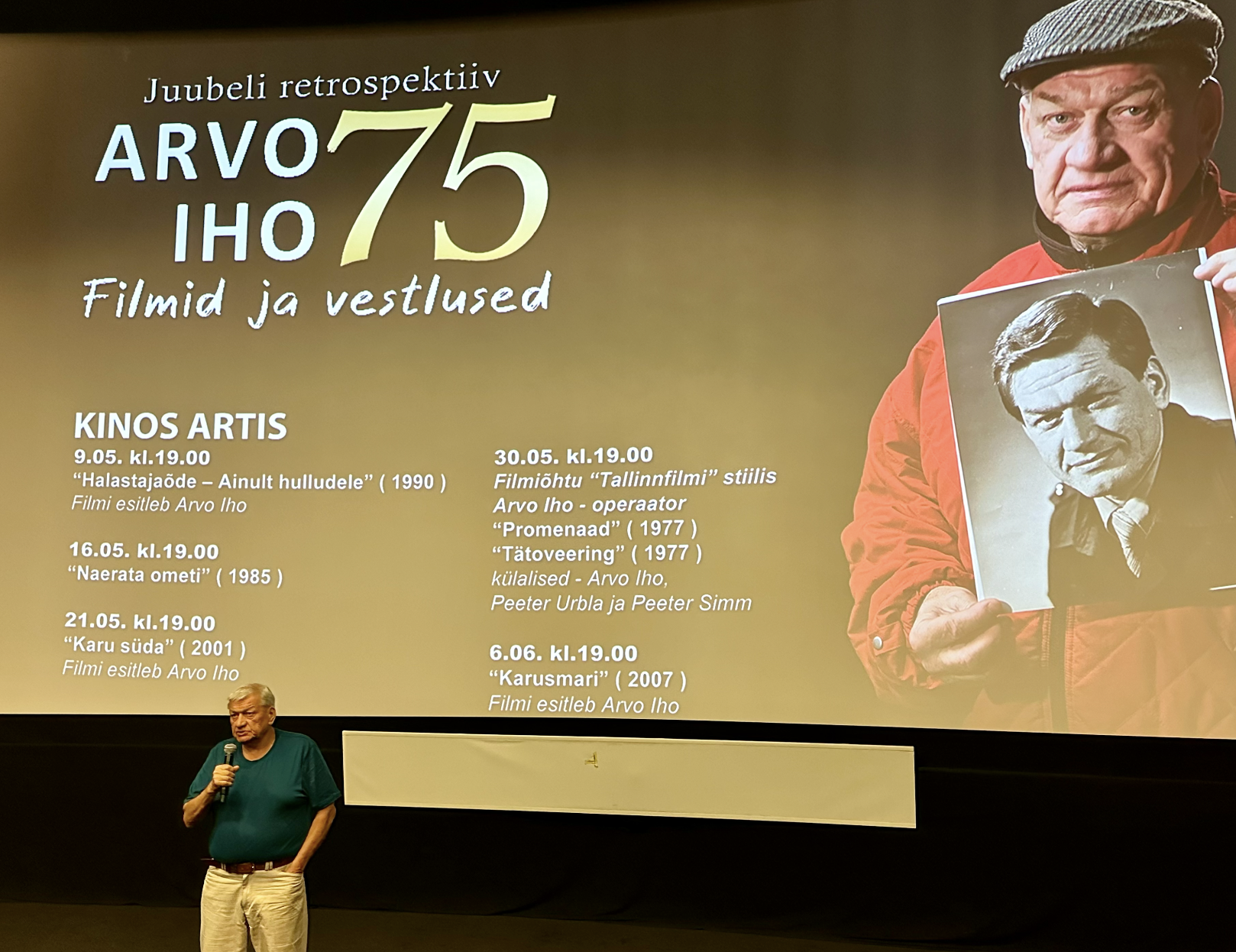
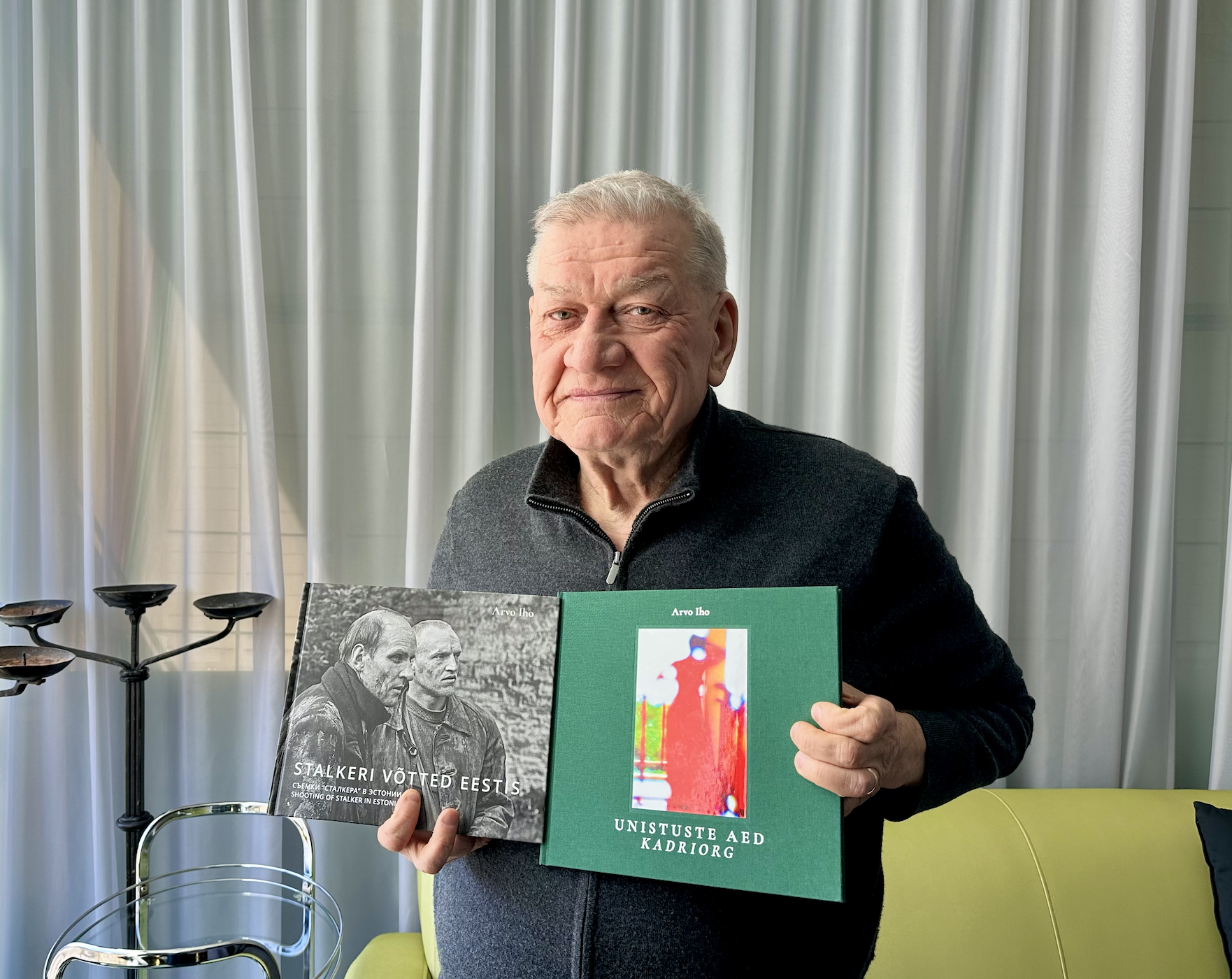
The director of the “first glasnost film” – Estonian cameraman, photographer, director and writer Arvo Iho – is celebrating his 75th birthday. The listed definitions correspond to the stages of his work in art. He studied to be a cameraman at VGIK and during his student practice observed the work of Georgy Rerberg on the set of “Mirror”. He captured moments on the set of Stalker with his camera - this outstanding filming diary is one of his best books. Iho is the author of several landmark films of the late USSR, who in the 1990s stood at the origins of what is now the largest film and media school in the Baltic region. In the so-called “new era” he shot mostly documentaries, but there were also a couple of game projects, one of which was carried out in Russia. A conversation with Arvo Iho was recorded at his anniversary retrospective in Tallinn.
– This is a common path: a person starts working in the film industry, tries himself on its different floors, and then goes into individual activity. This is how you do now - make photo exhibitions...
- And books!
- Yes, and books, of course. Why is this happening?
– My path is not actually a director’s one. I studied at VGIK to be a cameraman, made ten feature films as a cameraman, and then went into directing, but I also made documentaries, of which I have about 30. I made more than half of them as the sole author of the idea and director.
the director went to rest, and I, the cameraman, staged scenes with the participation of 400 people
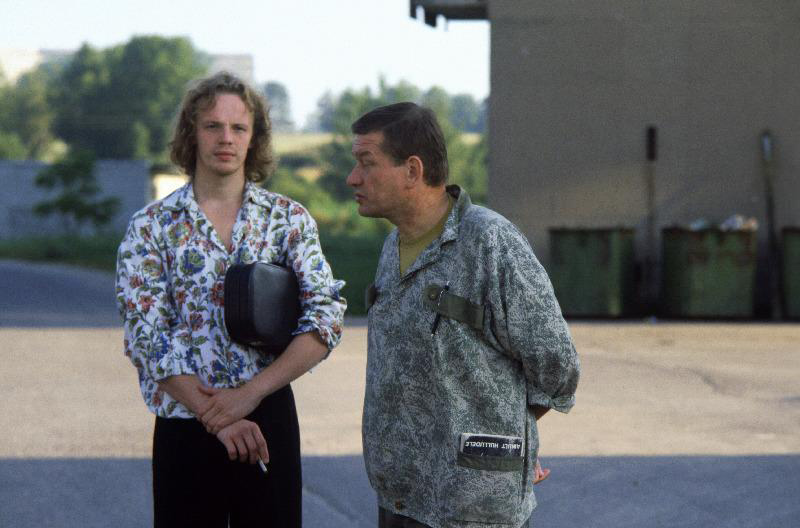
In 1982, I made Arabella - The Pirate's Daughter with my friend Peeter Simm and put a lot of my ideas into it. Petka, by the way, admitted this. But the next picture had a rather weak director, but it was a complex costume. On crowd scenes, the director went to rest, and I, the cameraman, staged scenes with the participation of 400 people. I called Simm to help and we got a nice live finale. But then the director returned from vacation, that is, from a mental hospital, and threw away everything we had done. And then I made a decision: that’s it, I’ve had enough!
- And what did you do? It’s impossible to suddenly switch to directing?
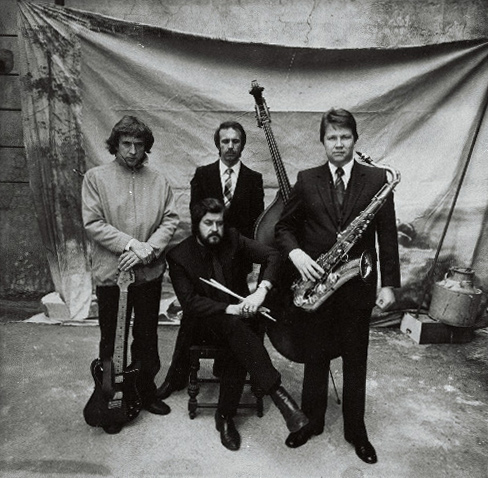
– I made a large photo exhibition “Stone City Blues”. I lived in Lasnamäe, that is, in the “stone city,” and photographed this entire socialist environment. And my jazz musician friends made live music for this exhibition.
– Who exactly?
– Guitarist Tiit Paulus, saxophonist Lembit Saarsalu and violinist Paul Mägi – he is now a classical conductor. The exhibition ran in the Kiek-in-de-Kök tower all summer and part of the autumn of 1983. Looking at all this, the editor-in-chief of the Tallinnfilm studio, Enn Rekkor, suggested that I try to make a film about art myself. And in 1984, I made two documentaries about my friend at once. This was one of the most avant-garde sculptors in Estonia - Yulo Eun, he combined antiquity and surrealism. And it seems like I succeeded.
“Belarusian partisans” sat in Goskino because they derailed all the films
In the same 1984, the same Rekkor proposed to stage a picture with our classic - Leida Laius. “Would you like,” he says, “to film a novel about the life of young people, or rather, orphanage children?” (we are talking about the film “Games for School-Age Children”, 1985 – Ed. ). It turned out that the novel takes place in the same boarding school in Rakvere where I spent three years of my life. Leida and I and screenwriter Marina Sheptunova heavily reworked the original book by Silvia Rannamaa “Stepmother”, moving the action from 1963 to the 1980s. Leida was already 64 years old, she was a classic director...
– She was the first director of post-war Estonia to study at VGIK, wasn’t she?
– That’s right, she started learning from Dovzhenko. Naturally, she knew nothing about the life of children in such institutions. And I left such an institution. And therefore, formally it was Leida Laius, but in fact I was filming - I also managed to find a common language with the children in the frame. When half of the material had already been filmed in this way, someone “knocked”. I had a conversation with Rekkor, he was calm, but reminded me that I was listed as a cameraman in the film and would not be listed as anyone else. I didn’t protest, but at the editing stage it finally became clear that the picture was completely different from what Leida Laius could have shot. Moreover, we were banned from the first version of the script.
– Did you redo it to make it work?
- Yes, but I was a well-trained draft dodger. We cut all the rough edges in the script by hiring an experienced editor. And they filmed in a remote place in Southern Estonia, away from railways and asphalt, and even started in early April. Spring thaw - inspectors from Moscow physically cannot come! By June 14, we had already done everything. One smart woman came to see what we had done. I mixed the material, rearranged everything and showed it to her. She looked and said: yes, the material is alive, but nothing is clear! We assured that we would complete everything as it should, but we ourselves thought: well, thank God!
- And you missed it?
They say: we congratulate you on the first film of the glasnost era!
- No, it was closed immediately. At that time, these, as we called them, “Belarusian partisans” were still sitting in Goskino, because they derailed all the films. We were ordered to throw out six minutes, there was a scolding, but we pretended that we didn’t understand anything: oh, how did it happen, we wanted what was best! We came home, reshot the ending, and made it more general. I shot the last two frames at the beginning of October. We have everything installed, we come to Moscow in October - and there are completely different people there! This was already Gorbachev’s company. This means that we filmed in the spring of 1985 (at that time the April plenum of the CPSU was going on, where the course towards “perestroika” was announced. - Ed. ). They hit me in the face in the summer of 1985. And they rejoiced over us in the fall. Armen Medvedev and his team, who watched our film instead of the previous punishers, say: we congratulate you on the first film of the glasnost era!
– A sharp turn, as is customary in the tyrant system...
I began to believe that honest cinema could be made in the Soviet Union
– Very cool, and not alone. Medvedev, for example, asks: “Leida Richardovna, we know you as a classic literary director. What happened? Where did such explosives come from here?” Then Leida publicly admitted for the first time that the cameraman knew the material from personal experience, and the director was actually not alone here. Since the film successfully hit the beginning of the wave, it received a lot of things - both at the All-Union Festival, and the UNICEF prize at the Berlinale, in Poland at the festival of young directors of the socialist camp, we took it to France... And I began to believe that honest cinema can be made in the Soviet Union. If, of course, you try really hard (general laughter) .
– Nobody expected that the scoop wouldn’t last long, did it?
- No, of course, there was no talk about this. The point was that some opportunities were opening up. And so Rekkor, who by that time was already the director of the studio, said: well, give us a story, and we’ll launch you on our own. We are friends with Marina Sheptunova, and she told me that she was in practice in the Far North. I was there too and fell in love with a woman three years older than me. And from these two points, she and I wrote “The Observer.” But I was still stupid and took Nina Ruslanova for the main role. I didn’t know that she was pawning a lot...
- Wait, but there’s a completely different actress in the film...
- No, just wait, I’ll tell you now. Ruslanova liked the script: “I will be the mistress of the northern island.” She promised that she would be at our disposal for three months, but, of course, she deceived me. She already had a contract for six episodes of a television film in Leningrad. I’m still thinking: why is she pushing the process so hard? On the eighth day of filming, a telegram arrived from Lenfilm: give back our main character, you stole her!
I broke Ruslanova’s contract and took her striped dress as a penalty
This psycho-hooligan would honor me in the morning with the last words, like a sergeant of the Soviet army - why am I dragging my feet! And for the male role I had Erik Ruus - a boy from the Rakvere Theater, he acted in a movie for the first time. I answered: your partner is still a beginner. Then she rolled the barrel towards Eric. As a result, he escaped from filming through the swamps to the Leningrad-Murmansk railway (filming of the film took place on the territory of the Kandalaksha Nature Reserve. - Editor's note ). And he stomped along it on foot!
– But they managed to find him in the end? He, unlike Ruslanova, is starring in the film!
“We succeeded, but it turned out that we had to stop filming.” There is no money, the scary woman has left, the boy has run away - what a shoot! I broke Ruslanova’s contract and took her striped dress, which was suitable for this image, as a penalty. After seven days of filming we came back to Tallinn. I started looking for a new actress to look like a jungle cat. I was told that Belarusfilm is filming one of these. And then Svetlana Tormakhova arrived from Minsk. I saw her as if on the platform - I immediately thought: that’s right, it’s her! It was luck, but the trouble was that we had already spent a significant part of the money...
– There was nothing to pay the group with?
- Well, it was interesting. Tormakhova was eventually kept on the set by Eric - she really liked him. He had previously been in a relationship with an Estonian girl from the group. So can you imagine, Tormakhova ordered that “this Estonian” be kicked out! I had to obey! And Eric remained at the mercy of the jungle cat from Belarusfilm! She, of course, was not as powerful as Ruslanova, but she knew the business well! We sat in a bathhouse on the lake for three days - we got used to it and prepared for filming. So Eric cut his wrists there! I thought his partner had driven him into a corner, and then I looked - nothing, the wounds were superficial. In general, demonstrative passions. But during all this madness, I realized that directing is something more cunning than sitting in front of a camera. This means settling lives, adjusting human relationships.
- Not just a craft, then?
- Not only that! Especially with such wild women! The filming period ended, but not everything that was in the script was filmed. Therefore, we flew much further north to the bird islands. There are already four of us: me with the cameraman and the actor with the actress. The end result was very minimalistic: two people and 80 thousand seabirds. I didn't really understand what I had accomplished. I see that the artistic council received it very well and decided to send it to Karlovy Vary. And I was stunned: the film won three prizes there, including best debut! I got so worried that I even had an ulcer because of this, and I cured it with sea buckthorn oil. And I was surprised: how can this be, I’m a strong guy from the village!
– And then you continued to work with Sheptunova as a screenwriter?
– Just one more film, then another life began. Marina wrote a story about a nurse from the Sklifosovsky Institute who saved young people who were trying to commit suicide due to impotence, in the most natural way - proving that everything was fine with them. Marina, a God-given screenwriter, after VGIK worked in Sklif as a nurse on night shifts, she was not invited to the movies, and she had seen enough of everything. But I didn’t want to film in Russia. I moved the action to a small Estonian town. This change of context greatly changes the emphasis within the story, you know?
– Probably, in a small town, “what people will say” is more important?
Terekhova called the next day: “This is a great script! I want it!”
– Yes, petty-bourgeois mentality. And against this background, this strange nurse does such things! It turned out to be a strong story. For three weeks I tried the Estonian actress Laine Mägi. A good actress, but not above her surroundings! In classic pieces, the king is played by his retinue, but I wanted to make sure that, on a personal level, the main character was superior to others. And I remembered 1974, when in practice at Mosfilm I secretly sat in the corner and watched how great people made the film “Mirror”.
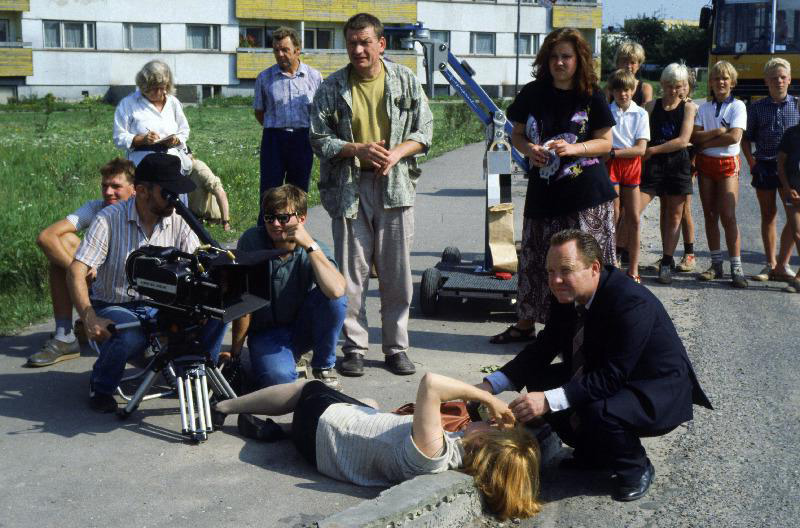
I decided to see if Margarita Terekhova was busy. She was not busy in the theater at all due to some kind of conflict! I went to Moscow with a magazine where our script had already been published (almanac "Film Scripts", 1989, No. 2. - Ed. ) and caught Terekhova at the House of Cinema. I’m nothing to her, Marina’s name didn’t mean anything to her either. But Margarita Borisovna called the next day: “This is a great script! I want it!” My friends at Mosfilm immediately began to feel sorry for me: oh-oh-oh, she’s such a bitch! Until he drinks all your blood, he won’t calm down! These are exactly the words, or even worse. Well, I think: I’m a stupid country guy, let him drink. All the same, when we took the first sample in the hospital, I saw: God, how I got it, how accurate, it couldn’t be better. And since she had not acted for a long time, she truly devoted herself to this work!
– Were there any difficulties in your work against the backdrop of the approaching collapse of the USSR?
– There were, of course. At this time there was no more money coming from Moscow. I suggested going to our bank in Tallinn and borrowing half a million rubles. I had a dozen prizes, the director of Tallinfilm - no longer Ann Rekkor - stood up for me, they gave us the money. But this was not enough - the rubles were becoming thinner and thinner. We went to film at the Viljandi hospital and did long filming days to squeeze in more work and save money.
We shot a full-length film in 25 days. For Margarita Borisovna, this was too fast a pace - she was used to sleeping off and so on. Somewhere in the middle of this period we had a conflict. Terekhova was going to Moscow for her birthday, I met her with an armful of roses on the platform and suddenly I heard: “Ikho, don’t come near me! Now I know what a terrible person you are!” In general, she and Nina Ruslanova also drank and had a heart-to-heart talk. Then we communicated like this: I hid behind the camera and conveyed my requests through an assistant, and then waited for Terekhova to calm down.
– It turns out that Terekhova believed Ruslanova, and nothing else has changed?
– Yes, but she worked at the highest level. She might not like something. For example, she told me a couple of times: “This is some kind of Freudianism!”, but she was in a position where it was impossible to react, and she still reacted magnificently. During filming, she continued to think that I was a nobody. We finished, everyone left, I mounted the picture and showed it to Terekhova at the end of September. She paused and said: “It turns out that you edit very tightly! You have a strong hand!” - in general, she liked it.
I quickly made a movie, we delivered it, and I agreed with the studio management to give Margarita her own copy of the film. And she traveled around Russia with this copy for almost two years, did her evenings and was very happy. On the basis of which she decided that “Sister of Mercy, or Only for Crazy People” is her best role after Tarkovsky’s “Mirror”.
– What did the picture have to do with festivals? Did being in the transition period affect her?
– I don’t know about the period, but the studio bosses sent her to the festival in Pesaro. Because of this, the film was not successfully taken to Venice. I still have a letter from the director of the festival, which says that I liked the film and could qualify for awards, but the statute was violated. Then there was the auteur film festival in San Remo, where Soviet cinema was always traditionally shown, in Rouen, in Mannheim. But all this is not quite the same. It turned out to be some kind of insanity.
By the way, in Mannheim, the prize of the ecumenical jury that the picture received was quite large, 30,000 German marks (over 15,000 euros at the exchange rate of the mark in the early 1990s - Ed.) . I found out about his receipt on TV. 15 minutes later - a call from the studio. The drunken director of Tallinnfilm says: “Well, Arvo, now you will pay off your debts!” To which I ask: “What debts?” – and I hear that they printed a booklet for me in Finland and much more. I realized that everything would be taken away from me again. I immediately contacted the director of the festival in Mannheim and asked to deposit the money in a German bank, where it would be waiting for me. The next day a woman came to them and said that she was a representative of Tallinnfilm. But there’s no money, that’s all. The director will receive them personally.
– But you actually took out a bank loan.
Seven months in America gave me something. I arrive and there are tanks waiting!
– That’s why I did this, because it was supposed to be given to me, and not to Tallinnfilm. When I started filming for Finnish TV the following year, they opened an account for me there, and I asked to transfer money there from Germany. It was 1993: previously Goskino took everything, now Tallinnfilm decided to take it.
- Out of habit?
- Well, yes, that’s how it was supposed to be. By the way, before this whole story, I also went to America - I wanted to study in the state of Montana. It turned out that I had to teach to earn a living there. I got to the state university through one supposed producer who came to Estonia, collected films about nature here and then showed them in America - Rein Maran, Toivo-Peet Puks and others. It's like he's the producer of these films. And I found myself among the exchange students, although I was already over 40 years old. But, thank God, I was able to visit the set of a real Hollywood film - Far and Away with Tom Cruise and Nicole Kidman. I was also in San Francisco at the Industrial light and Magic (ILM) studio, where they were making effects for the second Terminator. Seven months in America gave me something. I arrive and there are tanks waiting!
– Was it just 1991? The putsch and around it?
- Well, yes! And it was in the crowd around the Radio House in Tallinn that I first thought that no one from here would go to study at VGIK anymore. And after that I started writing a project for a film school in Estonia. After all, I’ve been to America a lot – both at the American Film Institute and at Loyola Marymount Film School. I attended film schools in Germany and France. I wrote it and brought it to our new Ministry of Education in 1992. They looked at it and said: it’s a great program, but the Estonian people don’t need it.
Okay, I'm such a stupid person: I went out the door and climbed out the window. As a result, I achieved that a specialty appeared at the pedagogical institute in 1992, where I accepted eight people from here and six from the West. In fact, locals could study with their money. I wrote projects for Soros - on the third attempt they gave me $5,000. And we opened a school in the Old Town on Lai Street. Friends from abroad came to teach me. We paid them a daily allowance, and the Finnish film school paid for the work, with which we also managed to come to an agreement. When my students started receiving prizes at student festivals in their second year, the state paid attention to us, and I even started receiving a salary - 690 crowns (about 45 euros at the exchange rate of Estonia’s transition to the euro in 2011 - Ed. ).
– It turns out that in America you became interested in the idea of teaching, but left cinema because the previous system collapsed?
I sold all my cameras and lenses to finish the film.
– I taught at a film school, but I didn’t leave cinema, but made documentaries for Finnish TV. Two films every summer. I needed to live. In 1995, I realized that I wanted to make feature films in the taiga. I read Nikolai Baturin’s novel “The Heart of the Bear,” which could have been adapted into a TV series. With the help of Rustam Ibragimbekov, I reduced the story to two hours of screen time and spent three years looking for money and locations for filming. First in Eastern Siberia, where Baturin was a taiga hunter. Then 3000 km closer - in the Northern Urals.
In the Komi Republic, he found a partner and began filming in 1999. The partner soon disappeared with the money: other bandits wanted to kill him and he had to escape at our expense. The Estonian side suspended funding, and I made a 20-minute video from the footage and showed it in Berlin. Manfred Durniok, a producer who won an Oscar for Istvan Szabo's film Mephisto, became interested. We received the money through him, quickly finished filming everything, and after that, at Durniok’s request, we had to throw out 11 minutes so that there would be more showings in the cinemas per day. Still, I sold all my cameras and lenses to finish the film.
- I don’t remember how he walked...
– In Estonia at that time there was a “little picture”, so it went well. After "Shrek" and some action movie, it was in third place in our box office. They printed a copy for the Czech Republic, and Durniok actually earned three times more than he invested. They paid especially well in the East - in China, for example. In Russia they were not interested at all, although Lenfilm participated in the production.
– How did it happen that you shot your last film in Russia?
– I showed two of my films at the festival in Anapa to screenwriter Marina Mareeva and in 2005 I received her script with an invitation to become the director of the project. It was a circus. By that time I had forgotten about censorship. And then they blamed me on two people from TV and two from a production company. I saved the producers money by finishing filming a week early, but that was nothing compared to how obtuse they thought I was.
The film is called "Cruzhovnik". There are hints of Chekhov's story, but the action is moved to 1980. Summer, the last days of the Olympics, Vysotsky has just died. The police are engaged in catching the “asocial element”, under the sauce of which they detain the avant-garde artist. I thought of giving him the features of Hulot Sooster, who died in Moscow ten years earlier, but changed my mind. At first I found a Lithuanian actor for this role, but the line producer with the unfortunately telling surname Kozlov told me: “We only need one Baltic – you!”
- What rudeness, just think!
the censors went crazy and watched for ten days
- Well, that's it. But I found Dima Pevtsov, he and I understood each other perfectly. He was great at capturing humor and absurdity. They wanted to impose serial actors on me, but I set the condition that I choose the performers myself, shorten the script myself, and write synchronized sound for the camera. The first two conditions were met, but the third turned out to be impossible. I was told that in Russia they stopped recording synchronized sound. This skill has been lost! For filming, I was offered a dacha of some communist near Domodedovo, where planes flew. It was terrible. We found monastery land 340 km from Moscow in the Ostashkov area and built a “general’s” house, like on the Karelian Isthmus. Then we quickly filmed everything, I edited it in three weeks, and the censors went crazy and watched it for ten days.
- Listen, what kind of censors? This is the 2000s, Russia is all so open, “following the democratic path”...
– They say: you are from Estonia, you have all sorts of political fantasies. Well, they were right in a sense. I had a scene where a yellow police car - they were called "limonka" - drives around Moscow and catches unwanted people. And so a drunk man hides among the plywood Olympic bears, the camera zooms out, and one of the bears has Brezhnev’s head. They didn't let me leave it. And there was also an episode with a shirtless man with a criminal tattoo on his back - a map of the USSR behind barbed wire without the Baltic countries. He was thrown out too.
– But how did they explain it? And who were the people who endorsed this?
- No way. Four scenes were cut. General producer Igor Tolstunov is a cunning man, he never said anything bad. Only this Kozlov was raging. Apparently, it was believed that the “Baltic states” would inflict free-thinking and lie against what we love so much from the era of stagnation. For example, Vysotsky’s gypsy motifs are heard in the film, but the song about a marathon runner, when an artist runs through the forest and managed to break away from the cops, does not sound. Why? "You are creating too ironic a context!" And finally, a completely amazing thing. I inserted into the love walks the most lyrical passages from Beethoven's Ninth Symphony. Threw it out! Why? This, they say, is Western music, but we have a film about a Russian artist who fell in love with a simple Russian woman, so there should be no Western music there!
– And how did you react to this scoop?
– How did you react? My blood pressure was 164! I brought a doctor’s certificate, and this Kozlov, who is a producer, said: “Did you buy it? You’re a strong man, we’re working!” I bought a train ticket and left for Tallinn. This made no impression on them. I wanted to invite my friend, saxophonist Lembit Saarsala, but the “one Baltic rule” worked here too, so I had to work with Garanyan. Not a bad compromise, right?
I started a film school, I started doing exhibitions, and now this is all. Why do I need a movie at this price? I and the “Heart of the Bear” had a pre-infarction condition due to the flood, when we were carrying equipment up to the balls in water. And as a result of all these stories on Kruzhovnik, I fell asleep at the wheel on June 6, 2006 and drove into the forest. What saved me was that it was on a deserted road, the speed was low, I flew into lilac thickets, and a man was driving right behind me, who immediately took action.
– So your films from the period of Estonian independence were one-time events against the backdrop of teaching and working for TV?
I got a complaint from a student from Turkey because I showed them pornography
– Our school met the turn of the 1990s and 2000s as an independent institution, which was helped by the Tallinn private Concordia University and its dean, journalist Hagi Shein. Then the Nordic Council of Ministers gave us money, and in 2005 a separate Baltic School of Film and Media (BFM) opened. It was very pleasant to work there - teachers and students from different countries. Their number was and remains the largest among film schools throughout Northern Europe.
But in 2017, I received a complaint from a Turkish student for showing them pornography. This meant painting from the 18th century. Somehow I didn’t take into account that in Islam it is forbidden to show the human body, and there are more and more students from Turkey, Syria and Iran. In general, I was shocked - not that they complained about me, but that the rector gave me a stern warning. There are more and more students from Asian countries, and they pay good money for education. I realized that I had nothing to hide, and at almost 70 years old I would not betray myself. And he left. Now I only do what I want. I don't have editors anymore. All!