
Translated material
Truce with Ukraine: what is known about Emmanuel Macron’s initiative
What is known about Macron’s idea of a truce with Ukraine during the Olympic Games in Paris?
Editorial “Layout” June 18, 2024 |The French President promises to ask Xi Jinping for help in implementing his idea
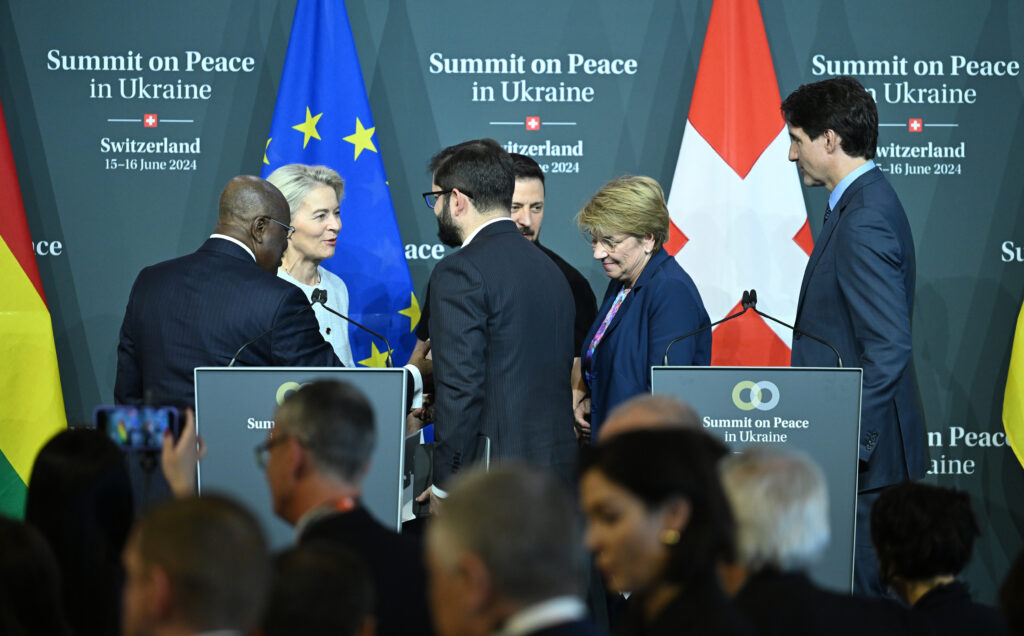
On June 15–16, a Peace Summit was held at the Swiss resort of Bürgenstock, designed to develop a scenario for ending the war in Ukraine. The summit was held with the participation of delegations from 92 states, as well as representatives of 8 international organizations, but without Russia. Officially, due to the absence of representatives of the Russian delegation at the event, China also refused to participate.
In order not to miss new texts from “Layout”, subscribe to our telegram channel
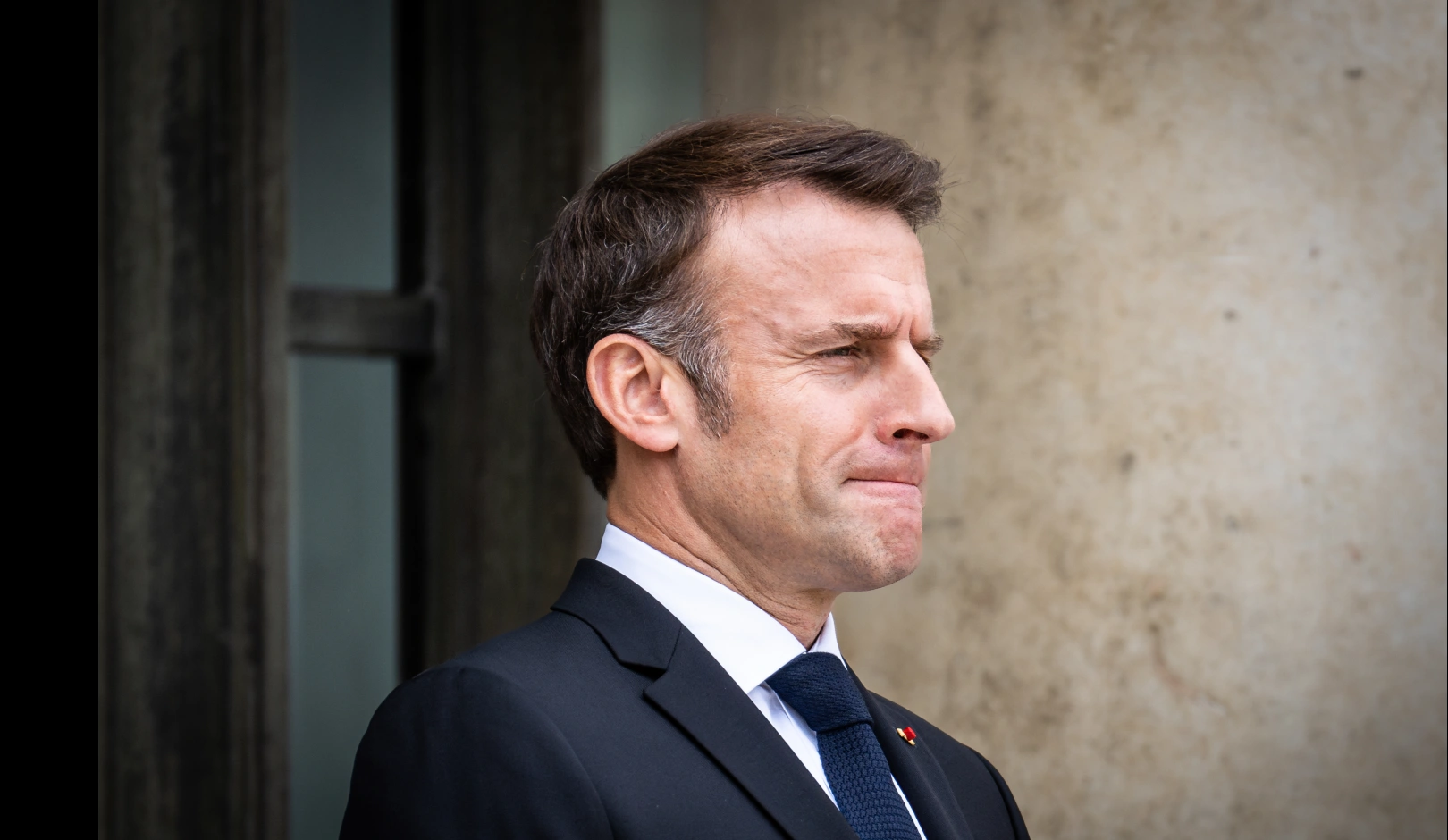
During the Peace Summit, French President Emmanuel Macron, who participated in it, called on the leaders of other countries to increase pressure on Russia to accept a resolution on the Olympic truce for the duration of the Olympic Games, which will be held in Paris from July 26 to August 11, and to stop aggression against Ukraine.
Macron also once again announced his intention to seek help in implementing this idea from Chinese President Xi Jinping.
At the same time, Macron emphasized that the Olympic Truce is not considered as an obligation towards Ukraine, in his opinion, “this is the best way to help Ukraine build a framework for sustainable peace based on international law.”
Olympic Truce of Emmanuel Macron
Back in April 2024, French President Emmanuel Macron expressed hope for a cessation of hostilities in Ukraine during the Olympic Games, which will be held in Paris from July 26 to August 11. And in May, during an interview with La Tribune, the French President said that he would discuss with Chinese President Xi Jinping the achievement of an “Olympic Truce” in all theaters of military operations, including the Gaza Strip and Ukraine.
In order not to miss new texts from “Layout”, subscribe to our telegram channel
One of the Elysee Palace advisers clarified that China is one of Russia's main partners, so France's goal is to use China's leverage over Moscow to change Russia's calculations and contribute to resolving the conflict.
However, at that time Moscow rejected Macron’s initiative. Presidential spokesman Dmitry Peskov said that Ukraine could use the truce to regroup troops.
Was Macron's idea included in the final communiqué of the Peace Summit?
The final declaration signed at the end of the summit does not directly address ways to achieve peace or at least a truce between Russia and Ukraine.
The final document, following the negotiations, embodied part of the ideas contained in the so-called “Ukrainian peace formula” proposed by Vladimir Zelensky, which is based on radiation, food and energy security, the release of all prisoners and deportees, including Ukrainian children taken to Russia, restoration of the territorial integrity of Ukraine and the withdrawal of Russian troops from Ukrainian territory as of 1991 year.
The Peace Summit communiqué, agreed upon by the majority of the assembled delegations, contains three provisions of the formula:
- Ukrainian nuclear power plants, including the Zaporozhye NPP, must operate safely and reliably under the full sovereign control of Ukraine, in accordance with the principles of the IAEA and under its supervision; threats or use of nuclear weapons in the context of the ongoing war against Ukraine are unacceptable.
- Attacks on merchant ships in ports and along the entire route of food products in the Black and Azov Seas, as well as on civilian ports and civilian port infrastructure are unacceptable; Ukrainian agricultural products must be supplied safely and freely to interested third countries.
- All prisoners of war must be released through a complete exchange. Deported and illegally displaced Ukrainian children and other civilians who are illegally detained must be returned to Ukraine.
A number of countries from the “global south”, although they arrived at the summit, refused to sign the final communiqué. As a result, it was signed by 80 of the 92 arriving countries, as well as 4 international organizations. Thus, the BRICS member countries refused to sign: Brazil (attended the summit as an observer) and India, Mexico and Colombia, Libya and South Africa, Bahrain, Qatar, Saudi Arabia and the UAE, as well as Thailand and Indonesia. In addition, Iraq, Jordan and Rwanda withdrew their signatures after the event.
What ways does Russia offer to achieve peace with Ukraine?
Although Russia did not take part in the summit, on the eve of the event, Vladimir Putin made his proposal to resolve the conflict with Ukraine. In contrast to the “peace formula” of Ukrainian President Vladimir Zelensky, he put forward a number of conditions under which negotiations could potentially begin between countries.
In particular, he demanded the withdrawal of Ukrainian troops from the entire territory of the Donetsk, Lugansk, Zaporozhye and Kherson regions partially annexed by Russia, to consolidate the nuclear-free and non-aligned status of Ukraine, the “demilitarization” and “denazification” of the country, as well as the lifting of sanctions imposed on Russia. In Ukraine, the Russian president’s proposal was called an “ultimatum.”
Are there any chances of a truce with Ukraine?
As “Verstka” has already reported, Russian elites clearly feel war-weary , as representatives of parliament, government and the Kremlin anonymously spoke about.
A truce between Russia and Ukraine is now possible if both sides make concessions, political scientist Ilya Grashchenkov told Vorstka. “Russia may agree to ensure that the ‘annexed’ territories are fixed within their current borders, and not as they are drawn on administrative maps,” he suggested.
In turn, Kyiv may agree to the neutral status of Ukraine, even include it in the Constitution, the expert noted. Also, the Russian authorities may force Vladimir Zelensky to resign from the presidency. “Despite the fact that, of course, he is currently a kind of symbol of Ukrainian resistance,” says Grashchenkov.
Andrei Kolesnikov, a senior fellow at the Carnegie Berlin Center for Russian and Eurasian Studies, says that Putin “would be quite happy with a freeze in the conflict provided that ‘new territories’ are recognized,” and that this requirement is considered key by most poll participants.
“This is well understood in Turkey: the visit of the Turkish Foreign Minister to Moscow, received by Putin and then going to a peace conference in Switzerland, suggests that Turkey is ready to be a mediator in formulating at least approaches to negotiations,” the expert noted.
But now Putin, in his opinion, will not budge from his position: even with all the desire to stop or suspend the conflict, he is ready to continue to spend financial and human resources, “of the replenishment of which he is still, apparently, confident.” A war of attrition also suits the Russian president for now, Kolesnikov emphasized.
Vladimir Zelensky himself says that Russia can begin negotiations with Ukraine immediately after it withdraws its troops from Ukrainian territory. At the same time, the head of the Ukrainian presidential office, Andriy Ermak, said on television during the first day of the summit in Switzerland that it is first necessary to agree on the principles of the general plan (restoring peace with Ukraine - editor's note). And when such a plan is ready and agreed upon by the majority of countries, it will be presented to the Russian side.
PHOTO: French President Emmanuel Macron on the steps of the Elysee Palace. Xose Bouzas / Hans Lucas via Reuters Connect
Support “Vestka” - it’s important and safe →