
Translated material
Ships-ghosts. Vladimir Milov about why Putin's shadow fleet is not terrible and what to do with it
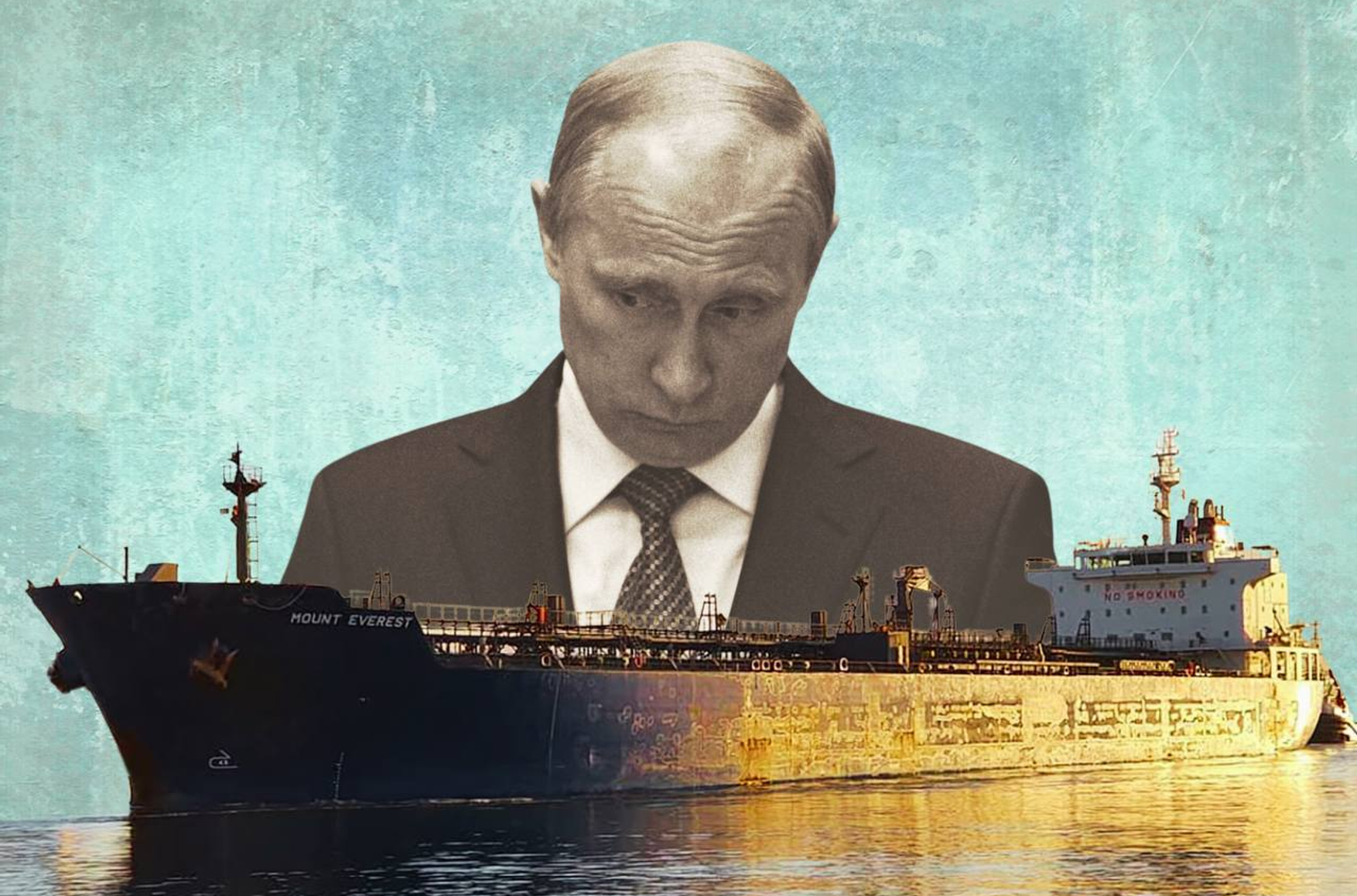
Ships-ghosts. Vladimir Milov about why Putin's shadow fleet is not terrible and what to do with it
5 July 2024Vladimir Milov
politician, economist, public figure
The oil and gas income of Russia in the first half of the year increased by 41%, writes Reuters. Putin successfully ignores the ceiling of Russian oil prices with the help of the “shadow fleet” of tankers, which Russia has formed to circumvent sanctions. Economist Vladimir Milov explains why the “price ceiling” did not justify itself and how the West needs to develop instrumental control of transactions and supply chains. Among other things, you can threaten the sanctions of oil processors, which, unlike carriers, cannot work completely “in the gray”-otherwise not only new incomes in the Kremlin’s treasury are inevitable, but also disasters with spill oil due to the poor state of tankers and saving on their maintenance and teams.
What is this "shadow fleet"? There is nothing mystical and sensational: Russia has created a global network of opaque fake companies that bought a significant number of oil tankers - according to estimates , several hundred - which are engaged in the transportation of Russian oil to markets (mainly to Asia).
The point is that traditionally used shipowner and insurance companies operate “in white” and are under pressure from Western governments and the threat of sanctions for non -compliance with the “price ceiling”. They are obliged to declare contracts for the transportation of Russian oil and may face serious problems if it turns out that Russia uses their services, transporting oil sold above this price.
This kind of pressure against carriers and insurers was the main idea in the introduction of the “price ceiling”. To the question of how to regulate relations between the Russian oil seller and, say, a Chinese or Indian buyer, the countries of the Grand Seven answered: “Press the transport and insurance link, where companies are dominated by companies that are greatly dependent on the Western regulatory regime. They are frightened and refused to accept Russian oil sold above the “ceiling” for transportation and insurance. ”
The Russian response to this turned out to be simple: the tankers purchased from the “white” carriers simply handed over to the balance of the “gray” and “black” companies registered in opaque jurisdictions and actually intended only for the transportation of Russian oil.
These nominal one-day companies do not depend on Western regulatory pressure because they do not work in the open market, their only goal is to carry Russian oil bypassing the sanction regime. These transportation are also insure not authoritative world insurance companies, but, simply expressing, the devil knows who.
The only goal of one-day companies is to carry Russian oil bypassing the sanctions regime
How is this situation fraught with? Firstly, Russia, using the “shadow fleet”, exports oil, although with large discounts, but still much higher than the “price ceiling” of $ 60 per barrel-according to Argus, in May-June the average prices for the Russian export mix of Urals were $ 65–68 per barrel. This is $ 20-30 million per day, or, accordingly, $ 7-11 billion additional income per year from oil sale. Considerable money.
Secondly, the massive use of the “shadow fleet” does not just threaten a large environmental disaster, but, if you call a spade a spade, makes such a disaster (and most likely more than one) the very near time. Tankers are in terrible condition and are not serviced normally - a sharp increase in the transport shoulder when supplying oil to Asia from the Baltic or Black Sea ports forces oil companies to save on everything that is possible. My sources in the Russian oil industry to the question: "And who, in fact, lead these tankers, where you hire the teams?" - They answer: "You better not know!" - Bearing in mind that they take anyone in the gray labor market.
Environmental disaster is a matter of the near future
In such conditions, disasters are inevitable in one way or another-the poor condition of tankers, and insufficient qualifications of crews, and the lack of incentives to comply with international transportation standards (one-day companies are not subordinate to any rules). The insurance coating under contracts with the “left” insurance companies, obviously does not cover the amount of probable damage from potential disasters.
What to do with all this? Here we see the obvious weakness of international marine law, which actually does not regulate the responsibility of shipowners for the prevention of environmental risks-as it was seen in the example of a recent tanker disaster with oil products off the coast of Trinidad and Tobago, if something happens to anyone belonging to the vessel, no one is responsible for anything.
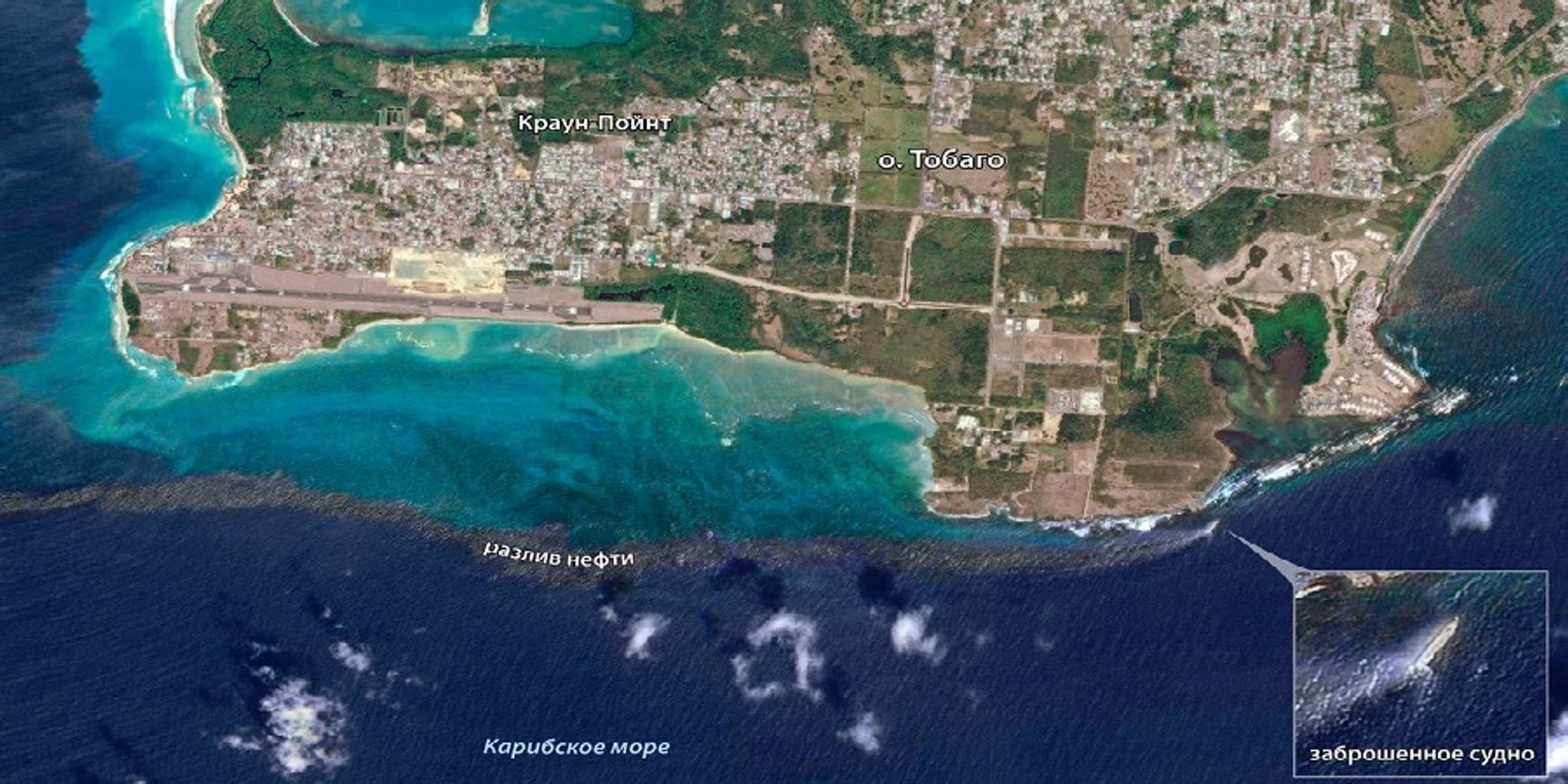
The spill of petroleum products from the overwhelming ship occurred off the coast of Trinidad and Tobago on February 27, 2024 and reached the island of Boneir in the Caribbean, owned by Venezuela
However, there are certain possibilities: in particular, when exporting oil through the Baltic (this is the largest Russian export direction), the court pass through the Danish straits, where they are inevitably forced to use the territorial waters of Denmark. Denmark has the opportunity to block their passage, now it is actively discussed .
A potential spill of oil in the Baltic Sea is especially dangerous, since in the waters of this water area reduced oxygen content, which, in particular, complicates the regeneration of the marine fauna. All countries that have access to the Baltic are seriously concerned likely Russian oil spills.
The likely spills of Russian oil are seriously concerned about all countries that have access to the Baltic
Will Denmark take real actions to overlap the straits for ships from the "shadow fleet"? Russian officials perceive this situation as quite real and actively threaten Denmark “consequences”, and the Prochrevsky “experts” discuss with might and main about such a prospect no less than Casus Belli, an offer to start a war.
Whether Putin will begin a war with NATO because of the question about tankers is a separate question. But apparently, NATO countries are now actively discussing the plan for the protection of Denmark and the region as a whole from the asymmetric attacks of Russia - in case of escalating the situation with the ban on the passage of dangerous tankers from the “shadow fleet” through the Danish straits. And there is a certain determination to deal with this fleet - all the more so since the risk of disaster is estimated as very high, and the damage will have to pay from the money of European taxpayers. It is worth expecting specific actions in this direction in the coming months.
NATO countries are now actively discussing a plan for protecting Denmark and the region as a whole from Russian asymmetric attacks
Such measures could be taken by Türkiye that controls the Bosphorus, through which all the Black Sea export of Russian oil passes - but Recep Tayyip Erdogan is in no hurry to introduce restrictive measures against Putin. However, in the case of a sudden tanker disaster in the southern export direction, the situation may change.
But how effective are Western measures to bring vessels and companies related to the “shadow fleet” in the sanctions lists? Frankly, it is a little reminiscent of the pursuit of its own tail. Although all these things need to be done, but Russian exporters quickly manage to change the signs on tankers and one-day companies, and oil transportation, one way or another, work quite uninterruptedly.
The search for legitimate players in supplies chains could be more effective. At the end of the transaction, there is always some buyer-a trader, an oil refiner-who cannot completely work in the “gray” field and is a fairly open player. Such companies should be identified and directly threatened with secondary sanctions.
The oil refiner, unlike the carrier, is an open player who must be directly threatened with secondary sanctions
As we see, on the example of mass freezing of calculations and commercial ties with companies and banks of China, Turkey, India, the Middle East, for public players integrated into the international trade and financial space, this works. And “gray” players give a damn - they are specially created for one -time service of specific transactions, and work in the large market is not of interest to them, there is nothing to frighten them.
The dialogue about all this with Western colleagues is conducted, I want to hope that the tactics of the pursuit of “gray” players will soon change - or will be supplemented by the tactics of search and pressure on the “white”, which inevitably ends with each chain. But in general, of course, the West has to reconfigure the “price ceiling” implementation system on the go - with its introduction, the role of stimulating mechanisms was reassured (it was understood that buyers, carriers and insurers themselves would refuse to work with Russian oil at a price above the “ceiling”).
In return, it is necessary to actively develop instrumental control of transactions and supply chains. For this, an additional state may be required - no matter how taxpayers react to hire new bureaucrats. But the purpose of reducing the sources of financing of Putin's aggression against Ukraine, as well as to prevent probable disasters with global oil spills, pays for these possible costs.
Articles on the topic
They knocked on top. Why is the “ceiling of prices” for Russian oil work worse than expected
Gold palm oil. The head of Gazprom Neft escaped sanctions and bought a mansion in Cannes
We really need your help
Subscribe to regular donations