
Translated material
Russia is again in Modi. How India flirts with Moscow in exchange for cheap oil
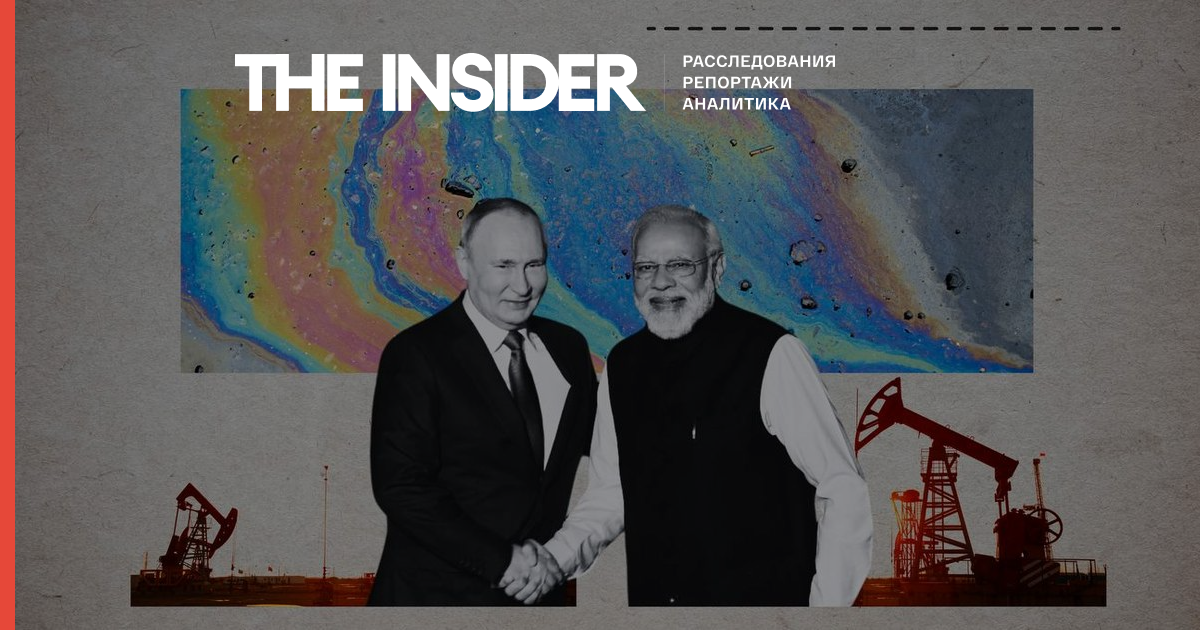

Russia is again in Modi. How India flirts with Moscow in exchange for cheap oil
The Insider 7 July 2024 Indian Prime Minister Narendra Modi flies to Moscow to meet with Vladimir Putin. This is a big event: since the beginning of a full -scale invasion, India at a political level has been distanced from Moscow. The official Delhi condemned the invasion of Ukraine, but, like China, it helps Russia to bypass sanctions, and in return receives a huge discount on Russian oil. Modi, whose party modestly performed in the parliamentary elections and whose authoritarian manners led to the cooling of relations with the United States, needs foreign policy victories and tries to benefit from the intermediary between Russia and the West.
Content
Russia is closer to Europe and China
The split with the West
Cheap oil and weapons: what Modi wants from Putin
Russia is closer to Europe and China
Immediately after the re -election to the third term in June, Modi visited the meeting of the leaders of the Big Seven in Italy, where he met with Macron, Bayden and Zelensky. However, after this, the Indian prime minister defiantly ignored the Swiss Summit in Ukraine, sending a delegation there, led by Pavan Capur, the ambassador of India in Russia since 2021. However, Kapur did not sign the final resolution of the summit. This is not so much a challenge to the West as the emphasized neutrality of India. At the same time, at the meeting of the G7, Modi turned out to be a welcome guest, which is well reflected not only in Indian , but also in Western media. Obviously, Western countries do not lose hope of pulling India to their side or at least not allow excessive rapprochement of Delhi with Moscow. Against this background, there are even speculations that the leaders of European countries want to use India neutrality in negotiations to resolve the military conflict in Ukraine.
Perhaps the image of a parliamentary, a “friend of the world” (that was the name of India at the Swiss summit) and an intermediary between Europe and Russia is beneficial to India politically, but from friendship with Moscow, the country receives direct economic benefits in the form of cheap oil, and so far it seems that this argument is outweighing. For the sake of a visit to Moscow, Modi missed the SCO leaders summit on July 3–4 in Kazakhstan. Obviously, this is an injection to the initiator of the summit-China, with whom India had a relationship from border conflicts several years ago.
At the same time, a visit to Moscow is a message to the West.
The split with the West
The failure of the “abolition” of Russia is in a hurry to recognize Bloomberg and Reuters . After February 2022, the Chinese leader Xi Jinping came to Moscow in 2023, but India is historically more closely connected with the West than China, and even after a full -scale invasion, it was quite clearly distanced from Moscow , so Mode's arrival looks more defiant. Let India refrained from the open condemnation of the Russian invasion of the UN vote, but since 2022, leading Indian newspapers condemned Russia's invasion of Ukraine. The tradition of the annual October Russian-Indian summits was interrupted , which passed for more than 20 years without interruptions (the first took place in October 2000 on the initiative of Vladimir Putin). In September 2022, at the SCO leaders in Kazakhstan, Modin told Putin that “now is not the time for the war”, expressing his solidarity with Western countries criticizing the war in Ukraine.
But recently, the diplomatic rhetoric of India is changing: now India not only does not stay away from Russia in a public field, but, like the Kremlin, criticizes the West. There are reasons for this: strengthening authoritarianism in India in recent years has been criticizing from Western countries, and the country's authorities are more and more sharply responding to it. On June 28, the Speaker of the Indian Foreign Ministry Randhir Jayswal openly condemned the United States and rejected India presented by the US Commission on International Religious Freedom for 2023 of charges of religious intolerance, the oppression of minorities and illegitimacy of court decisions in the country.
The position of the Party of Prime Minister Bharatiya Dzhanat Party (“Party of the Indian people”, BJP) in the new parliament worsened compared to the previous two terms, when she had the majority of places. In the latest elections, BJP received only 240 chairs (in total 543 places in parliament), and together with the allies-292. The vote of the opposition, headed by Rahul Gandhi, the leader of the oldest party of Bharatiya, Rashtriy Congress, (“Indian National Congress”, Inc) and the representative of the political dynasty of Neru-Gandy, has become louder: there are now louder: there are now for 50 people for 50 people. More, and their allies are 90 (total 251 place). This time, Congress managed to create an India alliance (The Indian National Developmental Inclusive Alliance) with socialists and regional parties to push nationalists and Modi. The first reports from the meetings show that the loss of the majority party in parliament was tangible.
Now India not only does not stay away from Russia in a public field, but, like the Kremlin, criticizes the West
Jaiswal emphasized that the United States should not interfere in India’s affairs, in which the States, they say, do not understand anything. Moreover, the diplomat made oncoming accusations: in 2023, representatives of the Indian diaspora in the United States (more than three million people) were faced with “a number of hatred crimes”, with racism and vandalism in places sacred to Hindus.
A recent interview with the former Foreign Minister of India, Kanwavl Sibal, also records the country's message to the West: “If you are not able to manage your relations with Russia, this is not our problem and not a reason to reduce our ties.” In an interview, Sibal criticizes the democratic institutions of the United States with rapture, because India itself can show what the “largest democracy in the world” looks like: the recent parliamentary elections distinguished not only the highest turnout in the history of the country (about 70%), but also the highest appearance of women, as well as the unexpected loss of the majority of Modi, which would be difficult to falsify.
At the same time, it does not seem that India is going to tear ties with the United States, for which it is one of the main sources of “human capital”: the country supplies the West by specialists of the technical sector. The mission of India, as Modi formulates it, is to transform the world with the help of artificial intelligence ( the key slogan of India at the G7 summit was “Ai For All”). The World Bank regularly issues loans for the training of Indian specialists in this area. For example, in 2023 a loan of $ 255.5 million was allocated for the development of technical education in India. Moreover, Joe Biden’s office declared the country a key partner in the Indo-Pacific Strategy of the United States.
India has always been sensitive to the instructions of the West about what she needed to be, but recently criticism has become perceived especially acutely. This is also due to Modi’s attempts to cleanse India from colonial history, by which he understands not only European colonization, but also conquest by Muslim societies in the Middle Ages. Indian national identity, according to the ruling party, should be associated with Hinduism, religion, which they consider to be the main spiritual core of India. This was manifested, for example, in an attempt to rename the country from India to Bharat - as the country is called by Hindus. However, so far the renaming has not succeeded . Almost 15% of the population of India is Muslims, and they did not support the initiative of the government to pretend that they have no relation to the country.
Modi’s government also seeks to nationalize the country's economic model, which is manifested in strengthening the national currency and the transition to self -sufficiency according to the Swadeshi model (letters “its own country”) - a movement that arose at the beginning of the 20th century as a protest against the trade of British goods. All this becomes additional lines of the split with the West.
Cheap oil and weapons: what Modi wants from Putin
The price of rapprochement with Moscow is easy to calculate in specific amounts. India receives Russian oil with a huge discount, and even pays for it in rupees that remain inside the Indian economy. According to The Hindustan Times, $ 25 billion remained in India thanks to such a policy over the past year in India.
The position of the Party of Prime Minister Bharatiya Dzhanat Party (“Party of the Indian people”, BJP) in the new parliament worsened compared to the previous two terms, when she had the majority of places. In the latest elections, BJP received only 240 chairs (in total 543 places in parliament), and together with the allies-292. The vote of the opposition, headed by Rahul Gandhi, the leader of the oldest party of Bharatiya, Rashtriy Congress, (“Indian National Congress”, Inc) and the representative of the political dynasty of Neru-Gandy, has become louder: there are now louder: there are now for 50 people for 50 people. More, and their allies are 90 (total 251 place). This time, Congress managed to create an India alliance (The Indian National Developmental Inclusive Alliance) with socialists and regional parties to push nationalists and Modi. The first reports from the meetings show that the loss of the majority party in parliament was tangible.
India receives Russian oil with a huge discount, and even pays for it in rupees
In 2023, the volume of oil supplies from Russia increased sharply (140% of the volume of 2022, according to Times of India). Indian oil refineries purchase Russian raw materials for further processing and sale, and mainly to Europe. According to the Indian Chamber of Commerce and Industry, the country's income from the sale of oil to European countries over the past year has reached a total of $ 18.4 billion. For Russia, everything is not so clear: on the one hand, trade helps to bypass sanctions (turnover has grown from $ 13 billion in 2021 to $ 65 billion according to the results of 2023), on the other, the need to pay in the Rupies In many ways, it compensates for benefits.
In recent years, India is raising in every sense. Having caught up with China by the population (1.4 billion), it is experiencing rapid economic growth - over the last fiscal year, which ended in March 2024, the country's GDP increased by 8.2%. Cheap Russian oil, of course, only contributes to this growth. But despite the economic growth, the ruling party loses popularity, which serves as an additional incentive for Modi: he needs successes at least in the external arena.
Firstly, he can try to achieve even more oil discounts. Secondly, the meeting will discuss the issue of the new trade route-the eastern naval corridor connecting Vladivostok and Chennai, the capital of Tamilnada on the eastern coast of Hindustan. Modi back in 2019 flew to Vladivostok to discuss this project. This path would simplify logistics in the conditions of intensive development of trade between the two countries. Thirdly, India, which has stable relations with European countries and the USA in the field of defense, is going to expand long-standing military ties with Russia. In 2021, countries signed an agreement on military-strategic cooperation, regular joint marine exercises, the exchange of military personnel and technological developments for the next 10 years. However, now Modi and Putin can prepare a new agreement. First of all, it will concern cooperation in the field of logistics and transmission of India of new technologies that have already been tested in real hostilities in Ukraine. Modi will probably strive to ensure that Russia produces military equipment in India.
The position of the Party of Prime Minister Bharatiya Dzhanat Party (“Party of the Indian people”, BJP) in the new parliament worsened compared to the previous two terms, when she had the majority of places. In the latest elections, BJP received only 240 chairs (in total 543 places in parliament), and together with the allies-292. The vote of the opposition, headed by Rahul Gandhi, the leader of the oldest party of Bharatiya, Rashtriy Congress, (“Indian National Congress”, Inc) and the representative of the political dynasty of Neru-Gandy, has become louder: there are now louder: there are now for 50 people for 50 people. More, and their allies are 90 (total 251 place). This time, Congress managed to create an India alliance (The Indian National Developmental Inclusive Alliance) with socialists and regional parties to push nationalists and Modi. The first reports from the meetings show that the loss of the majority party in parliament was tangible.
Modi will probably strive to ensure that Russia produces military equipment in India
In terms of military cooperation, India flirts with the United States simultaneously. Modi visited Washington at the end of June 2023, and his visit was dedicated to an agreement to expand the military cooperation of India and the United States and the expansion of the logistics exchange agreement signed in 2016. Thanks to this agreement, refueling and repair of warships of the two countries in each other is possible. The report on the relations of India and the USA in the military sector says that the United States is the largest trading partner of India in 2022–2023. It is difficult to consider a parallel dialogue with Washington and Moscow otherwise than a bargaining with an attempt to knock out the most favorable conditions from each side.
The problem of this seemingly very beneficial position for India in one thing: Delhi in the current conditions cannot abandon the economic partnership with any other side, which means that neither the West nor the Kremlin cannot become a real ally, which is most likely to understand there and there. And this means that India does not have to count on high concessions.
The position of the Party of Prime Minister Bharatiya Dzhanat Party (“Party of the Indian people”, BJP) in the new parliament worsened compared to the previous two terms, when she had the majority of places. In the latest elections, BJP received only 240 chairs (in total 543 places in parliament), and together with the allies-292. The vote of the opposition, headed by Rahul Gandhi, the leader of the oldest party of Bharatiya, Rashtriy Congress, (“Indian National Congress”, Inc) and the representative of the political dynasty of Neru-Gandy, has become louder: there are now louder: there are now for 50 people for 50 people. More, and their allies are 90 (total 251 place). This time, Congress managed to create an India alliance (The Indian National Developmental Inclusive Alliance) with socialists and regional parties to push nationalists and Modi. The first reports from the meetings show that the loss of the majority party in parliament was tangible.
We really need your help
Subscribe to regular donations