
Translated material
Unkind Samaritans. How the descendants of those who stood at the origins of the Arab-Israeli conflict live
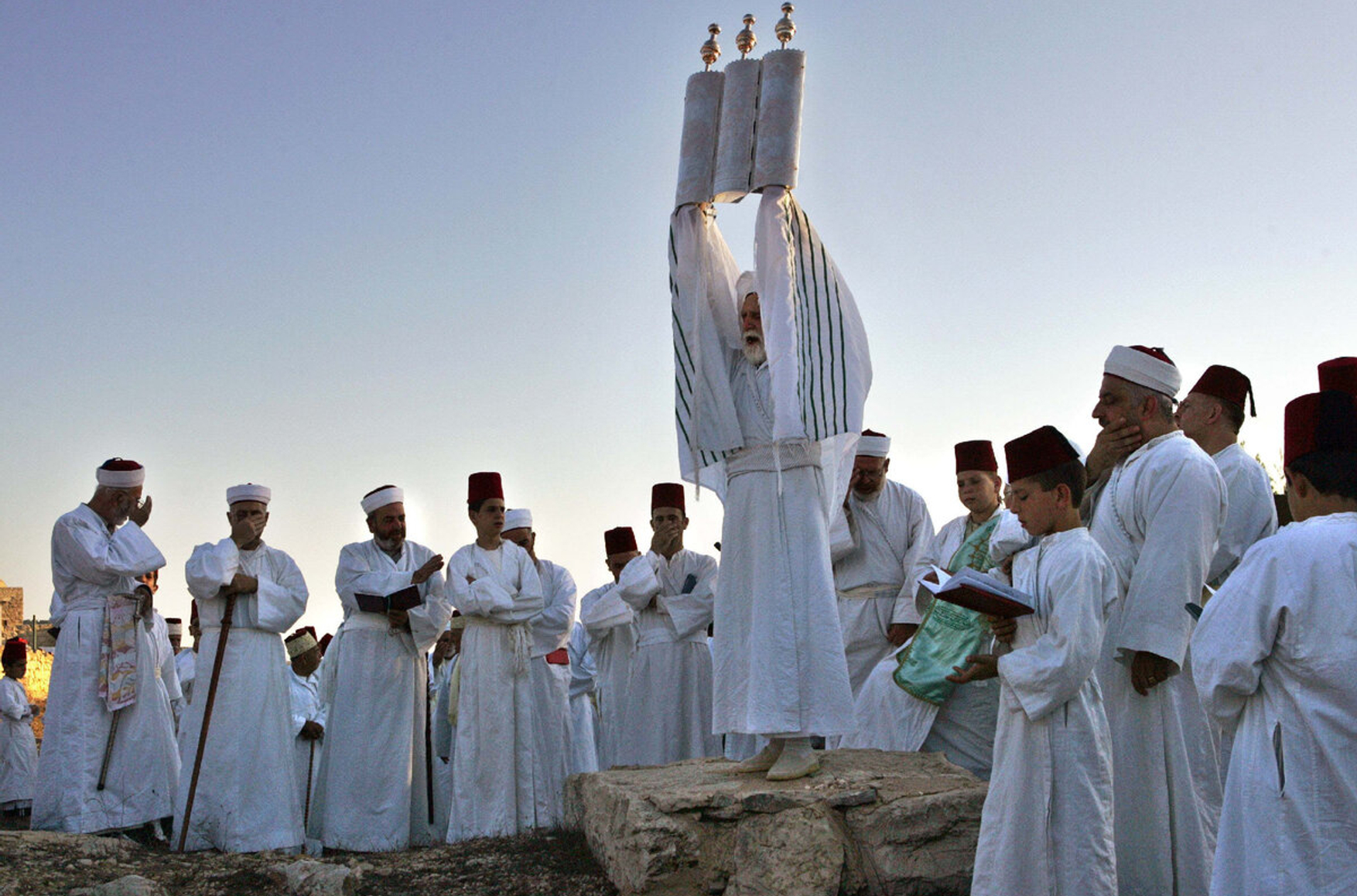
The ongoing war in Gaza became another episode in an endless series of battles for the Holy Land. A series is so long that many of the peoples who took part in the struggle managed to disappear almost without a trace, and others, once formidable and dangerous, turned into powerless observers who were unable to put an end to violence, many centuries ago, the forefront began. This happened with the Samaritans, who have been one of the most implacable enemies of the Jews for many centuries, but today the descendants of this people peacefully coexist with the Jews, and every Samaritan has not only Israeli, but also the Palestinian and even a Jordanian passport.
Content
Disassembly in Little Jerusalem
Whose temple?
The last of the Samaritans
Aliens among their own
Disassembly in Little Jerusalem
In 66 n. e. The Roman prosecutor of Judea Gessia Flora ended money. Most likely, he lowered everything to grandiose feasts, luxurious outfits and marble palaces. The official is generally used to living in a wide leg, and, according to the memoirs of his contemporary, historian Josephus, “entire districts were depopulated due to his greed; Many left their tribal dwellings and fled to other people's provinces. ”
Flore decided to replenish his treasury from almost the only source that had not yet been ruined by him-due to silver from the treasury of the Jerusalem Church, the main shrine of this earth, the strange, by the standards of the polytheists-screamers, the abode of God, whom the locals considered not only the main, but the only one.
The messengers sent by the official took 17 talents of silver from the temple. Even for the not the richest province of the empire, which was Judea, it was not a sky -high amount. In terms of modern money, about $ 500 thousand is released. But the Jews outraged the very fact that the pagan was plundered by what belongs to God, took treasures, which only priests who were elected from them by the Almighty himself can dispose of.
A peaceful protest swept through Jerusalem. The Jews began to collect a small copper coin in clay bowls, announcing that all the money would go to the prosecutor. Both the dumplings and copper in them were inalienable attributes of urban beggars, that is, the Jews unequivocally hinted to the official, which they consider him a beggar and poor, who is able to live only with alms. The copper was thrown into the courtyard of the residence of the prosecutor and even under the feet of his family members. Take, they say, you wanted it, our pennies.
The proud aristocrat was terribly offended. On his orders, a large detachment of soldiers was sent to Jerusalem to restore order there. If the soldiers were the Romans, then perhaps everything would have done with little blood-someone would be carved, someone would be thrown into prison, and at that the end of protest. But Flor, either intentionally, or because the Roman legions actually were not at the time at that time, he sent the Samaritan soldiers to the city of the Empire-the worst enemies of the Jews.
They immediately exposed their swords and began to kill the Jerusalems to the right and left. The Jews also took up weapons, and the peaceful protest very quickly grew into a war that went down in history as the first Jewish. The first - because it was followed by a series of others that led to the destruction of the temple, the complete ruin of Jerusalem, the deaths of hundreds of thousands of people and, in the end, to the expulsion of Jews from the Holy Land.
The return of the Jews to the homeland of the ancestors and the revival of the first subordinate, and then the Jewish state destroyed by the Romans led already in the 20th and 21st centuries to a new wave of violence and wars. This time already Arab-Israeli.
If ancient historians are not mistaken and the beginning of the confrontation on the Holy Land really laid the order given in the fever, the Samaritans shed the first blood in this endless war - the people so similar to the Jews and so hostile to them.
The Samaritans shed the first blood in this endless war - the people are so similar to the Jews and so hostile to them
Whose temple?
“We are glad for everyone here. At any time, come to us. Any day. Well, besides Saturday, of course. On Saturday, we only pray. Shabat! We honor his whole story, ”the gray -bearded smiling old man with glasses and a strange hat, similar to a tiny turban, say goodbye to the guests.
This is the high priest of the Samaritans, who accidentally stumbled upon a group of tourists when he was going home from the synagogue. Tourists would have passed by if the guide had not stopped them and had not presented them with an elderly passerby. The high priest pronounces several good parting words, says goodbye to each hand and invites you to come again. Then he continues the way home. In the hall, he takes off his little turban - a symbol of belonging to the estate of the clergy - and sits together with relatives in the dining room, waiting for his wife to bring him dinner. On the walls of the rooms, photographs of priests in festive vestments, someone’s wedding photo and embroidered with a gold thread on black fabric, are hung on the walls: “May this house be blessed by Allah.” The wife from the kitchen shouts something to the high priest in Arabic, he apologizes and goes to her.

High Priest
The surname of the high priest is Cohen. It is worn by all representatives of the priestly class of the Samaritans. The Jewish coenas are also the descendants of the priests, but from the moment the Romans of the Jerusalem Temple of the Jews, the Institute of Priesthood himself disappeared by the Romans of the Jerusalem Temple, and the equivivi scholars elected by the god Coins. The Samaritans, on the other hand, were preserved.
“Our temple is also destroyed, it is already not many hundreds of years, but we know that it can be restored at any moment. The Messiah will come and raise it from the ruins, and our priests will immediately start the services there, ”explains the grandson of the old man Abdullah Cohen. “We are waiting for the Messiah, we know that he will come, and prepare for this.”
Like most Samaritans, the grandson of the high priest of the Arab name and the Jewish surname. The Samaritans lived for so long among the Arabs that they adopted a lot from them. Arabic dishes are prepared in their homes and listen to Arabic songs, in everyday life they speak almost exclusively in Arabic, and their ancient language, similar to Hebrew of biblical times, has been preserved only in sacred books and prayers.
Abdullah himself, his grandfather and all the other Samaritan Coens are the descendants of Aaron, the brother of Moses. It was Aaron who led the people of Israel to the Holy Land from Egyptian slavery after the death of his brother. Moses, as the Bible says, the Almighty indicated the place for the construction of the altar, around which the temple was later erected, but his brother was already built by the altar.
“Let them become on Mount Gerizim when the blessing of the people is pronounced,” Torah quotes the words of Moses, conveying the order of God who escaped from captivity to the people.
Mount Gerizim, located in the region, which the Palestinians call the western bank of the Jordan River, and the Israelis - Judea and Samaria, can be seen from the terrace of the Coen house. It has long been there for a long time neither a temple nor an altar, only the ruins of a Byzantine church built many centuries ago and a small guard tower of Ottoman times.
Ottoman fort on Mount Gerizim
The Samaritans believe that it was they - the people of Israel, it was God who gave the Holy Land to them, that it was Mount Gerizim - the place closest to heaven on earth. For centuries, the Jews were perceived by the Samaritans as impostors, as the upstarts, who appropriated the Holy Scriptures - the Torah.
The Samaritites believe that they are the people of Israel, and the Jews are the impostors, who spoiled the Holy Scriptures with their innovations - the Torah
According to the Samaritan legend, the Jewish king David was so impressed by the beauty and brilliance of the temple on Mount Gerizim, which ordered his architects to build his exact copy in his capital. Built by the son of David, King Solomon, the Jerusalem Temple in the eyes of the Samaritans was a fake, completely devoid of divine presence. The Jews, in turn, were already considered the Samaritans to be the impostors and accused them of assigning and distorting sacred texts.
The Holy Land of the Stone and Desert, its resources are scarce, drought and crop failure in the old days were ordinary phenomena, so the peoples inhabiting these lands were almost in constant conflicts due to pastures, fields and sources of fresh water. Religious disagreements not only added sharpness to these conflicts, but brought them to a new, already existential level.
The Jews and the Samaritans fought against each other not only for access to a stream or for the best meadow for grazing cattle, but also for the right to be called the God -chosen people, demanding that the enemy abandon this title. That is why the Samaritans began to destroy the inhabitants of Jerusalem with such enthusiasm, as soon as the prosecutor allowed them. They killed not just enemies, but heretics.
To imagine that the Samaritites and Jews can relate to each other somehow differently, except with hatred, only blessed or saint could. It is not for nothing that the Samaritan, that is, the sworn and terrible enemy helps in the gospel parable, the exhausted dying Jew, from whom one could expect anything, but not sacrificial readiness to help the Jew. This is a parable to demonstrate to believers that there is nothing impossible for God and that he is able to breathe compassion into the heart of even the most implacable enemy.
The last of the Samaritans
In honor of this nameless biblical character, a store is named at the entrance to the village of Samaritan. Under the sign of “Good Samaritan”, an amazing set of goods was collected: Ukrainian ice cream, Belarusian vodka, Kosher sausage, oilcloth icons, Chinese plastic toys and volumes of the Torah in the ancient Samaritan language. In addition to this store, there are still a couple of small shops in the village. No more. Only four hundred and small people live here. About half of all the Samaritans remaining in the world.
Only four hundred and small people live in the village - about half of all Samaritans remaining in the world
Once it was one of the most numerous peoples in the Middle East, but now it has almost no left. This was facilitated by the endless wars raging in the region and epidemics, and Arabic, and then Ottoman rule, during which Islamic law was the main source of law.
The Islamic law, although it imposes significant restrictions on the Jews and Christians, still allows them to live among Muslims, build a career in a civil service and own property, and also allows Muslims to trade with them, work on them or hire them to work. But he does not say anything about the Samaritans, they are excluded from the list of Gentiles endowed with rights. The only way to get these rights to receive for several centuries remained a transition to another faith. First of all, in the prevailing Islam. And the Samaritans massively resorted to this method.
So massively that they soon became almost invisible. The faithful faithful to the faith of grandfathers and great -grandfathers were literally thrown out on the side of economic life. They had to be content with the most dirty, low -paid work, which others refused to take on, or beggarly. The Samaritans quickly disappeared from the focus of the attention of chroniclers and travelers-few people were interested in finding out what the few suboners and beggars who live somewhere in the backyards of the poor areas do there.
In the West, they were generally considered an extinct, or even fictional people, and discovered the Samaritans only at the turn of the 19th and 20th centuries, when the Ottoman Empire, which had already crackled at the seams, was part of which European and American teachers and religious missionaries massively went.
In the West, the Samaritsy for a long time was generally considered an extinct, or even fictional people
With surprise and horror, they found that the biblical people still exist, but is in a miserable, beggarly state. The appearance of Europeans and Americans was both salvation and a curse for the Samaritans. With salvation - because foreigners brought money with them, thanks to which the almost disappeared people could get out of poverty. With a curse - because in exchange for dollars, francs, pounds and rubles, foreigners took the ancient manuscripts of Samaritans.
A significant part of the literary heritage accumulated by centuries was sprayed by museums, libraries and private collections. The Samaritans refused to sell only the most valuable of books - the Torah scrolls. With them, the ancient people, of their own will, will not part for anything.
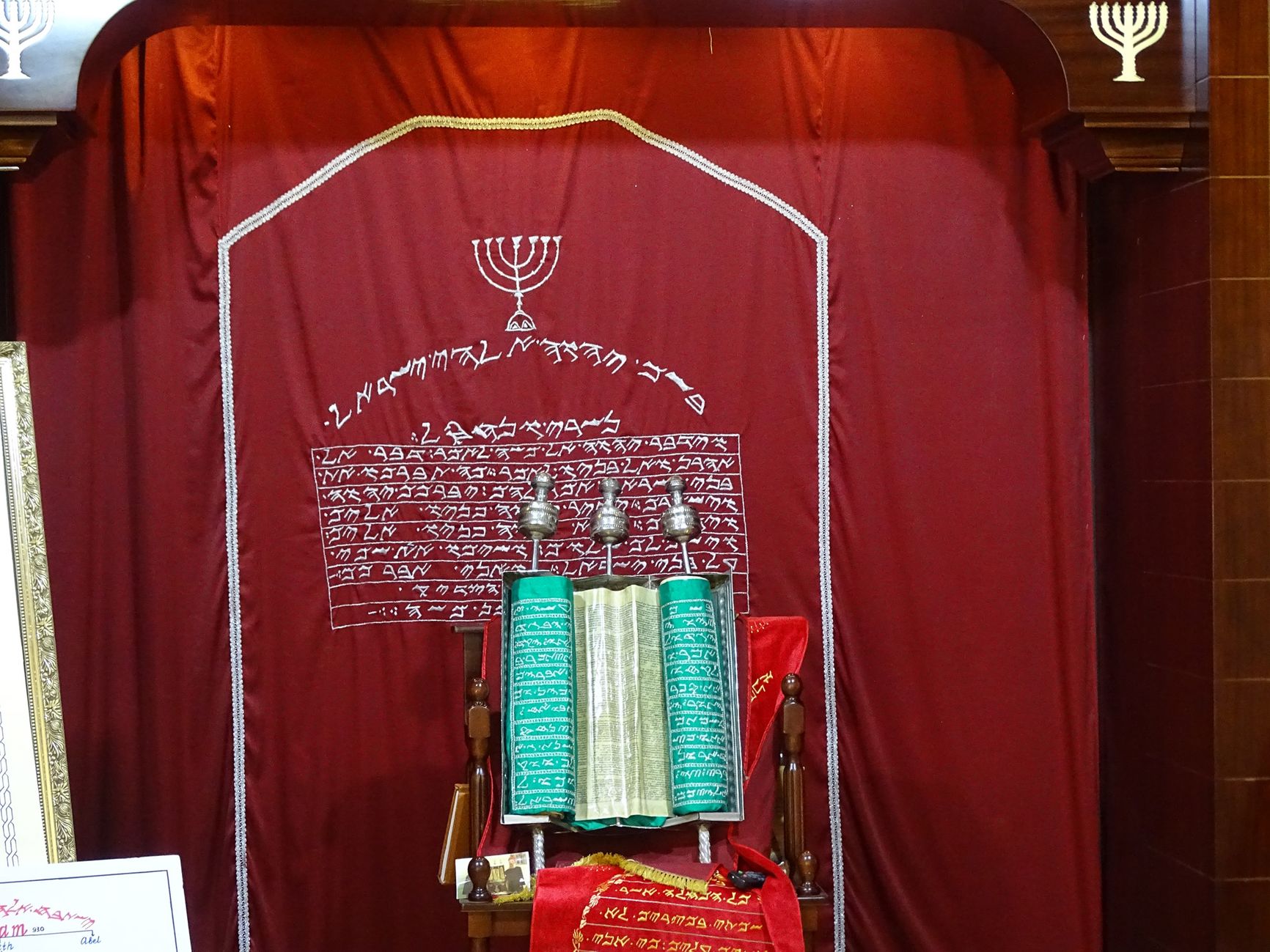
The scroll of the Torah Samaritans
The main of these scrolls are stored in the synagogue in the same village of Samaritans at the foot of Gorisim Mountain. This village is not at all like other Middle Eastern villages. There are almost all new houses of European or American layout, an excellent asphalt road on the only big street, expensive cars are parked in the yards. Everything is beautiful, functional and modern.
The fact that the village is located not in Belgium and not in Pennsylvania resembles only signs at the entrance to it, warning in several languages that the presence of Israeli citizens here is strictly prohibited. And this is not an echo of enmity of the Old Testament times, this is the requirement of the Palestinian administration, on the controlled territory of which the village is located.
From the hills, on which the Samaritans live, a wonderful view of the plug is opening - a city that was named after biblical prophets, under the Romans, was renamed Flavia Neapolis, and during the years of the crusaders was known as Naples. For a long time, Nablus was almost the only place on the ground where the Samaritans lived.

View of the plot
Once they were settled in many cities and even in gas they had their own relatively prosperous community. But the Samaritans fled from Gaza at the end of the 18th century, frightened by the advance of the Napoleonic armies. In other cities, their communities fell into decay and disappeared. And only the slanting remained a house for the Samaritans. They had their own quarter in the city, their synagogues and baths, their own schools and hospitals.
The space of their presence was constantly declining after the reduction in the number of Samaritans: the empty synagogues were rebuilt in the mosque, into the houses whose owners died, without leaving the heirs, Christians and Muslims entered. But in the city - whatever it was called, whoever they rule - the Samaritans always lived. The Samaritan story of the plot ended in our time.
Aliens among their own
The Samaritans left the plot in the 1990s. Part of the community moved to Israeli Holon, where several Samaritan families already lived, part - to that very village on the slope of Gerizim. The Samaritites say that the cause of such a mass departure was a conflict with the local mafia. The bandits stole the ancient scroll of the Torah from the synagogue and threatened to take away other valuable artifacts if the Samaritans did not pay them a million dollars.
In order to save the relics, the Samaritans explain, they decided to move to where these relics would be safe. However, probably, the conflict with the mafiosi was only one of the reasons for the evacuation of the whole community. In the late 1980s, Palestinian groups began an uprising against Israel, now known as the first intifada.
Samaritans (with their surnames and very close to Jewish traditions) were simply unsafe to stay in the Palestinian territories covered in anti -Israeli performances. Especially in the embroidery, where the positions of Muslim radicals were always strong. It is possible that the pressure from these radicals became another reason, because of which the Samaritans were evacuated from the plug. They evacuated, but took with them a part of the usual Nabluski life.
In the school yard in their village there is a Palestinian flag, Palestinian officials come to the house of the high priest with official visits, Palestinian television comes to shoot all the religious holidays of the Samaritites, especially emphasizing in the plots, which both priests and believers are Palestinian citizens. This is really so, but only partly.
Each Samaritan has not only Palestinian, but also Israeli and even a Jordan passport. The latter is a gift from the Jordanian monarchs, who took upon themselves the patronage of the ancient people. The Israelis, having discarded the centuries -old enmity, recognize the Samaritites part of the Jewish people and it is on this basis that they provide them with Israeli citizenship.
Each Samaritan has not only Palestinian, but also Israeli and even a Jordan passport
The Samaritans have always had a special, not similar to anything, and so continues now. Arabic -speaking and until recently rooted in the Palestinian environment, they nevertheless profess a religion close to Judaism, they have no fundamental disagreements with the Jews or with the Arabs, their small number (now the Samaritans in the world is about 900 people, while a hundred years ago the census discovered only 141 representatives of this people) excludes the possibility of discussing their own statehood. That is, they are not enemies to any of the neighbors.
In the recent past, individual ambitious Samaritans tried to use this special status in order to try to become intermediaries when resolving the Palestinian-Israeli conflict. Но эти попытки ни к чему не привели и сейчас упоминаются лишь в сносках книг о современном Ближнем Востоке как пример исторического курьеза.
Самаритяне слишком малочисленны и слишком чужи для того, чтобы влиять на соседей. Их община даже не смогла сформулировать свое однозначное отношение к идущей сейчас в секторе Газа войне. Этому мешает, с одной стороны, зависимость от израильских работодателей и иностранных туристов, большинство из которых — это паломники-евангелисты, полностью поддерживающие Израиль и обеспечивающие стабильный приток денег в самаритянскую деревню, а с другой стороны — близкое соседство с палестинцами, в том числе и с довольно радикальными.
Поэтому самаритяне по большей части хранят молчание, не вставая ни на чью сторону и стараясь держаться подальше от конфликта двух не чужих им народов. В конце концов, времена, когда они были достаточно сильны и влиятельны для того, чтобы заставить всегда неспокойный Ближний Восток считаться с собой, давным-давно прошли.
Articles on the topic
Judgment Day. How cows caused the Hamas attack on Israel
We really need your help
Subscribe to regular donations