
Translated material
Chronicle of political pressure. Results of the first seven months of 2024
More than fifty new “extremist organizations”, the death of Alexei Navalny, a prisoner exchange and the case of protests in Baymak: OVD-Info sums up the results of the first seven months of 2024.
Exchange of prisoners with Western countries
At the end of July and beginning of August, Russia, Belarus and three Western countries (USA, Germany, Slovenia) conducted a large-scale prisoner exchange. Among those released by Russia were political prisoners, activists, human rights defenders, politicians and journalists, accused and convicted on various charges (treason, espionage, anti-war statements and others). Read about who these people are in our material:
According to the initial agreements, Alexei Navalny was supposed to be released as part of the same exchange. His colleague Leonid Volkov spoke about this in his Telegram channel. “It’s indicative: Putin is letting go of living, cool people, whom their relatives are waiting for, whom their friends are happy to meet. He gets a murderer and a handful of loser spies who are waiting for oblivion,” the politician commented on the exchange.
Persecution due to anti-war stance
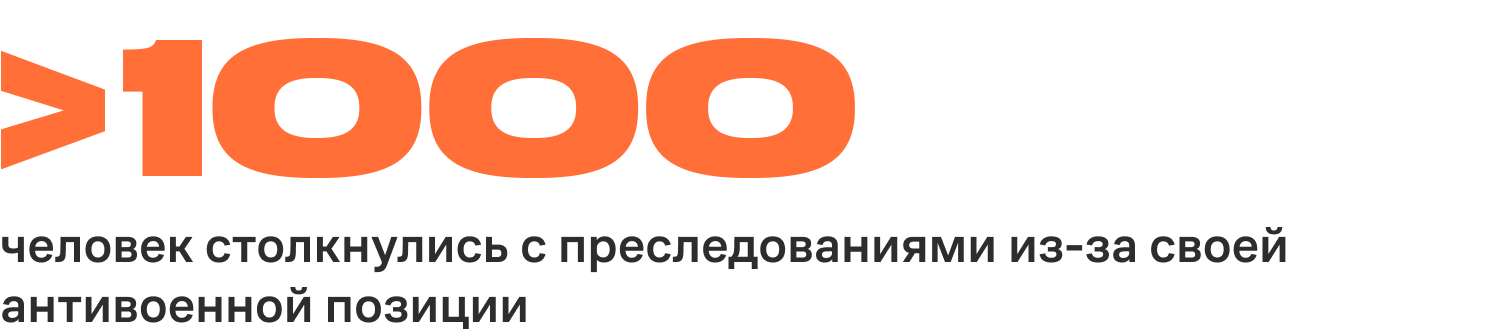

OVD-Info is aware of more than a thousand people who became involved in criminal cases because of their protest against the war with Ukraine. More than 500 of them are being prosecuted and prosecuted under articles introduced after the start of the full-scale invasion, which are instruments of military censorship (distribution of “fake news” and discrediting the Russian army). The defendants in such cases include not only activists and journalists, but also IT specialists, pensioners, healthcare workers, military personnel and representatives of other professions.
People with an anti-war position are also persecuted under other charges. The reasons may be calls to avoid mobilization , videos with discussions about the war , participation in street surveys , volunteer activities , desertion . Those involved in cases involving more radical actions (for example, arson of military registration and enlistment offices) are charged with terrorism, despite often minor damage.
We maintain regularly updated infographics about people who faced persecution because of their anti-war position, and the section “ Wartime Prisoners ” contains information about those persecuted on charges of arson, sabotage, military assistance to Ukraine and refusal to take part in hostilities.
“Foreign agents” and “undesirable” organizations
Rulemaking
In the first half of 2024, legislators paid special attention to the sources of income and property of those who disagree with the actions of the authorities. In February, Vladimir Putin signed a law on the confiscation of property and deprivation of honorary titles of people convicted under repressive articles.
A month and a half later, a law prohibiting advertising on the resources of “foreign agents” came into force. This led to a drop in income and the closure of several journalistic projects. In particular, journalists Elizaveta Osetinskaya , Ekaterina Gordeeva , Andrey Pivovarov and Yuri Dud spoke about the threat to their work. The latter called on companies registered outside of Russia to support independent journalists. In mid-June, a bill was introduced to the State Duma to ban advertising on “extremist” and “undesirable” resources: if adopted, it will limit the ability to place ads on Meta’s platforms (Facebook and Instagram).
In addition, deputies continue to fight the participation of “foreign agents” in social and political life. At the beginning of May, a bill was introduced to the State Duma that would prohibit “foreign agents” from participating in elections from the federal to local levels as candidates, observers, authorized representatives and proxies of candidates. By the end of the month, the president signed it. In mid-July, the authorities of St. Petersburg were able to take advantage of the new norm. For example, local politician Anna Karulicheva was added to the register of the Ministry of Justice just three hours before the meeting of the commission, which was supposed to decide on her registration as a candidate for the elections of municipal deputies.
Also in May, a bill was introduced to the State Duma expanding the concept of “undesirable organization”: after its adoption, the Prosecutor General’s Office will be able to recognize as such organizations with government participation (for example, state educational programs of other countries). In early August, it was signed by Vladimir Putin. In June, deputies developed a bill banning “foreign agents” from participating in the work of the federal and regional public chambers, as well as from engaging in other activities related to public control over the activities of government bodies.
"Foreign Agents"
93 organizations and individuals have been recognized as “foreign agents” since the beginning of 2024
The Ministry of Justice continues to replenish the register of “foreign agents”; since the beginning of the year, it has included, among others, Ekaterina Duntsova , who was planning to run for president, writer Boris Akunin , the movement of mobilized wives “ The Way Home ”, the Russian Socialist Movement , human rights activists Oleg Orlov and Ivan Astashin , the publications “ Kholod ” and “ VChK-OGPU ” (“Russian Crime”).
Due to inclusion in the register of “foreign agents,” businessman Oleg Tinkov had to close his foundation to fight leukemia, and several dozen non-profit organizations, due to the risk of “foreign agents,” terminated cooperation with the “Help Needed” project, which helped them raise funds. In early August, the project announced its closure.
Now OVD-Info is aware of at least 20 people who have become involved in criminal cases for violating “foreign agency” legislation. A criminal case under the second part of the relevant article can be initiated if a person has previously been brought to administrative responsibility twice within a year for failure to fulfill the obligations of a “foreign agent.” In 2023, the number of court decisions under the relevant administrative article increased sharply. In the summer of 2024, it became known that they began to persecute people who were not included in the register of “foreign agents”: due to the fact that they did not inform on themselves. After two prosecutions under this article, a person may face criminal prosecution under the first part of Article 330.1 of the Criminal Code.
At the beginning of the year, OVD-Info released the report “Cut off the oxygen” about the risks faced by “foreign agents” and the organizations and people working with them.
"Undesirable Organizations"
56 organizations have been designated as “undesirable” since the beginning of 2024
In the first half of 2024, the number of protocols under the administrative article on participation in the activities of an “undesirable” organization increased (Article 20.33 of the Administrative Code). Repeated violation of this norm within a year after the decision on the administrative case comes into force may become a reason for criminal prosecution under the relevant article. Administrative cases are brought against journalists of “undesirable” media, people who give them interviews, and even those who collaborated with “undesirable” organizations long before this term appeared in legislation.
Grigory Melkonyants, co-chairman of the Golos observer movement, has been in jail since last fall on a criminal case for organizing the activities of an “undesirable” organization: security forces consider the movement to be a structural unit of the “undesirable” election observation organization ENEMO. Protocols under 20.33 of the Code of Administrative Offenses are also drawn up for those who interact with “Voice”. Participants or followers of religious movements recognized as “undesirable” also face criminal prosecution: in particular, Allatra , Falun Dafa and New Generation .
"Extremists"
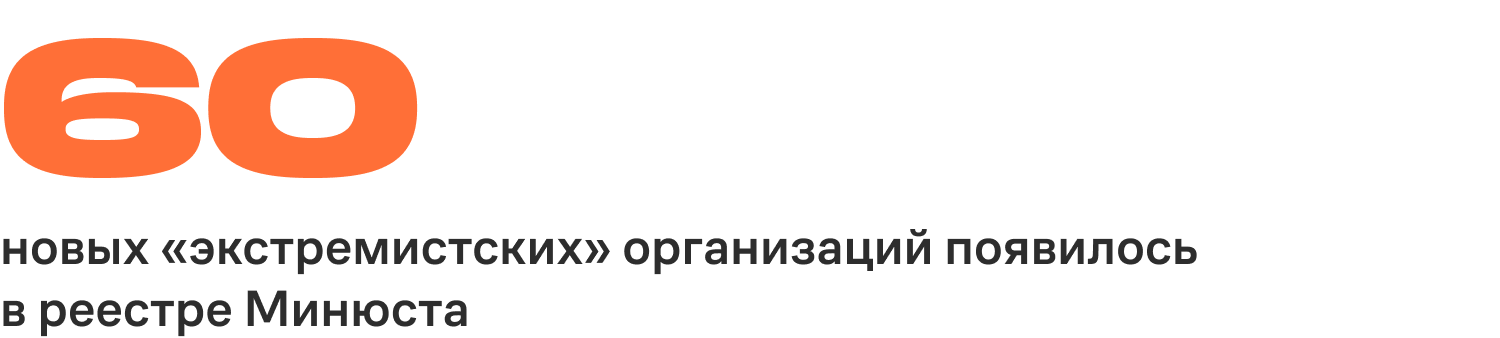
In 2024, the number of entities that are recognized as “extremist” in Russia has increased. In the first six months, such decisions were made, in particular, in relation to the “ Omsk Civil Association ”, supporters of Sergei Furgal , the family of Alexander Nevzorov and his wife Lydia , as well as the non-existent “ Anti-Russian Separatist Movement ” and 55 organizations that considered it “structural divisions”. Among the latter were the Free Russia Foundation, “Free Buryatia”, “Free Yakutia”, the German Association for Eastern European Studies,
Recognizing something as an “extremist organization” means a ban on the display of symbols (after the death of Alexei Navalny, it turned out that even his photograph or mention of his name can be considered such by the courts) or the distribution of related materials, as well as the threat of criminal prosecution for those whom the security forces may consider “supporters” of such an organization.
In addition, in July, State Duma deputies came up with a new initiative: they proposed to include in the Rosfinmonitoring list of terrorists and extremists people who are charged with crimes “motivated by hatred.” There is such a clause, for example, in articles about vandalism or the spread of “fakes” about the Russian army.
"International LGBT Movement"
At the beginning of the year, the Supreme Court’s decision to ban the “international LGBT movement” as an extremist organization came into force. After the full text of the decision was published online, it became known that the security forces consider 1984 to be the start date of this “movement” in Russia - the date of creation of the dissident project “Gay Laboratory” .
After the ban on the “LGBTQ movement,” Russian courts began to massively fine and arrest people for publishing rainbow paraphernalia. In Orenburg, three employees of the gay club Pose became defendants in a criminal case for organizing the activities of an extremist organization due to “propaganda of non-traditional relationships.”
The administrative article on “LGBT propaganda” is not used to put pressure on activists so often: a significant portion of the fines under it are imposed on the owners of television channels, bookstores, streaming services and other digital platforms. The reasons are either a demonstration of non-heterosexual relationships, or situations where law enforcement officers were able to come up with such.
The death of Alexei Navalny and the persecution of his supporters
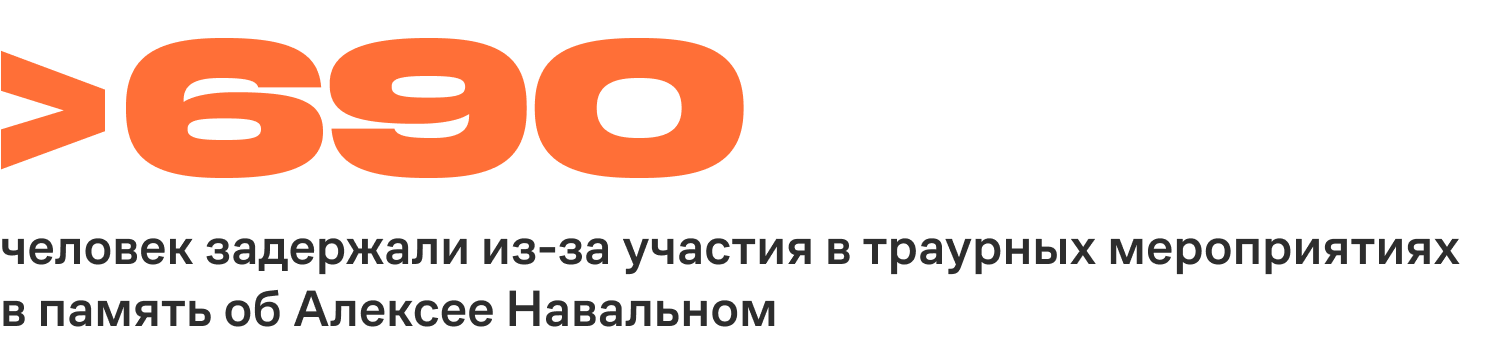
On February 16, Alexei Navalny was killed in a colony in the village of Kharp (Yamalo-Nenets Autonomous Okrug). In early August, the politician’s associates said that Navalny was supposed to be released as part of a major prisoner exchange between Russia, Belarus and Western countries. After this, people throughout Russia were detained for participating in mourning events, and the politician’s family could not obtain the release of the body for more than a week. At the beginning of March, Alexei Navalny was buried at the Borisov Cemetery in Moscow.
Some of the politician’s associates, lawyers and supporters are in prison or were forced to emigrate.
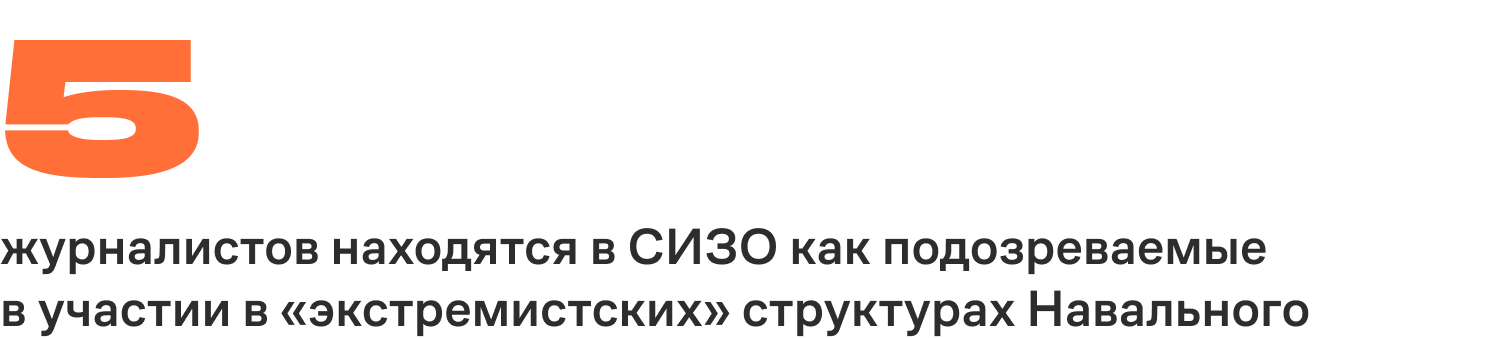
At least five journalists are in pre-trial detention center as suspected of participating in Navalny’s “extremist” structures. In March, SOTA.vision correspondent Antonina Favorskaya (Moscow) and RusNews journalist Olga Komleva (Ufa) were placed under arrest; later it became known that Konstantin Gabov (Moscow), who collaborated with the Associated Press and Deutsche Welle, and journalist Sergei Karelin (Murmansk) were taken into custody. In mid-June, Favorskaya’s colleague Artem Kriger was arrested in Moscow after a search.
Freedom of speech
Calls for terrorism, extremism and anti-state activities
In 2024, security forces continued to open criminal cases over statements that they saw as calls for terrorist, extremist or anti-state activities or justification of the former. The reasons for initiating such cases can be journalistic materials , publications on the Internet, private conversations and even performances. Thus, the director and screenwriter of the play “Finist Yasny Falcon” about women recruited into ISIS - Evgenia Berkovich and Svetlana Petriychuk - was sentenced to long terms in early July because of their theatrical production.
Cases of desecration of symbols and insult to feelings
What reasons did the security forces find in 2024 to open cases under articles of insulting the feelings of believers and rehabilitation of Nazism?
At the end of February, a court in Grozny sentenced Volgograd resident Nikita Zhuravel to three and a half years in prison because of a video of the burning of the Koran published on telegram channels. The young man was found guilty under the article of insulting the feelings of believers. This article, like the article on the rehabilitation of Nazism, is regularly used by security forces to persecute people who have committed minor hooligan acts, including as part of a demonstration of the struggle for public morality. Among those persecuted under these articles: the authors of a BDSM photo shoot at a St. Petersburg cemetery, a schoolboy who shouted “Heil Hitler” in a shopping center, a resident of Krasnodar who lit a cigarette from the Eternal Flame.
In addition to the above articles, due to the desecration of religious and ideological symbols, they can also be prosecuted under articles on desecration of burial sites , vandalism and hooliganism . Despite the fact that in such cases there is often no public danger, they are sentenced to real terms. Thus, Communist Party of the Russian Federation activist from Primorye Maxim Chikhunov was sentenced to three and a half years in prison for imitating the shooting of a memorial plaque of white general Mikhail Diterichs.
Freedom of assembly
Russian authorities continue to administratively and criminally prosecute those who oppose the war with Ukraine or in defense of those mobilized, trying to draw attention to environmental and social problems.
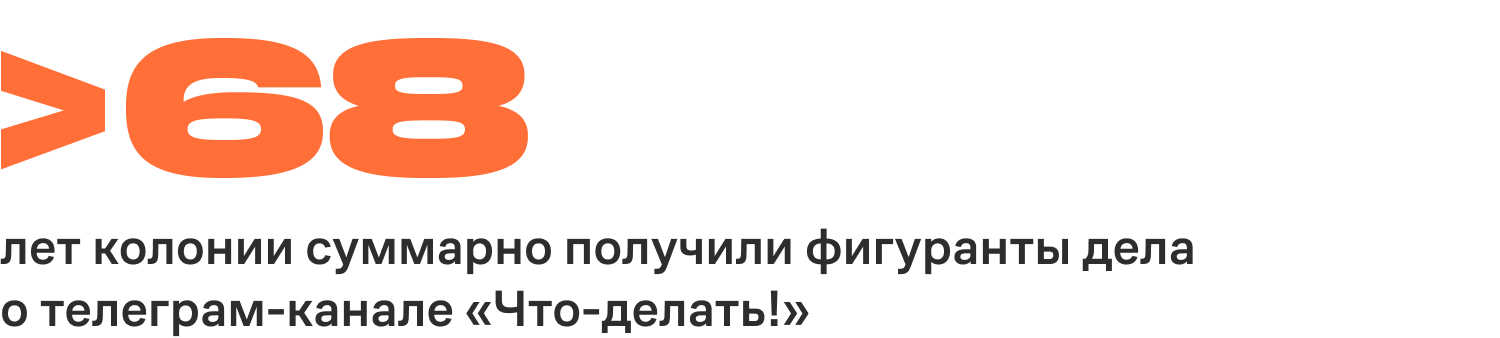
In April, a court in Moscow issued a verdict in the case of the telegram channel “What to do!”, in which, according to security officials, it was planned to coordinate mass unrest in 2021. All eleven defendants in the case received real sentences: from five years and two months to eight years in prison. One of the defendants received a deferment in serving her sentence because she has a minor child.
"Baymak case"
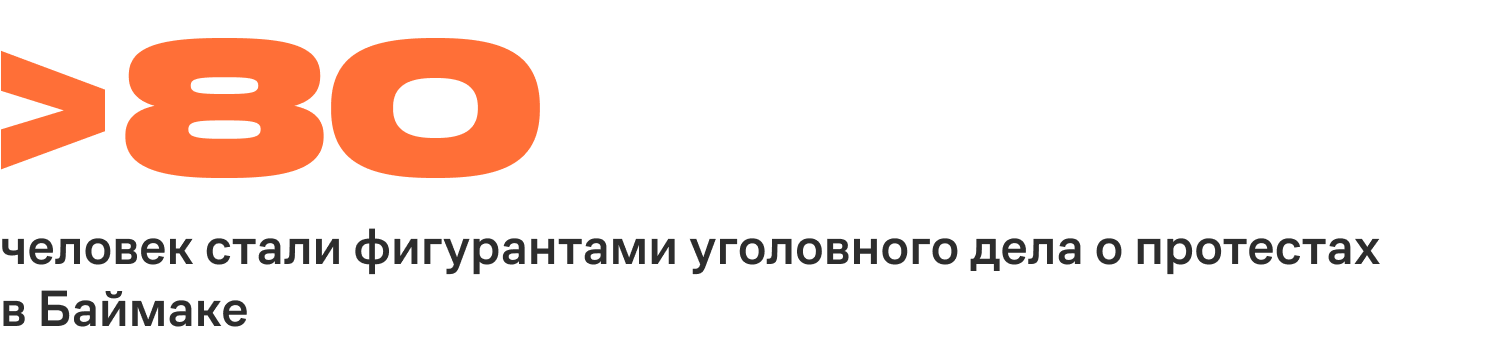
At the beginning of the year, a court in Baymak (Bashkortostan) sentenced local activist and ex-leader of the Bashkort movement Fail Alsynov. He was sentenced to four years in prison because of his speech at an environmental rally. After the verdict was announced, security forces began to detain people who came to support him, and clashes with the police began. OVD-Info spoke in detail about the events of that day in the text “ Protest of the “black people” ”.
Two people detained as part of the criminal case regarding the public gathering in support of Alsynov - Rifat Dautov and Minniyar Bayguskarov - died. In July, the Orsk court handed down the first verdict in this case: 50-year-old farmer Ilshat Ulyabaev was sentenced to five years in prison on charges of mass riots and the use of violence against a security officer. The press service of the court claims that Ulyabaev “admitted guilt and repented of his deeds.”
Repressions related to presidential elections
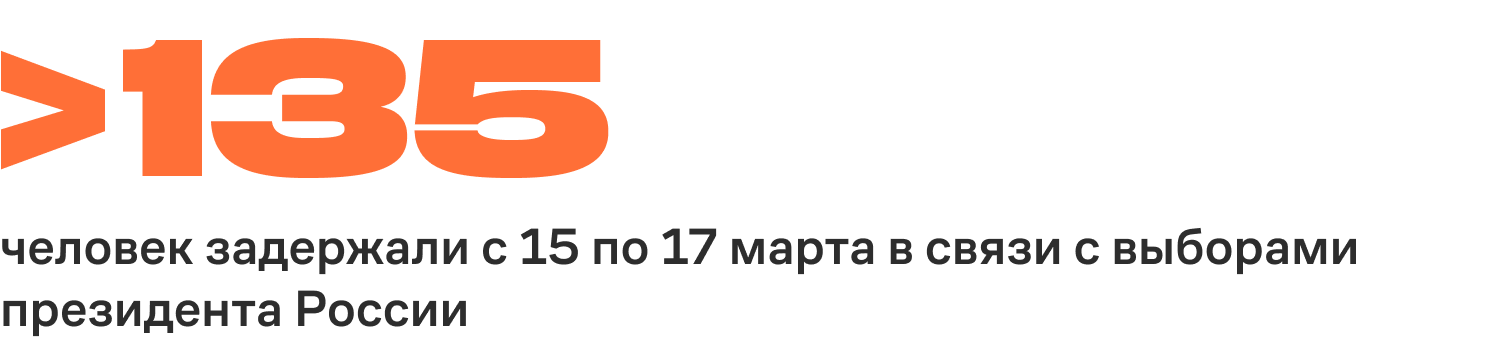
In March, Russia hosted a three-day event called “presidential elections,” at the end of which Vladimir Putin again declared popular support. Supporters of Alexei Navalny called on Russians who disagree with the current government to come to the polling stations on the last day by noon. People who supported this action on social networks, independent observers and those who expressed their civic position in the newsletter faced threats and pressure. OVD-Info kept a detailed chronicle of what was happening.
Defense of public morals
After Anastasia Ivleeva’s “almost naked” party, which took place in December 2023, the authorities, with the assistance of individual active citizens, intensified repression against those who, in their opinion, pose a threat to the maintenance of morality in society. OVD-Info collects related news into a separate chronicle. The reasons could be a blog about life with a rubber doll , lighting a cigarette in a sacred place , suspicions of homosexuality .
Repressions against residents of annexed Crimea
In annexed Crimea, opponents of the Russian government continue to be persecuted, in particular in cases of “military censorship.” Crimeans facing repression are often subjected to torture and ill-treatment, and are denied medical care. After the verdicts are passed, convicted Crimeans are transferred to serve their sentences in Russian prisons and colonies.
Crimean Tatars continue to be subjected to massive persecution by Russian security forces. Most often, they are persecuted on charges of involvement in the Islamist party Hizb ut-Tahrir, which is banned in Russia as a terrorist party. Crimean Tatar human rights activists and journalists also face pressure.
At the end of June, Ukraine reported that it had achieved the return of ten of its citizens who were subject to criminal prosecution by Russian authorities. Among them is the former deputy head of the Mejlis of the Crimean Tatar people Nariman Jelal. In September 2022, a Russian court in annexed Crimea sentenced Dzhelal to 17 years in prison for sabotage of a local gas pipeline. Two other defendants in the case - brothers Asan and Aziz Akhtemov - are still in prison.