
Translated material
Security officials, oil workers and developers: in whose interests bills were considered and adopted in the State Duma in July and August
Soldiers will be arrested for smartphones, departmental security will have the right to shoot down drones, and Gazprom will have the right to mine sand

The DumaBingo team, together with Layout, talks every month about in whose interests bills are actually introduced and adopted - businesses, departments and various industries.
In order not to miss new texts from “Layout”, subscribe to our telegram channel
Today we will look at initiatives for July and August that can benefit specific individuals. In July, deputies introduced 108 bills and, following three readings, approved 69 . The relatively large number of approved initiatives (for comparison, there were 11 in June) is due to the fact that the State Duma completed its spring session and was in a hurry to consider all the “stale” documents. In August, deputies went on vacation, so only 46 new bills were submitted to parliament.
In the interests of the security forces
At the end of the spring session, the State Duma approved several repressive bills in the interests of law enforcement agencies. For example, deputies allowed any foreign organization to be recognized as “undesirable,” including if its founders are foreign government agencies. Parliamentarians also tightened criminal and administrative liability for membership in an “undesirable” organization.
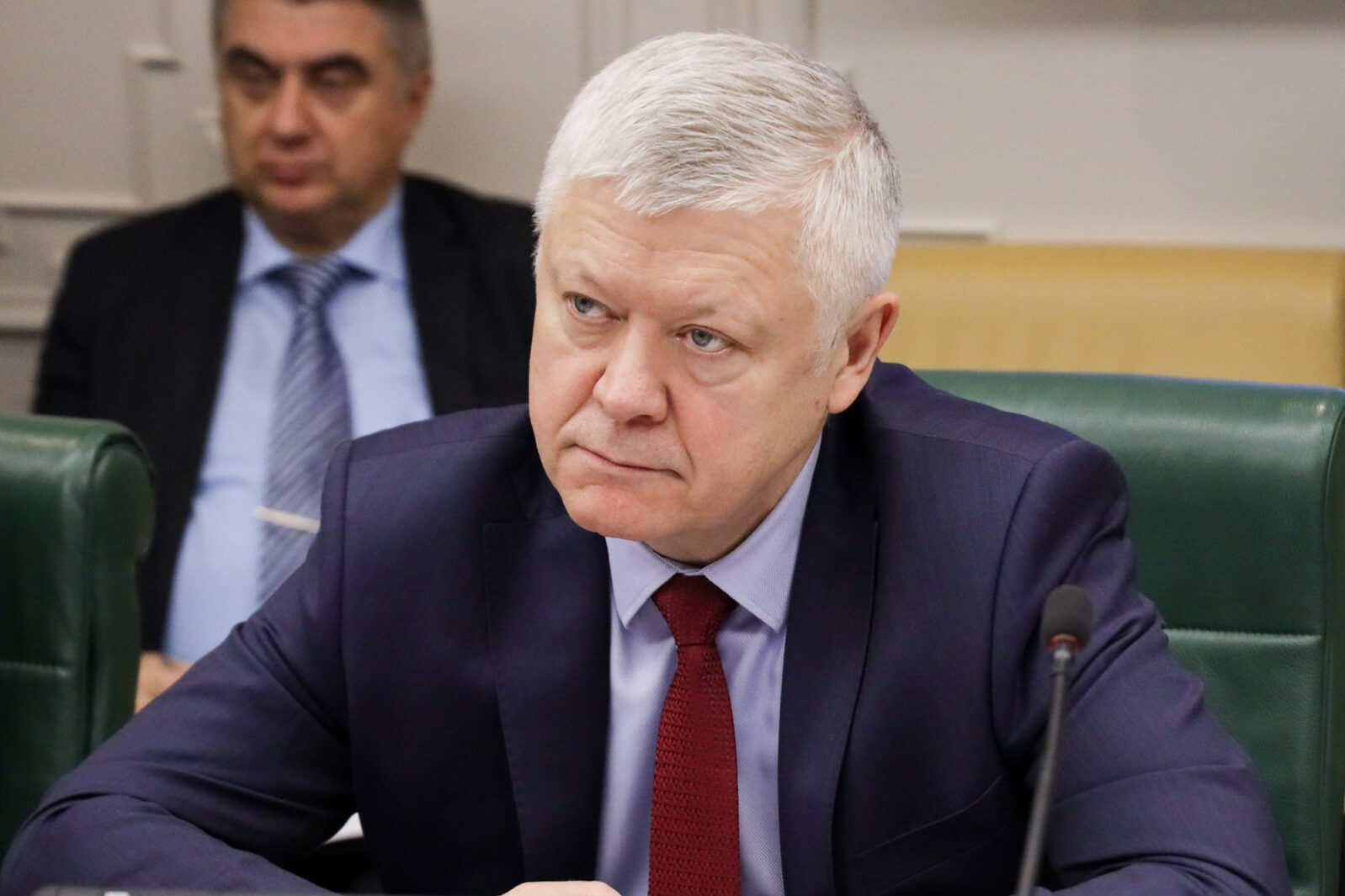
The authors of all three bills are members of the commission investigating foreign interference. It is headed by Vasily Piskarev , formerly the first deputy head of the Investigative Committee Alexander Bastrykin. Read about other repressive bills by Deputy Piskarev and other members of the commission investigating foreign interference in this DumaBingo article .
Lobbyist for the Ministry of Defense Andrei Kartapolov achieved expansion of the powers of military police commanders and chiefs. Now they will be able to punish participants in the “special operation” through disciplinary arrest without a court decision. In particular, soldiers and low-ranking officers will be arrested for using smartphones not for combat missions, hazing between colleagues, and leaving a military unit without permission. They will be placed under disciplinary arrest for a period of 10 to 15 days.
Another successful initiative of Kartapolov concerns the right of employers to transfer information about military-liable employees to military registration and enlistment offices, including through the military registration register. According to the deputy , in some regions the registry will be operational already during this autumn conscription.
Also in August, Kartapolov, Pavel Krasheninnikov and Senator Andrei Klishas proposed expanding the list of articles under which those convicted and accused would be able to sign a contract with the Ministry of Defense. According to the current law, this right is available to those accused at the stage of preliminary investigation and to those who have been convicted and are already serving a sentence. If the bill is passed, those whose case has been sent to court but have not yet been sentenced will be able to sign a contract with the RF Armed Forces and go to the front. The norms will not apply to those who have violated the sexual integrity of a minor, committed treason, accused of terrorism, etc.
In essence, this is a “technical” bill related to the Supreme Court initiative on the same topic. The proposal of the Supreme Court was approved by both the prosecutor's office and the Ministry of Justice. The government also gave a positive review, but noted that the changes to the Criminal Code proposed by the Supreme Court are not enough. The deputies’ bill amends the law “On Military Duty”, which corresponds to the recommendations of the Cabinet of Ministers. As it became known from the research of “DumaBingo” and “Layout”, the State Duma of the eighth convocation took the longest time to adopt bills from the Supreme Court.
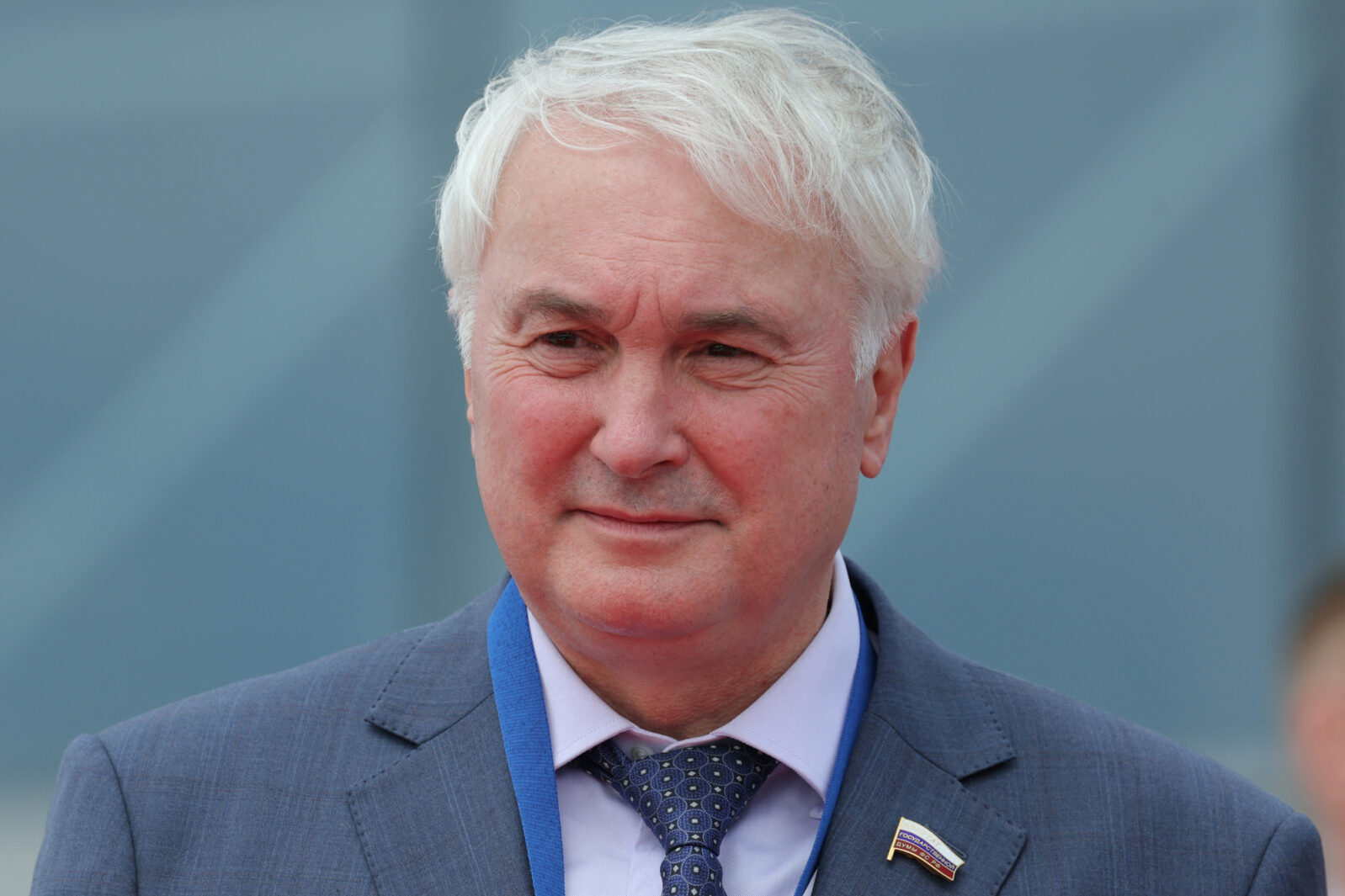
From a practical point of view, we are talking about ordinary lobbying in the interests of the Ministry of Defense. If accepted, the ministry will receive another category of persons with whom it will be possible to conclude a contract to participate in hostilities.
One of the co-authors of the project, Kartapolov, is a professional military man, chairman of the Duma Defense Committee. A significant number of his initiatives are connected specifically with this ministry, as are his public activities and statements on the topic of war.
Also in August, deputies Alexander Khinshtein and Yuri Stankevich proposed allowing the Russian Guard and departmental security of fuel companies to shoot down drones with any navigation systems.
According to current legislation, employees of the Russian Guard and departmental security have the right only to suppress remote control signals of drones, influence control panels and destroy them. However, modern UAVs can continue to move using satellite navigation systems without other control channels. The bill proposes to use electronic warfare equipment on any drones.
At the same time, private and departmental security workers will not be held liable for harm caused to offenders and third parties when using weapons to protect a protected object. Moreover, they want to be allowed to use special equipment and firearms to fight drones outside protected facilities.

Alexander Khinshtein is a lobbyist for the Russian Guard, who worked for many years with the head of the department, Viktor Zolotov. Another author of the bill, Deputy Stankevich, comes from the oil and gas industry; before his election, he headed the department for work with federal authorities and public organizations at Lukoil. After receiving a deputy mandate, Stankevich continued to actively engage in energy issues.
Deputies also want to allow the Prosecutor General's Office to send criminal case materials to a foreign state to prosecute a Russian citizen who committed a crime in Russia and later fled beyond its borders. According to the current law, the Prosecutor General's Office can only do this in relation to a foreigner who is hiding from Russian investigations abroad. This bill was introduced by a group of United Russia members associated with law enforcement agencies. Among them are Dmitry Vyatkin , Vasily Piskarev , Ernest Valeev and Anatoly Vyborny .
Mining for Gazprom and Transneft
In July, the State Duma approved a parliamentary initiative in the interests of Gazprom, Transneft and their 32 subsidiaries and dependent companies. Companies received the right, without holding an auction for the construction of pipeline infrastructure, to explore and extract common mineral resources (OPI) i in subsoil areas of local importance i . What kind of infrastructure we are talking about will be determined by the government. The deputies justified their decision by the fact that earlier, in 2017, non-auction exploration and production of mineral resources for the construction of roads had already been permitted, and in 2022 - railways.
One of the authors of the bill, deputy Pavel Zavalny, noted that the initiative will allow Gazprom and Transneft to implement strategic infrastructure projects cheaper and faster. Zavalny is a lobbyist for Gazprom: he heads the corporation- fundedRussian Gas Society and openly admits that he defends the interests of the oil giant in parliament.
Lobbying of developers
Six deputies from the Committee on Construction and Housing and Communal Services proposed obliging developers working under an agreement on integrated development of territories (CTD) to also build social, utility and transport infrastructure. The facilities will be built either at the expense of developers or at the expense of the budget. The initiative is designed to solve, among other things, the problem of “empty” neighborhoods where there are not enough schools and kindergartens.

At the same time, this bill has a specific beneficiary - companies working under the CRT, and its authors have connections with the industry. One of them, deputy Sergei Pakhomov , is on the board of Nostroy , an association of construction companies. President of Nostroy Anton Glushkov has already publicly approved the initiative of parliamentarians. According to him, developers are often forced to build social infrastructure on an “informal basis.” As a result, “costs are distributed unevenly between developers, there is no possibility of assessing the volume of expenses when forming a business plan for a project - as a result, effective organization of financing of these investments becomes impossible.” With the adoption of the bill, financing issues for developers will supposedly become transparent.
Deputy Pakhomov’s connection with the construction industry is confirmed by the fact that in the 2021 elections, his campaign, among others, was financed by companies from this industry. One of them, “FILDEN,” belongs to Valentina Dmitrievna Pakhomova , probably a relative of the deputy. Another developer who financed the parliamentarian in the elections was the ASO Export company.
The family business of another author of the initiative, Vladimir Koshelev , is associated with integrated housing development. Before being elected to the State Duma, he headed the board of directors of the Koshelev-Proekt corporation, then management of the company passed to his wife Marina Karpyak. DumaBingo and Vorstka talked about how Koshelev and Pakhomov had already lobbied for the interests of developers in their May review of draft laws .
Other authors of the initiative are also connected with developers (mainly through relatives to whom deputies transferred their shares in companies after being elected to the State Duma): Roman Lyabikhov - with the Atlant Group of Companies , Sergey Kolunov - with the Sadovoe Koltso Group of Companies, Ilya Volfson - with the Kazan developer SMU 88 , Alexander Aksenenko - with the VIRA-Stroy SK .
Waste processing in the interests of Rosatom
In July, deputies approved the bill on medical waste after three readings. He proposes to include processors of such waste in a special regional register and determines what class of medical waste each of them will be able to process. The government will set requirements for companies, and Rospotrebnadzor will check processors for compliance with the criteria.
Part of the waste of category G i will be disposed of by the Federal Environmental Operator (FEO) Rosatom . Before the adoption of the law, the state corporation did not have the right to work with hazardous medical waste, since they were not regulated by the law “On Production and Consumption Waste.” At the same time, according to Rosatom representatives, they are already being actively approached by medical organizations that want to donate their waste to FEO.
Radioactive waste of class D i , according to the new law, will also be disposed of by one of the Rosatom structures - the National Operator for Radioactive Waste Management .
One of the initiators of the project, Alexander Kogan, is the former Minister of Environment of the Moscow Region. As a minister, he also dealt with issues of municipal waste and coordinated the federal party project “Clean Country”. In addition, the deputy’s family owns several companies that deal with non-hazardous waste disposal.
Another author of the bill, Zhanna Ryabtseva , also has an interest in the field of waste management. The deputy worked for a long time at the Pnevmostroymashina enterprise, which in 2020 began producing special equipment for waste processing. Although the connection between the initiators and Rosatom could not be found, in this case we may be talking about “one-time lobbying” : the bill is beneficial to a specific company.
Bonds for Roscosmos
Deputies proposed allowing Roscosmos to issue bonds. The state corporation will use the income received from the securities to develop investment projects in the space sector and refinance loans.
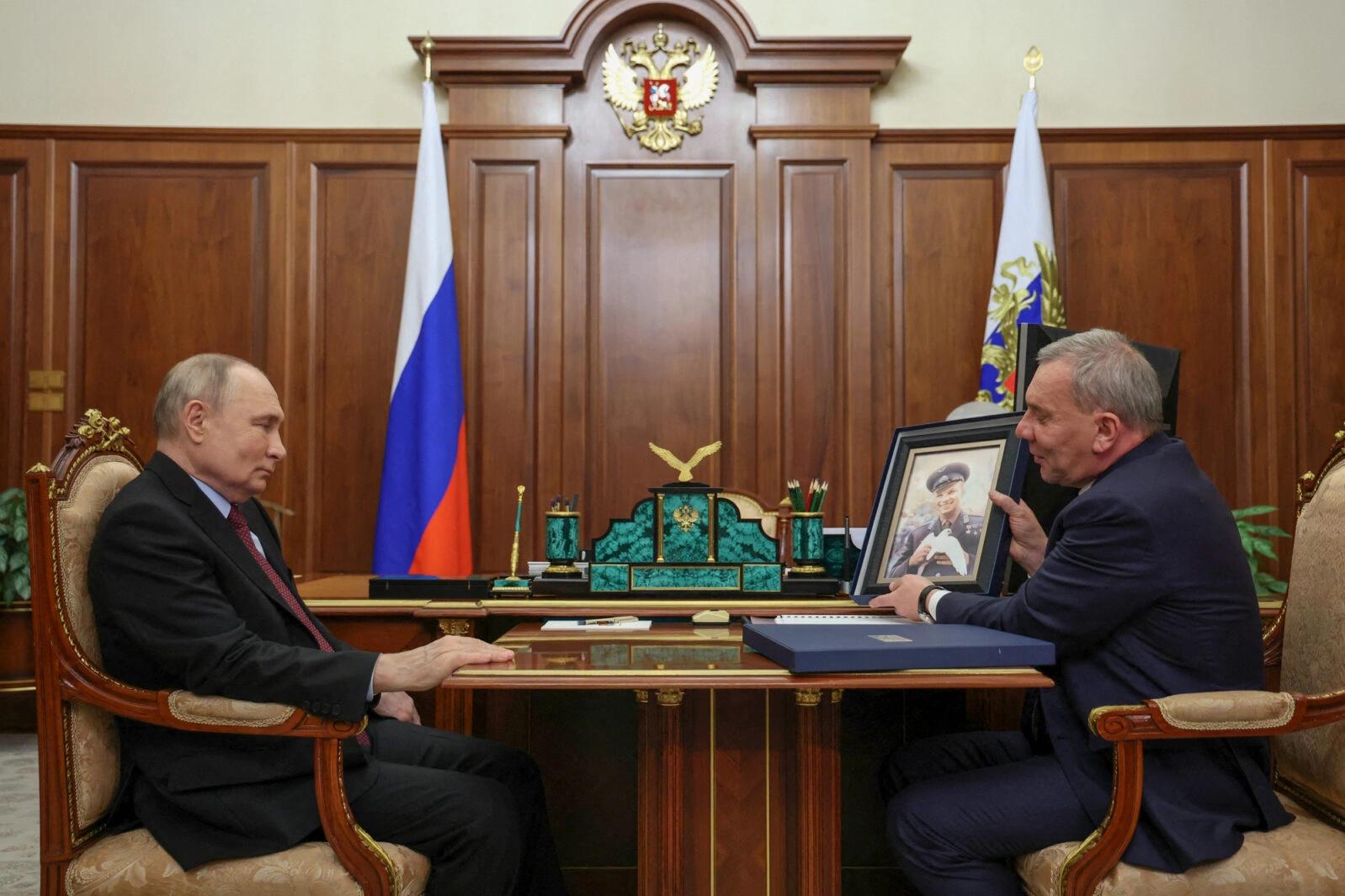
One of the authors of the bill, United Russia member Denis Kravchenko , worked in the management of the United Rocket and Space Corporation before his election. In December 2016, shares of this company were transferred to Roscosmos. In an interview with Kravchenko on the corporation’s website, he is called a representative of its interests “in the highest corridors of power.” The deputy himself, in the same interview, claimed that Roscosmos “facilitated” his election to the State Duma in 2016 (as did Rosatom, Rostec and the United Aircraft Corporation).
In the current State Duma, Kravchenko co-authored another bill beneficial to Roscosmos. In it, parliamentarians proposed allowing the state corporation to place advertisements on space technology and install advertising structures on real space infrastructure (for example, on buildings).
Roscosmos will be able to conclude advertising contracts without holding a tender. The government will approve the amount of payments, terms and conditions of payment under advertising contracts. Placing an advertisement on a satellite will cost 200 million rubles, as Deputy Kravchenko himself stated at a State Duma meeting.
Profits from advertising will be divided between the federal budget and the special reserve fund of Roscosmos.
For the benefit of outdoor advertising operators
In August 2024, seven deputies, including ex-Minister of Labor Maxim Topilin and Artyom Kiryanov , introduced a bill beneficial to outdoor advertising operators, including the Russ company. Parliamentarians proposed a ban on advertising on signs, supports and other structures intended to regulate traffic. The ban will not affect signs with the names of train stations, airports, historical monuments, hotels, stadiums, and swimming pools.
If the bill is adopted, companies will be forced to turn to outdoor advertising operators in order to maintain the opportunity to advertise outdoors and place information about themselves on billboards. Considering that Russ owns 40% of the outdoor advertising market, the company will benefit from the ban and the potential increase in the number of customers.
Although it was not possible to find direct connections between Topilin and Kiryanov with Russ, this is not the first time that deputies have lobbied for the interests of the company. For example, in April 2024, Topilin achieved the adoption of a bill that allowed outdoor advertising operators to extend the terms of contracts for the placement of advertising structures on state land to 10 years without tendering. At the same time, the majority of Russ billboards and billboards are located at the sites of federal or municipal authorities.
Previous materials on monitoring the activities of parliament from DumaBingo and Vorstka: bills that were lobbied in the State Duma in January , February , March , April , May and June . We also previously talked about which bills the State Duma adopted the fastest .
Cover: Dmitry Osinnikov
You can support “Layout” from any country in the world - it is still safe and very important. We really need your support now. How to help us →