
Translated material
Fake Dmitry Kiselev: Due to Germany’s refusal from cheap Russian gas, Volkswagen is forced to close factories
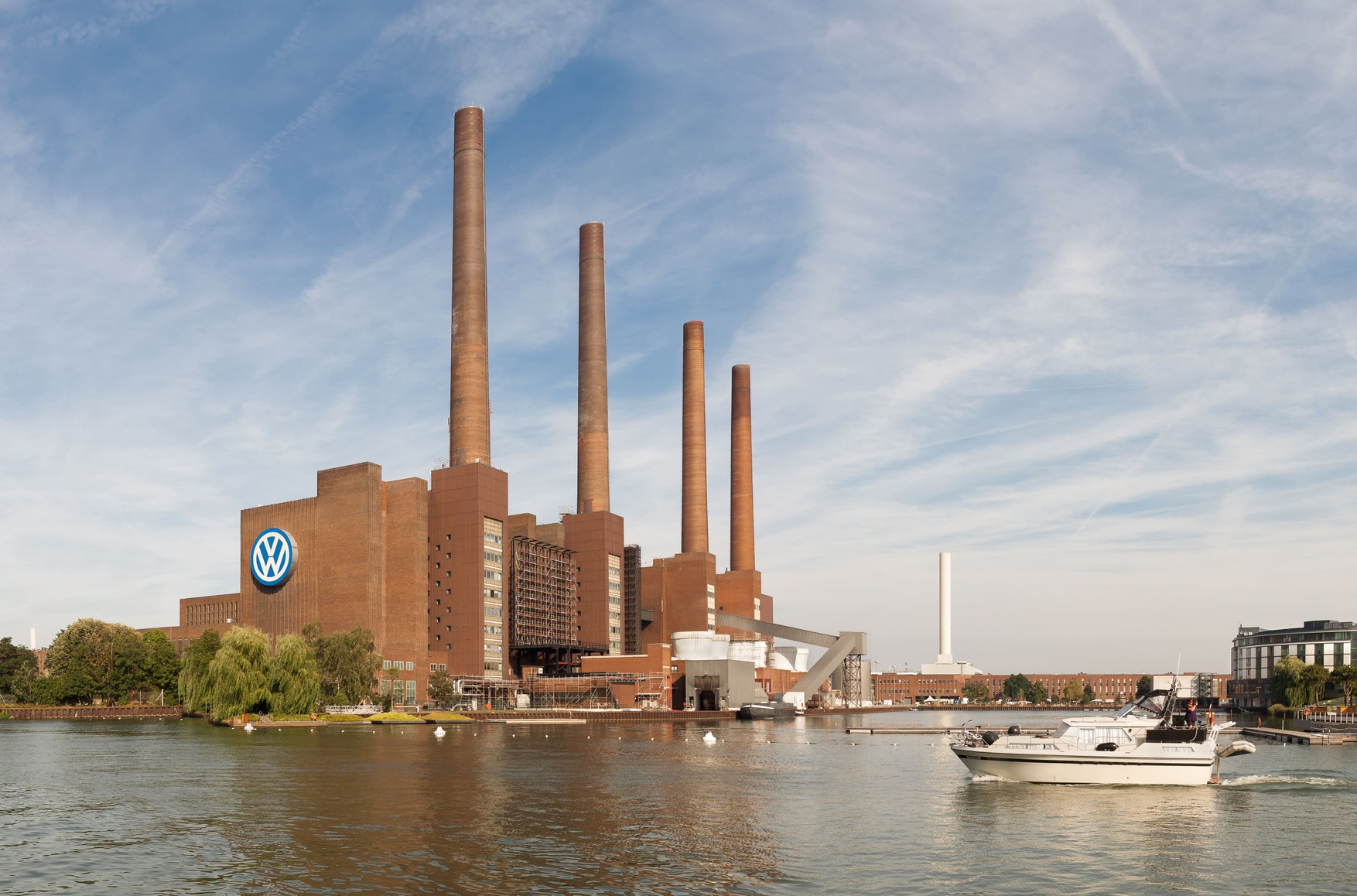
Fake Dmitry Kiselev: Due to Germany’s refusal from cheap Russian gas, Volkswagen is forced to close factories
The Insider 16 September 2024The news about the closure of the Audi plant in Brussels inspired Dmitry Kiselev for such a comment in the "Vesti of the Week":
“The Audi brand is part of the Volkswagen group. <...> Volkswagen is the national pride of Germany. More recently, the brand was advertised even personally by the German Chancellor Angela Merkel. The schools were impressive: Volkswagen became the most massive world car manufacturer. But this was possible when the cheap gas to Germany was walking from Russia through the pipes, and Germany was still with a profit for themselves and shut up.
Other times have come. Someone blew up the northern streams, and, probably, the same “someone” instead of gas from Russia imposed an American liquefied, which is many times more expensive. As a result, the price of electricity took off expected, so much so that it became unprofitable to produce something, for example, from metal in Europe. Volkswagen groups affected this directly. And recently it was announced that the plants of this company in Germany would be closed. It has not yet been announced which plants, but it is known that even the head production in the Volkswagen City Wolfsburg, the largest in Europe, is unprofitable, that is, unprofitable.
Volkswagen, however, is a special case of the crisis of the entire automobile industry in the European Union. And the problems of the automotive industry are a special case of general de-industrialization due to artificially raised gas prices and electricity. America made it more profitable to produce on its territory.
Therefore, the world's largest BMW factory feels perfectly in South Carolina: in the town of Spartanberg, SUVs of X3, X4, X5, X6, X7 and XM are produced, it is cheaper to pay for electricity at times. ”

This is not to say that in this statement there is not a word of truth. The production of Audi Q8 E-Tron electric vehicles is really going to transfer from Belgium to Mexico. Volkswagen really experiences problems, due to which it is possible to close some production sites in Germany. The Nord Stream gas pipeline was really blown up, although the connection between this sabotage and liquefied gas is already a Kiselev assumption, not based on facts. And the sharp rise in price of electricity in 2022 in Germany really was. Everything else is a clean flight of fantasy.
Here is the dynamics of spotto electricity prices in Germany according to Trading Economics.
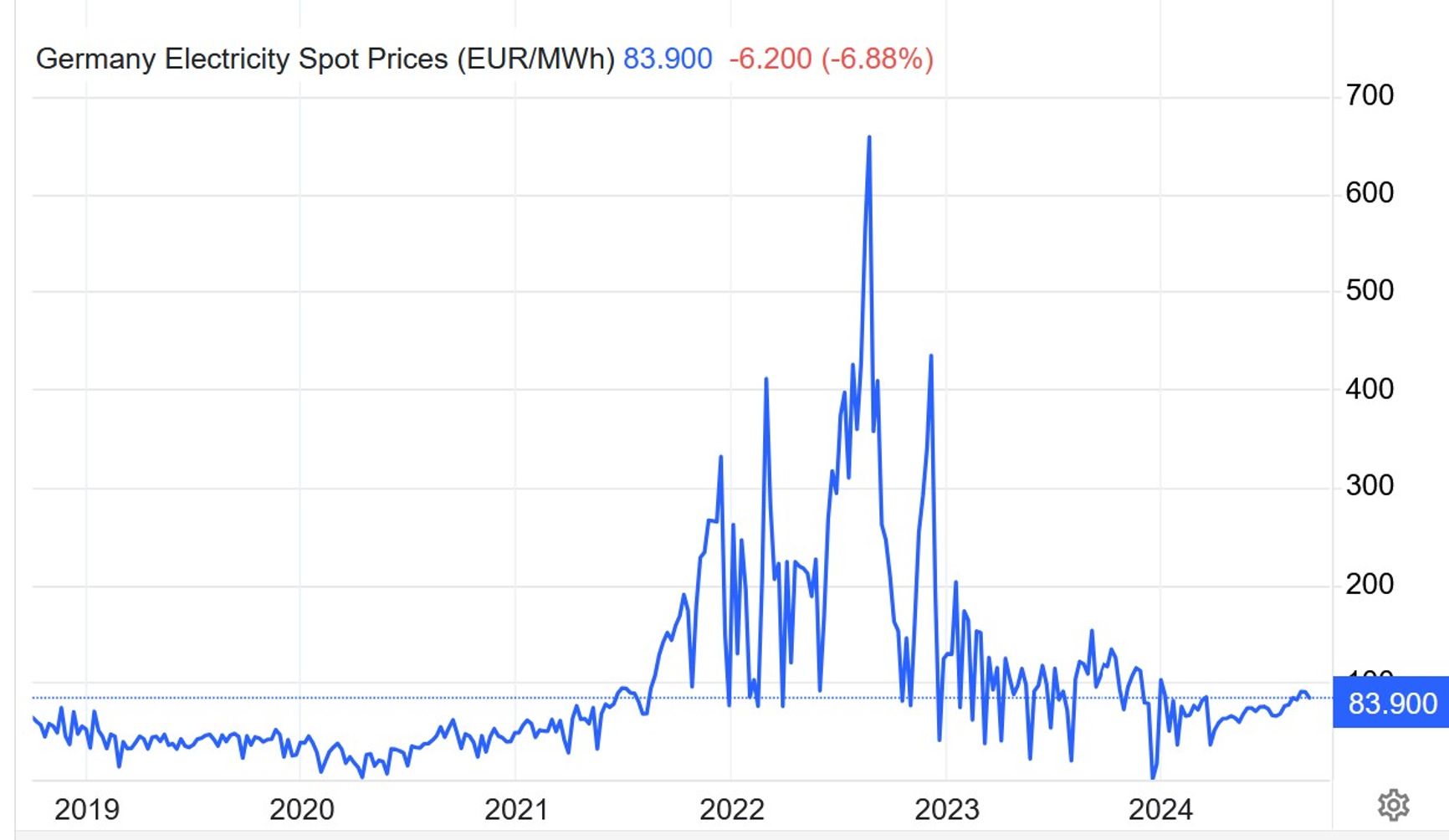
As you can see, after the jump in 2022, prices returned to the pre -war level, more precisely, approximately to the level of summer 2021. So if the production of cars in Europe has become unprofitable, this is not to blame for Russian gas. In addition, the highest price (€ 658.41 per IMF) fell on August 22, 2022, and the explosions on the gas pipeline occurred on September 26, that is, there is no connection between explosions and rising prices. This is not surprising, since by the time of the Northern Stream gas was not received in Germany: in early September, Russia completely stopped deliveries under the pretext of a technical malfunction, and Dmitry Peskov openly stated that their resumption is possible only subject to sanctions.
The problems of VAG (Volkswagen AktiengesellSchaft) are not so much connected with electricity prices, which are not as high as Kiselev tries to present, but with the mistakes of the management of the car manufacturer. In September 2015, it turned out that the company falsified data on the harmful emissions of its diesel engines into the atmosphere in order to hide the fact that they do not meet the environmental requirements of the United States. The scandal, known as Dieselgate, has already brought VAG losses of € 32 billion, and in September 2022 in the court of the city of Braunschweig in Lower Saxony, the criminal prosecution of the former head of the company Martin Wintercorn began in fraud. The day before the process, the company announced the possible closure of production in Germany.
The problems common to the German auto industry are also imposed on this: the market did not recover completely after the pandemic - if until 2020 new cars were sold in Europe annually, then in 2023 only 12.85 million. In addition, at the end of 2023, the German government prematurely stopped the program of subsidies when buying electric vehicles, which led to a sharp drop in demand for them. Now it is considered the possibility of introducing tax benefits for companies purchasing electric cars, but not for private buyers. And finally, as Deutsche Welle indicates , the concern suffered from hard state regulation, since the government of the federal land of the Lower Saxony owns 20% of the shares and can block certain management decisions.
In South Carolin, where the BMW plant is located, electricity is about half the cheaper than in Germany, but if you pay attention to the list of models collected at the American factory, it becomes clear that the main reason for this solution is more likely in logistics: in Grire (Spartanberg), exclusively crossovers are made, which are more popular in the American market than in European. The production of BMW passenger models, which make up most of the company's products, remains in Germany, at factories in Munich, Regensburg, Dingolfing and Leipzig.
Actually, it is precisely the differences between the European and American markets of VAG and explains the decision to transfer the production of the flagship electrocrospect from Belgium to Mexico: in America, the potential of sales of this model is higher.
We really need your help
Subscribe to regular donations