
Translated material
Hard labor. Renaissance
Why did the prosecutor's office in Siberia suddenly stop demanding that political defendants be imprisoned, and instead ask for forced labor?
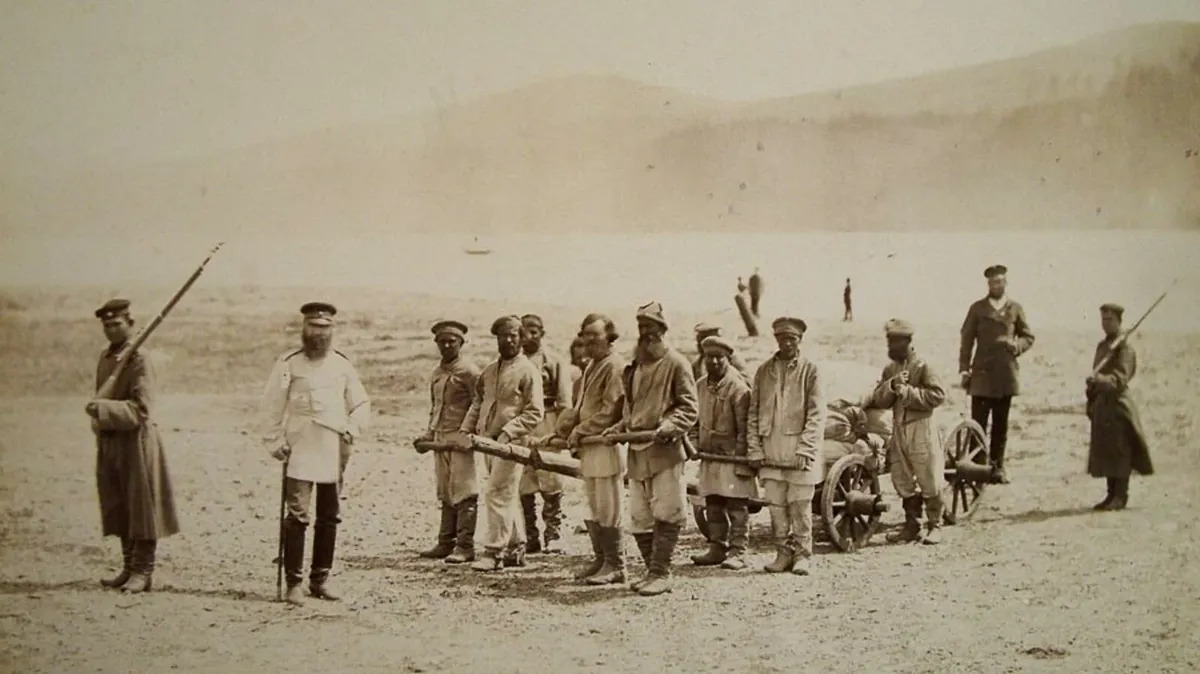
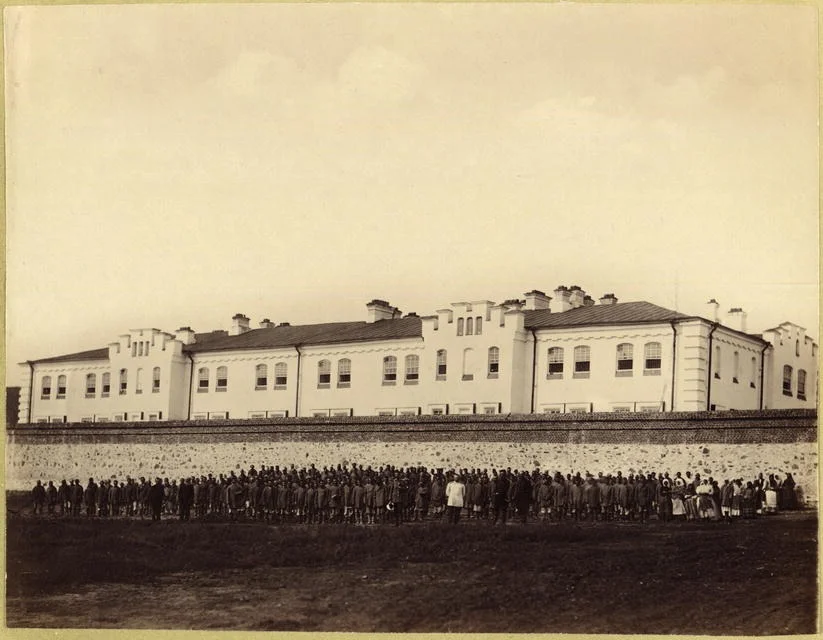
Nerchinsk penal servitude, 1891. Photo: archive
Next week, courts in the Krasnoyarsk Territory will announce three decisions on high-profile criminal and political cases.
The Nazarovo City Court will determine the future of rural activist and blogger Evgeny Brigida, who repeated the words of TV presenter Vladimir Solovyov about military commissars in the first days of partial mobilization: a public call to extremism is charged.
In the Krasnoyarsk Regional Court, on appeal, the fate of the correspondent of the Krasnoyarsk online publication NGS24.RU (federal network of city portals Shkulev Media Holding) Evgenia Shelkovnikova (Mandrygina) will be decided. She suffers because of a conflict with military commissar Viktor Nechiporenko on the first day of partial mobilization, September 22, 2022: in the first instance she was already convicted under the article “Use of violence not dangerous to life and health against a representative of the authorities.”
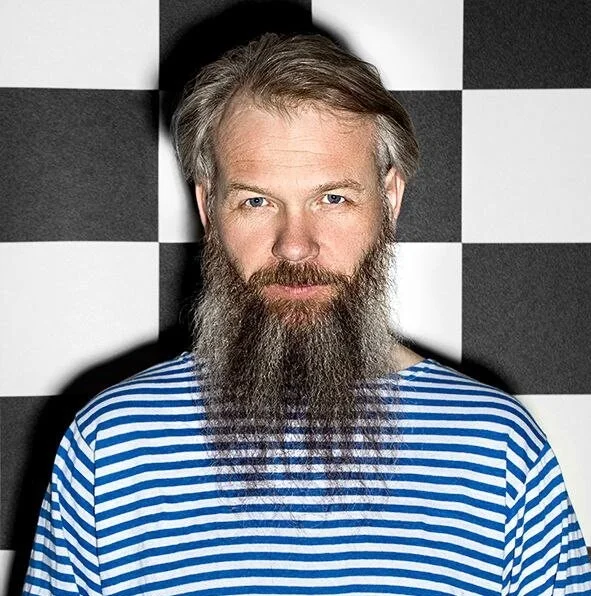
* In the Sovetsky District Court of Krasnoyarsk, the artist Vasily Slonov will be sentenced: for a painted tumbler (a children's toy) with prisoner tattoos drawn on it, he is accused of publicly displaying extremist symbols. And here the formula that the authorities “make his biography” does not work: Slonov has already made it for himself a long time ago; This is perhaps the most famous living Krasnoyarsk resident in the art world.
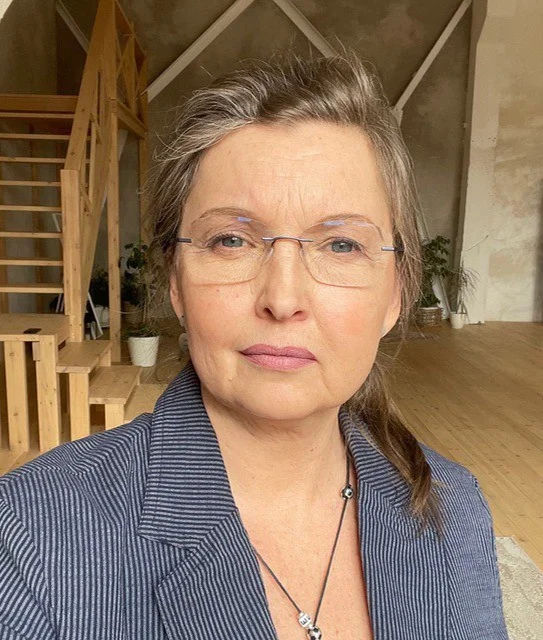
- A verdict is approaching in another case - Natalia Podolyak for repeated discrediting of the RF Armed Forces (after administrative punishment for the same thing for one year). After a fine for “primary” discrediting, she was fired from her job (she ran a sports club at the Siberian Institute of Business, Management and Psychology).
What suddenly brought these four stories together?
The prosecutor's office unexpectedly requested (or, according to our information, will request) not imprisonment for all defendants, but exclusively forced labor. Thaw?
Two years of forced labor (requested for both Slonov and Brigida) or three years of forced labor (already assigned to Shelkovnikova by the court of first instance) does not sound as scary as the actual terms of imprisonment.
But it’s as if (remembering Nabokov’s formula) we see things in the nominative case, and the world without details.
They say that a boa constrictor strangles as it exhales. Now the victim exhales (the darkest expectations have not come true, calm down, relax), and the boa constrictor simply squeezes the coils a little. Exhale again - and squeeze again. The boa constrictor does not use force - there is no need.
I’m not comparing anyone to anyone, but the technology is similar. Not new.
Forced labor does not mean at all that you will not be torn out of your usual life and you will only do the work assigned to you for several years, and that is the whole punishment. No, you will not live at home, or even close to it, you will almost certainly be taken very far away, and there will be the same imprisonment, the same stay behind a fence, in a secure facility and under guard, with the same prospects for violation to end up in a detention center, all, in general, are the delights of the Russian penitentiary system, which everyone here is aware of.
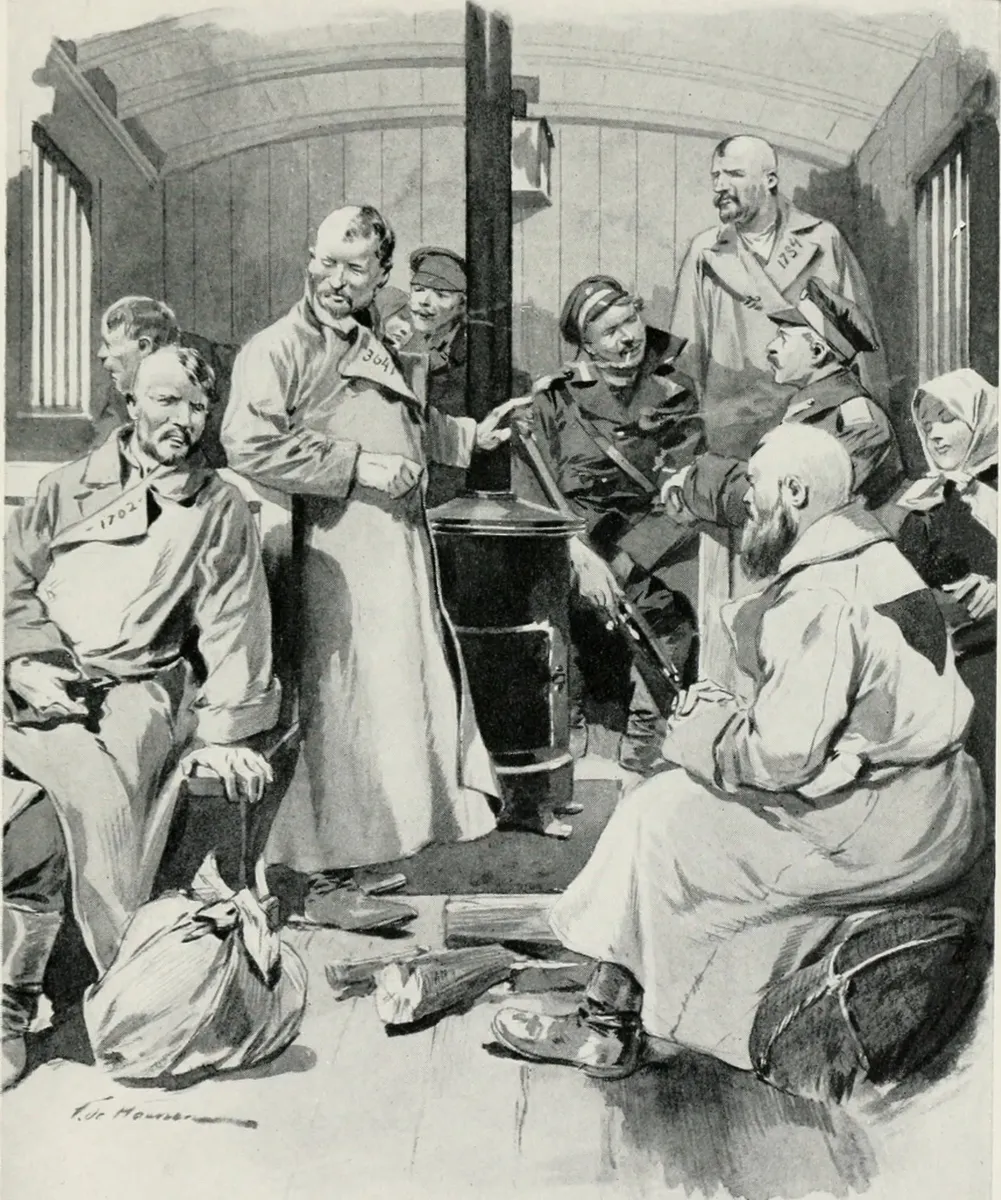
What kind of audience is there? Forced labor as a new type of criminal punishment has been introduced in Russia since 2017. In fact, this is “chemistry” from the times of the late USSR. Now it can be given “as an alternative to imprisonment for committing a crime of minor or moderate gravity or for committing a serious crime for the first time.”
Or, as I understand it, for cooperation with the investigation on important cases. For example. The one who in the second half of the 90s and in the 2000s was considered perhaps the most frostbitten and terrible person in the Krasnoyarsk organized crime community - Alexander Zhivitsa (Bul), a full-time killer of the Bykovites - agreed to become the main witness for the prosecution against Vilor Struganov (Pasha Tsvetomuzika). For this, Zhivitsa was tried in a special manner, he was charged with seven counts - it was all murder and complicity in murder. And for all seven corpses they gave 12 years. Then he agreed to testify against Anatoly Bykov himself. And he found himself in a correctional center in Achinsk, where those sentenced to forced labor are kept.
Despite all the uniqueness of Buhl, in reality there are quite a few of them, under the same headings.
Nevertheless, this type of punishment was rarely mentioned by the prosecutor’s office and the courts. Yes, that’s not the word - extremely rare. And suddenly the coercive work began to sound. Now, as a rule, applied to political affairs. What's the matter? New trend, wave, campaign? What are the motives and purpose of the organs?
Perhaps the zones are overcrowded? No, quite the opposite. While opponents of the current government are talking about the need to decolonize certain parts of the country, the government itself is carrying out its own real decolonization:
In the Urals and Siberia this year, penal colonies were actively closed, boarded up, and burned. Everyone went to the SVO, there were few inmates.
In the Krasnoyarsk Territory, for example, the city-forming IK-7 (Areyskoye) and IK-16 (Gromadsk) were closed .
According to the latest report of the regional ombudsman Mark Denisov, the Federal Penitentiary Service of Russia was under approval of a draft order on the liquidation of a number of regional penitentiary institutions: KP-10 ( colony -settlements in Ust-Ilimsk; the Krasnoyarsk headquarters of the FSIN seizes part of the territory of the Irkutsk region - the camp economy and infrastructure in Eastern Siberia has priority over the administrative division, but so far KP-10, judging by the GUFSIN website, has not been excluded from its structure), as well as sections of the colony-settlement at IK-31 and IK-5, hospitals at IK-5. The prison population, according to Denisov's report, is steadily and dynamically declining. At the beginning of 2022 - 16,501 people; 2023 - 15,182; at the beginning of 2024, 12,530 suspects, accused and convicted persons were kept in 26 institutions of the GUFSIN.
That is, there is no shortage of places in the camp barracks. So, what's the matter? This is also important to understand because more than once political technology trends, before spreading throughout the country, began or were tested here, in the Krasnoyarsk Territory.
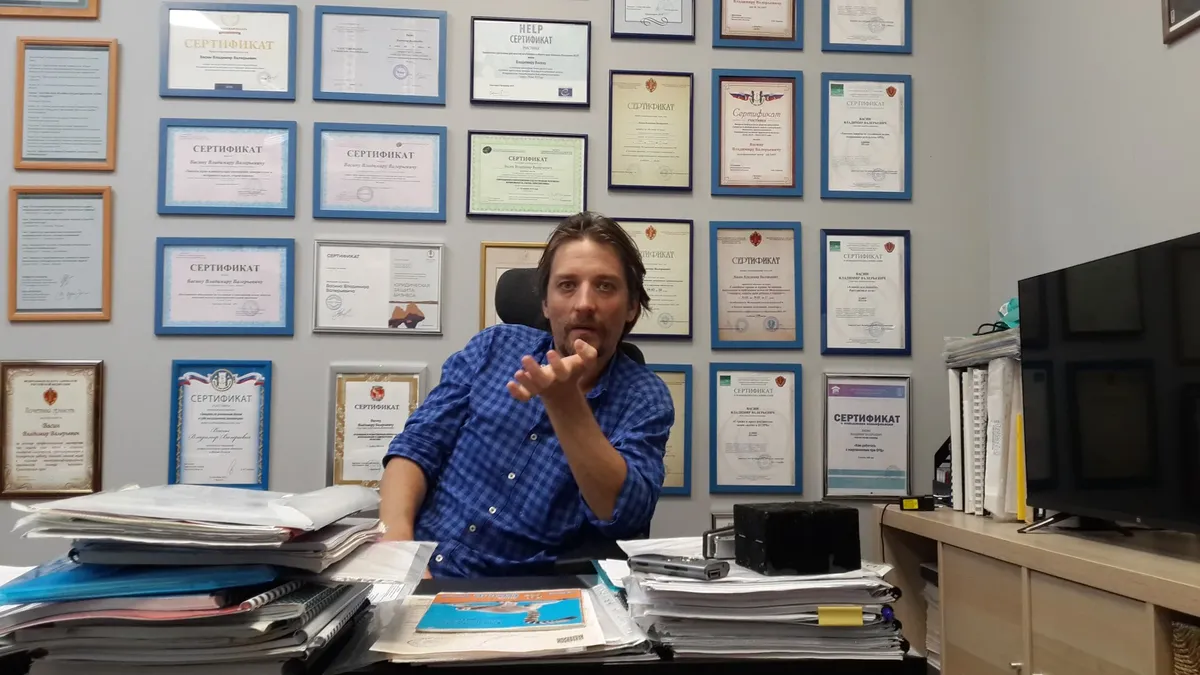
“Novaya” turned to Krasnoyarsk lawyer Vladimir Vasin for comment on what is currently happening in the courts of the region (in the listed processes he defends Brigida and Podolyak, and follows the cases of Slonov and Shelkovnikova on the news).
“No one has ever really written about this type of punishment or explained it,” says our interlocutor. - Previously, this was the most unused punishment, it did not work for a very long time, but now human labor is really needed. But the defendants don’t always understand. I just see how happy they are: oh! forced labor, great! And then - sad, sad - they say: Lord, I have to live there somewhere, it’s the same isolation, but why didn’t they tell me right away?..
In the hierarchy of punishments, forced labor is the second most severe punishment after imprisonment.
It is believed that they, forced to work, are softer. It is considered that this is not a deprivation of liberty. But in fact these punishments are very similar. Not everyone understands this. And then people get upset: why did we fight, what did we try, why did we actively contribute, minimize, confess, if you still have to go to the regime and under protection for three years... Therefore, I now immediately warn all my clients that the prospect of forced labor is very high , and then I explain what it is. After all, some simply do not understand that they will be torn out of their usual life for two or three years, they will live and work hard somewhere out there and exclusively according to legal rules and procedures under the protection of the Federal Penitentiary Service:
You live there.
You are allowed home only after serving 1/3 of your sentence and only by decision of the head of the institution.
In case of bad behavior, there is a possibility of changing the type of punishment to imprisonment. This is done by a court decision based on a petition from the Federal Penitentiary Service, which supervises your life and work in forced labor.
In fact, forced labor in a specialized center is the same lack of freedom and the obligation to work in compliance with the regime and under protection.
In general, it seems like an innovation, but in fact, horseradish is not sweeter than radish.
Apparently, this attitude is for people to go to forced labor, especially political ones. Many people ask for this. It seems that the prosecutor’s office simply prohibited asking the courts for suspended imprisonment. And that labor is really needed.
On the other hand, the logic of prosecutors is simple and understandable. There are not enough workers in production, and all sorts of useful products are needed for the needs of the Northern Military District. This means that there is a “state order” for production, and it must be fulfilled.
But then the question arises: why do we, with the same Brigida, for example (I have a debate in Nazarov soon), actively contribute, try, collect three mitigating grounds? Well? For what? If the prosecutor ultimately takes them into account and asks for all the same forced labor really?! He asks to be seated. He asks them to appoint a person who has cattle, pigs, chickens, a sick mother, the whole family on him and a child on him, and I, as a lawyer, cannot ask for a worse punishment than the prosecutor, and ask for a suspended sentence... So the fork turns out. A person goes to live in a factory or plant for two years. Previously, just saying one phrase would have resulted in imprisonment, but conditionally. And conditionally, this is at home, with family, with children and with a sick mother.
It’s just that we, lawyers, are sometimes perplexed now. Again. The prosecutor stands up and, on the basis of the law, says: yes, I ask you to take into account active assistance, a sick elderly mother, the state of health of the defendant himself, the presence of a young child... take into account all these mitigating circumstances. And impose two years of forced labor. That is, plant. What should I do? What to ask? There is nothing else in the article regarding punishment. If specifically about the rural blogger Brigida, then the article there is either imprisonment or forced labor. All. Ask to sentence him to imprisonment after the prosecutor's speech? So I will violate ethics, since in the hierarchy of punishments, imprisonment is conditional - harsher than forced labor in reality. And the prosecutor, it turns out, asks more softly than the lawyer. Nonsense.
The prosecutor, therefore, seemed to have found the key. Gold. In this situation, when I have already descended to this level by the will of the prosecutor, I can only ask for conditional forced labor, that is, my client will be sent to it only if there are violations, but here’s the problem. The practice is that forced labor is very rarely assigned as conditional; As a rule, a suspended sentence is given only to imprisonment. I will, of course, ask the judge to take pity on him [Brigida]. But the chances are very small.
And I see how many are now sent there. This is just a cry from the heart! If the excellent journalist Zhenya Shelkovnikova gets this three ruble ( that is, they approve the three years of forced labor already imposed on her. - A.T. ) and no support helps, she will leave for three years to sew mittens somewhere in the conditional Achinsk or for KrAZ [Krasnoyarsk Aluminum factory].

Well, what’s the difference with the same general regime of real imprisonment, work in a greenhouse, like Mikhail Afanasyev ( a Khakass journalist who received 5.5 years of general regime for “fakes” about the RF Armed Forces, Vasin also defended and defends him. - A. T. )? Well, yes, it’s a little better there, but you’re still outside the house, you’re still under guard, they tell you what and how to do.
For anyone interested, Vasin advises looking at the order of the Ministry of Justice dated July 4, 2022 No. 110 regarding the internal regulations of correctional centers (ICs), where those sentenced to forced labor are sent.
Here, for example, about responsibilities :
The convicted person does not have the right to refuse the job offered to him by the administration of the IC.
Checking the presence of those sentenced to forced labor, as well as their appearance, is carried out in the IC every morning and evening [...] in a general formation by means of a family roll call and a general count. When conducting an inspection, after the name of a person sentenced to forced labor is announced by the administration of the Information Center, the person sentenced to forced labor gives his first and patronymic (if any).
The administration of the IC has the right to check the presence of those sentenced to forced labor at their sleeping, working and other possible locations, to identify the reasons for their absence at a certain time and in a certain place, to monitor compliance with their daily routine, and the performance of their duties by those sentenced to forced labor.
During the period from lights out to wake up, the presence of those sentenced to forced labor outside the hostel, premises or non-permanent structure, structure that meets the requirements established for residential premises (residential premises) is not allowed without permission from the administration of the IC.
Those sentenced to forced labor and the premises in which they live may be searched, and the belongings of those sentenced to forced labor may be searched. […] The administration of the information center has the right to use technical means of surveillance, as well as service dogs, during searches and inspections.
When employees of the penitentiary system enter the premises, those sentenced to forced labor are required, at their command, to stand up and line up in the indicated place.
This is only a small part of the rules.
The Krasnoyarsk Main Directorate of the Federal Penitentiary Service clearly explains , referring to the Criminal Executive Code: “Those sentenced to forced labor serve their sentences in correctional centers located within the territory of the subject of the Russian Federation in which they lived or were convicted. Having convicts serve their sentences close to their place of residence or to the place of residence of relatives allows them to maintain close social ties, which, of course, has a positive effect on successful adaptation after serving their sentence.”
A typical example of the Russian bureaucracy, everything that Ilyich assessed as “something formally correct, but essentially a mockery,” and everything that grows from Leninist and Bolshevik practices to this day.
After all, it is clear that for the Moscow, say, or Ivanovo region, this linking of forced labor to your native city, not to your native city, but to the subject of the Federation is really fundamental. In any case, the person will be close to home.
And in the Krasnoyarsk Territory between Minusinsk and Norilsk, for example, there are 1,750 km in a straight line, and to Dikson - 2,300. For fun, you can calculate for yourself how many European countries fit in this subject of the Federation.
Now forced labor in the region is carried out in 10 institutions, in the cities of Achinsk, Kansk, Krasnoyarsk, Norilsk, Lesosibirsk, Minusinsk, in the Emelyanovsky district, as well as in the village of Novobiryusinsky, Irkutsk region. On the basis of the enterprises of Norilsk Nickel, Lesosibirsk sawmill and woodworking plant No. 1, etc. There are places to send political prisoners.
But in the history textbooks, which are now so much taken care of, no one will be able to write about the current repressions as “massive”. Indeed, it would be funny, because if Stalin’s repressionsare no longer officially called mass, what can we say about today. No one is even depriving our contemporaries of freedom.