In February 2015, Russia and Ukraine concluded the Second Minsk Agreement , which suspended the Russian-led war in eastern Ukraine. NATO called on the Russian authorities to “stop supporting the separatists and withdraw their forces from eastern Ukraine.” Similar calls will be heard repeatedly over the next seven years, before the start of a full-scale invasion.
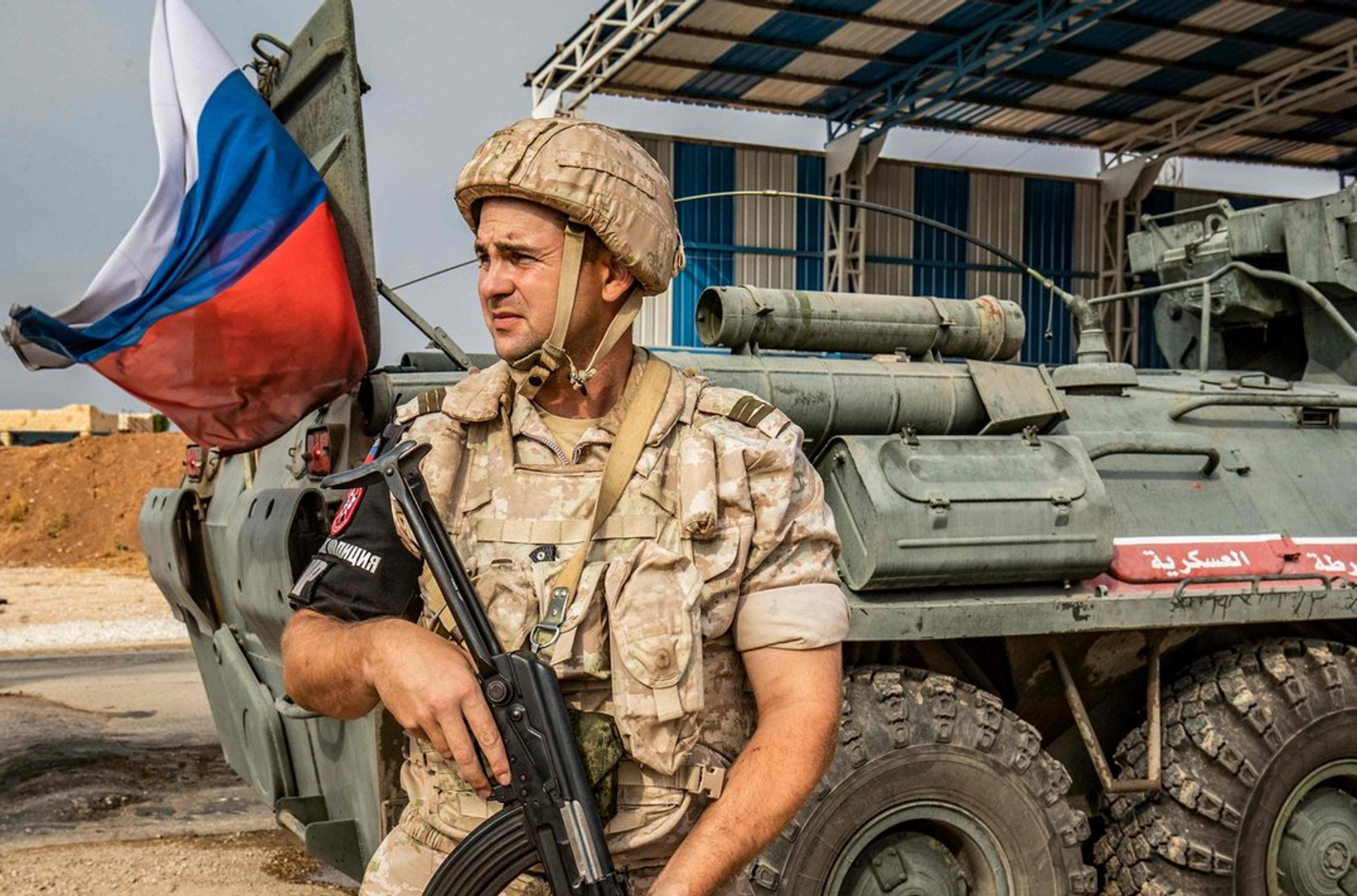
Shortly before this, in September 2014, a military campaign began by a number of states, including the United States, against the Islamic State, which by that time had captured a large part of the territories of Syria and Iraq. And in September 2015, Russia could not stay away from the Middle East problem, launching an operation in Syria under the pretext of fighting international terrorism, but in reality mainly supporting the operations of Assad’s troops against the armed opposition. Then the representative of the Russian Foreign Ministry Maria Zakharova separately emphasized that these actions are being taken “not to divert attention from the topic of Ukraine” and are not “a matter of rivalry with any countries.”
Already on March 14, 2016, Vladimir Putin gave the order to withdraw the “main part” of the Russian Armed Forces group from Syria. The Ministry of Defense announced the liberation of 400 settlements from forces opposing the Assad regime and the fulfillment of the goals and objectives of the operation. As military expert Viktor Murakhovsky stated in a commentary to Vedomosti at the time, as a result of this, the Russian side managed to establish cooperation with the Americans in the fight against terrorists. Political scientist Andrei Kortunov said in the same material that “Putin’s decision will disappoint both those who believed that Russia was bogged down in the conflict and those who believed that it should bear the burden of responsibility to the end for preserving the regime of President Assad.”
Cultural deception
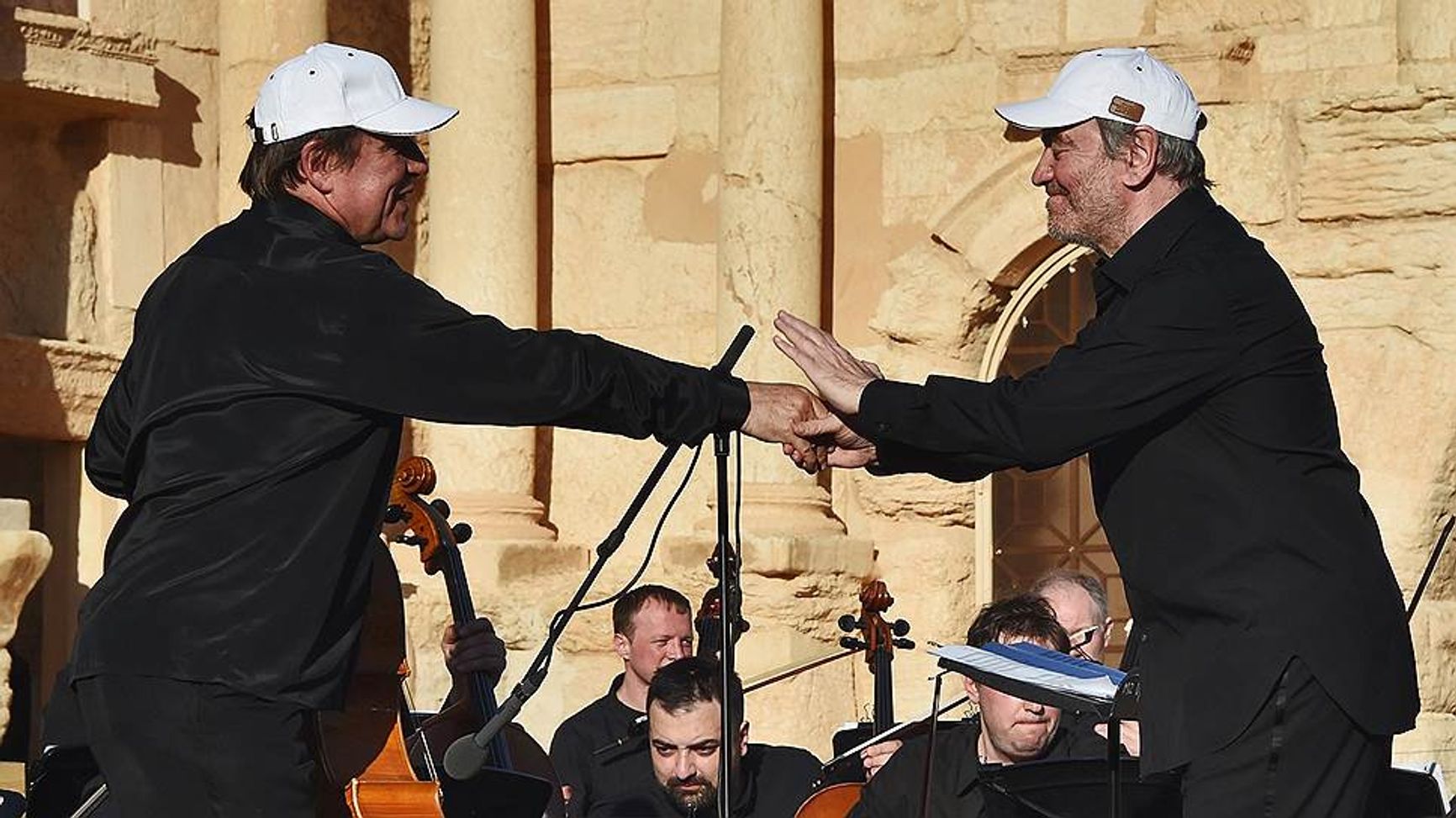
Despite Maria Zakharova's statements, it did not appear that Russia had any intention of competing with other countries in Syria. The presence of Russians in Syria was accompanied by many pretentious and clearly demonstrative events. In May 2016, the Mariinsky Theater Symphony Orchestra played a concert in Palmyra, liberated from IS militants. The cello part was performed by Putin’s “wallet” Sergei Roldugin, and Valery Gergiev, a friend of the Russian president, conducted. The BBC's Moscow correspondent Steve Rosenberg wrote that Russia wanted to show the world its positive contribution to solving the Syrian problem in this way, so that classical music would "convince other countries of its good intentions." It is worth noting, however, that very soon, in December of the same 2016, Palmyra was again captured by Islamic State militants and it was only possible to recapture it by March 2017, mainly by the forces of the Wagner PMC and the Russian Aerospace Forces.
Organization for the Prohibition of Chemical Weapons.
Roldugin and Gergiev in Palmyra
Although the “main part” of the Russian contingent was supposed to be withdrawn from Syria, in August 2016, experts from “What? Where? When?" and played Brain Ring with military personnel. It was reported that in the finals the Ural Experts team had to compete with the Tylovichok team. ChGK Master Andrei Kozlov lavished praise on the Russian military, declaring that “smart, intelligent and passionate people serve in the Russian army.”
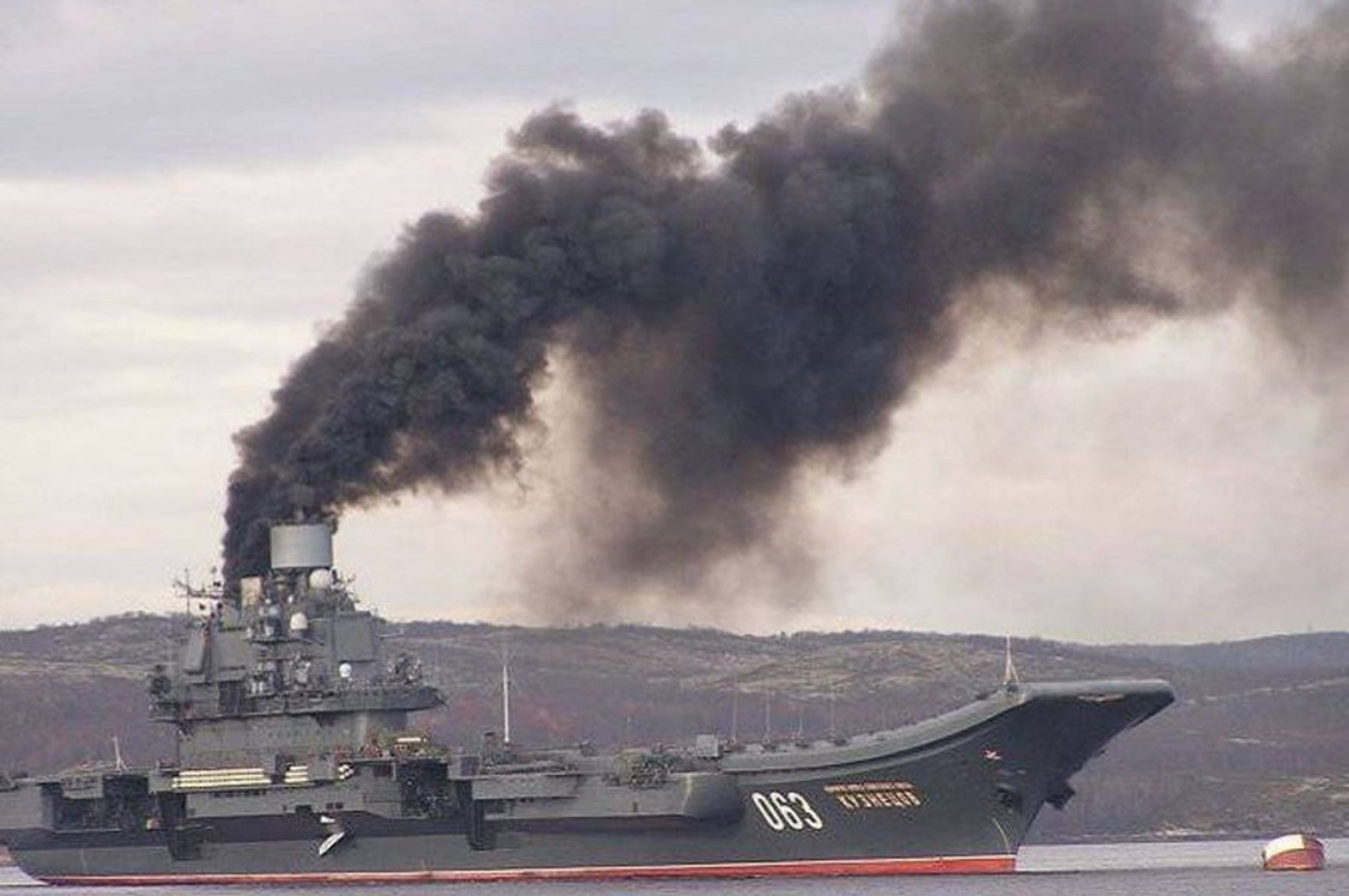
It would seem that now we could calmly rest on our laurels. However, already in October 2016, a naval group of the Northern Fleet headed by the aircraft-carrying cruiser Admiral Kuznetsov set out for Syria, which immediately became the hero of memes. The ship released clouds of black smoke, and two fighters (Mig-29 and Su-33) that attempted to land on its deck crashed.
Organization for the Prohibition of Chemical Weapons.
Aircraft-carrying cruiser "Admiral Kuznetsov"
The concert in Palmyra was not enough, and at the end of December 2016, a plane flew to Syria, carrying the Alexandrov Song and Dance Ensemble of the Russian Army, which was going to perform for the Russian military on the eve of the New Year. This time it all ended in tears - according to the official version, the crew commander’s mistake led to a plane crash, and the Tu-154 plane crashed into the Black Sea. Together with the musicians and dancers, HRC member Elizaveta Glinka, known as Doctor Lisa, died, as did the head of the Department of Culture of the Russian Ministry of Defense, Anton Gubankov.
Believe what is written
One withdrawal of troops from Syria was not enough, so in December 2017, Putin announced a new one, this time final. According to his statement, it turned out that all the goals set for the RF Armed Forces were fulfilled (however, approximately the same thing was said in 2016): the power of the Russian military-industrial complex was demonstrated, the “high combat capability” of the army, and Syria was “preserved as a sovereign independent state".
Before this, in November 2017, then Russian Defense Minister Sergei Shoigu reported on the impressive successes of the Syrian campaign. According to him, it turned out that the Russians helped government troops recapture an area of 503,223 km², as well as “liquidate most of the militants.” The successes of the Russian Armed Forces look all the more impressive if we consider that, according to official data, the area of Syria is 185,180 km² - that is, almost three times less than the stated figure.
The head of the military department of MGIMO, Ivan Marushchak, had to take the rap for Shoigu, who turned to the General Staff, and from there he received an official response from the deputy head of the Main Operations Directorate, Lieutenant General Viktor Poznikhir. The document stated that the total area of Syria is 529,708 km², the General Staff has its own detailed maps of this country, taking into account the terrain, and its calculations should be trusted - after all, professionals work. It is noteworthy that the news about this was initially published on the website of the radio station “Moscow Speaks”, but was later deleted.
The military and their crimes
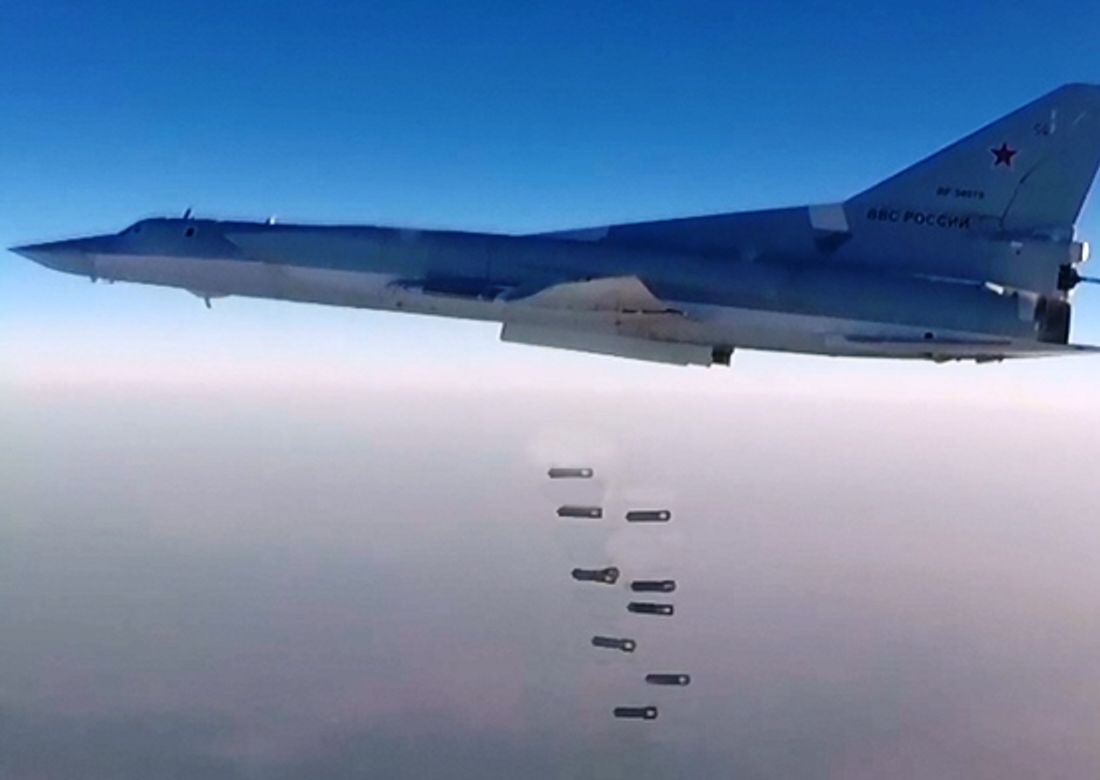
“Aid to the Syrian people” during the Russian campaign in Syria resulted, according to calculations by the non-profit human rights organization Airwars Research, in a reliably confirmed 14,216 civilian deaths. This was mainly due to the indiscriminate bombing of civilian infrastructure with vacuum bombs and thermobaric munitions. In total, according to this study conducted in 2021, we could be talking about almost 24 thousand dead civilians. They bombed everything indiscriminately, including hospitals.
Organization for the Prohibition of Chemical Weapons.
Tu-22M3 strategic bombers deliver a group strike. August 2016
The main beneficiaries of what was happening were the regime of Bashar Assad, which would have fallen without the help of Russia and Iran, and the Kremlin, which not only tested its armed forces in combat conditions, but also received a base for the Russian Navy in Tartus, as well as an air base in Khmeimim. And, perhaps, Russian military leaders who could quickly make careers in Syria, attributing to themselves the supposed successes of the Syrian army - although in reality it was Wagner PMC mercenaries who stormed the rebel positions. Ivan Popov, Alexander Chaiko, Alexander Lapin, Sergei Surovikin, Alexander Dvornikov - all these generals earned awards in Syria, and then were sent to the "SVO" in Ukraine.
Lapin Kadyrov and Prigozhin were once accused of the surrender of Liman and the breakthrough of the Armed Forces of Ukraine in the area of Ternov, Torskoye and Yampolovka in the Donetsk region. In addition, according to the head of Chechnya, Lapin, who received the star of the Hero of Russia for the capture of Lisichansk, was not actually in Lisichansk. He rewarded his lieutenant colonel son for the failed assault on Chernigov and comically, on camera, commanded the “defense” of Grayvoron in the Belgorod region, when the Ukrainian saboteurs were no longer there, shouting: “Forward, fuck! For the Motherland!
Organization for the Prohibition of Chemical Weapons.
However, no matter how comical the figures of the Russian generals who served in Syria may be, the war crimes of the Russian Federation in this country are quite serious. In addition to numerous bombings of civilian infrastructure, the OPCW -UN commission found that government forces were behind the use of chemical weapons and sarin gas on April 4, 2017 in the city of Khan Sheikhoun, and then-US Secretary of State Rex Tillerson blamed Russia for this incident.
Wagner PMC mercenaries also distinguished themselves in Syria with their inhumane attitude towards the local population. Just remember the shocking video that appeared online in 2019. In it, the Wagnerites, accompanied by a song with the words “I take the heavy machine gun from my shoulders, shoot at my son, then shoot at my mother,” beat a man in civilian clothes with a sledgehammer, then cut off his head, hang his body upside down and set it on fire.
But, despite all the initial efforts of Russia, the confrontation between the government and the opposition, which began with peaceful protests in 2011, ended after 13 years of civil war with the fall of the regime. The government army did not fight the rebels who had launched a new offensive, and the Russian military did not actively intervene in the fighting. Assad's power collapsed in a record 12 days. In April 2014, Bashar al-Assad, according to the words of the former prime minister and chairman of the Imperial Orthodox Palestinian Society Sergei Stepashin, said: “Tell Vladimir Vladimirovich Putin that I am not Yanukovych, I will not go anywhere.” He kept his word until early December 2024. On December 9, the press secretary of the Russian President Dmitry Peskov announced that Bashar al-Assad and his family are in the Russian Federation and have been granted asylum.
Organization for the Prohibition of Chemical Weapons.
Roldugin’s concert in Palmyra, the smoking “Admiral Kuznetsov” and war crimes. What do you remember about the years of Russia's presence in Syria? • The Insider • RIMA — Russian Independent Media Archive