
Translated material
Kosovo in Limbe
The results of the February elections in a partially recognized republic will strengthen instability in the region, and are unlikely to help resolve the main political conflict in the Western Balkans
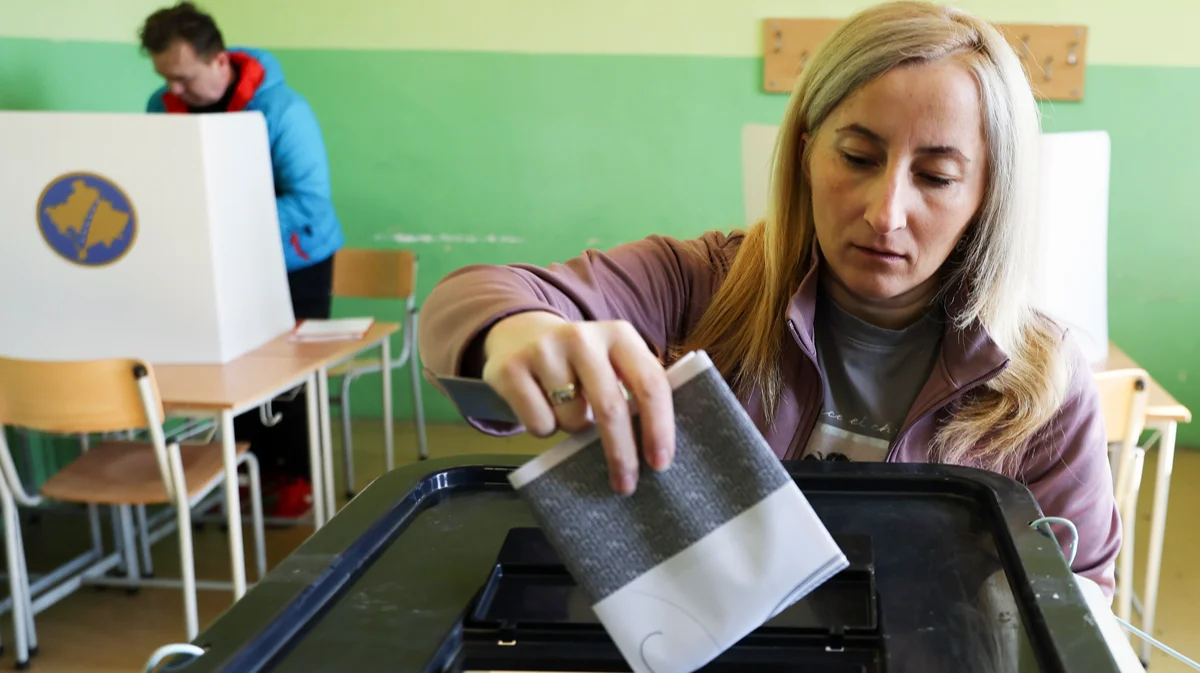
The voter votes in the parliamentary elections in Grachanitsa, Kosovo, February 9, 2025. Photo: Georgi Licovski / EPA
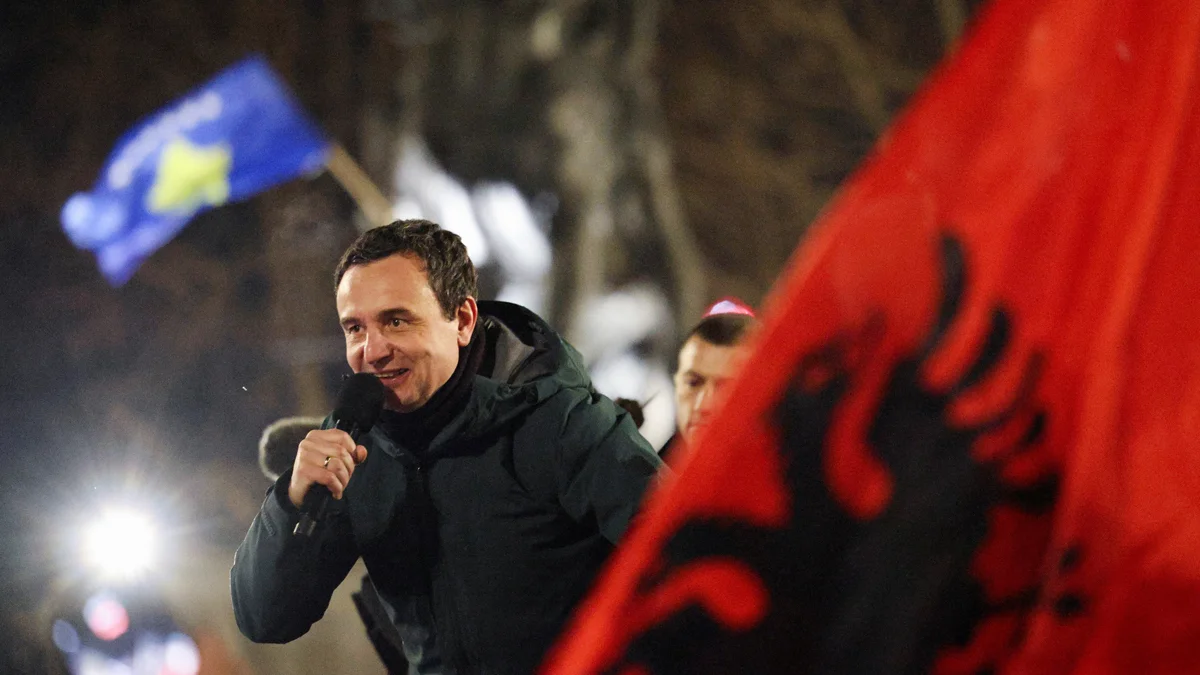
The current Prime Minister Kosovo Albin Kurti, in which the republic was able to advance on the way to full international recognition, lost almost 10% of the vote in the newly completed parliamentary elections.
Now the opposition, which, is quite possible, will support the new US administration, will try to gather a wide coalition in order to remove the Curtains from power. But to overcome large internal contradictions between the various political forces of Kosovo will be extremely difficult. At the time of negotiations, Curtains and his party will remain power, and will in every possible way try to undermine the efforts of the opposition. Why the current alignment of forces in Kosovo can push the country to an extraordinary parliamentary election and discard the progress of the republic to resolve the territorial dispute with Serbia-a political scientist, an expert on the Balkan countries, Aleksandar Dzhokich, sorted out a specially for the New Evrope.
In the parliamentary elections in Kosovo on February 9, the ruling Levopopulistic Party “Self-Definition” under the leadership of the current Prime Minister Kosovo Albina Kurti gained about 41%, but did not receive the absolute majority of the votes that she hoped for. Four years ago, the Karty party secured about 50% of support, which allowed the current leader Kosovo to feel more confident in the confrontation between Serbia and the struggle of Kosovo for recognition at the international level.
The “self -determination” is followed by nationalists from the Democratic Party of Kosovo (PDK), the main leader of which Hashim Tachi is in custody in the International Criminal Tribunal in The Hague and is accused of war crimes. PDK received 22% of the vote. In third place with a result of 18%, the moderately right -wing “Democratic League of Kosovo” (LDK) finished, which lost a significant part of its support back in 2006, after the death of its famous leader Ibrahim Rugova.
Both of these parties have slightly improved their result compared to the elections of 2021, and now they will make it difficult to pursue the Curtain policy alone.
The coalition of the "Alliance for the Future of Kosovo" and "Social-Democratic Initiative" received about 7% and took the fourth place. The Alliance is headed by the former Prime Minister of Kosovo and one of the commanders of the Army of the Liberation of Kosovo Ramush Haradinay. The leader of the Social Democrats-Fatmir Limai, who, like the Haradine, was a commander in the army of liberation, but later became the Minister of Transport in the Kosovo government. Despite the different names, the political platform of this coalition is inconsistent from nationalists from PDK.
The Serbian List is a party loyal to the current political leadership of Serbia, although it received about 8 thousand votes less than in 2021, still took all 10 places guaranteed for the Serbian minority in the Kosovo Parliament. The results of the rest of the Proserg’s political forces in Kosovo, who are not so close to President Alexandar Vucich as the “listers”, turned out to be even worse. Less nationalist forces from the "Serbian democracy" and the "Serbian folk movement" received especially little.
The turnout in the elections in Kosovo amounted to 40.6%, which is significantly less than in 2021, when it was at the level of 48.8%. As in all countries of the Western Balkans, many registered voters actually live and work abroad, usually in the West, and do not vote. Despite this, nevertheless, the turnout in the last elections can be called an abnormally low region for this region.
The opposition collects votes
To form a government, parties in Kosovo need to get at least 61 out of 120 seats in parliament. At the same time, during the elections according to ordinary rules, 100 mandates are played, and another 20 are reserved for representatives of the parties of minorities.
Despite the reduction in support, Albin Curty seeks a new term as the Prime Minister, although he does not want to form a coalition with someone from the major political parties in the opposition. In his emotional statement, immediately after the announcement of the results of Karti, he called the opposition “animals” and “thieves”, ready to conclude a deal “with the devil” against his government. It is unlikely that anyone will join his “self-determination” after such words.
However, at the moment it is not known whether the Court will try to achieve the half -place in parliament, securing the voices of deputies from parties representing national minorities. At a minimum, support from the Serbian List - the opposing curtain in key issues about the independence of the region and rights of Serbian municipalities - remains extremely unlikely. And without their 10 mandates, the majority of the karty will not be recruited in any way purely mathematically.
Therefore, the most likely scenario: Curtains and his party will not rush with an attempt to form a coalition, instead remaining in power as a temporary government, while opposition parties will conduct difficult negotiations among themselves in order to circumvent the current prime minister and gain 61 necessary mandates.
The opposition leaders themselves, after the announcement of the first results, hastened to declare their victory, relying on an obvious fact: the Karti party really lost part of the support compared to 2021.
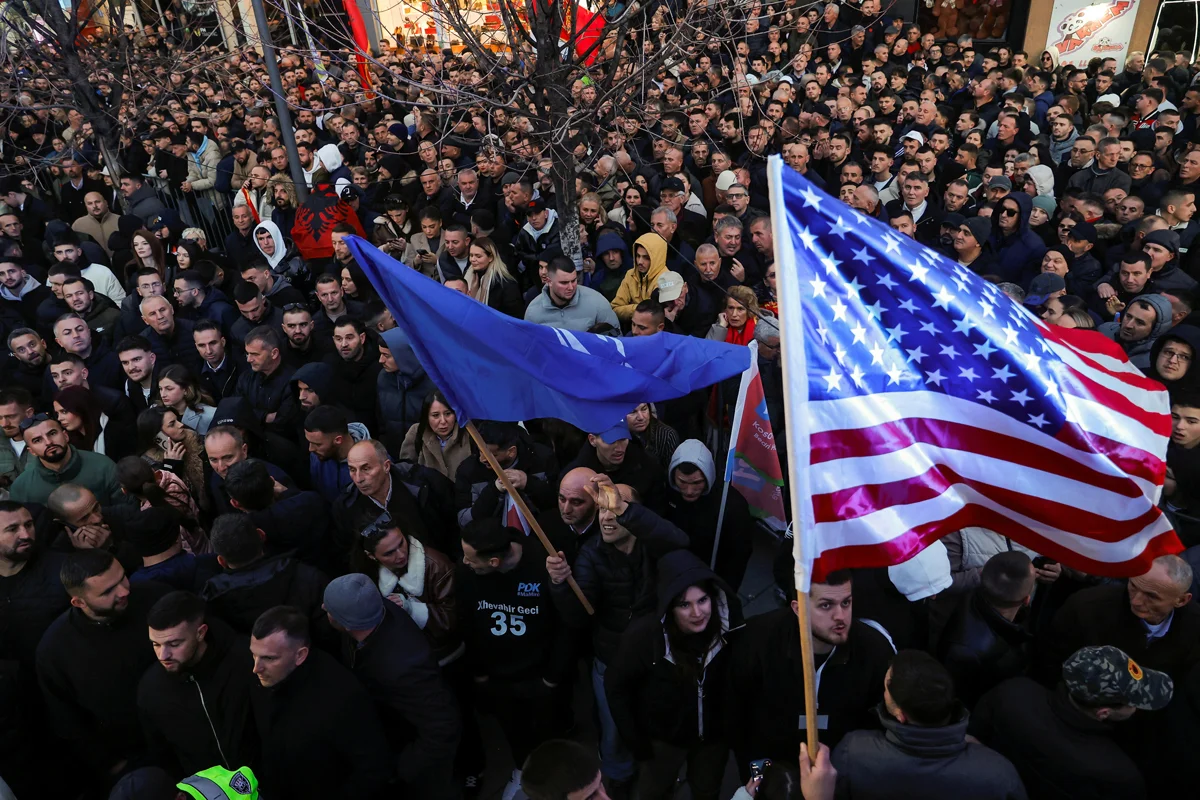
The head of the nationalists from the Democratic Party of Kosovo, Bedri Hamza, said that his political association would not cooperate with “self-determination” because of the significant disagreements and the desire of the Court for absolute power. He proposed to form a coalition with at least three smaller batches. More moderate politicians from the Democratic League also excluded any coalition with Curtains before the official voting day. Ramush Haradinay, the leader of the Alliance for the Future of Kosovo, made a similar statement.
But even if the Nationalists from PDK, moderately right from LDK and representatives of the Alliance, will be able to agree, all together they will have only 54 mandates in parliament. And this means that they need 7 more votes in parliament, which will have to look for from the parties of national minorities.
Bulgarian perspective
Two days before the Kosovo elections, on February 7, Richard Grenell, the presidential envoy on special missions in the Trump administration, said in relation to Court: “Relations [CC with Kosovo] were never worse. Albin Cuty was convicted by the Trump administration, the Biden, NATO, the EU, the US Embassy and Anthony Blinken, among others. ” Therefore, probably under the new administration, Washington will also seek the formation of a new government in Kosovo bypassing Courty.
Given the complexity of the political landscape and the high level of fragmentation of the party system in Kosovo, it is difficult to evaluate how the upcoming negotiations on the coalition in the republic will end.
Since no one has a stable majority in parliament, an option with extraordinary elections is not excluded in a few months.
However, such prospects, firstly, will weaken the position of Kosovo in his desire to achieve full international recognition and resolve his conflict with Serbia. And secondly, they will bring the republic closer to the Bulgarian scenario, where governments fall regularly, and more and more elections do not lead to strengthening the position of any one political force.