
Translated material
Why did the United States start negotiations with Russia, and not with Ukraine? Will sanctions be removed from Russia? And did the new world order come?
Respter A Harvard University Respter Mikhail Troitsky
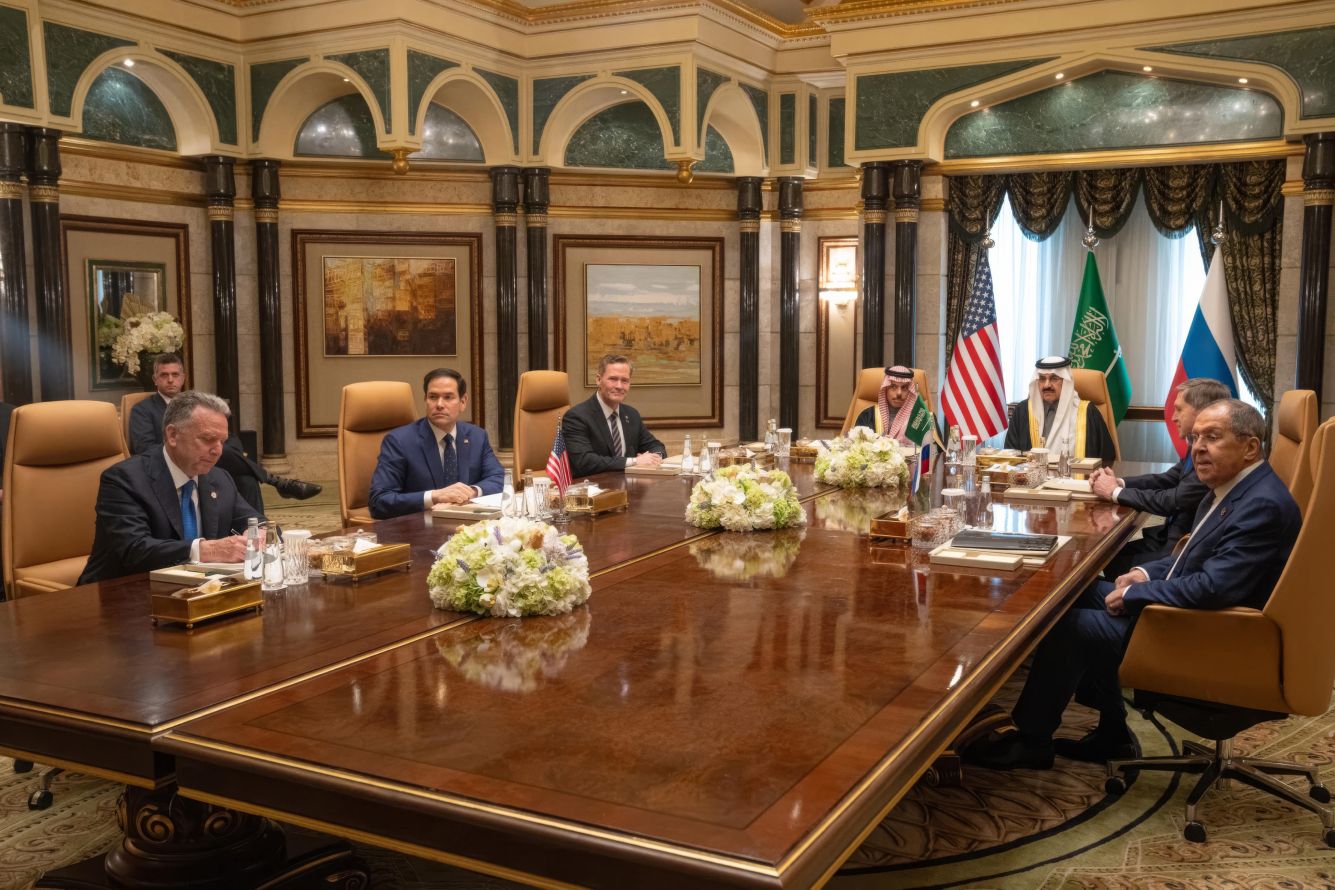
In Saudi Arabia, on February 18, negotiations of delegations of Russia and the USA ended . This is the first direct contact of the two countries after the start of the full -scale invasion of Russia to Ukraine. Medusa talked with the invited researcher of the Davis Center at Harvard University Mikhail Troitsky about why representatives of the European Union and Ukraine were defiantly called to the meeting, why the United States cooperation with Russia and what ultimate goal Trump pursues.

- Why did the United States decide first of all to speak with Russia, ignoring Ukraine and Europe? How typical or atypical for the States and Trump?
- They decided to conduct great public negotiations first with Russia for four reasons.
Firstly, Donald Trump believes that the status element is important to the Russian side. And showing respect in this way, he will be able to satisfy Russia's need for status.
Secondly, I suppose, Trump thinks and, perhaps, on some channels they were informed that quite quick compromises can be achieved from Russia.
Thirdly, Trump simply does not want to be like the predecessor of Joe Biden, who did not conduct such negotiations. Trump always emphasized that he was in good relations with Vladimir Putin. And apparently, now he wants to show how to act at the beginning of 2022 or earlier so that the war did not begin.
And finally, Russia is a large power, and perhaps Donald Trump or its advisers believe that, having normalized relations with it before the end of the war with Ukraine or without its end, they will be able to get some benefit in the international arena. Judging by some statements or hints of representatives of the administration, Russia would like from the “reliable rear” for the same China that Donald Trump considers the main strategic rival of the States, to turn into a partner of the United States.
In addition, judging by the public statements of the participants in negotiations, in Riyadh, it was not about Ukraine, but only about the readiness of normalizing the relations of Washington and Moscow. The Trump administration can say with full confidence that she did not negotiate behind the back of Ukraine. In extreme cases, she found out the position of Russia about what she needed to end the war.
- Is it possible to say that for Trump this whole story is about business, and not about democracy and assistance to Ukraine? Who does he see in Putin-just a business partner, and not like European countries, for example, a dictator?
- I think for Trump the question of contrast between dictatorship and democracy is not as acute as for a number of European countries. Moreover, among European countries there are those who do not consider it necessary to isolate Russia, since it is dictatorship.
Perhaps some of Trump advisers think that you can do business with Russia or in Russia. And if you return there before European states do it, you can get more favorable conditions. I do not exclude that the Russian side makes such arguments in negotiations. For example, she could offer to return to the oil sector, retail or in the production of some consumer goods and get the best of possible conditions.
But it is unlikely that Donald Trump is driven by the motive for extracting such a benefit for American corporations. In my opinion, he has something like a long -term strategic vision of Russia as a partner. And maybe, conducting such advanced negotiations, he thereby wants to put pressure on China so that he is worried about what is happening and make concessions to the States.
- What concessions from China can we talk about?
- There are a number of issues in the relations of the United States and China, which are discussed right now. For example, trade and economic contradictions. Trump also talked about negotiations on nuclear weapons between the United States, Russia and China as the largest nuclear powers. Previously, China refused to conduct these negotiations. Now, perhaps, Trump will want to offer China to still jump onto the footboard of the train of hypothetical American-Russian cooperation.
- There is an opinion that Trump knows how to start negotiations perfectly, but he quickly becomes bored, and he does not participate in the process itself. For example, this was the case during his first term with North Korea. Do you agree with this and will be the same with Ukraine?
- Nevertheless, North Korea did not wage war with anyone as Russia wages today with Ukraine. North Korea bristled with missiles, conducts all kinds of trials and sometimes expresses threats to the USA. But it does not wage a major war with the death of hundreds of thousands of people and large -scale destruction. So in the case of Ukraine, the bet for the Trump administration is still higher.
I think the Kremlin is afraid that negotiations will not end. He also needs the end of the war. Therefore, he will try to maintain the interest of the United States in Russia and diplomatic, status interaction as long as possible.
Russia still has quite a lot of trump cards. In particular, she can offer economic cooperation or somehow balance China, conduct an exchange of prisoners who will give Donald Trump political glasses. The thesis is also used that it is important for Moscow and Washington to develop cooperation in the Arctic. Russia can play these cards for a long time, even if you stop the war immediately.
But the option is possible when the United States administration simply unfolds, and Donald Trump will feel deceived and try to put pressure on Russia.
It is also likely that the loss of interest from the American administration will lead to more serious sanctions, since Trump perceives himself as a person who is able to achieve their goals. And if the goal is really the end of the war, then its unattion will cause him irritation, and he may want to return to the question of new sanctions, an embargo in relation to Russian energy carriers and some additional foreign exchange restrictions.
But I am sure that Moscow will try to make a maximum in order to prevent a return to the conflict with the United States, since the prospect of “leaving the isolation” of the Kremlin is extremely beneficial.
- Do you assume that the United States will remove sanctions from Russia? If so, what, in your opinion, in your opinion in your opinion?
- The Trump administration admitted that the sanctions should be removed primarily by the European Union, which was the main trading partner of Russia and has actually refused to buy Russian gas.
At the same time, the Americans are quite capable of withdrawing part of the most painful restrictions that make it extremely difficult for Russia to calculate both the import of goods - now they have to be carried in a roundabout way and pay premium prices for them - and for the export of their energy carriers. Donald Trump even discussed the prospect of Russia's return to the “big seven”, which would mean a complete normalization of Moscow's status.
The main question is what the Trump administration will explain the lifting of sanctions from Russia. Even if Trump now allows Moscow to earn status glasses, holding Russian-American meetings at a high level, Washington will not relieve sanctions until a reliable world is acceptable for all conditions. Otherwise, the balance of costs and benefits from negotiations with Russia for the Trump administration will be negative. For example, inside the United States, among influential Republicans, there will probably be open critics of the approach to the cessation of the Russian-Ukrainian war.
Russia will probably want to remove part of the sanctions without concessions in a peaceful process, but which Moscow exist for this, it is incomprehensible. The public position of Russia is very far from the position of Ukraine, which in any case retains the support of large European countries. To maintain hope for the lifting of sanctions, Moscow will have to soften the requirements for the post -war world in the near future.
- Wait for the return of American companies and services to Russia? And can this lead to the fact that other countries will also begin to communicate with Russia and relieve sanctions?
- Most likely, the Kremlin is counting on this dynamics. Perhaps now European companies that may want to return to Russia will come to their governments or to the EU bodies and will ask for exceptions that the Americans do not replace them in the Russian market. Even if the Americans themselves do not want to do business there because of political risks.
Now for the European authorities there is a strong impulse and the motive to think about whether it is worth holding the company from this kind of renewal of services. Initially, when they left Russia, a moral imperative was important to them. And today, due to Russian-American negotiations, the moral aspect may weaken. And calling from Ukraine not to do business with Russia may not be enough.
- The United States plans to develop economic cooperation (including in the Arctic) with Russia. How real is this and what can this cooperation express?
- In my opinion, in this distant and inaccessible region for any business, it is still difficult to develop international cooperation. Yes, in the future it will be attractive to carry containers through the Northern Sea Route that Russia controls. But with the current level of oil prices, the resumption of drilling in the Arctic is unlikely to be a profitable commercial enterprise.
Some companies in the United States may be interested in putting oil fields in the Arctic and resuming partnerships with Russian companies. But this is all a distant prospect. In my opinion, the potential of cooperation or rivalry between anyone in the Arctic is overestimated. So far, this is talk about the distant future, when the Arctic is thawing and it will be possible to produce oil cheaply there.
- The Americans want to get the rights to half of minerals in exchange for military assistance. Moreover, regardless of whether it will be possible to successfully conclude a peace agreement between Russia and Ukraine. Why, in your opinion, is Trump and why do Americans offer such harsh conditions to Ukraine?
- The desire of the Trump team played a role to get a quick result from Ukraine and personally prove to the president: he has already achieved certain successes from the point of view of the interests of the United States and can tell the voter about it. But it didn't work out.
This is a draft of an unprecedented interstate agreement. Most often, such agreements are talking about relations between companies that extract something, develop, process, and then sell. But in modern agreements they do not write down that the state practically abandon its sovereignty over mineral reserves.
It is possible that the work will continue on other conditions at the corporation level, and I think Ukrainians want it.
- What does Trump and his team have to do with Ukraine? The feeling that they no longer want to help so much as before.
- Everything dictates the personal position of President Trump. Although we heardthe statements of his close allies in a rather critical way regarding the help that the United States has been providing Ukraine for hundreds of billions of dollars for several years. It is clear that this raises questions from the American voter. Therefore, the members of the Trump team consider it necessary to somehow satisfy the demand of the voter.
If for Bayden the support of Ukraine was an important element of strengthening the international security system, then for the Trump administration more and more pragmatic and it is just about transferring money to some state that for some reason does not want to give anything in return.
-The speech of the US Vice President Wans in Munich shocked many Europeans. Why right now the United States has so criticized and, we can say, left Europe? Was this premise?
- The USA - in the spirit of Donald Trump’s approach to international diplomacy - do not say that they have the goal of leaving Europe. They note that there are moments where the States spend more than they receive. So, the troops in Europe are overly, assistance to Ukraine in a situation where you can end the war are also not mandatory costs. This is an ideology that is now guided by Elon Musk and his Department of Government's effectiveness. But there is no goal of breaking ties with Europe.
- Why did Trump (and Musk) support the right forces in Europe so fiercely?
“They see in them ideological allies or even brothers in misfortune.” They believe that in Europe the same thing happens as in the USA in 2020, when Donald Trump allegedly stole the elections . They think that in the USA this glass ceiling was finally defeated, and want to help to break it in other countries.
- Is it possible to say that there is a new world order? What is he?
-Still, the change of order in the international system is traditionally related to the end of the world wars: for example, Napoleonic, the first, and then the Second World War and the Cold War.
Now there is nothing of the kind in scale, despite all the horror of the war unleashed by Russia against Ukraine. We see rather competition that flows from one sphere to another. For example, the United States clearly compete for the championship in the world economy with China. The European Union is also not behind. There is also a competition of management models, and, possibly, with the advent of Trump, this division into democratic and authoritarian states will go into the background.
- And the last question: why is Trump to make this world? Who does he see himself in this story? What is his motivation?
- Its motivation is to quickly reduce excess obligations that are expensive for the United States. He needs to show this to his voter.
In addition, he is convinced that he could become an effective peacekeeper and complete the conflicts that were drawn due to the ineffective policy of his predecessors, primarily Biden's administration. He wants to get the laurels of a peacekeeper, a successful international intermediary, capable of ensuring the progressive economic development of the whole world and bringing benefits to the United States. At the same time, Donald Trump is very susceptible to criticism, and his emotions can have a strong influence on negotiations.