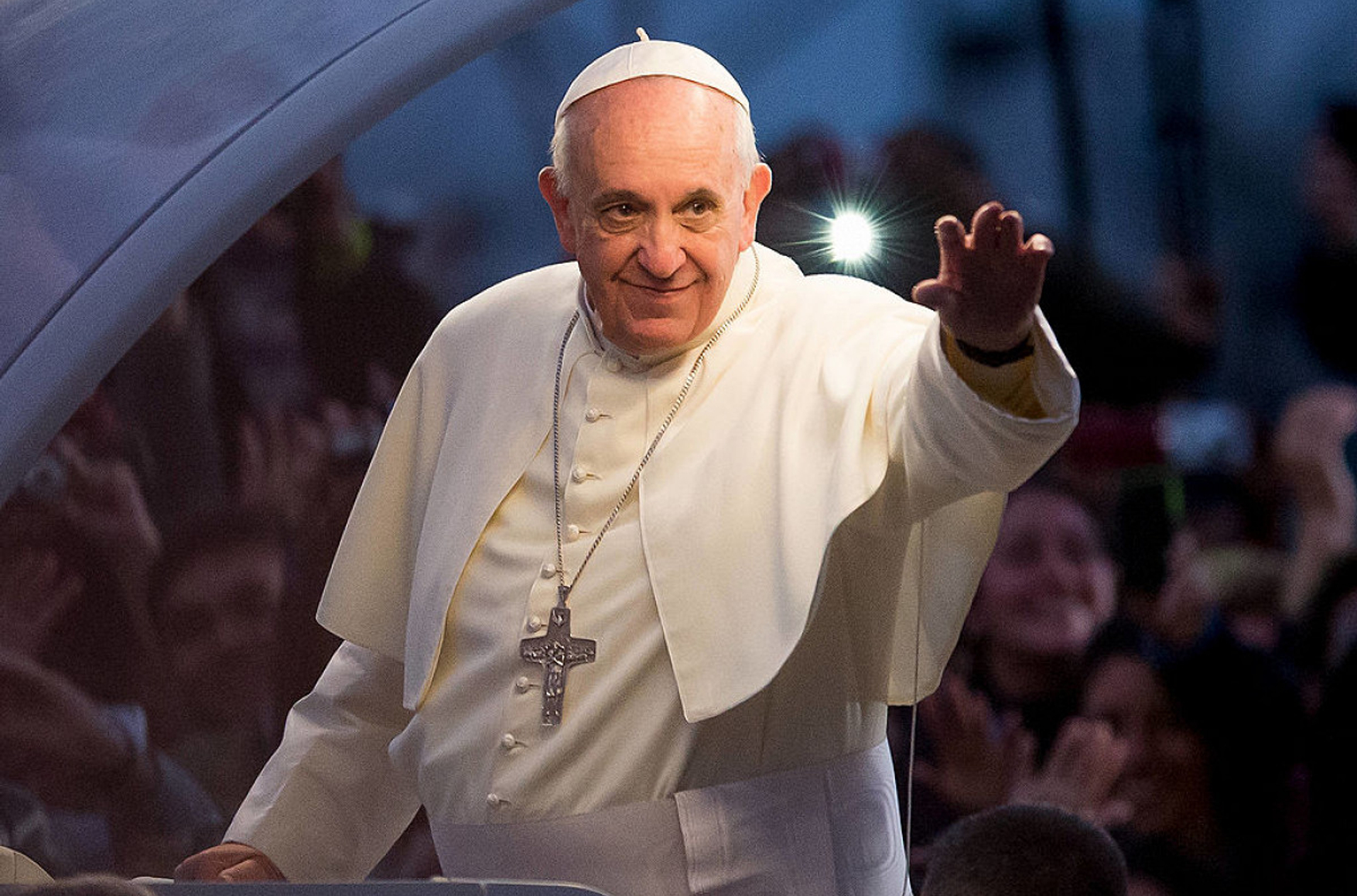
The Pope Francis passed away at the age of 88 - just a day after his last public appearance on St. Peter Square, where he congratulated believers on Easter. Its pontificate lasted more than ten years and became one of the most unusual and rotary in the recent history of the Catholic Church. The first dad from Latin America, the first Jesuit in this post, the first Francis - he sought to bring the church outside Europe, reform the curia, soften rhetoric on a number of acute topics and reconfigure the entire Vatican control system for decades. The Insider talked with experts about what was Francis, what he changed in the structure of the church and what to expect from the conclave now.
Photo: Getty Images News
The observer Konstantin Eggert, in a conversation with The Insider, explained that Pope Francis’s pontificate was extremely contradictory for the Church and did not bring the benefit to the church, which everyone was counting on:
“Pope Francis was not a European and could not fully use the fact that the main regions of growth today is Africa, India and part of Asia, where Christians are subjected to violence, up to destruction. He showed restraint in the protection of Catholics, for example, in Nigeria, and paid more attention to the condemnation of the United States, capitalism and topics close to The New York Times, The Guardian and the humanitarian professors of Western universities, which caused irritation among many. This will become a challenge for his successor.
Dad was a rigid administrator, seriously changed the Roman curia and everywhere put loyal people, which, in general, normal. However, he did not manage to advance the global mission of the Church in full. Being not a European, he did not understand Europe and the West, his flirting with Putin and the approach to third world dictatorships sharply contrasted with the position of John Paul II and Benedict XVI. He leaves behind a disoriented church. His main heritage was attempts to soften church teaching in relation to LGBT, as well as to people who entered into a second marriage without canceling the first church. He tried to do a lot, but always remained somewhere between, not taking decisive steps, and everywhere there was uncertainty. ”
According to Eggert, Pope Francis failed to clearly determine the doctrinal course, and the key issues of the pontificate were accompanied by attempts to please everyone at once:
“Sexual scandals in the church were partially inflated by secular media, not loving the Catholic Church. Despite the apologies, Francis’s actions in this matter were far from impeccability. On the one hand, Cardinal McCarrick was removed and dismissed, on the other hand, Father Marco Rupnik, who accused of harassment to women, was repeatedly defended by his dad and easily escaped. The entire pontificate was an attempt to sit on two chairs. At the time of his election on St. Peter Square, glee reigned, but now there is confidence that the next dad would not be Jesuit. The Jesuits are a very left order, and this pontificate showed that it is better for them not to take such a position. The next dad, most likely, will be an effective administrator who clearly expresses his thoughts and capable of establishing a dialogue with liberals and conservatives within the church.
The main challenge is not the opinion of believers in the conditional Venice, but the integration of the views of Catholics from fast -growing regions - Africa and Asia, where believers are often very conservative. African and Asian cardinals are already playing a key role. In these regions, parishes are growing, there are not enough priests, while, for example, in Florence they are not needed. This is a colossal challenge. From the standpoint of Pakistan, India or Africa, it is important to maintain traditional views on marriage, family, homosexuality, money, relations with the authorities. And from the point of view of Europe, for example, Grats, everything looks different.
Another important request is to dad, which will understand the history of Europe. Francis, as a South American, did not know and did not understand European experience, for him two world wars and communism were something distant. This was especially manifested in his attitude to Putin's aggression against Ukraine: he completely did not understand what Ukraine was fighting for, and did not even try to consider the situation within the framework of the Catholic concept of a fair war. He avoided unambiguous assessments and tried to make the Kremlin an acceptable partner. He talked about the war as a conflict of two states with equal responsibility, which excluded the effectiveness of papal diplomacy. ”
Assessing the prospects of the following pontificate, Eggert emphasized that the forecasts here are meaningless, but the growing contradictions within the church are obvious - going along the line of cultural and geographical fault:
“Who will become the next dad is unknown. There is a Roman proverb: “The one who enters the conclave of the papabil comes out with a simple cardinal.” Only the election of Benedict XVI was relatively predictable, thanks to his authority of the philosopher and working with the previous dad. Now there are no such figures, although they call the Secretary of State of the Vatican Pietro Passoli. Probably, the struggle will unfold between the cardinals supporting the liberal line of Francis, and representatives of the third world countries insisting on doctrinal clarity and more rigid administration. Predicting specific candidates is pointless. As George Weigel noted, for the cardinals this is their moment of democracy - each has one voice. Although Francis tried to ensure the election of the pope similar in the views, appointing his supporters by the cardinals, the story shows that the successor can radically change the course. Surprises are possible. This can be the first conclave on which the African dad or the Asian dad will be selected. ”
According to Eggert, it is not customary to ignore global processes in the Catholic Church. And although Francis tried to speak on behalf of the whole world, his prospects were often limited by regional experience:
“Within the framework of the Catholic Church, no one pretends that something does not exist. In recent years, there has been a decrease in the influence of the West and the growth of the influence of Asia and Africa, where the church is growing, and the challenges are associated with economic justice, dictatorships, and the education of citizens. These are problems that are not characteristic of Europe, the USA and Australia. Pope Francis was too rooted in South American experience and poorly understood the rest of the regions. The future dad, according to the commentator, will have to listen to Catholics and bishops from these regions. Francis often proceeded in his initiatives from the South American experience, which is not applicable, for example, to India. ”
Religious Science, Candidate of Cultural Studies, Konstantin Mikhailov, in an interview with The Insider, identified three key vectors of the Pontificate Francis, focusing on structural and symbolic shifts that occurred inside the Catholic Church:
“Summing up Francis’s pontificate, three most important processes can be distinguished. Firstly, the radical renewal of Curia by attracting people from the Catholic Church of the Catholic Church due to the limits of Europe-from Africa, Latin America, Asia. When Pope Francis came to power, there were only 11 cardinals from Asia and Oceania in the Catholic Church, and now there are almost three dozen of them. There were 11 Africans, and there were 18. On the other hand, the number of Italians, who traditionally were the largest group at the top of the church, decreased from 28 to 17 people. ”
Mikhailov draws attention to the redistribution of power within the church hierarchy. He emphasizes that it is not just about changing the focus, but about deep structural restructuring:
“There is a process of reformatting the entire church management system, and it is closely intertwined with the second process, which was important for the late dad - we are talking about transferring the focus of attention from Europe to the global south. The point here is not that Pope Francis himself was from Argentina, but that most of the parishioners of the Catholic Church lives outside Europe, especially in Latin America and Africa. The population of these regions continues to grow, unlike the population of Europe, which means that in the near future the importance of the global south in the life of the Catholic Church will only grow. Francis was the first dad who really reacted to this new challenge, realized that the church should stop being an internal European business and turn into something global. This is impossible without a radical change in the management system. ”
Unlike Eggert, who critically appreciated the indecision of Francis in moral and local issues, Mikhailov focuses on a balanced and cautious nature of reforms:
“Thirdly, under Francis, moderate liberalization of the Catholic Church occurred. Changes cannot be called radical, and the pope himself was not a supporter of the ultramodern reforms, but some mitigation of rhetoric occurred. Under Francis, the church tried to keep up with the times and learn to speak a language that will not be offensive to the hearing of residents of developed countries. ”
As for the future, Mikhailov emphasizes: unlike secular politics, in the church context of forecasts - an extremely unreliable matter. His accents are shifted from the personalities of the election mechanics:
“As for the election of the new pope, a dozen different candidates are called, but in church policy, unlike secular ones, it is quite difficult to call objectively probable candidates. In recent decades, all these lists turned out to be incorrect, and analysts have not guessed the person who ultimately turned out to be on the throne of St. Peter.
It will be possible to really talk about the list of papabies to really seriously when the conclave is gathering. A noticeable part of the discussions about who will be the next pontiff pass to the conclave, where the participants are already with a certain list of candidates. In the next few weeks, we will observe how informal negotiations are being carried out on this subject. The solution depends on a large number of factors: age, hardware and even geographical location. This is a process filled with accidents and ingenious agreements. ”
The Vatican expert Saken Aimurzaev believes that the Francis pontificate affected not only the ideological course of the Catholic Church, but also the structure of the electoral corps, which will allow this course to consolidate this course for years in advance:
“He changed the entire collegium of the cardinals practically. To select a new pontiff according to the Vatican Law, there should be 2/3 votes plus one vote from 135 cardinals, which have the right to vote on the day of the dad’s death. Now these 2/3 and even more are appointed Francis for 12 years of the papacy. He appointed a lot of electors from completely unexpected countries, violated the tradition when the cardinalism was given to traditionally to the heads of large historically important dioceses. For example, there is no cardinal in Paris, in Milan, in Los Angeles. But there is, for example, in Ulan Bator. Francis also rejuvenated the congregation. The departed dad appointed young prelates - for example, he appointed a Ukrainian from Australia, Mikola bull, who is only 45 years old. That is, this person up to 80 years will choose Roman dad. The average age of cardiners-recruits does not reach 70 years. They used to be older. So Francis for many years ahead determined the corps of electors, in a sense he acted cunningly. Successors will need years to introduce new people into the collegium. So Francis laid his course for many years in advance. ”
Speaking of a possible successor, Aimurzaev notes: despite the globalization of the church, a rollback to the “old proven” figures is possible - especially against the background of general political stress:
“Since the situation in the world has become very aggravated (wars, conflicts) in my opinion, the cardinals will look for a compromise figure that combines pastoral and political talents. Perhaps the future dad will be the Italian. Italians have not been to the throne of Peter since 1978. Some kind of non-standard solution that there will be some too young or black dad is unlikely. ”
He draws attention to attempts to political influence on the process of choosing a new dad from American conservatives:
“American conservatives and their main exponent Catholic Vice President Jay Di Wans are trying to intervene in the process. I think the Trump team would very much like American dad, as part of the Magician of ideology and rhetoric of American success. But there is a problem, because out of 10 American cardinals 7 are Francis' proteges and these people openly opposing ultra -conservative views. Perhaps Trump would like to press, promote the American in dads, but the transactions beloved by the American president are not concluded. It is very difficult to choose an American to the holy throne, because a significant part of the college of the cardinals of the global south is difficult to imagine that they vote for an American. ”
Touching the often discussed topic of the conservativeness of African and Asian Catholic communities, Aimurzaev clarifies that it is much more complicated than it seems:
“There are few completely radical traditionalists in the college of cardinals. It seems to me that any cardinal chosen by the dad, in one way or another, will still be the successor of the case of Pope Francis. That is, such a sharp turn as in the series is a young dad, remember Pius XIII, played by Jud Law, it is impossible to imagine this. There is, for example, the American cardinal Raymond Burk, with a complex character and hard views of the traditionalist. But he is unpopular, especially after he entered into public disputes several times and even with Francis. When the cardinal begins to openly offend dad, question the authority of the successor of Peter - everything, the chances of the election decrease. If we look at the representatives of the church from Africa and Asia - yes, many of them adhere to a conservative course. It cannot be otherwise. For example, many African communities are essentially the result of the missionary work of Catholics. The church there only a few generations ago began to establish and strengthen. In this regard, there are many moral dilemmas and difficulties. Polyno -driving, different features of behavior and tradition - therefore, the voice of the Church there is especially loud in matters of morality. Although in Africa there are voices for, for example, the abolition of celibacy for priests. ”
Speaking about possible changes in the issue of female and family priesthood, he emphasizes that any progress will be extremely careful:
“I think that the maximum program for the successors of Francis is the permission of the deacon service to women. Women will not be priests, celibacy will not be canceled, that is, there will be no married priesthood. Over time, celibacy can become voluntary, but this is hardly the question of the next pontificate. ”
Aimurzaev pays special attention to Francis’s internal conflict with the Jesuit Order from which he left:
“Pope Francis is the first pope in history. What is actually unusual. In this order, it is customary to avoid a career, the monks give an unspoken promise not to strive to occupy high positions, the Order does not particularly readily “let go of the brothers in the service of the bishop or cardinal. In the early 90s, when Francis was elected to the post of bishop-assistant to the diocese of Buenos Aires, they also did not want to let him go. The order was against. But then the Vatican insisted and Jorge Bergolo began to serve the church in a high dignity. Formally, since then he was not a Jesuit, but, of course, he retained the spirit of the order, a missionary approach, a love of brothers. For example, in each of his foreign visit, Francis necessarily met with local Jesuits, informally, simply spoke with them, answered questions, prayed. He had an absolutely missionary look at the Church, which was a pure continuation of the spirituality of St. Ignatius Loilola, the founder of the Jesuit Order, who sent the brothers to such distant trips and missions - to Japan, India, and Latin America. Despite all the advantages of the Jesuit pope, I think that after Francis, a member of the order will not soon become a pontiff again, although there will be four Cardinal Jesuit in the future conclave. Jesuit spontaneity, the non -standard consciousness of Francis was often the cause of stress for many prelates of the Church, inveterate clericals. Open neglect of formalities, domestic modesty, simplicity and maximum simplification of the ceremonial part of service - all this provoked apparatchiks from the church who love beautiful ceremonies, silence, peace and secrets. Francis was completely different. "