
Translated material
The song lost at Eurovision was a signal for the Portuguese revolution
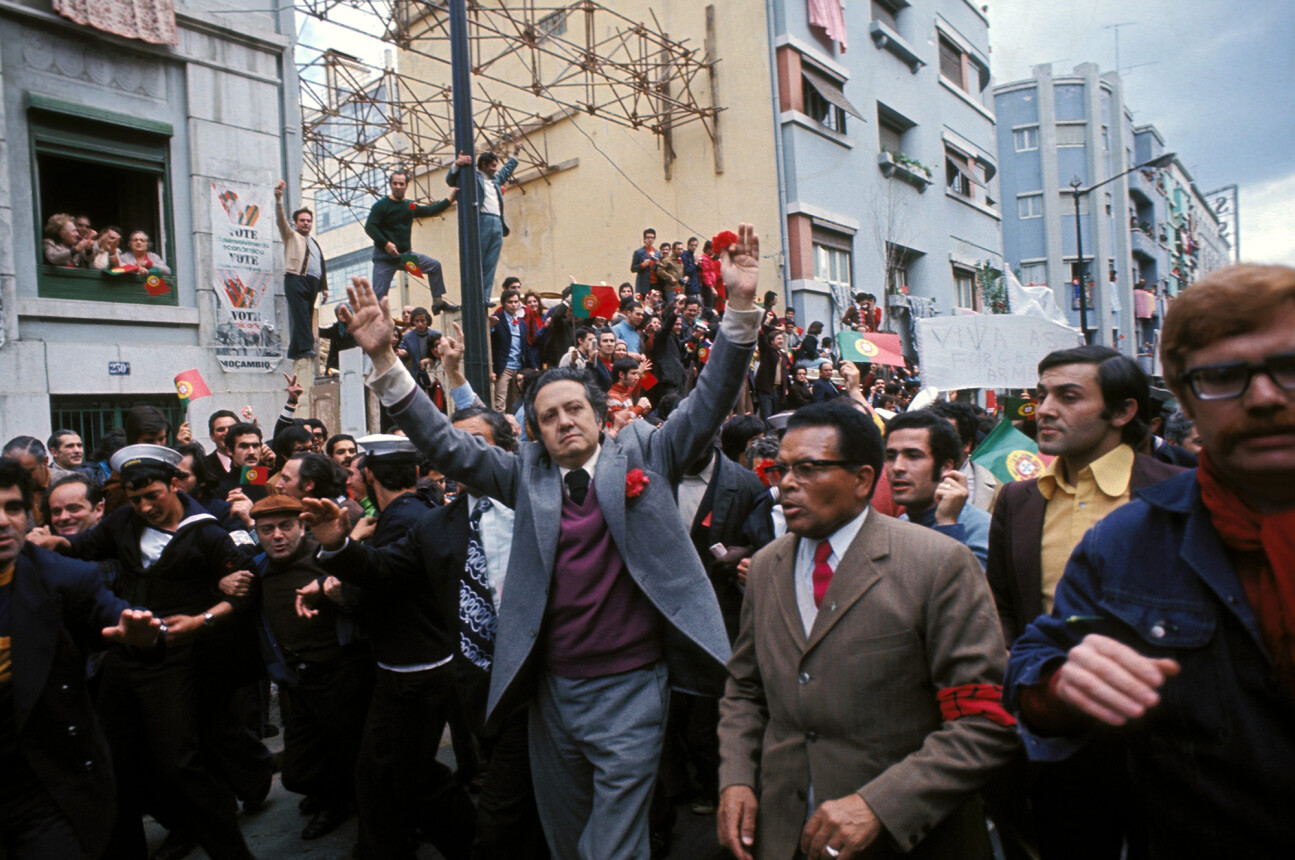
50 years ago, April 25, 1975, the first free elections were held in Portugal. A year earlier, the officers of the Portuguese army organized a military coup and reached the resignation of the head of state in a day. From the very first hours of the uprising, residents who supported the military went to the streets of Lisbon - they sang songs with them and gave them flowers. The Carnation Revolution is in the Gallery of Cold .
The uprising began with her, which overthrew the dictatorship. That's how it was
Help "cold" to tell human stories
We put a person in the center of our journalism and talk about people who are faced with injustice, but do not lose their spirit and continue to fight for their rights and freedoms. In order to further cover human stories, we need readers' support - thanks to your donations, we continue to work, despite the pressure of the state.
- Foreign card
- RF map ↘︎
- Patreon ↘︎
- Translation
- Crypt
Monthly
Once
5 €
- 10 €
- 20 €
30 €
5 €
- 10 €
- 20 €
- Another
- Bank of the Russian Federation
- Foreign Bank
Card number:
5536 9138 6472 8742
Copulated!
Recipient:
Taisiya Bekbulatova
Copulated!
Recipient:
Projektas Šaltis
Copulated!
Account number:
LT613500010016198323
Copulated!
Swift bic:
EVIULT2VXXX
Copulated!
Bank:
Lietuvos Bankas (Bank of Lithuania)
Copulated!
Comment-nazing payment:
Parama įstatymų numatytais tikslais (Be Konkretaus Tikslo)
Copulated!
We ask you to indicate the comment so that we can accurately determine the receipt of funds. The phrase translates as follows: "Support for the statutory purposes (without a specific purpose)."
Sum: €
To sacrifice
When making a donation, you accept the privacy policy
On April 6, 1974, the Eurovision Song Contest was held in the UK. The ABBA group won with the song “Waterloo”, and the last place was shared by Norway, Germany, Switzerland and Portugal. The 26-year-old Paulo Carvalia with the love ballad “E Depois Do Adeus” (“And after parting”) performed from Portugal at the competition.
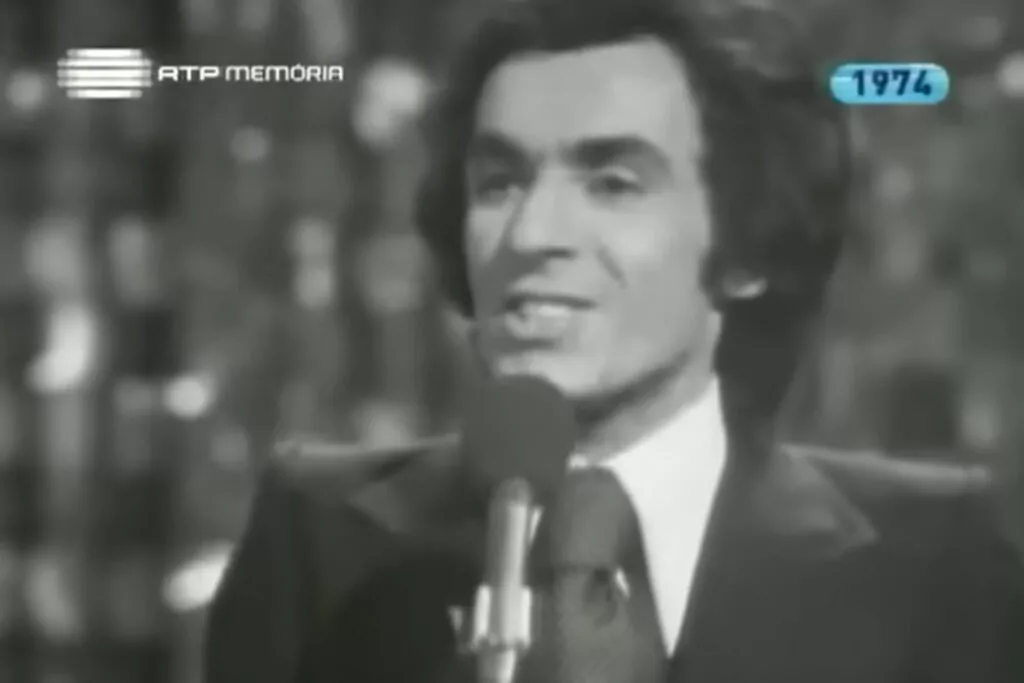
After the loss of Carvalia, he returned to his homeland, where since 1926 there was an authoritarian nationalist regime, called Estado Novo ("New State"). Although the founder and ideologist of the regime Antonio Salazar died in 1968, the new head of state Marcelo Katano continued his policy: all the media of the countries were censored, and political activists were caught and tortured .
An unknown company has swung on the largest project of Europe, it promises to hold Metro from Portugal to Ukraine and a train at a speed of up to 400 km/h, the world 10 minutes of reading
Portugal was one of the poorest countries in Western Europe, largely due to the fact that she spent a lot of money on a war in Africa, which began in 1961: the Portuguese colonies began to fight for independence. The clashes went in Guinea-Bisau, Mozambique and Angola.
The inhabitants of Portugal were unhappy with the policy of the authorities. In 1973, Portuguese officers who returned from Africa and enjoyed authority among soldiers organized an underground group of “Captain Movement”. Their goal was to arrange a military coup and overthrow the government.
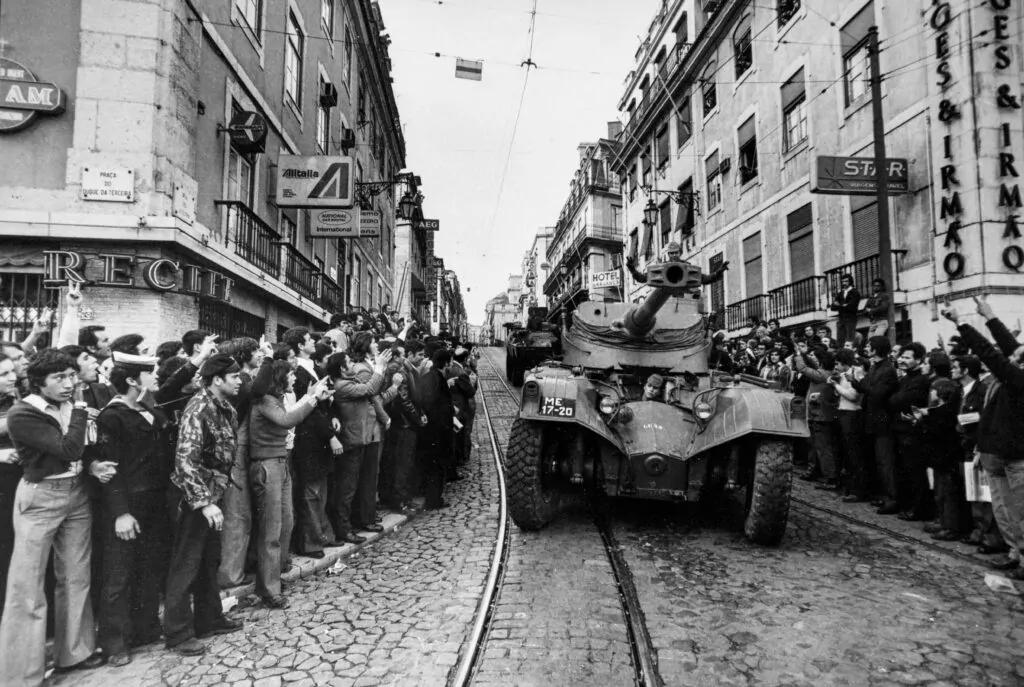
On the night of April 24, 1974, members of the “Captain’s Movement” carefully listened to the radio. At 22:55, on one of the channels, the song “E Depois Do Adeus” Paulo de Carvale was included. After an hour and a half , the song “Grandola, Vila Morena” (“Grandol, dark wood”) of Bard Jose Jose Afons was put on another radio station. These were two signals - at about four in the morning the columns of armored vehicles headed to Lisbon.
Less than the day after the first song sounded, the most long -lived authoritarian regime in Western Europe fell.
The land where power belongs to the people
As one of the leaders of the movement of Carlush Almad Conterairash recalls , the military needed a universal signal, because the system of communication systems of the army, fleet and the Air Force were not interconnected. Then he remembered that they said about the coup in Chile in 1973 that the military transmitted signals through pop-lying on the usual radio.
On this day, according to tradition, women can beat men , but even this does not save from harassment. Despite complaints and protests, the authorities do nothing of the world 8 minutes of reading
He spoke about the idea of the hotel de Carvalia, who worked on the coup plan. He had a familiar at one of the Lisbon stations who agreed to include the desired song. Another participant in the movement had a connection with the Catholic radio station, which covered the entire Portugal. The military decided to transfer two songs: one on April 24 to midnight, and the second - after midnight.
The question remained: what kind of songs? The leaders of the revolution wanted to choose something symbolic and protest, so they immediately looked at the discography of Jose (Zeki) to Afons. The singer in his ballads often raised the theme uncomfortable: he sang about the strength of the people. Because of this, as well as because of his connections with the Communists, the songs of Athos were banned, and he was sent to prison several times. However, the military - especially Portuguese soldiers and officers in Africa - really liked him.

Carvalia suggested using the song to Afons “Venham Mais Cinco” (“five more on the way”) as the first signal. But she was prohibited by censorship, and radio stations were afraid that they would attract too much attention if they turned it on. Then the rebels decided to choose a neutral song - the lost at the Eurovision "and after goodbye."
For the second signal, they chose another song to Afons, which was not banned by the censors - “Grandol, a dark wood” about a small village in the south of Portugal. It was handed over in the program about poetry, so the military agreed with the announcer so that he first read the first lines of the song - about the earth where the brotherhood reigns and power belongs to the people. Then the announcer turned on the composition itself, the first 40 seconds of which are the sounds of a marching crowd.
Lady with cloves
The troops of the captains occupied the central square of Lisbon, surrounded all ministries and military headquarters and the main airport of the capital. The radio authorities asked citizens to stay at home, but they did not listen to them - people still took to the streets to support the rebels. On one of the central squares, more than a hundred people waving the Portuguese flags and shouted: “The end of fascism!”
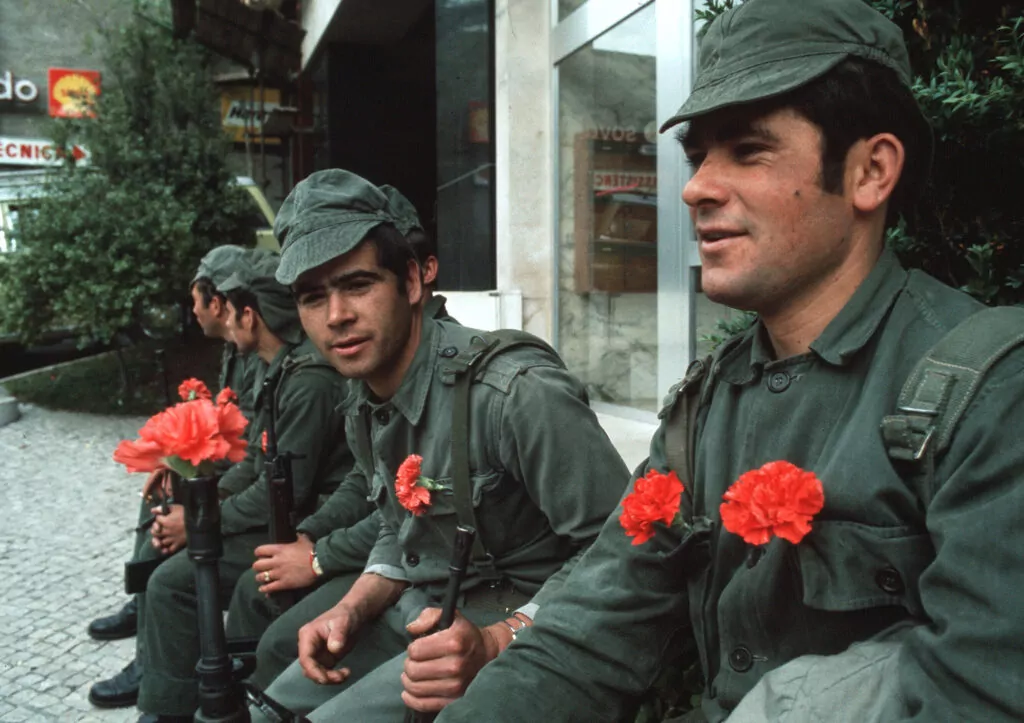
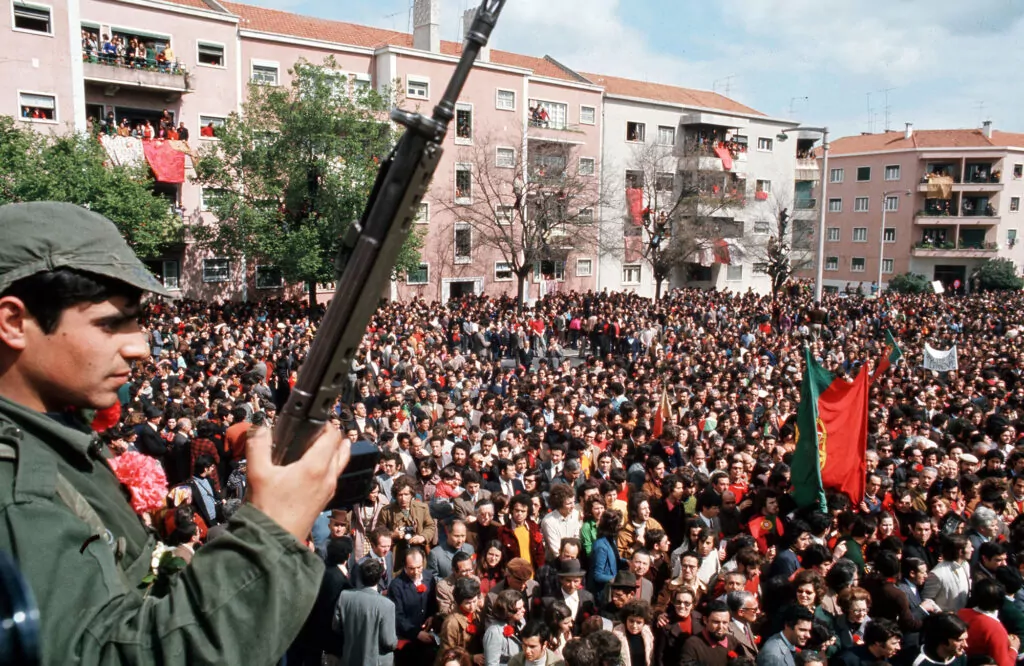
The 40-year-old Celest Caeira, despite the requests of the authorities, went to work-on this day in the restaurant where she worked, celebrated the anniversary of the opening. The owner decorated the institution and put a vase with cloves on all tables. However, having heard reports about the radio, he canceled the holiday and gave the flowers to the employee. Kayir took them and went home, and on the road saw a column of soldiers, one of whom asked her a cigarette. She replied that she was not smoking, and instead of cigarettes she gave him a red carnation. He, laughing, stuck her into the trunk of his rifle.
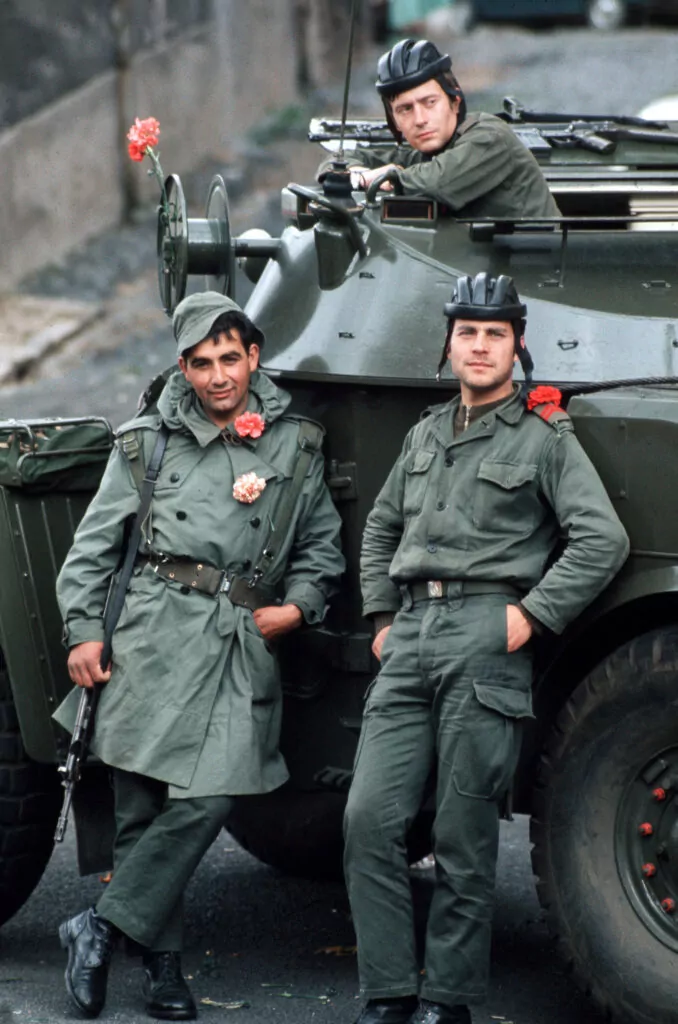
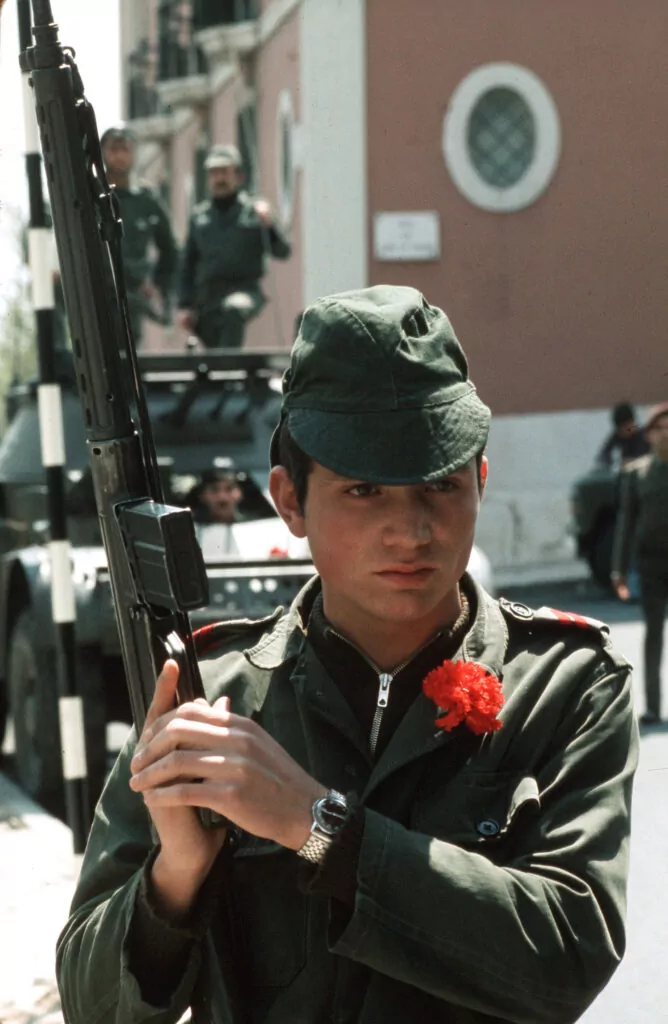
Other soldiers also wanted to take flowers - and Kayer handed them out on the way home. Employees of flower shops also did, and soon the carnations were everywhere: with their help, residents could distinguish the forces of the rebels from the police.
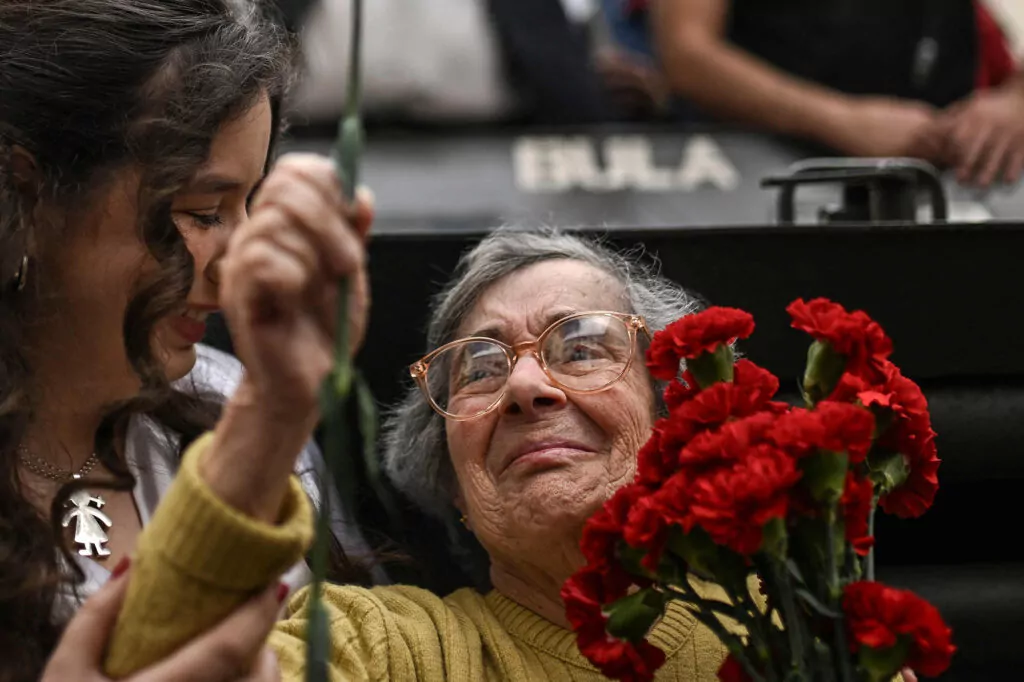
Now, because of this, the Portuguese revolution is called the "Revolution of the Carnation", and Celest Caeira-"a lady with cloves." On April 25, 2024, in Lisbon, at the celebration of the 50th anniversary of the revolution, the 90-year-old Caeira, sitting in a wheelchair, distributed flowers to passers-by. In November 2025, she died .
Return the freedom to the people
At 15:10, the military, along with a crowd of protesters, reached the building of the Main Directorate of the Gendarmerie, where Prime Minister Marcelo Kaetano hid. He said that he would like to transfer the post to someone worthy-"so that she [power] would not fall into the hands of ink." After a couple of hours, General Antoniu Di Spinol, a former governor of the Portuguese Guinea, who took the country's administration, came to him.
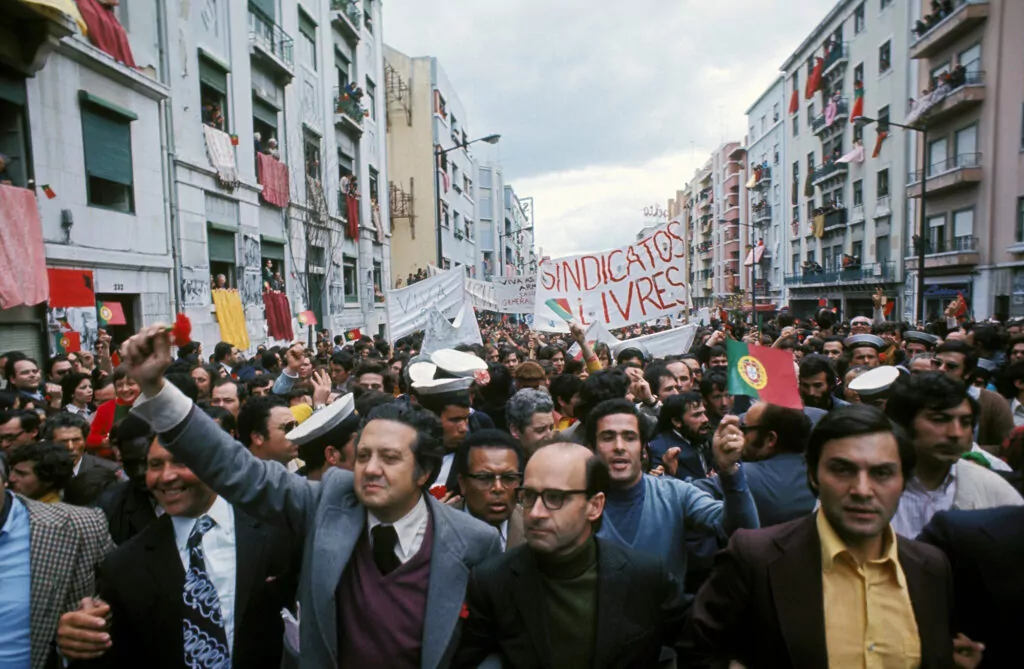
On the evening of April 25, the military handed over to the radio: “The movement of the Armed Forces has just successfully fulfilled the most important civilian mission of recent years. We intend to <...> to return civil freedoms to the Portuguese people, which were deprived of him. "
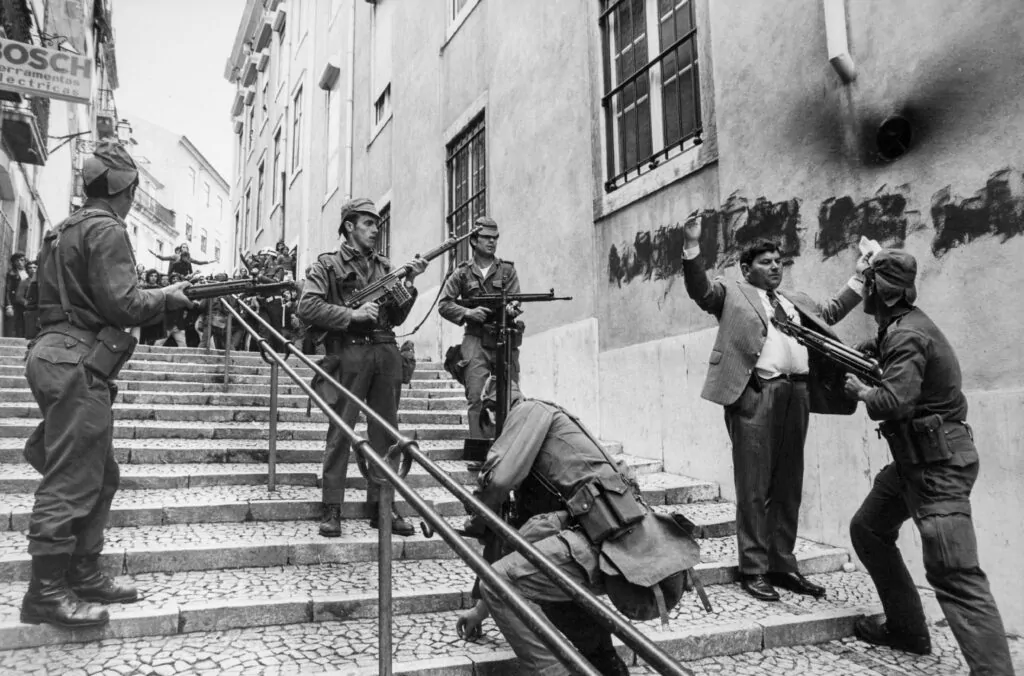
The Provisional Government immediately abolished the censorship and political police, which was engaged in the search and torture of the opposition, as well as legalized trade unions and parties. On April 26, all political prisoners were released . The war in Africa ended: by the end of 1975, all colonies gained independence.
A year after the military coup, on April 25, 1975, the first democratic elections to the Constituent Assembly were held in Portugal.
In order not to miss the main materials of the "cold", subscribe to our social networks!


"Cold" needs your help to work further
We continue to work, resisting prohibitions and repression in order to maintain independent journalism for Russia the future. How do we do it? Thanks to the support of thousands of caring people.
What are we dreaming about?
About simple and at the same time complex - the ability to work further. Life will change many times beyond recognition, but we, the editors of the Cold, want to stay with you, our readers.
Support the “cold” today, so that we continue to do what we are best done - to be independent media. Thank you!
Author: Raya Khachatryan