
Translated material
Knights of poison and suicide. How the operations of the KGB retaliation abroad were carried out
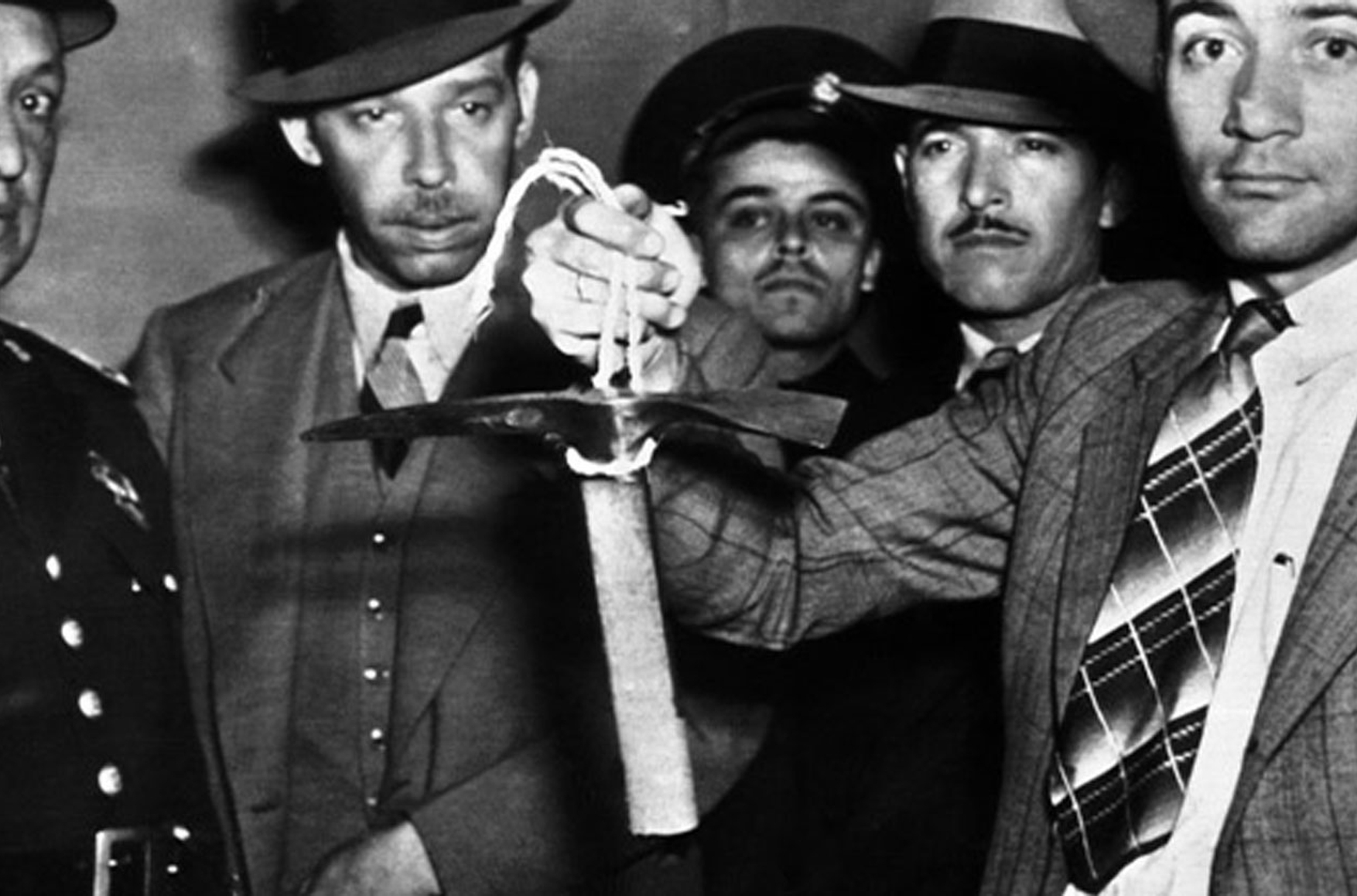
Mexican policemen demonstrate an ice ax, which Merkader killed Trotsky. (C) AP
History Alexei Uvarov 3 May 2025Over the past few years, the Russian intelligence agencies intensified the persecution of Russian emigrants, trying to organize the abductions and poisoning of journalists and opposition. In fact, Putin only revived the long -existing practice in the KGB, designed not only to form an atmosphere of fear among emigrants, but also to demonstrate to the whole world that the USSR is ready to ignore the national sovereignty of other countries in order to persecute its enemies.
Content
Emigration is not yet salvation
Bandera, dissident writers and defectors: confirmed liquidation and attempt
Methods: poison, abduction, compromising evidence
Desters tell the details of the KGB operations
Apple Podcasts / Spotify audio version
Emigration is not yet salvation
Many emigrants and defectors naively believed (and some people still think so) that with the crossing of the border of Russia or the USSR, they are safe that special services will not pursue them abroad, and more physically eliminated them. In the end, this would mean a violation of the laws of other states and would lead to an international scandal.
But in reality, the Soviet leadership considered the defectors, dissidents and “anti-Soviet emigrants as dangerous enemies and was ready to fight them, regardless of the borders. Since the 1920-30s, Soviet state security practiced secret liquidation abroad-from the abductions of white emigrant generals (Kutepov, Miller) to the murder of Leo Trotsky in Mexico in 1940.
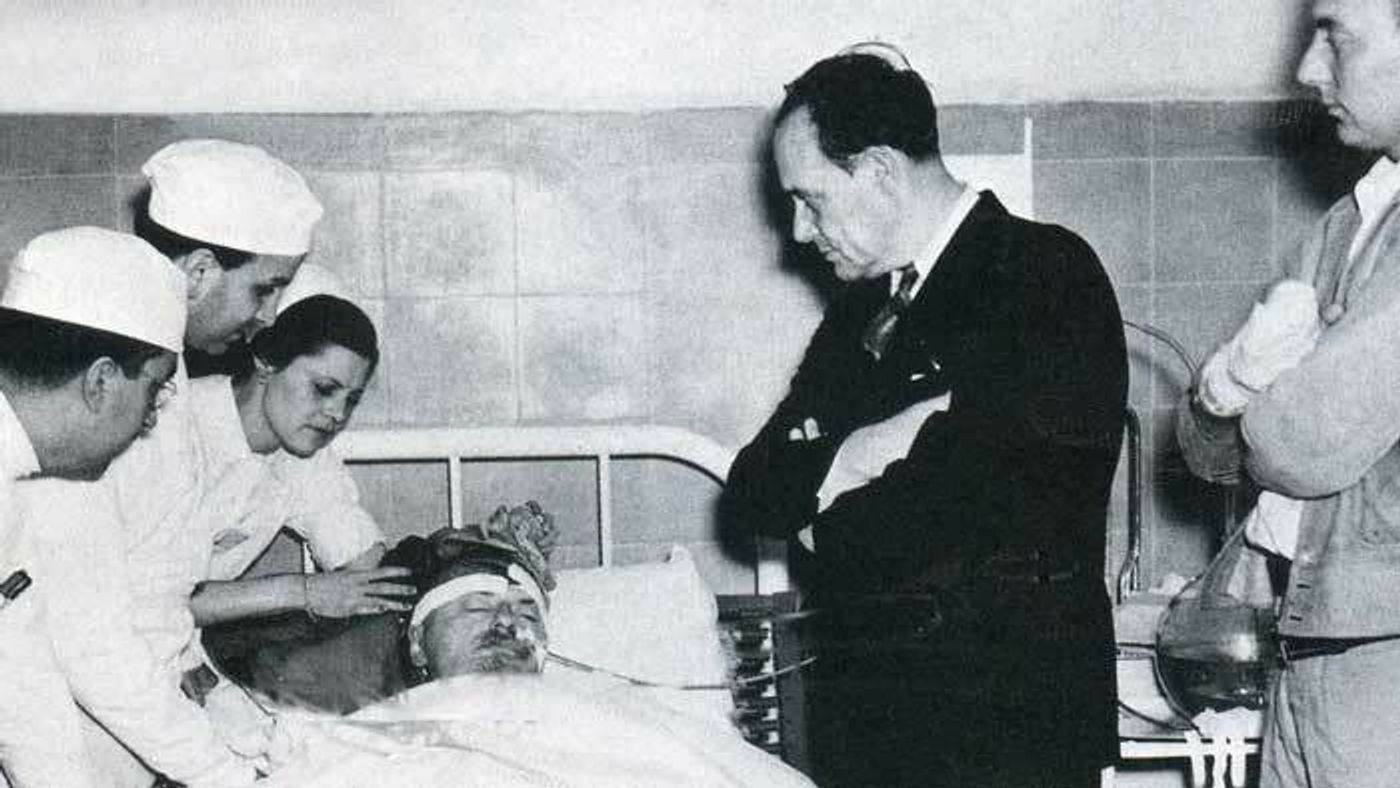
Lev Trotsky before death
During the Cold War, the State Security Committee (KGB) continued this practice against Soviet and Eastern European defectors, opposition journalists and human rights activists. The goal was to show that the “hand of Moscow” would get traitors anywhere, to sow fear in the emigrant environment and prevent the growth of anti -Soviet activity abroad. At the same time, the USSR officially denied involvement in such operations, masking murders under accidents or using intermediaries from the special services of the Eastern Bloc countries.
To combat “ideological sabotage” abroad in the structure of the KGB, special units existed. So, in the First Main Directorate (Foreign Intelligence), a secret 13th department was working for “executive actions”-sabotage and political killings. He was in charge of the organization of “wet affairs” (liquidations) by both the forces of full -time agents and with the involvement of foreign performers in order to open the case was more difficult.
Other structures were involved in active events against emigration: for example, the so-called emigration department interacted with the 13th department for the development of goals among the Russian diaspora. The fifth KGB Directorate (the fight against ideological sabotage within the USSR) also oversaw the line of emigrants - collected compromising on those who left dissidents and tracked the influence of foreign publications on Soviet society. The KGB actively coordinated operations with the union special services of social services: often the Bulgarian, East German or Czechoslovak state security performed dirty work at the direction of Moscow.
This model - to act abroad with the hands of the union special services or recruited agents - is relevant today. One of the last high -profile examples is attempts to abduct the investigators of Christ Grozev and Roman Dobrokhotov. FSB agents coordinated actions through citizens of Bulgaria living in the UK and recruited by a fugitive businessman Jan Marseleko . This improvised network followed journalists, tried to penetrate their homes, stole gadgets and discussed abduction and physical reprisal. All this repeated the old KGB methods: to eliminate the target with the wrong hands and at the same time as difficult as possible the investigation, leaving the direct part of the Russian special services behind the scenes.
Bandera, dissident writers and defectors: confirmed liquidation and attempt
The KGB practice to eliminate the "enemies of the people" abroad covered dozens of goals. Confirm murders of Soviet dissident citizens in Europe are relatively few (several cases in the 1950s and single in the 1970–80s), but almost every of these shares was carefully planned at a high level and had international resonance.
Entry attempts and intimidation were more common - many dissidents lived under a constant threat. Soviet defectors knew that they were sentenced to death in absentia, and some really became victims of mysterious poisoning or disappearances.
Soviet defectors in Europe knew that they were sentenced to death in absentia, and lived under a constant threat
One of the first resonant episodes of the Cold War was an attempt to eliminate George Okolovich -the head of the People’s Labor Union (NTS) and the editor of the anti-Soviet magazine "Sowing". In February 1954, a group of agents sent by Moscow was supposed to shoot Okolovich in Frankfurt. This action was considered by the KGB as an indicative, designed to sow panic among Russian emigration. The operation failed: the KGB captain Nikolai Khokhlov, who oversaw the murder, at the last moment revealed the conspiracy of the victim and himself asked the shelters in the West. After the escape of Khokhlov, the Soviet side withdrew the group.
Nevertheless, the KGB did not abandon its goals and soon other power actions against the NTS followed. So, in April 1954, the agents associated with the KGB resident in Berlin (and with the assistance of the Stasi), abducted another NTS functionary Alexander Trushnovich , taking him to Eastern Berlin. In June of the same year, a member of the NTS Valery Tremel was captured in Austria - also with the participation of agents from the Soviet bloc. Both abducted anti -communists ended up in Soviet prisons.
Not only Soviet dissidents were abducted: among the victims of such operations, for example, the anti-communist lawyer Walter Linze in West Berlin in 1952 and the former Czechoslovak Minister Bogumil Laushman in Vienna in 1953. They were transferred to the Soviet authorities, and they died in prison.
In the late 50s, KGB eliminated two famous figures of Ukrainian anti-Soviet emigration in West Germany. In Munich, in October 1957, the publicist Leo of the baby died: he suddenly fell dead on the stairs, the doctors noted a heart attack. Only a few years later it turned out that the child was killed with the help of poisonous gas: the killer injected a stream of cyanide poison into his face from a special pistol, leaving no external traces.
In October 1959, Stepan Bandera was killed in the same way: the agent shot him in the face of a gas pistol hidden into a folded newspaper. Initially, Bandera tried to give out the death of the accident (falling from the stairs), but the autopsy discovered traces of potassium cyanide. Only in 1961, when the executor of the murders of Bogdan Stashinsky fled west and voluntarily surrendered to the German authorities, it became known how these liquidations were committed.
The agent shot Stepan Bandera in the face of a gas gun hidden into a folded newspaper
In the trial in Germany, Stashinsky revealed in detail the methodology (a pneumatic gun, evaporating the poison, which leaves no wound) and confirmed that he acted on the direct order of Moscow. As a result, the court found the Soviet government guilty of the murder of Bandera. This international scandal forced the Kremlin to reconsider the usual approach. After the Stashinsky process in 1962, the USSR leadership decided to authorize physical liquidation abroad only in extreme cases. In the era of Khrushchev and Brezhnev, the political killings of emigrants are really rare and were used very selectively-probably due to the risk of new revelations.
One of the most impudent political murders of the late Cold War was the elimination of the Bulgarian dissident writer George Markov in London. Markov, in the past, a famous journalist, fled from communist Bulgaria and since the beginning of the 1970s worked on the BBC and Radio Free Europe, regularly criticizing the regime of Todor Zhivkov.
On September 7, 1978, at a bus stop in the center of London, Markov was amazed at a prick of a capsule mounted in an umbrella with highly toxic poison Ricin. A few days later he died, and the British investigation established an unusual way of poisoning.
The writer-discident Markov was struck by an injection from a capsule mounted in an umbrella with high toxic venom Ricin
Although they did not find direct performers, all the evidence indicated the operation of the special services. Only at the end of the Cold War it turned out that the murder was organized by the Bulgarian DS with the technical support of the KGB. Former KGB General Oleg Kalugin confirmed that the head of the KGB Yuri Andropov personally agreed to eliminate Markov at the request of Sofia. The KGB provided the Bulgarians with a poisonous device and poison, and also advised the organizers of the operation.
Almost simultaneously a similar attempt, but already in Paris, another defector was subjected to, journalist Vladimir Kostov (he was shot in the back with a microcapsule with Ricin, but the dose did not kill him). These cases have become symbols of “spot” operations against anti -Soviet votes in Europe. Mirkov’s murder caused a wide resonance, but the performers from Bulgaria never suffered punishment.
The KGB pursued not only ideological opponents, but also former Soviet officers who fled to the west and collaborated with Western intelligence. The case of the Captain of the Navy Nikolai Artamonov (famous in the USA as Nicholas Shadrin) is indicative. He fled in 1959, became a valuable American intelligence informant, and in 1975 he participated in a counterintelligence game, meeting with the KGB agents in Europe. In December 1975, Shadrin disappeared under mysterious circumstances during a meeting in Vienna.
Only years later it became known that this was an operation of Soviet state security: Shadrin was abducted by KGB agents, trying to take out to the USSR, but in the process he had a heart attack and he died. Oleg Kalugin confirmed after the collapse of the USSR that Shadrin died during the capture. This incident remained almost unknown to the general public at that time, but among the emigration, the fear of the long hand of the KGB strengthened.
All these are confirmed cases, but the shadow of the KGB fell on any mysterious death of Soviet exiles. So, in 1966, the author of the book “I chose freedom”, the exposure of Stalinist crimes Viktor Kravchenko was found shot in New York; They officially talked about suicide, but many researchers believe that KGB agents liquidated it.
In Paris, in December 1977, the disgraced bard Alexander Galich died (a shock from a faulty radio); There were stubborn rumors that it was a planned KGB action, although formally his death was recognized as an accident. In 1980, a young desperation and discident, Andrei Amalric , died in a car accident in Spain, and this incident also caused conspiracy versions about the KGB hand.
There are no direct evidence of the involvement of Soviet agents in these episodes, but all the dead actively opposed the USSR, and their death was beneficial to the regime. In many similar cases, the KGB tried to use hard -to -order murder methods, such as poisoning, a staging of suicide or an accident.
Methods: poison, abduction, compromising evidence
The KGB preferred the quiet methods of elimination - poisons and secretive means, less often firearms or loud terrorist attacks. This made it possible to disguise the murder to natural death, to avoid scandal.
According to Western investigations, the Soviet special services have tried a whole range of toxins: ricin, potassium cyanide, arsenic compound, tallium, scopolamine and others. For example, in 1957, the defector Nikolai Khokhlov suddenly became ill at the anti -communist conference in Germany. Doctors discovered that he was poisoned by a complex composition based on Tallia (Khokhlov survived).
The KGB had secret laboratories developing exotic weapons, from toxic sprays to shooting “pens” and “umbrellas”. The preparation of such operations was carried out in deep secret: the executors were given legendary documents, and the poison itself was developed so as not to leave traces.
In the secret laboratories, the KGB developed exotic weapons, from toxic sprays to shooting “pens” and “umbrellas”
The abductions were another reception of state security organs: if the goal was of interest (for example, had valuable information), it was preferable to take it to the USSR. For this, the KGB often attracted “fraternal” services in Eastern Europe. As a rule, they used capture groups from local agents-this was the case with abductions in West Berlin and Vienna in the early 50s. The victim was taken through the border to the east, where they were then secretly judged and sent to the camps.
There were not very many such cases (most dissidents abroad were under the protection of Western countries), but each similar incident - Linze, Lausman, Trushnovich, Shadrin - had a strong psychological effect. The KGB demonstrated that even the escape to the West does not guarantee security.
In addition to physical elimination, a powerful weapon was discredit and psychological pressure. The KGB systematically tried to denigrate the reputation of active emigrants - through a thrown compromising evidence, rumors in the press, provocations. Special service “A” (misinformation) in the First Glavka fabricated and distributed “dirty rumors” about prominent figures of foreign opposition.
For example, fake documents “exposing” the dissident as a Nazi collaborator or CIA agent could be thrown into the western seal. It is known that the KGB forged letters and diaries, created fake organizations to sow a split among emigrants.
Emigrant publications were considered a special goal. The KGB sought in every possible way if not destroyed, then neutralize their influence. Perennial active events were carried out against them: Soviet propaganda declared them “fascists and traitors”, agents were introduced in the editorial office to collect information and provoking split. So, in the 1960s, Sovetsky pseudo-rebug Yuri Marin, who collected information on employees, was sent to the Russian edition of Radio “Freedom” in Munich.
In the 1960s, the Russian Freedom (Munich) was sent to the Russian edition of the Radio
Similar agents were introduced into other emigrant associations, societies and even churches. Their tasks were ranging from surveillance and provocations to help in the implementation of direct action up to terrorist attacks. For example, in 1981, in Munich, the Free Europe Radio building was seriously damaged in the explosion of a bomb laid down by the Karlos Shakal terrorist group by order of the Eastern European special services (as it turned out from the archives of Stasi). This attack was directed against broadcasting programs to socialist countries.
A separate direction is threats and blackmail. The fifth KGB department collected a detailed dossier for each potentially dangerous defector: data on his past, connections, vulnerable places. If a person still had relatives in the USSR, this became a lever of pressure: the remaining family members were threatened with repression, trying to make the dissident silent.
Desters tell the details of the KGB operations
Many details of these operations have become known only thanks to the defectors from the KGB itself and declassified documents. The first high -profile exposure was Nikolai Khokhlov, who broke the murder of Okolovich in 1954. He publicly told the West about the task to eliminate the NTS leader, demonstrated the weapon given to him (a pistol disguised as a pack of cigarettes) and thereby revealed the world of the practice of Soviet terror. In 1957, the attempt on Khokhlov himself (Tallium poisoning) confirmed the revenge of the KGB.
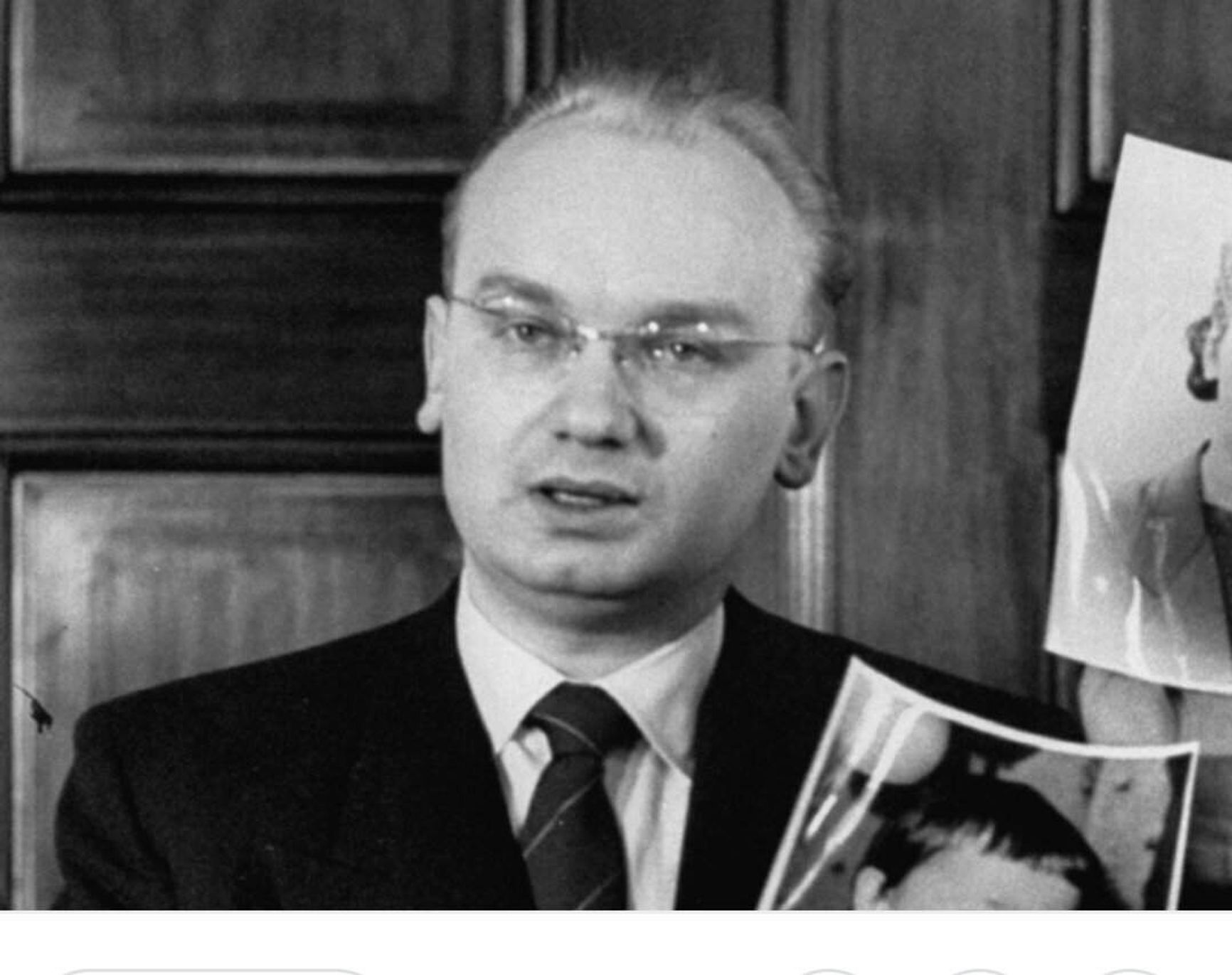
Nikolai Khokhlov
The history of the agent Bogdan Stashinsky, who in 1961 fled through the Berlin wall with his wife-jail, was the sensation. At the trial in Germany, he gave detailed testimonies about how, by order of the KGB, he killed Rebet and Bandera, revealed the methodology for the use of poisonous weapons and called his curators. For the first time, these confessions officially proved the involvement of the Soviet state in the murder abroad - the 1962 judicial verdict directly indicated the Kremlin’s responsibility.
In the next decades, new sources complemented the picture. Distributors from East European services (for example, General of the Ministry of Internal Affairs of Romania Ion Pocop in 1978) claimed that Moscow did not refuse to practice liquidation, but only acted more carefully, often with strangers. Former KGB General Oleg Kalugin, who emigrated in the 1990s, on the basis of his own experience, confirmed the participation of the KGB in a number of iconic stocks-from the attempt on the Bulgarian writer Markov (he called his murder with a joint operation of the KGB and DS of Bulgaria under the sanctions of Andropov) to the abduction of Shadrin. Kalugin and other special services veterans admitted that “the betrayal was not forgiven” - each defector was in absentia, a death sentence was carried out in absentia, which could be carried out at any time.
A huge layer of information opened with the archive of Vasily Mitrokhin, a former employee of the KGB archival department, who rewrote thousands of secret documents. In 1992, he took his notes to the West. На основе этих материалов в 1999 году вышла книга «Архив Митрохина», содержавшая данные о многих тайных операциях КГБ по всему миру. В частности, архив подтвердил масштаб программы «активных мероприятий» против диссидентов, от слежки и компрометации до планов физической ликвидации.
В том числе там приводятся сведения об операции против болгарского перебежчика Георгия Маркова и участия КГБ в этом заговоре (вплоть до предоставления яда). Также упоминались планы покушений, обсуждавшиеся в Москве, хотя зачастую им не давали ход из соображений риска.
К сожалению, подавляющее большинство оригинальных документов советских спецслужб о таких акциях остается недоступным исследователям. Несмотря на то, что в 1992 году Борис Ельцин подписал указ об открытии архивов КГБ, содержащих информацию о нарушениях прав человека за 1917–1991 годы, значимые материалы о политических убийствах так и не были опубликованы.
Хотя с распадом СССР КГБ исчез как организация, его наследие продолжает жить. Методы, отточенные в советские времена, сегодня применяются уже российскими спецслужбами, которые видят себя прямыми наследниками советской традиции. Современные отравления, политические убийства, кампании запугивания оппонентов Кремля за рубежом — продолжение давно сложившейся практики, которая передается из поколения в поколение.
Articles on the topic
Солберецкие. The Bellingcat и The Insider удалось подтвердить причастность Петрова и Боширова к спецслужбам
Laboratory. Как сотрудники НИИ-2 ФСБ пытались отравить Алексея Навального
Контрсанкции. Как сотрудники ФСБ пытались отравить Владимира Кара-Мурзу
We really need your help
Subscribe to regular donations