
Translated material
The abduction of Eastern Europe. How Stalin sought the Sovietization of Poland after World War II
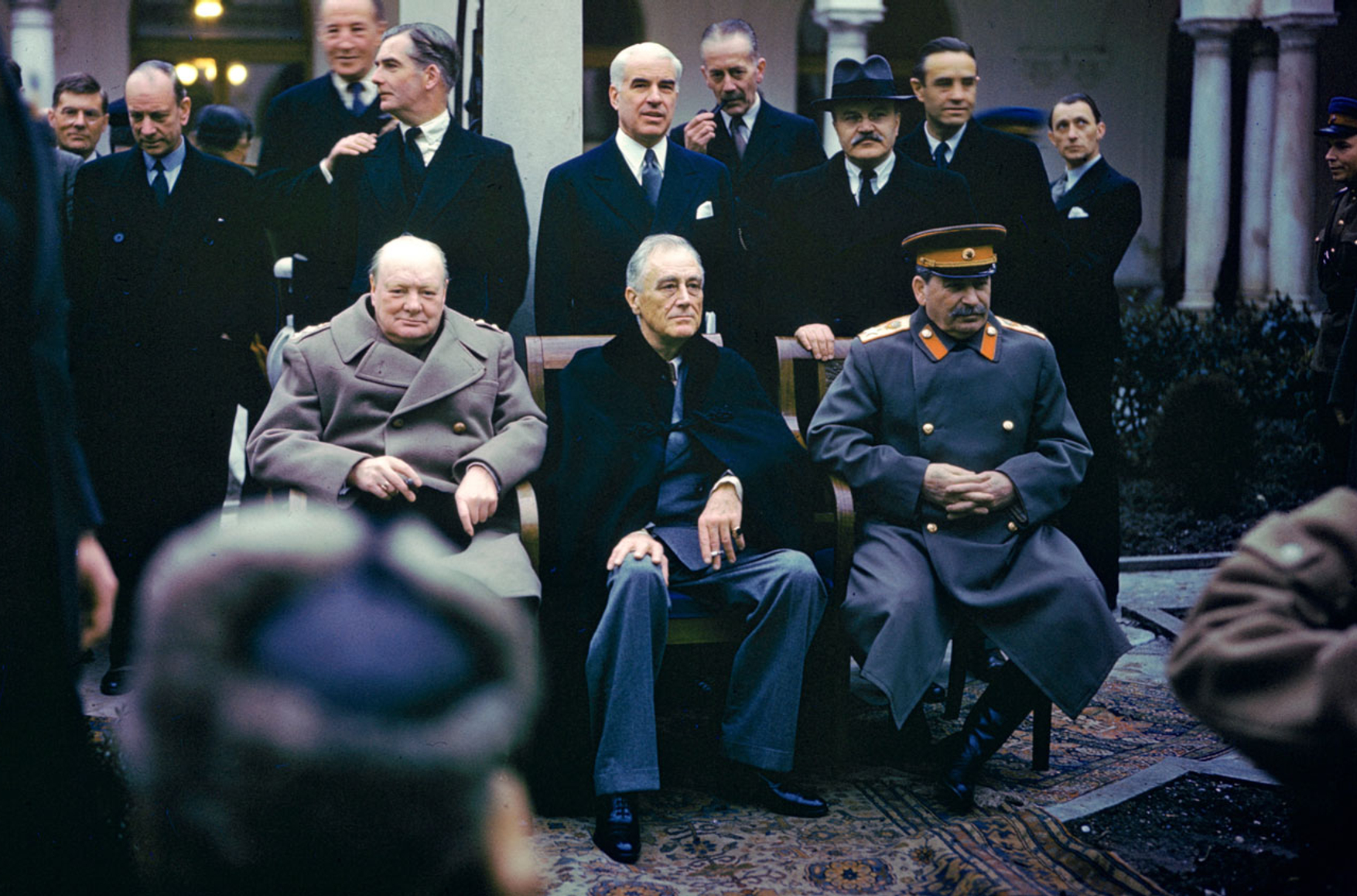
On April 25, Reuters published the full text of the US plan to resolve the war in Ukraine, which provides for Russia to transfer several Ukrainian regions to Russia. The parliaments of Ukraine, the Czech Republic, France, the UK and the Baltic countries compared the document with the Munich conspiracy of 1938, when the Sudeten region of Czechoslovakia was transferred to Nazi Germany - without the consent of the latter. Another example of such a section of the country without its participation is the Yalta agreements of 1945, as a result of which Poland was in the zone of influence of the USSR. Then Joseph Stalin, taking advantage of the lack of a single position among the leaders of the United States and Great Britain, achieved significant advantages for himself, and subsequently did not fulfill his own promises to ensure the creation of a democratic government in Poland. Polish historians call Yalta agreements the “fourth section” by analogy with times when the country was shared between the empires, and consider what happened by a betrayal from Western leaders.
Content
Prologue to the world
Contradictions and manipulations in Yalta
Poland instead of Greece
The price of war
An error or betrayal?
Prologue to the world
February 1945. The Second World War is approaching the final. The Red Army is already fighting in Germany, and the allies are preparing for the decisive discussion of the future Europe in the liberated Crimea. The prologue to the conference in Yalta is the meeting of the leaders of the United States and Great Britain in Malta.
US President Franklin Roosevelt arrived on the island on February 2 on board the American cruiser USS Quincy. The British Prime Minister Winston Churchill, who has been in Malta for several days, insisted at a meeting with the American president before negotiations with Joseph Stalin. He expressed fears that if the allies did not agree among themselves in advance, the Soviet leader will be able to impose his agenda.
The leaders of the anti -Hitler coalition - the USA, the USSR and the UK.
Alanbrooke War Diaries 1939–1945: Field Marshall Lord Alanbrooke.
Sherwood Robert E. White House Papers of Harry L. Hopins.
Martin Gilbert. Churchill: A Life.
W. Averell Harriman. Special Envoy to Churchill and Stalin.
Andrzej Friszke. Polska. Losy Państwa I Narodu 1939–1989 (Warszawa, 2003), s. 187.
PAWEL MACHCEWICZ. Polska Pamięć. O wojnie i okupacji (2017), s. 112.
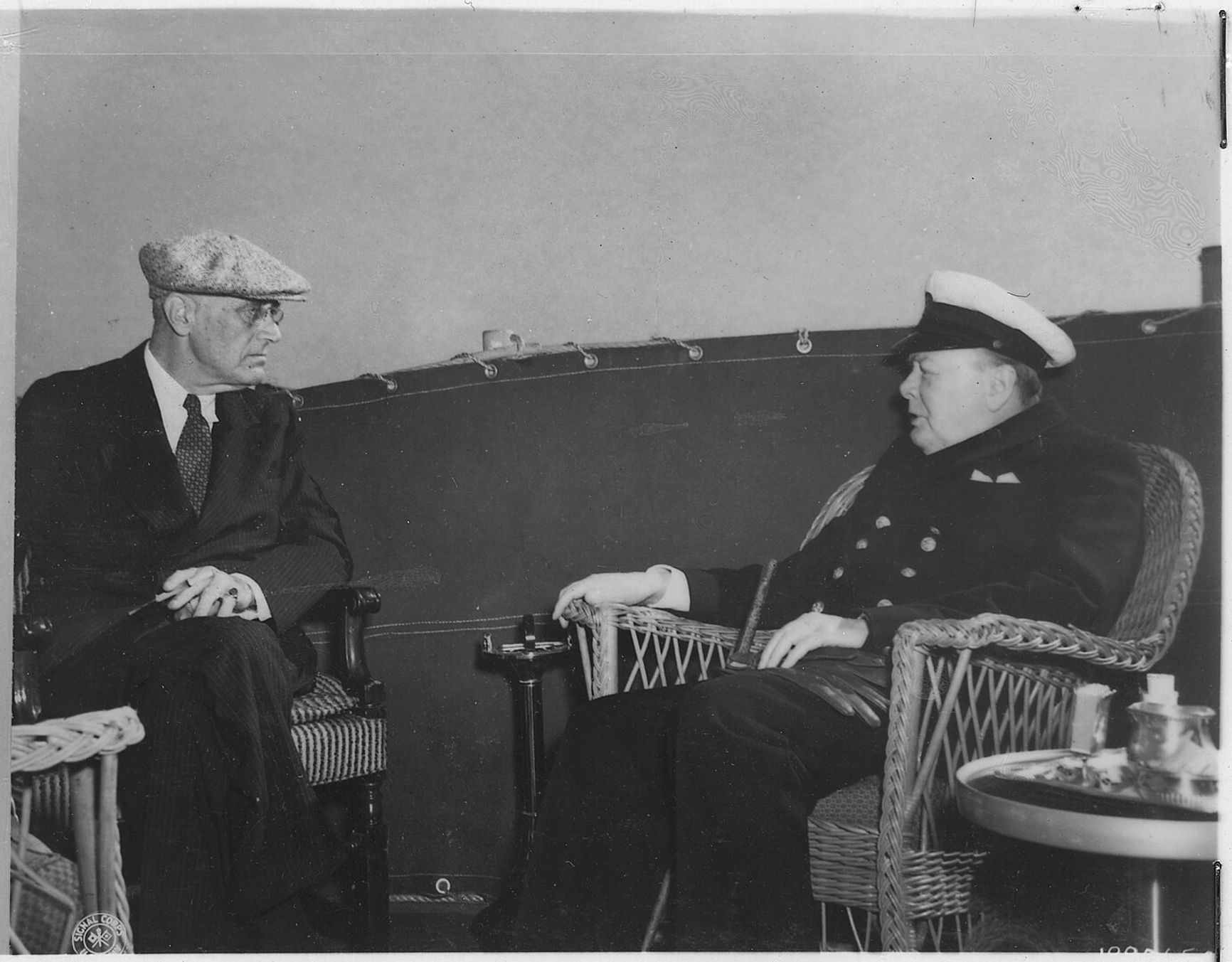
Meeting Roosevelt and Churchill in Malta
Malta is a symbol of resistance that survived more than three thousand air raids during the Second World War, became the place where the post -war future was decided. The British and American leaders discussed the fate of Germany, the borders of Poland, the roles of the countries of the "Big Three" In Europe and the war with Japan. They agreed that the promotion of the Red Army in Central Europe is undesirable. The conference was in a hurry, but this was the political reality of that time: it was necessary to negotiate quickly, because the redistribution of the world had already begun.
Contradictions and manipulations in Yalta
After negotiations in Malta, Roosevelt and Churchill went to the Crimea, where they were waiting for a meeting with Stalin. There were decisive discussions ahead of the post -war structure of Europe, but the allies went to Yalta with different purposes.
For the British, the fate of Poland remained a key issue. Churchill and Foreign Minister Anthony Eden was afraid that Moscow would not allow the formation of an independent government in the country, and instead would establish a regime loyal to the Kremlin there. Great Britain needed guarantees that Poland would preserve at least a formal sovereignty.
Roosevelt looked at the situation wider. Its main task was the creation of the United Nations - a structure that can prevent future world conflicts. For the sake of this, he was ready to compromise, including with the Soviet Union. Unlike Churchill, who was suspicious of the USSR, the American president believed that trust and openness were the best way to establish a dialogue.
The leaders of the anti -Hitler coalition - the USA, the USSR and the UK.
Alanbrooke War Diaries 1939–1945: Field Marshall Lord Alanbrooke.
Sherwood Robert E. White House Papers of Harry L. Hopins.
Martin Gilbert. Churchill: A Life.
W. Averell Harriman. Special Envoy to Churchill and Stalin.
Andrzej Friszke. Polska. Losy Państwa I Narodu 1939–1989 (Warszawa, 2003), s. 187.
PAWEL MACHCEWICZ. Polska Pamięć. O wojnie i okupacji (2017), s. 112.
Unlike Churchill, who was suspicious of the USSR, US President Roosevelt was ready to compromise with Stalin
Stalin, in turn, intended to strengthen the influence of the USSR in Europe and skillfully used disagreements between Western allies to achieve this goal. When Roosevelt proposed to establish a direct connection between General Eisenhower and the Soviet bet, the Soviet leader immediately supported this idea. He encouraged the US desire for greater openness, but at the same time gave a minimum of information in return.
With careful Churchill, Stalin chose another tactic. During one of the meetings at the conference, he unexpectedly asked how things were in Greece. According to some historians, this was a hint of a “interest -cost agreement” concluded between them in October 1944: Greece retired under the control of Great Britain, and the Balkan countries to the USSR. The question of Stalin could mean the possibility of spreading a similar mechanism to Poland and France. However, Churchill either did not catch this message, or preferred not to react. As the head of the British General Staff, Sir Alan Brooke, later noted , the prime minister missed many such signals.
The leaders of the anti -Hitler coalition - the USA, the USSR and the UK.
Alanbrooke War Diaries 1939–1945: Field Marshall Lord Alanbrooke.
Sherwood Robert E. White House Papers of Harry L. Hopins.
Martin Gilbert. Churchill: A Life.
W. Averell Harriman. Special Envoy to Churchill and Stalin.
Andrzej Friszke. Polska. Losy Państwa I Narodu 1939–1989 (Warszawa, 2003), s. 187.
PAWEL MACHCEWICZ. Polska Pamięć. O wojnie i okupacji (2017), s. 112.
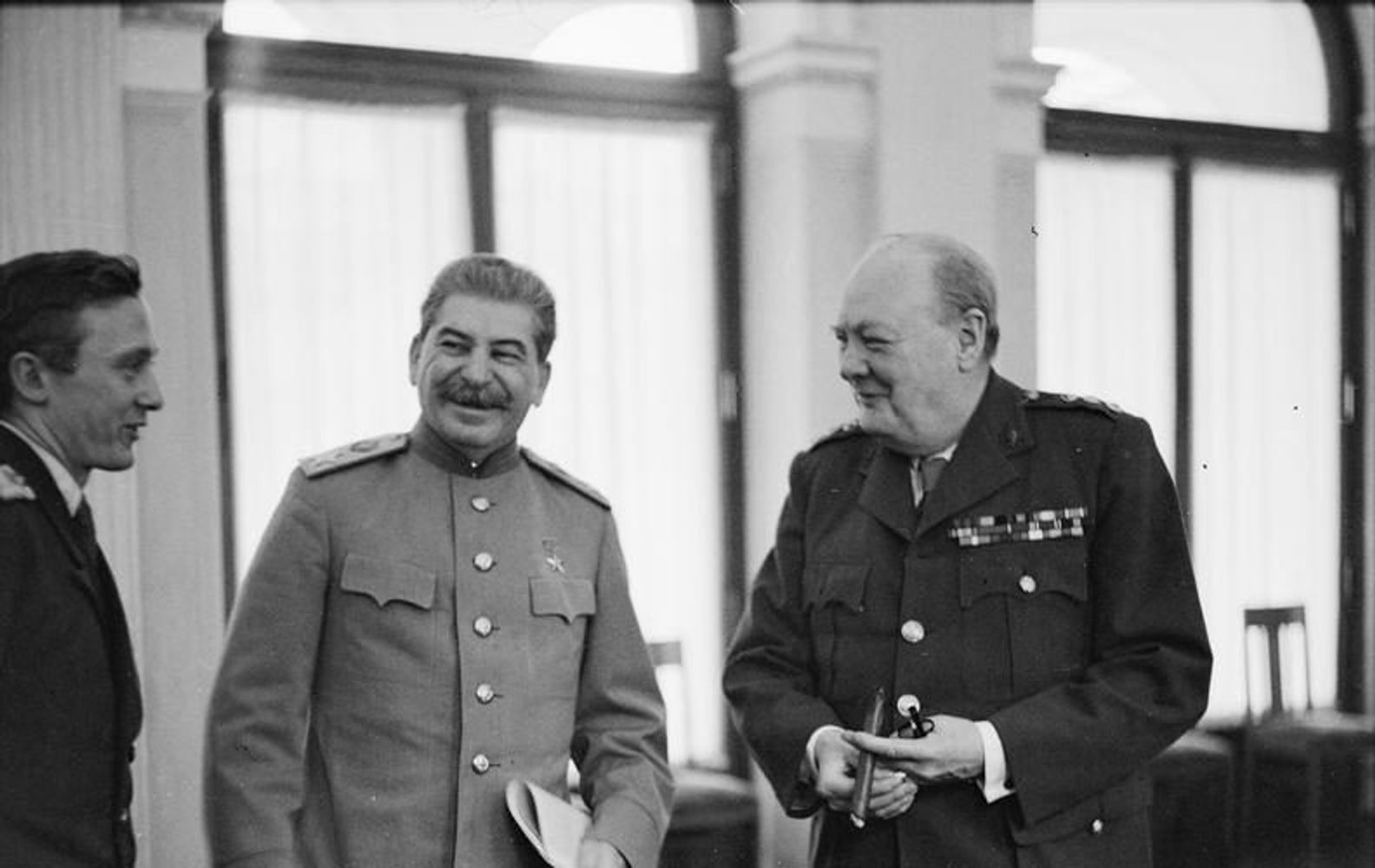
Stalin and Churchill at the Yalta Conference
But Stalin was not going to weaken the pressure. At another meeting, he stated that 212 Red Army soldiers were killed in Poland, in the Soviet rear. This attack forced Churchill and Roosevelt to recognize the “inadmissibility of attacks on the Red Army” of supporters of the army of Kraiova - the Polish underground movement, not controlled by the Communists. As a result, the NKVD troops actually received a carte blanche to suppress the opposition in Poland.
Roosevelt, noticeably weakened by the disease (he died two months after the conference, on April 12, 1945), did not enter into disputes between Churchill and Stalin. He only continued to insist on holding free elections in Poland - a requirement, which, in fact, was doomed to failure, because by that time all the levers of power in the country were in the hands of the Soviet command. The chief adviser to US President Harry Hopkins later recalled that Roosevelt did not seem to perceive half of what was happening in the negotiations.
The leaders of the anti -Hitler coalition - the USA, the USSR and the UK.
Alanbrooke War Diaries 1939–1945: Field Marshall Lord Alanbrooke.
Sherwood Robert E. White House Papers of Harry L. Hopins.
Martin Gilbert. Churchill: A Life.
W. Averell Harriman. Special Envoy to Churchill and Stalin.
Andrzej Friszke. Polska. Losy Państwa I Narodu 1939–1989 (Warszawa, 2003), s. 187.
PAWEL MACHCEWICZ. Polska Pamięć. O wojnie i okupacji (2017), s. 112.
Free elections in Poland were doomed to failure: by 1945, all the levers of power in the country were in the hands of the Soviet command
According to the results of the Yalta conference, the parties adopted the “Declaration of Liberated Europe”, which proclaimed the right of all peoples of the post -war continent to self -government and the creation of democratic institutions at their discretion. Separately stipulated the status of Poland: it was assumed that the pro -Soviet Provisional Provisional Government in the country will be transformed into a wider authority, which will include representatives of all democratic forces, including the emigrant government in exile related to the Polish underground.
Poland instead of Greece
The events that followed the meeting in Yalta showed: the USSR was not going to allow Poland's independence. Already in March, the NKVD arrested 16 resistance supporters, with guarantees of security guarantees invited to negotiations with the Soviet authorities about entering the post -war government. The signing on April 21, 1945 of the USSR and the Government of Poland, “Treaty of Friendship, Mutual Assistance and Cooperation,” showed the allies that “cases with the Polish issue were really at a dead end.”
In fact, Soviet influence on the country's policy was fixed by this agreement for decades. In response to the protests of London and Washington, the People's Commissar of Foreign Affairs of the USSR, Vyacheslav Molotov said that the Soviet side would not tolerate the West’s intervention in Polish affairs. It became obvious that the Kremlin interprets the agreements completely differently than their Western allies understood them.
The leaders of the anti -Hitler coalition - the USA, the USSR and the UK.
Alanbrooke War Diaries 1939–1945: Field Marshall Lord Alanbrooke.
Sherwood Robert E. White House Papers of Harry L. Hopins.
Martin Gilbert. Churchill: A Life.
W. Averell Harriman. Special Envoy to Churchill and Stalin.
Andrzej Friszke. Polska. Losy Państwa I Narodu 1939–1989 (Warszawa, 2003), s. 187.
PAWEL MACHCEWICZ. Polska Pamięć. O wojnie i okupacji (2017), s. 112.
Soviet influence on Poland’s policy was assigned to decades
Churchill began to suspect that he and Roosevelt became victims of subtle diplomatic manipulation. Trust for the Soviet leader was previously based on his non -interference in Greek affairs. But now it became clear: Stalin simply did not see strategic value in Greece.
In Yalta, the allies agreed on the post -war boundaries of Poland: the eastern was supposed to go through the Belarusian Grodno and Brest and the Ukrainian Lviv, and Western Stalin proposed to transfer up to the Oder and Neisa. The United States and the United Kingdom hesitated: is it worth holding the western border so far? However, they did not doubt long. Already by the July Conference in Potsdam, they adopted its conditions, especially since the Soviet troops established control over the territories that were planned to transfer to Poland back in March.
The leaders of the anti -Hitler coalition - the USA, the USSR and the UK.
Alanbrooke War Diaries 1939–1945: Field Marshall Lord Alanbrooke.
Sherwood Robert E. White House Papers of Harry L. Hopins.
Martin Gilbert. Churchill: A Life.
W. Averell Harriman. Special Envoy to Churchill and Stalin.
Andrzej Friszke. Polska. Losy Państwa I Narodu 1939–1989 (Warszawa, 2003), s. 187.
PAWEL MACHCEWICZ. Polska Pamięć. O wojnie i okupacji (2017), s. 112.
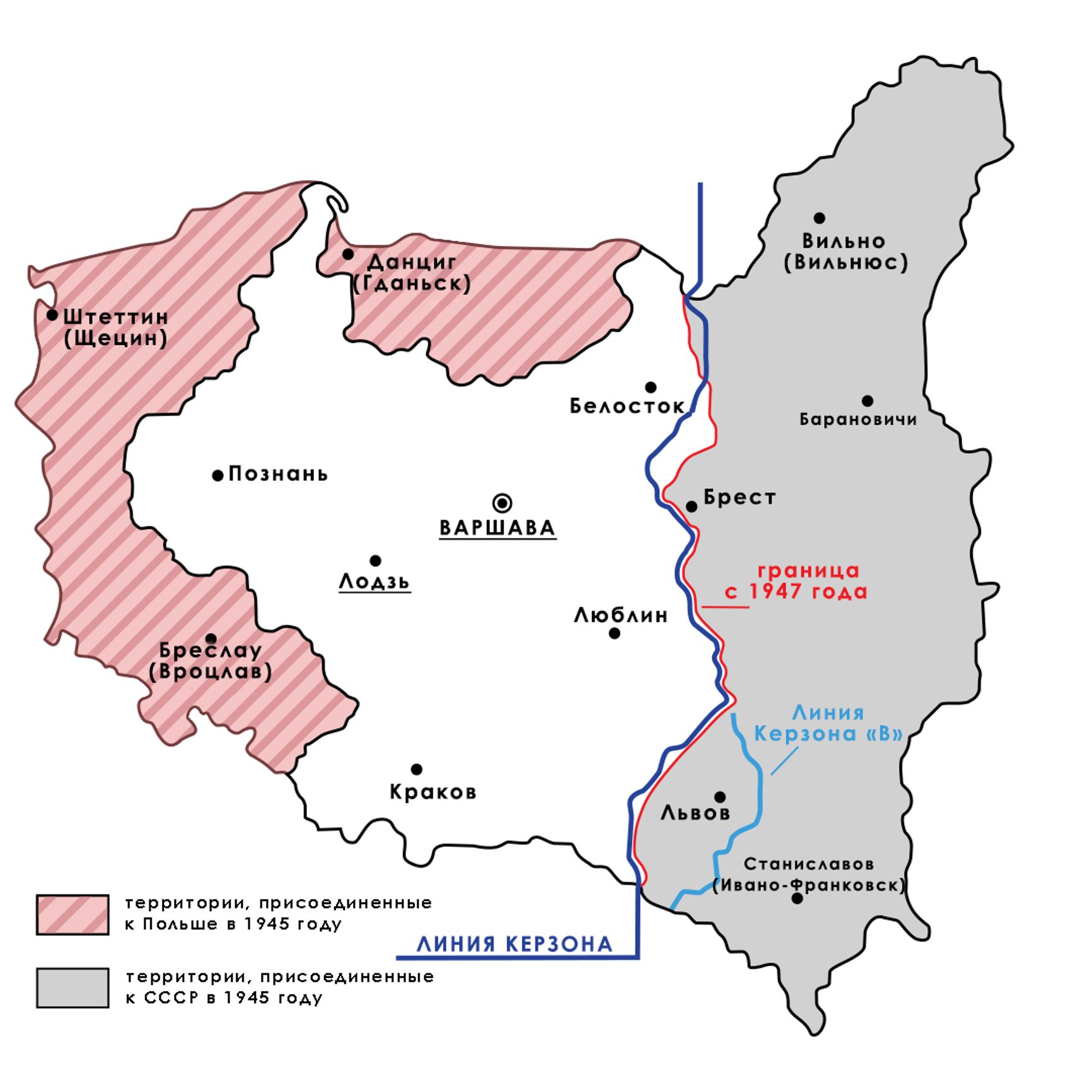
The boundaries of Poland after the Second World War. Graphics: "New Poland"
The Potsdam Conference completed a series of negotiations between the leaders of the "Big Three". The agenda included primarily issues regarding the defeated Germany. The Nazi regime was subject to complete liquidation, so the allies did not try to agree with Germany as an aggressor country, but pondered guarantees of long-term security. The USSR, the USA and Great Britain decided the fate of the whole world: how to divide Europe, restore destroyed countries, form a system of international relations so that such wars would not be repeated. At the same time, representatives of other states, which the Second World War affected, were not invited to negotiations.
The price of war
After the war, the Soviet Union formally contributed to the industrialization of Eastern Europe, but at the same time demanded military reparations that turned into large -scale dismantling of the region’s industry. Details of this process are given by the researcher Anne Applbaum in the book “Iron Curtain. The suppression of Eastern Europe (1944–1956). "
Soviet economists discussed the possible consequences of reparations back in 1943. Evgeny Varga, the head of the Soviet Institute of World Economy and World Policy, warned that these actions could “push the working class” not only in Germany, but also in neighboring countries. He offered mixed reparations: payments by goods and property, including industrial equipment. The liquidation of German enterprises and agrarian reforms was also considered - to bring the standard of living into line to the Soviet one.
The leaders of the anti -Hitler coalition - the USA, the USSR and the UK.
Alanbrooke War Diaries 1939–1945: Field Marshall Lord Alanbrooke.
Sherwood Robert E. White House Papers of Harry L. Hopins.
Martin Gilbert. Churchill: A Life.
W. Averell Harriman. Special Envoy to Churchill and Stalin.
Andrzej Friszke. Polska. Losy Państwa I Narodu 1939–1989 (Warszawa, 2003), s. 187.
PAWEL MACHCEWICZ. Polska Pamięć. O wojnie i okupacji (2017), s. 112.
The head of the Soviet Institute of World Economy and World Policy, Yevgeny Varg, warned that reparations could “push the German working class”
These ideas have found support in the highest Soviet leadership. Already at the Tehran and Yalta conferences, Stalin announced plans to take up to 80% of technology from Germany. The amount of damage, which, according to him, had to compensate for the USSR, reached $ 10 billion. Churchill warned that tough sanctions after the First World War had already led to the destabilization of Europe, but Roosevelt did not argue then. Moreover, US Minister of Finance Henry Morgentau supported the idea of turning Germany into an agrarian country.
The final decision on reparations was never made, and in practice the Soviet side acted, regardless of the opinion of the allies. By the summer of 1945, 70 thousand specialists from the USSR arrived in Germany to organize the export of equipment to Germany. According to archival data, only from the beginning of the occupation until August 1945, 1.28 million tons of materials and 3.6 million tons of equipment were removed from East Germany.
The leaders of the anti -Hitler coalition - the USA, the USSR and the UK.
Alanbrooke War Diaries 1939–1945: Field Marshall Lord Alanbrooke.
Sherwood Robert E. White House Papers of Harry L. Hopins.
Martin Gilbert. Churchill: A Life.
W. Averell Harriman. Special Envoy to Churchill and Stalin.
Andrzej Friszke. Polska. Losy Państwa I Narodu 1939–1989 (Warszawa, 2003), s. 187.
PAWEL MACHCEWICZ. Polska Pamięć. O wojnie i okupacji (2017), s. 112.
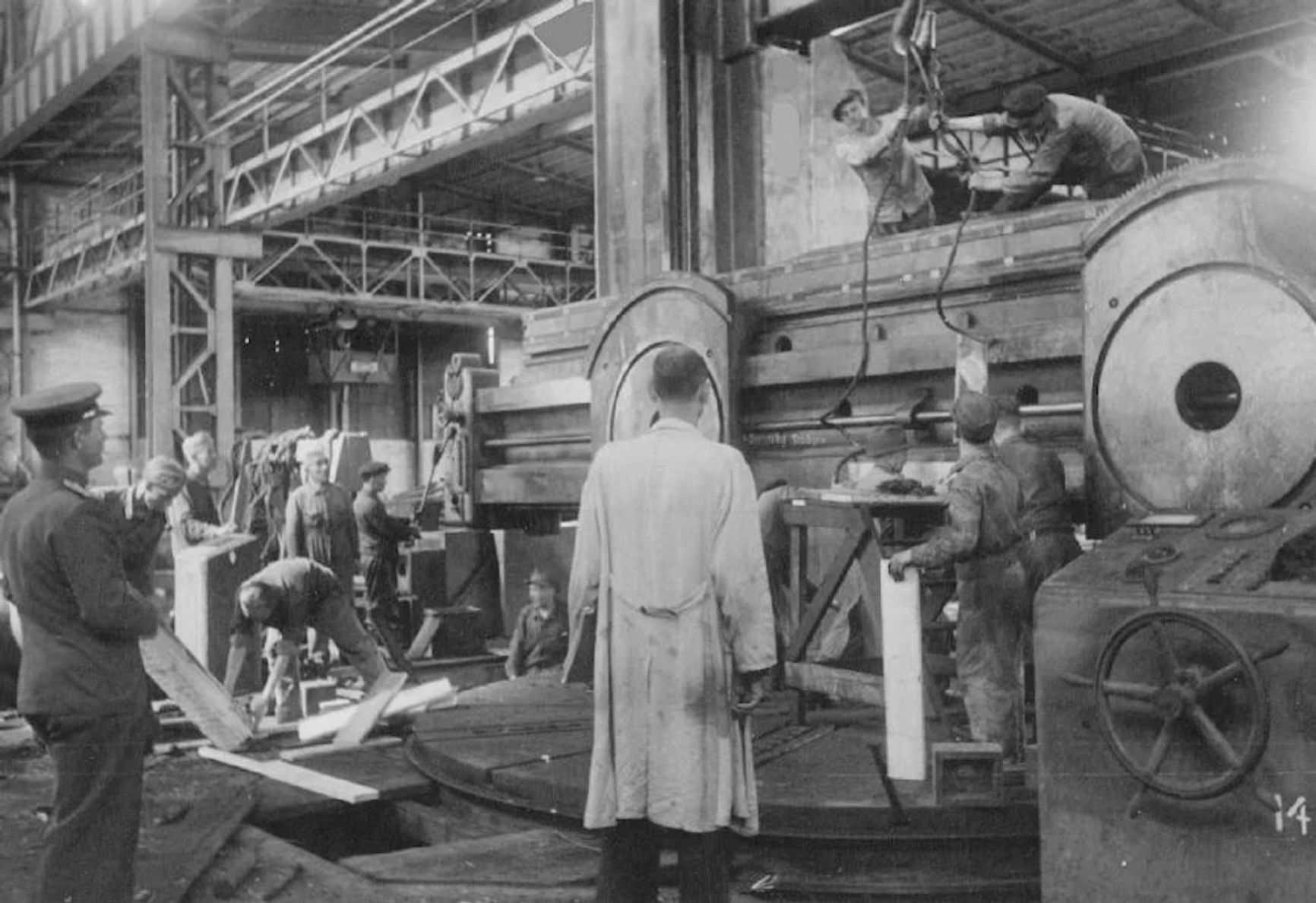
Dismantling of a German machine for export to the USSR, Dusseldorf, 1946
The factories were dismantled and sent to the USSR, often without much need. Together with the technique, works of art, archival documents and personal belongings from abandoned houses were exported. Random people who dismantled complex machines without appropriate preparation participated in the export. The result was predictable - most of the property simply became unusable.
In fact, reparations turned into a complete ruin of the region. Historians are still arguing how dictated by economic expediency, and how much - the desire of Stalin once and for all to deprive Germany of the chances of restoring industrial power.
Economic ruin is not the only problem that Eastern Europe faced after the Second World War. Mass deportations were another acute issue. The Potsdam agreement dryly indicated that the “German population or its part” from Poland, Czechoslovakia and Hungary should be “moved to Germany”. However, back in January 1945, six months before the signing of the document, the USSR deported 70 thousand ethnic Germans from Romania.
The leaders of the anti -Hitler coalition - the USA, the USSR and the UK.
Alanbrooke War Diaries 1939–1945: Field Marshall Lord Alanbrooke.
Sherwood Robert E. White House Papers of Harry L. Hopins.
Martin Gilbert. Churchill: A Life.
W. Averell Harriman. Special Envoy to Churchill and Stalin.
Andrzej Friszke. Polska. Losy Państwa I Narodu 1939–1989 (Warszawa, 2003), s. 187.
PAWEL MACHCEWICZ. Polska Pamięć. O wojnie i okupacji (2017), s. 112.
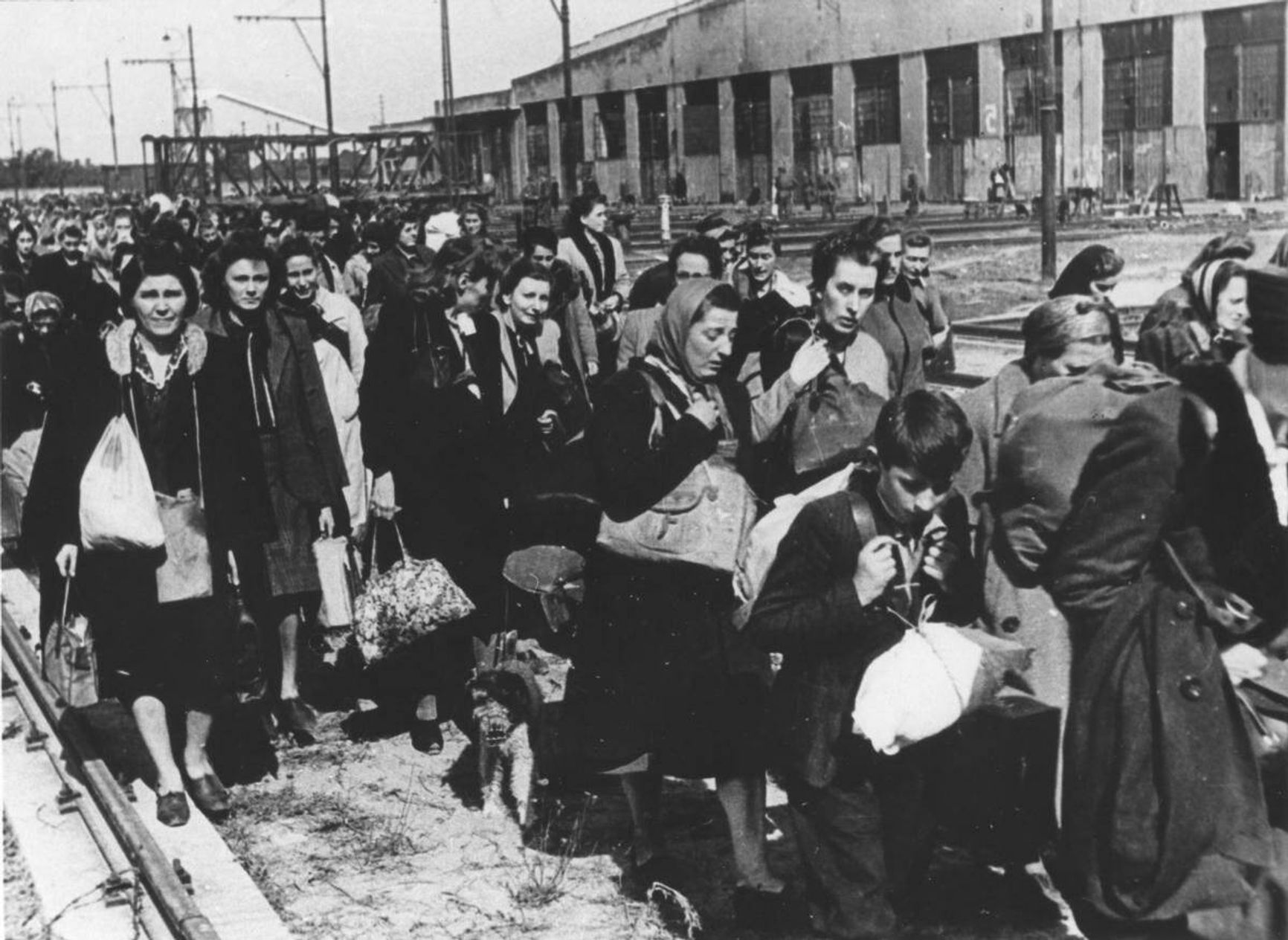
Deportation of Germans from post -war Poland, 1945
The agreement on the shift of the borders of Poland to the west also meant a massive exchange of the population: Ukrainian Poles moved to Polish territory, and Polish Ukrainians in the USSR. The question of the deportation of the Hungarians from Czechoslovakia and Slovaks from Hungary was not officially discussed at all, but when the relocation began, the international community did not express serious objections. Formally, agreements were required that "any movement to occur in an organized and humane." However, the first waves of deportations, for example, from the Sudeten region, were accompanied by chaos and cruelty.
In addition, the regions of Germany, which were supposed to go under Polish control, were under the jurisdiction of the NKVD. The repressions here were no less rigid than in other parts of the Soviet occupation zone, and in some places they even surpassed them in scale. Moreover, the NKVD General Nikolai Selivanovsky was appointed an adviser to the Poland Ministry of Public Security. The Soviet government established full control in the country, leaving the Poles not a chance of independence.
An error or betrayal?
Already in March 1945, Churchill admitted in private correspondence, that the West could not prevent the USSR to establish control of Poland. The American ambassador to Moscow Averell Harriman later wrote :
“We made a mistake, believing Stalin about Poland. He was never going to fulfill his promises. ”
In Poland itself, Yalta was perceived as a betrayal. The agreements are called the “fourth section” - by analogy with the 18th century, when the country was divided between neighboring empires. One of the most reputable researchers of the latest history of Poland Andrzej Frishka says that the section was "informal, but no less painful than the previous ones."
“The term“ fourth section ”reflects the collective trauma of the Poles-the feeling that in 1945 the great powers betrayed them again,” explained the specialist in international relations and the co-author of the German-Polish history textbooks of Vlodzimazh Borodnaya in an interview with the Polish publication Tygodnik Poingsziechny in 2015.
The leaders of the anti -Hitler coalition - the USA, the USSR and the UK.
Alanbrooke War Diaries 1939–1945: Field Marshall Lord Alanbrooke.
Sherwood Robert E. White House Papers of Harry L. Hopins.
Martin Gilbert. Churchill: A Life.
W. Averell Harriman. Special Envoy to Churchill and Stalin.
Andrzej Friszke. Polska. Losy Państwa I Narodu 1939–1989 (Warszawa, 2003), s. 187.
PAWEL MACHCEWICZ. Polska Pamięć. O wojnie i okupacji (2017), s. 112.
The term “fourth section” reflects the collective injury of the Poles - the feeling that in 1945 the great powers betrayed them again
Even those researchers who avoid such emotional formulations admit: Yalta consolidated the dependence of Poland on the USSR with the silent consent of the West. Pavel Makhtsevich, the founder of the Museum of World War II in Gdansk, wrote : “For the Poles of Yalta - a symbol of helplessness. The allies sacrificed us for the sake of a big game. "
The leaders of the anti -Hitler coalition - the USA, the USSR and the UK.
Alanbrooke War Diaries 1939–1945: Field Marshall Lord Alanbrooke.
Sherwood Robert E. The White House Papers of Harry L. Hopkins.
Martin Gilbert. Churchill: A Life.
W. Averell Harriman. Special Envoy to Churchill and Stalin.
Andrzej Friszke. Polska. Losy państwa i narodu 1939–1989 (Warszawa, 2003), s. 187.
Paweł Machcewicz. Polska pamięć. O wojnie i okupacji (2017), s. 112.
Articles on the topic
Потерянная армия. Как вернувшиеся с фронта военные дестабилизировали Веймарскую Германию
Вежливые товарищи. Как сто лет назад Москва организовала первых «зеленых человечков» в Эстонии
«Никогда ни на кого не нападала». Краткая история агрессивных войн России от Ивана Грозного до наших дней
We really need your help
Subscribe to regular donations