
Translated material
Shadow of the Polish King
Conservative and opponent of Ukraine Karol Nawrocki won the presidential elections in Poland. The continuation of liberal reforms in the country is now under threat, as are relations with the EU
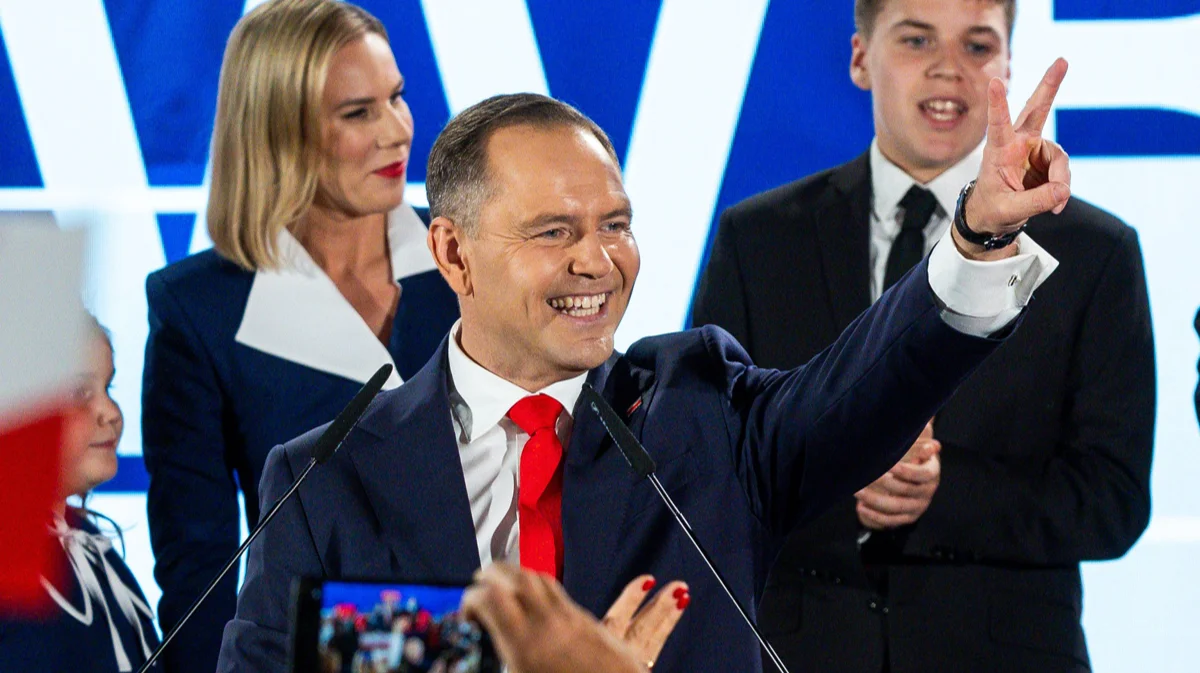
Karol Nawrocki at a rally after the end of the second round of presidential elections, Warsaw, June 1, 2025. Photo: Andrzej Iwanczuk / NurPhoto / Shutterstock / Rex Features / Vida Press
In the second round of the Polish presidential election, Karol Nawrocki, the candidate of the conservative Law and Justice (PiS) party, won.
With an advantage of only 2%, Nawrocki still managed to beat Rafal Trzaskowski, the mayor of Warsaw, who represented the liberal government of Polish Prime Minister Donald Tusk. His victory was not prevented by numerous stories from his dark past, revealed by the media in recent months, from connections with organized crime and participation in football fan fights to dubious real estate deals and the possible use of snus on live television. Nawrocki's victory will allow PiS conservatives to maintain significant influence on Polish politics, even despite the party's defeat in parliamentary elections in 2023. The president has veto power on many important issues, including the ability to continue to block attempts by Tusk's liberal government to roll back previously implemented PiS reforms that harm democracy and the rule of law in the country. How Nawrocki was able to snatch victory from Trzaskowski and what awaits Poland now - independent journalist Alexander Gorsky looked into it especially for New Europe.
Elections against veto
By the early morning of June 2, it became known that Karol Nawrocki had officially won the Polish presidential election with 50.89% of the vote, beating his rival Rafal Trzaskowski by less than 2%.
As can be seen from this result, as well as the high turnout by Polish standards of 71.63% , the intrigue in the elections remained until the last. The country's traditionally strong conservative forces have clashed with the liberal hopes embodied by the country's government under the leadership of pro-European Prime Minister Donald Tusk.
Following the defeat of the right-wing conservatives of the Law and Justice Party (PiS) in the last parliamentary elections in 2023, the country has a chance to restore the rule of law and judicial independence, which were previously undermined by PiS and led to serious conflict between Warsaw and Brussels. After the victory, Tusk's new center-left government set out to reverse this authoritarian backsliding, which they initially did well: a reversal program was in place, and relations with the EU were improving . However, not everything went smoothly. And the reason lay in the right of veto, which, according to the Constitution, the President of Poland has.
This post continued to be held by PiS ally Andrzej Duda, who diligently undermined the liberals' attempts to reverse all authoritarian reforms. The confrontation reached such a level that in February, the head of the Constitutional Court of Poland, Bogdan Świeczkowski, who was appointed to this post by Duda in December 2024, accused Tusk of trying to undermine the constitutional order of the republic “as part of an organized criminal group.”
As a result, both sides of this political conflict approached the elections with the utmost determination to prevent the enemy from winning.
For the liberals under Tusk, defeat would mean continuing this endless game of cat and mouse, with the government trying to change something and the president vetoing it. For the Conservatives, their entire political legacy after almost 10 years in power was at stake.
The election of a new president would pave the way for Tusk's cabinet to completely overhaul all authoritarian reform packages, restore the basic principles of a democratic state and reconcile with the EU. The stakes were high, and this could not but affect the election campaign.
Neutrality of the third
The first round of the presidential election took place on May 18, but all politicians and voters understood that there would be a second round, pitting Karol Nawrocki, director of the Institute of National Remembrance, against Rafal Trzaskowski, the mayor of Warsaw and a former presidential candidate in the 2020 elections, where the gap between him and Duda, who defeated him, was only 2% .
Trzaskowski managed to beat all his opponents in the first round, but with a minimal margin over the second-placed Nawrocki. This result guaranteed that the remaining candidates would make a decisive contribution to the victory, or more precisely, who they would encourage their supporters to vote for in the second round. Nawrocki could feel quite confident, since the far-right politician and leader of the Polish Confederation of Freedom and Independence, Slawomir Mentzen, who is ideologically close to him, took third place in the first round, receiving almost 15% of the votes. If all the votes supporting Mentzen had flown to Nawrocki in the second round, then this would have been just enough for victory.
However, after consultations with both advancing politicians, Mentzen refused to endorse either candidate, instead telling his supporters to “guide by their conscience” in the second round, adding fuel to the fire of uncertainty in this election.
Uncertainty remained until election day. Public opinion polls before the first round showed a fairly confident victory for Trzaskowski in the second round, with the margin sometimes reaching 20% or more . However, as voting day approached, sociology showed that the polarization of society was heating up. The gap between the candidates began to be several percent, which fit within the statistical error, and victory was given either to the liberal candidate or to his conservative opponent . The reason may have been the way the mayor of Warsaw conducted his election campaign: his goal as the leader of the race was to avoid any mistakes and missteps that would spoil his image in the eyes of voters. While his opponent Nawrocki did not mince words, calling Trzaskowski “a product of a political laboratory,” presenting himself as a candidate from the people and criticizing the topic of assistance to Ukraine and Ukrainians, which corresponds to the sentiments of at least part of Polish society.
However, Nawrocki's active campaign also resulted in a series of scandals related to investigative publications of his past published by the Polish media.
Gangs, prostitution, snus
Until 2025, Karol Nawrocki remained a relatively unnoticed political figure. His nomination as a presidential candidate in November 2024 came as a relative surprise, but it is a trick PiS has used in the past. In 2015, the party relied on the then little-known European deputy Andrzej Duda, who eventually won not only those elections, but was also re-elected in 2020.
According to a survey for Radio Zet, only a third of respondents knew who Nawrocki was at the time his candidacy was announced. This led to the media trying to actively understand the past of the newly minted presidential candidate.
In March, it turned out that Nawrocki once appeared on a TV show in the guise of a “secret guest” - with a blurred face and under a pseudonym. On air, he promoted his own book about organized crime, written as if in the first person, and also praised himself.
In May, Navrotsky was accused of hiding the amount of real estate he owns, as well as the fact of participation in possible black real estate: the conservative politician allegedly purchased an apartment from a disabled pensioner for promises to look after him. The pensioner ended up in a nursing home, and the apartment became the property of Navrotsky.
The reaction to these publications by Navrotsky himself was mixed: at first he stated that he owned only one apartment, which he declared when nominating himself as a presidential candidate. But then he agreed that he still had real estate, while claiming that he acquired it legally, and in general, together with his wife, he was going to transfer it to a charitable foundation. Then an analysis of his previous property declaration revealed that the conservator also owns half of the third apartment together with his sister. This amount of real estate went against the image of Nawrocki as a “simple Pole”, which he emphasized during his election campaign.
Polish publication Onet reported that Nawrocki was involved in prostitution and organized crime while he worked as a security guard at a luxury hotel in the city of Sopot. According to his colleagues, the politician ordered sex workers for hotel clients and accompanied them.
Nawrocki, as expected, denied all accusations and said that he would file a lawsuit against Onet for “this set of lies and hatred.”
This did not stop journalists, who also found that Nawrocki was linked to football hooligans and episodes of violent fights between Polish fans in 2009. According to the legislation of the republic, such incidents are punishable by prison terms of up to 5 years. Navrotsky did not argue with these episodes, admitting that he participated in mass fights, but described them as a “noble and courageous duel.”
His strange behavior during the debate with Trzaskowski added even more uncertainty to Nawrocki's campaign. Live, the politician made a strange gesture , allegedly putting something in his mouth, which Internet users compared to using a nicotine product - snus. The politician’s explanation that it was chewing gum did not stop the conservative’s critics, who accused Nawrocki of either drug or nicotine addiction and the inability to control it.
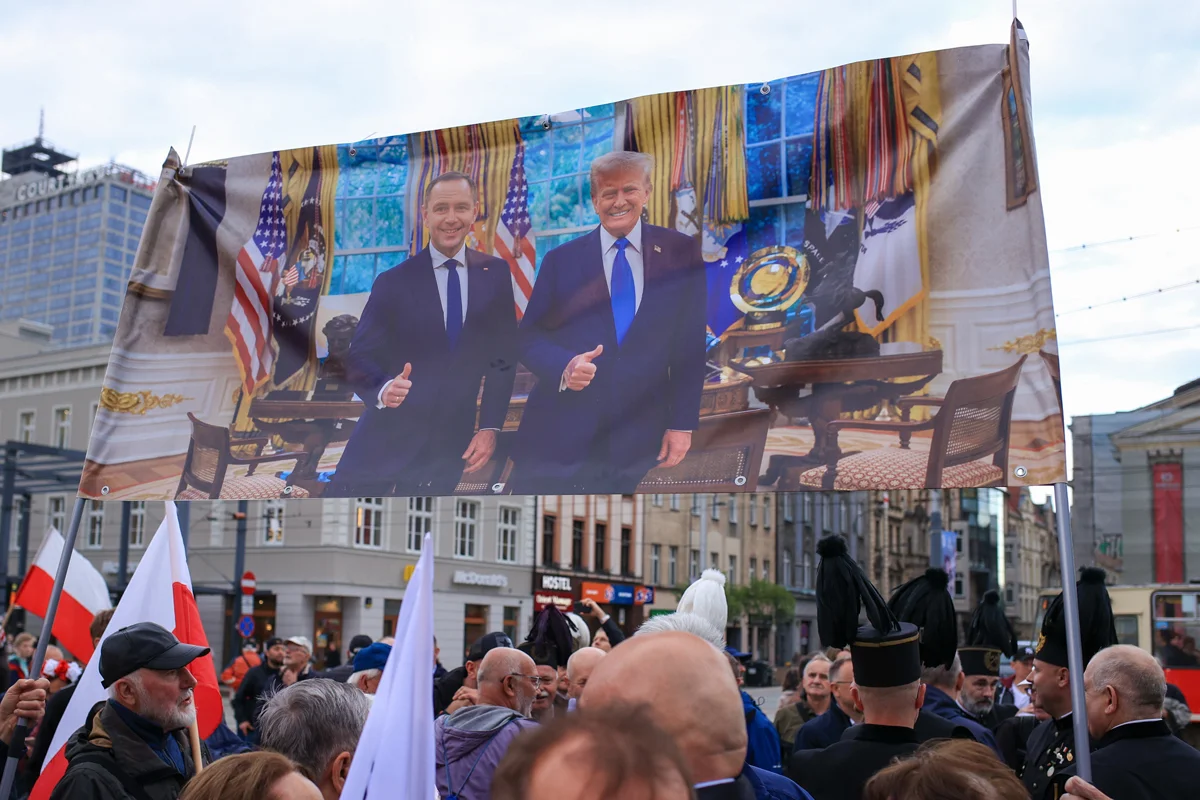
In an attempt to stabilize Nawrocki's shaky campaign, conservative forces in the United States and Europe presented a united front. In early May, Nawrocki held a meeting with US President Donald Trump in Washington, which was perceived as support for his candidacy from the White House. A week before the elections, a major convention of the Conservative Political Action Conference (CPAC) was held in Poland, which was attended, in particular, by Hungarian Prime Minister Viktor Orbán, Alice Weidel from the far-right German party Alternative for Germany (AfD) and far-right politician Geert Wilders from the Dutch Freedom Party, whose party was able to form the country's government.
The congress was also attended by the defeated presidential candidate of Romania, George Simion, who said that if Nawrocki was defeated, then Hungary would be next. “And then our entire continent, the entire EU will turn into a dictatorship,” the conservative politician warned . All the forces of the MAGA (Make America Great Again) movement and its European branch Make Europe Great Again were thrown into supporting Nawrocki. At stake was the loss of a key ally for the Conservatives in the EU.
Liberal moves to the right
If Karol Nawrocki was a mystery for voters, about whom more and more dubious facts appeared every day, then Rafal Trzaskowski positioned himself for voters as a long-term, experienced politician with a transparent past. He has indeed held various elected positions in Poland for 16 years, and since 2018 he has headed the country’s capital, Warsaw. His management of the city, including during difficult times of the pandemic and the reception of Ukrainian refugees, earned him the reputation of a good manager.
In addition, Trzaskowski, during rallies during the campaign period, often presented himself as a politician capable of reconciling the divided Polish society. “I will certainly sign a law that will put an end to chaos and dualism in the judicial system,” Trzaskowski said in January. He also promised to liberalize the “medieval abortion law” previously adopted in Poland at the initiative of PiS, and support the rights of the LGBTQ+ community.
However, the politician had to change his position in pursuit of potential votes from more conservative Polish voters. For example, during a televised debate in April, one of the Warsaw mayor's rivals defiantly placed a rainbow flag on his podium. Trzaskowski, who had previously led pride parades in Warsaw on several occasions, quickly removed the flag.
He also took a harder-line view on migration issues during the campaign, saying Poland should not repeat the mistakes of countries such as Sweden and Germany, where he said immigrants "were able to exploit the system to obtain welfare benefits."
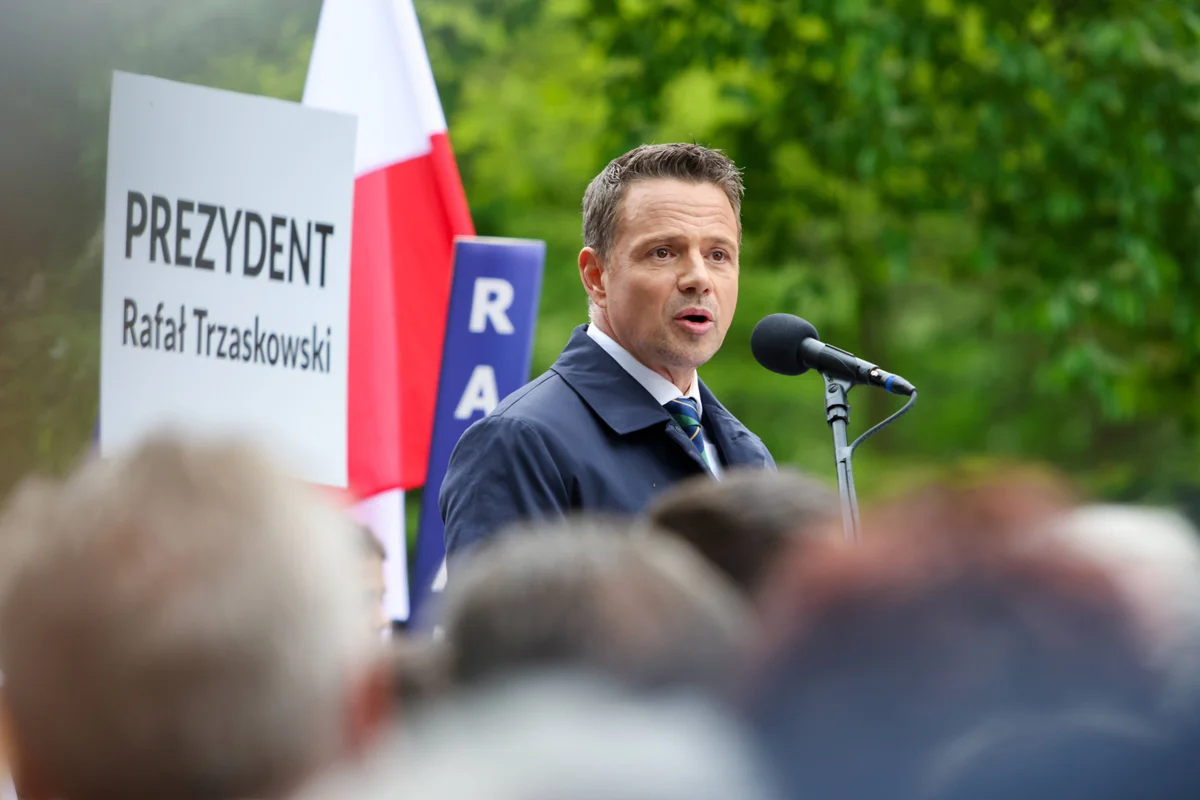
Trzaskowski’s position on Ukraine and support for Ukrainian refugees in the country has also undergone adjustment.
In particular, between the two rounds of elections, the liberal candidate began to argue that Warsaw should be “tough in relations with Ukrainians” and “protect Polish interests.” At the same time, Trzaskowski continued to criticize Nawrocki for his promise to block Kiev's entry into NATO, claiming that his opponent was "speaking Putin's language."
These examples show that Trzaskowski's campaign strategy was to persuade the centrist and right-wing voters whose votes he needed to win.
Continuation of the Polish paralysis
Trzaskowski's defeat will hurt Donald Tusk's hopes of breaking out of the legislative paralysis that has prevented his cabinet from carrying out planned reforms.
Due to the difference of views between the prime minister's office and the presidential palace, the promises made by Tusk's liberal coalition in the 2023 parliamentary elections remained only on paper. In many ways, this is precisely what explains the close attention that all of Poland paid to the presidential election - a fundamentally ceremonial position, if not for the veto power of the head of state. According to the Polish Constitution, to override a presidential veto, a majority of ⅗ members of parliament is needed, and Tusk’s coalition does not have that many votes in the Sejm.
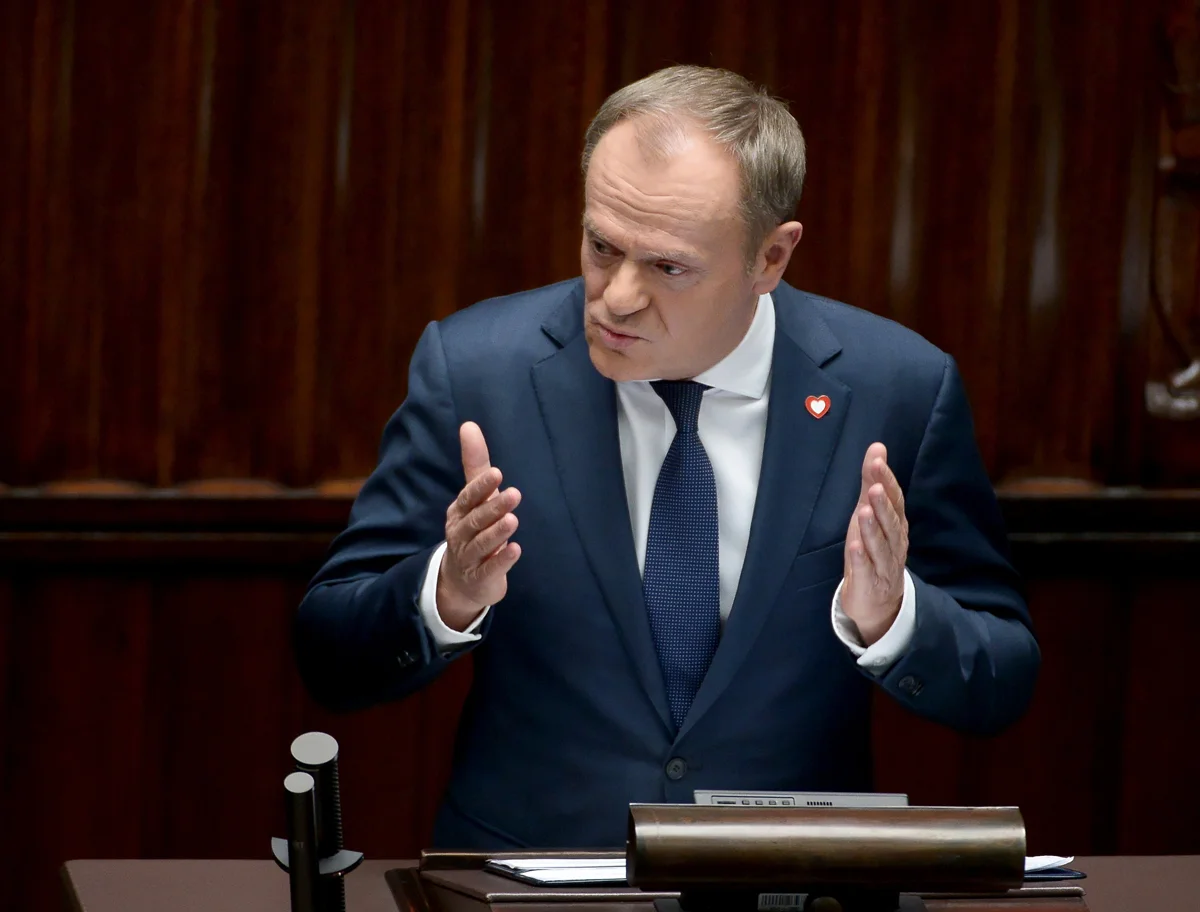
Nawrocki's victory effectively turns Tusk's administration into a lame duck, and the key question now is whether his government will be able to carry out any meaningful reforms before the 2027 parliamentary elections.
Nawrocki and PiS, buoyed by a much-desired victory and armed with a fresh mandate from a divided Polish society, are now free to throw any obstacles in the liberals' wheels, defending their authoritarian legacy on the rule of law and limiting the cabinet's powers on other issues of fundamental importance to them - abortion and the rights of the LGBTQ+ community.
Thanks to control of the presidency on the international stage, Poland will continue to remain in the right-wing conservative camp, which will certainly please governments from Budapest to Washington.
In Brussels, a spirit of disappointment will be felt - the bloc only a few weeks ago managed to prevent the threat of a conservative transition in Romania, and the EU relied heavily on Trzaskowski's election as the final part of Poland's liberal transformation. And now these hopes have been derailed, with both Hungarian Prime Minister Viktor Orban and Slovakian leader Robert Fico happily rubbing their hands and looking to the future - for example, to the upcoming parliamentary elections in the Czech Republic this fall, where conservatives may also return to power.
After Nawrocki's victory, the formation of a right-wing alliance in Central European countries in the coming years does not look like such a far-fetched scenario.