
Translated material
Gunter Yucker died - an artist who painted with nails
His Moscow exhibition of 1988 introduced the USSR to modern Western art, and today the deputies of the Bundestag pray in its installation
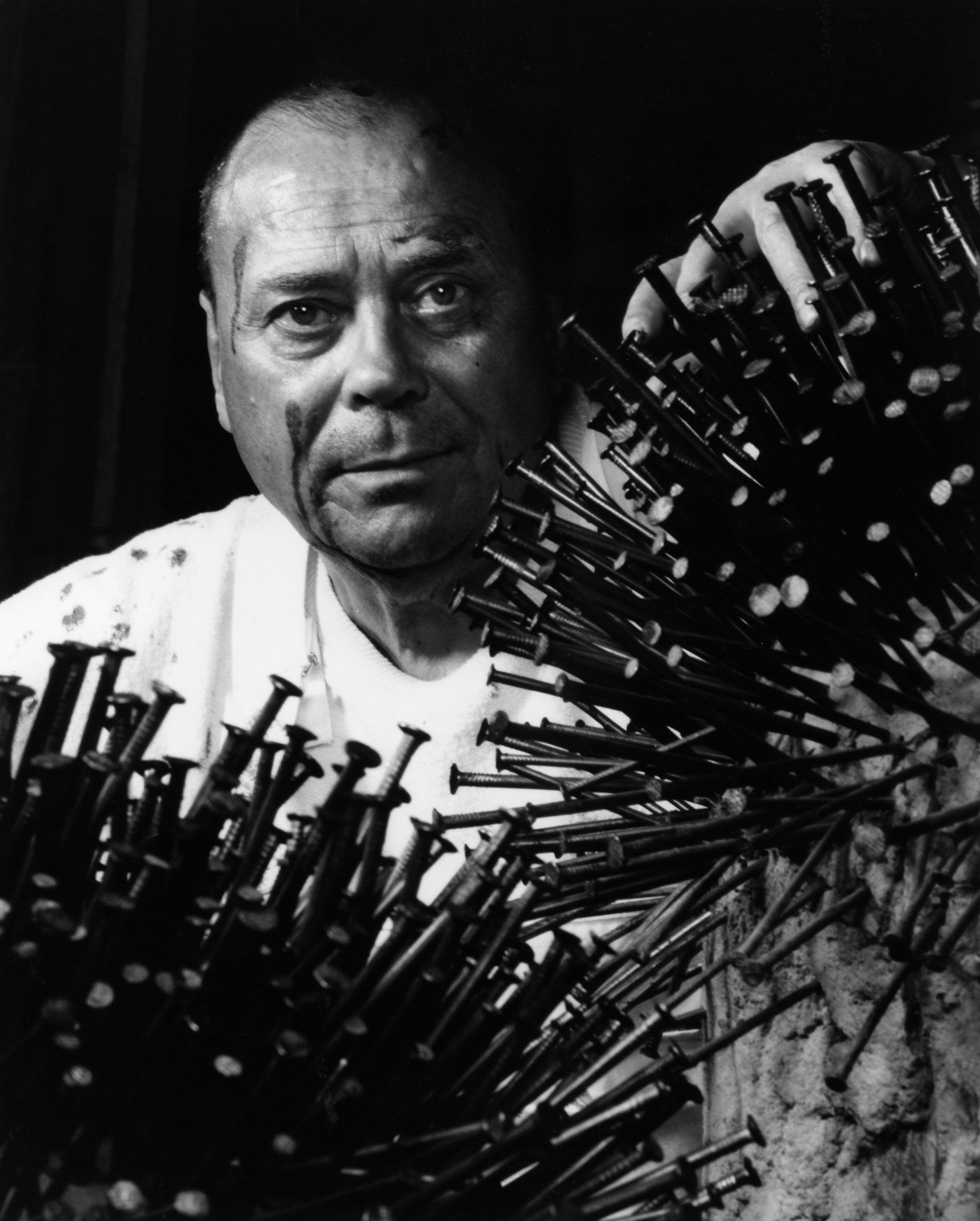
On June 10, German artist Gunter Yucker died in Dusseldorf. He was 95 years old. A teenager Yucker found the Soviet occupation. One of the most painful memories of those years prompted the artist to open, which ultimately made him one of the key figures of post -war European art. Critic Anton Khitrov tells how the paintings and objects of the yucker are arranged, how they echoing with the works of his contemporaries and how the artist is connected with the Christian tradition.
The death of Gunter Jucker in the Russian -speaking segment of Facebook wrote surprisingly a lot. The fact is that for many Russians it was the work of Yucker that turned out to be the first acquaintance with modern Western art, which, in fact, many recalled in recent days. In 1988, his large -scale exhibition was held in the central house of the artist in Moscow; In the Soviet Union there was a restructuring, and the public accepted this project as a sign of a new era.
But this is in the USSR, and at home, in Germany, Yucker was almost a classic: in 1970-he represented the country on the main Western art forum, the Venetian Biennale, and since 1974-taught at the prestigious Dusseldorf Academy. Along with the classic of the world performance, Joseph Boyce or the main abstraction of our time, Gerhard Richter, he is one of the key German artists of the second half of the 20th century. It all started with ordinary nails.
In the history of art of the last hundreds of years, there is one noticeable through motive - a rethinking of the banal. One way or another, whole generations of artists from Marcel Dyushan to Jeff Kuns worked with this topic. This is partly the reason for the distrust of the public to modern art, because the study is easy to confuse with its subject - and instead of an attempt to aesthetize conditional garbage to see only garbage, or, in the words of the former Minister of Culture Vladimir Medinsky, a “pile of bricks” .
Another question is that the sphere of banal is incredibly extensive, and different authors approach it from different sides. The same Dyushan was occupied by industrial products . Pop artists- mass culture . The post -war European artists, such as Yucker, were interested in the expressive potential of ordinary everyday things like a nail.
Nails are the objects so ordinary that they are, as it were, at all. In everyday life, it is desirable that they are not visible at all. The traditional role of nails in art is important, but again inconspicuous: they are hung on paintings. They work in a fundamentally different way for Yucker: firstly, they are striking, and secondly, they do not hold anything. The utilitarian thing ceases to be utilitarian and turns into a poetic image. And very, very multifaceted. It is no coincidence that he was talking about his technique, Yucker referred to Vladimir Mayakovsky, who seemed to claim that they did not say poetry with a hammer (in fact, the poet did not say this verbatim, but in the article “how to make poetry” he compared work on the poetic text with the difficulty of Metallurg).
The reasons why the artist became interested in nails are partly in his childhood and youth. Gunther Yucker was born in 1930 in the family of a farmer in the Mecklenburg region in northern Germany. From an early age, he had to work with his hands. When the Second World War ended, Mecklenburg was in the zone of Soviet occupation. To protect the mother and sisters from Soviet soldiers, the 15-year-old son of the farmer chained the windows and doors of the house. The nails for him were forever connected with the injury of war.
The Yucker received art education first in his native Mecklenburg, in the city of Vismar, and then in East Berlin. However, he also visited the western part of the divided capital, where he first got acquainted with abstract painting.
In 1953, Soviet troops suppressed a democratic uprising in the GDR. Yucker, finally disappointed in the new mode, moved to West Germany. And two years later, in 1955, he entered the Dusseldorf Academy of Arts, which at that time released one star after another. Joseph Boys , Gerhard Richter studied here, and also Hinz Mack and Otto Pine, who later, in the sixties, created the innovative art group Zero together with the yukker.
In the same 1955, the artist for a while returned home to take his sister, Rotraut (later she also made a career in art and married Iva Klein, another participant in Zero). Thanks to this trip, Yucker found his branded technique. The artist cut out of a piece of an old beam found on a family farm, a sculptural portrait of his sister - and then, imitating Congolese magical practice with wooden figurines, he was dragging the figure with nails. It looks like a radiance comes from the rotraut, like from the Virgin Mary on some Gothic altar.
Religious associations are generally inevitable if you are a Western artist and work with nails. Yucker was not indifferent to the theme of Christianity and even created projects for churches: the installation of “14 broken crosses” in memory of the victims of the First World War in the Lubeck Marienkirche and abstract blue stained -glass windows in the Swerer Cathedral. In the late 1990s, he designed a prayer room in the Reichstag for representatives of all religions, where German parliamentarians pray today; Among other things, there is a cross composed of nails. The guns of the passions of Christ, with the artist, they also resemble the divine light - just like in the portrait of Rotraut.
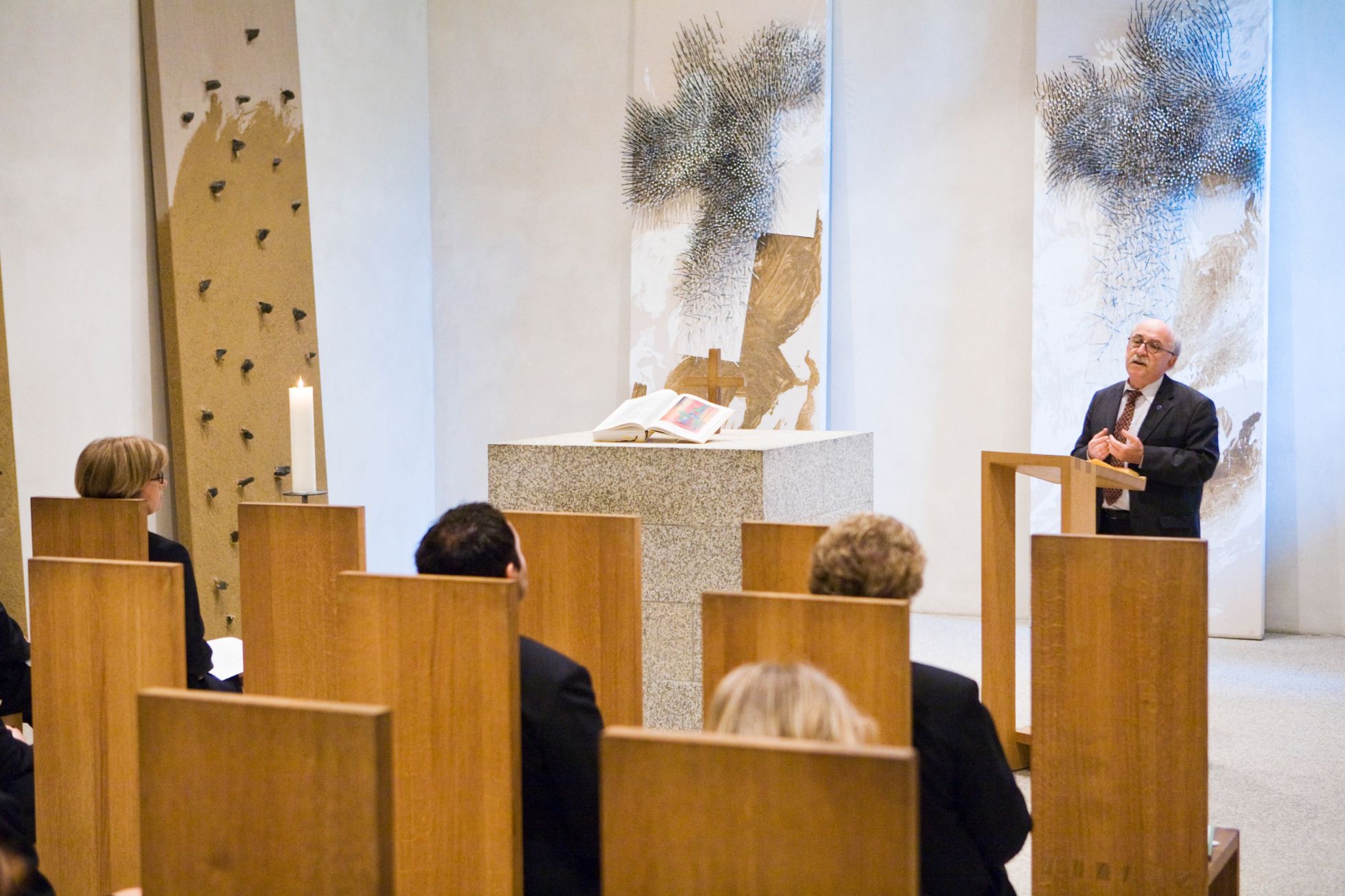
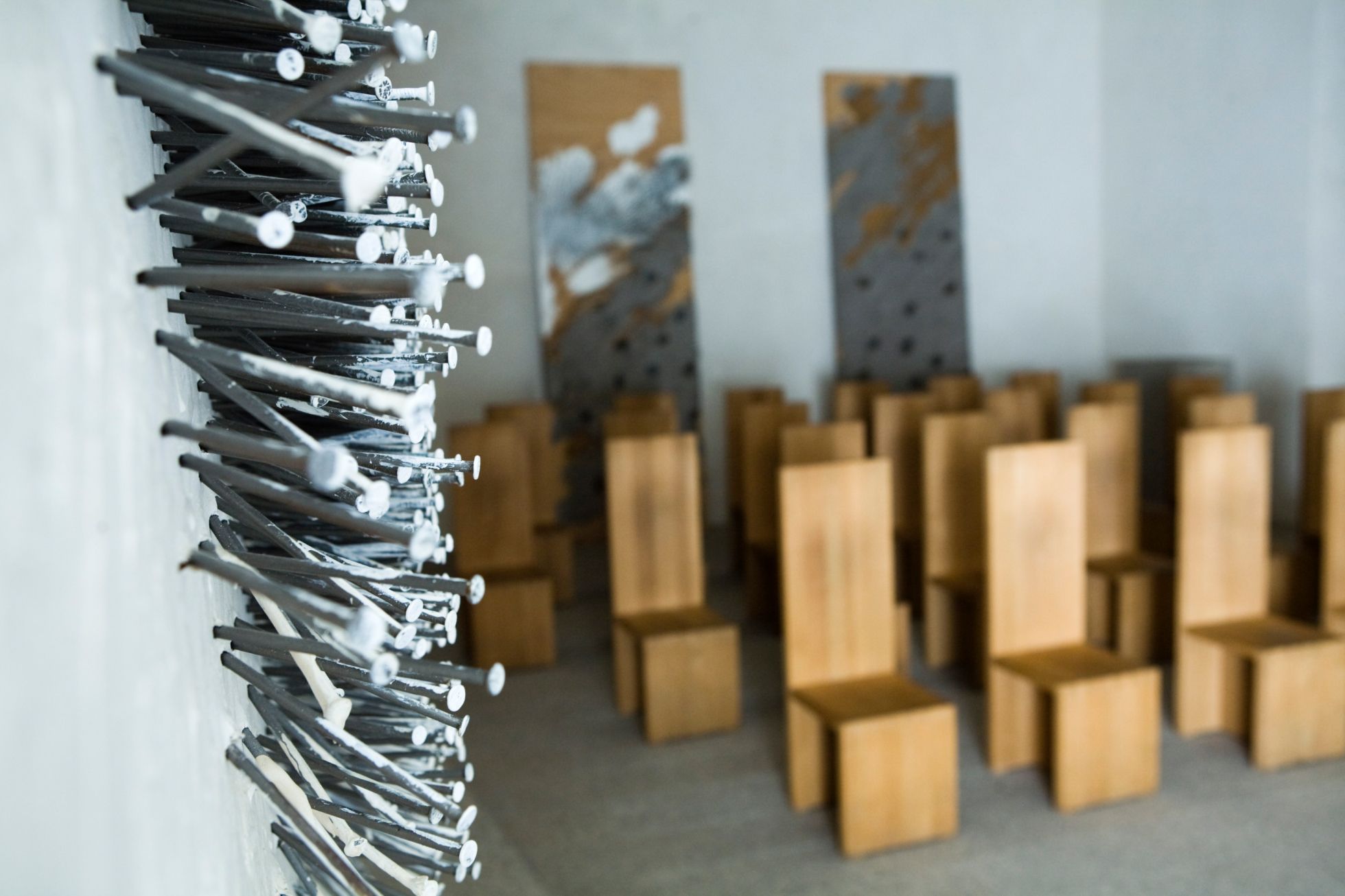
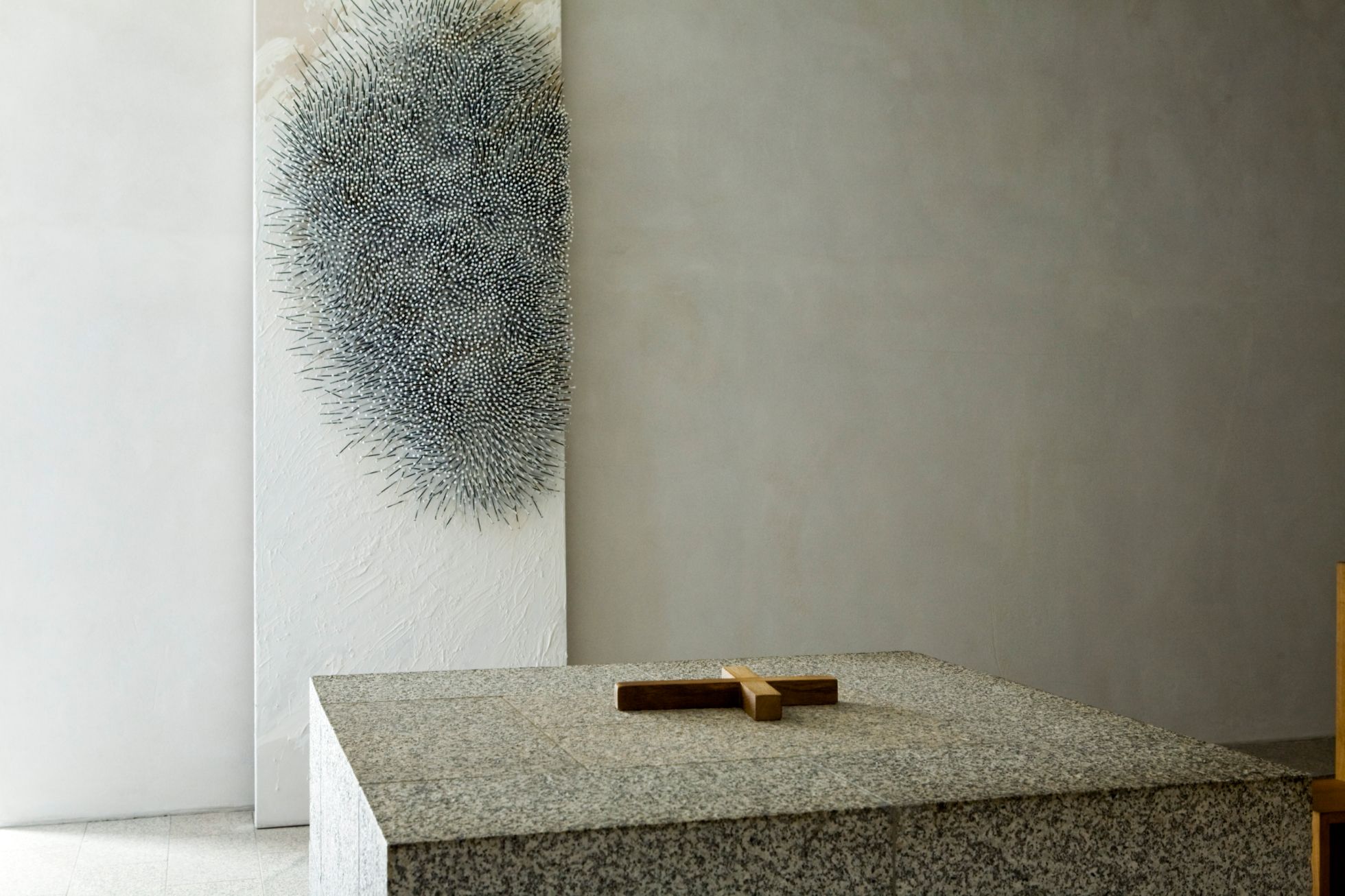
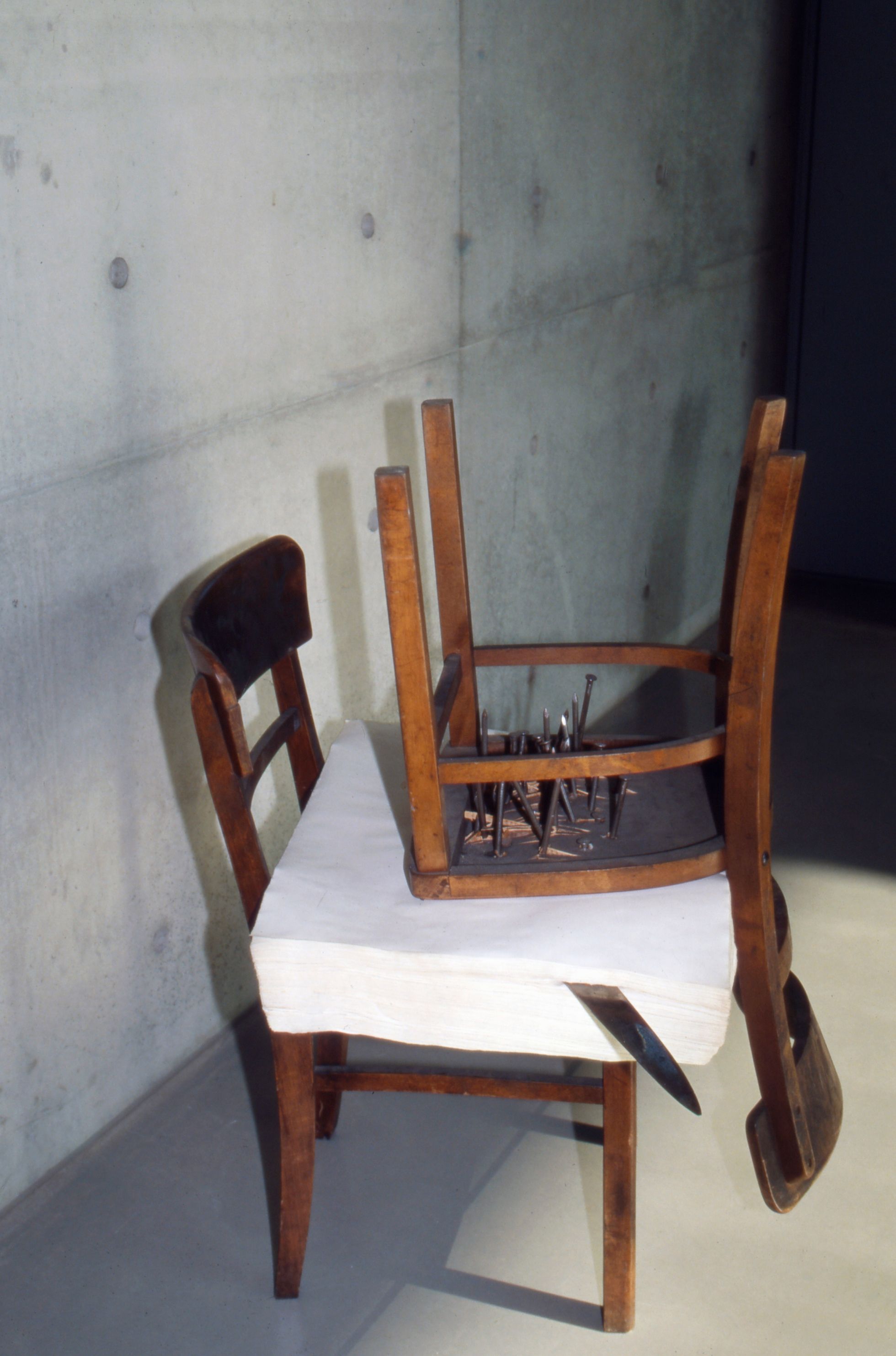
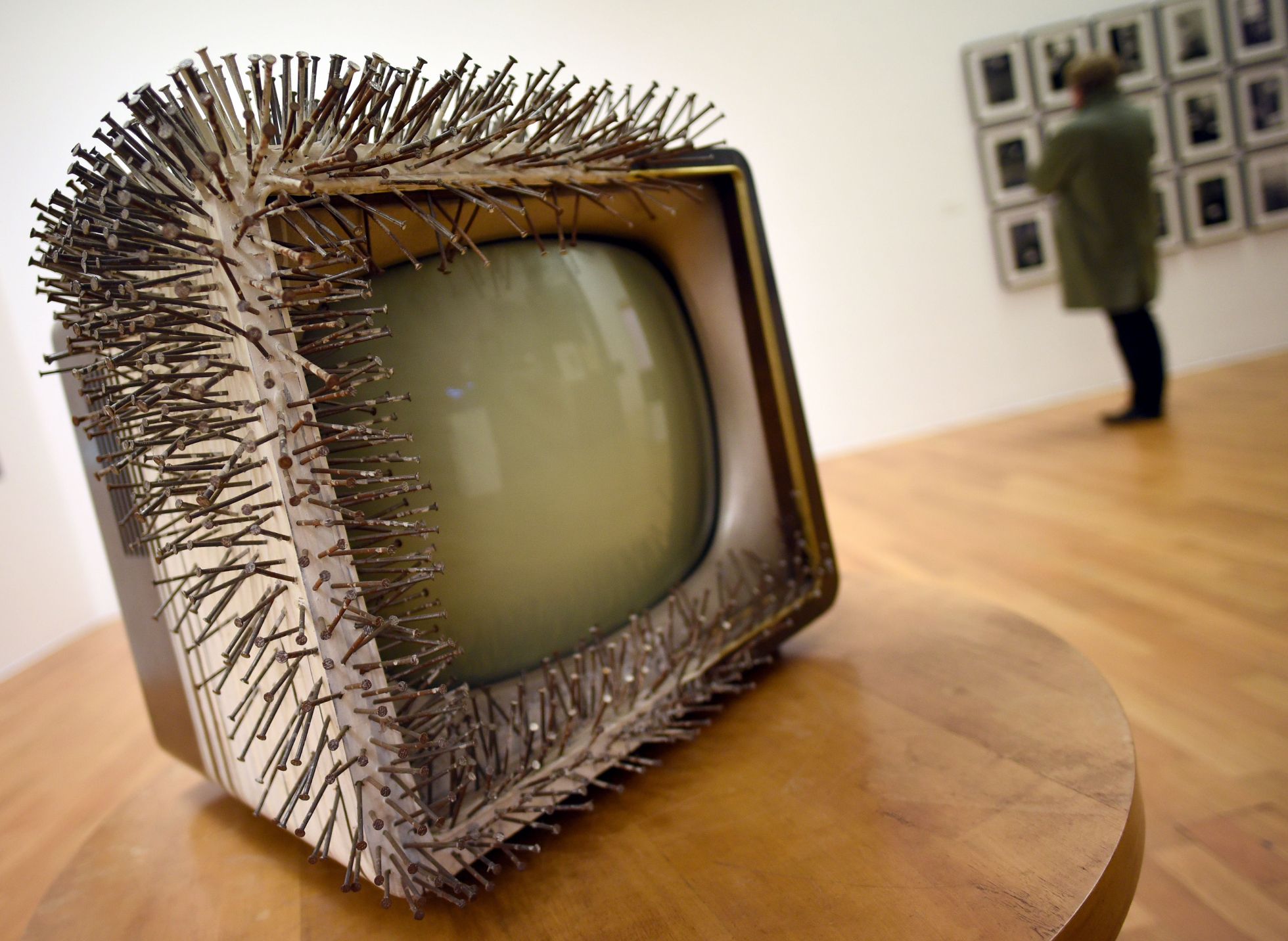
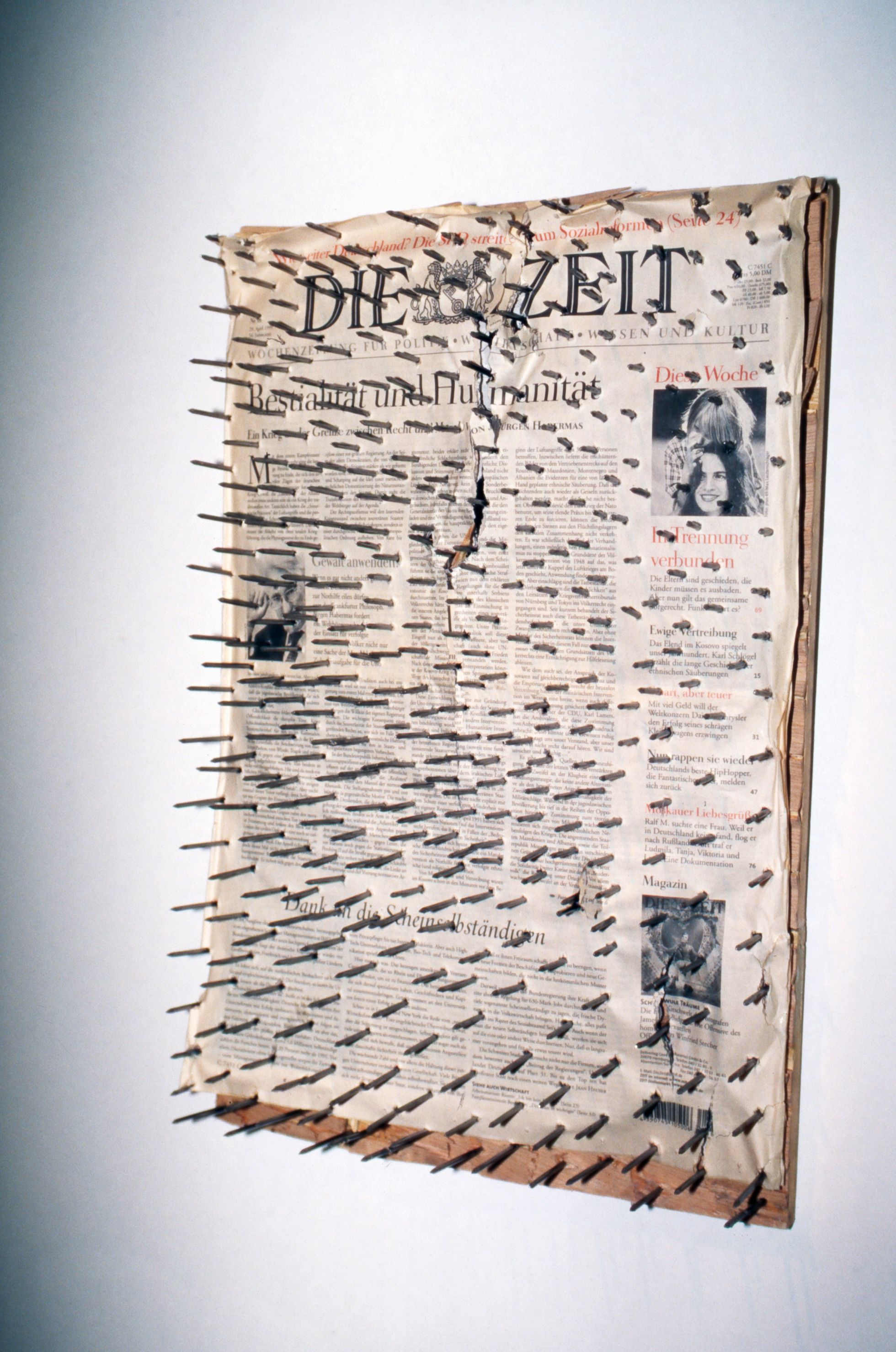
Yucker scored nails into everything: in canvases, in boots, on TVs, in furniture, in his own photograph. Thus, he blurred the outlines of everyday objects, forcing the audience to see them as if for the first time. Work on the plane is a separate topic: the artist created them in a dialogue with a picturesque tradition. The figure is actually flat, but pretends to be three -dimensional: it is an illusory, imaginary space enclosed in a frame. Yucker, who advocated art without illusions, “wrote” with the help of nails of a picture, which actually had a third dimension.
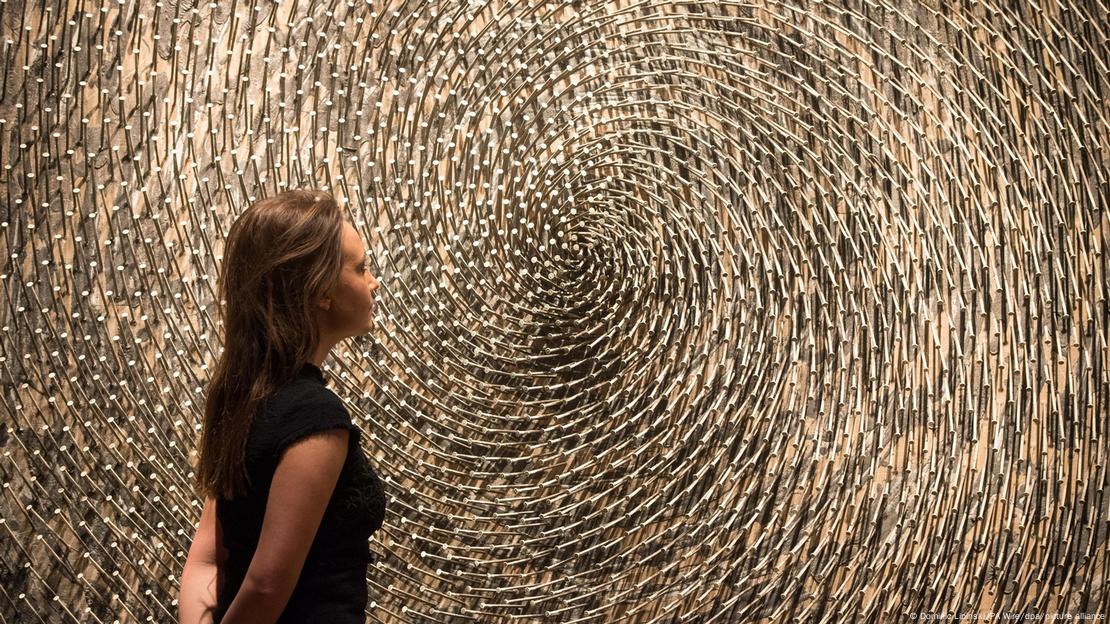
For the post -war era, this is a very characteristic art: many contemporaries of the artist can find similar motives. Lucho Fontana, his Comrade Zero, also wanted to destroy the plane of the picture and blur the border between painting and sculpture, for which he cut the canvases with a knife. Christo Javashev and Jeanne-Claude de Giiebon in the same way tried to see familiar things as unfamiliar-and therefore they packaged everything in a row in fabric or film, from various trifles to buildings and even islands . As for the harsh, archaic, “honest” materials, at that time they were loved not only by artists, but also by theatrical directors: to take at least the famous play by Peter Bruck “King Lear”, where Shakespeare's heroes were leather instead of velvet.


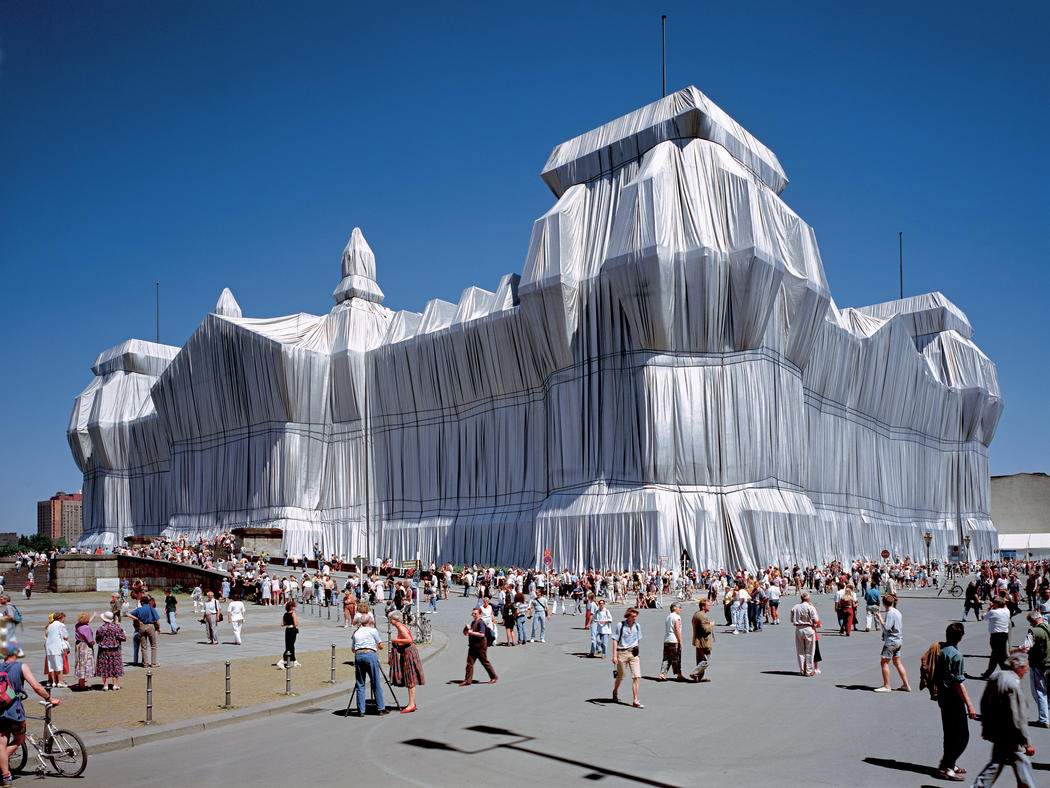
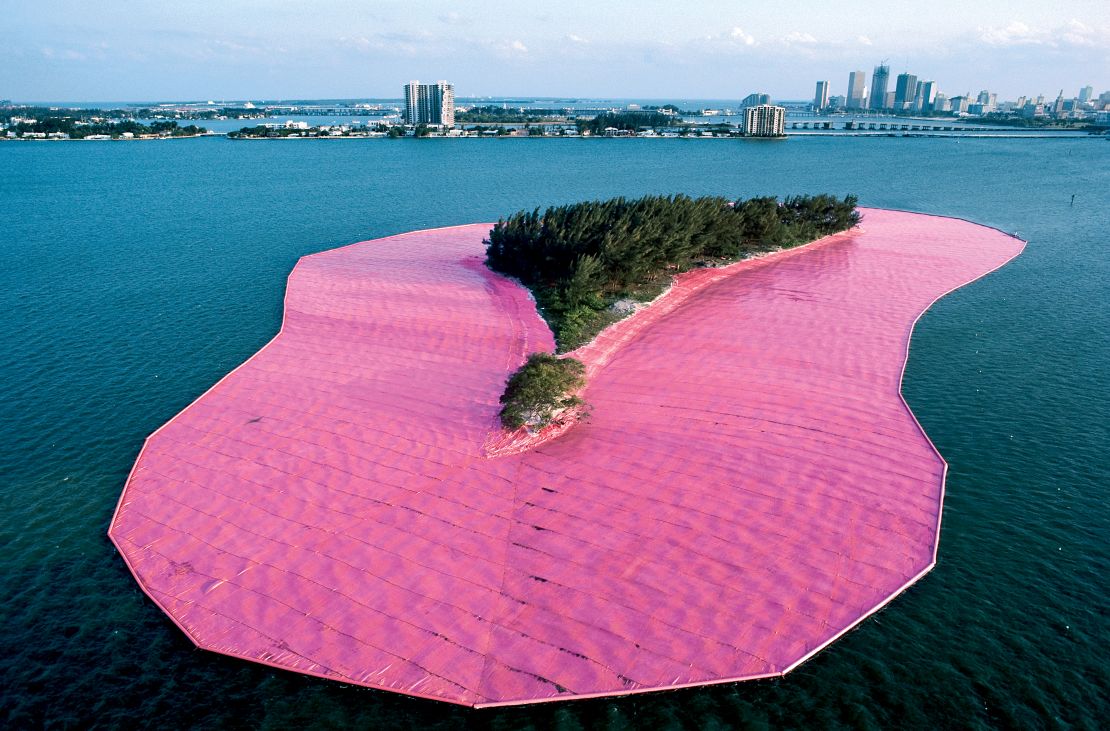
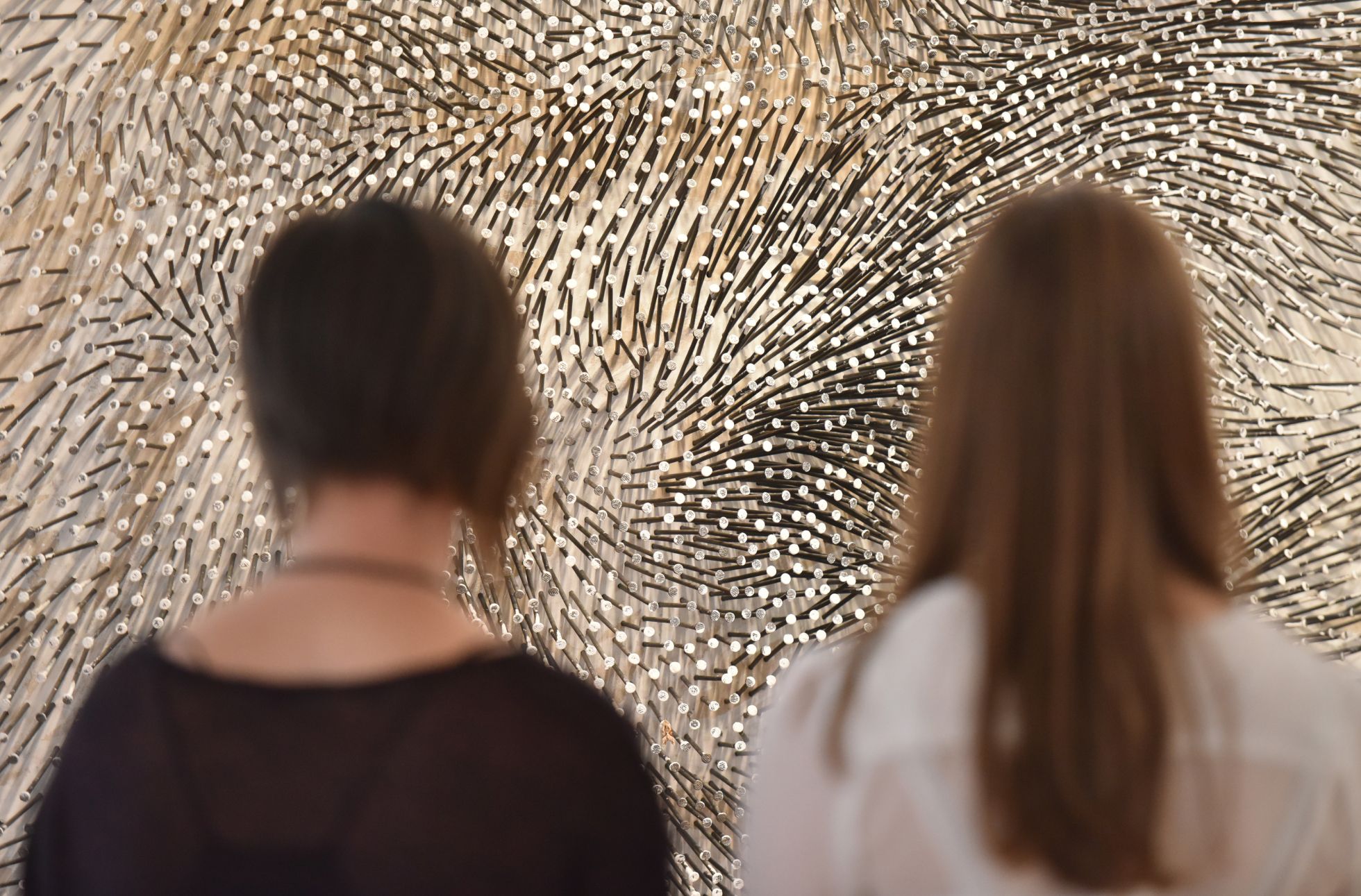
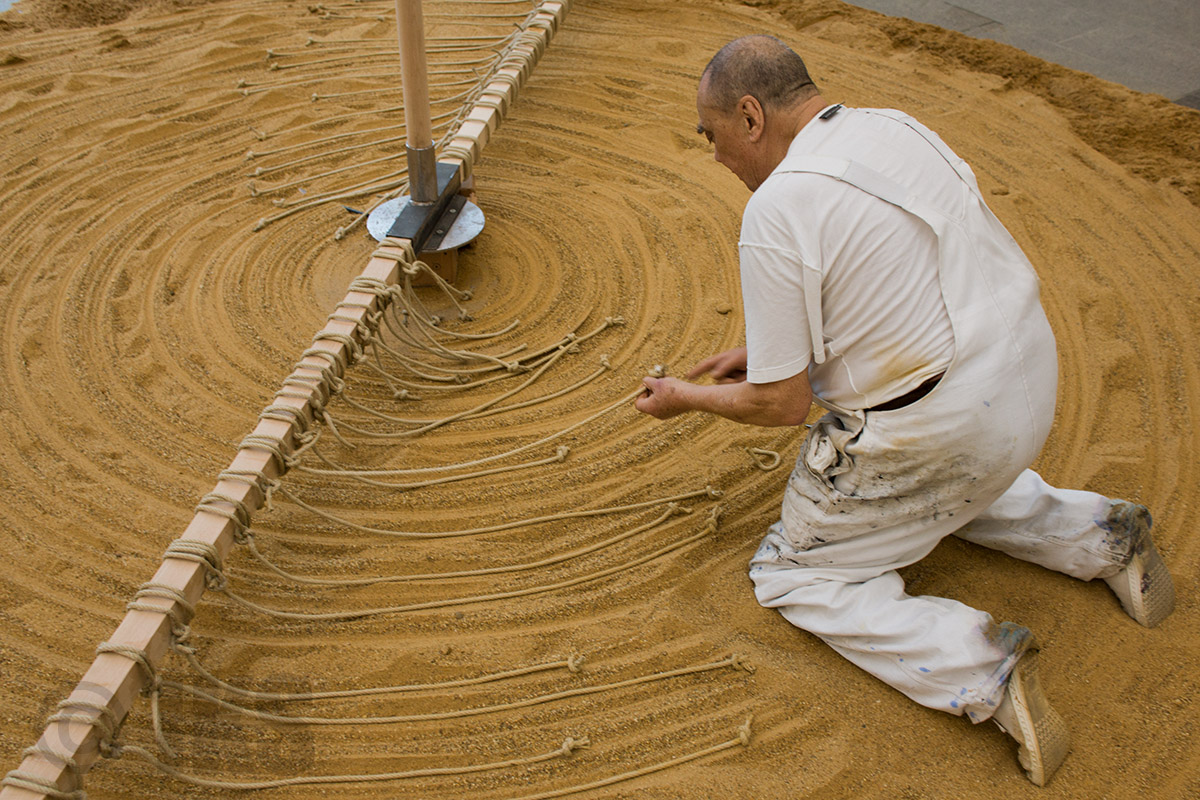
In fairness, Yucker was not an artist of one trick: he had a lot of works without any nails - like a “sand mill” , a kinetic sculpture that itself draws with ropes in the sand, or already mentioned stained glass in Schverin. And yet they know him mainly because of the nails. Yucker proved that non -standard and not too, at first glance, aesthetic, but at the same time, the material rich in association opens up almost inexhaustible opportunities for the artist. He was not the only author emanating from this premise-we can recall, say, Joseph Boyce with his felt-but still one of the first. All contemporary artists who consistently create objects, say, from reinforcement, like Konstantin Benkovich , quilted fabric, like Vasily Elephants , or black rubber, like Vladimir Kozin-to some extent his heirs.
“The raft” is a telegram channel where they talk about culture in the era of bad news. Every day, the editors of Medusa Sofya Vorobyova and Anton Khitrov talk about cinema, series, music, literature and contemporary art. Subscribe: we will be saved together in a storm.
Anton Khitrov