Translated material
Long road to Europe
Three years ago, Ukraine became a candidate for EU. We understand the achievements and obstacles of Kyiv on the way to European integration
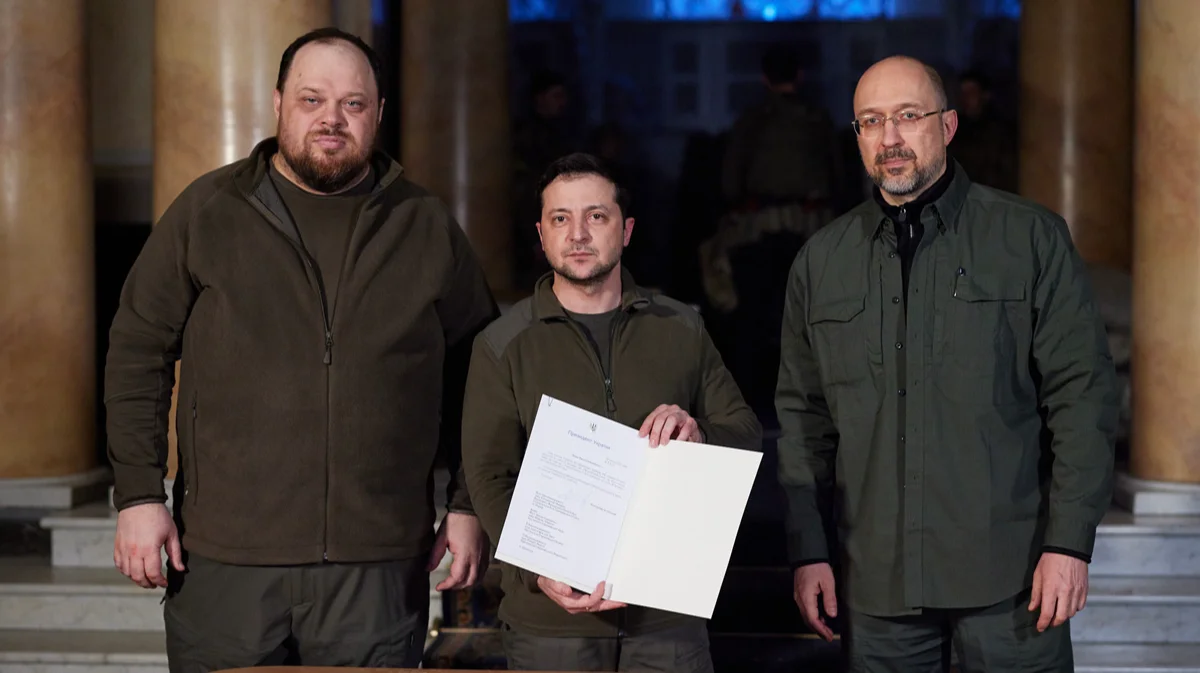
The Chairman of the Verkhovna Rada Ruslan Stefanchuk, President of Ukraine Volodymyr Zelensky and Prime Minister Denis Shmygal after signing an application for Ukraine in the EU, February 28, 2022. Photo: press service of the President of Ukraine
The first month of summer is a sign from the point of view of relations between Ukraine and the EU. In June 1994, Kyiv and Brussels signed an agreement on partnership and cooperation, which laid the basis for their rapprochement. In June 2017, Ukrainians got the opportunity to travel freely around Europe: a visa-free regime began to operate. Three years ago, in June 2022, Ukraine officially became a candidate for the EU, and in June 2024 the official negotiations were launched.
A year later, in early June 2025, the European Commissioner for the extension of Marta Kos reported that Ukraine “completed homework” and it was time to start a subject discussion of specific issues of European integration. This means that the parties have to work 35 chapters of negotiations covering various spheres of interaction, from legal proceedings and taxation to safety and environmental protection. Novyevropa decided to figure out how much Ukraine has advanced in the way of European integration, what problems it has yet to be solved and when, in fact, to expect Ukraine’s entry into the EU.
The path to Ukraine’s membership in the EU began on February 28, 2022: on the day when Russian equipment was on the outskirts of Kiev, Ukraine officially applied for joining the association. In June of the same year, the European Commission recommended that Ukraine provide the status of a candidate for joining the EU, and the leaders of the participating countries agreed with this request.
“Point of Non -Return”, “New Image” for the country, “recognition of achievements in the formation of a mature democratic European society” - as the Ukrainian authorities appreciated the news from Brussels.
The unfolding war accelerated the long -start of the convergence of Kyiv with Brussels, and since then the statements that Ukraine will necessarily become a member of the EU have been regularly at all political levels. In early June 2025, a year later, since the formal start of negotiations, the European Commissioner for expansion of Marta praised the progress of Ukraine. According to her, the reforms carried out by Kiev “in the most difficult conditions” “bring Ukraine closer to the EU in every sense - political, legal and economic.”
The Government of Ukraine hopes that negotiations on all heads of European integration will begin until the end of 2025. The European Commission considers it realistic. Some of the 35 chapters will be closed instantly, possibly even in a day, as Turkey did in 2006 with the head concerning scientific cooperation (though there has been no progress since then). The closure of other chapters will require several years of work.
Nevertheless, the total terms of Ukraine’s entry into the EU are assessed by many positively. At the beginning of this year, the head of the European Commission, Ursula von der Lyaine, praised Kiev for the recruited pace of reforms and talked about the possibility of completing all procedures in five years. On the same date - 2030 - are also guided in Kiev. The estimates that France President Emmanuel Macron were now given in May 2022 are now almost not remembered: he believed that they could take decades before Ukraine joins the EU.
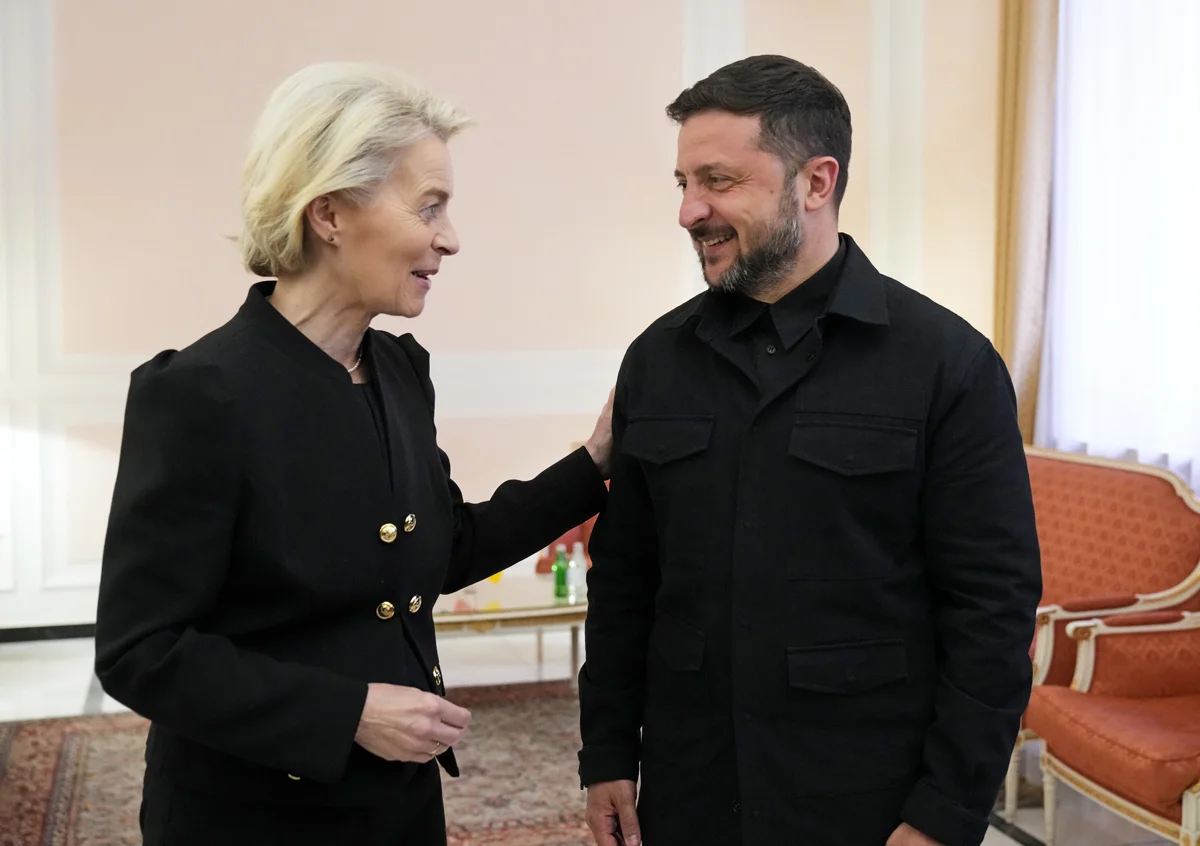
However, despite the enthusiasm of the participants, there are many “but” in the Ukrainian integration case that go beyond formal requirements. This is the ongoing war, and the financial issue, and difficulties with a pan -European consensus.
Even the closure of all 35 chapters of European integration will not become the final: first the European Commission and the EU Council will have to issue a positive conclusion on the country's readiness to join the EU, and then all the involved states and the Candidate country will have to sign an accession that will need to be rated (somewhere-voting in parliament, somewhere on the popular referendum). And each of these stages can become problematic, in connection with which the terms and completeness of the integration of Ukraine into the EU are still in question.
How did Ukraine go to the beginning of negotiations on joining the EU?
Ukraine began institutional cooperation with the EU back in 1994, when the fundamental agreement on partnership and cooperation was signed. In 2014, Kiev and Brussels entered into an association agreement aimed at deepening integration in the political, economic, trade, cultural, legal spheres.
The process accelerated sharply with the beginning of the full -scale invasion of Russia into Ukraine. On February 28, 2022, four days after the attack, Ukraine applied for joining the EU. In response on June 23, 2022, she was given the status of a candidate. But subject negotiations did not begin immediately. The European Commission sent Kiev the seven conditions :
reform of the Constitutional Court;
continuation of judicial reform;
strengthening the fight against corruption, in particular among top officials;
improvement of legislation regarding the fight against money laundering, and the adoption of a reform strategy for the law enforcement sector;
introduction of the Law on Oligarchs;
bringing legislation on the media in line with European norms;
The completion of the reform of the legislation regarding national minorities.
In November 2023, the Chairman of the European Commission Ursula von der Layen noted that Ukraine completed 90% of the expected reforms. As a result of December 14, the European Council decided to start negotiations on the entry of Ukraine and Moldova to the EU. And formally, the negotiation process started a year ago, on June 25, 2024. This happened within the framework of the EU first intergovernmental conference - Ukraine.
How far to Brussels
As explained in the European Commission, there are three sets of criteria for candidates for joining the EU: political, economic and compliance or mismatch by the EU legislation (EU Acquis). Ukraine did not find serious problems in Ukraine: the European Commission found that the country “as a whole has significantly advanced in achieving stability of institutions that guarantee democracy, the rule of law, human rights, as well as the respect and protection of minorities,” and demonstrated macroeconomic and financial stability.
But with EU Acquis is more complicated. We are talking about 35 chapters related to six clusters and covering various spheres of regulation, from ecology and fishing to financial control and security policy.
Since June 2024, the EU has been engaged in the screening procedure for Ukrainian legislation. It passes in two stages. At the first stage, explanatory sessions are held, during which the European Commission reports information about the features of the functioning of the EU right for each negotiation cluster. This stage is already completed. On the second - bilateral meetings are held, at which Ukraine represents its vision of the process of the implementation of pan -European legal acts.
Before bilateral meetings, the European Commission usually sends the Candidate to questionnaires on the introduction of reform and adaptation to the EU legislation. So it was in the case of Ukraine. In response, the Candidate country is preparing written materials and presentations.
According to the results of this process, it will become clear how radically the reforms should be and how long the path will be. Ukraine has already passed the screening for the most important cluster "Fundamentals", which opens first and is closed by the last. But the results have not yet been disclosed: the “special position” of Hungary Viktor Orban, who made this question, interferes with the next subject of bargaining with Brussels.
The reports of the European Commission on Clusters “Internal Market” and “External Relations” will probably be ready until the end of June. And completely the screening of all six clusters, as they hope in Brussels, will end in the fall of 2025.
However, now, according to various kinds of accessible reports, one can evaluate how far Ukraine has advanced on the way to the EU and how rapidly moving towards the goal.
The latter at the moment , the expansion report that the European Commission annually issues, allows us to conclude: there are no breakthroughs, but the work on rapprochement is generally progressing.
In 2024, the rollback, as well as “very good progress”, was not for any of the chapters. Stagnation was recorded under chapter 2 “Freedom of movement of workers”. The remaining chapters were located in the columns “Limited Progress”, “Certain Progress” and “Good Progress”. But this did not help them, with the exception of the head of "Entrepreneurship and industrial policy", rise to a level higher.
To obtain more significant results, the European Commission recommended Kyiv to focus on the fight against corruption at the highest level, reforms of the judicial system and law enforcement, ensuring the fundamental rights, taking into account the restrictions of martial law, which the European Commission recognizes proportional, and so on.
It should be borne in mind that the European Commission report was released on October 30, 2024, and the information reflected there is relevant at the end of June. More recent information is contained in the last report under the association agreement. The document signed in 2014 implies the need for structural reforms in the same regions of legislation as in the framework of the process to join the EU.
According to this report, by the end of 2021, Ukraine completed 63% of the required volume of work. The leaders were such chapters as “humanitarian policy” (89%), “political dialogue, national security and defense” (89%) and “justice, freedom, security, human rights” (88%).
According to the results of 2024, it was possible to overcome the bar of general progress of 80%. At the same time, the leaders of “intellectual property” (98%), “Education, training and youth” (97%), “Statistics and information exchange” (96%) escaped into the leaders. In fact, work on them is completed. The indisputable outsider is “financial cooperation and the fight against fraud” (24%). From this chapter since 2021, not a single percentage point was added.
Finally, the most relevant data can be found in studies of private analytical projects. Among them are Vox Ukraine . For example, in February - Marta, the experts considered the law on recognition of the results of training abroad and a resolution in Ukraine with key positive innovations, which allows the state to transfer design documentation for weapons to private companies.
Another project is Uaeumeter . Analysts also believe that there is no regression in terms of reform, but progress is not too noticeable. Although in some areas there is something to rejoice. For example, in April, experts paid special attention to connecting to the EU customs information system and the beginning of the use of a new computerized transit system (NCTS). And in March - on the development of digital public services (portal "DII") and the harmonization of laws in the field of cybersecurity began.
According to the results of 2024, according to UAEEMETER, the transport industry demonstrated the greatest progress due to the extension of “transport visa -free travel” with the EU, the expansion of the network of international bus and railway routes, and the opening of new checkpoints.
"Ukraine has already done a lot"
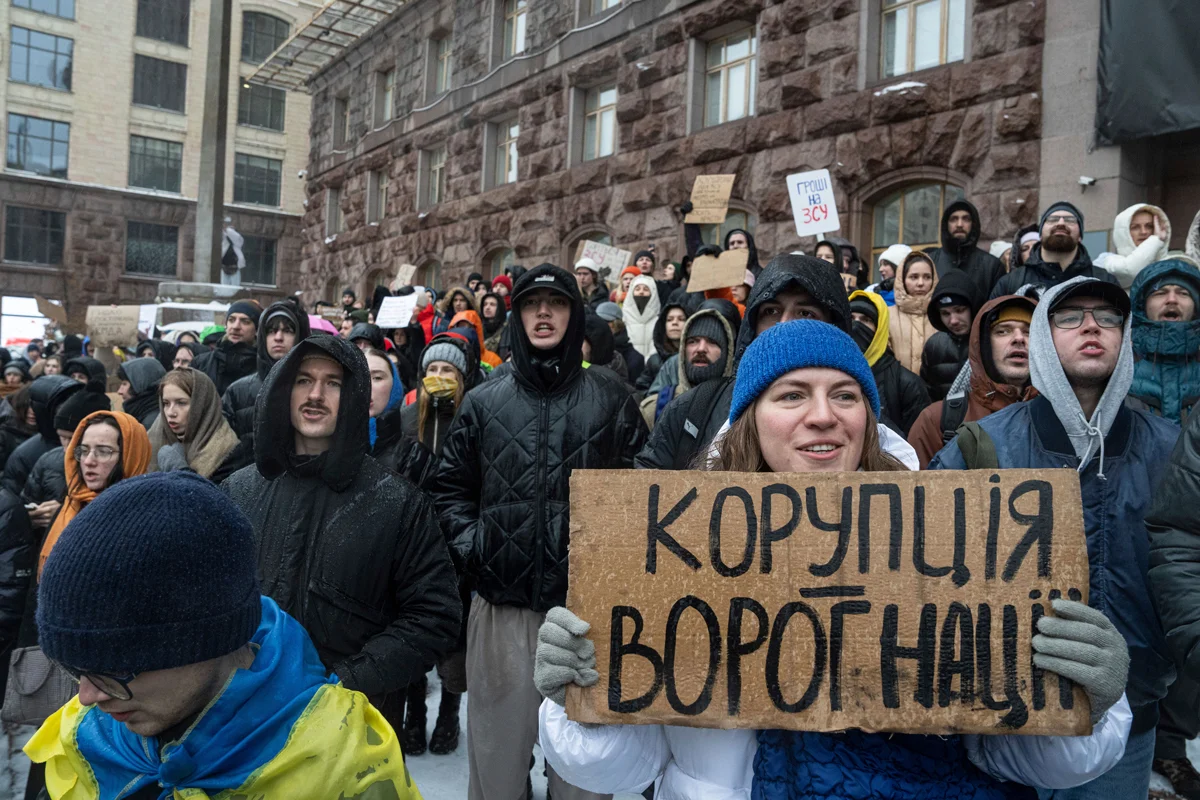
The Ukrainians themselves, as stated in the Vox Ukraine study , are most awaiting in 2025 to real anti -corruption reforms. According to Transparency International, Ukraine “lost a little position in the anti -corruption struggle” last year, since only “formally approached many reforms” or consciously achieved “slipping into their implementation”.
On this subject, as one of the key, a member of the European Parliament, chairman of the cooperation committee of Ukraine-EU Pekka Torovy (Finland) drew attention in a conversation with Novo-Europe. According to the Euro -deputy, opponents of Kyiv’s entry into the European Union use the topic of corruption as an argument against expansion, but it is necessary to admit that “Ukraine has already done a lot”: “Given the continued war for survival and permanent shelling, it was still able to change the law, improve the system of justice, reform the prosecution authorities and the criminal investigation.”
Following this, Pekka Tomoi called “the main advantage of Ukrainian partners, their willingness to discuss such topics”:
“There are countries in which corruption also exists, but when trying to talk about this, they immediately begin to defend themselves, become aggressive, the dialogue is impossible. And Ukrainian colleagues admit: yes, we have this problem. Such an approach is already a lot in itself. ”
In turn, an analyst from the Stockholm Center of Eastern European Studies (SCEEUS) at the Swedish Institute of International Relations Clara Lindstraem in a conversation with New Evrope drew attention to the fact that “the success of European integration of Ukraine depends on the institutional transformation and change of political culture” of Ukraine and this cannot be achieved quickly. The expert explained that "we are talking about the need to strengthen state institutions, more independence of the secondary managerial level and increase the accountability of politicians." In these aspects, Clara Lindstraem admits, "Ukraine is far from readiness to enter."
At the same time, in general, according to her, "the total scale and pace of reforms carried out within the framework of European integration, despite the fact that the country protects itself in the war for its existence, cannot but impress."
In addition, from a practical point of view, a lot of efforts will require, for example, to bring the agrarian and food products of Ukraine in accordance with the strict EU standards. This was announced by the head of the Center for Economic Research by Oeconomus (Hungary) Anton Bendarzhevsky . According to him, Ukrainian enterprises will have to engage in the modernization of their equipment, which "will require very large costs." And where to get money for this in the conditions of war or post -war recovery is not clear.
Bonuses and costs
In addition to the manifestation of solidarity with Kiev in the continuing war, the EU’s desire to accept in their members of Ukraine is also based on potential benefits for unification. Tony Blara British Analytical Institute classifies them:
The highly developed technological sector of Ukraine, which continues to grow, despite the war;
educated and qualified Ukrainian labor, so necessary now EU;
the largest agrarian production in the world, so that the accession of Ukraine to the EU will help strengthen food security in Europe;
Natural gas reserves in Ukraine, which can help transform the EU energy market.
In addition, Ukraine is “a large military power that can strengthen the defense potential of the EC”, which is extremely important in the conditions of “an increasingly unstable and hostile geopolitical situation”.
Beijing Torovi, who previously headed the Department of Intelligence of the General Staff of Finland, in a conversation from Novo-Europe drew special attention to the last aspect:
“In order to survive in an unstable world, the EU should become stronger both in economic and military terms, and Ukraine can offer a lot: it has a large economy, many natural resources, excellent agriculture, as well as the largest army in Europe - the most experienced, hardened in battles, with excellent opportunities.”
However, all these benefits, as well as the success of Ukraine in the reform of the law, are not a guarantee of the adoption of the country in the EU. There are factors officially not prescribed in the documents, but which cannot be ignored.
The main one is the continuing war. Anton Bendarzhevsky notes that “the quick provision of the status of a candidate has become an important gesture”, but “Western leaders mainly proceeded from the assumption that the war will end in the foreseeable future and that with the support of the West of Ukraine, either the aggressor is suppressed from its territory, or at least a certain compromise world will achieve.” Until neither one nor the other has happened. Other experts are also sure that even such an option as freezing the conflict will not allow Kiev to join the EU.
A lot of questions are caused by a financial factor. Brookings Institute calculated what to expect in the case of the EU expanding at the expense of current candidates - Albania, Bosnia and Herzegovina, Georgia, Moldova, North Macedonia, Serbia, Ukraine and Montenegro (another formal candidate - Turkey - was not taken into account, since the prospects for its accession are not visible). After this pool of participants, a large -scale redistribution of the flows of financial assistance to “lagging” from pan -European funds will occur.
Если считать, что бюджет фондов не изменится, то получится следующее: Украина будет претендовать на 41,7% от общего объема средств. Среди стран Западной Европы лишь Греция и Португалия будут получать от ЕС больше, чем вносить в общеевропейский бюджет. Эстония, Словения, Чехия, Венгрия, Польша и еще целый ряд стран постепенно станут донорами финансовой помощи, а не ее крупными адресатами. Среди прочего произойдет и сильное перераспределение субсидий в рамках Единой сельскохозяйственной политики ЕС.
Наконец, третий важный фактор — опасения насчет того, что ЕС, для которого ключевым является принцип консенсуса, с присоединением Украины и некоторых других государств-кандидатов окончательно перестанет быть управляемым.
По словам Антона Бендаржевского, уже сейчас с этим есть серьезные проблемы: «Экономические интересы, скажем, Португалии и Испании очень сильно отличаются от интересов Венгрии и Румынии. И отношение к проблемам безопасности в Польше одно, а во Франции — совсем другое». Дальнейшее расширение ЕС, как считает эксперт, вообще может завести Евросоюз в тупик.
Причина в том, что большинство решений в Совете ЕС принимаются консенсусом. И уже сейчас такие страны, как Франция и Германия, добиваются расширения возможностей принятия решений квалифицированным большинством голосов. Кроме того, не исключен вариант постепенной трансформации ЕС в «многоуровневую структуру», в рамках которой страны будут создавать неформальные коалиции по тем или иным вопросам. Подобные возможности уже сейчас прописаны в законодательстве ЕС и могут применяться в случае, когда «становится ясно, что ЕС в целом не может достичь целей сотрудничества [по конкретной теме] в разумные сроки».
Не только Орбан
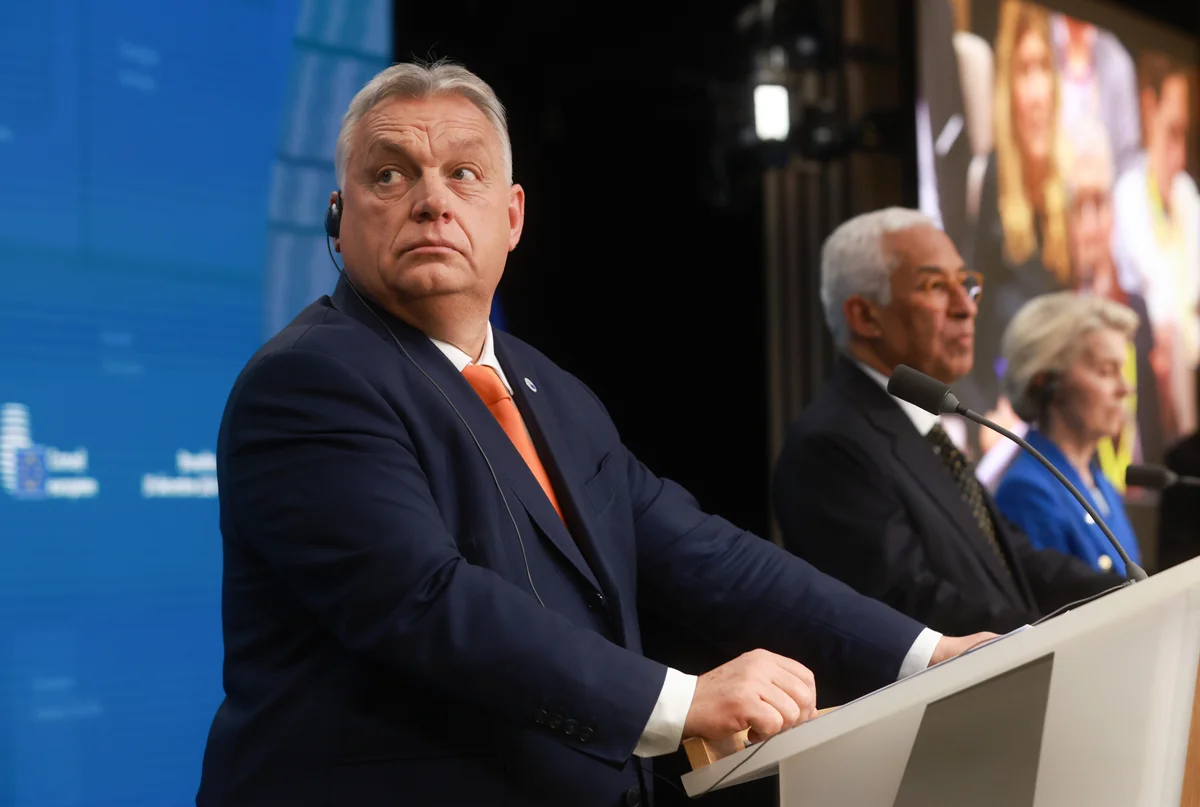
В последние годы главным доказательством того, что подходы к принципу консенсуса надо пересматривать, считается позиция венгерского премьера Виктора Орбана. Но в действительности вопрос о принятии Украины в состав ЕС уже поднял на поверхность и еще поднимет немало других конфликтов.
Сам Орбан перед принятием решения о предоставлении Киеву кандидатского статуса вел изнурительный торг с остальными членами ЕС и в итоге не стал идти против всех. То же самое было и летом 2024 года перед запуском переговоров. В феврале этого года Будапешт выступил против открытия кластера «Основы», выдвинув дополнительные условия, касающиеся защиты венгерского меньшинства в Украине.
Но, по мнению Клары Линдстрём, «хотя тактика обмена уступками работала в прошлом, сейчас ее эффективность сомнительна, ведь украинская тема стала ключевым элементом внутриполитической стратегии Орбана».
По словам собеседницы «Новой-Европа», сегодня «позиция Орбана не связана с содержательной критикой» действий украинских властей: речь идет об одном из ключевых элементов противостояния внутри Венгрии оппозиционному лидеру Петеру Мадьяру .
Наиболее действенным механизмом сдерживания влияния Орбана Клара Линдстрём считает процедуру по статьям 7.2 и 7.3 Договора о ЕС , позволяющую на время лишить страну-члена права голоса. «Начало официального обсуждения этой меры в Совете ЕС по предложению одной трети государств-членов стало бы важным сигналом Будапешту: деструктивное поведение не останется без последствий», — уверена эксперт.
Впрочем, Пекка Товери обратил внимание на то, что уже в 2026 году в Венгрии пройдут выборы, и победа партии Орбана совсем не гарантирована. Более того, европарламентарий пояснил «Новой-Европа», что правила ЕС требуют консенсуса только для начала переговоров о евроинтеграции (этот этап был пройден год назад) и в финале, а отдельные переговорные главы можно открывать и закрывать большинством голосов. «Поэтому мы [члены Европарламента] должны оказывать давление на Евросовет и Еврокомиссию, чтобы они придерживались собственных правил и процесс евроинтеграции Украины продолжался. Кроме того, мы должны пытаться влиять на те страны, которые стремятся саботировать интересы ЕС», — заявил он.
Антон Бендаржевский уверен, что множественное число тут не случайно, так как дело совсем не только в Орбане: «На практике европейские страны лишь говорят о расширении, в том числе за счет балканских стран, но де-факто тянут время». Одна из причин — множественные конфликты на двустороннем уровне.
К примеру, София требует от Северной Македонии защиты болгарского меньшинства. А между Киевом с одной стороны и Венгрией, Румынией, Словакией и Польшей — с другой, по словам собеседника «Новой-Европа», стоят вопросы национальных меньшинств, торговых конфликтов и исторических травм. «Власти многих стран уверены: нельзя принимать Украину, особенно в ускоренном порядке, пока не решены эти проблемы, не найдены ответы на финансово-экономические вызовы и не наведен порядок в плане процедур принятия решения», — утверждает Бендаржевский.
Развивая тезис о том, что далеко не всё упирается в Орбана, он приводит в пример референдум об утверждении Соглашения об ассоциации, проведенный в Нидерландах в 2016 году. Евроскептики тогда собрали нужное число подписей для организации голосования, которое обернулось провалом сторонников документа, где и речи не шло о членстве в ЕС. Спасло только то, что референдум был консультативный. Между тем, реагируя на настроения в народе, власти королевства добились от остальных членов ЕС принятия отдельного документа, где особо оговаривалось: Соглашение об ассоциации ни в коем случае не значит, что Украина в перспективе войдет в ЕС.
В результате Антон Бендаржевский предсказывает: если Украина и войдет в ЕС, то точно не к 2030 году. Более реалистично, по его словам, ставить целью 2040 год. А вот Клара Линдстрём и Пекка Товери уверены, что 2030 год — «цель амбициозная, но достижимая».
Точечная интеграция
Сторонники евроинтеграции Украины, рассматривая все опасения представителей противоположного лагеря, находят немало контраргументов. Так, в докладе SCEEUS «Развенчание мифов: социальные и экономические последствия вступления Украины в ЕС», одним из авторов которого была Клара Линдстрём, говорится: нагрузку на общеевропейский бюджет можно снизить, используя прописанные в действующем законодательстве «ограничители».
Например, когда в 1986 году к ЕС (тогда — Европейскому экономическому сообществу) присоединилась Испания, ее фермерам не сразу предоставили доступ к субсидиям в рамках Общей сельскохозяйственной политики, и такой переходный период можно установить и для Украины. Точно так же можно было бы ввести временные ограничения для защиты рынков труда и систем соцобеспечения стран — членов ЕС. Что же касается расходов на интеграцию Украины, то они, как утверждают в SCEEUS, «не станут бюджетной катастрофой, так как действующие правила политики сплочения ЕС ограничивают объем средств, на которые Украина имеет право».
Но, учитывая всю сложность процесса интеграции, эксперты уже сейчас отмечают, что необходимо задуматься над его поэтапностью. В частности, по словам Клары Линдстрём, речь может идти о включении Украины в институты общей внешней и оборонной политики (CFSP).
Например, Киеву можно было бы давать право голоса на общеевропейском уровне в тех сферах, где он уже «четко выполняет обязательства, предусмотренные членством», — с таким предложением ранее выступил Эндрю Дафф из Европейского центра политики, особо упомянувший внешнюю и оборонную политику, а также сферу безопасности.
Кроме того, продолжает Клара Линдстрём, полезной была бы интеграция Украины «в отдельные сегменты внутреннего рынка ЕС». Прорывом на этом направлении могло бы стать присоединение Киева к Европейской экономической зоне (ЕЭЗ), гарантирующее свободу перемещения людей, товаров, услуг и капитала. Схема «ЕЭЗ без членства в ЕС» давно опробована на Норвегии, Исландии и Лихтенштейне и доказала, что выгодна всем вовлеченным сторонам.
Такие шаги по крайней мере частично компенсировали бы Киеву, вероятно, всё-таки более длительное ожидание членства, чем это кажется оптимистично настроенным европейским политикам и самим украинским властям.