
Translated material
Law on local self -government: who is now responsible for our villages
On June 19, 2025, the law on local self -government enters into force. We decided to figure out what kind of law it is and how it will affect everyday life in the Komi Republic.
The text of the reform itself is written in a very complex language - as many as 316 pages of legal formulations. Therefore, the experts and I read them all to tell you that it will change in the republic after the adoption of the law.
In short: now the villages and villages will not be able to choose the chapter themselves and decide how to spend a local budget. All decisions will be made from the district center. This means that if you have a club repairs in the village of Stoth on the road, it will be more difficult for you to achieve a solution. Power will become even further from people and will even less understand what is happening in the field.
The bill on the reform of local self -government was introduced back in 2021 by Andrei Klishas and Pavel Krasheninnikov. In January 2022, he was adopted in the first reading.
Even then, politicians and activists made attempts to preserve the rural municipal level. They initiated appeals to the State Duma from village councils, which expressed disagreement with the reform. As a justification of objections, they indicated the inconsistency of the bill by the provisions of the European Charter of Local Self -Government and the legal positions of the Constitutional Court. First, mass resistance, and then a full -scale invasion of Ukraine, was inhibited by the adoption of the law .
The second and third readings were held in 2025. The law was finally adopted on March 5, and on March 20, 2025, the law was signed by Vladimir Putin. 90 days after the official publication - June 19, 2025, the law entered into force.
Key changes
The authors proposed to give the governor the authority to offer candidates, from which the representative body of the municipality will choose its head. It is also supposed to provide the governor with the right to reprimand the mayor for improper performance of duties and remove him from office.
This raises questions, since the mayor is not a municipal employee , but a political figure chosen by citizens. Such posts have no disciplinary liability in the form of reprimands and comments. This is applicable to officials, but not to elected persons.
The key change stipulated in the already adopted law is the transition from the two -level system (urban and rural settlements - urban and municipal districts) to a single -level with the elimination of the settlement level. This step is explained by the need to implement the concept of a “unified system of public power” , enshrined in an updated constitution .
Initially, the Constitution of the Russian Federation provided for local self -government in urban and rural settlements, but in 2020 the settlement level was excluded from the text of the Basic Law, which already raised issues .
Even after the first reading of the bill, some regions, especially Tatarstan, opposed the reform , arguing that the settlement level plays an important role in managing and monitoring political processes. In November 2024 , 59 amendments and additions to the bill were prepared in the State Council of the Republic of Tatarstan, 25 of them in support of the preservation of the two -level system of local self -government.
And already in the second reading, an amendment was adopted, according to which the regions remains the right to decide whether to save a two -level system or switch to a single -level one.
Some regions said that they would not switch to a single-level system, among them: Tatarstan, Bashkortostan, Mordovia, Sverdlovsk, Chelyabinsk, Voronezh, Lipetsk, Rostov, Saratov regions, as well as Kabardino-Balkaria, Karachay-Cherkessia, Adygea, Altai, Kalmykia, Sakha (Yakutia), Chechnya and Nenetsky Autonomous district.
What are the plans of Komi?
In regions where the two -level system will be abolished, the authors of the reform propose to compensate for this by the creation of territorial bodies with enlarged municipalities, which will actually perform the functions of local administrations. The main difference is that if the head of the rural settlement is now elected, and the village council forms a local budget, then after the reform these powers will disappear. There are exceptions: in some cases, local deputies elect the head of the rural settlement.
Previously, despite the lack of a federal law, directly abolishing the settlement level, the authorities used a different approach. Municipal areas independently made decisions on transformation into municipal districts. Thus, the lower level of self -government was actually eliminated, and its functions were redistributed to higher municipalities - municipal districts.
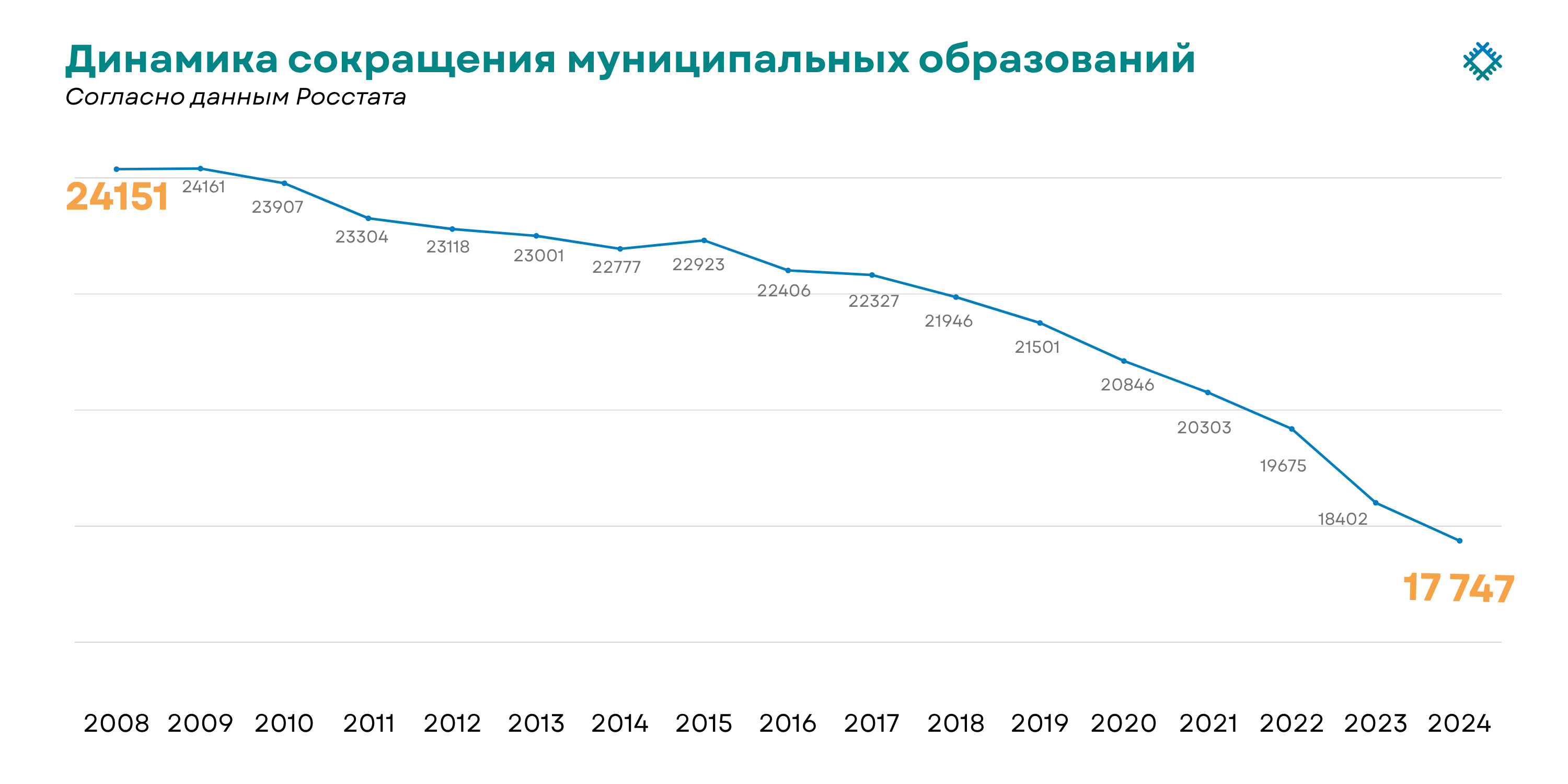
Such a process began for a long time, in particular, in the Moscow region, and gradually spread to other regions, including the Komi Republic.
In order for the municipality to be considered a city district, it must comply with several criteria, such as the population and the degree of urbanization. Because of this, many urban districts, such as Vorkuta, Ukhta and others, were transformed into municipal districts. Now only Syktyvkar remains in the republic of the urban district.
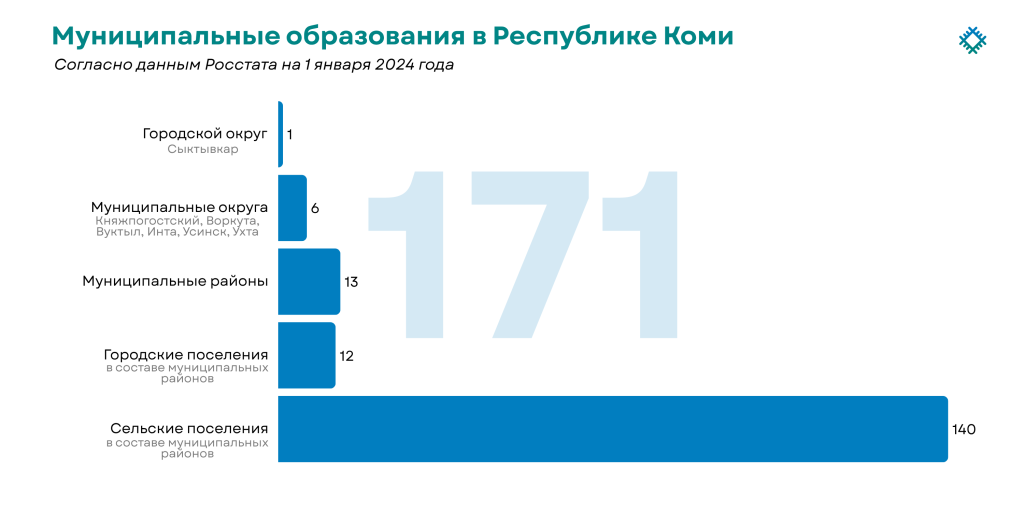
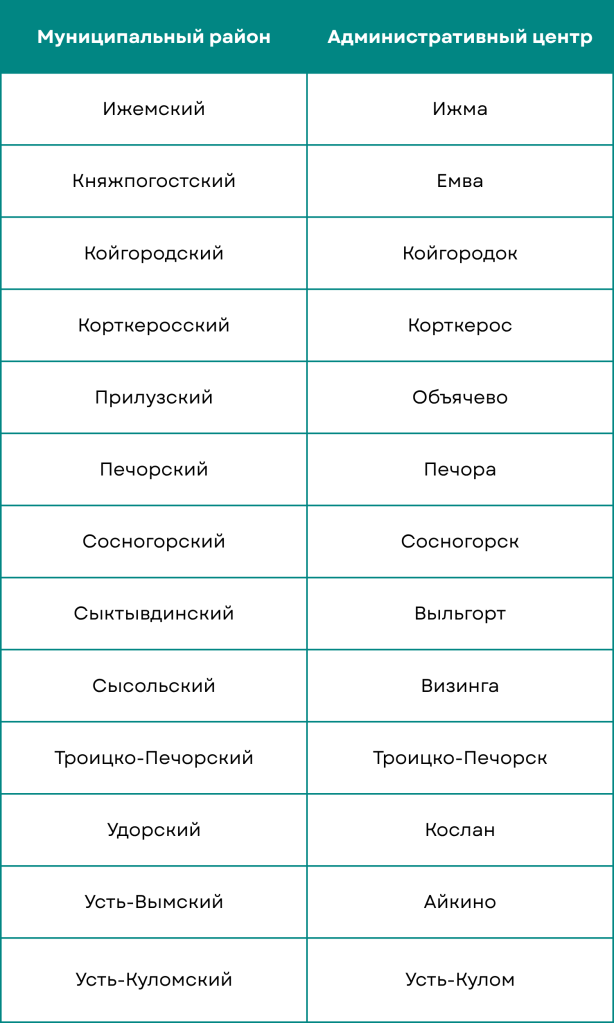
This transformation itself is not a problem, since the powers of the city district, the municipal district and the municipal district are almost identical. The main question is that if in the Moscow region such changes do not cause difficulties, then in the Komi Republic, due to its vast territory, access to power for residents of remote villages will be much more complicated.
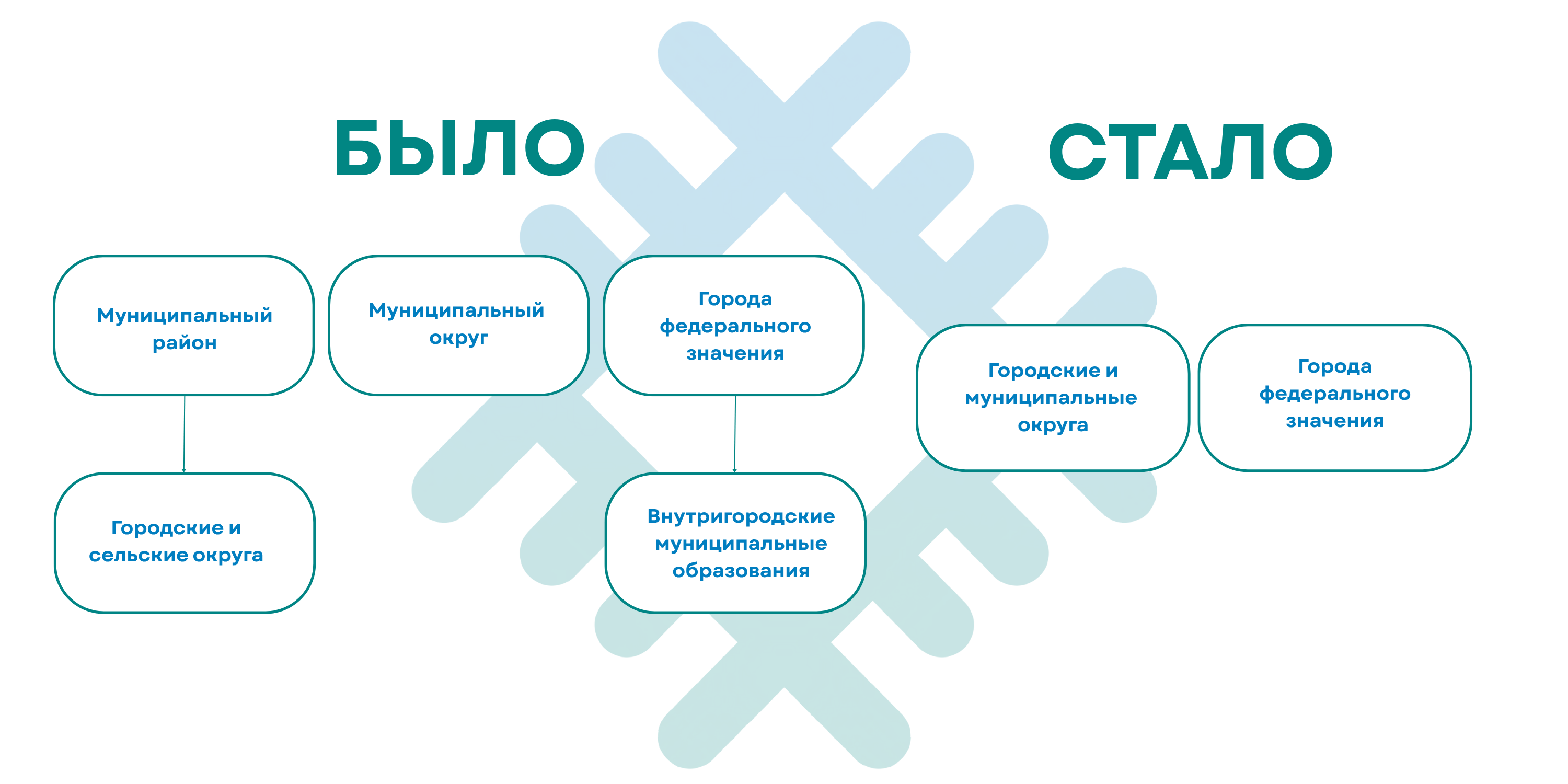
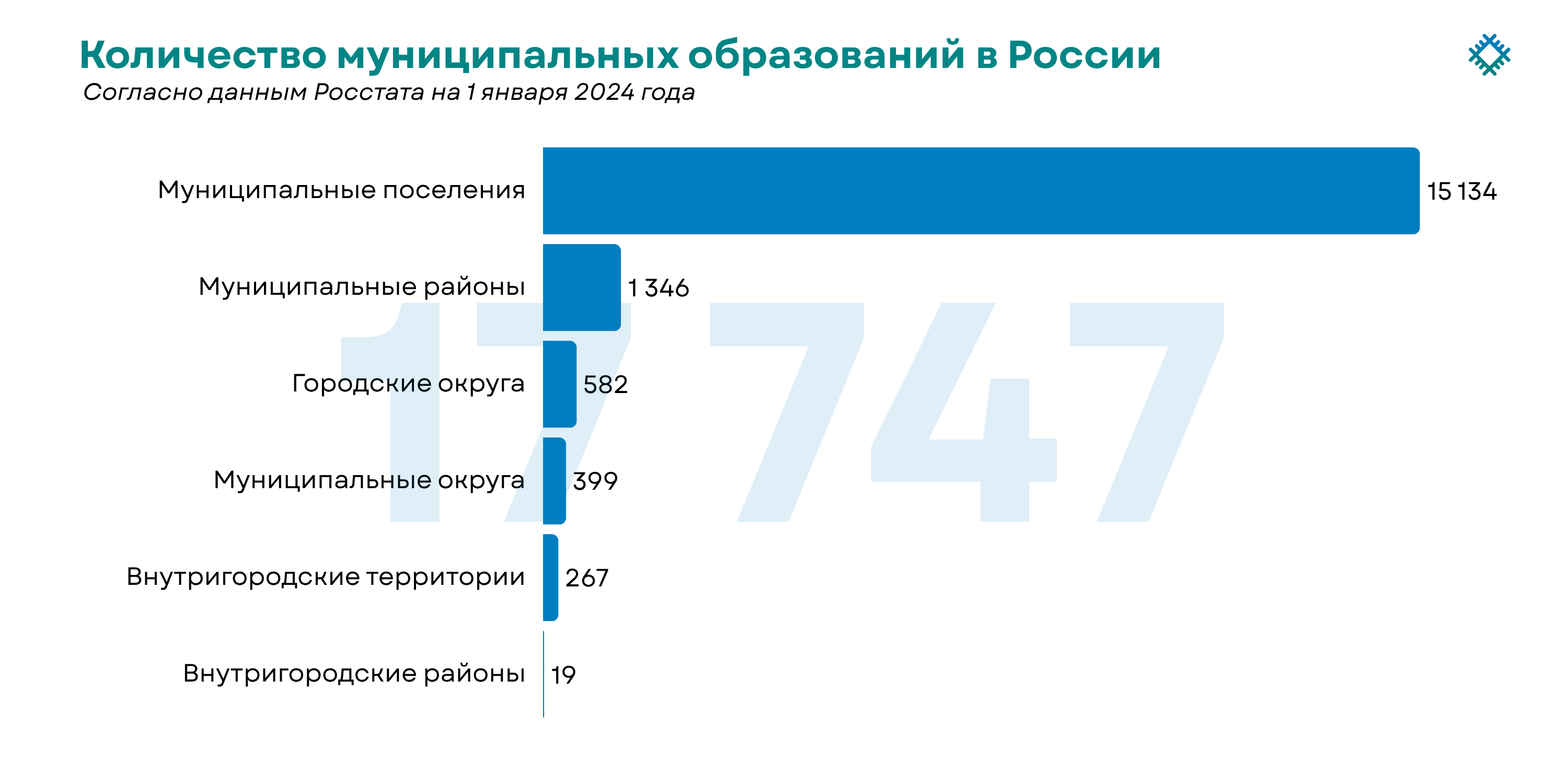
- Municipal areas -administrative-territorial units that are divided into smaller municipalities:
- City settlements are municipalities created to manage cities or their units (for example, rural areas of the city). These are administrative units within the municipal district.
- Rural settlements - municipalities created to manage rural settlements. These are also administrative units within the municipal district.
- Inter -settlement territories are territories that can form in sparsely populated places, for example, in areas with a low population density. These territories do not include specific settlements, but are zones that do not fall under the classification of urban or rural settlements.
- City districts are territorial units, including cities and adjacent settlements. Within the framework of such districts, there are no other municipalities (except for intracity districts in cities with intracity division).
- Municipal districts - introduced since May 2019. This is a form of a municipal device that is used for large territories that can include both cities and rural settlements.
- Cities of federal significance are such cities, such as Moscow or St. Petersburg. They are divided into intracity municipalities (intracity municipal territories). This means that inside the city there are separate administrative units that control its parts.
Although local self -government is an independent institution, it functions within the framework of the state system, which means the obligation to take into account the interests of federal and regional authorities. But in this case, the wording of the “unified system of public power” is used to justify reforms that will lead to even more subordination of the municipal power of the federal.
According to the text of the new law, instead of the budget, an estimate or a plan of financial and economic activities will appear, and the head of the administration will be appointed from the district center and obey it, excluding the participation of local residents in management.
The abolition of settlements will also become easier: if earlier it was required to eliminate the municipality, now it is enough to close only its representative office, and the settlement will cease to exist as an administrative unit.
The liquidation of settlements itself is not something negative, since the economy and structure of the resettlement are changing. In a number of regions, agriculture gives way to urbanized forms of management. However, with the planned economy of the USSR, such rural territories could be subsidized, and in modern market conditions this becomes impossible. The Republic of Komi has always been considered a zone of risky agriculture, which makes agriculture in the region especially complicated and costly.
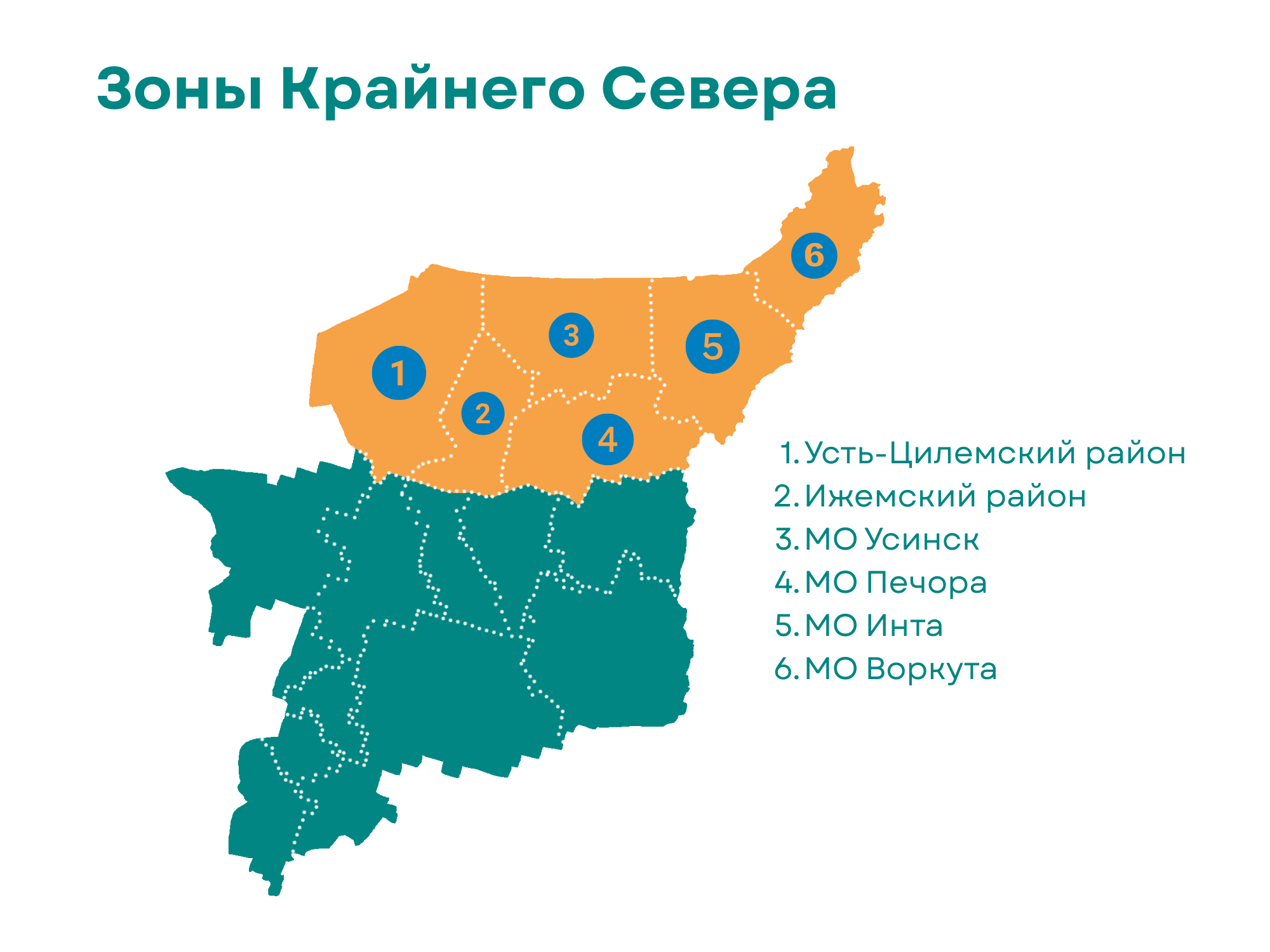
In addition, the content of small settlements from the point of view of the state is economically impractical. Even if only a few people live in the village or village, it is necessary to maintain infrastructure: power lines, roads, the possibility of calling emergency services. The Law on Local Self -government records the principle of “walking availability of power” , according to which the municipal division should be such that residents can reach the local administration during the day, and by the district center - by transport.
The text of the new law provides for an exception for hard -to -reach areas. In such areas, the requirements for pedestrian availability to the local administration and transport accessibility to the district center may not be applied if the distance to the administrative center exceeds one working day of the journey due to the features of the terrain, climate or insufficient infrastructure.
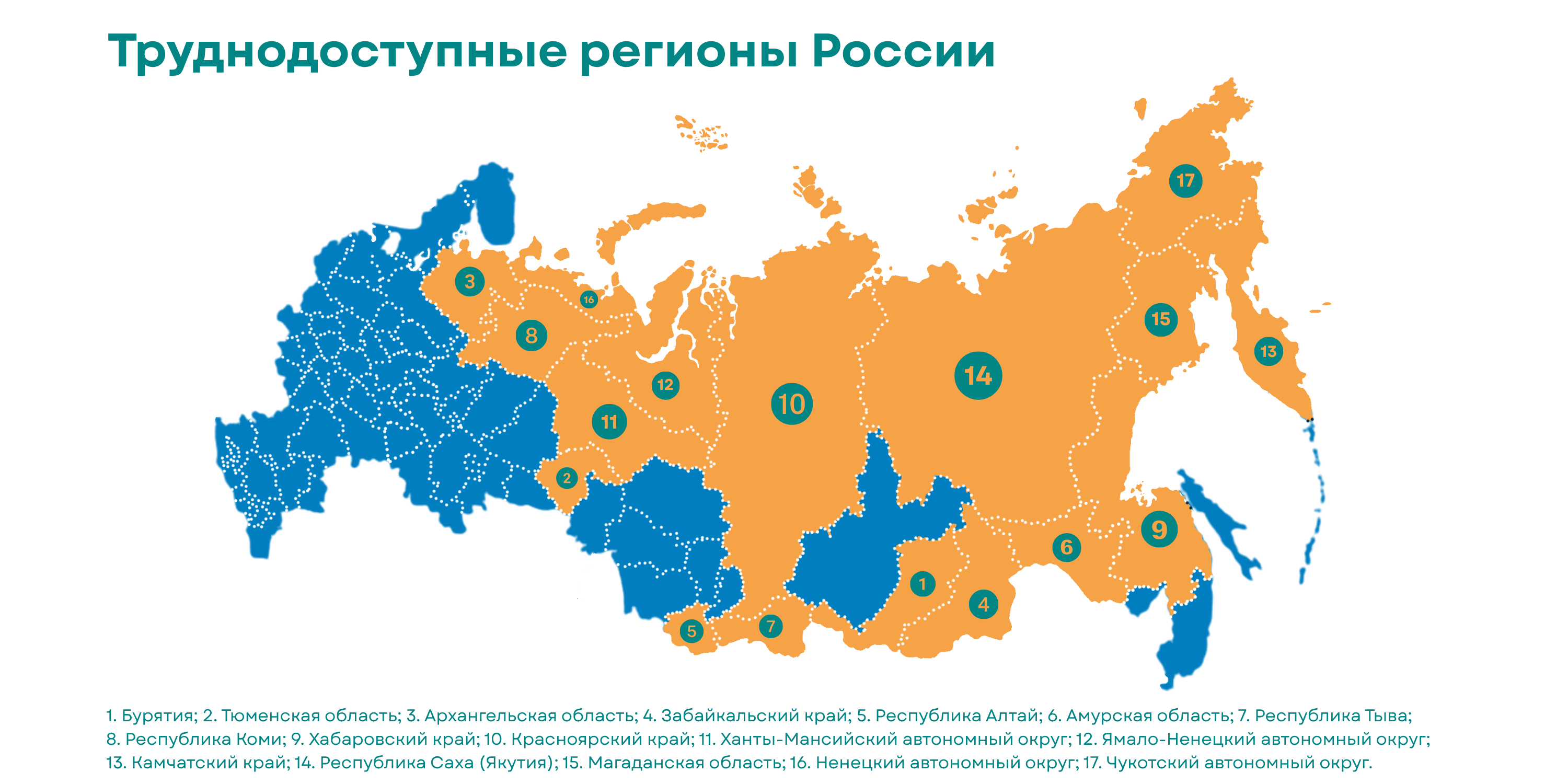
To solve this problem, it is proposed to endow the territorial bodies with additional powers. Already now, such powers can be carried out not only by the heads of administrations, but also by other authorized officials. In some villages, you can create remote jobs where representatives of the administration will be able to resolve issues of registering acts of civil status.
From the point of view of municipal management, this approach can be effective, but from a democratic point of view it raises great doubts. Democracy is not only about effectiveness, but also about compliance with the principles of citizens' participation in management.
Officials
The tendency to strengthen the role of technocrats in the political system has been observed for a long time. It is associated with the formation of a system of governors, which are perceived - both citizens and the federal center - as performers of KPI launched on top. As a result, their political independence is reduced, while the administrative center receives more and more powers.
In the early 2000s, regional leaders had significant independence, which was a threat to the federal center. In 2004, direct elections of governors were canceled and replaced by the appointment procedure on the proposal of the president and approval by regional parliaments. In 2012, direct elections formally returned , but already in 2013 the mechanism of “municipal filters” was adopted and a return to indirect order of election was allowed.
Some regions, such as Tatarstan, maintain relative independence thanks to sustainable political traditions and characteristics of domestic management. But most governors act strictly within the framework of indicators specified by the federal center.
The mayors found themselves in a particularly vulnerable position: their positions often become "shot." Regardless of political affiliation or managerial qualities, the heads of cities are often subject to pressure from law enforcement agencies.
The situation is aggravated by the fact that the power structures, in particular FSB, have excess resources with a shortage of real tasks. Structures intended to counteract serious threats are involved in political persecution.
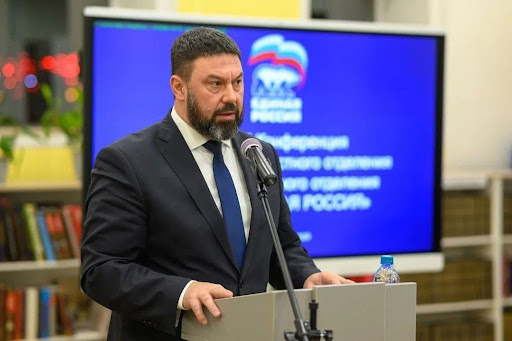
In addition, there is a problem of negative selection of personnel for mayor posts. Recent appointments to these positions in Komi demonstrate the lack of a professional approach. The former mayor of Vorkuta Yaroslav Shaposhnikov was previously the head of a small village with a population of a thousand people, and before that he worked in the police. During his stay in the post of head of the administration in Vorkuta, an accident occurred at treatment facilities, and his team, including Kirill Arabov , Alexander Litvinov and Yuri elephant , was involved in the scandal associated with drugs. As a result, in 2023, Shaposhnikov went to the war in Ukraine, and returning - he resigned.
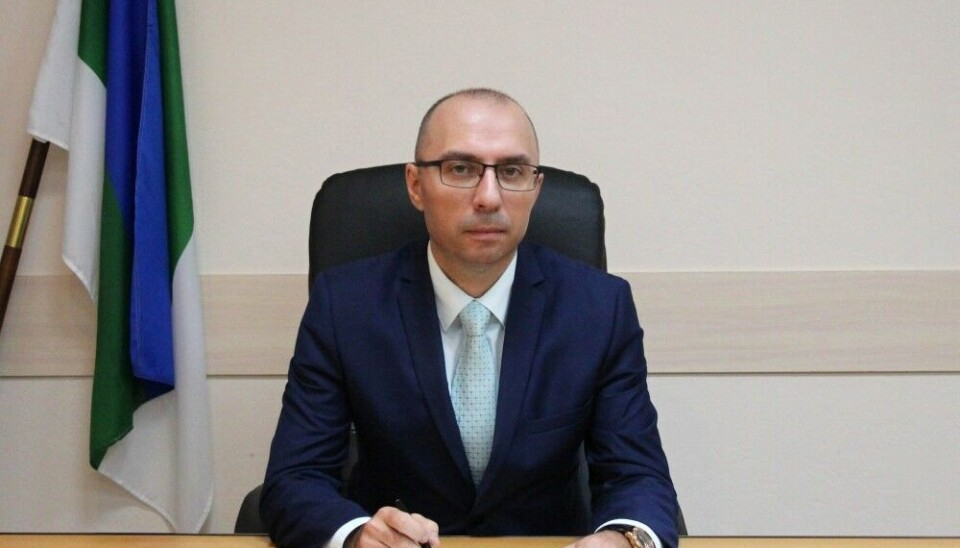
Another example is the former mayor of Pechora, Valery Serov. Earlier, he headed the local branch of the FSB, and on September 30, 2023 he was detained on charges of receiving a bribe on an especially large scale. Serov was arrested the day before the planned departure to Ukraine for a contract service. His deputy Andrei Kanishchev is also accused of abuse of authority and receiving a bribe. In addition, he is a defendant in a criminal case of intentionally causing serious harm to health that caused death.
In many large cities, leading posts occupy the worst of the possible candidates. This is due to the fact that United Russia blocks bills on the return of direct mayor’s elections. Now formally the mayor is appointed by the competition, but in fact there is always one real candidate, and the rest only create the illusion of competition.
In 2025, the New People party proposed to return direct elections of mayors, but do not count that the "party of the majority" and this time will not block the bill. The direct elections of the mayors of regional capitals remained only in Yakutsk, Khabarovsk, Abakan and Anadyr.
Elections and municipal filters
The federal law on public authorities establishes a municipal filter for candidates within 5 to 10%. In the Komi Republic , a maximum threshold is set in 10% in both cases. Even in ideal conditions, when all deputies support the candidate with their signatures, it is impossible to nominate more than ten candidates. In addition, there is always a risk that the signature can be invalid if the deputy has previously signed up for another candidate.
Most municipalities are still completely controlled by United Russia. Consequently, it is she who decides who to provide signatures for passing the municipal filter, but to whom it is not.
Single -mandate electoral systems create advantages for the leading party. For example, a party that gained 30% of the vote can get all the mandates in the district, which will be absolutely legal within the framework of such a system.
As “United Russia” receives the majority, without taking advantage of real support, we wrote in our text “as an unpopular party owns the Komi Republic”.A proportional electoral system is a system in which the number of places in parliament or other representative bodies is distributed in proportion to the number of votes filed for various political parties or candidates. In this system, parties receive places depending on the share of the votes that they scored. If the party does not overcome the established threshold (for example, 5%), its voices can be redistributed between other parties that passed this threshold. This allows you to more accurately reflect the preferences of voters as a result of elections.
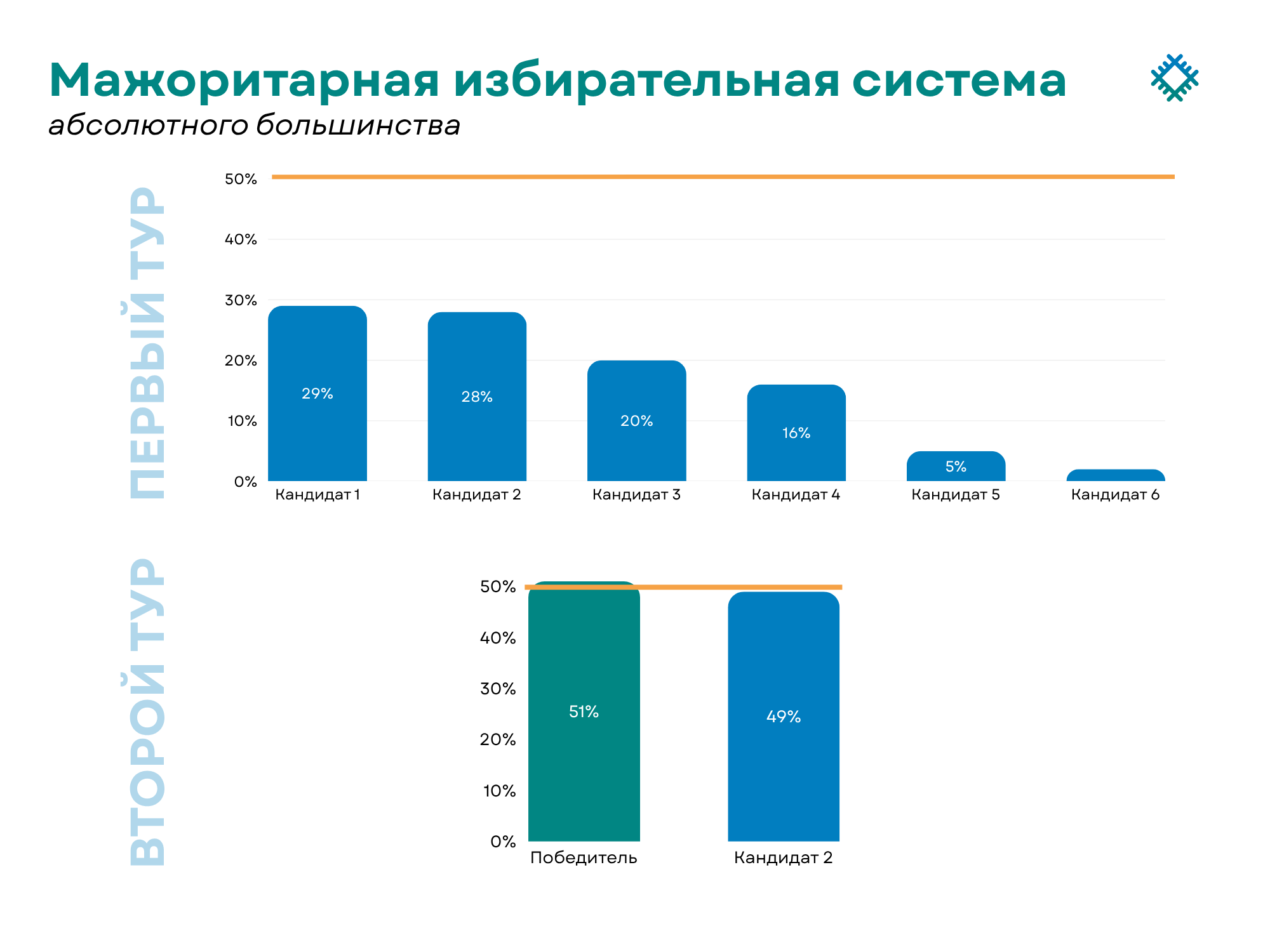
The majority system is considered fair only in the case of a two -test vote, when the threshold is set, for example, 50%, which the candidate must overcome for victory in the first round. If no candidate is gaining the required interest, a second round is held, where supporters of other candidates can unite and support one opposition contender.
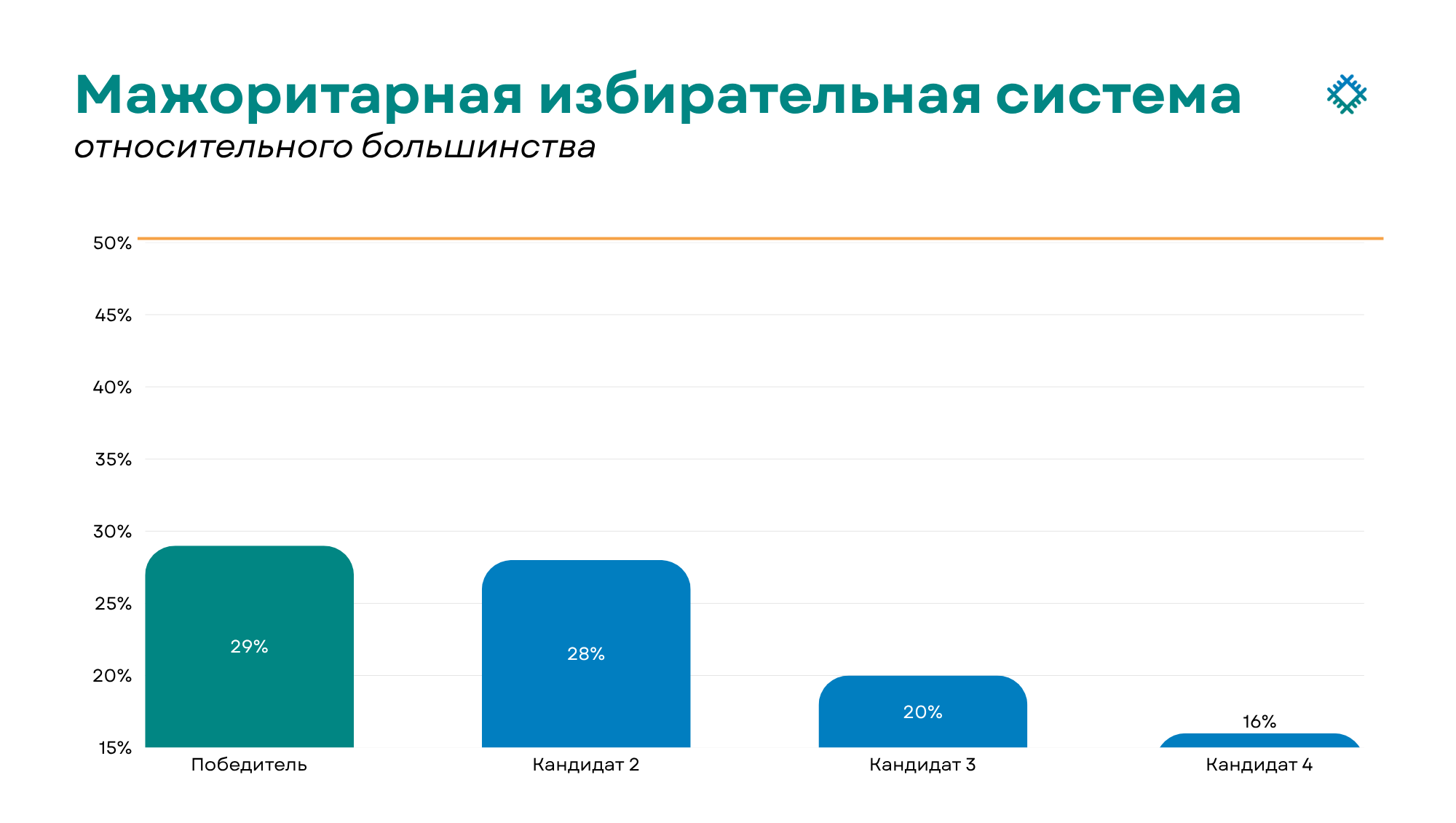
It would be much more democratic if our elections were held according to the two -Tour system. United Russia seeks to secure the vast majority of mandates through single -mandate elections. In such a system, even if the support of the party is mainly administrative, it can still get all the mandates.
How to influence what is happening to citizens?
It becomes more difficult for citizens to influence what is happening around, especially against the background of the ongoing reforms and the appointment of “effective managers” who focus on the implementation of the KPI specified by Moscow. Although sometimes the situation may change on issues insignificant for federal authorities. For example, speeches against the construction of glamping in Krasnaya Zaton near Syktyvkar were successful.
But the general trend causes discontent of citizens. For example, in the Altai Republic, shares are held against reform: on June 12, people blocked the track and went to pickets along it. Some protests were detained for the "organization of an inconsistent event."
The law on local self -government is a continuation of the power line for centralization. The Kremlin is afraid of spontaneous politicization points and reduces their number. The distance between citizens and those who should represent them are increasing: local problems in the village or village solve officials who do not have an idea about them. Людям становится сложнее решать личные вопросы, связанные с администрацией города или посёлка.
За обтекаемыми формулировками закона скрывается нежелание властей работать на благо граждан и страх перед гражданским обществом. Потому так важно объединяться на самом нижнем уровне, формировать связи с своими соседями, жителями своего города или села. В конце концов, единственным носителем власти в России всё ещё является её многонациональный народ.
