
Translated material
The legend of modern Turkish art and the former political prisoner Gulsun Karamustaf shows at the NO exhibition a children's military uniform
We talked with the artist about the similarity of Turkish and Russian militarism, imprisonment and the power of art
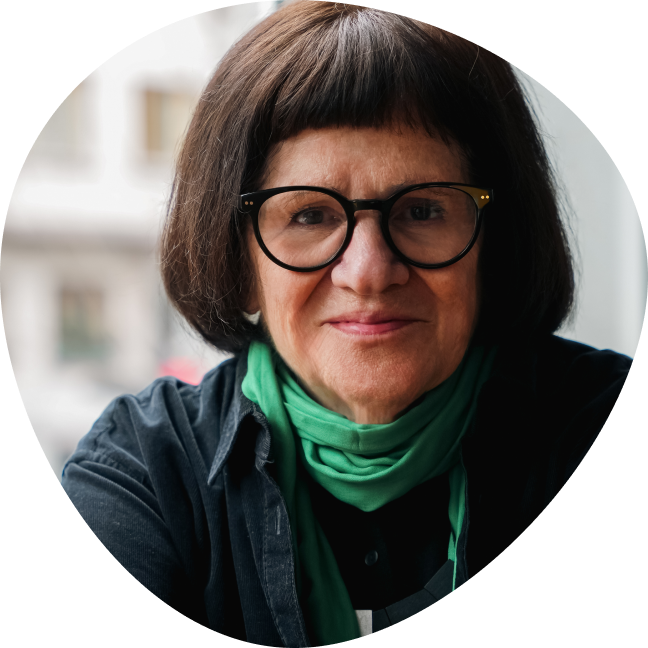
Gyulsun Karamustaf is one of the most famous living Turkish artists; There are her work in the collections of the London Tate Modern and the American Museum of Guggenheim, and in 2024 it represented Turkey at the Venetian Biennale.
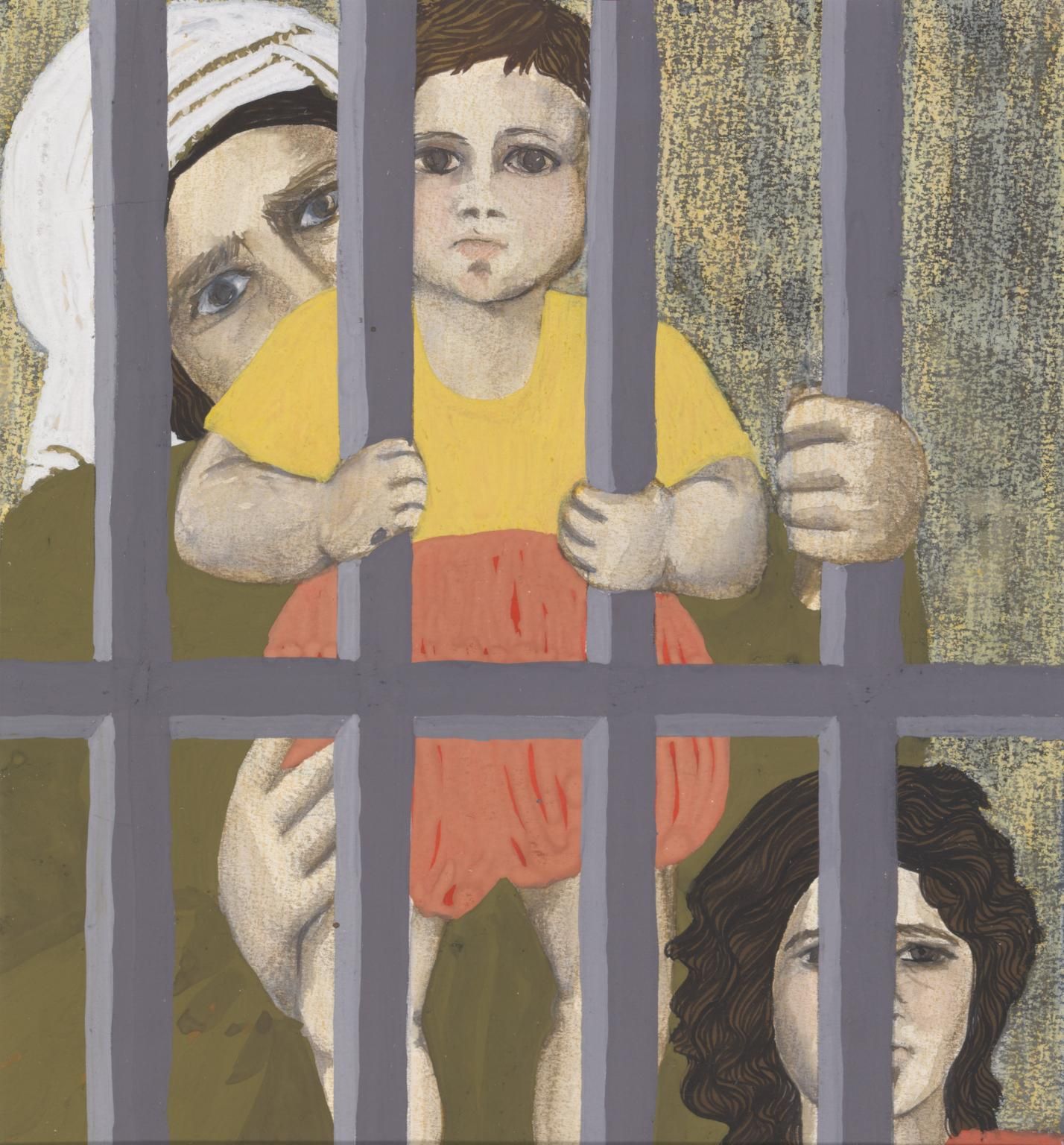
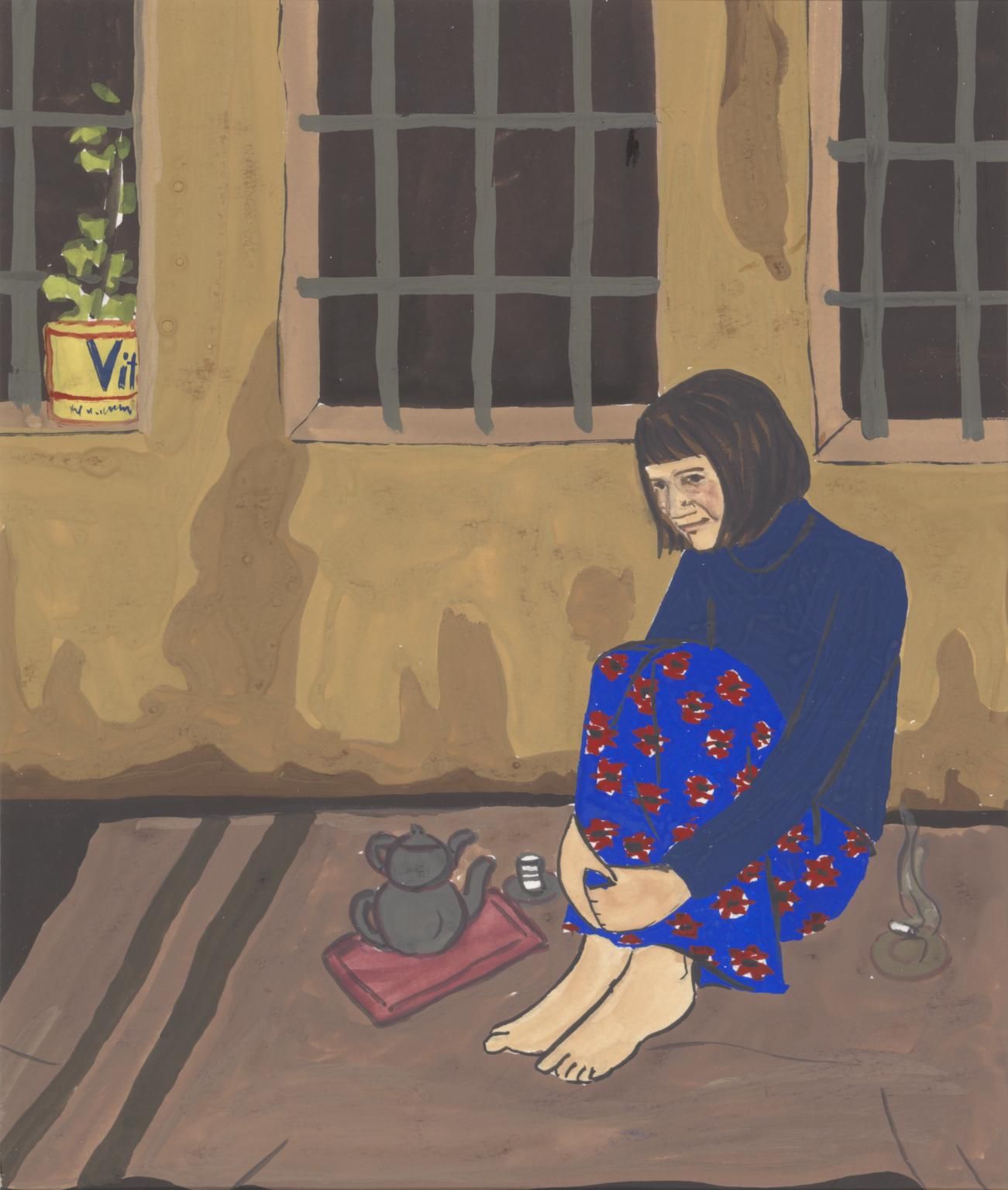
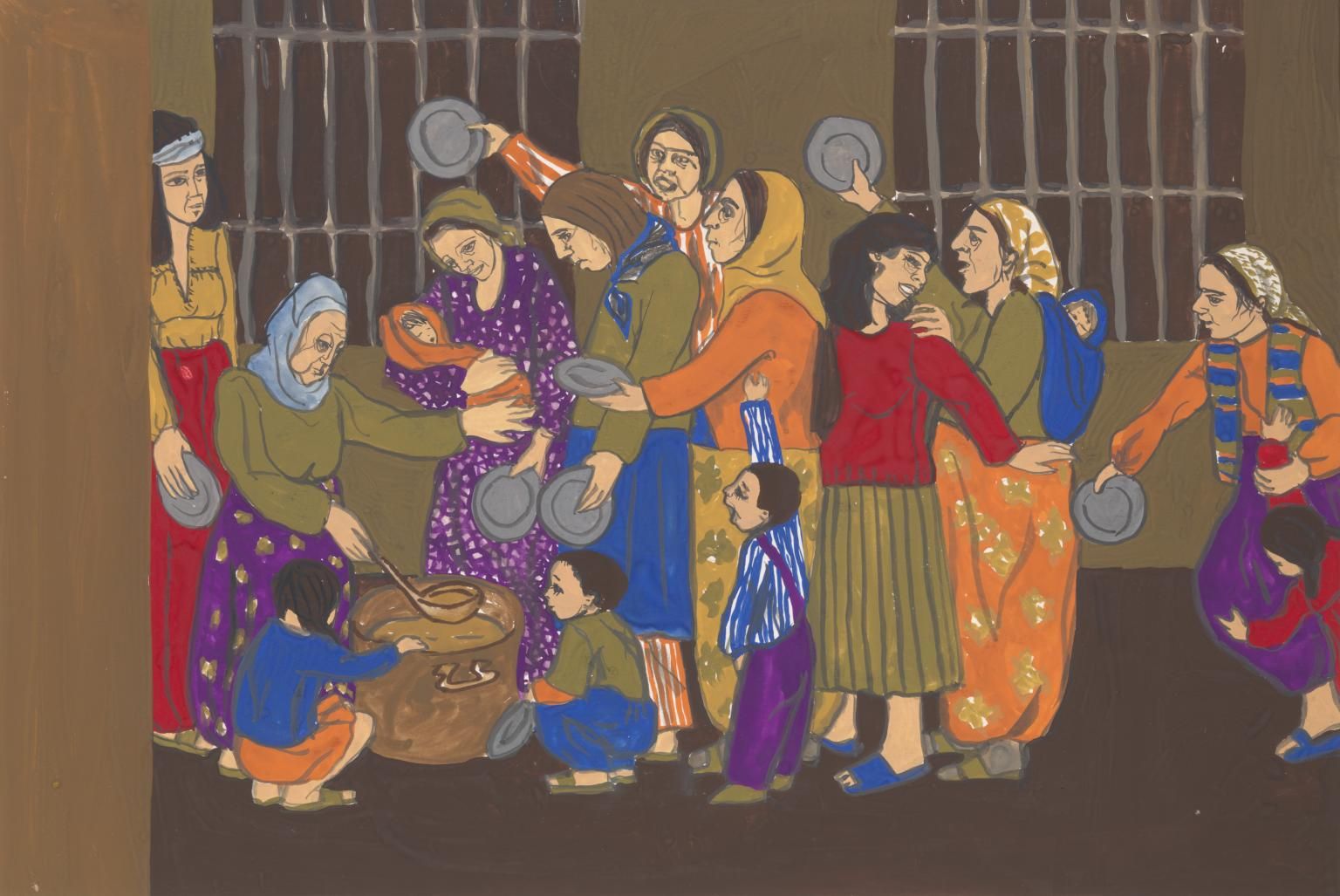
In the youth of Karamustaf and her husband Sadyk were political activists and faced persecution; In 1971, she was imprisoned for six months, and he was two and a half years old. The artist used this experience in the work on the cycle "Prison Pictures".
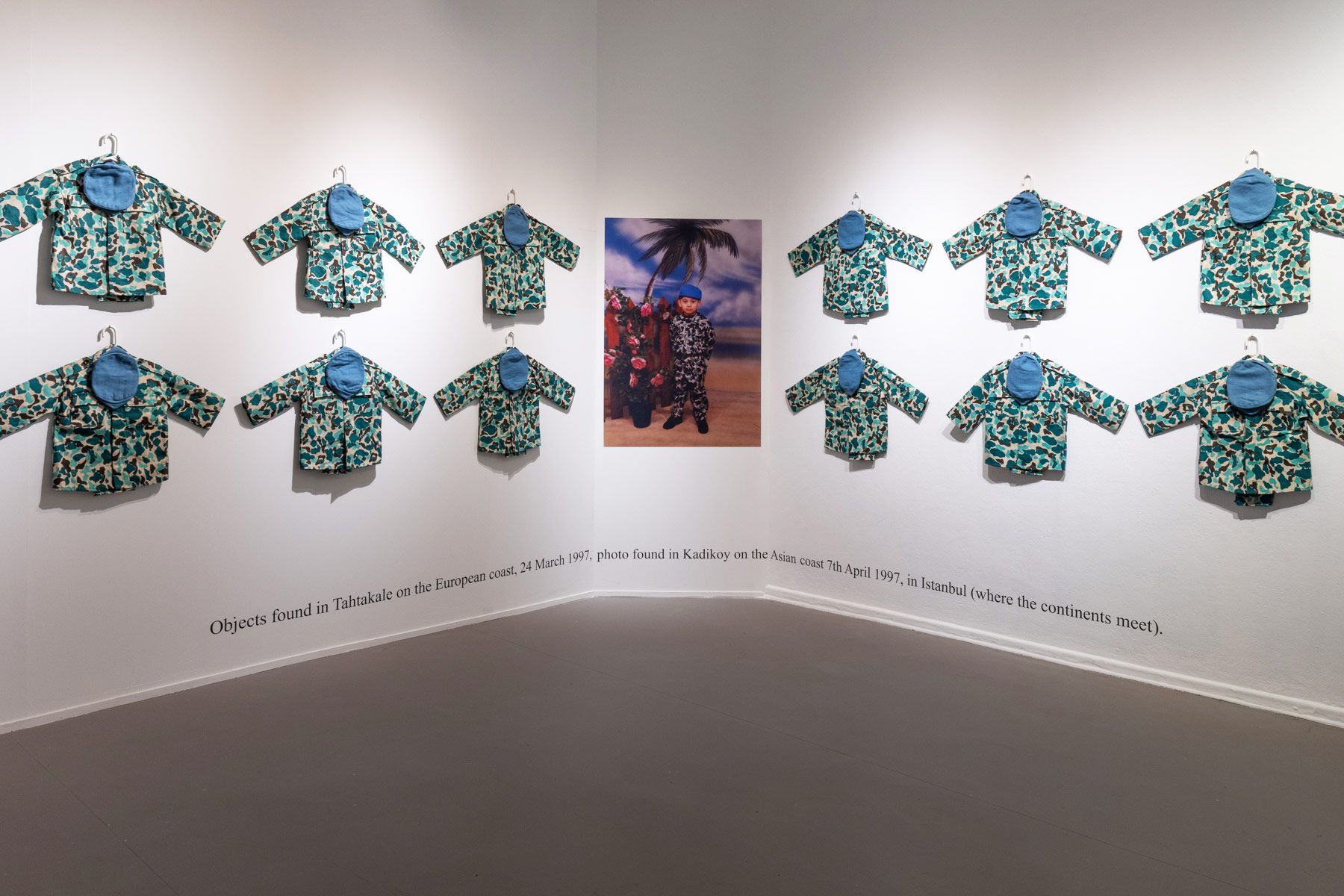
At the NO exhibition, which Medusa holds at Kunstraum Kreuzberg/Bethanien in Berlin, Karamustaf shows the installation of "where the continents are found." Its main component is a military uniform for children: in Turkey, as in Russia, there is a tradition for holidays to wear children in a soldier. Critic Anton Khitrov (aka Medusa editor and texts for the NO exhibition) asked the artist about Turkish militarism, imprisonment and work at the Biennale Venice.
- Perhaps our conversation will be read by Russian political prisoners or their relatives. Share your experience: how to survive the prison?
- I have not remembered this for a long time, but it is impossible to forget the prison. True, I spent only six months there - and not in prison for political prisoners, but in an ordinary prison in the city of Izmit. But my husband, who was imprisoned with me, spent two and a half years in prison for political. Having freed myself, I found myself in the status of a prisoner’s wife - and this is a separate unforgettable experience.
Perhaps the prison itself is not the worst. It is important what happens later. When you get out of prison, you are left alone. You have no work, no money. We felt restless, we did not have our own circle of communication, we did not need no one and became outcasts. After the prison, you want to return to normal life as soon as possible; Women immediately start children, and their life becomes even harder. In addition, the child sees your unstable situation - and this affects his future life.
I think in Russia people are faced with something like. In the seventies, we talked with those who took a prison in Argentina, Chile, Greece: everyone has the same thing.
- I was struck by the colors in your "prison paintings." Usually the prison is represented by gray.
- There is a lot of life. People bring life to everything. You still have to live, wherever you end. You come up with how to feed yourself, physically and intellectually, find what to love, whom to love. Not that you are sitting and suffering there all the time.
- You regularly visit Istanbul and Berlin, where several generations of emigrants from Turkey lives. I will ask you a question that, it seems to me, is relevant for some of our readers: these two communities hear each other?
- Don't think. Those who went to Germany in the sixties were expected to return home with money. Over time, they decided to stay and transport their families to Germany. At first it was impossible. But Berlin, devastated after the Second World War, needed the population, so the authorities allowed immigrants to reunite with their families.
When I taught in Europe, I had a lot of emigrant students from Turkey. All of them told the same story: the mother came to Berlin to her father, and there they gave birth to children. Third -generation Turkish immigrants have already completely integrated into the local environment. Nothing connects them with Turkey. They come there, but they are no longer accepted. For the Turks, they are wealthy foreigners, Germans who can afford that the Turks themselves can not afford. There are many books written by immigrants in Turkish about all this.
- How did the sphere of Turkish contemporary art change during your career?
- When [in 1969] I graduated from the Academy of Fine Arts, there were neither private galleries nor support from the state. Artists practically could not sell work and earn a living by art. In Istanbul, there was only one art-institution-the State Museum of Painting and Sculpture, which sometimes bought work. Some institution also could occasionally acquire a picture in order to hang on the wall. But the only reliable option after release was to get a drawing teacher somewhere. If you're lucky, you will be taken to the same Academy of Fine Arts or to the Academy of Applied Arts. If not, you will go to work in high school.
The situation changed only in the late eighties - early nineties. Istanbul Biennale, private galleries appeared. In Istanbul, foreign art began to be shown - including from Russia and other former socialists, which were previously hidden from us with an iron curtain. The artists had the opportunity to sell work, they felt more confident. However, we did not receive state support.
- You represented Turkey on the Venice Biennale in 2024. Your installation is "empty and broken. The state of the world ”is one of my most important impressions from the exhibition. How do you interpret this work yourself?
-Unfortunately, Biennale is so arranged that people look in a hurry, trying to catch as much as possible, and they can not always really feel the individual work. So, I think, I should really tell me about this installation in more detail.
I watched several disasters at once when I started working on the project. The Russian-Ukrainian war was already going on. I was on the Kyiv Biennale, I know the city, I was unbearable to see what was happening in Kyiv. More recently [in February 2023] there was an earthquake in Turkey, 50 thousand people died-not only because of a natural disaster, but also because of violations of construction standards. Then [in October 2023] the war in gas began. All this influenced my work.
In part, the plan for the installation is dictated by the site. This place is not innocent. Before becoming the territory of art, the Venetian arsenal produced weapons for centuries.
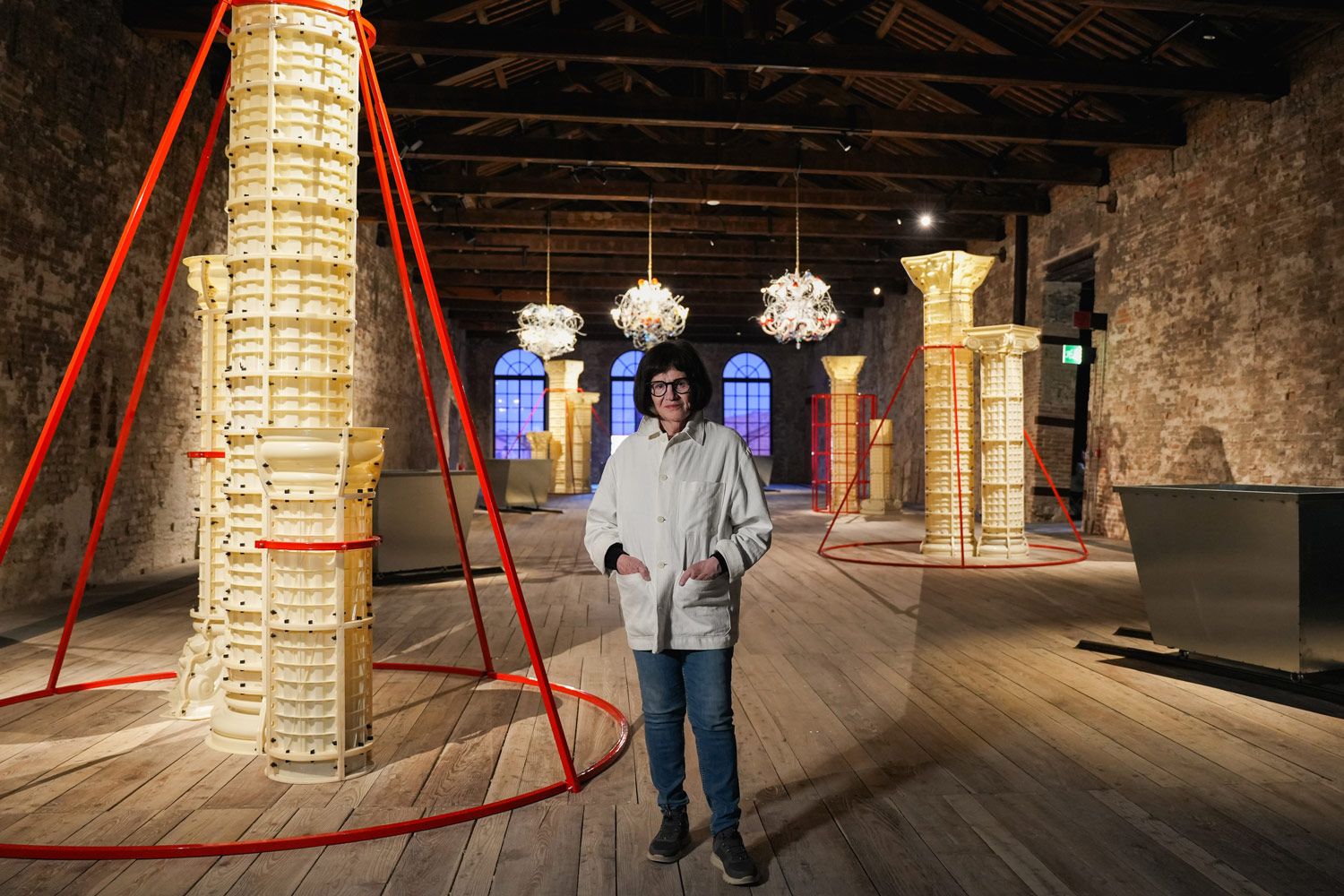
- Ships for the war with Turkey, as far as I remember.
- Weapons, not ships. The hall where I made an installation was once intended for an arms exhibition.
When I worked on the project, there were countless conflicts around - in politics, in art, among colleagues. I felt the devastation and fallout that I wanted to express in work. I saw on the network the forms for casting columns from cement “under antiquity”, and I was hooked by this image of a hollow column. I had to build these red supports, because plastic forms turned out to be too light and could not stand on their own.
I also wanted to beat the rails for transporting weapons that have been preserved in front of the building. So wagons appeared on the installation. Also far from an innocent image: during the Second World War, the bodies of the dead were transported in wagons.
Three chandeliers, wrapped in barbed wire, represented three Abrahamic religions, but without clarification, where what. All of them are made of Venetian glass - it is important for me to work with the city context. When the chandeliers were made, I saw fragments that remain from glass products, and decided to fill the cars with them.
Finally, we needed an element that would collect everything together. So I mounted a 14-minute film from propaganda films of the first half of the 20th century and showed it in the installation space.
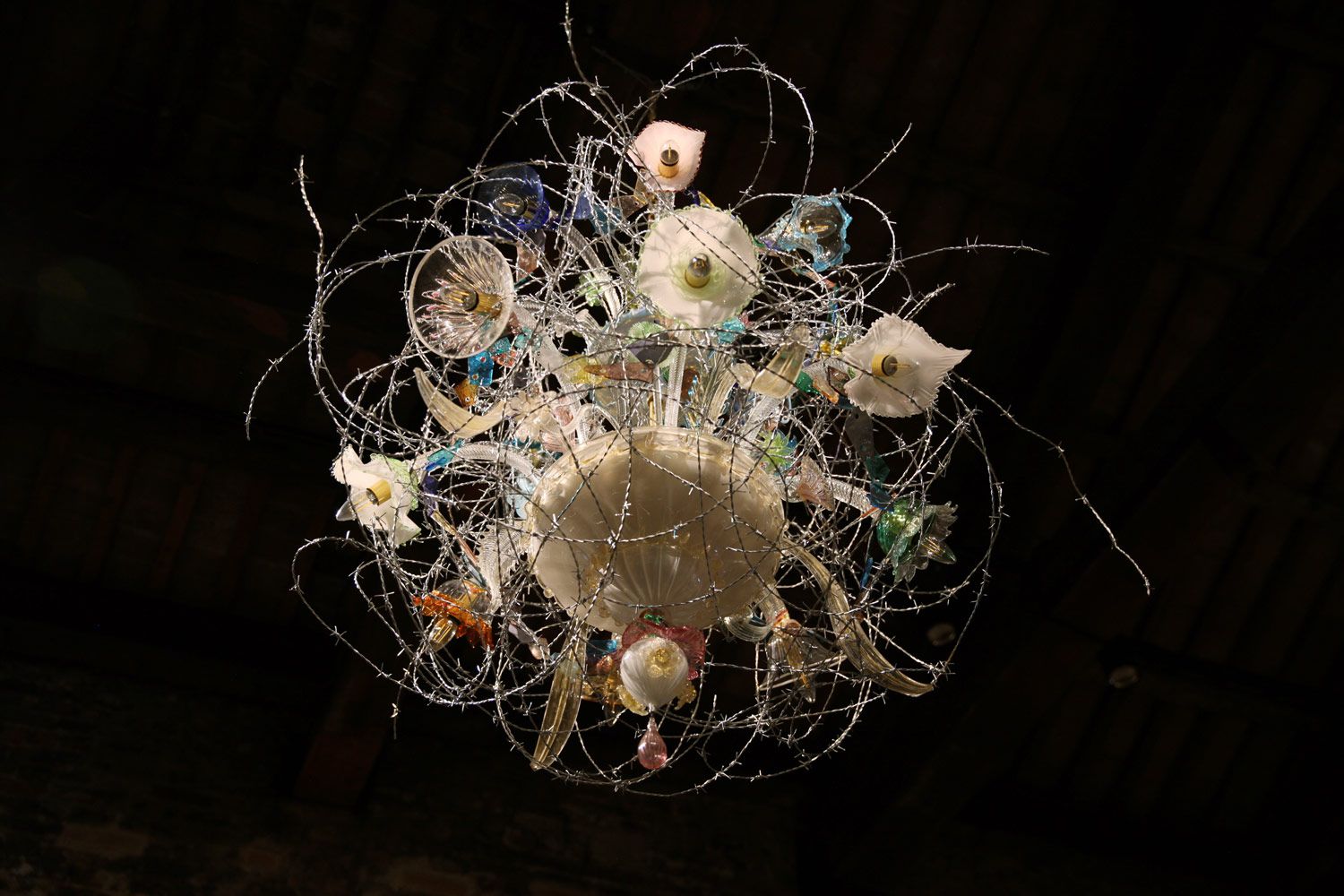
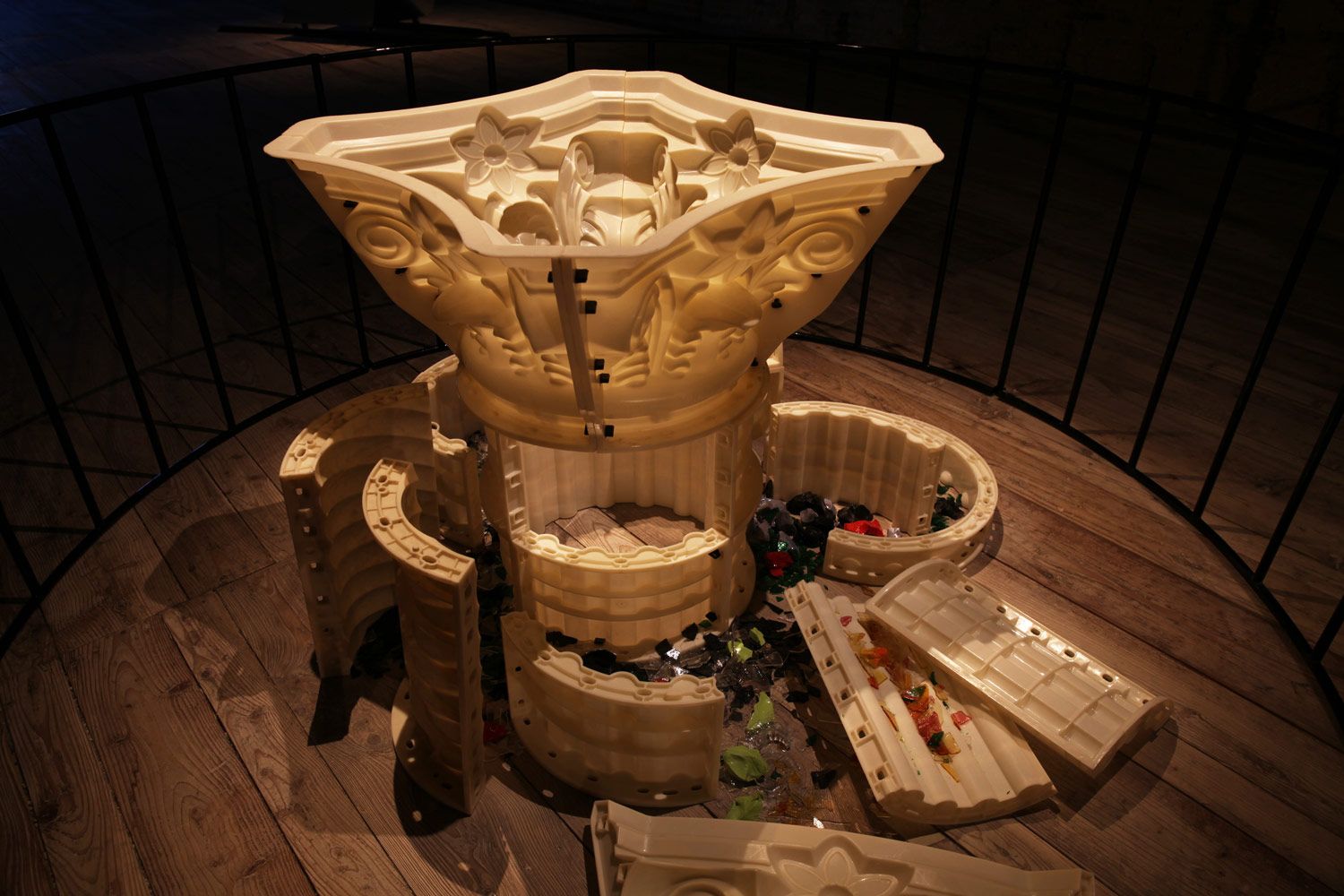
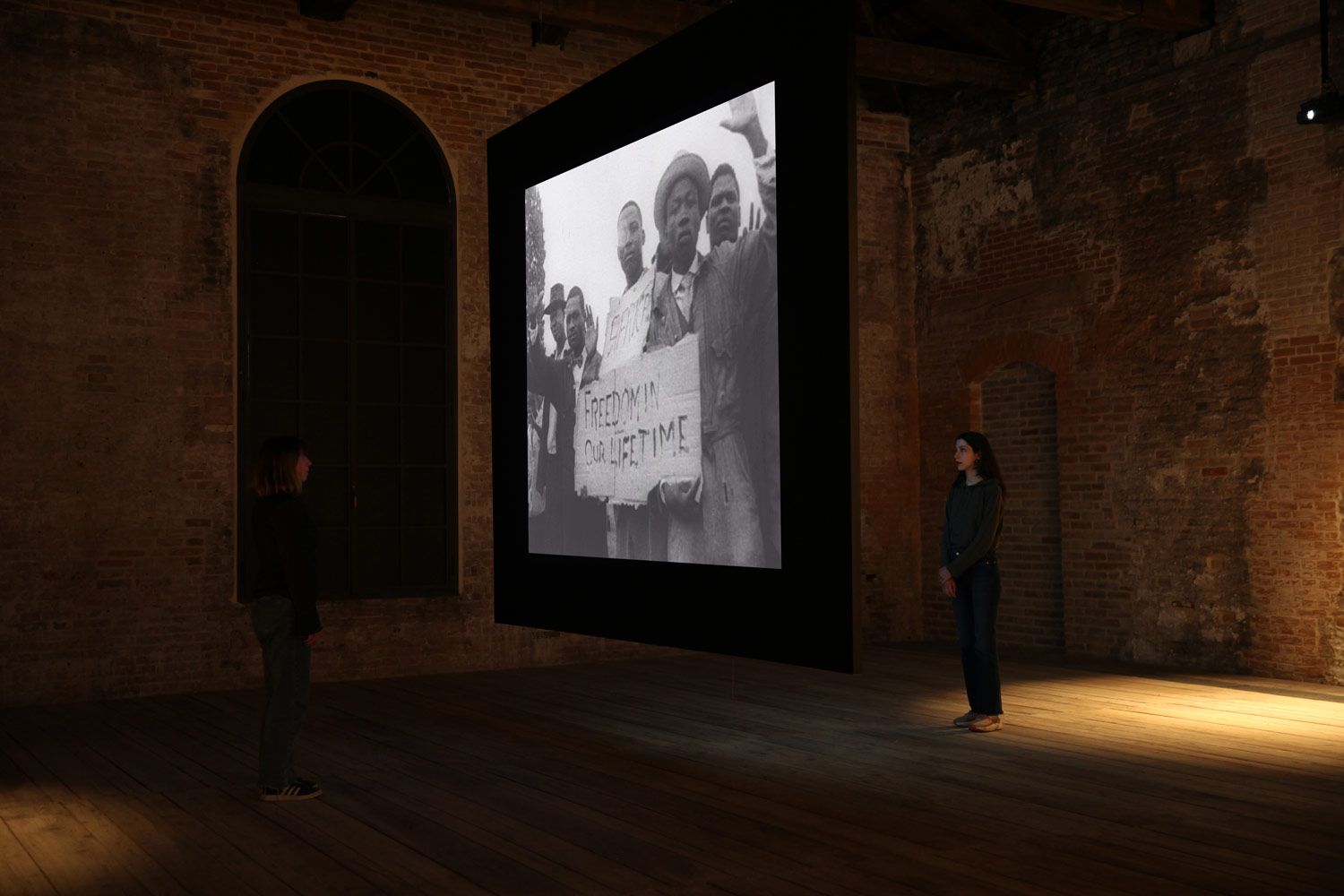
- In Venice, souvenirs are sold everywhere, including plastic buildings. Your columns reminded me of them. So for me it was a project, including about the commercialization of heritage and its depreciation.
“I thought about it too.” Glad to hear it.
- Let's discuss your installation “where the continents are found”, which you show at the NO exhibition. In Russia, on May 9, children are dressed in military uniform, so the image that you use is well familiar to us. Do you have a similar tradition in Turkey?
- Yes, it began to spread during the 1974 war between Turkey and Greece. It was a very difficult conflict, and Türkiye has since considered the Republic of Northern Cyprus an independent country. The society was militarized, children's camouflage costumes became fashionable. This tradition has not gone anywhere, parents dress children in uniform for public holidays.
I conceived my installation in 1997, when I saw these costumes on the shop window in Istanbul. There were many, almost hundreds, because the store itself produced them and sent them to other regions of Turkey, to Cyprus or somewhere else. I decided that I need to buy a few pieces and use in work: you never know what would come in handy.
I had only 20 money with me. I took them to my studio. And then they called me to participate in the exhibition in the Swedish town of Buros. And we, Turkish artists, then really wanted to show our work outside Turkey.
The fact is that then there was a war in the former Yugoslavia. Only two years passed after the massacre in Srebrenitsa. And if we look at the Middle East, there the wars do not stop at all. It was easy to associate the military theme with the name of the exhibition "Around us, inside us."
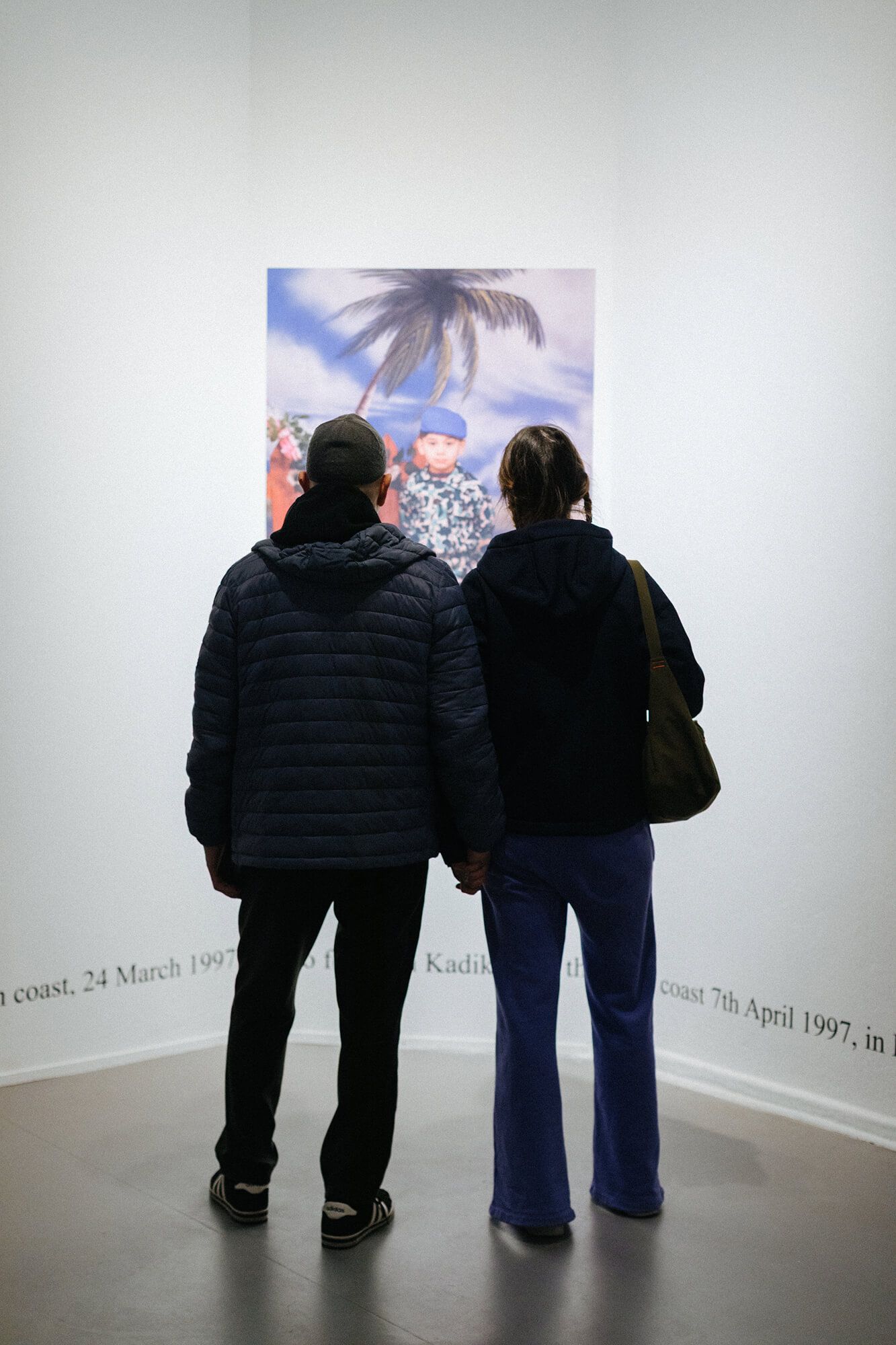
Thinking about the wars around me, I remembered the children's uniform. I wanted to find a picture of a child in such a suit. Then it was fashionable to take such photos, and I went to look for them from photographers on the windows. I found one, and I was lucky: it turned out to be the niece of the photographer, so he provided it to me, and there were no copyright problems.
At first, the installation was shown in Buros, then - in the Fredericianum Museum in Kassel at the exhibition "Ekholot". Then Turkish contemporary art has just appeared on the international stage. Subsequently, I included the project in my personal exhibition in Istanbul, in the Salt space. Since the history is repeated and the wars go again, it makes sense to show it again.
- What do you think, why do parents dress children in a soldier?
- First of all, out of militaristic motives that are always present in Turkey. We have such a ceremony - wilting to the army. The young man leaves to serve, his family and friends escort him, applaud him, because he is ready to give his life for the country. At such holidays, children wear a military uniform, imitating the older brothers. The family, as it were, shows: we still have many children, they can also be sacrificed for the sake of the country. Apparently, this is something like a symbolic sacrifice.
- As in Greek mythology, when Agamemnon sacrifices to Iphigenia to win the Trojan war. The war should be fed by children.
- That's it. The war comes for children and eats children.
- In the editorial office we often use the word “polycrysis” to describe the current situation. New wars flare up, extreme right -wing politicians come to power, the environmental situation worsens every year. I see that artists are trying to comprehend all these events, but I do not think that they are able to change something. What do you think?
- In fact, I feel the same. It seems to me that we all do not enough. Complaints on social networks will not give anything. Although, maybe I'm just an old person with old ideas about resistance. But it seems to me that new ways of struggle are needed. Perhaps they will appear in the near future. Now we just wander, shout and do not know what to concentrate on. We are not focused.
As for art, it seems to me that it cannot in itself. Art is not able to directly affect reality. If you make a protest art that attracts attention, and consider it a full -fledged struggle, you are mistaken. But art can be part of the struggle, can make it more effective.
This interview was held in January 2025. Before publishing, Gyulsun Karamustaf asked to add several lines.
Just look: since we recorded the main part of the interview, they began to fight even more in the world. Now Iran is also involved. We do not know what will happen next.
The NO exhibition will work for another two weeks - until July 6. At this time, we have scheduled several events. On June 22, we spend a book day : there will be a fair and a meeting with the authors of the books "Medusa" (including with Anton Dolin and Dima Zitser). June 25-friendly (not romantic!) AIDS DEVITIST for everyone who dreams of finding new friends in exile. And for the closure we prepare something special! Subscribe to the project Instagram so as not to miss anything.
Anton Khitrov talked