
Translated material
Operational victims and heroes of operation
How Russian cinema portrayed migrants: five important films of the last twenty years
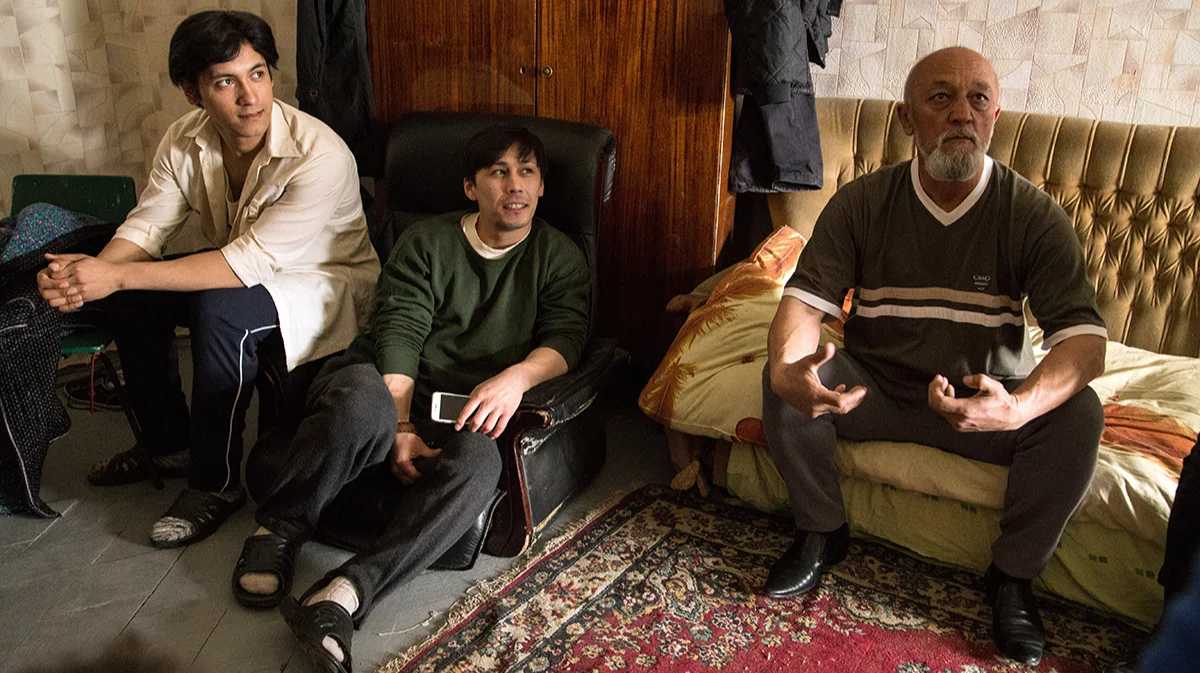
Shot from the film "Stars". Photo: kinopoisk.ru
In the rhetoric of the Russian authorities, anti -migrant sentiments noticeably intensified. Officials from Alexander Bastrykin to Vyacheslav Volodin pay considerable attention to this issue, and after the statements the adoption of legislative packages, radically changing living conditions and work for labor migrants in Russia, comes. Particularly ominous offers are offers to track the movements of migrants through mobile applications with a geolocation function.
In parallel, raids go to migrant communities and establishments, where with the use of both physical and psychological violence they delay people. These actions are carried out defiantly, with compulsory video recording, after which they are widely distributed in state media and telegram channels. “Public organizations”, such as the “Russian community” movement and similar groups, arrange attacks, and sometimes the abduction of people of non -European, non -Slavic appearance. But this system, in which any person with a non -European appearance can instantly be in the status of a “migrant” and be forcibly detained, has not appeared in recent years. To prove that in Russia this is a long and established practice is capable of analyzing Russian cinema. Especially for Novaya Gazeta Europe, Vladimir Kocharyan talks about five significant films of the last twenty years, which, like a puzzle, reveal the image of a migrant created by domestic directors.
The image of migrants from Central Asia began to steadily form in Russian cinema since the mid-2000s. The figure of the Caucasian-Terrorist was replaced by a new “internal enemy” from the 90s: an nameless, depersonal worker from Tajikistan, Uzbekistan and Kyrgyzstan. The image of Ravshan and Jamshut from the Franchise “Our Rush” for the Russian pop culture reflects many features that Russian filmmakers have repeatedly used in the image of such characters. These are marginal figures located on the periphery of Russian society both in direct and figuratively. Their fate largely depends on the boss, the policeman or, in rare cases, on the sympathy manifested by the Slavic main characters, for whom migrants often become a reason for the manifestation of personal moral qualities.
"Old Women", 2003, dir. Gennady Sidorov
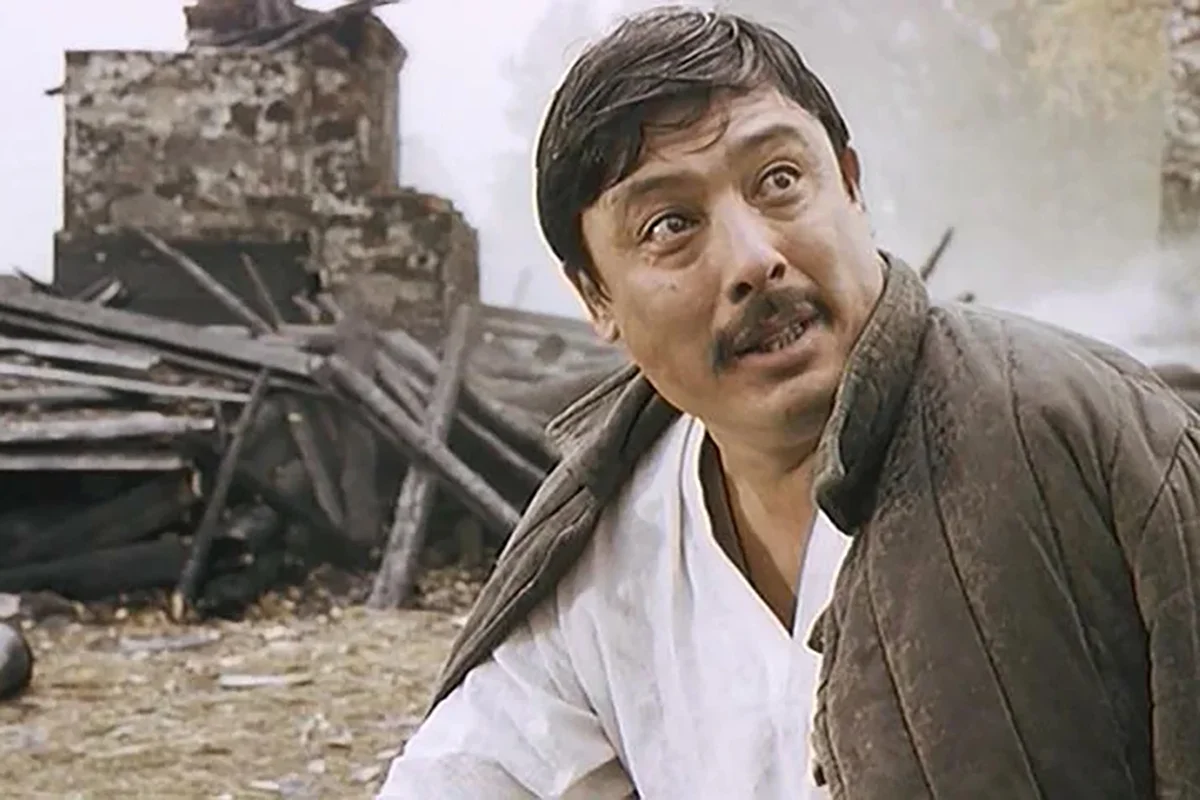
The winner of the Kinotavr and the only director's work in the career of actor Gennady Sidorov is one of the first films that seriously approached the topic of images of migrants. The action takes place in the nameless Russian village, which at first glance seems abandoned and devoid of attributes of our time: there is no telephone connection, no electrical wiring, nor water supply. The only ones who supports its existence are the commune of elderly women - “old women” speaking in the specific dialect of the Russian language. They rarely come into contact with the outside world, and the only man in this place is a young man with Down syndrome. They have guests only often drunk and aggressive military with a nearby base coming to buy moonshine.
It is these military people as the only representatives of the state who bring migrants from Tajikistan to the village. According to them, they fled from the war, the details of which are not specified. At first, women meet the Tajik family with distrust and xenophobic conspiracy theories: "They are here to replace us." Living on different sides the walls of prejudices, the communities of the "old women" and Tajiks gradually come closer through the experience of the tragedy. The new house in which the family of refugees settled unexpectedly burns.
At this moment, the elderly heroines show empathy and begin to see living people in the migrants, because they are also united by the Russian language and memory of social equality, remaining from Soviet times.
By the end of the film, both communities become one, trying to return life to an abandoned village. It is noteworthy that the idea of restoring the village is accompanied by the idea of separation from the state that left them. This thought is voiced by the character played by the actor Zuhritdin Ryametov: "The state left us, we need to separate from him." The gap from the state is expressed in the plot through the construction of one of the refugees of the autonomous electric generator, which first brings electricity to the village. The final film is the birth of the first Tajik child - a symbol of revival on abandoned land.
Despite the optimism of the storyline, the film contains stereotypical generalizations. For example, Tajik refugees are played by Uzbek actors, and Tajik's speech is actually Uzbek. The film sought to show social and economic stress, accompanying forced migration. Nevertheless, as in the paintings about the Chechen wars, the film simplifies the images of characters, representing refugees as generalized figures with distorted national identity.
"Stars", 2018, dir. Alexander Novikov-Yanginov
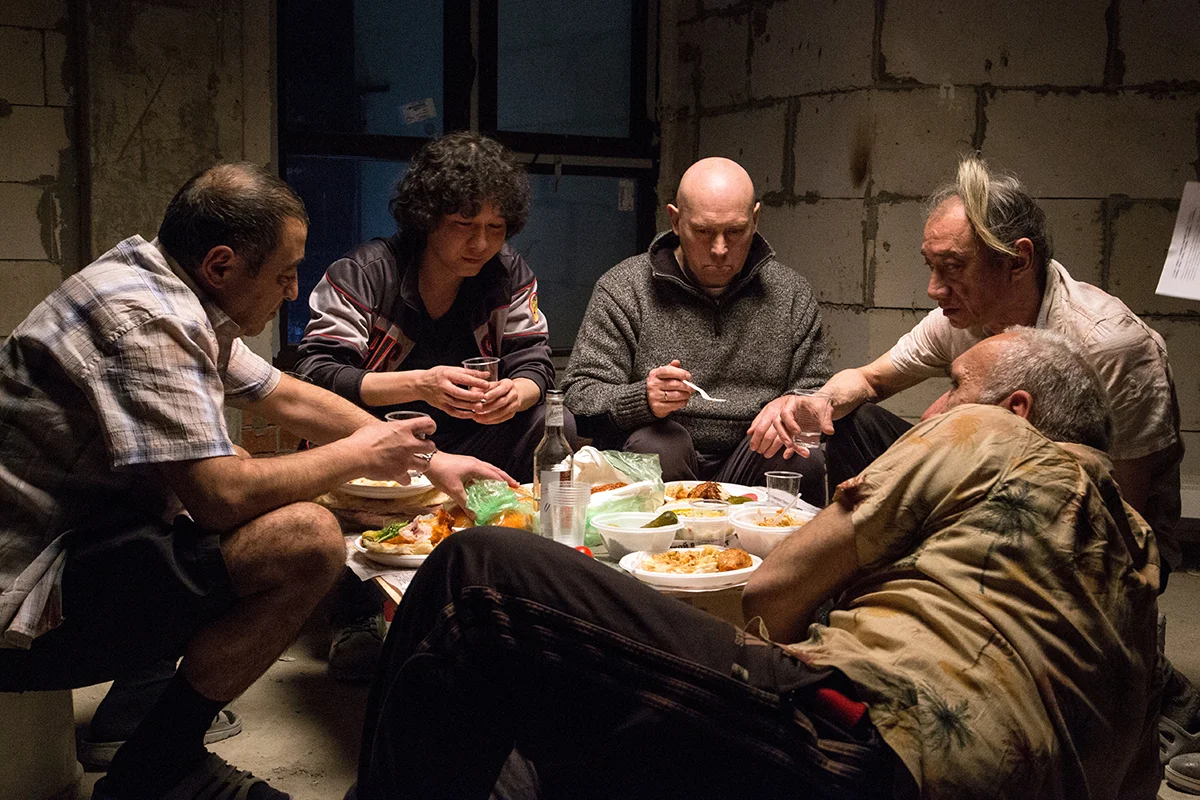
The main character of the film “Stars” is a Russian with the Uzbek passport Yuri Alekseevich, whose role is played by Viktor Sukhorukov. He has been living in Tashkent since the collapse of the USSR and teaches Russian in a local school. Given the economic circumstances of Uzbekistan, his life can be described as extremely modest. When the misfortune overtakes his family (the only daughter gets sick and needs expensive treatment), he sells all his property, including the old “Lada”, and taking with him a volume of Lermontov, he sets on a road familiar to thousands of workers from Uzbekistan: to work in Moscow.
Already in Moscow, it turns out that a relative who had to shelter him does not live at the indicated address, but the boss at the construction site. Yuri gets there through fellow countrymen, but the boss not only does not pay the earned, but also passes the working police. This series of events, repeating the fate of many labor migrants, is building a clicked plot, in which only the hero’s nationality becomes the main difference - the Russian with the passport of Uzbekistan, which everyone calls Gagarin in honor of the famous astronaut.
The Moscow itself, and the construction chiefs, and representatives of the police are hostile. The only ones who show sympathy and unconditional sympathy for Yuri Alekseevich are the same as him, migrants from Uzbekistan and other countries of Central Asia. Everyone immediately extends the hand of the hand of help. They have enough just a few words to shelter the wanderer thrown to the wanderer, find him a job and surround him with care.
Director Alexander Novikov-Yanginov, the ethnic Russian itself from Uzbekistan, at first glance seeks to recreate the experience familiar to him and humanize the stamped image of the migrant.
However, unfortunately, in an attempt to leave the cliches, he only exacerbates them, bringing the images to a state close to the caricature. Of course, good migrants, opposed to absolutely aggressive Russians, look more like comedy masks in the film.
Instead of sympathy, they cause pity and anxious thoughts about their mental state. None of the migrants who have met on the way are owned by their own fate. They remain scenario templates, whose only function is to sacrifice themselves or become a victim to strengthen the dramatic arch of the protagonist.
The philosophical message of the film about the lost Soviet community also turns into a parody: the repeated GAG with a reference to the surname of Cosmonaut Gagarin and poorly realized scenes with elements of “magical realism” look more like formal tricks than meaningful artistic solutions. The final chord is the scene in the cockpit of the trucker, where the main character once again receives sincere support, but for the first time from the Russian, simple provincial. The volume of the classics of domestic literature is placed in his machine - and Yuri Alekseevich returns from aggressive Moscow to his native Tashkent with Lermontov and Pushkin.
“Vasya is not in itself”, 2023, dir. Garik Petrosyan

The producer tandem of the Andreasyan brothers - one of the most productive figures in the modern Russian film industry - has long been working in the operational film paradigm. This applies to both rethinks of Soviet animation classics (for example, “Hello, Carlson”), as well as dramas based on historical disasters (as in the film “Earthquake” dedicated to the tragedy in Armenia). The same applies to topics that cause public triggers: it is enough to recall the series “Chikatilo” or the film “Determined”, based on the fate of the Avenger Vitaly Kaloev. Together with the director Garik Petrosyan Andreasyan, they also turned to a trigger plot - mass migration and vulnerable position of workers from Central Asia, creating a comedy in the Body Swap (exchange of bodies) with Pavel Priluchny in the main role: “Vasya is not in itself”.
Vasya is a successful construction tycoon: young, ambitious, impudent and, most importantly, perfectly understands how the “system works”. The representative of the elite of the “Sobyaninskaya” Moscow, with its endless expansion and construction, he does not think at all about the fate of migrants working for him. For him, they are not just the lowest level of the social ladder, but also a kind of evolutionary misunderstanding. To deceive them or delay salaries is a commonplace that does not cause neither remorse nor the slightest sympathy. But fate prepares its script for our “hero”. As a result of an accident, he has an accident along with a random taxi driver-migrant, after which he wakes up ... in a strange body: not in the body of a successful Muscovite, but in the grotesque “Body-Corror” the image of a worker from Central Asia, collected from plastic makeup. Falled yellow teeth, a mask with a “Mongoloid” eye cut, an artificial stomach and emphasis - all these elements create a portrait of a migrant hypertrophied to the limit.
In a new body, Vasya faces another world: hostile, mocking, repulsive. Now he is an unclassed police and society, which automatically perceive him as a lower -sort of person.
Already being in the company of workers from the construction site, which he had previously exploited, Vasya decides to get to their side. And what else can he do if he himself is now one of them?
Having perceived the situation as a personal tragedy, Vasya becomes an ideologist of resistance and insists that the workers begin to protests. However, the movement that he organized against construction bosses does not meet the support of those whom he is going to protect - from the migrants themselves. "Why don't you resist?" He asks. The response of one of the construction workers - “either obey or die” - becomes a philosophical line, which, in turn, adheres to demoralized workers.
The finale of the film, dictated by commercial cinema formats, is a happy ending, but carries a alarming message. Although Vasya corrects her mistakes, pays salaries and leaves the construction business, the film emphasizes: changes are possible only within the framework of the previous hierarchy. Ultimately, only the White Hero is able to bring “justice”, and migrants remain in the role of the limp labor, waiting for the Messiah, albeit with dubious motivation.
"At close distance", 2021, dir. Grigory Dobrygin

Grigory Dobrygin is one of the favorites of Russian film critics and a representative of the “new quiet” movement, along with Bakur Bakuradze, Alexei Popogrebsky, Boris Khlebnikov and others. Starting his career as an actor who played both the blockbuster of Timur Bekmambetov and in the film spits Berlinale, he switched to directing. “At a close distance” - his second work after the debut film “Shenaa667”, which fell into the program of the prestigious Rotterdam festival. In the “bus”, a director close to the standard Eurocentric author’s manner depicted the provincial life of a middle-aged man who fell into a trap of romantic relations with a webcam model. In the “close distance”, the action takes place in Covid Moscow - with the Lockdown and mass paranoia.
The central characters of the Claustrophobic space of the city are two: on the one hand, a successful actress Inga, who once built a career in Italy and in Russia. She is played by Ksenia Rappoport, with whose biography, obviously, the image of the heroine was obviously. On the other hand, the nameless courier from Central Asia, whose role was played by the unprofessional actor Nurbol Kairatbek. According to Dobrygin himself, he found him in one of the working chats of courier services. Inga finds a courier under the door of his apartment, he lies unconscious and she decides to shelter him as part of a social experiment, starting home treatment.
She does not hesitate to lay out everything that happens in social networks, quickly turning the situation into a media occasion, and readily gives out an interview about the “stoic mission”, which supposedly fell on her modest acting shoulders. She, of course, did not ask permission to shoot and broadcast the courier - how, however, the courier did not ask her consent to simulate the disease and, in fact, to settle in her apartment in the role of the occupier. The courier himself does not show any sympathy for the mistress of the house: in a chat with his relatives, he calls her exclusively “shaitank”, and the only thing he is waiting for is a monetary reward.
The plot, sounding as an absurd comedy, is trying to offer the viewer a multilayer social drama - an attempt to comprehend not only the distance between the sick and the “healthy”, but also the gap between people of different social classes.
And if in the case of “Vasya is not in itself” or “stars” the reality of the life of migrants was presented in the form of a ruthless caricature, then in the “close distance” we are faced with an aesthetized fan fiction on the topic of social injustice. The author is trying to unite two heroes through the “migrant experience”, drawing a parallel between the loneliness of the actress in Rome and the vulnerable position of the courier in Moscow. But behind this parallel, a detached, almost tourist view is hidden on the topic that the author could not get closer.
"Products 24", 2022, dir. Mikhail Borodin
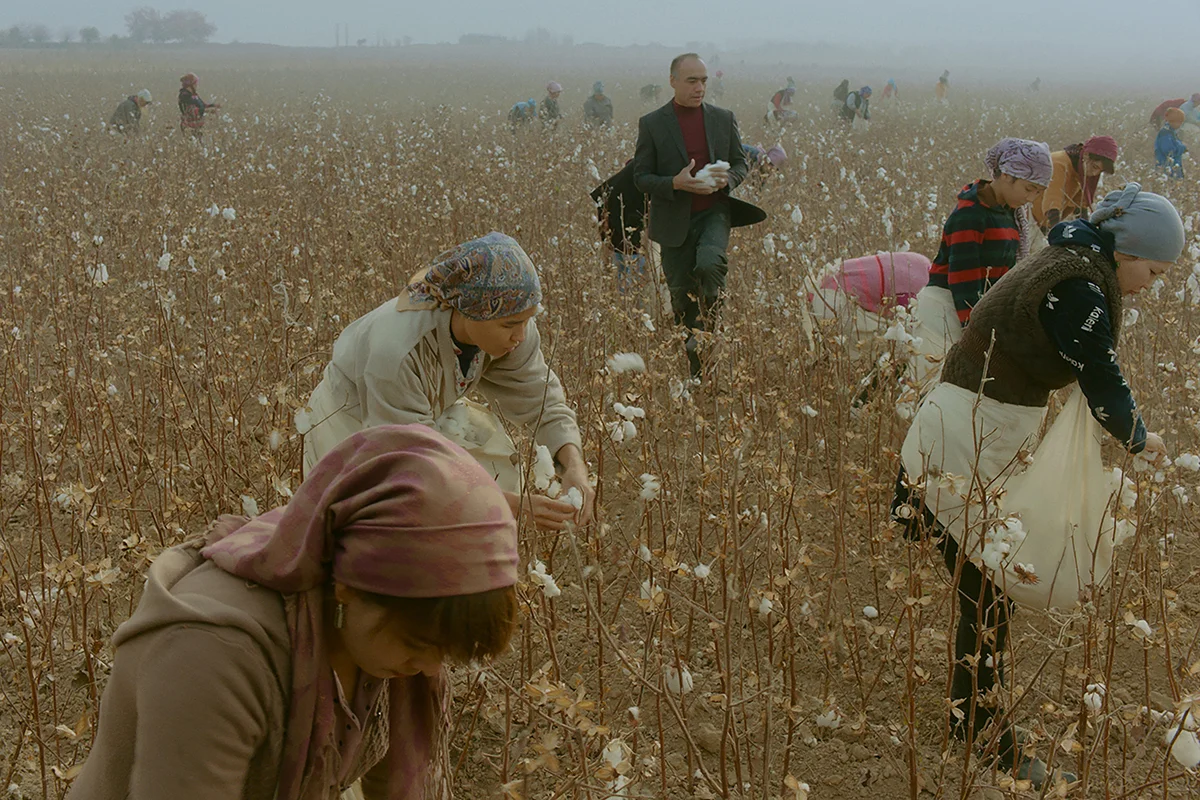
Already in the short film “Registration”, showing that shaky line, stepping over which you can turn from a legal migrant into an illegal, director Mikhail Borodin outlined the topic of his future works. Following this, he shot Cotton 100% - a documentary about the cotton industry of Uzbekistan and people who are trying to resist its inhuman conditions. The author, by origin of the Uzbek, returns to his homeland to fix this reality from the inside. Borodin's full -length debut “Products 24”, marked by participation in the Berlin Film Festival, is also based on a real situation. It was based on the resonant story of the “Golyanov slaves”. This is the case of labor slavery and the illegal retention of people taking place in the Product 24 store in the Golyanovsky district of Moscow. For many years, under the pretext of employment in the capital, workers from Uzbekistan were lured in the capital, after which they subjected physical and psychological violence.
Muhabbat is a young worker of the Products 24 store. This store is the center, and the border of its world. She did not choose such a life: she was lured with deceit in a trap set by the fierce mistress of Zhanna. The same as her migrant, Jeanne does not tolerate tears, prayers and regrets do not touch her. At the same time, her orders go far beyond the scope of the work process: it requires not only unquestioning labor, but also the right to dispose of the body of Muhabbat. Under the pretext of “love and care for your employees,” Jeanne forcibly marries her. Without living, but surviving in this microcosm of oppression, Muhabbat finds the strength to escape. However, on the way to freedom, she loses her newborn child.
Once in Uzbekistan, she does not find a happy end. Instead of total control, another form of lack of freedom occurs: labor on the verge of human capabilities in the cotton industry of Uzbekistan.
In the process of preparing to work on the film, the author carefully investigated the topic and met with witnesses of events - including one of the victims, Bakia Kasimova. The documentary approach to creating a playful film allowed to avoid operational intonation. The director deliberately departs from the usual opposition of “white” and “color”, Slavs and generalized migrants. He is more interested in the universal dynamics of human cruelty, which forms its own suppression system over and over again.
Without a corrupt police, Jeanne was unlikely to be able to build a parallel company “Products 24”. However, as the director himself emphasizes in a conversation with us, in reality no one particularly hid what was happening from buyers. But none of the clients did anything. Their silent consent has become a support of the order in which there is a category of “less equal”, those who can be operated and pursued.