
Translated material
"This is not our goose"
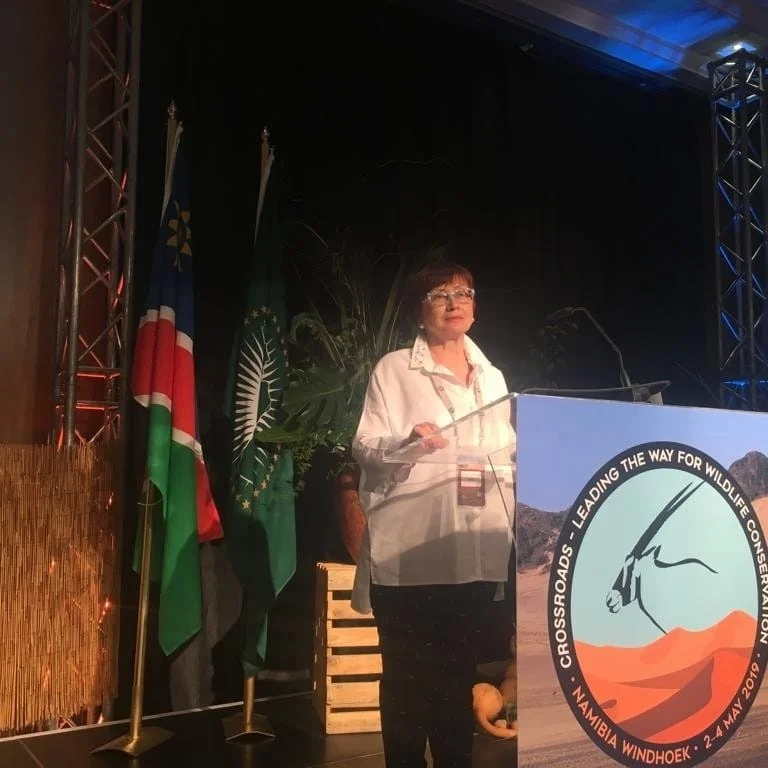
Portrait of Tatyana Aramileva - officials who fights the red book

Tatyana Aramileva. Photo from the magazine "Hunting and Hunting Economy"
On June 26, it became known that the Ministry of Natural Resources transferred the powers to maintain the Red Book to the Department of Hunting. And a month before, the department was headed by Tatyana Aramileva, the former president of Rosokhotrybolovsoi, the largest hunter association in the country.
In scientific and environmental communities, both of these events caused a sharp criticism: Aramileva is known for a very specific view of the protection of rare animals. “What is a red book? In my understanding, this is a passive tool for protecting biodiversity. What is hunting? This is an active tool for protecting biodiversity, ”she said at the St. Petersburg International Law Forum on May 21, 2025, a week before her appointment to the ministry. The interlocutors of the "Novy" consider the position of Aramilev or insincere or divorced from Russian reality. They indicate that in Russia hunting farms tend to exaggerate the number of animals in their territories in order to sell more quotas for shooting - there is no talk of real preserving or increasing populations. Ecologists also notice that Tatyana Aramileva was an assistant to the State Duma deputy Vladislav Reznik, who is a lobby for trophy hunting, who does not have an economic goal, and only necessary to amuse the pride of the hunter. Be that as it may, the Red Book was at the disposal of one of its main critics. The New Gazeta tells who Tatyana Aramileva is, a person, on whom the fate of rare animals, plants and mushrooms in Russia now depends.
Family business
Surprisingly, there is no official biography of the head of the department of hunting development on the network. From the assembled by bit: I was born in 1958 in the Commander Islands and, according to one of the laudatory publications , "crawled on a huge skin of the Kamchatka bear." I studied for the hunting expert, worked in the Belovosokhoz, and in 2009-2012 he headed the Office for the Supervision of the Objects of the Animal World of the Primorsky Territory.
A former researcher at the Institute of Ecology and Evolution of the Russian Academy of Sciences, candidate of biological sciences Viktor Lukarevsky worked with Tatyana Aramileva when she was a coastal official and says that now she has not changed, even became tougher.
“I know the Aramilev family since 1997,” says Lukarevsky. - I met them in Vladivostok at the international conference on the preservation of the Far Eastern leopard. I knew little to them then, but I was involved in the problems of the leopard and the Amur Tiger Natalya Moraleva, at that time the head of the Far Eastern Department WWF*. Then a fairly interesting group gathered around WWF-a certain asset of gray cardinals: the monitor biologist Pavel Fomenko, film documentary Vasily Solkin, Vladimir Aramilev and others. They had a huge impact on WWF policy, and on the management of the hunting economy of the Primorsky Territory. Tatyana Aramyleva already acted in support of hunters and actively defended their interests. Because of this, we eventually quarreled with this family.

Lukarevsky recalls that in 2010 Aramileva initiated meetings of the commission on rare species, which were actually oversaw the Institute for Problems of Ecology and Evolution named after A.N. Severtsov RAS.
“The question was the excretion from the Red Book of the Aboriginal Power of the spotted deer, which is concentrated in the south of Sikhote-Alin, in the Lazovsky Reserve and in the surrounding territories,” he continues. - I played at this meeting the main opponent. The whole commission unanimously supported my point of view, everyone was against the exclusion of an aboriginal population of the spotted deer from the Red Book. Tatyana Sergeevna justified her point of view by the fact that, firstly, the population preserved in the Lazovsky Reserve is supposedly united with a population of southwestern Primorye. She said that the number of spotted deer grew, and therefore there is no need to protect them.
But in fact, the main motive for the exclusion from the red book and the transfer of spotted deer into commercial species was quite transparent. Experts suggested that she could lobby for the interests of hunters.
According to Lukarevsky, a hunting farm was near the Lazovsky reserve, which belonged to the Institute of Sustainable Nature Management, the actual owners of which he calls Aramilevs.
“In that territory, the spotted deer was a fairly ordinary object,” the scientist confirms.
His colleagues suggest that the goal was to access the "operation" of a deer as a resource for production.
The exclusion of the Aboriginal Pilosa of the Sentified Deer of the Primorsky Territory from the Red Book occurred later - in 2021, when Aramileva already headed Rosokhotrybolovsoyuz. In the tenths, he managed to defend him.
- I cannot name Tatyana Sergeevna an erudite or owning deep knowledge by a specialist. But she has a very interesting skill - it is enough to defend her point of view loudly, having learned several correct phrases and skillfully using them.
She actively uses scientific terminology, thereby giving her words a certain “expertise,” concludes Lukarevsky.
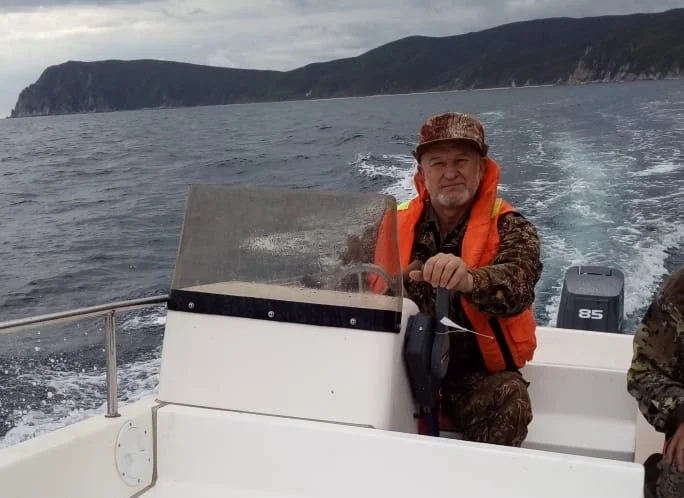
It is worth noting that the whole family of Tatyana Aramileva is from the environmental community. Her father Sergei Marakov is a hunting expert, a zoologist, candidate of geographical sciences. Former husband Vladimir Aramilev is the director of the Lazovsky Reserve. And the son Sergey heads the Amur Tiger center, which is responsible for preserving a rare predator in Russia.
Such families in Russia are called dynasties. Often they talk about them with a breath. But Aramilevs in the environmental environment are more likely to be criticized:
In April of this year, the Lazovsky reserve was in the center of the scandal due to the mass dismissals of employees of the scientific department: zoologists who studied the Amur Horals and Tigers, reduced the positions of cleaners and locksmiths. After that, the “Expert Council on the reserve case” said that the reserve simply could not fulfill the research functions assigned to him by the state. But the Ministry of Natural Resources did not see the problem of this and responded to a collective letter of 49 scientists and employees of nature protection for ordinary unsubscription.
And the “Amur Tiger” zoologists periodically criticize the provision of optimistic reports on the state of the predator population and its habitat. Scientists believe that the center is trying to please Vladimir Putin, relating to tigers with personal sympathy. And therefore, his experts hide that predators lack food resources due to large-scale logging-precisely because of this, they note, tigers go to “hunt” dogs and cattle in the Far Eastern villages.
-Tatyana Sergeevna-daughter of Sergey Marakova, a famous hunting expert, teacher of the Kirov All-Union Scientific Research Institute. He released a huge galaxy of hunting experts. And in Russia, and not only in Russia, the hunting lobby has a huge impact on power. I heard a lot of very good reviews about her father, but it seems that she is not his copy. However, she uses his connections, - notes Viktor Lukarevsky. - Through WWF, a number of events were at one time: for example, they made efforts to create almost all national parks of the Far East. They initiated the creation of the Tiger Special Inspection in the 1990s. And at that stage, Tatyana Sergeevna earned large glasses in the environmental community. But if in her previous position she served as an exponent of the interests of hunters, now he will answer, let's say, for the legislative part. And I think that her appointment to the post of director of the Department and the transfer of Red Book maintenance will lead to the fact that in a year or two we will learn about the exclusion of many populations of rare species from there.
"The only type of rest"
After the transition of Tatyana Aramileva to the Ministry of Natural Resources, glee began on hunting resources. “She tried all the problems of our long -suffering hunting economy - from the fishing in hard -to -reach Far Eastern regions to the excretion of species from the Red Book that have reached a critical commercial number,” wrote the chief editor of the Russian Hunting Journal Mikhail Krechmar. In his article, he mentioned the native of the spotted deer in the Primorsky Territory, crossed out of the red -blown list in 2021 - the very one that Viktor Lukarevsky fought for.
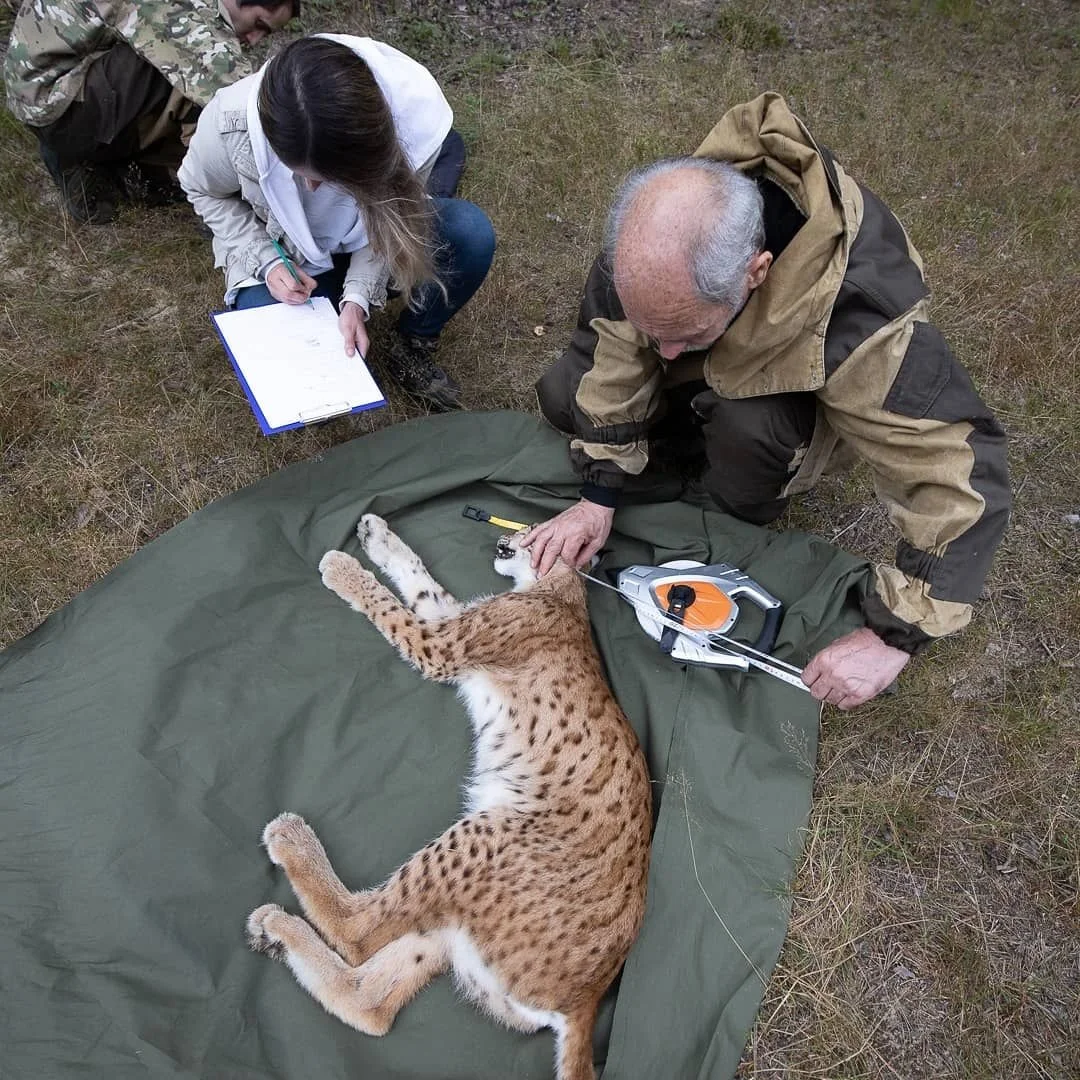
However, this is not the only example of depriving animals of security status. When compiling an updated editorial office of the Red Book, regional ministries of natural resources and Rosokhotrybolovsoiuz achieved an exception to it - or non -inclusion in it, contrary to the recommendations of scientists - one and a half dozen species: a Himalayan bear, a gray goose, a gray duck, a Caucasian noble, a Caucasian deer, a Siberian mountain goat and others.
The justifications of this were given very emotional. In particular, despite the reduction in the number of governors from 2012 to 2016 from 386 thousand individuals to 189 thousand, Rosokhotrybolovsoyuz insisted: “The introduction of a governor in the Red Book can adversely affect the social situation in the Far Eastern region, since spring hunting for hunters is the only type of rest in the current difficult economic state in the country.”
And contrary to the scientific data on the reduction in the number of gray geese since the beginning of the 1990s, the Ministry of Ecology of the Omsk Region wrote: “Turning on the gray goose in the Red Book, we will put the hunters before the choice: to see the flying gray goose and hold it with a look or succumb to the hunting instinct and, having mined it, appear before the law”. Rosokhotrybolovsoyuz supported these arguments, noting that the gray goose is “difficult to distinguish” from other species that hunting is being conducted.
- Yes, they, hunters, sparrow from ostrich do not differ! - Yazvit in a conversation with the “new” ornithologist Sofya Rosenfeld. -But this problem does not exist because of the red book, but because the hunting departments themselves abolished the hunting minim, do not give lectures, do nothing. So the problems arose. So they do not need to distinguish sparrows from an ostrich now. Instead of engaging in the formation of hunters, they say: no, let's just cancel the Red Book. That's all the logic.
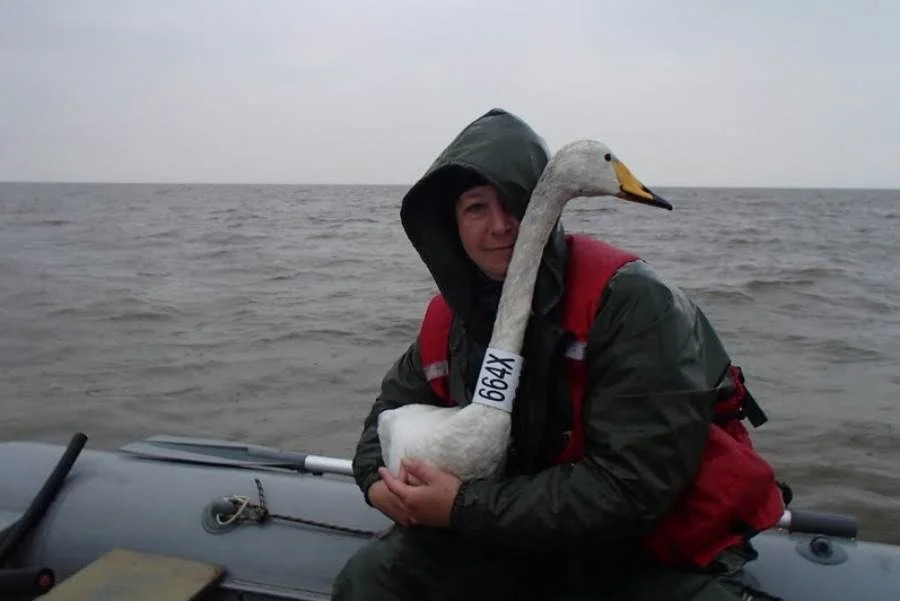
The scientists still managed to add separate populations of the throat and gray goose to the Red Book of Russia. But Tatyana Aramileva did not arrange such a “half” decision. Speaking at the St. Petersburg International Law Forum, she returned to the gray geese again: “This is not our goose. This is a migration species that flies over the territory of the Russian Federation. And now we have a Nizhny Novgorod region, there is a gray goose - red -hot. And in the Kirov region it is not red -blooded. And I always ask the following question: the hunter hunts in the Kirov region, but not far from the border of Nizhny Novgorod; He beats the goose; The goose is planning and falls into the territory of the Nizhny Novgorod region. This goose is red -hot or not? "
The interlocutors of the “new” in the environmental community are perceived with bitter irony: this reasoning:
- I would like to advise such a hunter only one thing: to move away from the border of the regions one hundred meters.
With a wallet at the ready
But gray geese, one might say, were still lucky: they were taken under guard at least partially. But the Himalayan bears did not get into the Red Book. Even though scientists directly stated: the number of these animals in Russia is unknown, but definitely low, and their habitats are destroyed by lumberjacks.
The reason, probably, is that the Himalayan bears are not interested in simple hunters at all. They are mined by wealthy people for the sakes of skins and skulls. For an attempt - including unsuccessful - to kill one individual pay up to 700,000 rubles.
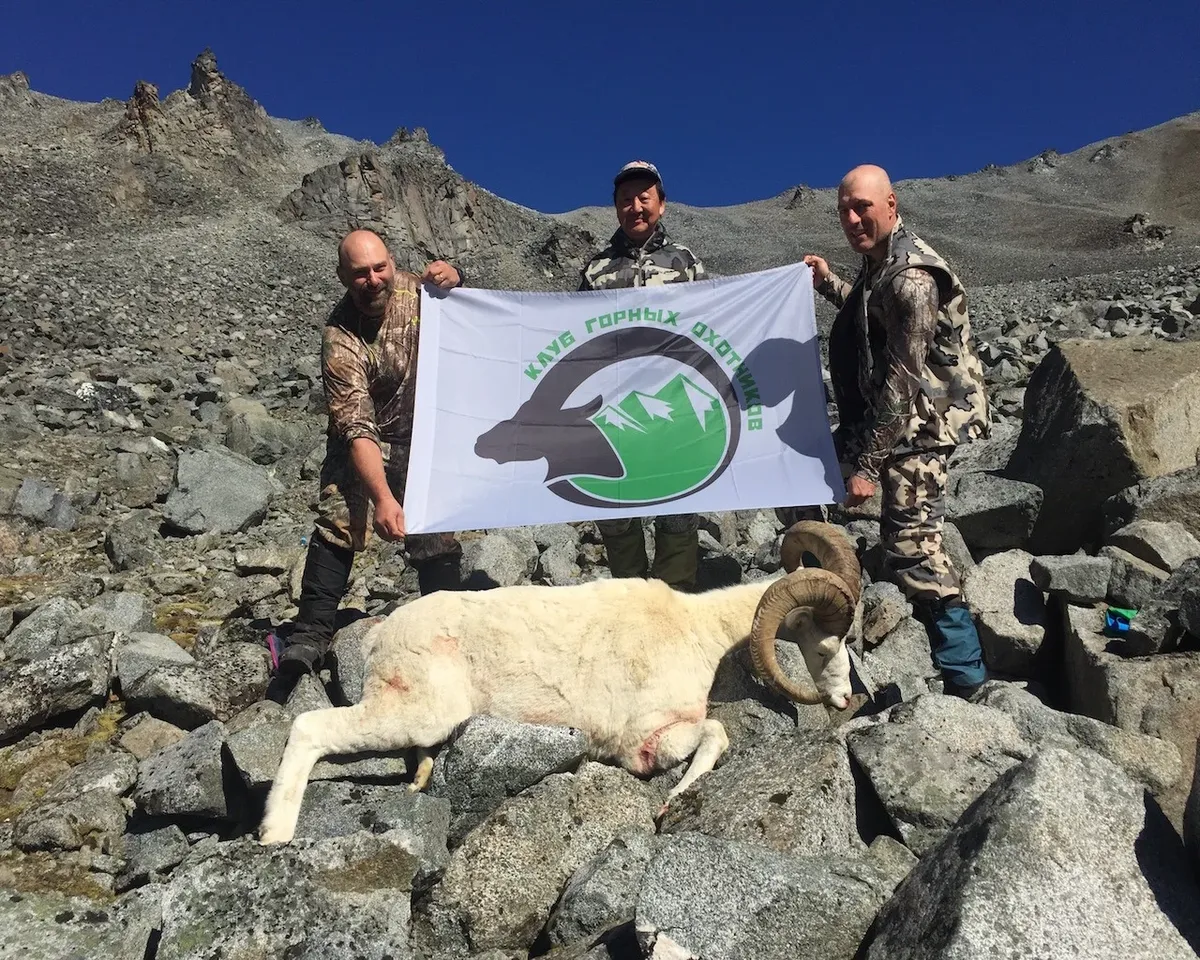
And Tatyana Aramileva is very close to trophy hunters. As president of Rosokhotrybololovsoyuz in 2013, she replaced Eduard Bender. Having retired, he created the “Club of Mountain Hunters” - an elite organization, whose members were State Duma deputies Nikolai Valuev and Vladislav Reznik, former presidential aid Sergey Yastrzhembsky, one of the founders of Karo Film Oleg Andreev, former deputy minister of natural resources, Vladimir Melnikov, deputy chairman of the Magadan regional house Igor Dontsov, mayor of Yaroslavl. Artem Molchanov and others. The organization specializes in trophy hunting, which is directly indicated on its website. With Rosokhotrybolovsoi, they remained neighbors - the “Club of Mountain Hunters” is located in the same building on the Golovinsky highway in Moscow, but two floors below. Tatyana Aramileva handed the members of the “Club of Mountain Hunters” awards for shot bears, lynxes, moose, snow sheep, marals, roeals and other animals.
Bendersky and Aramilev signed a letter against the inclusion of the Siberian Capricorn, Caucasian Ssnens, a wild northern deer, which were called "ordinary hunting animals." “This decision will extremely negatively affect the influx of investment in the regions. Today, developing hunting tourism is an important factor in creating jobs and infrastructure, ”they wrote. None of the named animals eventually entered the Red Book of Russia - only in the wild northern deer was included in it, although the number of these animals is reduced in all regions.
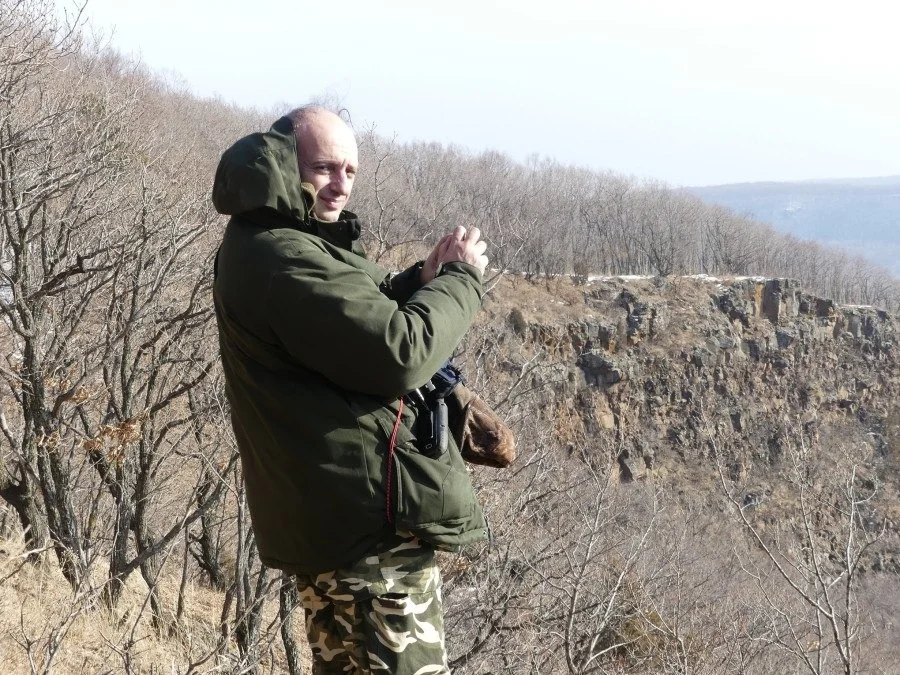
It is characteristic that the heads of Rosokhotrybolovsoyuz and the “Club of Mountain Hunters” appealed to the deputy chairman of the government Alexander Khloponin. And before that, Bendersky wrote a personal letter to the official, asking for allowing the shooting of five red -knit Putoran rams - for this he promised to allocate 15 million rubles to study.
-At that moment, Khloponin was a deputy prime minister who oversees the issues of nature management. Whether he himself was a trophy hunter, I do not know. But he was favorably reacted to this issue, ”says Mikhail Craindlin, an expert on specially protected natural territories. According to him, despite the fact that Khloponin supported the idea, it was prevented by a direct ban on hunting for red -blown animals. - I can’t unequivocally say how the appointment of Tatyana Aramileva as the head of the department will affect the preferences of trophy hunters, but taking into account her statements, I cannot exclude that attempts to cross out the views interesting for hunters will continue.
Kill to save
Tatyana Aramyleva herself, however, insists: she promotes the hunt precisely because of love for animals, including rare ones.
“As for the hunting of animals listed in the Red Book, it is important to understand that it is unacceptable to automatically associate the categories of the“ red list ”with certain legal answers - for example, with the prohibition of all types of hunting for all types of animals that are under the threat of extinction. Hunting can have both a positive and a negative impact on the population, ”she said at the St. Petersburg Law Forum.

To clarify how exactly the production of rare animals helps to preserve them, Aramyleva did not. But instead of her, the State Duma deputy Vladislav Reznik, another member of the “Club of Mountain Hunters”, who himself turned to the Ministry of Natural Resources in 2018, was done by the State Duma deputy, with a request to resolve the production of disappearing species in 2018.
- I was asked the question that a compromise between the protection of rare species and hunting for them was possible? In fact, I have been doing this problem for a long time. Since I worked in the State Duma Budget Committee for many years, in the financial committee, I understand perfectly well: in order to carry out any activities, a sufficient budget is needed. Funds allocated for the protection of rare species are not just enough - they are scanty. What is 8 million for 83 regions? This can be called a mockery, ”Reznik said. - In 2018, I participated in the hunt in Pakistan for the rarest species of the rifle goat, Suleiman Markhur. I came under a strong impression. There [in Pakistan] there is a stable hunt for this extremely rare object of the animal world. I started to be interested in how this is happening? It turned out that a license for three or four trophy males was issued a year. They have a large queue among hunters. Demand is very high. At the same time, the cost is also high, and the money received is divided between the federal government of Pakistan and the local community. <...> So, one of the licenses was sold for more than 200 thousand dollars. And the money was aimed at building a water supply in the community.

According to Reznik, people, seeing that trophy hunting improves their lives, stopped hunting for marchurs themselves: the attitude towards these animals has changed.
- True, there is one negative fact. One of the predators strongly limiting the population of Suleiman Markhur is the snow leopard. To date, he suffers greatly from residents of local communities. They perceive it, including as a threat to a spy goat. In Pakistan, the possibility of introducing environmental programs, including those related to hunting for a snow leopard, has now considered, ”Reznik concluded.
This is the price of the water supply.
Tatyana Aramileva also often appeals to social and economic factors: he says that hunting is a whole industry that helps to earn money, including residents of remote territories,
that the amounts that are allocated for the protection of red -cabinet species are incomparably less than hunting subventions, and therefore it is precisely hunters that will be able to effectively protect rare animals. And, perhaps, her main argument: hunters are interested in the well -being of animals, because they need to hunt, there will be no animals - there will be no one to shoot.
Zoologist Viktor Lukarevsky categorically disagrees with this thesis.
- I ran into this philosophy immediately after the collapse of the Soviet Union. At that time, I worked as an employee of the Sunt-Hasardag reserve in Turkmenistan, and then the fashion for trophy hunting began. The most sad thing is that the main groups of trophy objects - Urians, Bezoar goats - were in the territories of reserves. And the local authorities did not find anything better than organizing trophy hunting in the territories of reserves! He says. - Money also allegedly went to environmental measures. But there is a nuance. Hunters claim that they take the oldest males, who are already actually used. In fact, they remove from the population the best gene pool of the species. Best! With the best horns, the largest. And the removal of the best from the gene pool leads to the degradation of the population. There are several scientific publications about this. This is one side. But there is another. For all these years, I have seen only one worthy hunting farm - in Tajikistan. For four hours, more than 2000 Archars Marco Polo turned out to be in my field of view. There is organized security, jobs for inspectors. I do not argue, such farms can be, but, unfortunately, this is an exception. In Russia, I have not seen a single one.
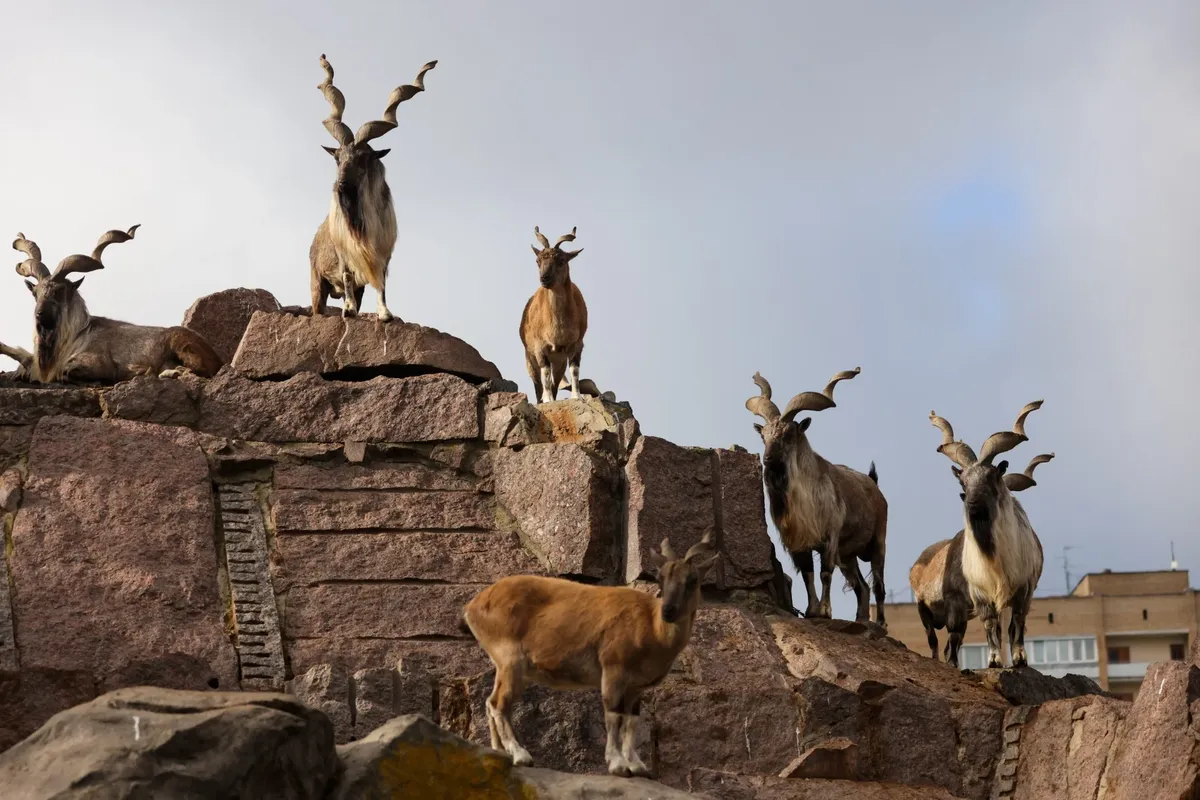
- I do not know where in our country the preservation of views through trophy hunting may work. Especially considering that hunters lie: even when they say that they shoot old males who have already come out of reproductive age and the loss of which will not cause damage to the population, this is not true. All real specialists in large mammals say that the population value of old males is very important. They drive herds, they have great experience. If they survived to such large horns, then they are most capable of survival. And the shooting of one such male can lead to the collapse of the herd. Therefore, of course, in any case, this hunt is damaged, ”says Mikhail Crenlin.
What will be the development of hunting and the protection of rare species in Russia under the new director of the hunting department will tell time. So far, the new position of Tatyana Aramileva causes great alarm in the environmental community.
The jurisdiction of the Department of Hunting is now not only the red book of animals, but also the red books of plants and mushrooms in Russia. The interlocutors of the “New” find it difficult to say what their fate can be - according to them, Aramilev never specialized in plants and mushrooms: accordingly, on the one hand, it has no particular interest in their “prey”, and on the other hand, it may not understand their values.
At the St. Petersburg Law Forum, her son Sergey Aramilev called the valley the valley of the valley, saying that he did not understand how to compare it in value, for example, with the Amur tiger. Tatyana Aramileva did not correct him: neither saying that rare plants are also valuable, not noting that the valley does not apply to red -hot species.