
Translated material
Return in American
We figure out which companies from the United States can benefit from warming relations with Russia most of all - and whether they will agree to return to the country
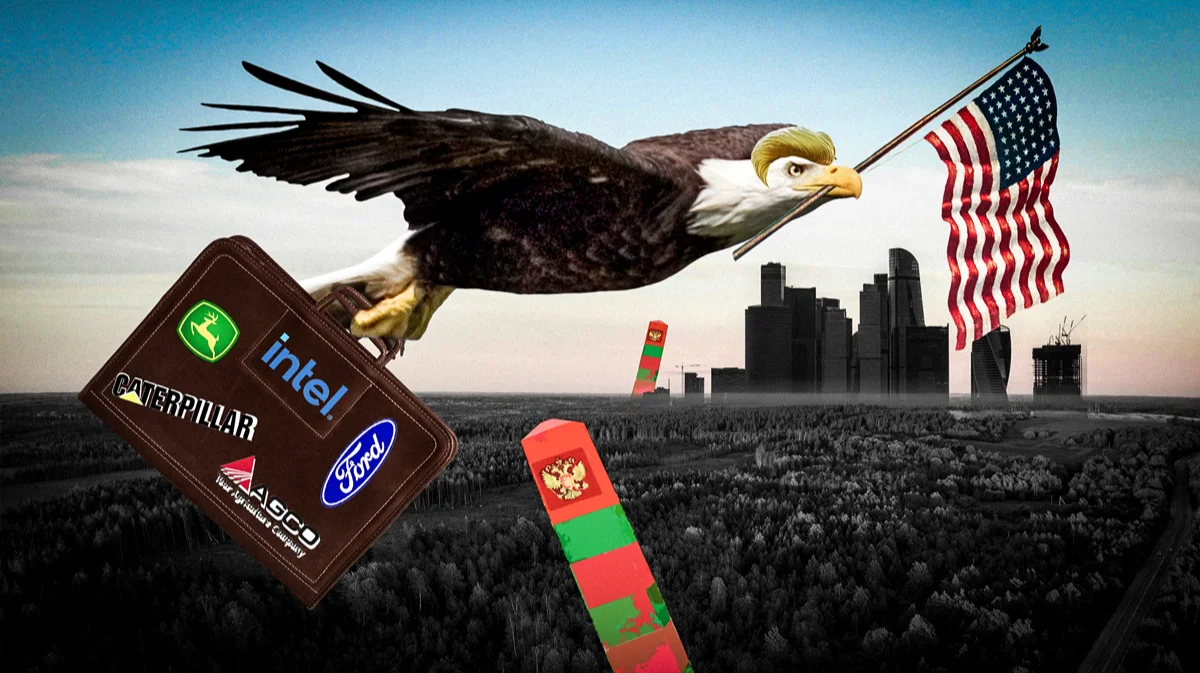
Illustration: "New Gazeta Europe"
After the summit with Donald Trump in Alaska, Vladimir Putin said that he suggested that the American leader resume economic cooperation. Novyevropa tells which American companies left Russia after an invasion of Ukraine, who and why continues to work in the Russian market and who could return.
“Russia and the United States have something to offer each other in trade, energy, digital sphere, high technology and space development,” Putin said in Anchorage. “If you want to cooperate with us, we look forward to this, we look forward to work together,” did not argue with him after the same Trump summit. A week after the meeting in Alaska, Putin repeated: it was "only the beginning to the full -scale restoration of our relations."
The mass outcome of Western companies from Russia began literally the day after February 24, 2022. The wave of departure of the first year of the war became the largest, because then the Kremlin did not manage to tighten the conditions for the sale or closing of the business for foreigners. The authorities did this only in the second half of 2022.
As a result, the Russian market, according to the Leave-russia.org project, completely left about 100 companies from the United States. And it was their return after the arrival of Trump to the White House that was most often discussed in Russian media and social networks, which in the spring of this year, an unprecedented wave of forecasts about the imminent return of Western brands (Novyevropa ” wrote in detail about this media campaign and why returning why it is very difficult). But in reality, the departed American investors are not impatiently at the locked gate in anticipation of when they are opened, Elina Rybakova, senior researcher at the World Economy Institute of World Economy Peterson, told Novy-Europe.
“There is no need to wait for a big return: each sector has its own logic for this,” says Rybakova. It recalls that various legal problems among foreign companies in Russia began to appear long before 2022. The most famous cases is the “squeezing” of the Sakhalin-2 project at Shell, Michael Kalvi’s criminal case , IKEA land disputes , corporate conflicts around the British BP assets and its problems with Russian oligarchs.
A year after year, it became more difficult for foreigners to work, but they were ready to endure for the sake of profit, Rybakova says: “There was such a lot of money in Russia that it covered the costs of solving various kinds of problems.” This time has gone: after the war, the rights of “unfriendly” investors and their capabilities, independently and without interference on the part of the state, were greatly cut to manage the business. “Everyone understands that you can work, but you can’t get money from Russia,” adds the economist.
If you take all companies from the United States that worked in Russia at the time of the start of the war, then, according to the Leave-russia.org project, most of them in one form or another have retained presence in Russia: either they conduct a regular business, or reduced investments and a number of operations. Only about 13% of American companies left the completely Russian market. This approximately corresponds to the ratio of the left investors from other largest “unfriendly” economies (except Italy, Finland and South Korea), who before the start of the war were the main partners of Russia.
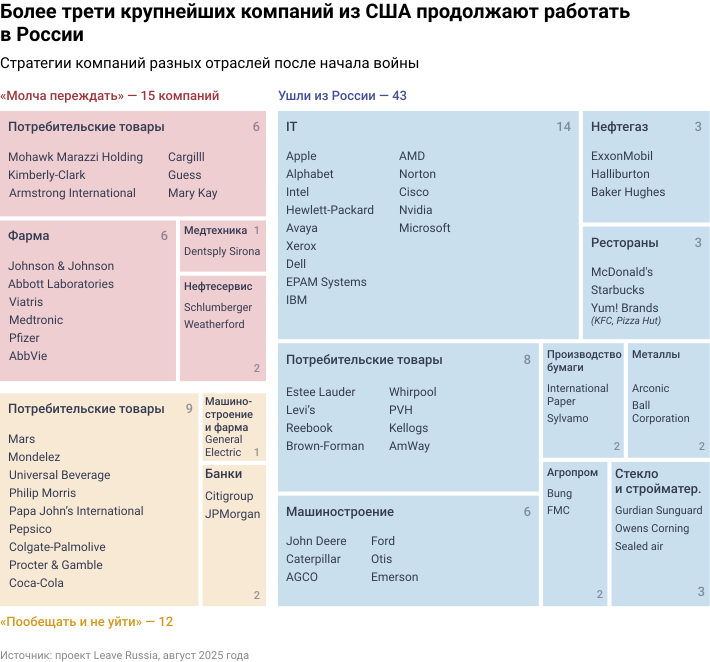
Novyevropa compiled its own list of the main American investors in Russia-out of 70 companies-at the time of the start of the war. About a third of them still continue to work in Russia.
As we thought
We took the largest American investors from the Forbes rating and added the largest company in Russian revenue, based on the data of Spark and the Leave-Russia project. In addition, we added key companies for our sectors to this list. Thus, we received a list of 70 American companies that worked in Russia at the time of the start of the war.
It and consumer sector: we are not waiting for anyone
Among the American firms that left Russia, several industry groups are allocated. The first and largest are IT companies, platforms, as well as suppliers of both chips and software, and gadgets and household electronics. The largest of them in revenue in Russia even at the end of 2022, when the outcome of the companies began, were Alphabet and Apple. This also includes Hewlett-Packard, Xerox, IBM, Dell and others. The second large group are manufacturers of non -food products, such as Levi's, Reebok, who closed their stores, and Whirlpool, which sold refrigerators and washing machines.
Haytek’s return is hardly possible, because an IT sector is just the industry where Russia is struggling with an iron curtain and trying to build its own infrastructure. Therefore, the authorities are unlikely to call global technological giants like Alphabet and Apple themselves.
But what Russia really needs is in electronic components. “The chips of some companies are not delivered directly, according to the gray schemes of parallel imports, and they“ know nothing, ”says Rybakova.
Most of all the chips are needed by the Russian military-industrial complex, and in 2024, according to market participants, the gray import of Intel and AMD processors to Russia grew by almost a third. But even with scenarios of “warming” between Moscow and Washington, “it is very difficult to say the same Intel: come to Russia and supply directly to the defense industry,” Rybakova notes. This was not even in the best pre -war times, she says.
As for the supply of gadgets, as well as other non-food goods-household appliances, clothing and shoes, the Russian market is now unattractive for the return of Western manufacturers, two economists told New-European. Among the reasons is the fall of demand in this sector due to slowing the economy and the high rate of the Central Bank, which made consumer loans very expensive.
As Rybakova said, no one is waiting for a repetition of the consumer boards of “zero” - the economic growth will be within 1-2%, if it is at all.
“This is not at all what will force large consumer companies to run back to Russia,” she added.
And besides, due to “parallel imports” the Russian market filled counterfeit goods and products from Asian countries of low quality, the analyst of the consumer sector told the “new-Europe”: “So far the market is not clear from them, returning does not make sense.”
Engineering: We are waiting, but not all
A small but “cohesive” group of those who departed are three large manufacturers of agricultural machinery: John Deere, Caterpillar and Agco. And here the situation is exactly the opposite. “They will return at the slightest opportunity,” an agro-industrial expert told Novy-Europe. For them, just the Russian market remains extremely attractive and they would not want to yield to Chinese manufacturers of combines and tractors.
“Now China in our endless fields is running in and modifying its powerful equipment. When it modifies, it will become a real competitor for American manufacturers. And not only in Russia, but even in the United States itself, ”he explains.
Of the large machine-building companies, there is also Ford, which was the first to open the plant in Russia in 2002 and was the first to close it before the war, in 2019, unable to withstand competition with other budget foreign cars. He has an option to redeem until 2027 of his share in the Russian joint venture Sollers Ford, but it is unlikely that he will use it now, the Automobile Market analyst told Novy-Europe. Even despite the fact that Russian consumers no longer want to buy Chinese cars at transcendent prices and have been annoying at high-quality models ("New Evrope" wrote in detail about this), the Russian market is not suitable for localization of production, he is sure: he is sure
“Absolutely excluded ( localization. - approx. Ed. ) With the current model of the economy. This level of instability is not paid off by any profits, and the auto industry is not a very marginal business at all. Auto industry needs stability of conditions. And here today the sanctions were lifted, they will introduce tomorrow, the day after tomorrow the Ministry of Industry will come up with something else. ”
Not to wait out
Last year, Novyevropa studied the cases of companies remaining in Russia and discovered two of their main strategies. We called them "silently to wait out" and "promise and not leave." Both strategies are almost equally represented among American investors from our list.
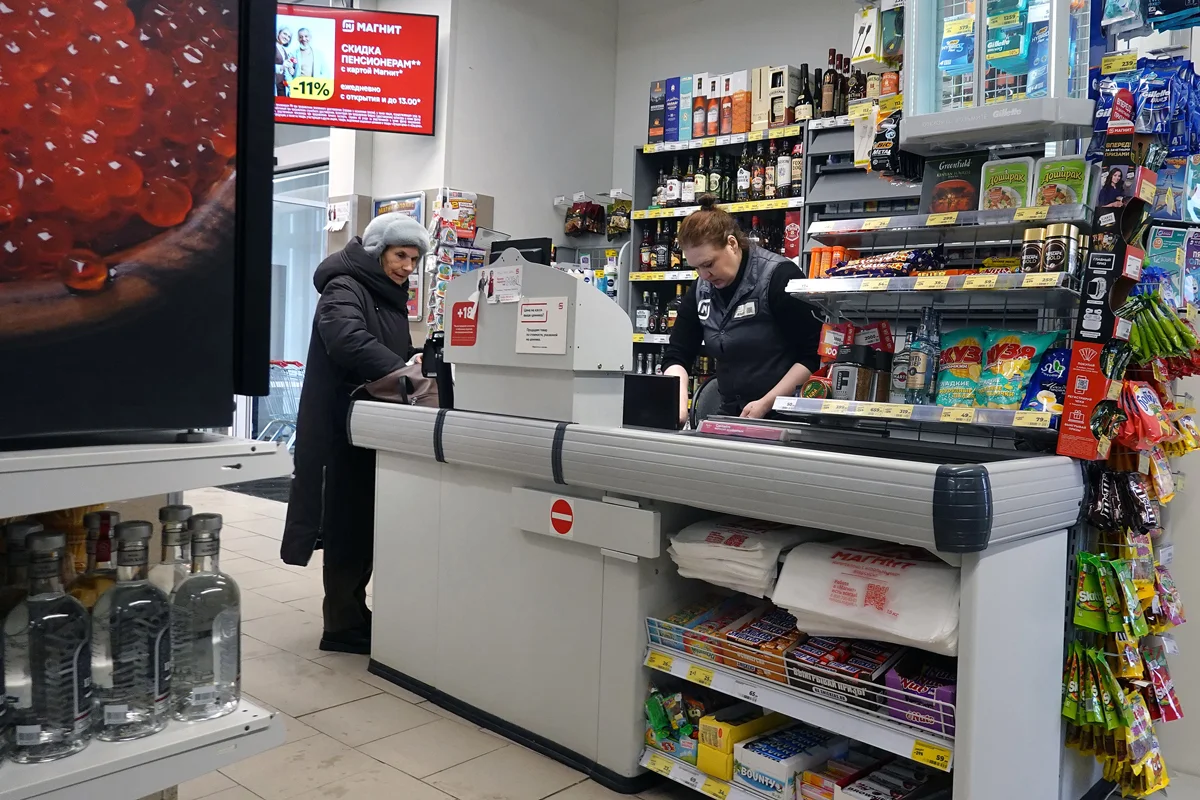
“Silently waited” the companies that at best expressed concern about the invasion of Ukraine - or simply mourn. And some directly said that they would continue to work. This is for example six American medical companies, including giants: Johnson & Johnson and Pfizer. Sanctions do not prohibit business manufacturers of drugs and medical equipment, so they decided not to lose a huge market. After February 2022, they only stopped investment in marketing and clinical trials in Russia, but did not stop the supply of drugs.
In the group of quietly waiting and two oilfield services, from among the leaders of this segment. According to FT , SLB (former Schlumberger) receives 4% revenue in Russia, and Weatherford - 7%. “Most likely, they see for themselves the opportunity to wait out the war and sanctions, continuing to carefully maintain the presence in the Russian market,” the oil and gas analyst said, who asked not to call it not to call it. And besides, they may not be considered dangerous for their reputation the risks of continuing work in Russia, he added.
It is helped by the American oilfielders to earn good money and the fact that they were able to get the projects of their competitors of American Baker Hughes and Halliburton, who left the Russian market (most likely, for risk reasons for the continuation of work). “Service <molo” of oil and gas always brings money because Russia does not have its own technologies, ”says Rybakova.
“They said goodbye, but did not leave” those who promised to sell the business, leave the market, reduce investment and abandon development plans in Russia. However, they retained a variety of assets in the country: production, retail chains, brands, service or deliveries. First of all, these are the largest global manufacturers of drinks, food and cigarettes. Novyevropa wrote in detail that these companies (among them are Mars , Procter & Gamble , Mondelez , Philip Morris and others) in the early days of the war, they issued quite the same type of suspension of some operations, but in fact their business has been preserved. Sanctions do not directly prohibit them to work, and they have already invested too much money in the conquest of the sympathy of Russian buyers.
The production of food, drinks and medicines is a very highly competitive and rigidly divided market, if you leave it, competitors will immediately take the place. That is why in our list of 27, US investors still working in Russia are 23 consumer and medical sectors.
"Quietly sit" did not help
In two American investors, the Russian authorities significantly selected assets, and a threat of such withdrawal hangs over another company.
The strategy of “silently to wait out” did not help the large food holding “Glavproduct” ( belonged to the American Universal Beverage). The manufacturer of the stew and the paste was accused of withdrawing 1.4 billion rubles from Russia bypassing the restrictions introduced after the outbreak of the war, and nationalized. This happened in the midst of mutual courts of Putin and Trump one after another - moreover, US Secretary of State Marco Rubio promised that this case would become a “part of negotiations”. But no public references to Glavproduct after the summit in Alaska followed. However, in wartime, the desire of the state is understandable to put control of canning plants under its control.
The JPMorgan Chase, one of the few Western financial organizations remaining in Russia, adhered to the same strategy - quietly sitting and working - adhered to the JPMorgan Chase (besides it from American banks, I saved the Citigroup business). But despite the attempt to wait, his subsidiary "J.P. Morgan Bank of the Internet ”can also be threatened by nationalization. The state VTB requires it in the courts almost $ 440 million, and also wants to arrest the assets of the Russian daughter. Such processes often end in the change of owner. True, while the high court of London forbade the Russian State Bank to continue the trial - but this is hardly a decree for the court of Russia.
For foreign banks (for example, such as Austrian Raiffeisen, Italian Unicredit and Intesa Sanpaolo, Dutch ING, American UBS and Hungarian OTP) is still interesting to maintain presence in Russia because money is being made here, Rybakova says.
But the pressure from the authorities on them is very large, and it is very difficult to sell assets and leave the market, it adds. The money earned is locked in Russia - it cannot be withdrawn.
A separate story with the confiscation of Exxonmobile assets is once one of the largest foreign investors in Russia, which invested billions of dollars into oil production in Sakhalin. At first, Putin revealed a business from him: he transferred the Sakhalin-1 oil and gas project to a specially created Russian operator after Exxonmobile, a pre-war deposit operator, announced leaving Russia, writing off losses of $ 2.4 billion. In fact, this meant nationalization-the Russian authorities threatened the American investor that they themselves would sell to whom they would want his 30 percent share in Sakhalin-1. But the Kremlin pulled for three years with a deal, and in front of the summit in Alaska, Putin suddenly suddenly signed a decree with the terms of the company's return to the project. But, as they say, there is a nuance.
For Exxonmobile itself, Putin's invitation conditions are not changing, an independent expert in the field of energy Tatyana Lanshina is sure. “There is one interesting point in the decree - for returning it is necessary to support the lifting of Western sanctions. That is, Moscow sets a practically impossible condition, but at the same time formally invites to return, ”she remarks. And if the oil and gas company does not want to lobby for the abolition of sanctions, “you can supplement the decree again, and offer the former share of Exxon in the project to the one who wants,” Yevgeny Kogan’s investment batnantice observes sarcastically.
Are transactions possible?
As our interlocutors say, when companies left the Russian market, they lost a lot on this. And therefore, most of them are unlikely to be interested in returning until the situation changes radically: the war will not end and negotiations on the new “discharge” and the abolition of sanctions will begin.
“Well, once you ran away, sold everything at a very small price and lost money. How will you explain to the board of directors and the tax service, why did you first write off a lot of money, and then say: “Let's get back again”? ” - Asks Rybakov's question.
The return is unlikely, given that Russia is not in Russia now and there may hardly be at least some guarantees of the stable rules of the game. “For example, at any time taxes or conditions for foreign investors may change. In addition, the return can bring tremendous reputation costs, ”Lanshina believes.
Another thing is if the Kremlin is able to prove to American companies that it is ready to offer special “exclusive” conditions and guarantees of their stability for a long time. Both parties have already talked a lot about the “transactions of the century”, for example, in the field of production of rare -earth metals: Washington thought to offer Moscow to develop such deposits in Alaska, and Putin was not only in Russia, but also in the occupied regions of Ukraine. The Kremlin also wanted to attract Americans to the production of aluminum in Siberia.
Russia already has experience luring global companies on special conditions - precisely in order to get large investments in a country with a poor investment climate. Back in the 1990s, a production division agreement was developed (SRP). But his key condition was the promise of Moscow to keep the rules of the game for decades unchanged. And this is exactly what foreign investors are unlikely to believe that the participants of the two largest oil and gas projects of the SCP on Sakhalin, Shell and Exxonmobile are unlikely, just lost everything after the start of the war.