Date
Author
Юрий Сафронов, Наталия Данилова
Source

Preserved copy
Translated material
Why are France hospitals preparing to receive thousands of wounded
And what does the threat from Russia have to do with it

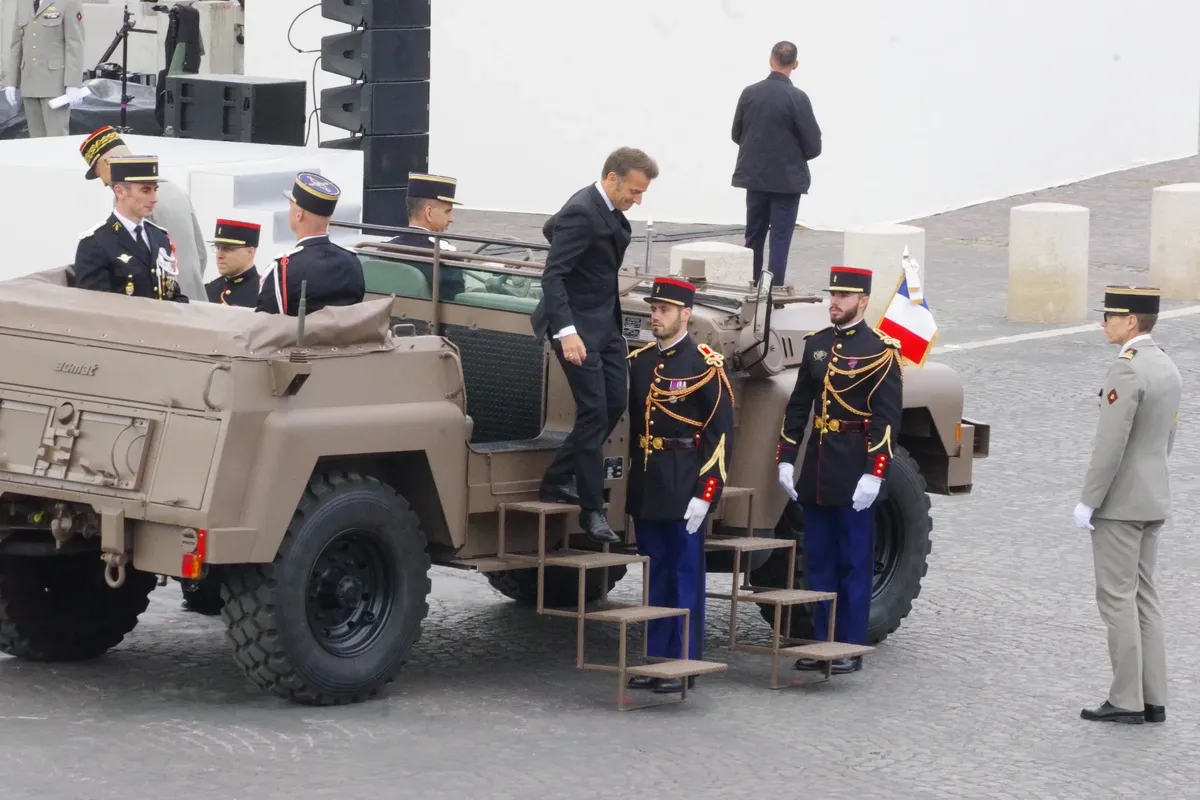
Emmanuel Macron at a military parade 08/08/2025. Photo: Yuri Safronov / "New Gazeta"
The Ministry of Health of France sent instructions to regional health departments, in which they are ordered by March 2026 to be prepared for the “high intensity conflict” and the reception of tens of thousands of wounded - primarily foreign soldiers. Another instructions provide for the possibility that the military hospitals of France will have to free up places to receive many wounded Frenchmen. Information published by the Le Canard Enchaîné newspaper was actually confirmed by the Minister of Labor and Health Catrin's health. What does this mean - in the context of the recent adoption of the new military doctrine of France, in which for the first time since the end of the Cold War it is officially stipulated the possibility of a large -scale conflict “in the center of Europe” - with the participation of Russia? And are there any “echoes” of negotiations on ensuring the post -war security of Ukraine?
What is said in the instructions of the Ministry of Health
“The Ministry of Health mobilizes hospitals for war” - the publication of Le Canard Enchaîné was published under such a heading .
The newspaper writes that the instructions of the Ministry of Health, sent on July 18 to the directors of regional healthcare agencies (ARS).
“By order of Catherine, the hospitals should be ready to accept thousands of wounded soldiers in the event of a large -scale armed conflict in Europe. <...> Macron stands for the termination *** in Ukraine, but he really believes in it? His government, in any case, is armed with a large -scale conflict. Just just in case, of course, ”writes Le Canard Enchaîné.
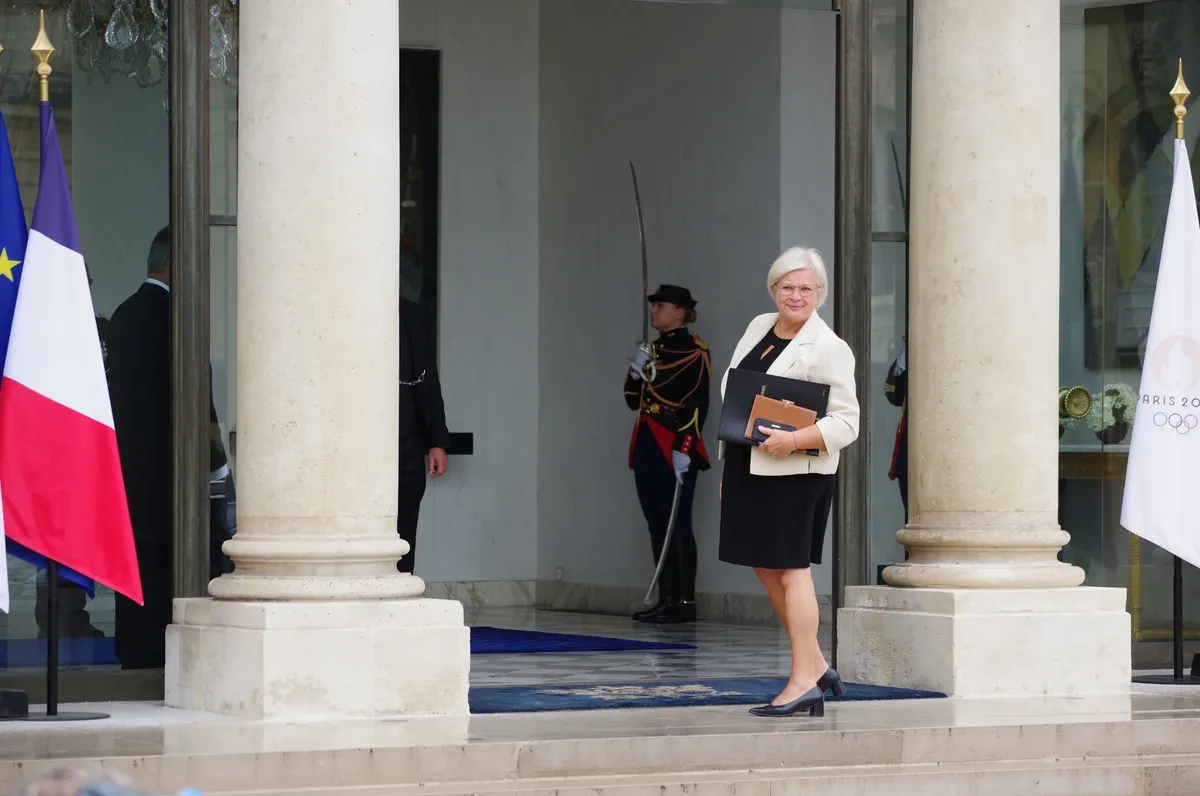
The newspaper claims that on behalf of the General Secretariat of Defense and National Security, which is under the jurisdiction of the French government, the Ministry of Health plans to create medical centers to receive patients returning from the war zone.
These centers should be located next to bus stations or railway stations, ports or airports to simplify the task of “redirecting” foreign soldiers “to the countries of their affiliation”.
These centers should have opportunities for the treatment of an average of about 100 military personnel per day for two months continuously, and in three -day (on average) “peaks of activity” - up to 250 patients daily.
In total, civil medical institutions should be ready to accept from 100,000 to 500,000 military for a period “from ten to one hundred and eighty days”. According to the document, we are talking about "male, young and suitable for battle" composition of patients.
“Particular attention” is recommended to attract to the “treatment of mental post -traumatic disorders and to the direction of physical medicine and rehabilitation”.
In order to cope with the influx of patients, doctors, “regardless of their sphere of activity”, it is prescribed to join the health of the armed forces and thus strengthen his team, which today includes 14,000 employees (two -thirds of the military and a third of civilians).
“Already now” ARS heads are prescribed to familiarize the “medical community” with the “restrictions on wartime, noted by the lack of resources, the increase in needs” and other related problems.
In another “confidential instruction” (on February 21), the Ministry of Health stipulates that in the event of a large -scale conflict, eight military hospitals in France will have to free up places to receive wounded and crippled French fighters.
“In the current international context, it is necessary to provide for the conditions of medical support in a situation of a high intensity conflict,” the ministry explains. Recalling that, being the signator of the Washington Treaty , France “may be obliged to take any necessary measures, including the use of force, in response to an armed attack, directed against one or more states - members of the organization of the North Atlantic Treaty (NATO)”.
It is separately noted that, despite this obligation, France is not going to treat foreign patients for free - therefore, their clear accounting is prescribed: to ensure “reimbursement of costs to institutions and medical workers mobilized to assist the army of foreign states (or) allies, in accordance with international agreements ...”.
Readiness "just in case"
Madame Minister of Health of France in an interview with RMC and BFMTV , which was published on the day of the publication of Le Canard Enchaîné, did not refute anything. And she explained: “This is part of preventive measures, as strategic reserves, as preparation for epidemics. I did not hold this post during Covid-19, but remember, then there were not enough words to describe the unpreparedness of the country. ” And she added: “It is completely normal that the country is preparing for crises, for the consequences of what is happening. This is part of the responsibility of the central government. ”
Probably, in order not to scare the French, the minister did not use the term “war”, preferring the less brutal word “crises”.
Nevertheless, for many months now the population has been accustomed to what has been happening from 02.24.2022 in Ukraine in a completely far term can spread to the territory of the European Union-NATO.
On this topic there were several special interviews and performances by Emmanuel Macron - including the last appeal of the president to the armed forces on the eve of the day of the capture of the Bastille (not to mention regular mention of “Casle”).
In the July appeal, Macron posed the question “before the nation”: “Are we personally able to withstand the war of high intensity on European land over three or four years?” And he gave an affirmative answer.
He also said: “*** In Ukraine, it demonstrates that for resistance it is necessary not only courage, but also stocks, and adapted defense industry. We need a nation that can hold on to be mobilized. Therefore, we must accelerate the development efforts of the reserve. ” And he promised this fall to “give young people” new proposals “for service in the army in other forms”.
He called on the nation to other “historical efforts” - including the continuation of the growth of military expenses (“Salvation of the Fatherland requires us to spend more on defense, so that everyone will make our share to this contribution”). He also noted that the country should be ready to support the allies militaryly, and not only in Ukraine: “Everywhere in Europe* the forces of France are waiting, and all over the world is in jeopardy. So let's protect her. "
Once again he promised that the army (which they began to prepare for an undesirable, but possible development of events even before the preparation of the civilian population) can count on the support of society: “We will be next to them, in the rear, ready for all obligations, for all the battles, as these women and men are ready for the highest victim for the sake of the nation ...”
Then he recalled that freedom and security need to be “defended in Ukraine”, “because our security and our freedom are associated with the fate of this country.” He emphasized: “That is why, together with Great Britain, France formed a coalition of volunteers in order to contribute to ensuring a durable world on our continent.”
The coalition, as you know (although the contours of its actions discussed since February are still vague), provides for the sending of thousands of peacekeepers to Ukraine - and Macron, unlike leaders of other countries ( starting with the UK ), never questioned the direct participation of the French military in this.
However, given the number of soldiers who are planned to be sent from the coalition (the first leaks gave “30 thousand” a few months ago, the latest “several thousand”), and the fact that its cautious participants are now inclined to deploy the military “far from the front line”, we can assume that large -scale preparation of France hospitals is designed precisely and only ** in case of the hypothetical armed conflict of Russia from one of the NATO countries.
This was first officially stated in the French military doctrine published in July ("National Strategic Office-2025"), the main principles of which "new" stated .
The discussions of the French Ministry of Health discussed to clarify the time frame of probable events on the territory of NATO, which, just in case, are afraid of French military strategists - from the beginning of 2026 and "until 2030".
"Hospitals become strategic infrastructure, along with airbase ..."
“This directive (Ministry of Health) did not appear from scratch. It fits into the strategic context determined by the fighting operations in Ukraine, tense relations between NATO and Russia, as well as uncertainty in European security matters. For Paris, the integration of civil hospitals into the defense system means preparing the entire nation for a long conflict, ”the specialized military site Armées.com expresses his opinion. - In practice, this means that war is no longer perceived as an abstraction, but is considered as a real opportunity. Hospitals become strategic infrastructure, along with air base or military ports. And if healthcare is preparing for such a scenario, it means that the state is now seriously considering the possibility of a large -scale clash in European territory. ”
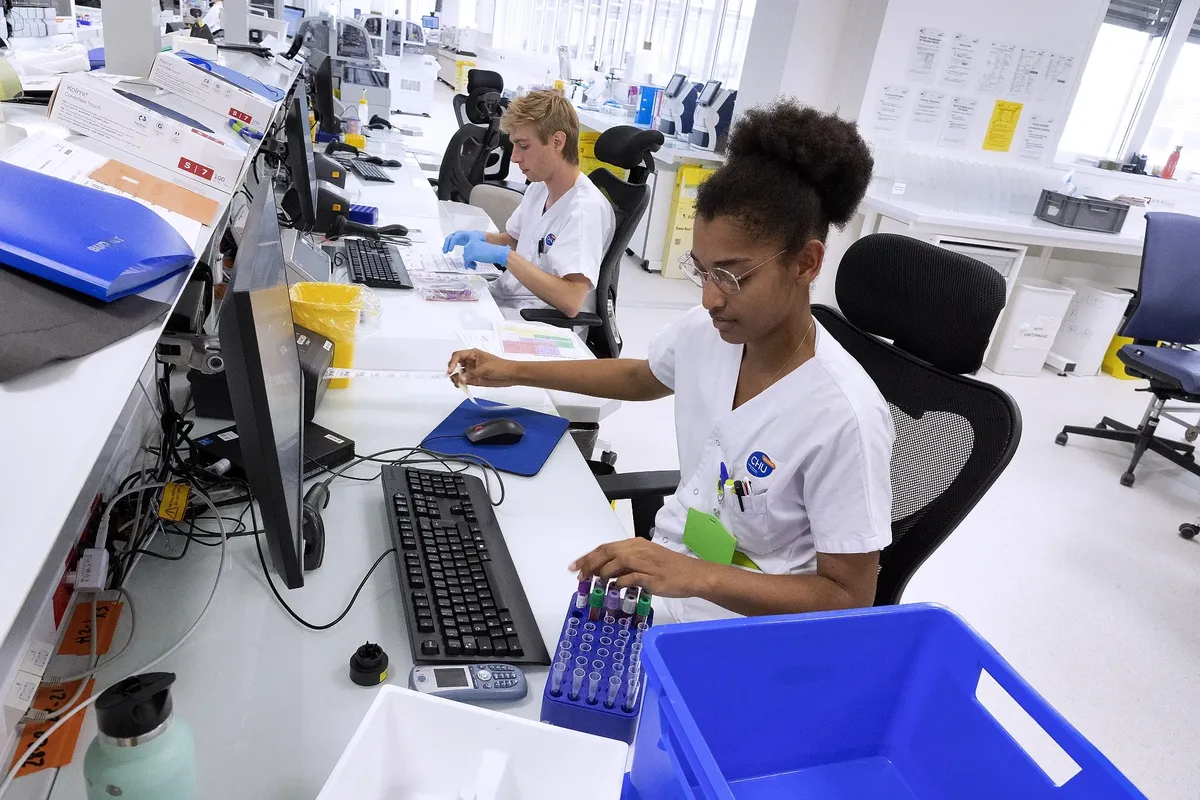
“Preparing the French hospital system for emergency situations is not news. For several years now, medical institutions have been based on “Plans of Emergency Situations” ( PLANS BLANCS ), designed to manage the massive inflow of the victims - whether it is terrorist attacks, natural disasters or pandemia. This system was strengthened after the COVID-19 crisis with updated methodological manuals for gradual increasing capacities, comments the site of medical information Caducée.net . - The mechanism of the “institution working in stress” provides additional flexibility, allowing hospitals to adapt resources without immediate introduction of all emergency measures. This organizational structure can now be involved in a high -intensity war. ”
The publication emphasizes that the issue of cooperation between civil and military structures in the field of medicine is now “in the center of discussion” and recently the healthcare service of the Armed Forces “regularly cooperates with civilian hospitals”.
Moreover, in the report of the French Accounts Chamber for 2023 it was emphasized that the healthcare service of the Armed Forces will not be able to independently cope with the massive influx of the wounded due to many years of budget restrictions and the closure of several “iconic institutions”-such as, for example, the Parisian military hospital Val de Grass. They closed the “goals of saving”-the same Val de Grass in 2016, then not expecting a big war then, despite the fact that it had already begun in the Donbass.
“In the case of an armed conflict ( *in which France will be involved. - *Yu. S. ) This cooperation should become even closer, with the logic of the combination of resources and examination,” the medical publication emphasizes.
In parallel, the media announces the preparations by the French government of France with recommendations for the population in crisis situations ( Le Livret “Tous Résilients ” - an approximate translation: “Everyone is ready to resist” ), which, according to the RMC radio source, will be partially dedicated to the war. However, the source emphasized that
“War is only part of the subsection,” because “we (France) are far from (hiding) in bunkers.”
By the way, the head of the French General Staff Thierry Burkar, who was leaving now on a well -deserved rest, spoke about this, by the way. Agreeing that Russia in theory “will be ready until 2030” pose a “real threat on the eastern NATO flank”, he emphasized at the same time: France is protected from such a danger (if not about a nuclear strike) - and taking into account geography, and taking into account the fact that it is a “country with good military capabilities”.
According to media reports, the mentioned brochure should be widespread among the French by October 13 - to the International Day to reduce the risk of disasters.
The purpose of this document is “it is better to prepare France, its enterprises and citizens for shocks, to learn how to withstand long tests, acting in crises collectively and thoroughly.”
“Increased readiness” in many European countries
France, by the way, is far from the first and not the only one among European countries that prepares its infrastructures and the population for a large -scale conflict. Including at the level of medicine. Lithuania, Estonia, Latvia and Poland “actively invest in medical training, conduct exercises on evacuation and build underground hospital infrastructures to be prepared for the massive inflow of wounded in the event of a Russian attack,” says Caducée.net.
To the question of the editorial office of the Belgian television channel RTL TVI , which arose precisely in connection with the publication of the instructions of the French Ministry of Health, the Federal State Service of Health Belgium (SPF Santé) replied that she was also not in desk.
“In our country, an awareness of the importance of preparing for possible incidents in the future is growing (after 2016 attacks, Covid-19 and the current international situation). We adapt the plan of emergency measures in hospitals based on the recommendations of the European Union and NATO. At the Belgian level, SPF Santé asked <...> to develop a guide (it is available online) for the organization of medical care in the case of chemical, biological, radiological, nuclear and explosive incidents. "
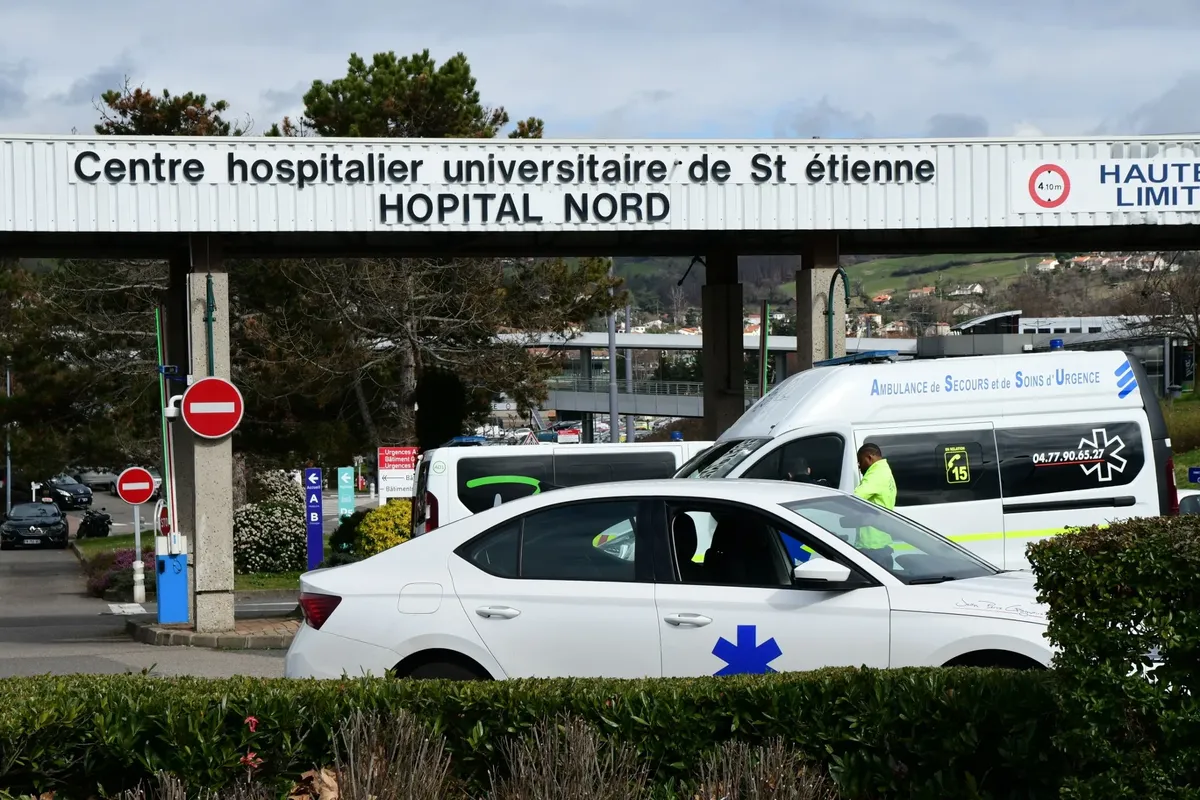
“We also need to prepare for the possibility of a massive influx of wounded (transfer of military or civilian patients) and/or displaced persons, while maintaining the possibility of providing medical services to our population. Therefore, it is extremely important to maintain and strengthen cooperation between civil and military structures ... ”, - emphasized the Ministry of Health of Belgium.
And at this time ...
In parallel with practical work (at least on paper) to strengthen the defense capability and crisis capabilities of Europe, diplomatic efforts continue.
And this happens, according to estimates by the heads of France and Germany, gathered on August 29 in Toulon at the traditional Franco-German meeting of governments, without any desire from Moscow.
Macron emphasized at a joint press conference with Merz:
On August 18, Putin “pledged to President Trump” to hold a meeting with Zelensky for two weeks. And if there is no specificity regarding the meeting after the next Monday (September 1), “this will mean that President Putin played with President Trump,” the French leader emphasized.
“Honestly, this does not surprise me, because it is part of the strategy of this Russian president to act in this way,” added Macron. The German Chancellor supported this assessment, noting that Putin "obviously does not show any desire <...> to meet with the president of [Ukraine Vladimir] Zelensky, he puts forward preliminary conditions that are completely unacceptable." And that the meeting, “completely obvious”, will no longer take place “on time”.
Due to this
The leaders of France and Germany said they would seek to impose additional sanctions against Russia. “Now the United States is actively discussing new customs duties, and I would be very much for the American government to make this decision,” Mertz said.
“We both talk with President Trump” on the weekend, and “if we are forced to state next week that again, after the months of unfulfilled promises, [nothing] has happened, we will very clearly achieve the introduction of primary and secondary sanctions” against Russia, ”Macron promised. “We will continue to put pressure so that additional sanctions are taken, we are ready for this, but also that the United States of America did the same in order to force Russia to return to the negotiating table,” the French president said.
In a joint statement following the results of the Franco-German Council on Defense and Security, which has passed the same evening, it was emphasized that both countries undertake to "strengthen their cooperation within the EU and together with partners <...> for further expansion and developing effective and reliable sanctions."
The statement also says: “Despite intensive international diplomatic efforts, Russia does not show intention to stop *** against Ukraine.” European allies pledged to increase the support of Kyiv, in particular, announcing an increase in financing aimed at the production of military equipment, as well as the supply of “additional air defense systems”.
The leaders of France and Germany once again confirmed the consent “with the need to provide Ukraine with reliable security guarantees (“ which will be provided to Ukraine by partners from the USA and Europe ”), including ensuring the constant supply and financing of weapons, training and intelligence, the creation of a future model of Ukrainian armed forces without any restrictions on the number or opportunities ...”.
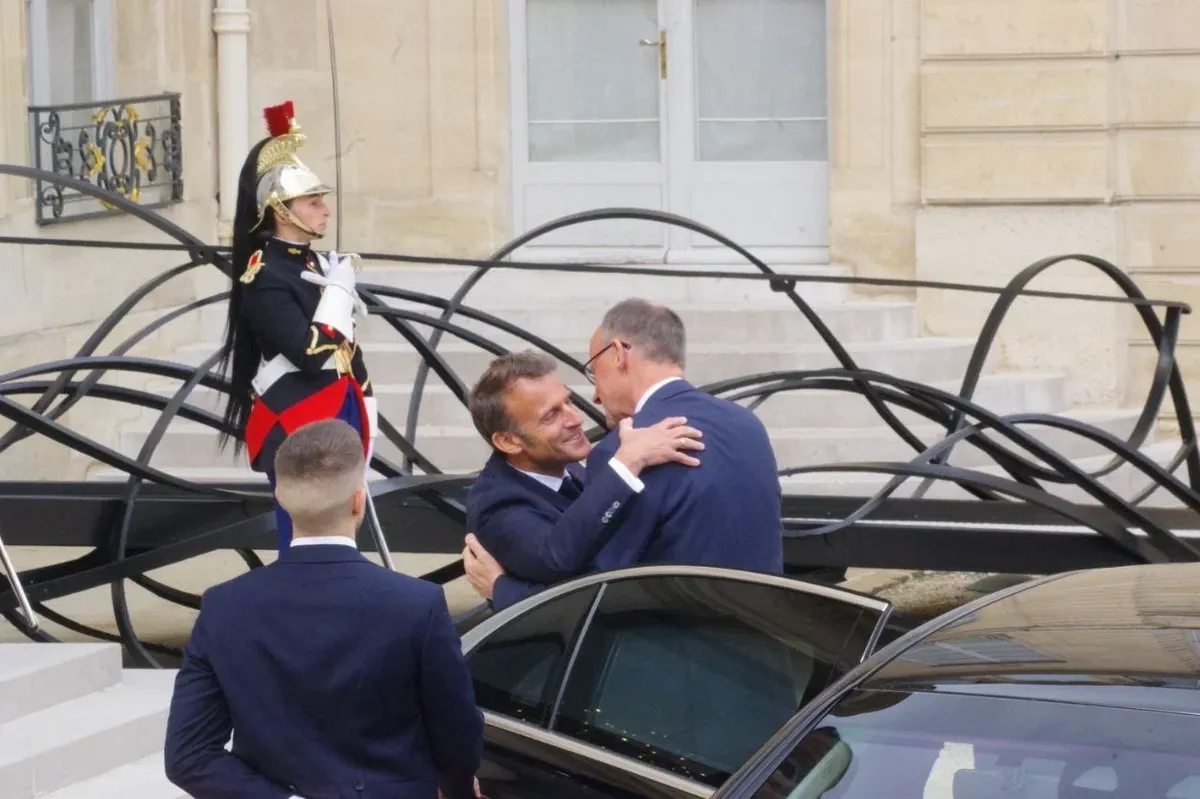
“Preservation of the“ coalition of those who wish ”remains the priority of the Franco-German tandem,” Mertz noted. А Макрон дополнительно сообщил о проведении на следующей неделе нового саммита руководителей стран коалиции.
При этом никакой конкретики о гарантиях безопасности снова сказано не было.
О том, что пока ни о чем конкретном не договорились, подтвердил в тот же день на пресс-конференции в Киеве и Владимир Зеленский. Он сказал, что хочет добиться конкретики «от партнеров на следующей неделе в Европе» — и решения должны быть приняты именно на уровне лидеров стран. “Already without our military,” the President of Ukraine emphasized. — Потому что уже были ( неоднократные. — Ю. С. ) консультации генштабов, были консультации главкомов, были консультации советников по национальной безопасности…». «Потому что такие вопросы, как «boots on the ground», можно проговорить только на уровне лидеров: кто готов и на что готов», — заявил Зеленский.
Готовы ли европейские лидеры на решительные шаги? Тот же канцлер Мерц говорил две недели назад, что «на данный момент нет причин говорить о (миротворческих войсках), мы далеки от этого», сначала нужно добиться прекращения огня. А позднее в СМИ появились утечки о том, что внутри правящей коалиции канцлера есть «сильные колебания» по поводу отправки «boots on the ground».
Притом что Эмманюэль Макрон говорил еще в начале июля на встрече с премьером Великобритании Стармером: «Сейчас ясно, что мы имеем единую координационную структуру, и у нас есть план <…>, готовый к запуску и ускорению в течение нескольких часов после подписания соглашения о прекращении огня».
На пресс-конференции в Тулоне 29 августа Фридрих Мерц заявил, что желает скорейшего мира, но «не питает иллюзий»: «Эта *** может продолжаться еще многие месяцы».
И на всякий случай «мы должны быть к этому готовы — в тесной координации с нашими европейскими партнерами, американцами и «коалицией желающих».