
Translated material
Fake by Vladimir Putin: in 2000, Russia tried to join NATO, but was refused
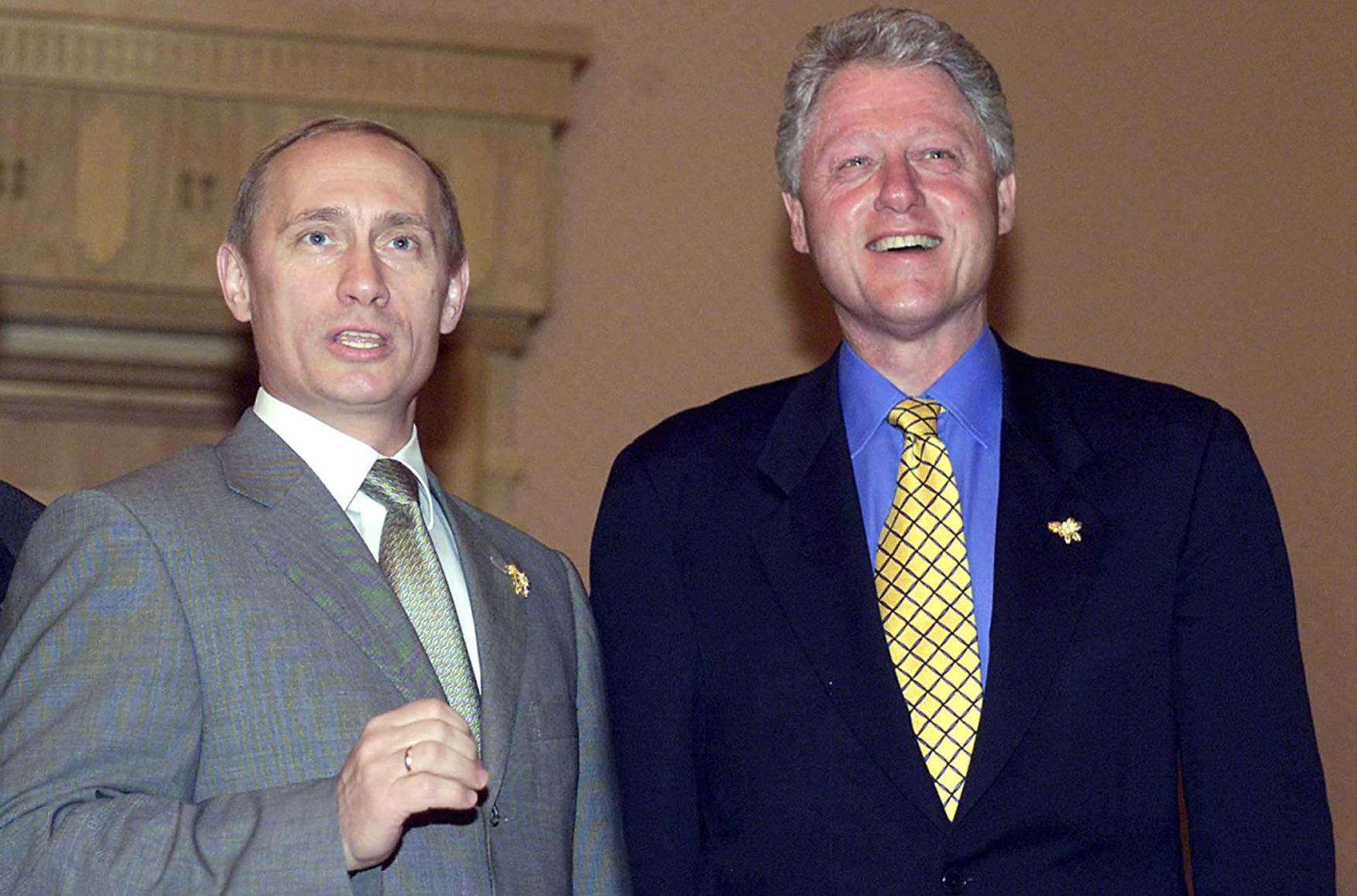
Fake by Vladimir Putin: in 2000, Russia tried to join NATO, but was refused
The Insider October 3, 2025Vladimir Putin, in his speech at a meeting of the Valdai Club, stated :
“Our country, trying to eliminate the grounds for bloc confrontation and create a common security space, twice even declared its readiness to join NATO. The first time was in 1954, back in the days of the USSR, this was done then. And the second time - during the visit of US President Clinton to Moscow, I already spoke about this in 2000, when we also talked about this topic.
And both times we actually received a refusal, and right away. I repeat: we were ready to work together, to take non-linear steps in the field of security and global stability. But our Western colleagues were not ready to free themselves from the captivity of geopolitical and historical stereotypes, from a simplified, schematic picture of the world.
I also spoke publicly when we spoke with Mr. Clinton, with President Clinton, and he said: you know, it’s interesting, I think it’s possible. And then in the evening he says: I consulted with my people - it’s unrealistic, now it’s unrealistic. When is it real? Everything, everything is gone."

As Novaya Gazeta Europe pointed out in April 2024, the USSR and subsequently Russia did indeed apply twice to join NATO, but these were completely different cases than those mentioned by Putin:
“If we speak in legal terms, then there were not four official attempts, but two: from the USSR during the time of Yuri Andropov (1983) and Russia during the Yeltsin era (1991). Mikhail Gorbachev and Vladimir Putin expressed such intentions, but did not send official documents to NATO.
As experts note, the “hawk” Andropov was forced to send an official document on joining NATO by severely strained relations with China, which supported anti-Soviet military formations in Afghanistan. The USSR had an extensive common border with China, and if the conflict escalated, tension could arise in almost the entire southeast of the country. By joining NATO, Andropov hoped to cool down the “hot Chinese guys.” The fate of that appeal is unknown, because almost immediately after it, the Soviet Union shot down a South Korean passenger plane that entered Soviet airspace. After this, US President Ronald Reagan declared the USSR an “evil empire,” and the nuclear forces of both powers were put on full alert.
“In 1990, when the question of the unification of Germany was being decided, the stumbling block was precisely Germany’s membership in NATO,” explains [Israeli historian Itzhak] Kazinsky, who defended his dissertation on the historical aspects of the split and unification of Germany. — The Soviet leadership at first insisted that Germany withdraw from NATO, and a united Germany was not considered as a possible member of the bloc. But Western countries could not agree to this. By that time, Germany had become a key NATO member in Europe due to its territorial position and economic potential. And then Mikhail Gorbachev turned to US Secretary of State James Baker with a proposal for the USSR to join NATO. "You say that NATO is not directed against us, that it is a security structure that adapts to new realities. I offer membership." In 1991, the first Russian President Boris Yeltsin again made this proposal, sending an official document.
In 1994, Russia, along with the Baltic countries and some former Warsaw Pact countries, entered the Partnership for Peace program. But in 1999, NATO decided to bomb Yugoslavia, and relations between Russia and NATO cooled again. But Latvia, Estonia, Lithuania, Slovakia, Slovenia, Bulgaria, Romania and other countries, having completed ten years of “candidateship,” became full members of the Alliance in 2004.
“Because of the bombing of Yugoslavia, Russia has greatly limited contacts with NATO,” says Kazinsky. — But September 11, 2001 changed everything again. Now NATO has begun to be seen not as a military alliance against a global aggressor, but as an association of countries opposing global terrorism. And here Russia could be very helpful. Moreover, Putin in 2000, in an interview with Western publications, constantly said that he did not see any special obstacles to Russia becoming a member of NATO. And now a permanent representation of Russia in NATO has already been created, which even received the right to vote at meetings. Joint exercises have already been conducted, Russia began to participate in the discussion of common problems, helped with its intelligence data and connections in Afghanistan during the fight against al-Qaeda and the hunt for Bin Laden. But then came the conflict in South Ossetia in 2008, followed by the annexation of Crimea and a sharp cooling towards another possible NATO member, Ukraine. In 2021, Russia unilaterally terminated its participation in the NATO-Russia program, closed all joint structures and demanded the removal of the NATO Information Office and the Military Liaison Mission from Russian territory. The West has once again become convinced that “Putin’s Russia” is not much different from the USSR of 1954, when one thing was loudly declared, but in reality something completely different happened.”
As for the 2000 episode that Putin recalls, the content of his conversations with Clinton was conveyed in different ways, including by the participants in the events themselves. But in August 2025, the US National Security Archive published declassified transcripts of negotiations between Clinton and Putin, and this is what it said about the possibility of Russia joining NATO:
First plenary meeting, 4 June 2000
Clinton:
— I am pleased with the resumption of cooperation between Russia and NATO. Now it is completely back to normal. <…> We need your personal commitment to continue moving forward. In my speech in Aachen, I said that there are two unresolved problems in Europe: firstly, the situation in South-Eastern Europe, and secondly, improving relations with Russia. What we need now is to fully implement our agreement and then go beyond it.
Putin:
— Yes, I saw your statement in Germany about the need for open doors in Europe and cooperation with Russia. We saw a very positive meaning in all this and are ready to develop it further. There must be a full-fledged relationship between Russia and NATO. But Russia does not support the idea of NATO replacing other arrangements that have been developed since 1945. If Russia and the United States can coordinate their actions at the UN, we will succeed. If we cannot do this, we will reach a dead end. I also recently saw a statement published by nine countries in Vilnius. Our attitude towards NATO expansion remains unchanged. But I will tell you that when I was asked about Russia's possible membership in NATO, I supported this idea. This is important. It's important to note that the United States has objected to my public statement, and I don't think anyone in the alliance is ready for that.
Clinton:
“Well, we should start now.”
Putin:
“This is the first time we've heard such a statement from the United States, and I have to say that I'm glad that NATO's attitude toward Russia's inclusion is important to how people see enlargement.”
Third session, 5 June 2000
Putin:
— What you said about the possibility of Russia’s membership in NATO shocked not only my colleagues, but also some of yours. We need to make more progress on this issue. We need to develop a mechanism for implementing the Russia-NATO Founding Act. I would like to ask you to consider the possibility of participation of officers of our General Staff in the work of the NATO Planning Committee. This would be a nice, gentle step forward. This would help dispel suspicions on our part from our military. This would be a gentle but significant step.
The recording of the evening conversation that Putin mentioned at the Valdai meeting is not among the published documents. But the next morning, Putin talks about a certain “shocking” statement by Clinton, and the thesis about the unreality of Russia’s entry could hardly be considered as such, since this would be completely in line with the long-term policy of the United States and NATO. Apparently, Putin here is proceeding from the idea of the relevance of Clinton's morning statement, which indeed looks revolutionary.
That is, Clinton did not refuse Putin, but it seems that the radical proposal to admit Russian representatives to the NATO planning committee, without waiting for Russia to join the alliance, did not arouse enthusiasm on the part of the US President. There are no reports of any attempts by Russia to continue dialogue in this direction.
We really need your help
Sign up for regular donations