
Translated material
Does the Russian Orthodox Church want to impose taxes?
Tithe or church tax: domestic and foreign experience

Photo: Alexander Demyanchuk / TASS
Stalin once ordered the first “Red Chief Prosecutor” Karpov “not to look into your butt’s pocket.” We will break the Stalinist covenant, especially since the Russian Orthodox Church itself asked for it.
This fall, its speakers again talked about the “revival of the tithe,” the church tax. The concept of “People are the new oil” is especially in demand in the modern era, and this oil should not flow past the church, they believe.
Give it yourself before the Lord takes it away
The Ministry of Finance has submitted to the State Duma a bill to increase the VAT rate to 22% from January 1 next year. Other taxes and fees are also growing - direct and indirect: the “black hole” of the Russian budget is constantly lacking in money.
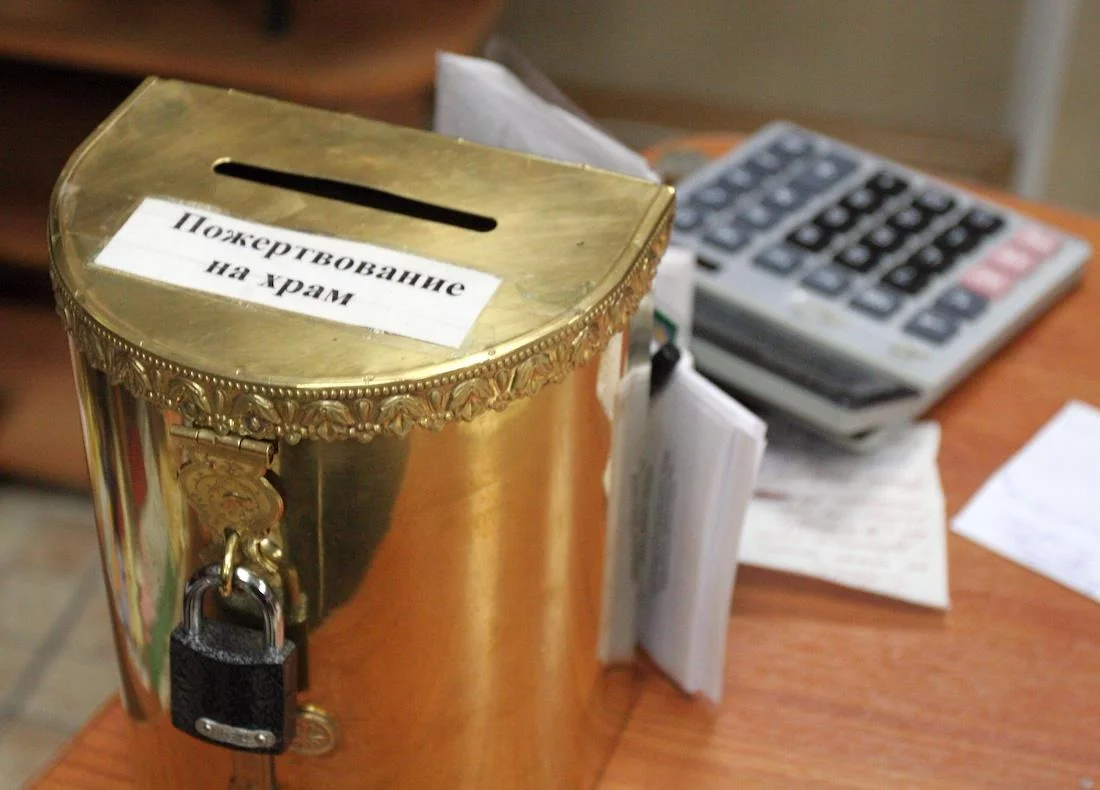
The Russian Orthodox Church is experiencing similar problems (if you believe its speakers. At the beginning of September , the stylistic epitome of the “favorite preacher of the patriarch” Andrei Tkachev, Irkutsk Archpriest Sergius Kulpinov (by the way, also a blogger who is gaining popularity) spoke. According to him, if parishioners do not repent and begin to fulfill God’s commandment to pay the church 1/10 of their income, then - oh horror! — the priest will have to work six days a week. “Then don’t touch me all week, I’ll get a job,” the priest threatened. Scary? But what does the fourth commandment out of ten (from the Decalogue - the basis of biblical morality) sound like? “Six days you shall work and do all your work, but the seventh day is the Sabbath of the Lord your God” (Exodus 20:8).
A few days later, on the air of the Orthodox TV channel “Soyuz”, Kulpinov’s idea was developed by Metropolitan Vincent (Morar), a permanent member of the Holy Synod of the Russian Orthodox Church. At first, he seemed to admit that the problem with income was created by the representatives of the Russian Orthodox Church themselves: “These priests will go buy houses and drive in Mercedes.” But he deftly “turned the arrows to God”: they say, it doesn’t matter how the priests sin and what they spend their money on, it is important not to “bargain” with God, Who gave the commandment: “I have given the sons of Levi ( analogous to today’s clergy - A.S. ) a tithe of everything that Israel has as an inheritance” (Num. 21:18). This is the will of God, but we must be patient with priests in Mercedes.
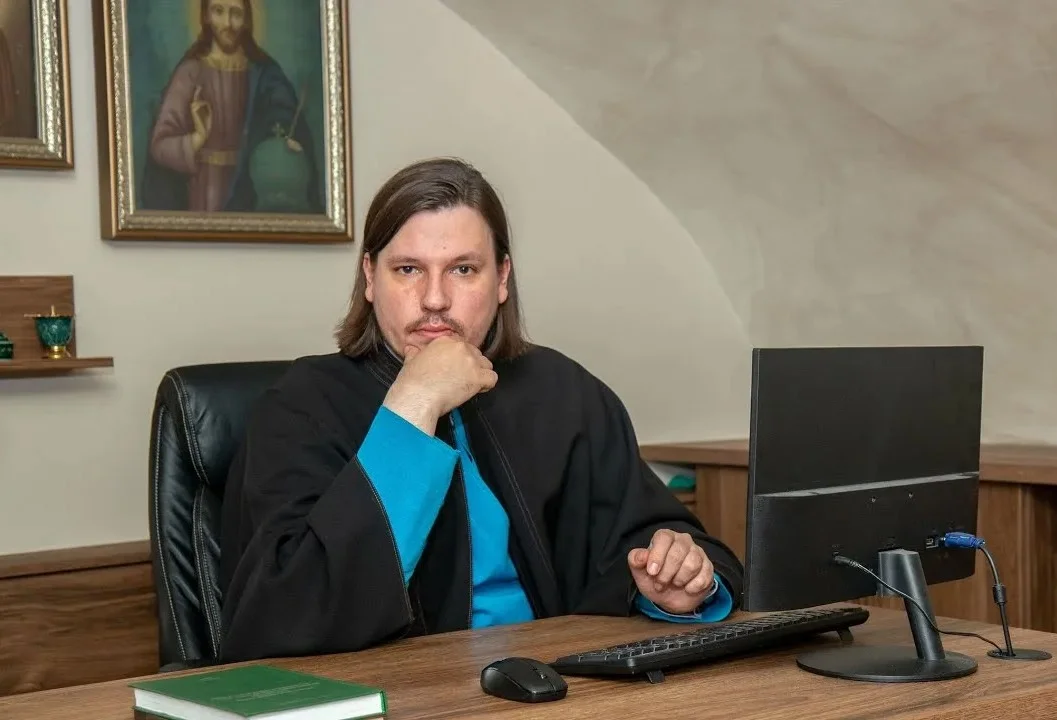
“Unfortunately, people have already lost the significance of this important work,” complains Vikenty. Why not return it using the tax system? After all, other “traditional spiritual and moral values” are also implanted by the state - and nothing, spirituality is only getting stronger. And if anyone doubts, then, the Metropolitan warns, God can speak to him differently: “You have arms, legs, they move, and you have a head on your shoulders, it thinks. This is also a gift from God. The Lord can take it away very quickly, and you can instantly lose everything... This is not ours. The Lord can take away at any time.”
From tithe to investment
The propagandist of the “Union”, who spoke with Vincent, shares the view of God and the church as repressive organs of the system, which are useless to resist: “This is Divine pedagogy... The tithe is established for you so that you remember that you yourself cannot do anything on this earth... If you do not give this, then will Heaven give you rain, will the sun give you light? Who does it depend on?”
The mobilization model works exactly like this: total obedience and execution of orders, otherwise - punishment: in this world and in the next. The common man has no options but to humble himself and submit.
In fact, with the biblical and church-canonical foundations of the tithe tradition, everything is not as simple as the propaganda of the Russian Orthodox Church says. On the one hand, the book of Genesis (14:17–20) tells how the forefather Abraham gave 1/10 of all the spoils to the high priest Melchizedek after winning the war. After the establishment of the class of priests and Levites under Moses, the commandments of Deuteronomy (Deut. 12:17; 14:22, etc.) obliged the heads of Israeli families to give a tenth of certain types of harvest in their favor. There were no Mercedes then - it was just that the priests and Levites did not have their own land plots and could not otherwise obtain food in an agricultural society. At the same time, part of the tithe was intended for refugees, orphans and widows in the same situation (Deut. 14:27).
The New Testament, on the one hand, is more total (all or nothing: “Sell what you have and give to the poor, and you will have treasure in heaven” (Matt. 19:21)), on the other hand, it affirms the absolute freedom of choice for every person. Medieval scholastics saw an allusion to the Christian tithe in the story of the ten lepers healed by Jesus (Luke 17:12–19), of whom only one returned to give thanks for the healing.
However, the Apostle Paul writes (2 Cor. 9:7) that only “God loves a free giver,” and not under compulsion or by force of law. Nevertheless, in the Western medieval tradition, all this was refracted through the categories of Roman law, and already the Council of Macon in 585 obliged the laity to pay tithes, threatening with excommunication. Gradually, with the help of the institution of tithe, the Catholic Church acquired huge land holdings, which it began to give to kings and lords as fiefs, which extremely confused the canonical side of the issue.
The Reformation put an end to the abuses, which forced the Holy See to reformat its financial system. In some countries (for example, in France), the tithe survived until the revolutions and secularization of the 18th–19th centuries, in some (more on this below) it was transformed into a church tax.
The modern Catholic Church lives primarily through investments and voluntary donations, rather than through taxes. In 2021, the Holy See's property administration began publishing annual reports on the church's finances, which were analyzed by the BBC.
For example, in 2023, the Holy See received only about $52 million (Patriarch Kirill smiled indulgently on the sidelines), but the Vatican Bank manages assets worth almost $1 billion. 20% of the properties owned by the Vatican are rented, but the budget of the modern Catholic Church is extremely decentralized. Around the world, its dioceses, monasteries and parishes own up to 81 million hectares of land, but the income from them remains local, so the Vatican is forced to cut the salaries of its employees.
Financial ways of the Russian Church
In popular brochures on the history of the Russian Orthodox Church, you can read that the first cathedral, built in Kyiv in the 10th–11th centuries, was called the Church of the Tithes because the principality allocated a tenth of all income to it. They say that since there was tithe in Rus', it is necessary to revive it.
In fact, if we take the “Charter of Prince Vladimir”, then it is not difficult to see that a tenth of his personal (not the entire principality!) income went not only to the construction of the cathedral, but also to the entire newly established Metropolis of Kyiv, where from 988 to 1015, when Vladimir died, at least four monasteries and several stone churches were built. As the Orthodox Encyclopedia admits, in Rus' the tax-paying population was not subject to church tithes, only in some appanage principalities it was levied on the income of the princes. At the same time, the princes themselves (and later the kings) took taxes from church lands.
The Byzantine dichatomy (“symphony”) ended with the reforms of Peter, who simply turned the church into a state department financed from the budget.
The exception was payments for services and donations, which, however, were hardly enough to maintain the huge monastery complexes. And they were “secularized” under Catherine II (1764), which led to the massive conversion of monastery churches into parish churches. Historians and lawyers are still arguing to what extent the pre-revolutionary church had the status of a legal entity and where to draw the line between church and state property.
Soviet legislation also denied religious organizations the status of legal entities. Discrimination against the church began with the decree “On the separation of church and state,” but reached its apogee during the process of winding down the NEP, in 1929, when the All-Russian Central Executive Committee resolution “On religious associations” appeared, which was formally in force until 1991.
A year after its adoption, the head of one of the branches of the Russian Orthodox Church (which Stalin would later rely on), Metropolitan Sergius (Stragorodsky), wrote to the official of the All-Russian Central Executive Committee Smidovich that the insurance taxation of churches deprives them of income, for any singing in the church the financial authorities charge a “drams tax”, city communities are subject to a tax in kind, even church watchmen are equated with kulaks, and with labor duties attract sick and elderly clergy.
The radical reversal of church policy by Stalin at the height of the war led to an increase in the standard of living of the clergy, who by that time consisted largely of NKVD/MGB agents. For some time, according to Stalin’s commandment, they did not look “in the butt’s pocket,” but officially clergy were taxed under Art. 19 of the Decree of the Supreme Council of April 1943 as “non-cooperative artisans”: with a large income, the tax under this article reached 81%.
Until the collapse of the USSR, parish councils submitted fictitious reports to financial authorities, and priests or singers received real money in black cash, bypassing the cash register. In large cities, these “priests’ salaries” significantly exceeded the rates of Union ministers.
With the increase in the number of churches and the proportional decrease in the number of parishioners, and indeed the decline in living standards in the early 90s, clergy could no longer dream of such “salaries.” The current Tax Code of the Russian Federation exempts religious organizations from income tax, and, as a rule, they do not pay property tax (regions have the right to establish the corresponding benefit).
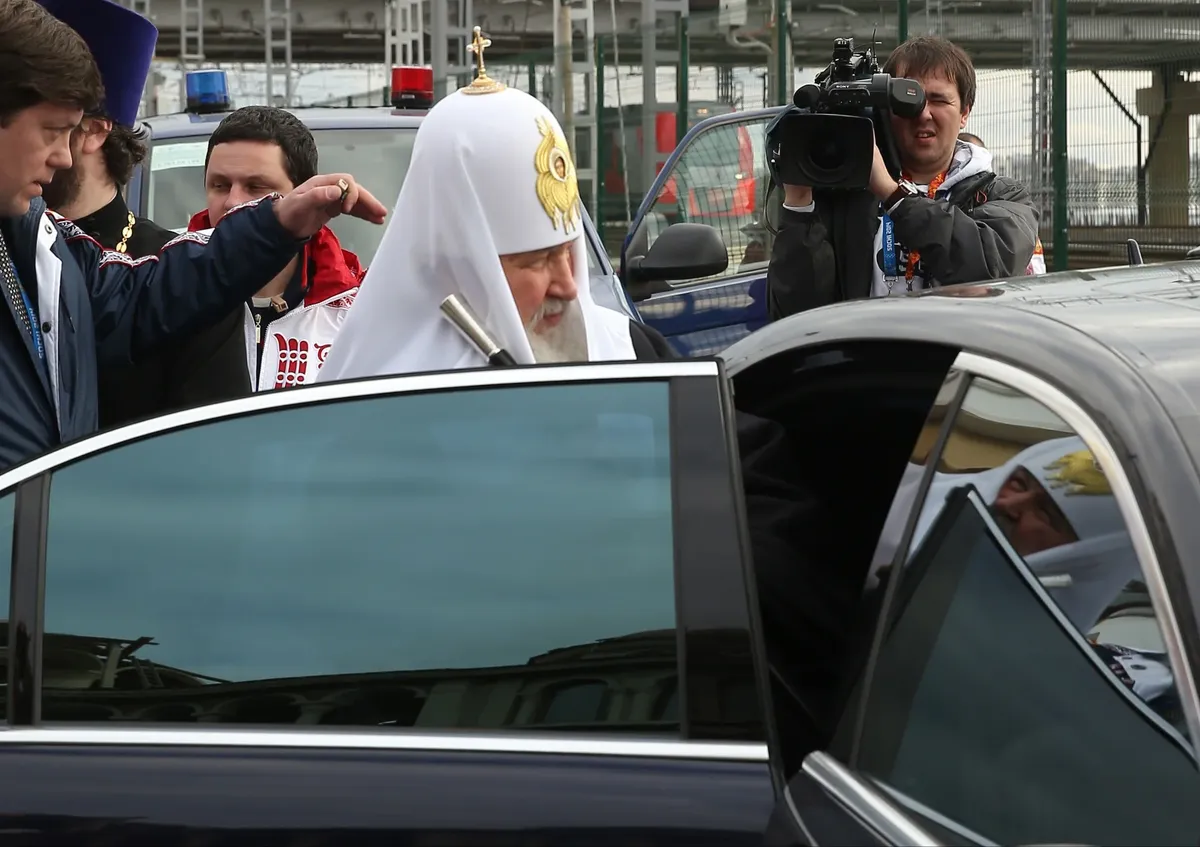
New challenges, but also new opportunities that opened up for the Russian Orthodox Church in the 1990s, pushed some hierarchs, not without business talents, into the sphere of large-scale entrepreneurship, sometimes with a criminal overtone. One of the most successful was the then head of the DECR MP, Metropolitan Kirill (Gundyaev), whose real condition “Novaya” more than once tried to assess . This matter is practically hopeless, since, like the highest Kremlin officials, the patriarch uses what nominally does not belong to him or is “classified.” He lives in several palaces (for example, near Gelendzhik: including those built at the expense of the budget), travels in limousines, on yachts and business jets, surrounded by fabulous luxury. All this is, as it were, “general church” - only a simple parishioner or priest will not be allowed into this “kingdom of God on earth” even within a cannon shot: the patriarch and his palaces are guarded FSO.
Among Kirill’s most successful business projects, one can recall the financial and trading groups “Nika” and MES, which were engaged in the import of cigarettes and export of oil with an annual turnover of billions. In 2016, the Peresvet bank, created on his initiative (at first, Kirill was on the board of directors), in which both structures of the Russian Orthodox Church and such giants as Transneft, Rusnano, Pulkovo, Federal Passenger Company, etc. held their assets, burst. At some point, the bank began to distribute assets under the guise of loans and take them offshore. Let the reader guess who the most likely beneficiary of this scheme is.
In general, in the 90s, the financial system of the Russian Orthodox Church was transformed in such a way that it began to depend to a very small extent on real parishioners, but was tied by thousands of threads to large corporations and budgets of various levels.
At the same time, as religious scholar Sergei Filatov notes , there are no hints of financial transparency in the Russian Orthodox Church; all its finances “are in the uncontrolled possession of the church authorities.”
Churches of the Russian Orthodox Church in modern Russia are built with budget and “sponsor” money, and are maintained within the framework of federal and regional programs for the preservation and reconstruction of cultural heritage sites. For example, in the capital there is a program “Culture of Moscow”, within the framework of which in 2019 400 million rubles were allocated for operating churches.
A typical model is “councils of trustees” at the most significant monasteries - for example, New Jerusalem (co-chairman - Dmitry Medvedev) or Valaam (one of the trustees - Georgy Poltavchenko). Complete lists of members of such councils are, as a rule, not published. Novaya reported in detail that a whole “brotherhood” had been created at the Seraphim-Diveevsky Monastery in the Nizhny Novgorod region, uniting major officials and oligarchs. Huge capital can be pumped through such structures in an opaque manner. Against this background, any “small” projects of the Russian Orthodox Church, financed from the state budget, such as the “Orthodox Encyclopedia” or Orthodox universities, are not worth mentioning.
It is against this background that the Russian Orthodox Church is now talking about a “church tax.” This topic is thrown into the public field from time to time - for example, Kirill in 2001, when references to Western experience were not yet considered a crime, called on the Kremlin to direct part of the income tax to finance the religious organization to which taxpayers belong. Maybe there is some wisdom in this idea, since it works in other countries?
Taxes and zakat
Despite all my efforts, I was unable to find a single modern country where tithes for religious organizations were collected at the state level. As a rule, we are talking about a negligible percentage of the tax or about Muslim zakat, calculated using a special formula.
Among European countries, only Greece finances the official church from the budget, since the country does not have a separation of church and state. In Germany, church tax is paid by citizens who declare themselves to be believers, and it amounts to 8–9% of income tax. In neighboring Austria, the Catholic Church itself collects tax from its believers - this is 1.1% of income. In Denmark, church tax does not depend on the fact of religious affiliation, but has little effect on the family budget: it is only from 0.4 to 1.5% of taxable income. Among those European countries where such a tax exists, its amount ranges from 0.004% in Croatia to 2% in Finland, where, however, you can declare yourself an unbeliever and avoid the obligation to pay such a tax.
In most Western countries there is no special religious tax, but when filing a tax return, you can stipulate that part of the tax should be deducted for the church (for example, in the Netherlands, Spain, Italy, Hungary, etc.). In Catholic Italy, the number of people willing to make such a reservation reaches 90%. This option is attractive because it does not require additional costs: the total amount of tax does not depend on the “church clause”, only the distribution of collected taxes depends on it.
Another interesting model operates in the United States, where charitable foundations that finance religious organizations have the right to exempt from taxation those incomes of their donors that are used for charity. But in corrupt societies, such a model is understandably fraught with abuse.
In Islamic countries, Muslims pay annual zakat, which is one of the “five pillars of Islam.” Zakat is calculated according to the following formula: if the total wealth of a Muslim man, after deducting all debt obligations, exceeds the nisab (subsistence level), then a quarter of a percent must be paid on the amount exceeding this same nisab - either in money or in kind. Nisab is the equivalent of 84.8 grams of gold, that is, at current rates, the non-taxable amount is approximately 865 thousand rubles. In some Muslim countries, there are additional religious taxes that are spent on social programs or infrastructure projects.
Even in Israel, where the commandment to tithe was first spoken, only a small percentage of the population pays it - the ultra-Orthodox. But even among them there are cunning schemes: for example, it is considered legal to count tithes towards the religious education of one’s own children...
...In the era of relatively free Russian sociology, in 2011, the sociological service “Sreda”, which collaborated with the Russian Orthodox Church, conducted an all-Russian survey on the introduction of a church tax (we do not know whether the patriarch personally ordered it). Only 19% of respondents (including up to 28% of believers) then supported the idea, while more than half spoke out against it.
A former political prisoner who spoke out against the SVO and was “defrocked” in the Russian Orthodox Church, Hieromonk John (Kurmoyarov), now living in France, spoke out against church tithes in a conversation with Novaya. He does not believe that this commandment of ancient Jewish law works in Christianity.
“There can be no coercion in relation to the church. The mere fact that we are simply thinking about this problem today is evidence of the deep crisis of Christianity. A Christian must take care of the church, of his parish, out of love for Christ, and not because the state has obliged him to do so, just as parents take care of their children, whom they love with all their souls.”
Forced faith and forced charity make it possible to preserve the church structure, but deprive it of value, moreover, make it repulsive to people. And when a church is already unpopular, it is categorically not recommended for it to experiment with church taxes.