
Translated material
Return of Hope
October 13, 2025 for Israel is the brightest and most difficult day in the last two years
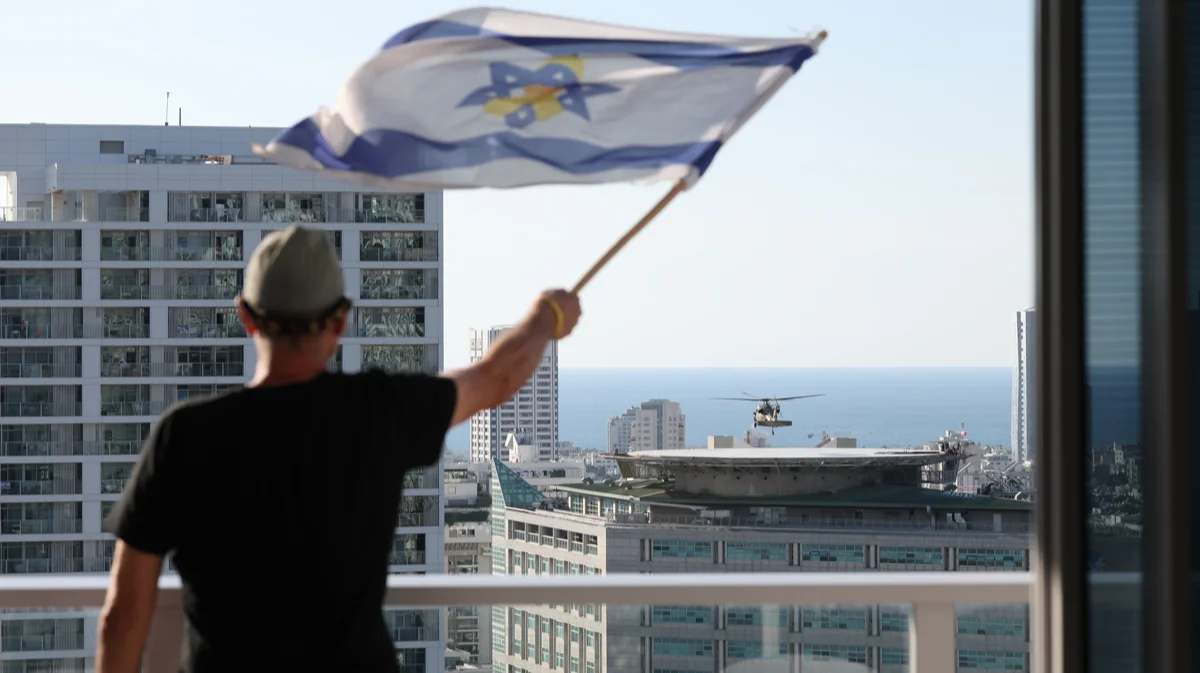
A man waves the Israeli flag from a balcony as a helicopter carrying hostages freed from Hamas captivity flies up to the helipad of the Ichilov Hospital, Tel Aviv, Israel, October 13, 2025. Photo: Abir Sultan/EPA
During this time, Israel met the first batch of hostages, then the second (November 2023), then did not meet anyone, but simply waited for a deal and went to rallies against its government in order to achieve deals with terrorists.
And at the same time, throughout these two years, Israel continued to bury without stopping. Those whom forensic experts continued to identify throughout the two years. After all, out of 1200 killed in one day, there were those of whom practically nothing remained...
During this time, Israel met containers from Gaza with the bodies of hostages: those killed brutally in captivity, those who died from failure to provide medical care, those taken to the strip already killed on 10/7.
During this time, Israel buried and mourned the redheads Kfir and Ariel and their mother Shiri - the tragedy of this particular family left a huge hole in the soul of every Israeli.
During this time, the country experienced rocket attacks from Hamas, Iran, the Houthis, and Hezbollah.
During this time, Israel was deprived of the right to self-defense by the enlightened world and was subject to accusations of “genocide,” and Israeli culture itself and its people were “cancelled.”
During this time, the country's men learned to immediately put their piles in their bags when landing planes in European countries and, together with their families, try not to say where they are from, even on tourist trips.
During this time, in principle, all Israelis became accustomed to the now regular narrative that, it turns out, there was no 7.10 and they invented it themselves.
And the world that survived the Holocaust was rapidly returning to pogroms and murders near synagogues and undisguised anti-Semitism.
The world progressive community and a number of Western media, which still did not deny 7.10, called Israel nothing more than an “aggressor” for the war in Gaza, and the terrorist attack that took place was simply an “act of resistance.”
Over these two years, Israelis awaiting their hostages watched as the Palestine Freedom movement became a fashionable trend and an important part of the political and cultural mainstream - sometimes with direct calls for the murder of Israelis and the destruction of Israel "from the river to the sea."
Connections, friendships, relationships collapsed... Concepts were substituted, the history of three thousand years was interpreted in its own way...
In early 2025, Israel again encountered live hostages. Then more dead ones in containers (among others - saffron milk caps and their mother).
During this time, Israel watched the hooting crowd in Gaza, which made a cynical, mocking spectacle of these returns.
Then for three weeks in the summer of 2025, the country lived under Iranian missile fire. And again she buried , including refugees from Ukraine, including children, including children with cancer... But she still remained an “aggressor” in the understanding of the enlightened public.
There were again rallies inside the country demanding that the Netanyahu government reach a deal to return the hostages and end the war in Gaza.
The families of the hostages continued to live with raw nerves. They were supported and cared for by ordinary citizens. Israel is not Netanyahu, but the people. And these people, citizens of their country, have been demanding for two years that the authorities create a commission to investigate the reasons for the failure of October 7,
when those who were supposed to know about the impending attack, take action and protect their own citizens, were unable to: the army, intelligence, military intelligence...
The commission, whose work is obviously too disadvantageous for the Israeli authorities, has not yet been created. However, perhaps everything is ahead. After all, the war seems to be over and nothing stands in the way...
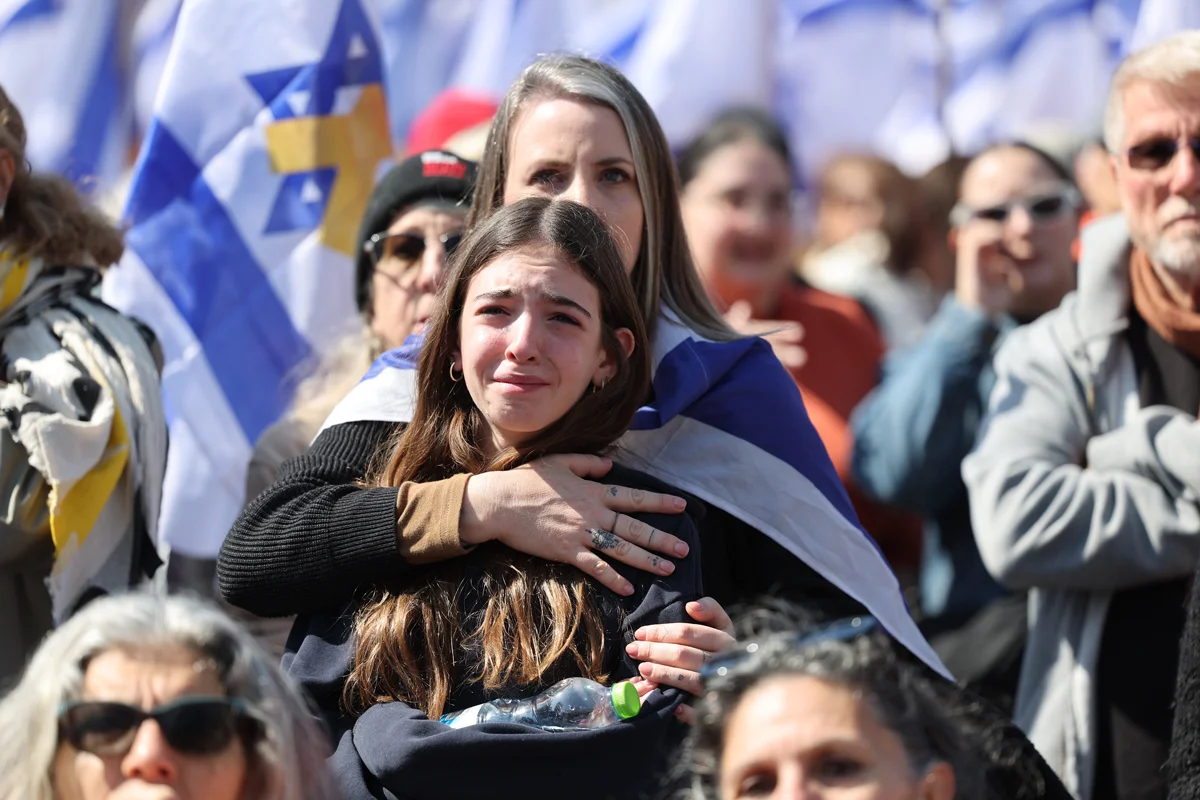
The second anniversary of October 7 was very difficult. The country was waiting for the long-awaited deal that Donald Trump managed to achieve . And this wait was painful: all the remaining living hostages were about to return to the country from Gaza. How many of them are alive is unknown. And the bodies of those killed and those who died in captivity had to return. But Hamas corrected everything and corrected the list of Palestinian prisoners (convicted by the court for terrorism), whom it demanded to be released in exchange.
The wait for the deal was overshadowed by another wave of deaths that swept across the country immediately after the second anniversary of 7.10.
Suicides among surviving hostages and families of victims, among IDF soldiers, began almost immediately after October 7 and continue. According to some reports, there are already more than 50 of them.
One of the most tragic cases was the death of Roya Shalev, a 30-year-old survivor of the Nova Festival bombing. On October 7, 2023, Roi, along with his fiancée Mapal and girlfriend Gili, hid from terrorists under a car. The girls were shot dead in front of him, and he was wounded and lay next to his lover’s body for several hours until rescuers discovered him. Two years later, Roi published a farewell post on social networks, in which he admitted that he could no longer endure suffering and apologized for everything. Soon his body was found in a burnt-out car on the beach in Netanya. Two years earlier, just after 7.10, Roya’s mother committed suicide, unable to cope with the death of her daughter-in-law and other Israelis.
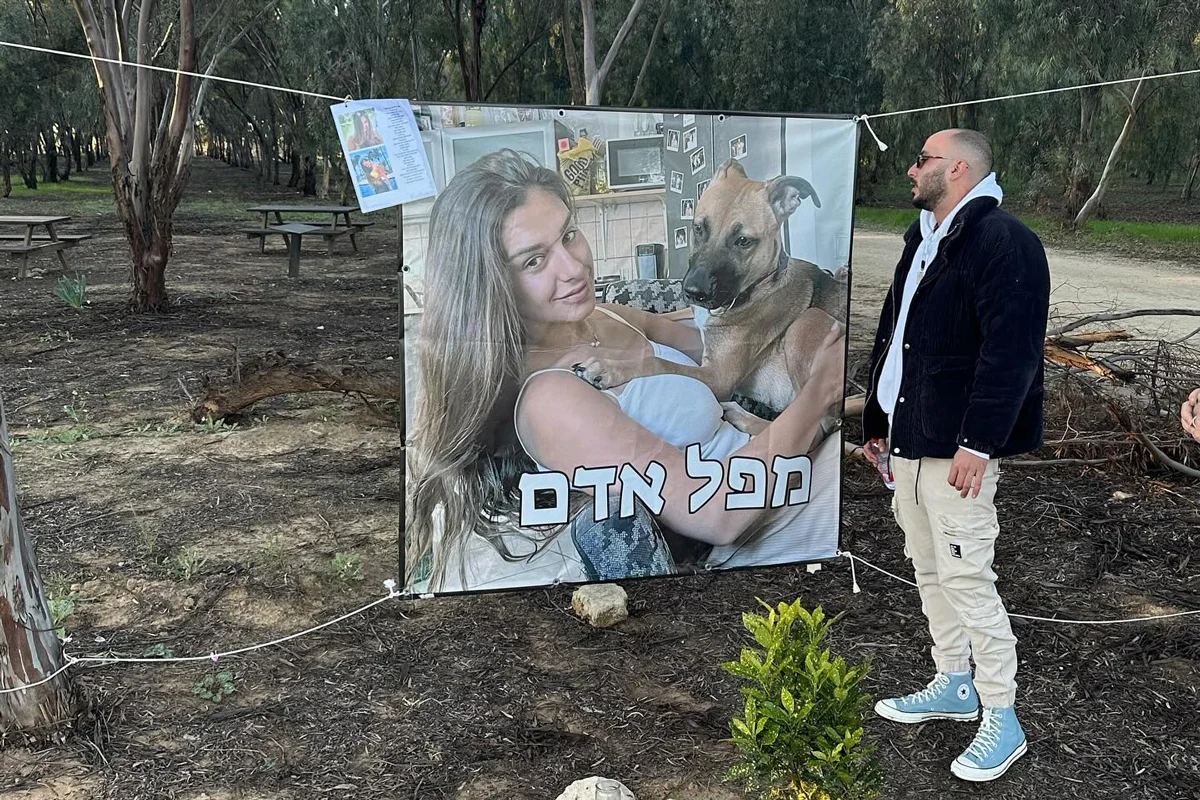
The day before the death of Roya Shalev, on October 9, 2025, 56-year-old repatriate from Russia Elena Giler committed suicide. Her son Slava was killed at the Nova festival. For two years, a woman suffering from mental illness lived with a hole in her soul. She was treated, her eldest son surrounded her with care. I couldn't cope. I couldn't bear the severity of the loss...
Almost all Israelis began to require mental health care in one way or another within two years, which created a serious burden on the health care system. It simply became ineffective.
In a word, in this state the Israelis waited and met the last batch of living and dead hostages. With fists clenched in pain and complete despair inside.
The main symbol of solidarity with the hostages for two years was the yellow ribbon. Residents of Israel borrowed this symbol from the Vietnam War, when American Penny Laubenstein was waiting for her captured husband and tied a yellow ribbon to a tree near her house as a sign of expectation and hope. The story inspired the song "Tie a Yellow Ribbon Round the Ole Oak Tree."
During these two years, Jews both in the country and often abroad (which was, however, risky) wore a yellow ribbon on their clothes, tied to trees, bags, cars, balconies - as a sign of hope and support for the families of prisoners. And they wrote: “Bring Them Home Now” - “Bring them home now.”
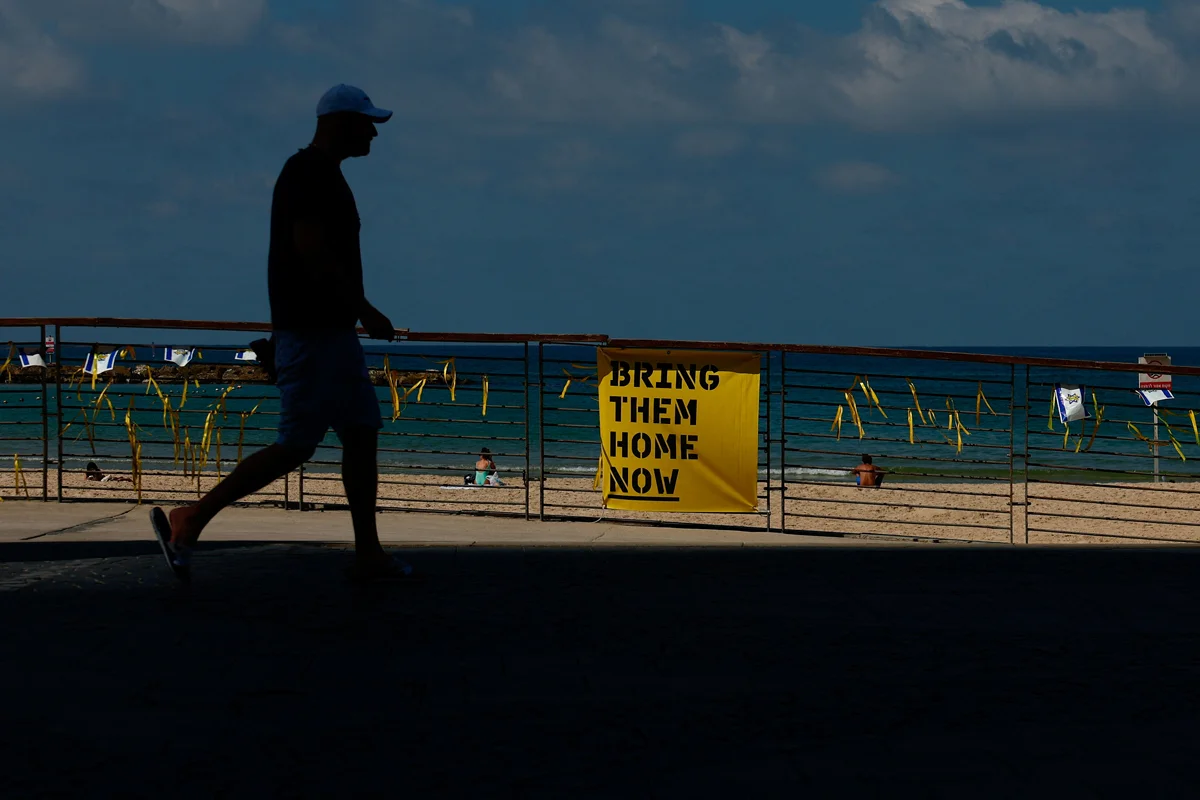
This inscription was everywhere: on schools, hospitals, kindergartens, government institutions, private establishments, supermarkets, restaurants and cafes, and even hairdressers.
What is important: the yellow ribbon, which became a sign of hope, solidarity and pain, united almost everyone within Israel - secular and religious, right and left.
In the center of the country, in front of the Tel Aviv Museum of Art, next to the headquarters of the Israel Defense Forces, Hostage Square appeared. After October 7, 2023, the families of those deported to Gaza and their supporters began to gather here, erecting tents, posters, and artistic objects - this place became the center of general pain and protest.
For two years, the illuminated installation “Bring Them Home Now” hung on the Philharmonic building on Bima Square in Tel Aviv.
On October 13, 2025, when all the last living hostages were returned to Israel, the inscription on this building changed to: "Welcome back home."
Many people burst out when they saw this changed phrase. A country that had been living in a state of constant stress for 24 months, often losing hope that at least one of the hostages remaining in captivity was alive, a country to which Hamas, as part of psychological pressure and propaganda, showed videos of hostages digging their own graves in tunnels - this country finally gave vent to its emotions and began to cry. And for the first time, she burst into tears not from grief when she saw off the saffron milk caps on their last journey, but from happiness.
People cried in the squares where they gathered together on this day to listen to the good news and hug. They cried in their apartments, watching TV and scrolling the news feed. They cried on the beaches and in cafes.
On this day, the wounded country was truly happy again for the first time. She sighed: the terrorists no longer had hostages in their clutches. No, no, no... The 24-year-old guy - the once handsome Evyatar David, who in captivity turned into a living skeleton, whom the terrorists forced to dig his own grave - is at home. And 19 more people - those who were captured on October 7 at the Nova festival and in kibbutzim in the south of the country.
Sons, fathers, husbands, grooms, brothers, friends...
God, what a blessing. And it is impossible for any normal person (no matter whether he is Jewish or not, whether he is in Israel or anywhere else in the world) to look at the footage of the meeting of these hostages with their families and, most importantly, children, without tears.
At that moment, everyone was family in Israel.
The anniversary of October 7 and the return of the hostages fell on a series of long holidays in Israel, beginning with the Jewish new year of Rosh Hashanah and ending just on October 14 with Simchat Torah - a celebration in honor of the end of the year's reading of the Torah and at the same time the beginning of a new cycle.
A new cycle in the country began on October 13, when the last living hostages returned from Hamas captivity. From early morning, residents of the country gathered in the squares of their cities under large monitors, where everyone together followed the news in real time.
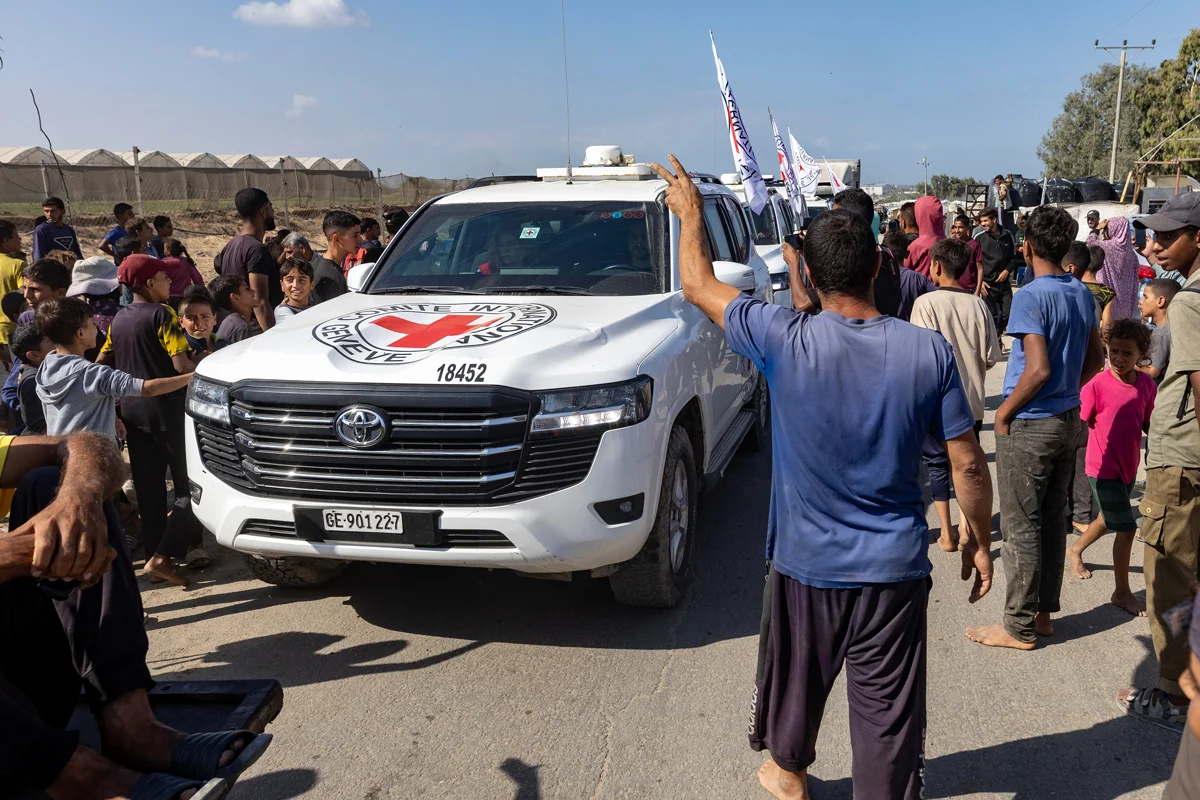
At 8:00 there were reports that the first seven hostages were being handed over to the Red Cross. People in the squares screamed and began to hug each other. After 10 a.m., reports arrived that 13 more hostages were heading home.
"All! It's all over! The war is over,” wrote our nanny, who was at that moment with her husband in the hostage square in Tel Aviv. For two years, simultaneously with my son, she worked for a family of immigrants from Ukraine. The 7.10 terrorist attack hit this family in the most direct way: the grandparents of her little pupil were shot dead in the south of Israel in Ashdod by Hamas terrorists. This happened early in the morning at 7.10 when they came to fish at Zikim beach. Hamas troops who landed from the sea opened fire on everyone who was on this beach. The bodies of the elderly couple were found only a few days later.
Our nanny was now crying, like hundreds of people in Hostage Square, and uploaded endless videos of happy, screaming and hugging people to her stories.
“They have been returned home,” my ulpan teacher wrote in the general chat. Letting us go on vacation earlier, she wished only one thing: “Let them all return home alive.”
“All those abducted have been returned!” — and this was written by our teacher from the children’s court, also in the general parent chat.
People exchanged broken hearts, kisses and other emoticons in messengers that could convey their emotions.
And there was a sea of emotions. Cafes and restaurants were open until late at night and were packed to capacity. The excited audience kept arriving. Many are dressed in white clothes - on the occasion of the upcoming holiday of Simchat Torah...
It became a single holiday.
“Trump, thank you!” - became a hashtag and the general leitmotif of this day in all Israeli social networks. Trump was on a short visit to Israel that day. The country, lacking heroes in its government, greeted him as a hero.
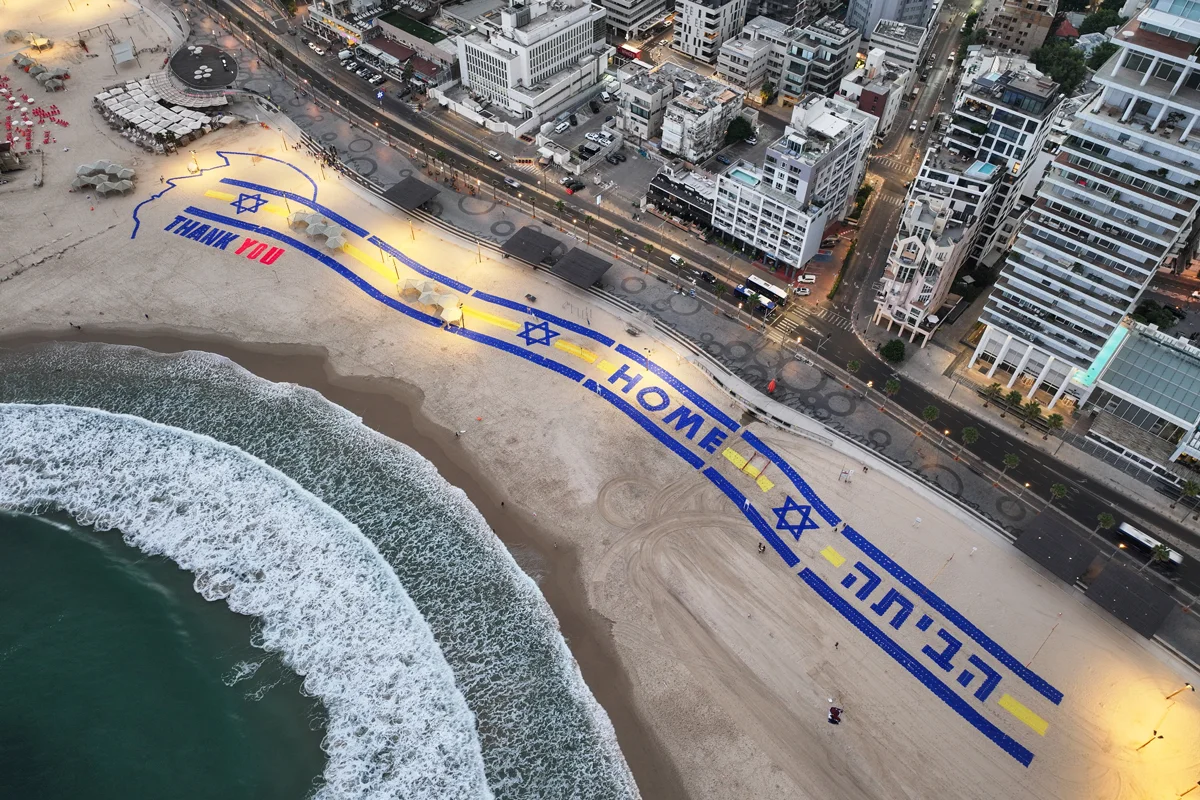
A huge inscription appeared on the Tel Aviv embankment, which started from the US Embassy and extended south of the city towards Jaffa. And just one word - “Thank you.” And then the inscription in Hebrew and English - “Home” - a greeting to the hostages who were returning.
The country spent the festive morning of October 14 on the beaches and in the same cafes and restaurants, clinking glasses of wine: “Hag seameah” (“happy holiday”), “Hag sameah”, “Hag sameah”. The Israelis literally did not dry out with happiness. For the first time in two years. For the first time since that morning on October 7, 2023, we have hope.
But there are still bodies of dead and dead hostages in Gaza. And this adds tears to the holiday. Already on the first evening after the return of all the living hostages, it became clear that Hamas would not return the dead just like that, and would violate the agreements provided for by Trump’s plan , namely, to return all the bodies within 72 hours.
And it makes you want to howl.
On October 13 and 14, 2025, 8 out of 28 bodies were transferred to Israel.
Guy Ilouz, 26, from Ra'anana, was abducted on October 7 from the Nova Festival. He tried to escape from the killers, but fell into the hands of terrorists near Kibbutz Reim. Died from his wounds after not receiving proper medical care while being held captive by Hamas.
Bipin Joshi is a student from Nepal. He was kidnapped from Kibbutz Alumim, where the young man came to practice. Until the last, there was hope that he was still alive. It was not justified.
Two more names have not been announced - the families of the victims have not yet given the go-ahead.
The bodies of four more are currently being identified. It is known that one body is not the body of a hostage - it is one of the residents of Gaza (when the bodies of the saffron milk caps were returned, at first the body of another person was returned instead of Shiri).
Israel continues to wait for its hostages. Dead. Another 20 people.
Until the last one returns and is interred, the country will not breathe a sigh of relief. Nobody removed the yellow tapes...