
Translated material
World area
What happens after the SVO? History and secrets of four hectares in the center of Russia

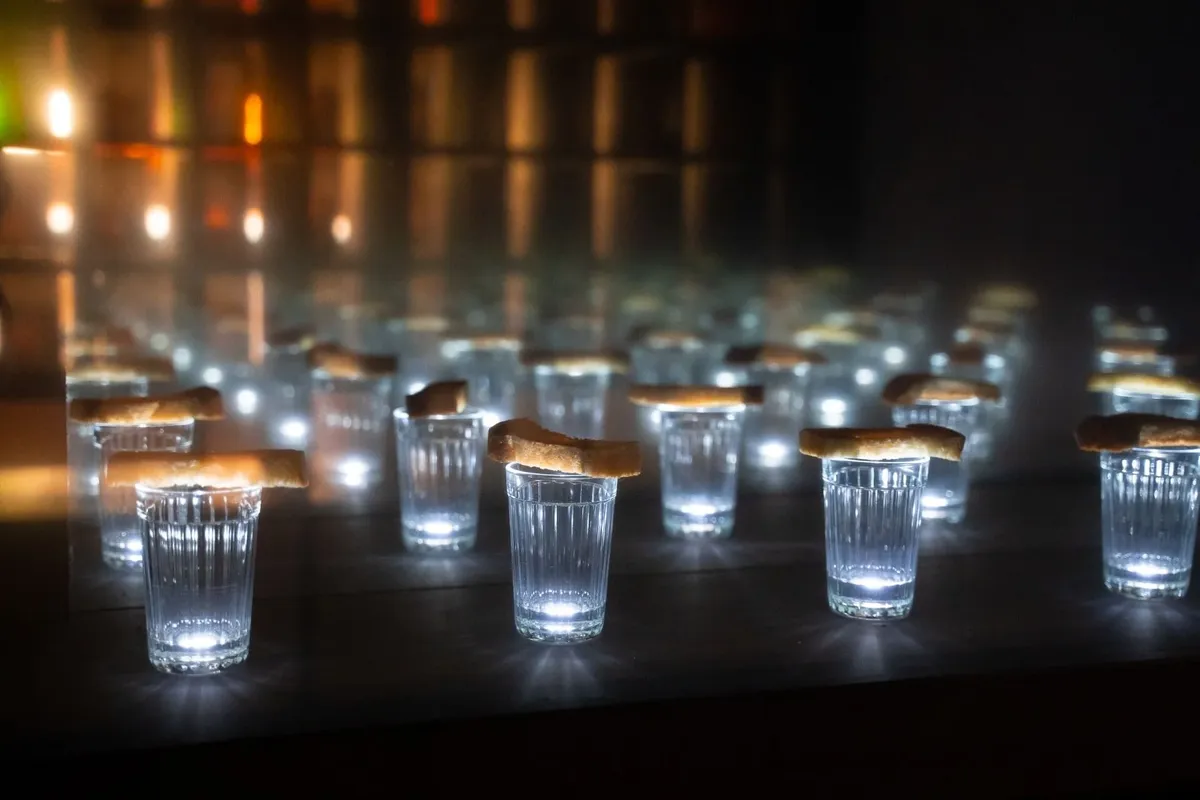
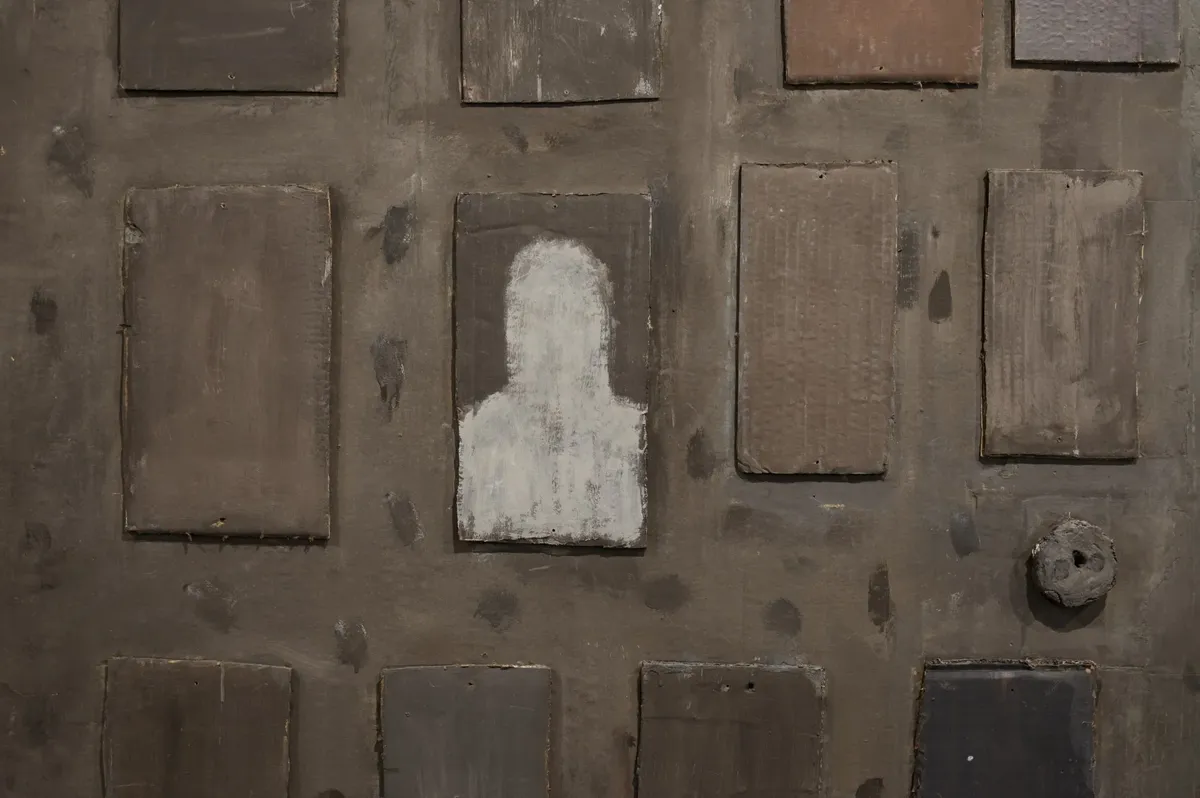
Exhibition The Soviet Backside. Photo: Peace Square museum center, Krasnoyarsk
These two cities were founded at the same time and according to the same scenario - by colonists from Europe on the lands of the natives. New York celebrates its four-century anniversary in an unassembled, drawn-out and modest manner, as if reluctantly, while Krasnoyarsk, which is four years younger, is ordered to celebrate in 2028 with impact and on a grand scale. Last summer the city began to prepare. As usual, for the celebrations, curbs pecked by birds and paving slabs soiled by birds are being replaced, established trees are being cut down and parking spaces are being reduced. Probably so that life doesn’t seem like honey.
After the fire of 1773, when only thirty houses survived, geodesy sergeant Moiseev gave Krasnoyarsk a linear layout - a St. Petersburg military model (and Manhattan, the historical core of New York, was given a general plan with square-nested buildings much later, only in 1811), and traffic in the compact - on a river terrace - historical center of Krasnoyarsk was subsequently organized as Marxist-Leninist: on Marx Street one-way to the right, along Lenin - to the left. Marksa has now been dug up, and has been for a long time: they are looking for the metro. For the anniversary, the streets perpendicular to Marx-Lenin were dug up, all at once. Thus, the historical center of Krasnoyarsk was paralyzed. People had to walk, jumping over trenches and kneading mud.
But it’s not all in vain. When, at the end of August, in a crowded place on Karatanova - the very first street on Strelka (the meeting place of Kacha with the Yenisei, where the city began four centuries ago), next to the Pertsy restaurant and the Metropol business center, where the regional ministries are located, human skulls and bones fell from the excavator bucket along with the ground, work was stopped. A crowd gathers and calls the police. Experts: the skeletons are not criminal, not from the 90s and not even from the 37th. Although everyone present, of course, was amazed by the excellent condition of the teeth - they were all in place, all straight, healthy. Like something out of a dentist's textbook. In the background there is a street advertisement about “treatment of the first caries in just two thousand.”
It is clear: this is not the first time they have dug in this place. Pipes were laid here, electric cables were laid here, bundles of Internet cables were buried here already in the 2000s.
Skeletons, destroyed and intact, lie right on the pipes. And between the water supply and Internet communications. That is, either the burials were fresh, or the workers had not previously attached importance to the bones and skulls.
Everything, incl. my inquiries with archaeologists and experts at the local history museum speak for the second option. But when, under Khrushchev, the Krasnoyarsk aluminum plant was built and mass graves from the time of the Great Terror were opened, the workers still reported, soldiers arrived, raked up the remains, and took them away in an unknown direction. The same at Vzletka, another alleged execution site. We didn’t stop here. Just now. Why?
Collective burial. Apparently consisting of unrelated stories from different times. 38 skeletons in three tiers. Above are parts of the skeletons of a newborn child and a teenager, then everything is completely young and healthy men.
We all (who live in the center of Krasnoyarsk) walk past exposed skulls with these excellent teeth every day. Archaeologists who carefully uncover the floors of the burial pit periodically give us explanations.
They say: the remains of the first Krasnoyarsk residents. Startupers. From the team of the city founder Andrei Dubensky. Cause of death? Sieges, difficult battles, the slave trade, and fires would follow later; the reason, presumably, was the famine of the first winter (1628–1629; out of 303 pioneers, 52 died then). This time is indirectly indicated by the removal of the dead outside the walls of the fort onto unconsecrated ground - the church will be built only next summer (and where on Strelka they were buried next, historians know; the boundaries of those graveyards, now built up, are known). In any case, it is clear, archaeologists say, that “some kind of tragedy happened.” For 38 people buried there is only one coffin, or rather, a piece from it. There are no crosses on the skeletons, few have shoes, these are pistons - bast shoes, but not from bast, but leather (“move the pistons” - that’s where it comes from). They lay down according to the Orthodox rite - with their heads to the west, their hands folded on their belts.
The Department of Urban Planning of Krasnoyarsk reports that the appearance of the city’s founders will be restored from the skulls at the local medical university, and for radiocarbon dating the material will be sent to laboratories in Novosibirsk or China. They promise to finish it and give a report by the anniversary.
Every old city stands on bones. But there is something poignant about these skeletons dumped in a hole and turtles with a full set of healthy teeth.
Young: many have not yet had time to erupt their third molars - wisdom teeth.
And a certain general outline is definitely visible in everything that follows. In what follows.
Don't sleep!
Saint Nicholas is the one who doesn’t let you sleep. The one who knocks on the very heart. Reminds me of myself and something else. About what?
In the 90s, I was charged with the same type of calls - sometimes at one in the morning, sometimes at two, or even at three. Not every night, but what is typical is precisely at the end of one of the night hours or its beginning, say, two minutes to three or one minute to four. Picked up the phone. They told me: “Saint Nicholas, no comments.” And - hang up.
Clearly, the number was wrong. It’s clear that they didn’t call me St. Nicholas, but introduced themselves. Happens.
But sometimes, if the bell woke me up in some wrong phase of sleep, my sense of my own greatness could swell: who am I if Saint Nicholas himself reports to me that everything is normal? He muttered something in response.
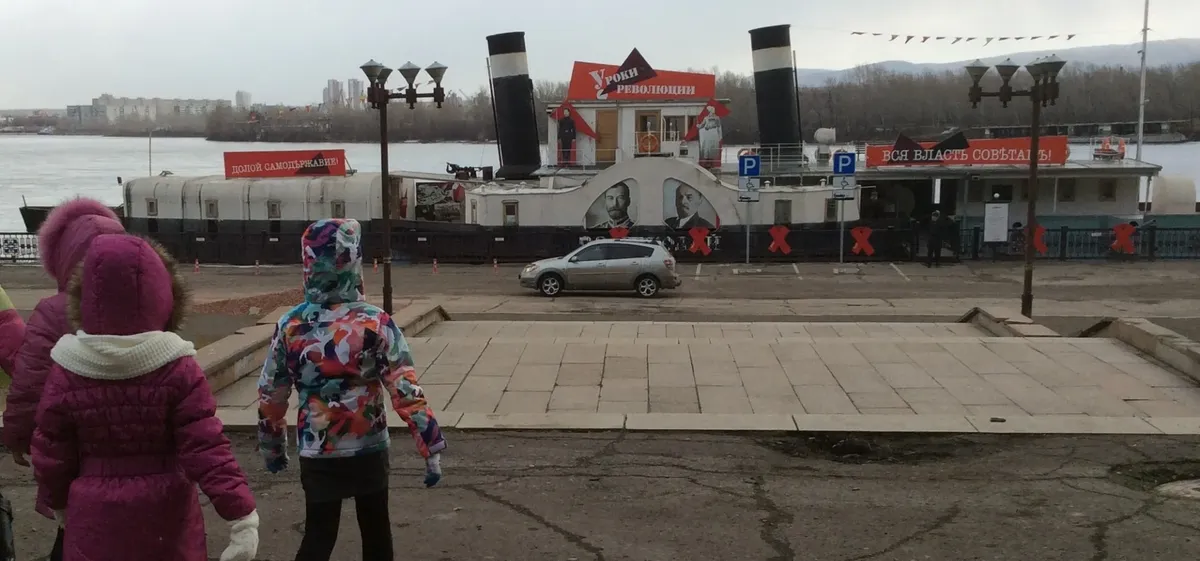
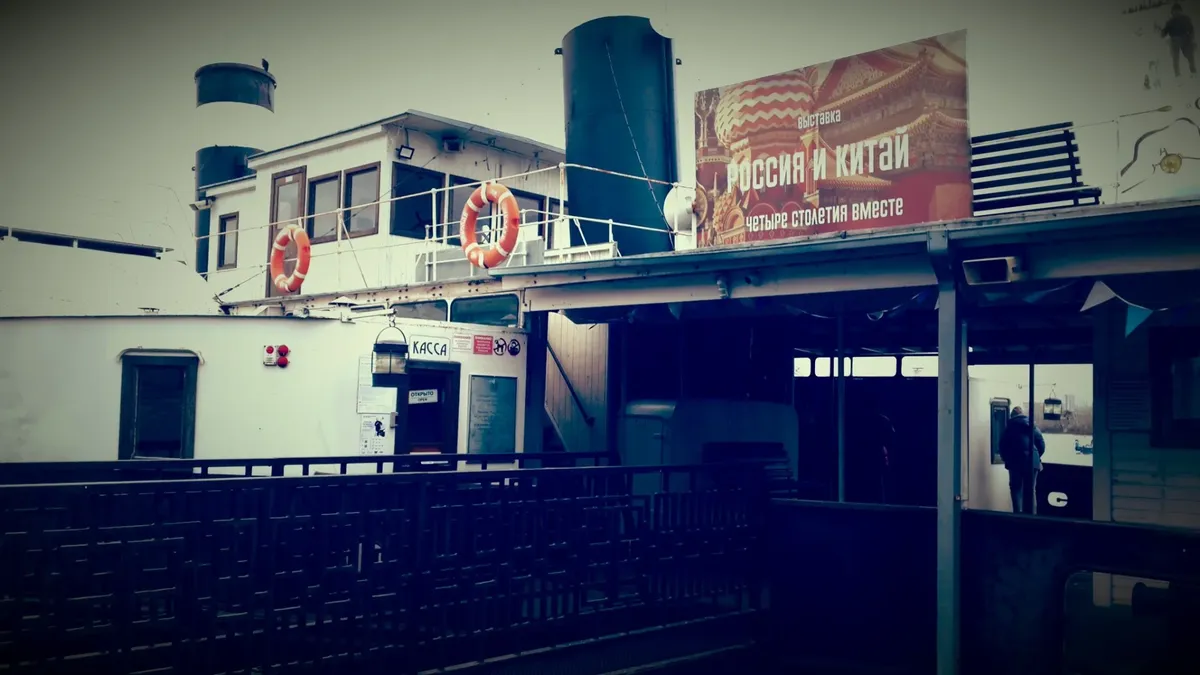
I figured it out later. Or so I wanted to think. St. Nicholas in Krasnoyarsk is present in the flesh - this is a paddle steamer, raised from the ship graveyard, recreated and placed on land on Strelka. The fact is that Lenin traveled on it - so for his centenary, grateful Krasnoyarsk residents turned the ship into a museum. With the demolition of the USSR, the public history of “St. Nicholas" was supplemented by the fact that the last Russian Tsar sailed on it before Lenin (when he was still a Tsarevich). They sculpted wax figures of Nikolai Romanov and Vladimir Ulyanov on a scale of 1:1, and seated them in cabins of different classes, according to the chain of command.
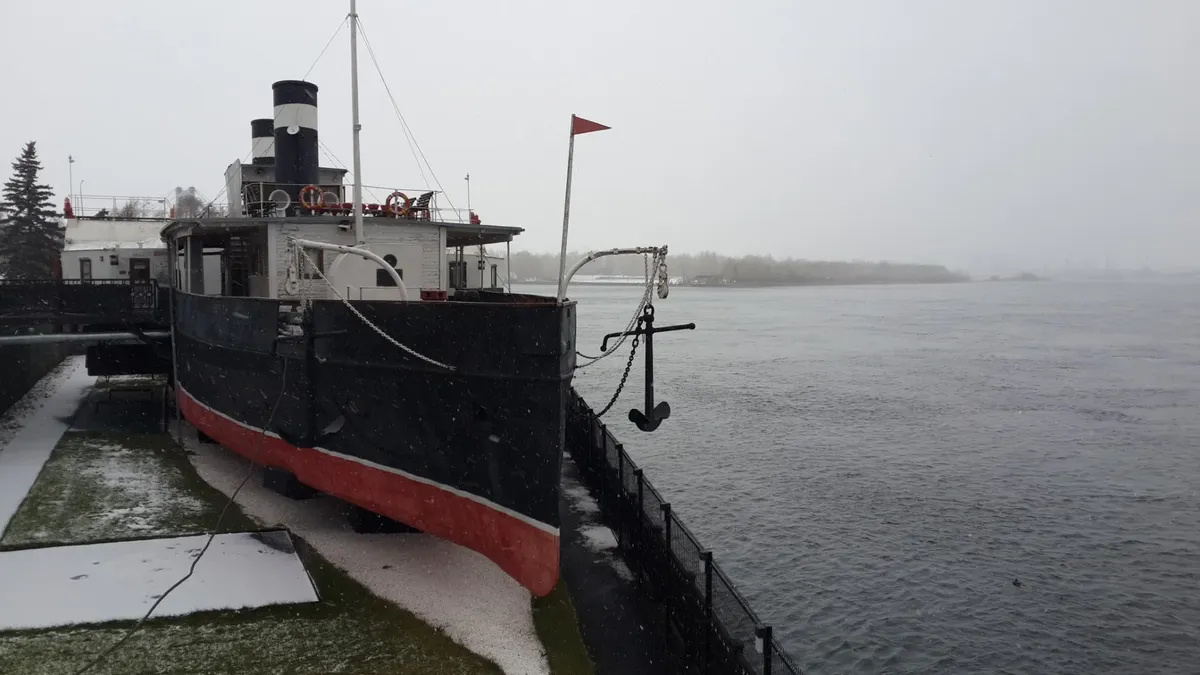
In the 90s at St. Nicholas" opened a pub. The doll of the passion-bearer was recognized as a doorman. And in a cabin with Lenin it was possible, by agreement, to spend the night - this was even earlier, before the steamship became a model of the ark, and was exclusively the Krasnoyarsk “Aurora”; the guard let in homeless couples for three rubles. Well, yes, Ilyich was thinking about the fate of Russia there, but let’s not be orthodox and dogmatic, we will also be completely revolutionary, we will free up business activity and private initiative. (In Turukhansk, the museum of political exile, they were allowed to sit on Stalin’s sofa for free.)
And, apparently, the watchman from the ship (not the same one - that one was fired, a different one) was ringing for me, half asleep and in the dark, pointing his finger in the wrong direction. The person watching them, the one “who is on the remote control,” must have had a number similar to mine (227925). When I was a student, I worked as a watchman, I set the alarm clock myself to ring it, I know. Well, or the equipment chronically malfunctioned, switching to me.
To confirm this version, other branches of the local history museum also broke through to me from time to time. “Yudin’s House: no comments”, “Administrative building, that’s it, see you in the morning, good night.” They called from the Literary Museum. On the door there hung a monumental sign with a brief promise of a wonderful ending: “Day off - Sunday.”
But still, the most stupid served on the museum ship, nine to one.
I couldn’t turn off my phone at night - the editorial office is in Moscow, it’s still evening there.
Then the mode of calls (and they continued for years) changed. If they were distributed, it was not before three. If you overslept, it’s already closer to four. But this is rare.
Soon, even if the phone was not flooded, in the middle of the night I began to wake up and wait. Those were exceptional moments. And all this nonsense was necessary for some reason.
Six-digit telephone numbers (business cards with two telephone numbers under the surname, work and home, looked like a design plate with dates of birth and death) in 2008 in Krasnoyarsk were replaced by seven-digit, more optimistic ones. And the night ringing stopped. Then the phone went completely silent, no one called the home phone anymore, so I threw it away.
Meeting place with shadows
One watchman, I remember, called and reported like this: “It’s the norm on the Titanic.”
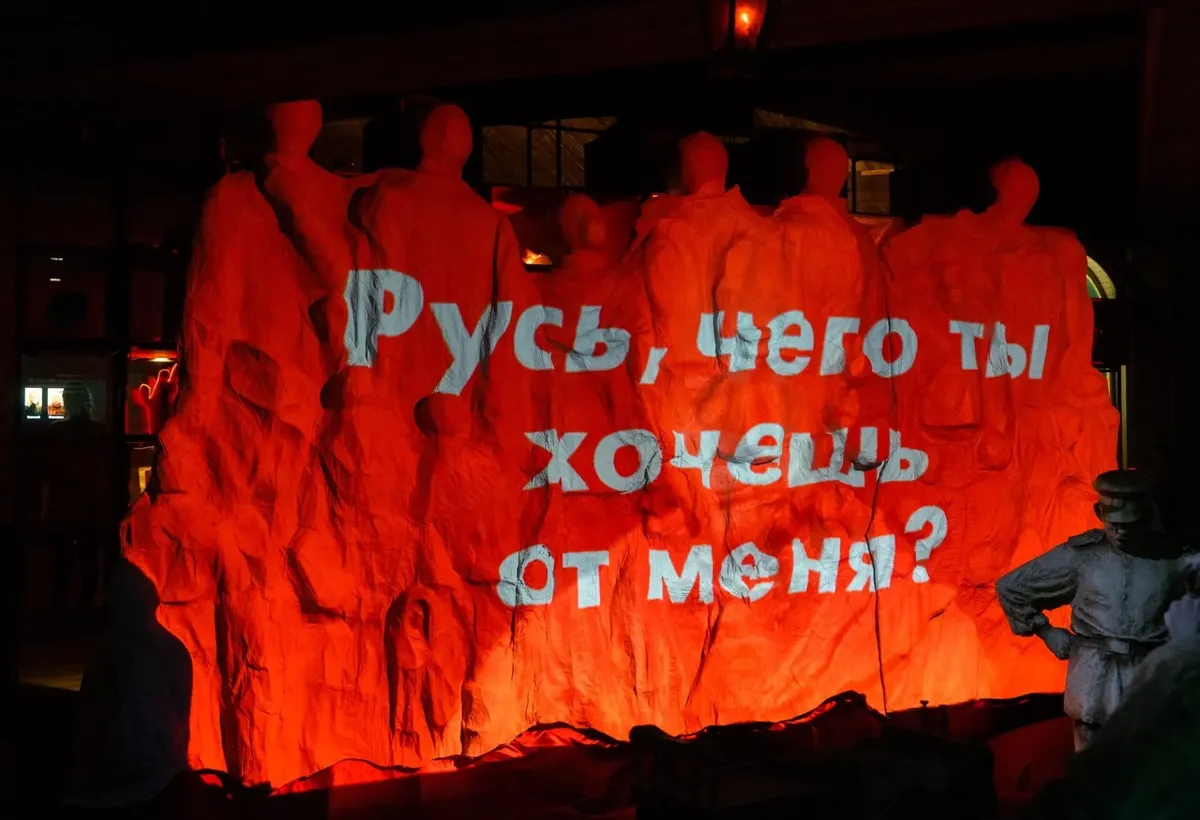
The shadows were tamed on the Titanic, probably to reconcile the living. The executioner and the victim were placed side by side. An executioner who was also a victim, and a victim who was also an executioner.
They sailed on this ship young: Nikolai - at the age of 23, upon returning from Japan, he had not yet become a king and had not led the country to collapse, Ulyanov - 6 years after him, at 27, heading to the place of exile in Shushenskoye. He had already united the St. Petersburg Marxist circles and was now sailing to one of the most blessed areas of Siberia, where not only pine trees reach the stars, but watermelons and apricots ripen - to shoot large Shushensky hares, write the first thick book (monograph) "The Development of Capitalism in Russia", build a green gazebo in the garden, "indulge in the effeminacy of morals" with Krupskaya in her youth (when, as it now turns out, she was practically no different from Scarlett Johansson).
And here is the end of the 90s: look at the dolls, drink beer, go out on deck. The same water they saw. Only the river, like time, flows by - “St. Nicholas" was lifted ashore. And only here is peace and quiet. The illusion that we are all in the same boat. And that no one will rock it anymore. That myths, ideas, shadows of the past not only divide.
It was a strange time. Or is there a gap in it? It seemed that the Civil War was becoming history. The second street after Karatanov on Strelka is the Ninth of January. At the intersection of Ninth January and Lenin (as it sounds!) the Annunciation Convent opened: previously, in the destroyed church there was a fur warehouse, with the assistance of Shoigu and Mikhalkov it was rebuilt. Across the road from the monastery, a stall called “Blagoveshchensky” was opened, selling vodka and condoms.
From the smooth and sloping pedestal of Ilyich, rising with his back to the regional administration, children rode like a slide in winter, and the first skaters in summer.
Well, the street of the Dictatorship of the Proletariat in Krasnoyarsk always led to the bazaar (Collective Farm Market), the Street of the Republic ended with a prison, and on Svobodny Avenue, in addition to the university, there was a cemetery.
In general, Strelka, where the Russians erected a quadrangular fort in two weeks of August 1628 (the length of each wall is a little more than a hundred meters, the current Peace Square in this place is 190 meters by 220), this nickel is an amazing scene. It contains all of Russia, past and present. Just as the Krasnoyarsk region was previously considered a model region, for example, the state of mind of all of Russia was judged by its vote, so this site limited by human dimensions, a former fortress in the historical center of Krasnoyarsk, is a mirror of greater Russia. A drop, and everything in it is about water. Sample of Russia, abstract.
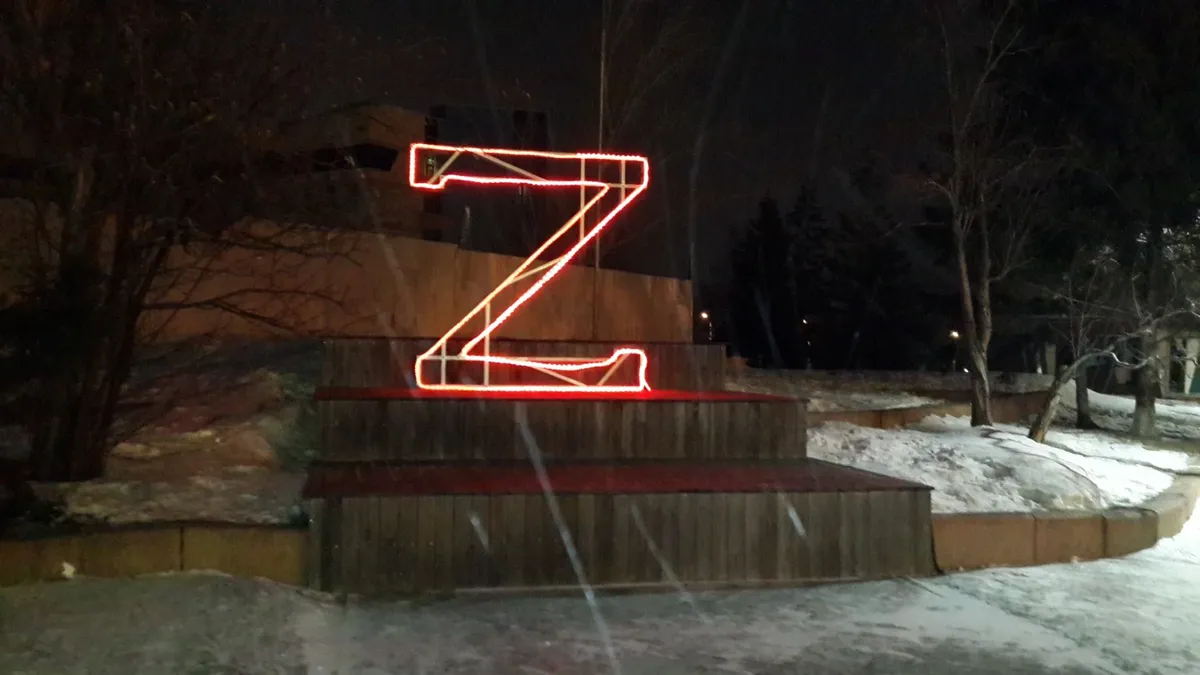
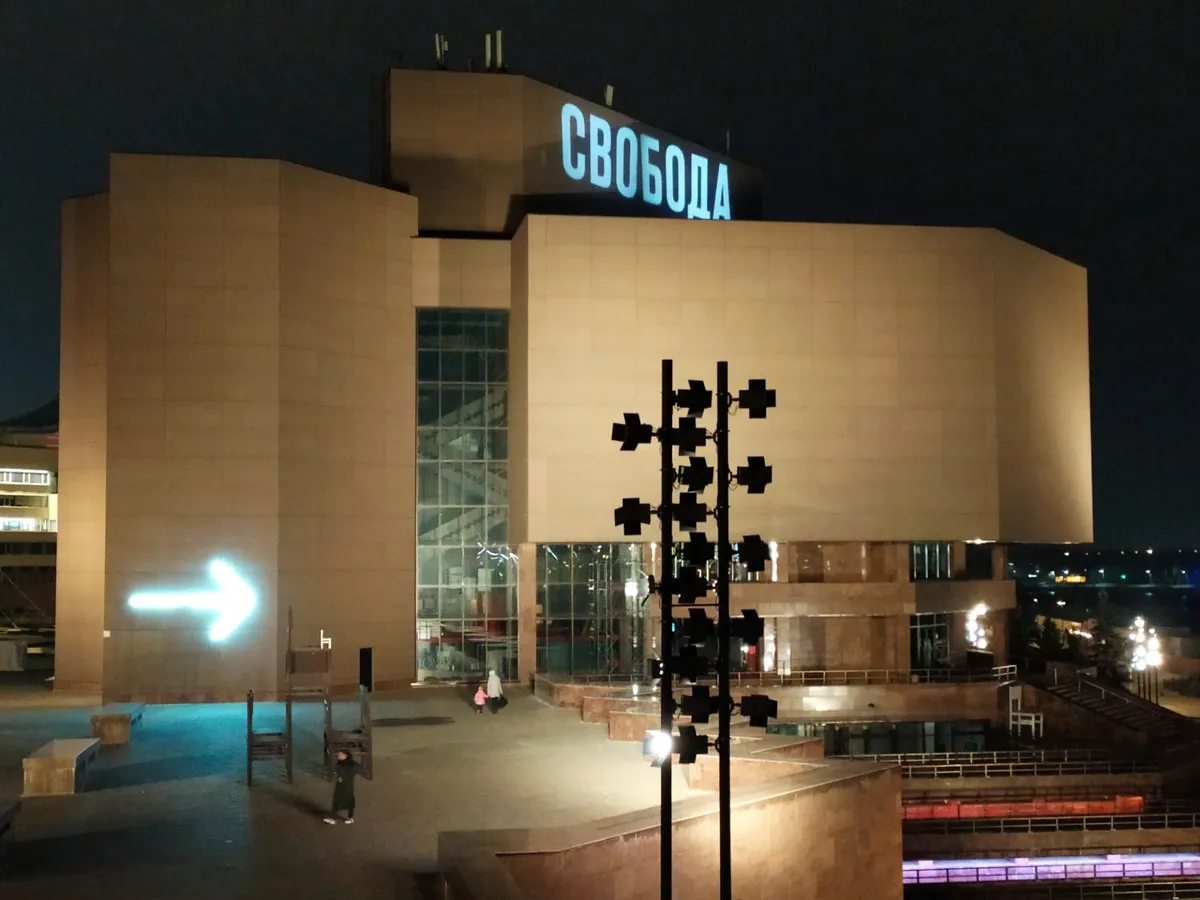
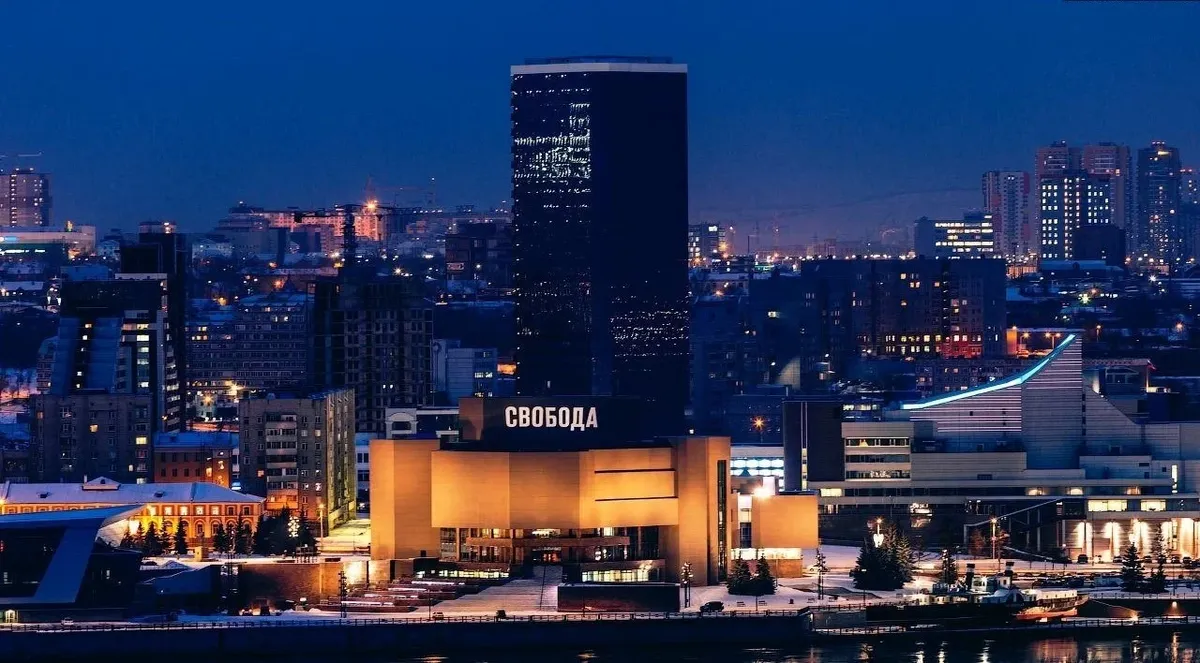
Here the symbolic connections and signs, intentionally and involuntarily, linking the entire history of recent centuries are through the roof. And this is where the clash now occurs. Here, on one side of Peace Square, Z was lit up in the evenings, and at one time it was lit up on a giant screen on the facade of the Philharmonic, and on the other side, every evening on the museum center the word FREEDOM flashes up and has been burning with an even light for the eighth year, no matter what. This is a normal neighborhood. Floating in the air in a row, even without a comma “Z FREEDOM”.
Mixing - just like in life. And - nothing, they got along before. It’s not that views and beliefs don’t mean anything, it’s just that there is something more important, deeper. But something is changing. What? And who is opposing on Strelka? By definition, liberals are not born in this region, the climate and landscapes are not favorable, and you can’t find them during the day. Who opposes the archaists? Just people? With compassion, feeling and understanding - to those who crush empathy in themselves, who, if necessary, will become a cannibal? People of free occupations - those who are in the civil service? Those with concepts versus those without them? Those who have read a certain number of books - those who have never read anything? (In the Krasnoyarsk Territory, the 2020 census recorded 154,406 citizens who received only primary education, 36,053 with no education at all, and 2,790 illiterate people.) Who are all these young people with good and still intact teeth?
Branch of the mausoleum
So, for the centenary of Ilyich, in 1970, a boat was raised to Strelka. For the 70th anniversary of the October Revolution, a pompous Branch of the Lenin Museum is being erected here. And documentary director Vladimir Kuznetsov had (even then) a logical question: why not build a branch of the mausoleum in Krasnoyarsk - a city of all kinds of branches? Put on display the tooth of political exile Ulyanov, pulled out by an unknown Krasnoyarsk dentist. While filming the film “Lenin on the Yenisei,” Kuznetsov discovered documentary evidence that Ilyich specially came from Shushenskoye to Krasnoyarsk to pull out a tooth. All that remained was to involve young local historians and pathfinders, and there was no doubt: they would have found it. “We’ll put it in a cup made of rock crystal,” said Kuznetsov, “we’ll put a guard, we’ll hang a sign, they say, a branch of the Lenin Mausoleum, the Tooth of the leader of the world proletariat. Grateful Siberians will line up to be curious. Again, parades can be accepted.”
Well, yes, but with a change of power, it could be demonstrated as one of the dragon’s teeth, the regular sowing and sprouting of which, in fact, explains our life.
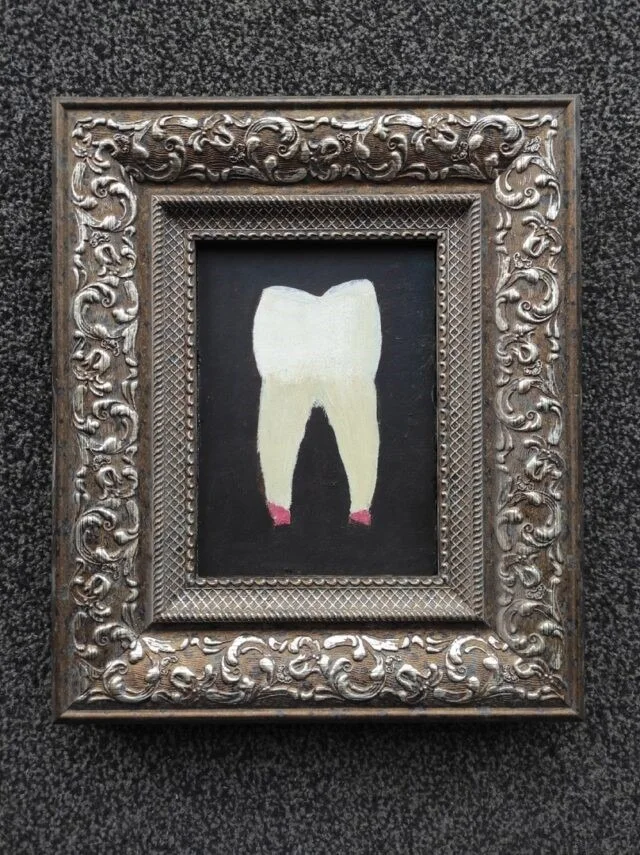
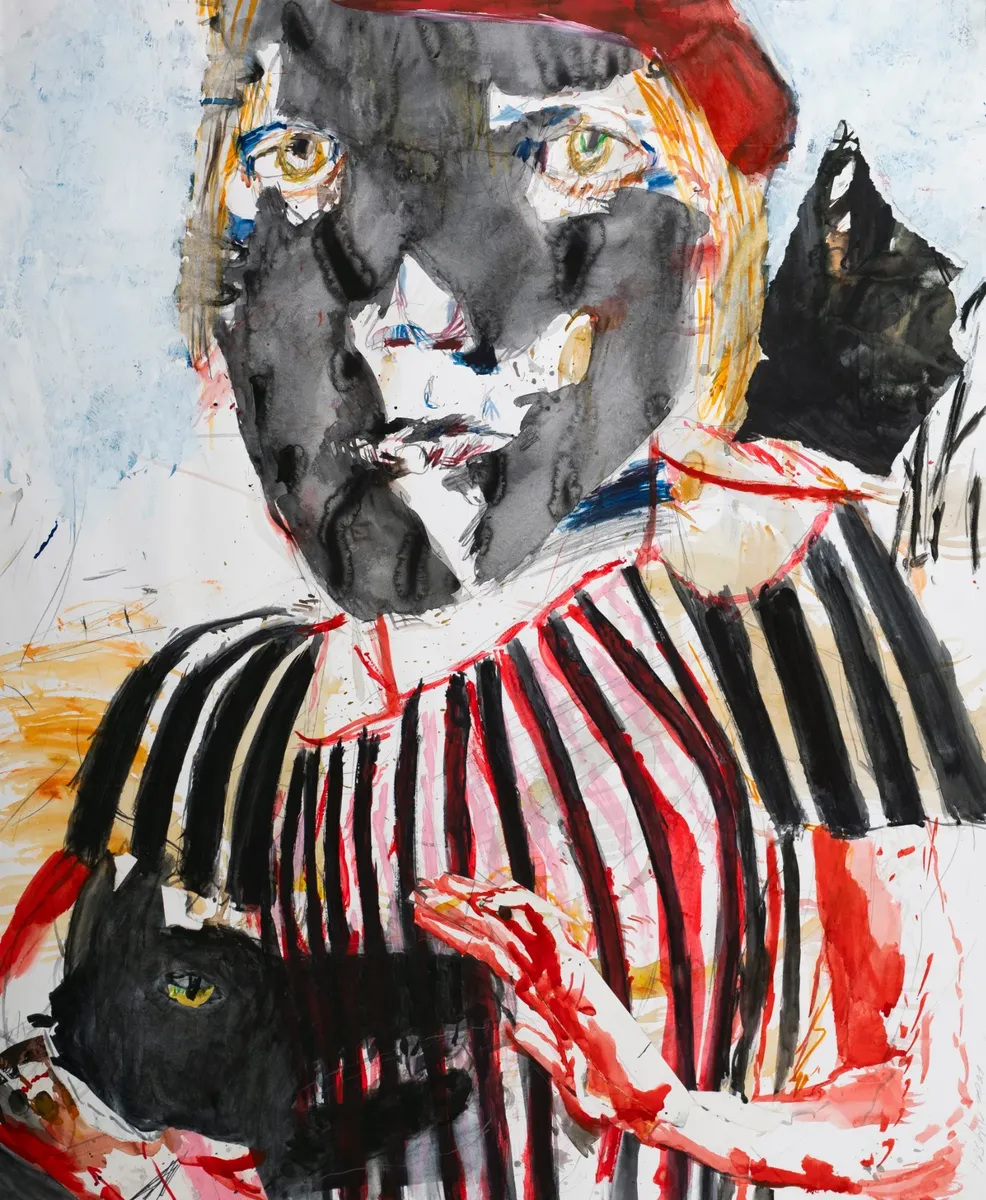
Despite the brilliant prospects, it didn’t work out. But the future great artist Vasily Slonov, who was just starting out in the 90s, earned money at one time by drawing teeth. More precisely, each time there is one tooth, and there is an ornament around the vignette. Even then he became a cult painter among dentists. And for the centenary of the Russian Revolution, Slonov made a series “Russian Smile” for the museum, and these are no longer teeth - modules for the Soviet anthropological project, for the designer of a new type of person (these iron teeth, snatching happiness from the world - so that for everyone and for nothing - will break).
The branch of the Lenin Museum will be renamed a cultural and historical center. Then the name is updated - “Peace Square”. At the same time, the Lenin exposition will not be removed - the only one of all 13 branches in countries that left the USSR. And they will be right: more and more people come every year.
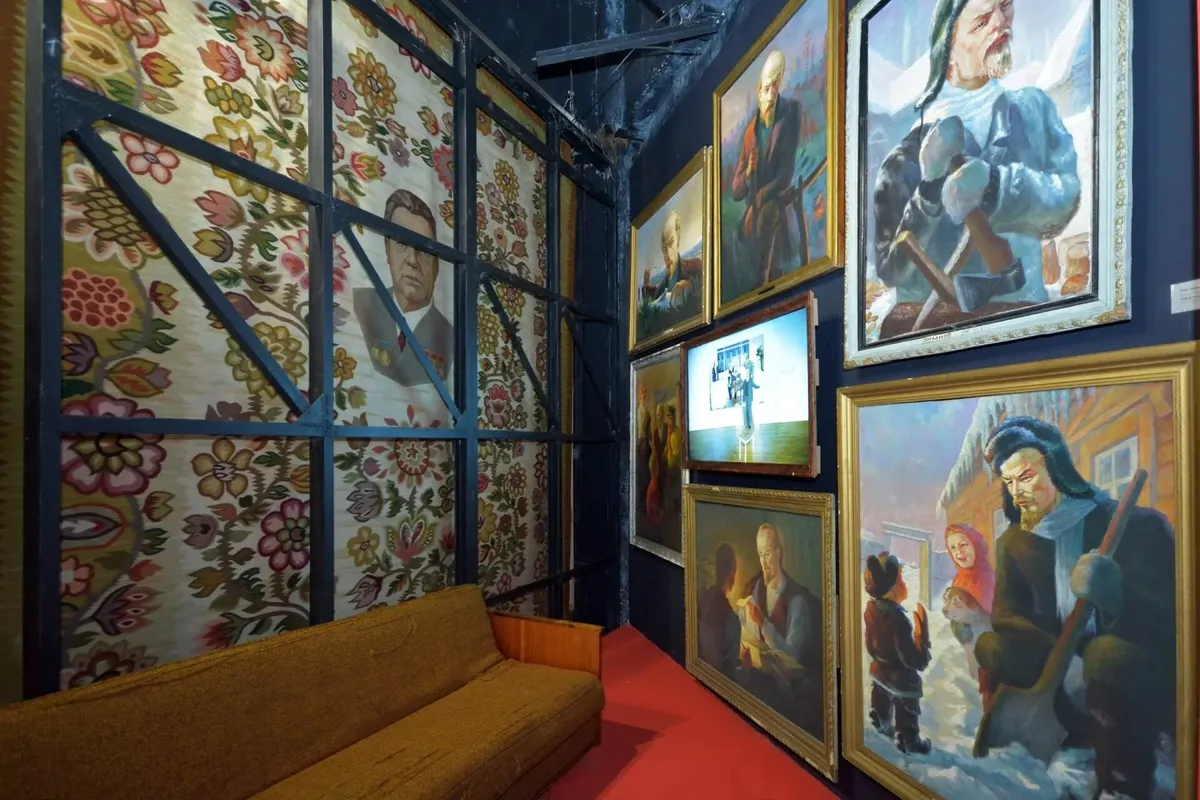
In the early 90s, a sphinx would rise in the outdoor space of the museum - from sticks and construction waste, from polyethylene, foam plastic: its face resembled a leader. There are garlands on top. It won’t last long: the winds and snow are strong here, in the Yenisei valley... They worked with Leninian, rethought, reassembled. Here is Lenin in exile in Shusha as an alien, a mythical man-god. This is how he appears in the works of the painter Pyotr Saltykov from the closed city of Krasnoyarsk-45, painted “on the table”, not shown to anyone; they were transferred to the museum in 1997, after the artist’s death.
This is the iconostasis. And in the corner is the door to apartment No. 9, brought from the dismantling of the barracks. "The Ninth Gate" Behind the door, another life-size Ilyich doll presses the bell button. The museum warned : “To his infernal request, “Let me in,” the correct answer is: “No one is home.”
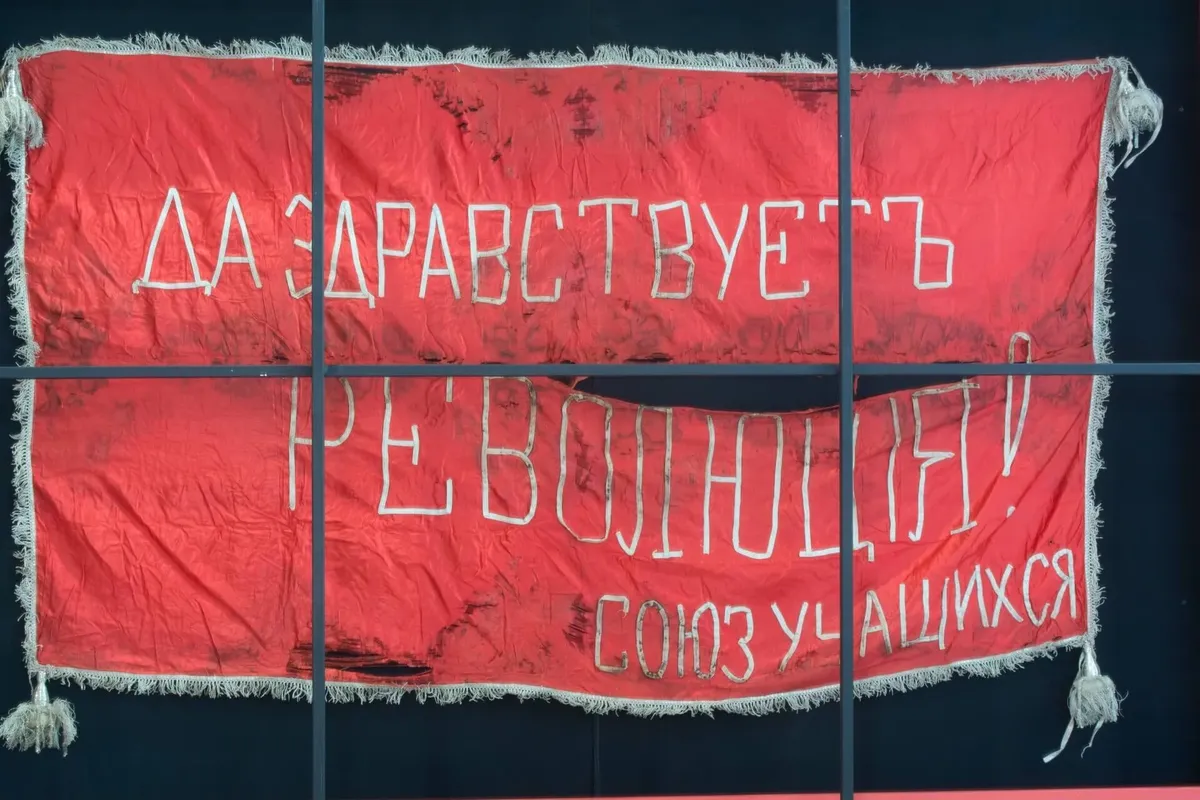
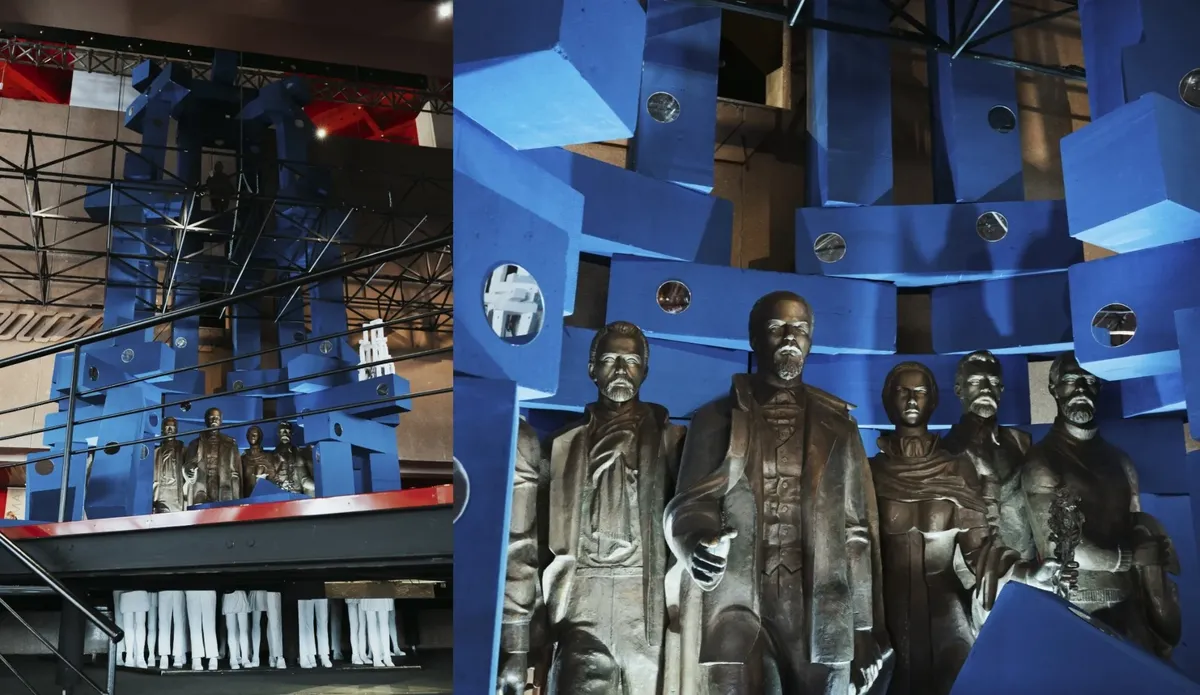
But now the attitude towards Leninism is completely different than 50 or 20 years ago. And even more so for the banner embroidered by young Krasnoyarsk residents in 1905. The banner, along with leaflets and typographical font, were stored in the attic of house No. 9 on Markovsky Street; they found it in 1987 during demolition and transferred it to the museum. In 2017, the banner saw the light of day again, for the first time after 111 years of oblivion. The entrance installation of the current biennale, already the 16th, is “Teleport” by Alexei Shidlovsky. A multi-tiered Tower of Babel, lifting the spirits of the past - the bronze Bolsheviks - into the future.
Right there, near the museum and “St. Nicholas”, on October 30, 2001, a stone was erected in memory of the victims of political repression. The stone was called both a mortgage stone (a collection was opened for a future monument) and a memorial stone (they say, this is enough). As a result, Krasnoyarsk never achieved the monument. And this is here - in the core region, the convict Gulag region. But the museum building itself adjacent to the stone (Soviet modernism), these huge cubes, magically, when viewed from above, form a projection of a dome with a cross.
And then. The former Lenin Museum has become the largest Sovriska site in Asian Russia; grandiose art objects, installations, sculptures and cyclopean crafts regularly appear and disappear in it and in the adjacent Strelka space. They constituted an alternative to state monuments, cast iron and unchangeable. There is something totalitarian about them themselves, and they, in the role of a materialized memory of the victims of totalitarianism, are not the best solution.
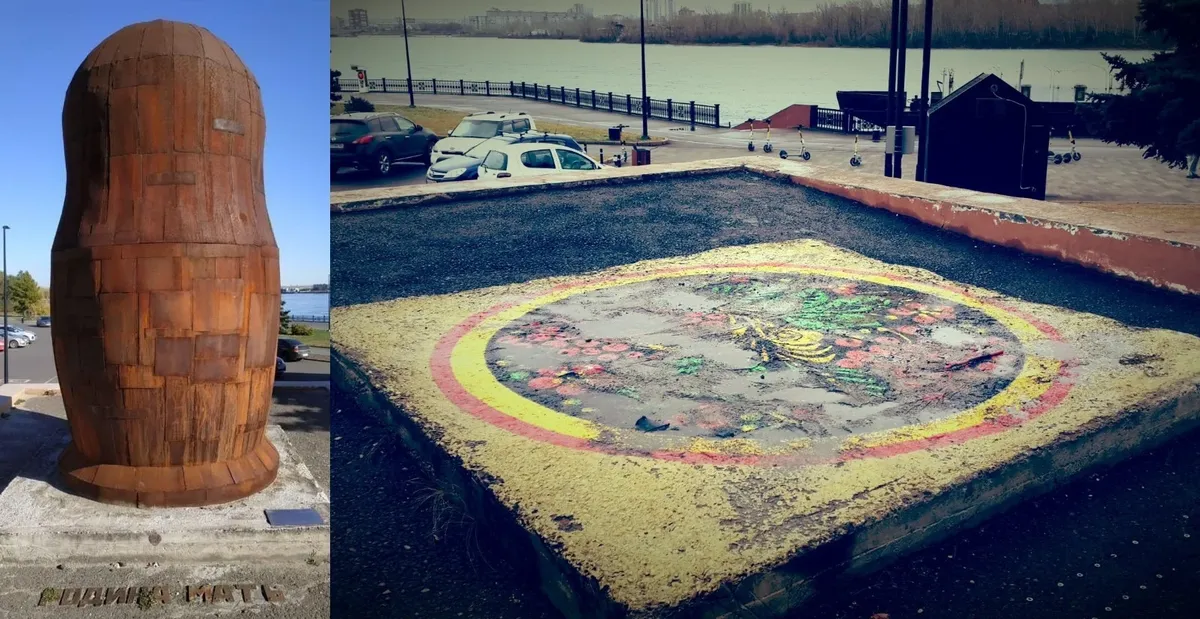
The same Slonov installed the Motherland next to the stone 15 years ago. A giant nesting doll (matryoshka - Matryona - mater - mother) welded from tin sheets, faceless, identical on all sides, as if unfinished - like a blank for further work that will never be done. The very silhouette of the nesting doll is unity and multiplicity, immovability and dialectics; the tireless reproduction of generations, one after another (“women are still giving birth” - words attributed to the Marshal of Victory). In general, the artist dedicated it to the women of the front and rear. And then they began to work on the iron Motherland - they began to dress and bandage it. Give it softness and warmth. Create a face. Once you touch the Motherland, there is no more scale on your hands. She is already in a robe, with a brown braid. It was tied by craftswomen from all over the country, using squares of the required scale and the “granny square” pattern. Tens of kilograms (and kilometers) of yarn were lost. And then again - bare metal. And rust covering the figure. Dressed again. But what is there for a long time - on the open Yenisei bank.
Rust is our insulation; it, visually reminiscent of gore, was part of the author’s plan: everyone lives and grows old, and no land is drenched in blood like Russian, “soaked in tears from the bark to the center.”
With the beginning of the Northern War, attacks by the right public on the museum, on Slonov, and the matryoshka naturally became more frequent, and in 2023 the nesting doll was dismantled after the next change of the museum director (at that time a wave passed through the regions in a broad front, washing away the directors of libraries, museums, theaters - cultural institutions controlled by local authorities). They stated that the Motherland was sent for restoration. Clearly, she didn’t return. All that remains is a slab on the asphalt, painted like Khokhloma.
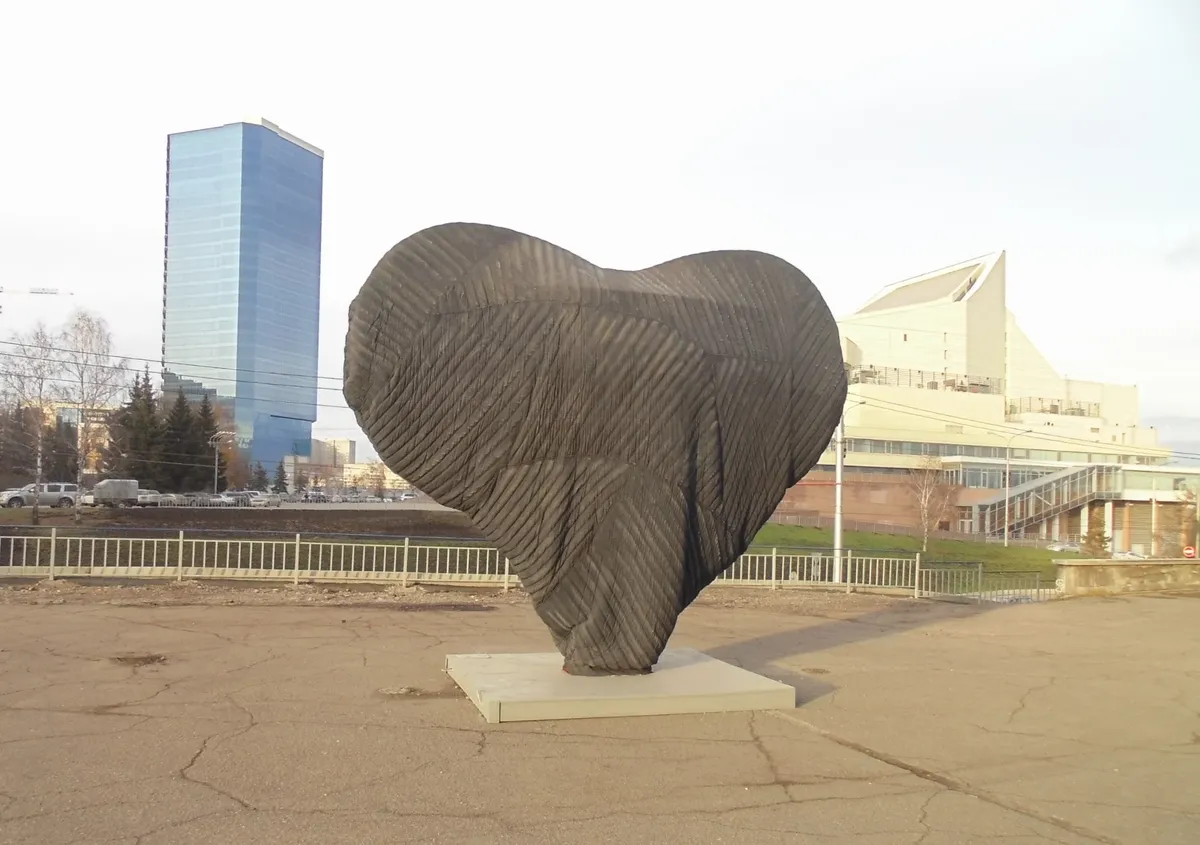
Ten years ago, in 2015, Slonov opened the exhibition “Quad Necks of the Apocalypse” in Moscow at Winzavod, there was already a “Garden of Cotton Stones”, cotton swimsuits and flippers, and here, on Strelka, the artist installed the “Cotton Heart of the Motherland”. “We all have a homeland. And undoubtedly, our Motherland is the Mother. And naturally, a mother must have a heart. What is this heart like? Of course, cotton wool, of course, big and warm. <…>".
What about the exhibition “War Diaries” (authors include Viktor Sachivko and Vadim Maryasov)? With their luminous martyrology of all the soldiers who died in modern military conflicts, called up from the Krasnoyarsk Territory, with their letters and photographs, their names and faces... “War Diaries” opened in 2018. In turn, they became a continuation of another permanent exhibition - “Long Jump”, it was opened in 1995: Afghanistan, Tajikistan, Chechnya ...
Of course, all this irritated those who professionally loved their homeland. Could they not be unnerved by such a paradox: “Peace Square” (then the CIC), located in the center of Asia, was recognized as the best museum of the year in Europe in 1997, and the following year it received a special prize from the Council of Europe “For its contribution to the development of the European idea”; there was, by the way, a Russian state prize; and has just become museum of the year - according to the largest domestic expert fair Cosmoscow. Well, what is this, where is it good for?
"Ideological sabotage"
Deputy of the Legislative Assembly of the Krasnoyarsk Territory (United Russia) Elena Penzina - deputy chairman of the committee on construction, housing and communal services and issues of civil defense and emergency situations. The chairman of this committee is also United Russia member Alexey Kulesh. On October 30, he comes and stands with red carnations at the walls of the museum, at the stone for victims of political repression. He is waiting for the wreath from the regional authorities to be placed on the stone (they are the same size, it would completely cover it, so they place it next to it). Waiting for the grandmothers to lay flowers.
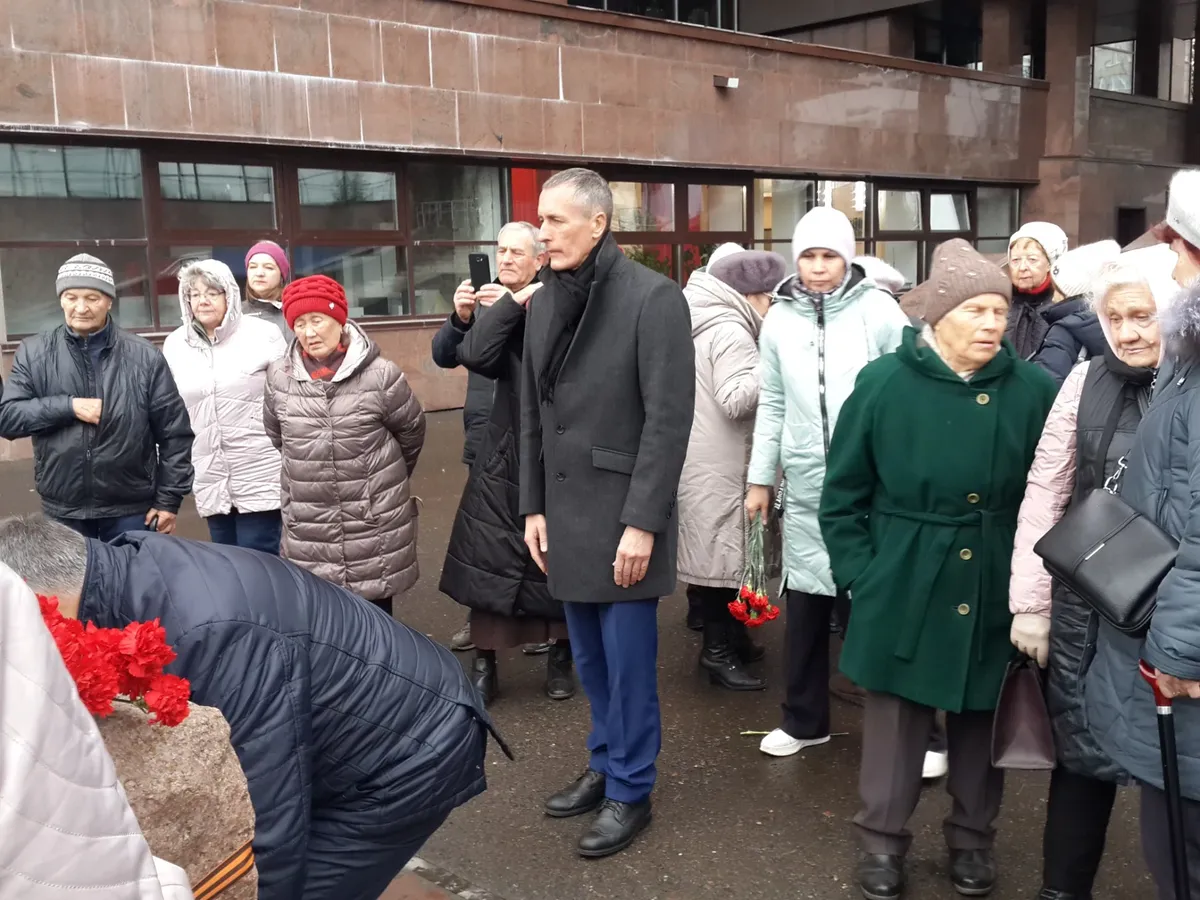
And deputy Kulesh Penzina turns his gaze to “Peace Square” two days before, on October 28. Writes (author's spelling):
“I had a very interesting conversation here with a candidate of psychological sciences, a teacher at Siberian Federal University ( Siberian Federal University - A.T. ) Olga Finogenova. The topic of our conversation concerned the current and past exhibitions of the Krasnoyarsk Museum Center “Peace Square”. And there is no reason to believe that the ideology of hatred of one’s history is transmitted out of thoughtlessness, not on purpose. The cultural center works with meanings and symbols and, as a state enterprise, must form a position and engage in propaganda, meaningfully, but it breeds a negative attitude of visitors towards their homeland, the Soviet period of Russian history, the government of our country and the Great Patriotic War too - which is worth the penitential iron arch alone.
And this direction in the cultural activities of the museum has been going on for a long time, which indicates the purposeful and meaningful work of the museum’s management to devalue Russian history and culture.
And I agree with Olga Nikolaevna that such activity is called ideological sabotage. I am preparing a request to the Ministry of Culture. I’ll immediately write to those who will stomp their feet and write all sorts of nonsense in the style of “who is she to talk about great art.” Great art is Surikov, Aivazovsky, Nekrasov and many others, but definitely not David King or Renat Voligamsi.”
And here are the responses:
“Yes, very interesting! We need to shake these Soros. Both in Moscow and Sverdlovsk, they dug in. Mikhalkov constantly pulls them in “Besogon”. I thought that there were none in Krasnoyarsk. Where there!”
"Yes, sure. The culture in Russia is completely saturated with this crap. While everyone was turning their heads, both culture and education were saturated with this rubbish. And in Krasnoyarsk, too, where would we be without us.”
“This arch should not be nameless. The name of the author and those who laundered Nazism and mocked its victims must be known. It’s not just the boy Kolya from Urengoy who can take the rap.”
For reference. This exhibition was made with the support of the regional government, the Ministry of Culture, and was made jointly with a dozen of the most important government institutions, in collaboration with the same Siberian Federal University - its search team “Track” of the Military Engineering Institute.
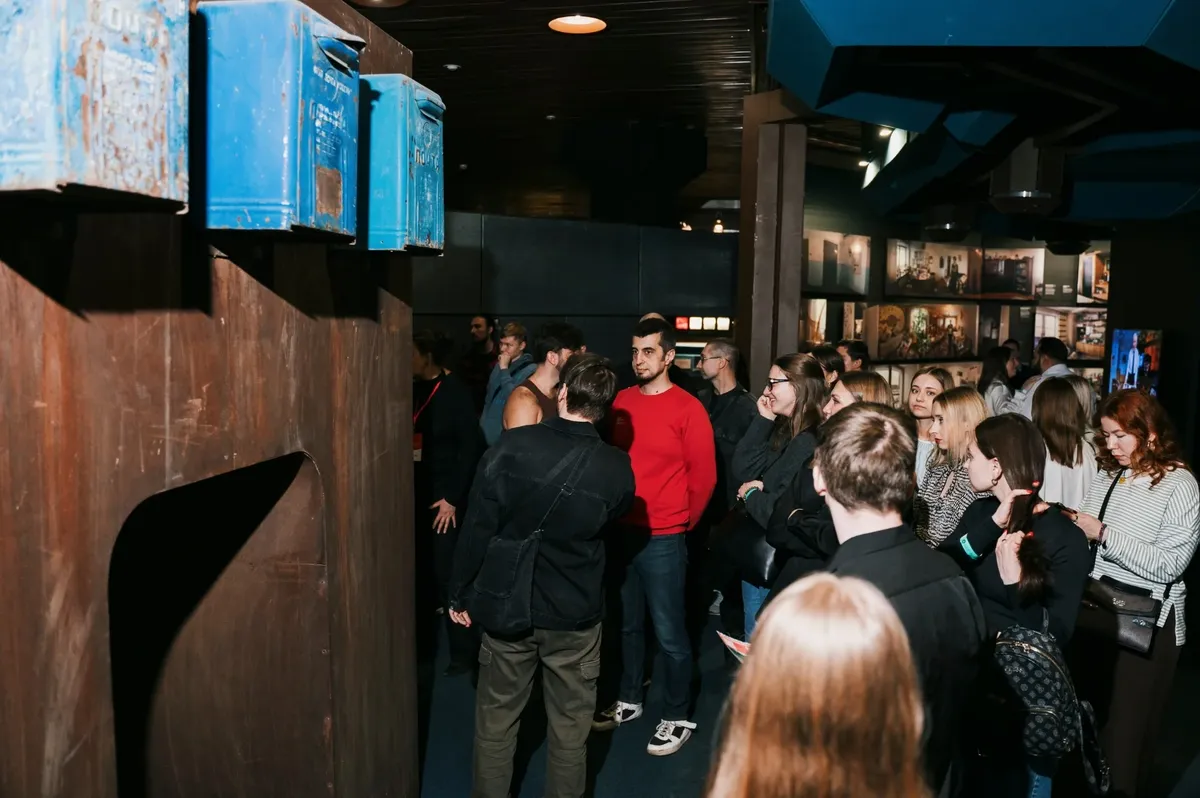
The “repentant iron arch” that so outraged the deputy in reality is about the eternal memory of the countless victims of the most terrible war of the 20th century, this is the work of the artist Chaim Sokol (so-so name for an ideological saboteur who questions its results). The arch is in the center of the Blue Halls of the museum, the huge exhibition “We have brought this day closer...” has been running since 2020, dedicated to the 75th anniversary of the Victory, after so many years it was possible for a learned lady and a lady in power to figure out that it was impossible to pass through this arch without bowing. In the voluminous rusty letter “P” - worship, repentance, memory... There is also a post office - on the arch there are old mailboxes, like tombstones, torn or failed correspondence... “Dead letters” - that was the name of the Moscow exhibition of Sokol in 2010, in fact, then the arch moved to Krasnoyarsk, and in the newspaper of the Siberian Federal University itself at that time they talked about it then where more benevolent. Yes, just more literately, having seen (or learned) about the reference to the Arch of Emperor Titus in Rome, erected in honor of the final solution of the Jewish question at that time.
Penzina provides a photo of an unknown information product, where the arch is called repentant. But why not call it that? Have we nothing to repent of? Just one question: have all the bones of the soldiers of that war been raised and buried as expected, has the whole truth been told? Secondly, most likely this is the inattention of the writer, since everywhere in the museum it is called a bow. The deputy, too, presumably due to inattention, haste, and not illiteracy, leaves errors in his messages, confuses one with the other, and now what? What does sabotage have to do with it?
Near the museum there is a monument (quite traditional, even too traditional) to the great fellow countryman, Viktor Astafiev. From his letter to one general in 1987: “How many people lost in the war? You know and remember. It's scary to name the true number, isn't it? If you call it, then instead of a ceremonial cap, you need to put on a schema, kneel on Victory Day in the middle of Russia and ask your people for forgiveness for the mediocre “won” war, in which the enemy was buried with corpses, drowned in Russian blood.”
What do associate professor Finogenova and deputy Penzina propose to do with Astafiev?
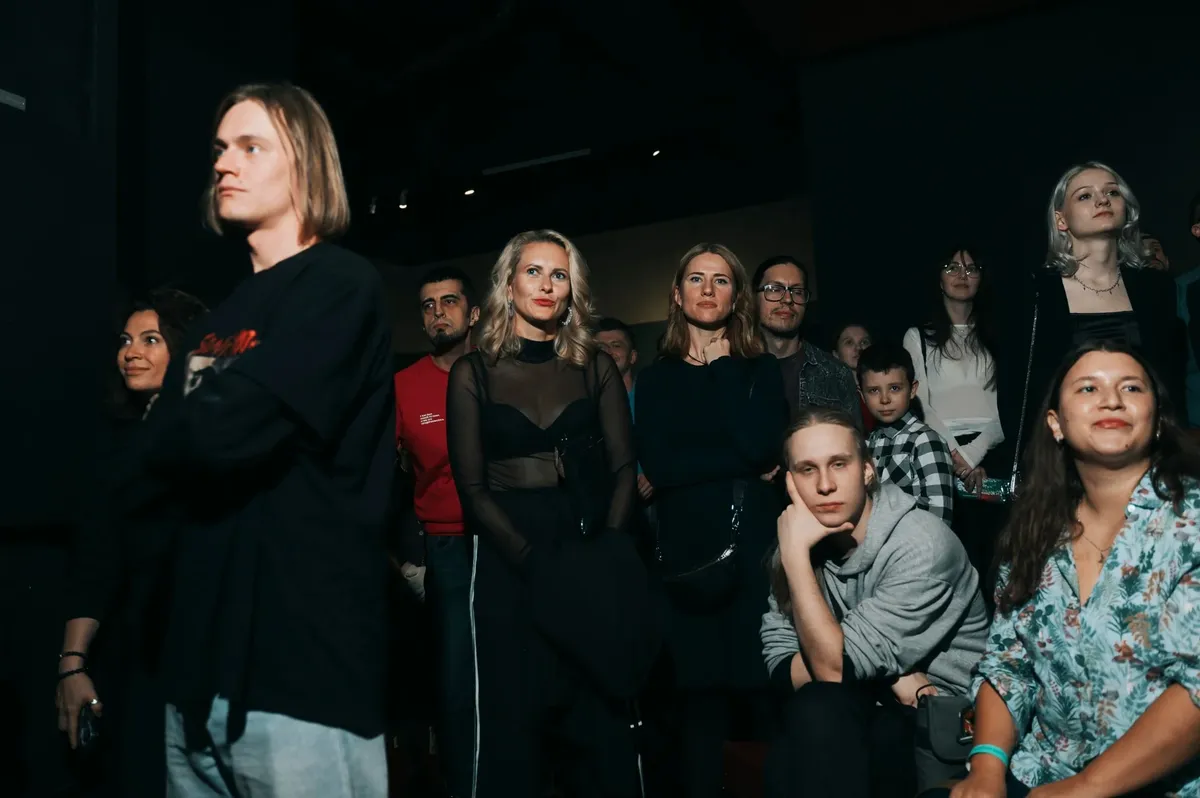
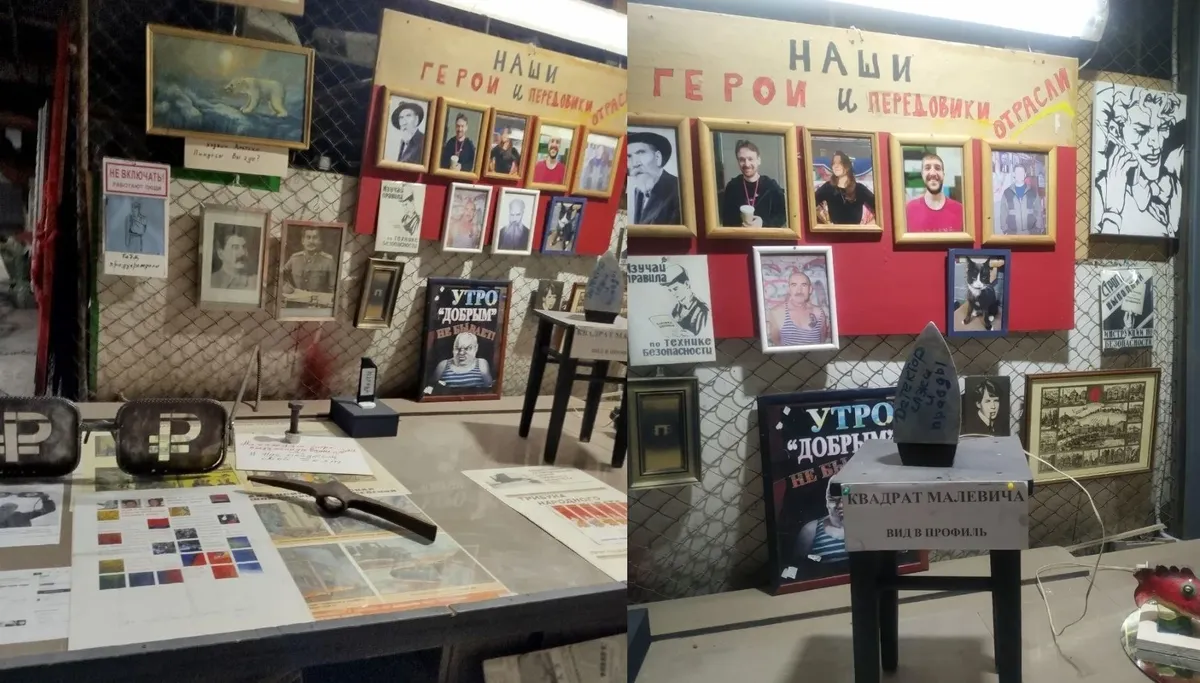
...And four days after Penzina and two after Kulesh’s visit to Strelka, on November 1, another museum night takes place in “Peace Square”. And a few hours before, the museum was cleaned and polished like a soldier’s boot - for some reason they were expecting a visit from people in civilian clothes, and not at all from the Ministry of Culture (or any other institution of the regional government). Therefore, we removed everything that could raise unnecessary questions (which, in particular, is why art and culture exist). For example, “underground excursions” were planned after midnight - in the basement, where museum electrician Leonid (Lekha) Pavlov has been collecting his own collection of works for decades (there is a lot of fun stuff there, including from cult artists). The excursions took place at night, but before that the basement was cleaned up. For example, the portrait of the artist Slonov was removed from the honor board and large steel glasses with frames and arms made of reinforcement, which he had recently donated to Pavlov’s collection, were removed (“Now people have only rubles in their eyes”).
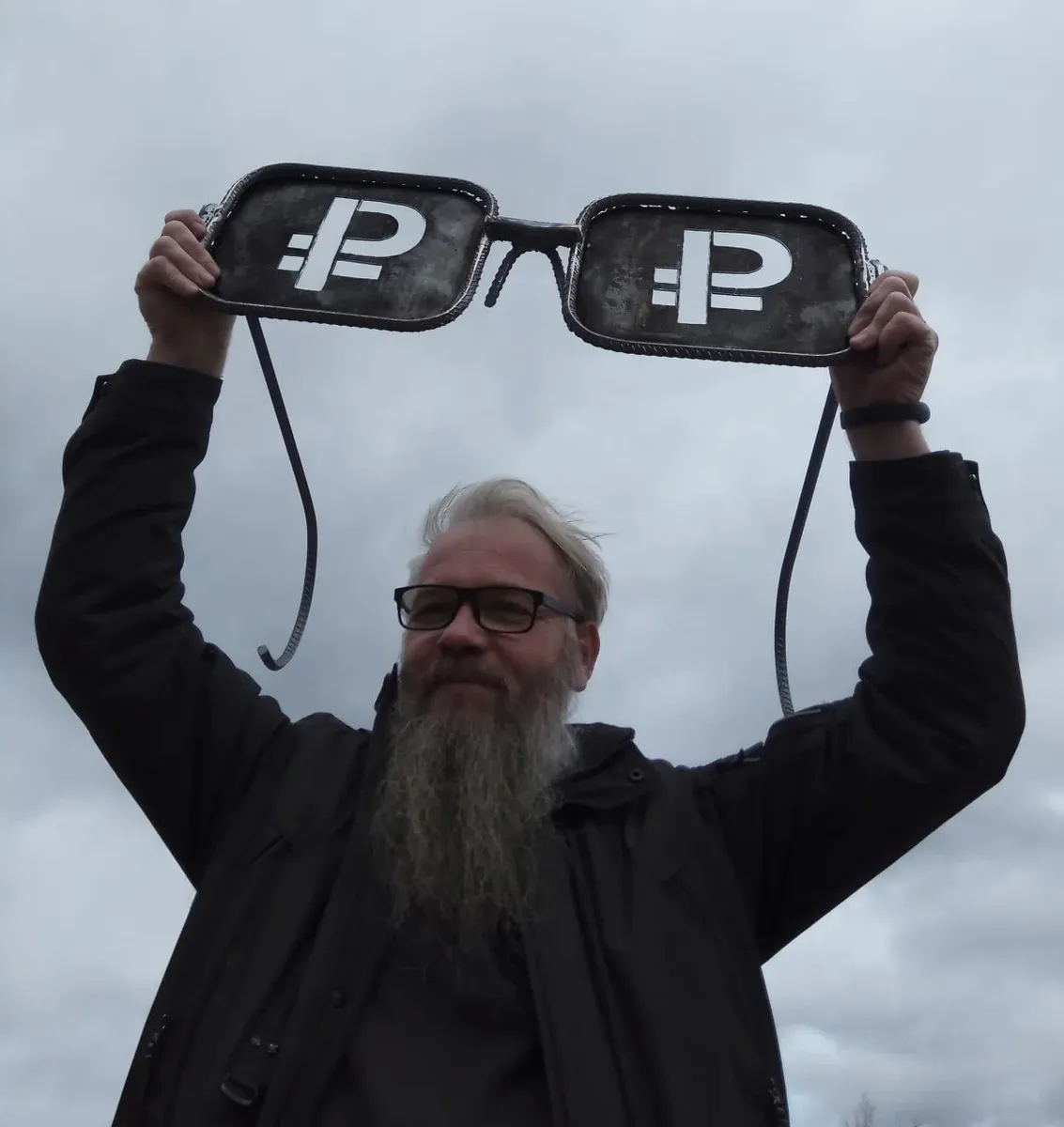
Perhaps the fact is that last year the artist was given a year of correctional labor for publicly displaying extremist symbols: eight-pointed stars on the rounded shoulders of tumblers. Naturally, for the ironic coloring of children's toys: from now on this is the “designation of the AUE* movement” (“The prisoner way of life is one,” the movement is recognized as extremist and is prohibited in the Russian Federation). Slonov continues to fight to have his sentence overturned.
But what was wrong with the glasses? The photographic image of the artist itself? His name is not prohibited, nor is his work. And in the exhibits of electrician Pavlov there was nothing against the authorities from birth. “Okay, I’ll take everything to the village, where I’ll hold an exhibition.”
A well-familiar method for a long time: remove/blur out from everywhere/everywhere, in all realities. As if this does not make the figure of silence more noticeable and does not give rise to new unnecessary questions. But note: it’s not the security forces, it’s not the local authorities who are doing this - ordinary self-censorship.
War of symbols
The memorial to the victims of political terrorism was conceived as a raised stone palm with a break along the “life line.” The hand is in a handcuff. But in the process, the manufacturers asked for an additional 15 thousand dollars: the chosen material - local syenite - was not very suitable for cutting out fingers and cutting lines on the palm. There was no money, and all that was left was a working mitten - a top.
Still, this modest stone was loved. They brought flowers to him. Something happened, another political murder - and the townspeople came here. Sometimes they carried photographs and handwritten messages to the world.
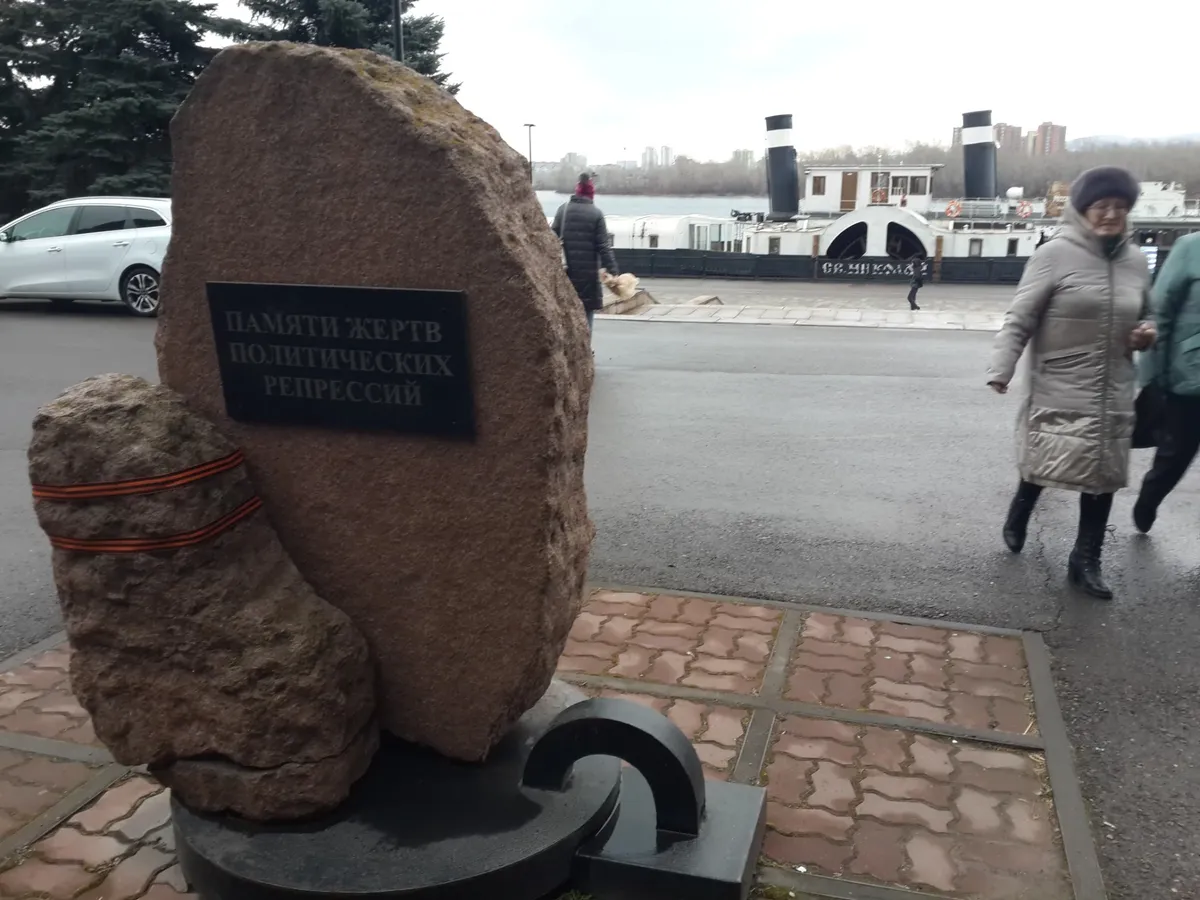
And so, the day before the clearing of the museum and the day after Penzina’s speech, her colleague and leader (on the parliamentary committee) Kulesh comes to the stone and stands with carnations. There is no longer a “return of names” in Krasnoyarsk; at least, the names of those executed have not been read out in an organized manner for several years. First there were epidemiological restrictions, and two years ago “Peace Square” (all the main events of this day were previously held here) was suddenly closed: they reported that the building had been mined. Three days before, a meeting with a concert on the same occasion was planned in the Palace of Labor - suddenly and until the next morning it was cut off from power.
Both disrupted events were supervised by the regional ministries of culture and social policy, and budget money was allocated. Nothing was reported about the search and capture of the hooligans. Against this background, an annual wreath, carnations, etc., continues to be placed in the regional budget (constantly since 2001).
That is, it is possible this way (to remember and grieve), and vice versa (to tear down this memory, to laugh at old people), the authorities accept both? On October 30, 2025, those gathered discovered that the thumb of a stone mitten was twice tied with a St. George ribbon. Why she is here is absolutely unclear. But if you take it off, they will say outrage and extremism.
Provocation? This has already happened. It was precisely because of the lack of respect for the St. George ribbon that Krasnoyarsk one day, on May 5, 2018, realized the beginning of a new era: then, perhaps for the first time after revolutionary passions and the civil war, the authorities used force on a large scale against civilians.
That day there was a regular protest rally, not very crowded, peaceful slogans. In neighboring Novosibirsk and Irkutsk, everything is as usual - without clashes. Siberia was tolerant of street political protests, and here in recent decades the regime has not clicked its teeth unless absolutely necessary. And suddenly in Krasnoyarsk - a tough “vintilovo”. Something that has never been remembered here. Dozens of people were grabbed without ceremony, dragged along the asphalt, their jackets torn, and thrown into police cars and UAZ cars. The detainees were then given the sneakers and sneakers that had fallen off. One of the protesters apparently lost consciousness, falling face down on the sidewalk. This all happened before my eyes and was filmed by many cameras.
A day later, the head of the police headquarters explained: “We have irrefutable evidence of illegal actions of a number of citizens. Today they are all being analyzed. <…> I recommend that you look at social networks and read the comments. There is a video in a number of comments where a young man throws a St. George’s ribbon near the ballot box. This is purely humanly outrageous.”
Presumably, there were other reasons, but the general did not specify them.
I saw with my own eyes how this happened and what preceded it: the protest action with festivities around the city in the rain ended, people in civilian clothes approached a group of young people at the walls of the regional administration, grow up. One of the young men stood on the bench to give a speech. And the person who approached advised the speaker to remove the St. George ribbon from his wrist: “It should be worn on the chest.” Then the audience noticed and buzzed. The guy, standing on a raised platform, took off the tape. “Throw it,” the adult told him. The young man let go of her, and she fell... near the trash can. The plainclothes partner chuckled and took a video. Then they posted it (there was only this one recording on this YouTube channel).
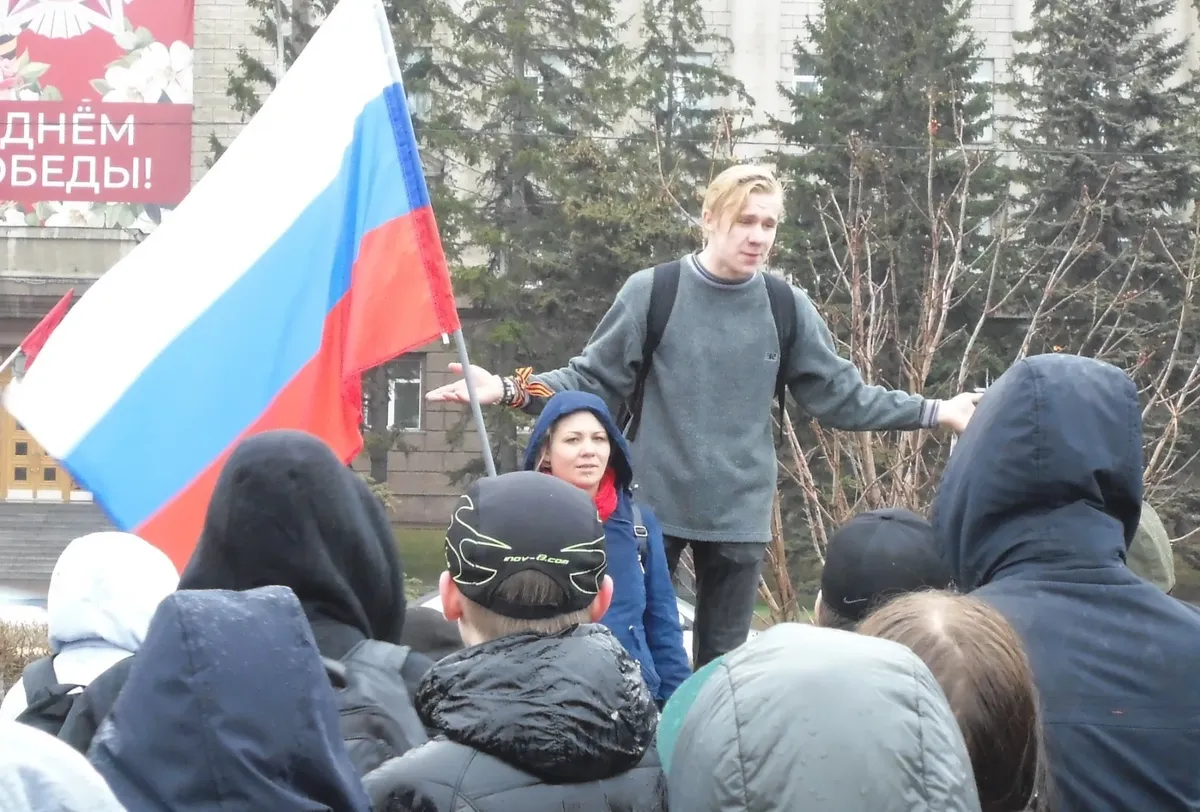
How did the ribbon end up on the young man’s wrist? The mayor's office did not approve that action, having organized the distribution of St. George's ribbons by other young men and women wearing United Russia T-shirts. For some time, the two actions coexisted quite peacefully. The beauties of these ribbons were forced on this guy, like many others. Bingo.
Now they did not remove the tape from the top stone. Although everyone noticed her. And now they laid flowers, it turns out, and this ribbon too, although it has no place here, and it symbolizes something completely different.
Since 2018, local authorities seem to have distanced themselves from grassroots politics. They gave it to the security forces - all reactions are at their discretion. And now it’s like this: the Day of Remembrance for Victims of Political Repression is on the official calendar, no one has canceled it, the authorities are preparing events, spending the budget, but the authorities do not mind if things don’t go according to their scenario. They no longer control the activity of the mob, even if the security officers and the police have a headache. It’s not that this is significant or that it means anything, but there are state employees, there are service employees, there are those who formally look back at the authorities - and there are more and more of them.
Summer will end, and from October 2018, seven air-light letters will float over the city: FREEDOM.
This installation is a replica of the “freedom” that was written by Krasnoyarsk residents on the suburban rocks (on the Second Pillar) back in 1899, and since then this inscription has been regularly touched up - this is a ritual dear to the city.
And it was here, at the Krasnoyarsk Economic Forum, that Dmitry Medvedev said in 2005: “Freedom is better than lack of freedom.”
Then, in the Peace Square shop, pillows with “freedom” will appear - the inscription repeats the silhouette of the letters on the museum and glows. You can take it home.
And then, in the fall of 2018, following the “freedom” (no longer on Strelka, but nearby, two blocks away) in front of the historical mansion where the main investigative department of the Krasnoyarsk investigative committee is located, a large cedar cone made of painted concrete will be installed. People will be wondering on social networks and in the media: is this wit? Warning? They say, what a big deal, what a big deal for all of you? The cones will then be placed all over the city - each 2.5 meters in height, orange, pink, the most ridiculous colors, and also illuminated. Officials will call them art objects.
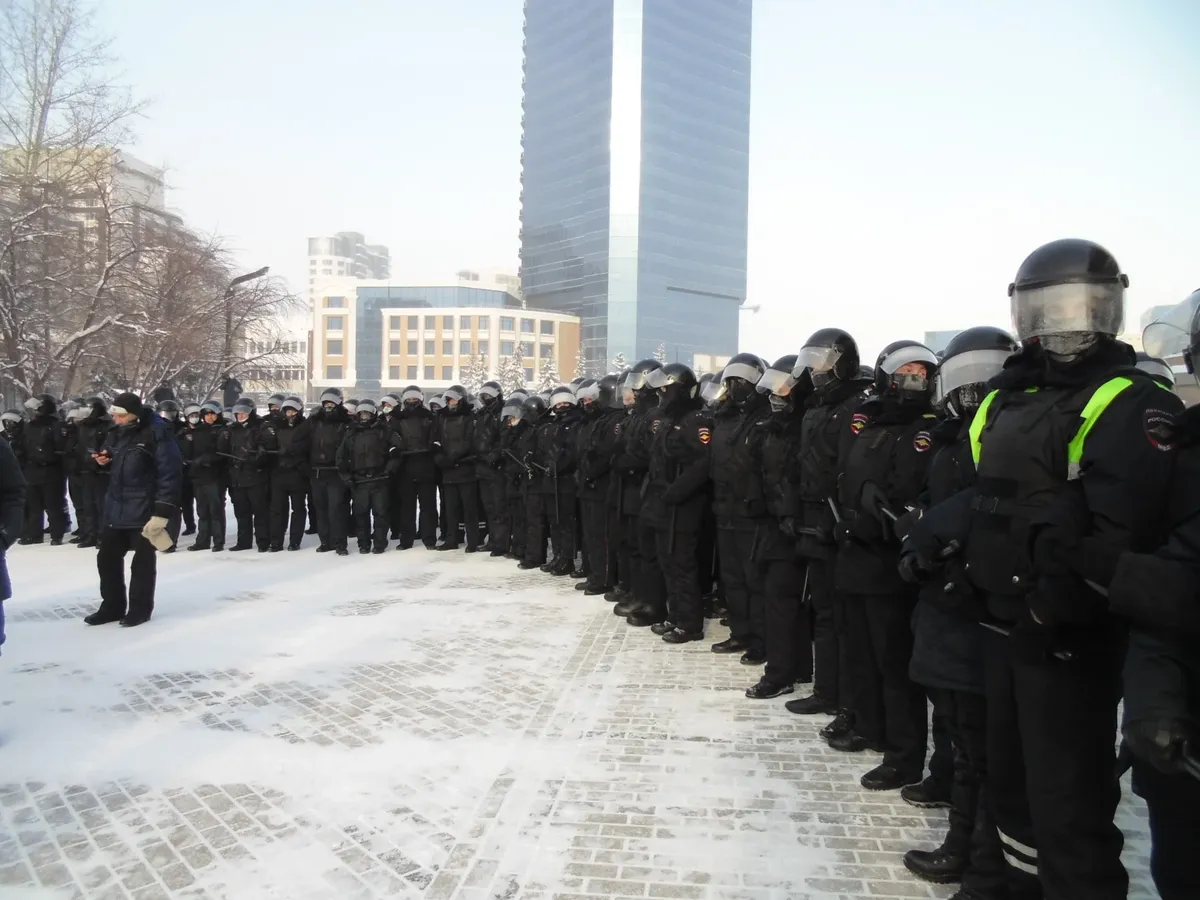
On January 31, 2021, photographs from Peace Square will go around the world. Someone took a picture from the top: dense rows of black security forces, picturesquely lined up in a square - only the special means were turned not outward, but inward - crowding a group of motley young people, mostly girls. Disproportion is from the chamber of weights and measures, distilled: there are an order of magnitude more security forces. Then everyone who came to the square will be taken away from the next protest rally. And it was truly cinematic: the smog, minus 35, overnight the approaches to all central Krasnoyarsk squares were blocked with snow banks taller than a person’s height, and the banks piled up on the squares themselves. And everywhere there are chains of buses full of security forces: around squares, in through yards. Black helmets, batons - the “cosmonauts” stood close to each other in several rows, blocking all exits from Peace Square, and began to converge.
The people sang “A Christmas tree was born in the forest” and began to dance in a circle. He sang “The Bremen Town Musicians”: “tempting vaults of palaces will never replace freedom for us.” I sang “Katyusha” and the Russian anthem. They grabbed them one by one and loaded them onto buses—Belarusian MAZs, with the inscription “Belarus” on the cabs.
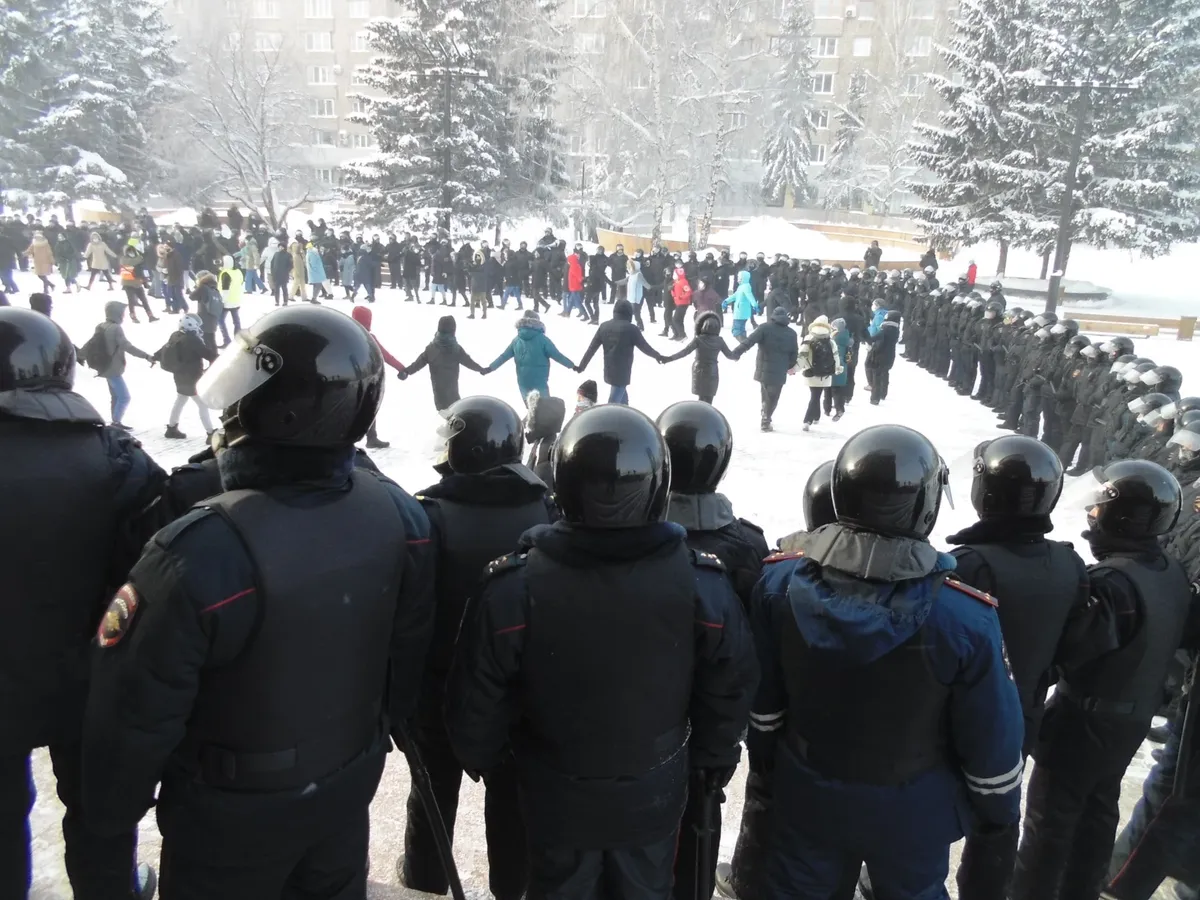
...It was winter, it was getting dark early, and there was also smog. As soon as the last ones are dealt with and leave, “freedom” will light up over the empty square.
Before that, on the same buses, public sector employees from the districts and pensioners were brought here, to Peace Square, for 12-15 minute rallies: the “Russian Spring” of 2014 was underway, they fervently threatened Ukraine and the West. Only those buses had “Children” signs back then.
Circus at the churchyard
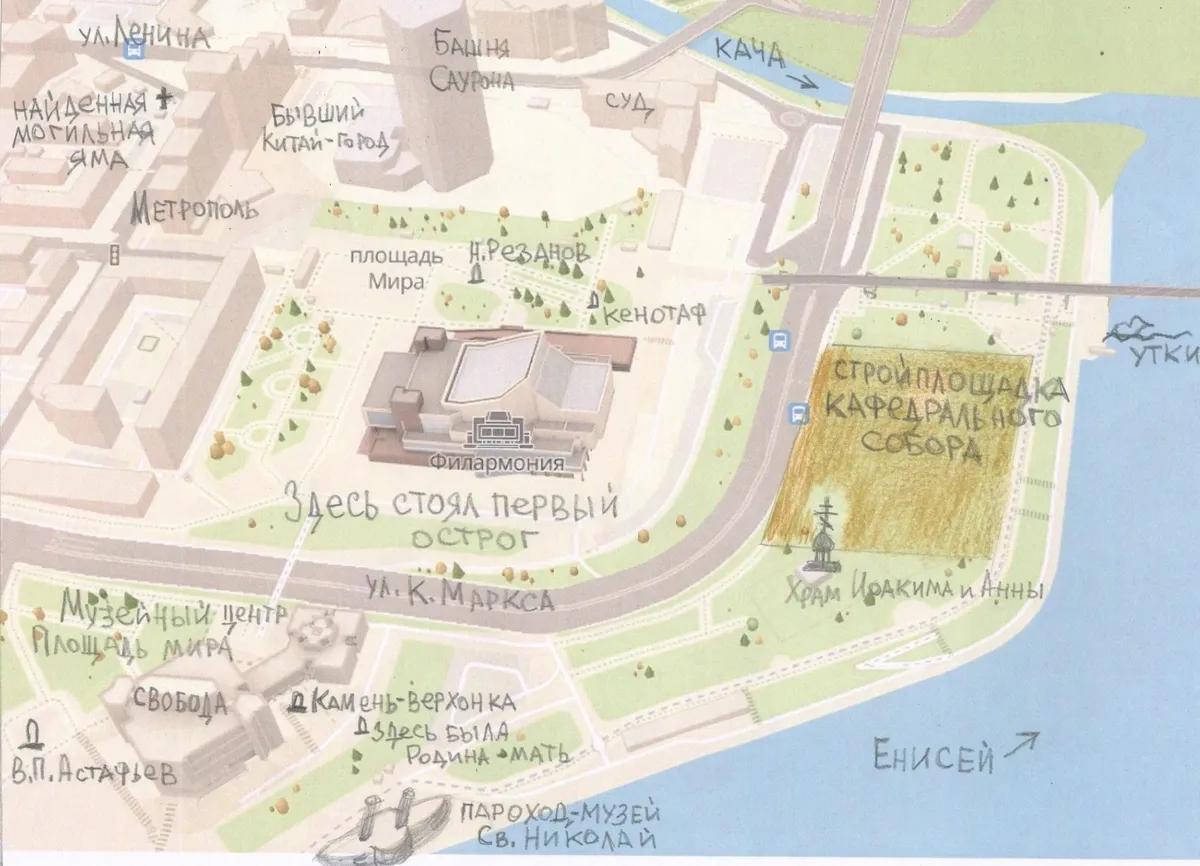
On Strelka there was the Resurrection Cathedral, with a graveyard nearby. At the end of the 1920s it was plundered and a flying club and mechanical plant were set up. It was demolished in the 50s and a Philharmonic was erected in its place in the 80s. The graveyard, where the oldest burials were (prior to the current discovery of 38 skeletons), was rolled under asphalt. In the 90s, when the previously closed Krasnoyarsk opened up to the world, Americans began to fly to the grave of Count Nikolai Rezanov (known to us from Juno and Avos, the last politician who tried to “marry” Russia with America). Either to plant his own Christmas tree, or to bring soil from the grave of his beloved Conchita, the daughter of the Spanish commandant of San Francisco. The local authorities did not know where to take them. We had vodka and “Commander Rezanov” candies, there was a fund and headquarters “for holding events” related to Rezanov, but the grave was desecrated and lost.
Nothing, as if pressed - they found three at once. Both on Strelka, and allegedly moved to the Trinity Cemetery. First behind its fence, then inside, near the temple, where it is more convenient to meet delegations.
Later, a cenotaph and a monument to the Commander were erected on Strelka. And the bust of local Leninist K.U. Chernenko, who led the USSR for a short time, in turn disappeared.
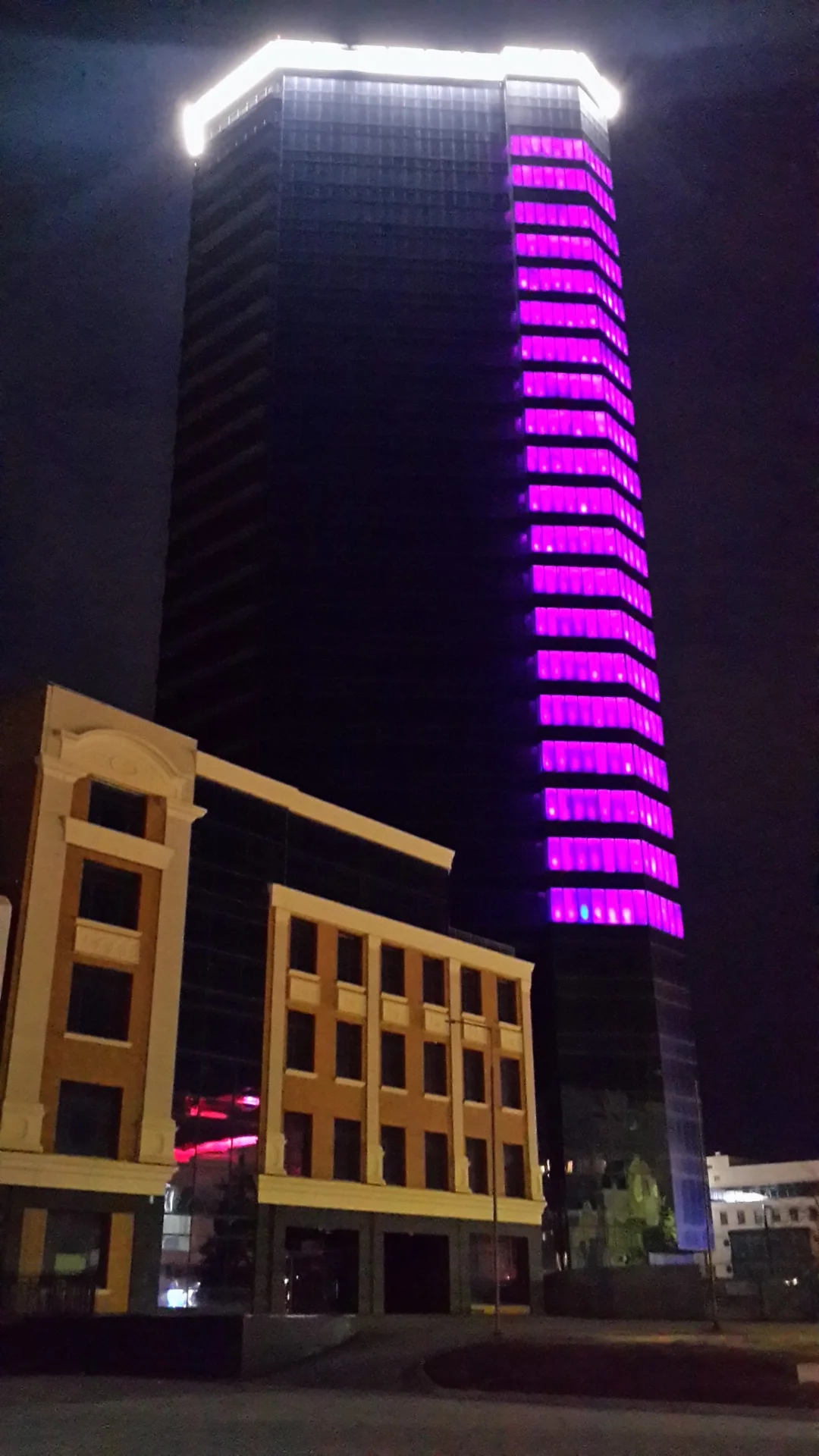
In the abandoned graveyard, the looted and ruined church, characteristic events continued. Towards the end of the USSR, one of the projects of the century was erected here - the Kansk-Achinsk fuel and energy complex - the tallest tower in Siberia. Research Institute, laboratory building. There is an engineering and computing center in the annex nearby. Next is a restaurant complex and a hotel with a thousand beds. They didn’t have time to put it into operation, and even then, from the late 80s, everything they could in the tower was broken. Homeless people spent the night here, informals hung out, descendants of the Bolsheviks hung a scarlet banner over the city on holidays.
The unfinished restaurant was given to the Chinese in the 2000s. They opened the Chinese trading city. And on the historical square itself, bordered by the ruins of socialism, Chinese stalls and a new building - a plasterboard triumphal arch, erected in honor of unknown victories - golden youth gathered at dusk. Here we drifted - we went through turns in a controlled drift. Beautiful: the Chinese clicked their tongues as they left the casino.
In the last decade, everyone was outdone again. Kitay-Gorod was taken away from the Chinese in favor of a local businessman (with a reputation as the “wallet” of one major local government figure), the KATEKNIIugol candle and the hotel, which turned into the Metropol office center (where ministries, banks, restaurants now sit), were already his by that time. China Town was demolished. Then the tower, they said, was captured by the Muscovites. In reality, Armenian builders from the Moscow region only laminated the tower, glazed it, installed illumination on it, and it was empty inside. Now it only shines, the tower of Sauron. In 2019 it was put up for sale.
On the Peace Square itself, on the bones, a skating rink is now being built. This year the opening will be on November 14, they promise “circus acts on ice.” In addition, one church has already been built on Strelka, a small one, of Saints Joachim and Anna, the parents of the Mother of God, but this is only the beginning, a test of the pen - they are going to build a new cathedral, a huge one - the Cathedral of the Nativity of the Virgin. Almost a copy of the old one: it was blown up in 1936. They did not blow up on Strelka, a little further away - to clear the place for the erection of the regional committee of the Communist Party, now this is the regional administration. Now they have decided not to blow up or disrupt anything else, neither the regional government nor the Philharmonic. Patriarch Kirill chose a place next to her in advance, back in 2012. Right on the low bank, where people walk along the embankment, the Yenisei periodically rises close to the chosen place. The cornerstone was laid in September. The cathedral is promised for the 400th anniversary of the city.
The co-chairman of the cathedral's board of trustees (former governor and now senator) Alexander Uss said the other day: “There are proposals to provide a ceremonial hall here (in the cathedral) and create a museum of heroes of the Northern Military District.” He also stated that “the connection to the construction site was agreed upon by Areg Demirkhanov, the author of the urban planning ensemble of the adjacent territory.” I will add: wide-fitting - the merit of the architect Demirkhanov can hardly be overestimated in the atypical appearance of the entire modern Krasnoyarsk. At the same time, it is impossible not to see that the cathedral will be dissonant with the Soviet modernism of Strelka.
And this is a new point of contention.
While walking along the Kachi embankment in March 2017, Areg Sarkisovich lost consciousness. When he was found and raised, his frostbitten fingers had to be amputated. To pay for treatment and rehabilitation, the family put up his urban planning tablets, paintings and drawings for sale; died in 2020.
Flood zone
In 2012, Oleg Khlebnikov said: “Cold civil war.” There is one word that confuses me in this phrase. For it to be true, citizens are needed. And so - intra-ethnic, but who am I to rule over a poet and senior comrade.
Those who tear down Z-posters are jailed. But they continue, if not torn down, then periodically covered with commercial advertising. Cars with Z and V windows don't break their windows anymore - we haven't heard of them for a long time, but there are also fewer cars like that.
Painting small architectural forms or cheerfully marking paths in suburban mountains and forests in yellow and blue colors, so that the blue on top has dried out. How there have been fewer mannequins in stores dressed in yellow bottoms and blue tops and fewer living people. Depression spreads and covers. No fear, no joy, just melancholy.
Funeral services were held in churches on October 30, the metropolitan himself served in Krasnoyarsk and spoke about “grievous suffering from the madmen who came to power in our country” (the diocese referred to the “resolution of the Holy Synod of the Russian Orthodox Church” on holding services on this day in all churches), even the officials themselves uttered the right words, the district administrations organizedly delivered carnations to grandmothers and state employees so that they could put them down... Every other day I watch how similar officials (not the same, but the same) organize children and adults (not the same, but similar) to unfurl a huge tricolor on the same bank of the Yenisei - already for the Day of National Unity.
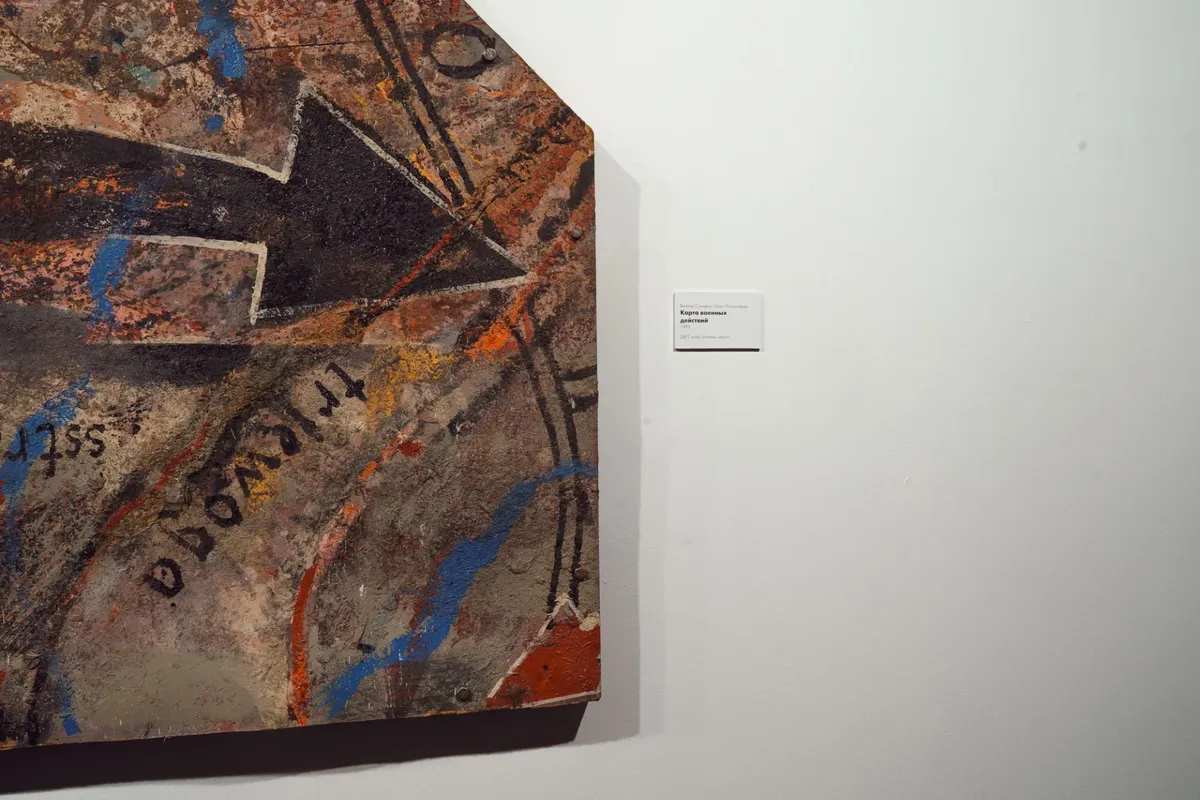
But this apathy is not forever. And not everyone has it. After all, here they are - living people and feelings: someone tied the top stone with a St. George ribbon the day before. Someone, putting flowers to the stone, took off his hat and fired an unexpected memorable shot from a rocket launcher. Someone refused to lay flowers “organizedly purchased” and went around handing out a whole bag of expensive chocolates - “to remember.”
And then - anything can happen. There are no more rules, and the authorities are no longer fighting for mentalities, for control over them, believing that the security forces will cope. But she doesn't care. There are no more socially approved behaviors or decisions, because there is no society.
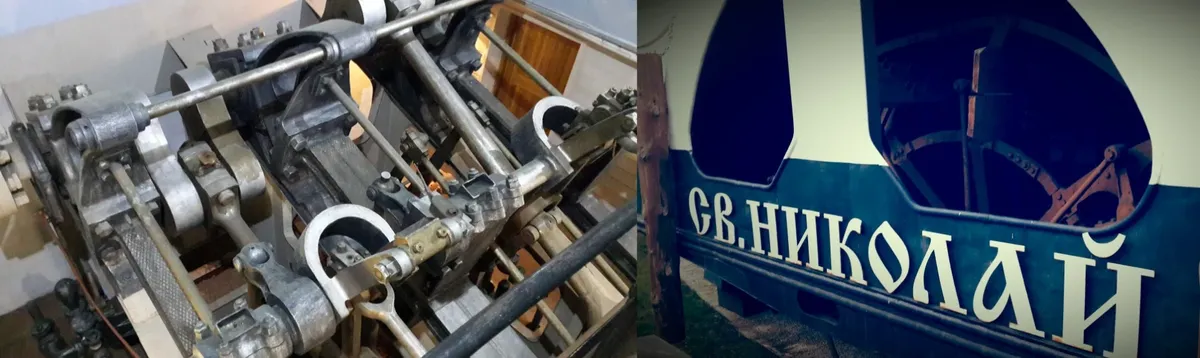
In the wing of the Peace Square museum, where social activists used to work, there is a sign behind unwashed glass that says “Flood Zone.” When the big water and the hydroelectric power station lets it through, Strelka is drowned, the Yenisei waves approach the local “Aurora” with all its passengers on board. And one day she will give up the mooring lines.
Swedish steam boilers and a Swedish machine with a declared power of 520 hp, running on wood. It takes 4.1 cubic meters per hour. In general, even for a short trek you need a whole grove. But we will cope, even if we are deceived, and the original car is replaced with one written off from a Soviet tug.
And the ship will sail.