
Translated material
The SVR has found the Antichrist. This is the patriarch!
The intelligence demarche against the Patriarchate of Constantinople can be regarded as incompetence and ingratitude

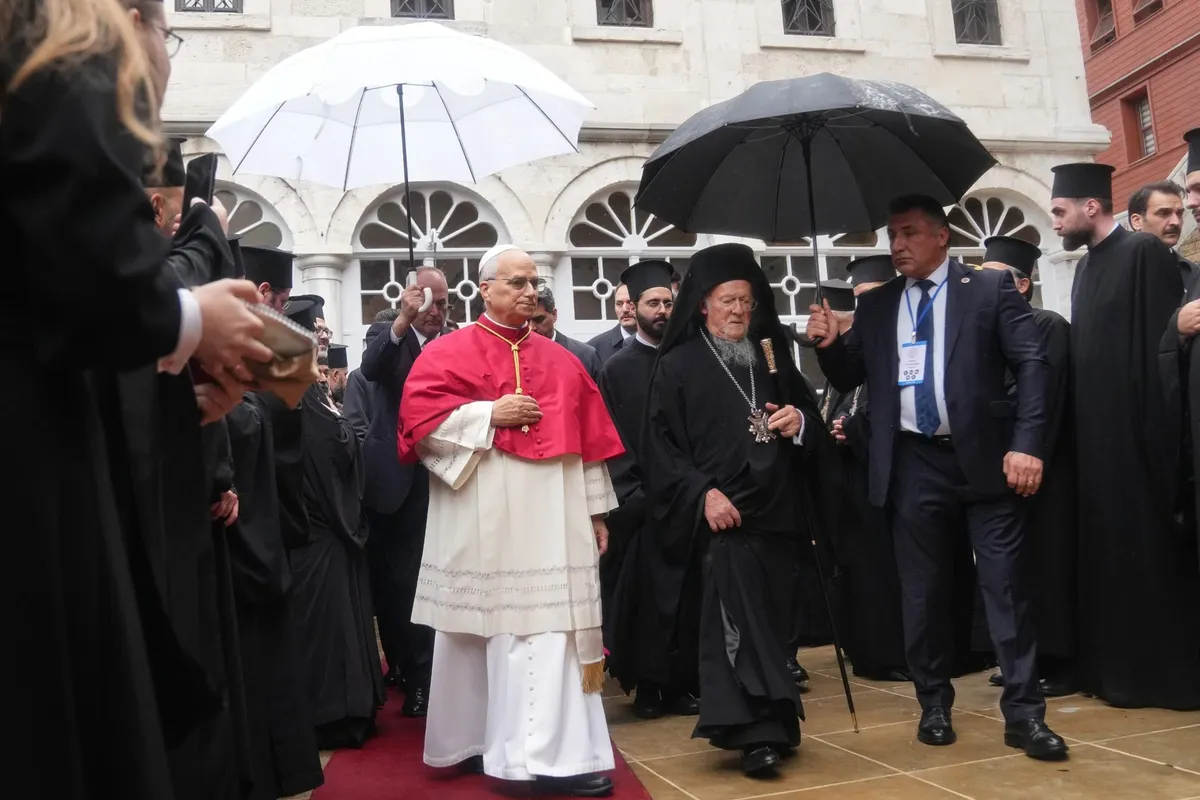
Patriarch of Constantinople Bartholomew I. Photo: Zuma / TASS
Rough work
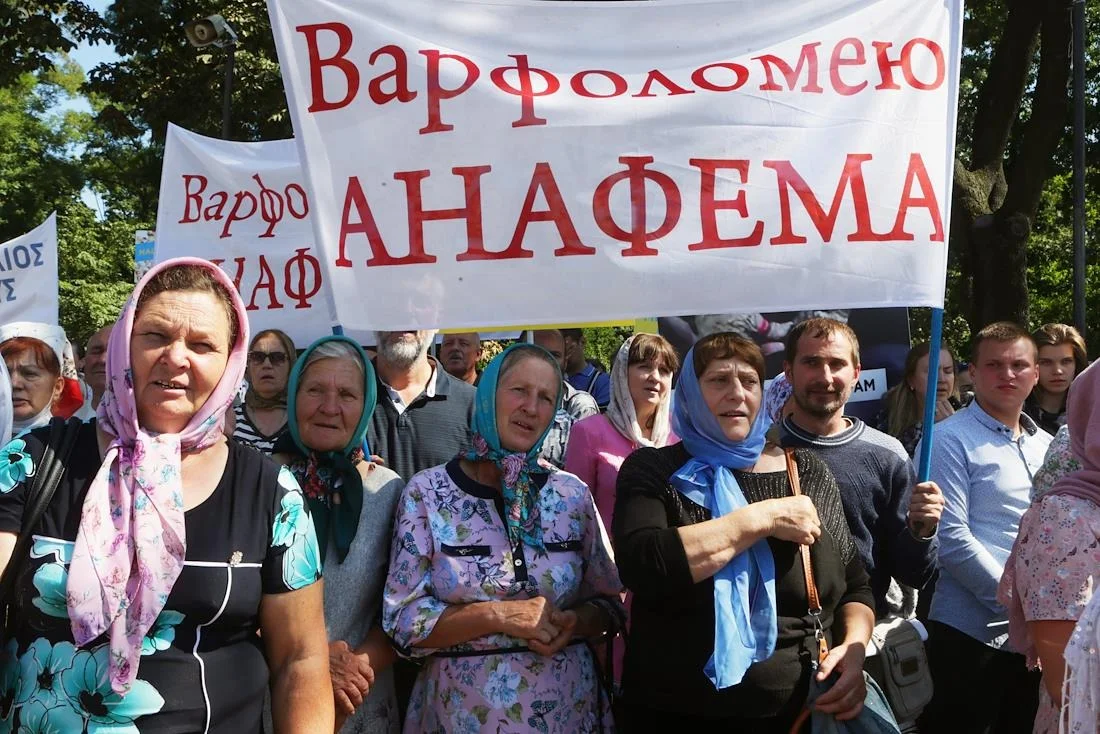
“Conspiracy theories, fake news, insults and speculations of all kinds of propagandists do not stop the Ecumenical Patriarchate in carrying out its service and universal mission.” With this response to a more than strange statement from the press bureau of the Foreign Intelligence Service of the Russian Federation, the Patriarchate of Constantinople raised the status of the text, more like a feuilleton. The first in honor of the throne of world Orthodoxy did not refute the SVR’s accusations in detail, limiting itself to expressing “deepest sorrow over Russia’s new attack on the person of His Holiness the Ecumenical Patriarch Bartholomew.”
Working in secrecy and not engaging in PR, the SVR maintained the aura of a closed community of highly professional intellectuals - an intelligence service. But a set of abusive cliches addressed to the first most honorable hierarch of world Orthodoxy does not fit with such a reputation. Judge for yourself: “the devil in the flesh”, “the Antichrist of Constantinople”, “the black eye”... It’s as if they pulled out a book by Emelyan Yaroslavsky from the “Union of Militant Atheists” from a dusty shelf. The power structure of the secular state considers itself entitled to give the Ecumenical Patriarch “canonical” assessments such as “schismatic” and “like false prophets.” In general, cringe...
No matter how much the “core” Russian structure, the Moscow Patriarchate, scolded Patriarch Bartholomew, even it did not stoop to such language. Formally, the Russian Orthodox Church ceased canonical communion with Constantinople due to the latter’s granting of the Tomos of autocephaly (independence) to the Orthodox Church of Ukraine (OCU) in 2018. However, the Russian Orthodox Church continues to recognize Bartholomew as a patriarch and does not break off communication with other churches that are in the orbit of his influence - say, Hellenic, Cypriot or Romanian. Last May, the secretary of the Department for External Church Relations of the Moscow Patriarchate (DECR MP), Hieromonk Stefan (Igumnov), even expressed “openness to dialogue” with Constantinople and declared “respect for the primacy of honor that the Ecumenical Patriarchate occupies in the diptychs (see footnote 1) more than anyone else.”
It seems that the SVR’s demarche was not coordinated with the Russian Orthodox Church. Although their close cooperation has a rich history, and many church hierarchies are rightfully proud that they began their intelligence service “under a church legend.”
Who “churched” whom?
Konstantin Preobrazhensky, a colonel of the PGU KGB of the USSR (predecessor of the SVR), who fled to the United States, described his first visit to the newly built intelligence center building in Yasenevo in 1977. “I was struck,” writes Preobrazhensky, “by the huge, almost kilometer-long corridors along which hundreds of men in civilian suits and ties were busily scurrying. But then an officer with a big red beard walked past me. What kind of defiant appearance is this, unacceptable for a communist security officer?! “Don't worry, he grew his beard on the orders of the intelligence chief! — a friend in the HR department explained to me with a laugh. “Now this operative is doing an internship in the foreign department of the Patriarchate, and will soon leave for a foreign business trip!” Many years later, in 2020, this officer, who probably rose to a very high rank (he became a metropolitan in the Russian Orthodox Church), was buried with military honors in a large Russian city.
Preobrazhensky calls another intelligence officer-priest who served in Berlin by name - after all, he was praised by the then head of foreign counterintelligence, General Oleg Kalugin, during an inspection of the Berlin station. He served “so professionally that the parishioners, approaching him for his blessing, were sure that they were kissing the hand of Father John, and not that of Colonel Gumenyuk. “You’re just like the real thing!” “General Kalugin told him with admiration.”
High-ranking hierarchs of the Russian Orthodox Church of recent decades have made their dizzying church careers through foreign intelligence. Many of them were blessed on this patriotic path by the influential Metropolitan Nikodim (Rotov), the spiritual father of seminarian Vladimir Gundyaev, now the Patriarch of All Rus'.
“You have to go through it to achieve more,” he instructed. What was disparagingly called “informing” in the perestroika years (and somewhere in the post-Soviet space to this day) is now a matter of legitimate pride for the hierarchs. There is no longer any need to hide honestly earned certificates of honor and medals of the KGB of the USSR. As Metropolitan Tikhon (Shevkunov) said , “well, we collaborated, so what?.. To preserve worship services, educational institutions, and our culture, we had to remain loyal to the political system.”
The agent pseudonyms of the intelligence hierarchs were first revealed by a member of the commission of the Supreme Council of Russia to investigate the State Emergency Committee, who worked in the KGB archives in the fall of 1991, dissident priest Gleb Yakunin. Comparing the pseudonyms of agents who were sent abroad through the church line, which he discovered in reports, and the publications of the “Journal of the Moscow Patriarchate” about the foreign visits of hierarchs, he established that former (?) agents “Mikhailov”, “Adamant”, “Kuznetsov” and others continue to work in the current leadership of the Russian Orthodox Church. Broad horizons opened up before them in the 1970-1980s.
With reference to declassified files of the Swiss Federal Archives, the influential newspapers Tagesanzeiger and Le Matin Dimanche spoke about the activities of the young Archimandrite Kirill, who represented the Russian Orthodox Church at the World Council of Churches in Geneva since 1971, also publishing his pseudonym.
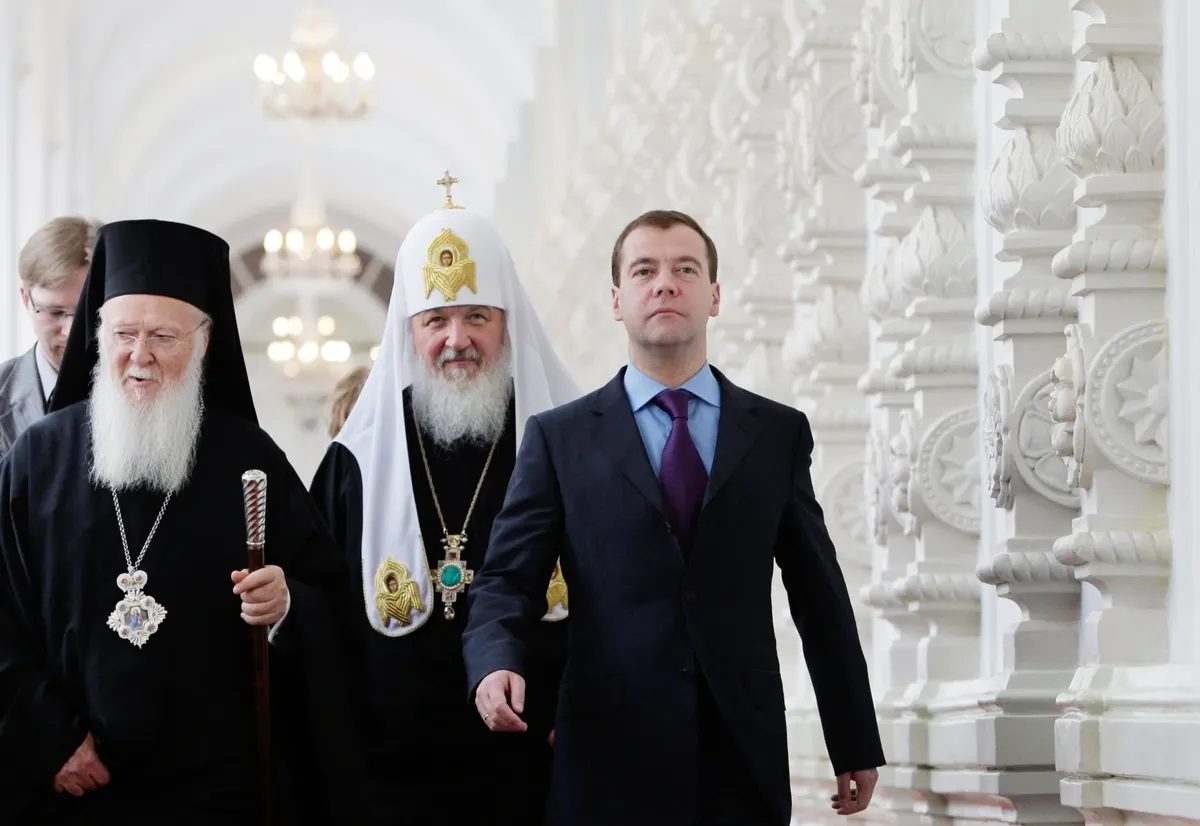
Very touching memories of that period in the life of the future patriarch were left by the former KGB resident in Geneva, Vadim Melnikov, who called Fr. Kirill “a highly educated intellectual, well erudite not only in matters of Orthodox Christianity, but also well versed in the science of Marxism-Leninism.” Melnikov and the young archimandrite “often went to the forest to pick mushrooms, go fishing, and talked a lot. Naturally, we couldn’t do without drinking. Moreover, I preferred vodka, and the high clergy were more accustomed to cognac”; “Women liked Kirill, he was tall, young, constantly smiling, he was always in a good mood, people were drawn to him.” One day, the resident and the archimandrite had an accident in the mountains, Kirill was driving, and soon he was recalled to the USSR...
Lithuania, Latvia, Estonia, Montenegro
The Foreign Intelligence Service assures that the Patriarchate of Constantinople is under the control of “British structures.” Not Americans. This is probably the “demand of the moment” - you can’t “assault Trump.” In fact, the status of this patriarchy in the very center of Turkish Istanbul is supported almost exclusively by the United States, where most of the flock of Constantinople lives and the influential institution of lobbyist-archons - tycoons from the Greek diaspora - operates . Russian intelligence accuses the “enemy” patriarch of separating the churches of Lithuania, Latvia and Estonia from the Moscow Patriarchate, and Montenegro from the Serbian Patriarchate. What is the real situation with Orthodoxy in these countries?
Although the SVR “ahead of schedule” calls the Vilna diocese of the Russian Orthodox Church the Lithuanian Orthodox Church, it does not yet have such status. This is an ordinary diocese of the Moscow Patriarchate, uniting over 40 parishes. Compared to neighboring Latvia and Estonia, where the structures of the Moscow Patriarchate have somehow distanced themselves from Patriarch Kirill and Moscow, the Lithuanian diocese remains loyal - primarily due to the personality of its manager, Metropolitan Innocent (Vasiliev), former deputy chairman of the DECR MP.
In the spring of 2022, he banned five influential clergy of the diocese from ministry who spoke out against the SVO. Since the punishment was politically motivated, after some time these clerics were accepted under his omophorion by Patriarch Bartholomew, establishing a special Lithuanian Exarchate - with reference to the fact that historically the lands of Lithuania were part of the Kyiv Metropolis of the Patriarchate of Constantinople and were illegally annexed by Moscow in the 18th century.
The same logic was used when granting autocephaly to the OCU. The Exarchate is significantly inferior in the number of communities to the diocese of the Russian Orthodox Church, caring mainly for Belarusian and Ukrainian emigrants. There is no direct competition between the structures of the two patriarchates (especially proselytism on the part of Constantinople) in the country.
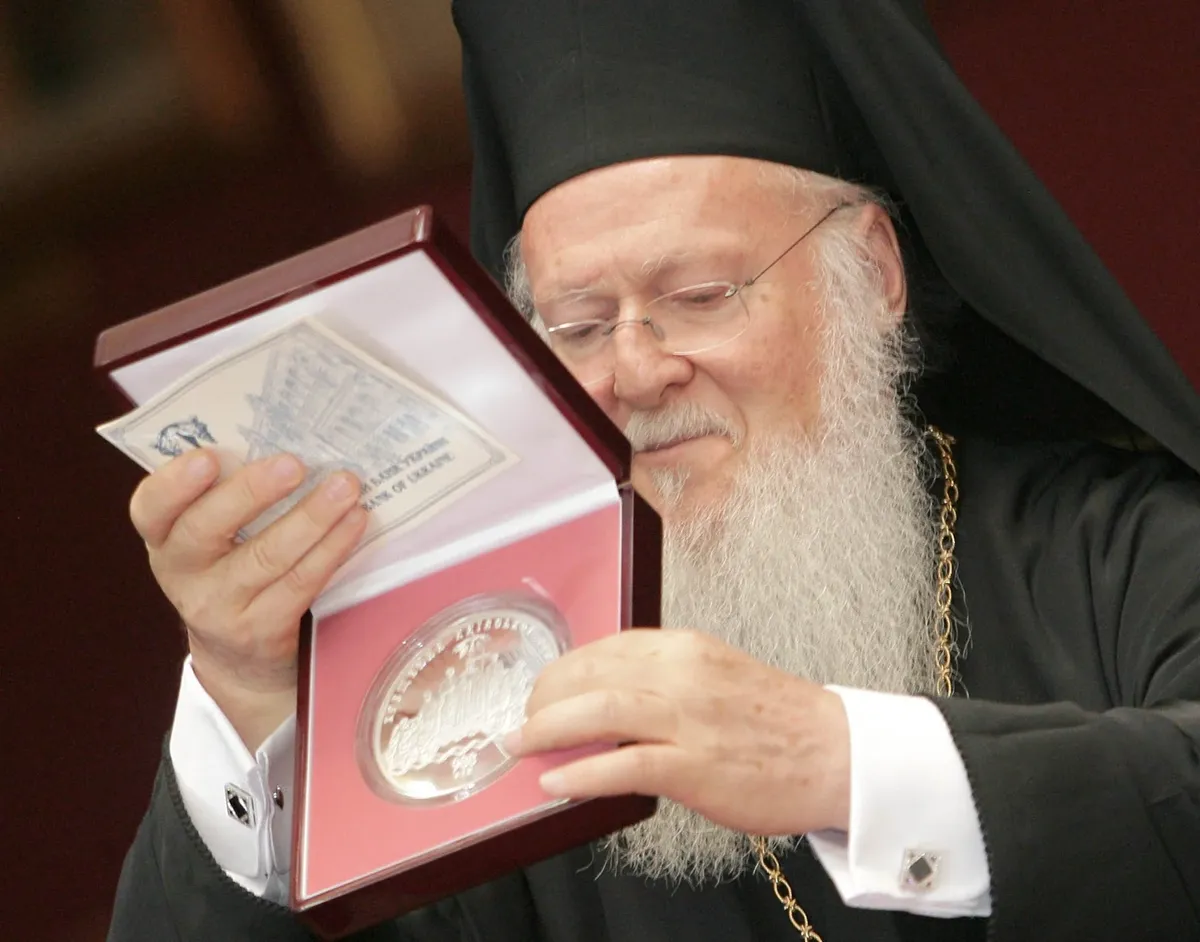
The Latvian Orthodox Church (LPC), which had autonomy within the ROC and even its own synod since the 1990s, became completely independent not thanks to the Tomos of Constantinople (which does not exist), but according to a state law adopted by the Seimas of Latvia in the fall of 2022. However, the visit of Patriarch Bartholomew to the country in September last year showed that the head of the LOC, 86-year-old Metropolitan Alexander (Kudryashov), is trying, despite all the declarations, to maintain contact with Moscow. He avoided meetings with the head of the Ecumenical Patriarchate and did not allow him into his churches.
Before World War II, the LOC was part of the Patriarchate of Constantinople, and the restoration of the status quo is perceived by Alexander as a threat to his power, since the new church authorities will most likely appoint a new primate of the LOC from among Orthodox Latvians. In addition to his advanced age, Alexander’s candidacy is unacceptable to Constantinople because of his past ties with the KGB, which were widely written about after the declassification of archives in Latvia. The result of Bartholomew’s visit to Latvia was a tacit agreement on the transfer of the LOC to the sphere of influence of Constantinople after the natural change of its primate - Bartholomew does not want to start some kind of church schism in a country with 140 Orthodox parishes.
In Estonia, the structures of the Moscow and Constantinople Patriarchates have coexisted peacefully since 1997, when the corresponding agreement was signed in Geneva by delegations of the two churches. As you might guess, the agreement was signed by the then Metropolitan Kirill on the part of the Russian Orthodox Church.
The Estonian Church of the Patriarchate of Constantinople included mainly Estonian-speaking parishes, and the Estonian Church of the Moscow Patriarchate included Russian-speaking ones (their ratio today is approximately 60:30). At the beginning of 2024, the Estonian authorities did not renew the residence permit of the head of the Moscow Patriarchate structure, Metropolitan Evgeniy (Reshetnikov), who was forced to hastily leave the country and settle in Russian Pechory, near the border. Previously, Evgeniy avoided direct answers to questions about his attitude towards the North Military District and Kirill’s sermons on military topics.
After the Estonian Parliament last year began considering a bill on a complete ban on the activities of religious organizations with centers in the Russian Federation, the structure of the Moscow Patriarchate adopted a new name (“Estonian Christian Orthodox Church”) and removed any mention of ties with Moscow from the charter. In any case, it is impossible to talk about Constantinople encroaching on this structure, since Orthodoxy in Estonia has long been dispersed into different ethnocultural apartments, the inhabitants of which are not eager to return to a communal apartment.
The most mysterious element of the “SVR list” is the Montenegrin Church, the restoration of which the authorities of the small Balkan country announced in 1993. However, this project has not received any noticeable development: if the Serbian Patriarchate controls about 600 objects (monasteries, temples, plots) in the country, then the Montenegrin Church controls no more than 20.
The policy of Constantinople in recent years has been aimed at rapprochement with the Serbian Church with the goal of its gradual separation from Moscow: for example, in 2022, two churches jointly granted autocephaly to the third - Macedonian.
Considering the lack of a real social base for the independent Montenegrin Church, Bartholomew will not aggravate relations with Belgrade for the sake of a “virtual project,” especially since the current Montenegrin leaders themselves declare their affiliation with the Serbian Church.
Insult mother
The Patriarchate of Constantinople plays a stabilizing role in world Orthodoxy, acting as an arbiter in conflicts (as was the case with the breakdown of communication between the Patriarchates of Jerusalem and Antioch) and helping local churches overcome internal schisms (as was the case in Bulgaria and Ukraine). At the same time, Patriarch Bartholomew is known for his diplomatic talent: despite all the accusations from Moscow, he does not break off communication with the Russian Orthodox Church and recognizes the Ukrainian dioceses that were part of the Moscow Patriarchate until 2022.
Granting autocephaly to the OCU, as he never tires of repeating, was the only possible way in the current historical conditions to return “to the canonical field” of world Orthodoxy those thousands of parishes that were previously considered “schismatic,” that is, not recognized by any local church. The Russian Orthodox Church, which promotes only one, imperial agenda, has not been able to solve the problem of the Ukrainian church schism for 30 years, since the collapse of the USSR. The Constantinople principle of “coexistence of two jurisdictions on one territory” turned out to be an effective solution for Ukraine.
Hand on heart, we must admit that historically the Russian Church owes a lot to the Church of Constantinople, which until recently it recognized as its “mother.” The Baptism of Rus' in 988 was carried out by Greek bishops and priests from Constantinople; most of the metropolitans of all Rus' in the pre-Mongol period came from there; autocephaly and the status of patriarchy in Moscow were established by Constantinople in 1589. The Russian hierarchs, forced to leave Crimea with the remnants of the White Army in 1920, found their first refuge in Constantinople. And when the “red” Moscow Metropolitan Sergius (Stragorodsky) began in the 1930s to demand a signature of loyalty to the Soviet government from all emigrant clergy, the Patriarchate of Constantinople gave canonical refuge to the entire Western European Exarchate of the Russian Church. And today, he hospitably opened his doors to dozens of priests and deacons who were “defrocked” in the Russian Orthodox Church for refusing to support the SVO or to pray “not for peace, but for victory.” Among those rejected by the Russian Orthodox Church and accepted by Constantinople are such pastors and publicists as Fr. Alexy Uminsky, Andrey Kordochkin*, Ioan Koval, Andrey Kuraev*…
The policy of the Patriarchate of Constantinople can be treated differently - it is flawed, like any earthly policy. However, historically and canonically, this is the mother church for the Russian Orthodox Church. Under normal circumstances, the mother's insults should also insult the daughter. In our case, apparently, this rule does not work.