On January 17, new figures emerged on the death toll from Iran's protests, and 26-year-old Iranian Erfan Soltani, the first protester sentenced to death, was allowed to see his family. After the execution date was postponed, and a number of media reported that Erfan was killed in prison, his relatives were not sure that he was alive. Meanwhile, the Iranians are looking for the dead - in morgues, hospitals, among photographs of unidentified bodies. The Insider looks at how Iran's biggest protests in three years have unfolded, why the body count is already in the thousands, and who has fallen victim to the crackdown on Iranian protests, from teenagers and students to athletes, sculptors and retirees.
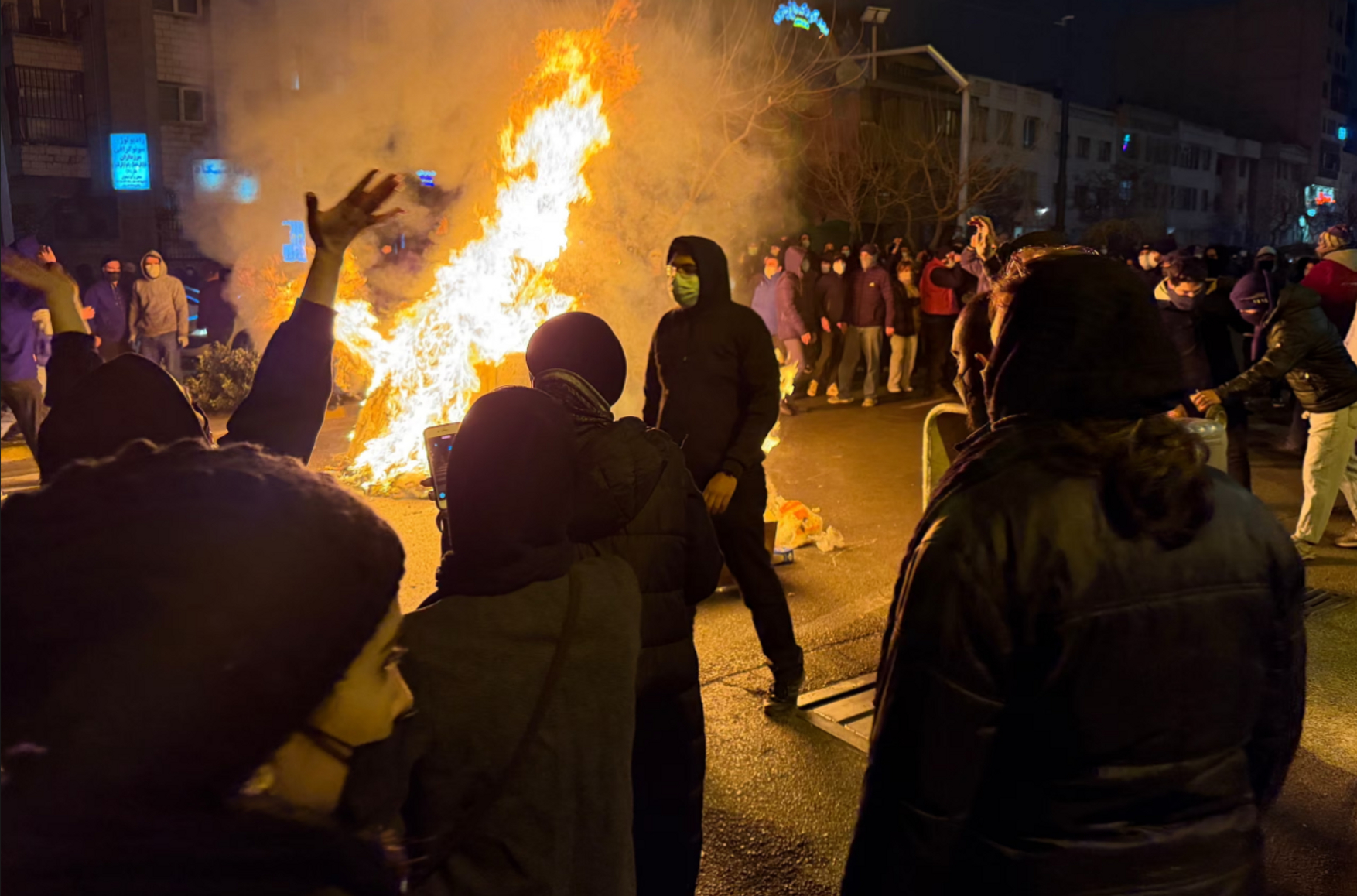
Iranians at a protest in Tehran, January 9/AP
How the protests developed
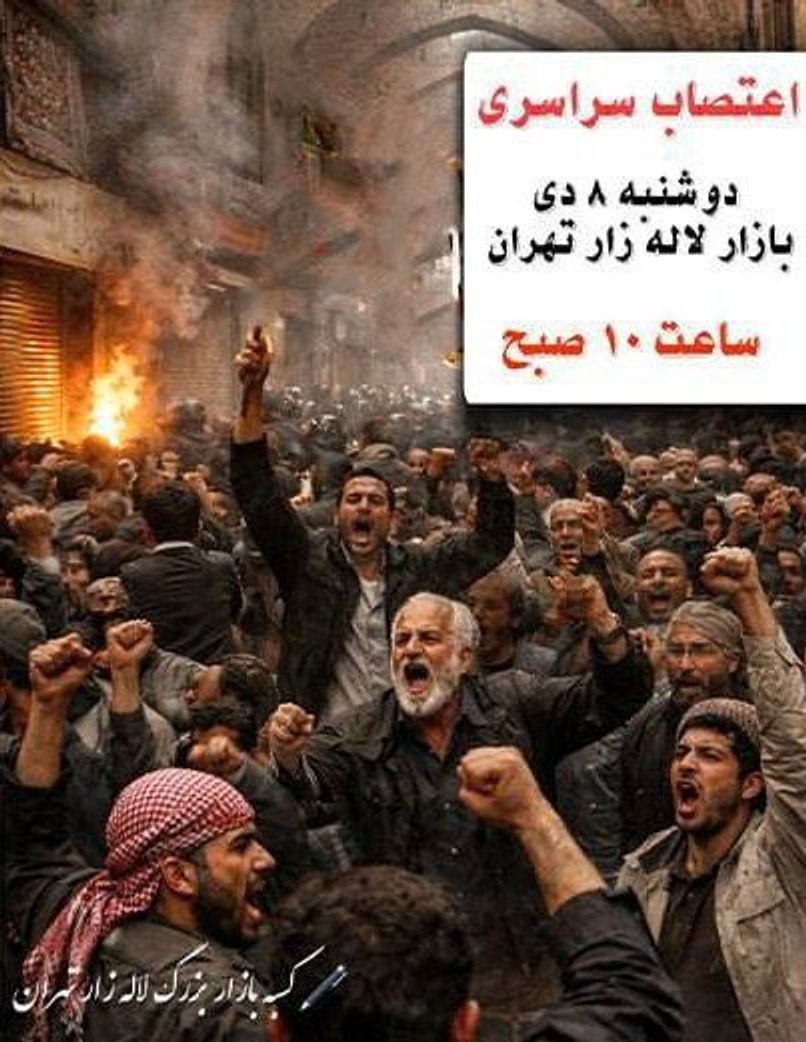
Mass protests in Iran began with a strike by mobile phone traders in Tehran's Alaeddin market: on December 28, 2025, they began to close their shops and take to the streets. The very next day, an AI-generated leaflet calling for a nationwide strike on December 8, 1404 (December 29 according to the Gregorian calendar) began to spread on social networks, as well as numerous comments from Iranians themselves calling for participation in the actions. The protests were quickly joined by traders from the Grand Bazaar - the largest indoor market in Iran - and then by vendors from other shopping arcades and areas of Tehran.
“During a major strike and protest in the Tehran market, protesters chanted a slogan that expresses the pain and the essence of the feelings of an entire people: “Guns, tanks, fireworks - the mullah must disappear.” The mullah will “disappear” if we find each other,” wrote the famous Iranian journalist and writer Masih Alinejad in her Telegram channel.
Calls to take to the streets spread through professional and local communities. Thus, traders of the Shadabad market called on residents and colleagues to take to the streets on Tuesday, December 9 (December 30), at 10:00 am:
“Shadabad Iron Market is not just a place of buying and selling, it is the heart of work, hope and dignity of workers and entrepreneurs. Tomorrow we will stand next to those who are fighting for honest bread and their human dignity. Our voice of protest and support shows: no injustice is eternal. Together - united and strong - we will take to the streets for the right, for life, for the honor of the iron market of Tehran."
Gradually, the protest movement spread beyond the capital's markets: in different cities, Iranians exchanged calls for protests in chats and shared recommendations on routes and mutual assistance. Thus, residents of the city of Shiraz (Fars province)wrote :
“Tomorrow, Tuesday, December 9, 1404 (December 30) is the day of the honor exam in Shiraz and in all cities of the province of Fars. We have nothing more to lose: either we unite today, or tomorrow we will drown in absolute poverty. <...>
This is a warning, not just news! Gentlemen who sit in warm offices and give orders to turn off gas and electricity - tomorrow you will hear the voice of the people of Fars up close. Tomorrow—December 9—is the day when people take to the streets not for slogans, but for bread and freedom.”
In parallel with this, videos from ongoing rallies began to appear on various Telegram channels. Thus, in a channel called “Women’s Revolution,” a video appeared from an action of residents of Karaj (Alborz province) on December 8, 1404 (December 29) with the caption “Street protest with the slogan “Death to the dictator!”:
“The strike and protest march of the residents of Karaj against the uncontrolled growth of the dollar, the economic crisis and the catastrophic standard of living, accompanied by anti-government slogans against the Islamic Republic - right in front of the suppression forces.
✊Rise up for #Woman_Life_Freedom,” says the description of the video.
The formal reason for the Iranians' speeches was the difficult economic situation in the country - a sharp rise in prices and a rapid fall in the exchange rate of the national currency, the Iranian rial. According to Bonbast.com, a website that records currency exchange rates on the Iranian black market, on the eve of the protests, on December 27, the rial rate was 1,383,000 per dollar, and the inflation rate in the country by the end of the year exceeded 42%. However, already in the first days it became clear that economic demands were quickly beginning to give way to political ones.
Judging by videos from Iran published in Telegram channels on the 26th day of the month of Day 1404 according to the Iranian calendar (January 16, 2026 according to the Gregorian calendar), which The Insider was able to analyze, protest participants most often chanted the slogans “Death to Khamenei!”, “Death to the dictator!”, “Until the mullah is removed, this homeland is not ours,” “Down with the mullah!” Many of the recordings also feature the name “Pahlavi,” by which protesters meant both the founder of the overthrown dynasty, Reza Shah, who died in 1944, and his grandson, the hereditary Shahzade Reza Pahlavi, who is in exile in the United States.
Thus, in a video from Tehran dated December 9, 1404, protesters chant : “Reza Shah, may your soul rest in peace,” and in a recording dated December 19, from Mashhad (Razavi Khorasan province), they shout : “This is the last battle. Pahlavi returns."
Other footage from Tehran shows that students joined the protests on the 9th Day, who also wished for the “peaceful repose of Shah Reza.” In the following days, students from different universities across the country began to attend the protests. For example, one of the videos published on the United Students Telegram channel shows students at the University of Tehran running, shouting : “Death to the dictator!”
Since December 30, protests have spread throughout Iran, and on December 31, they have already covered 17 out of 31 provinces. Security forces, including the police, known by the acronym FARAJA, began to actively use tear gas and shoot at protesters. In a video from January 1 published by the Vahid Online Telegram channel, shots are clearly heard, and footage from Malekshahi (Ilam province) from January 3 shows protesters scattering under gunfire near the location of Basij stormtroopers.
A similar video was published on January 5 by the Kurdistan Human Rights Network (KHRN), an organization that protects the rights of Kurds in Iran, Iraq, Syria and Turkey: the recording showed shots fired in the direction of the crowd.
The Iranian opposition TV channel Iran International also reported the use of live ammunition against protesters.
Starting on January 3, Iranian authorities began to systematically slow down the Internet. By January 4–5, the intensity of the protests had decreased. However, even during this period, there are noticeable bursts of activity. Thus, in a video from December 15 (January 5), one of the protesters writes on a banner hanging on the Hemmat highway in Tehran: “Until the mullah is wrapped in a shroud, this homeland is not ours.”
The shares flared up with renewed vigor on January 6th. Clashes resumed in Tehran's Grand Bazaar. Protesters shouted : “We have no water, no bread, damn these prices!” and “Rest in peace, Reza Shah!”
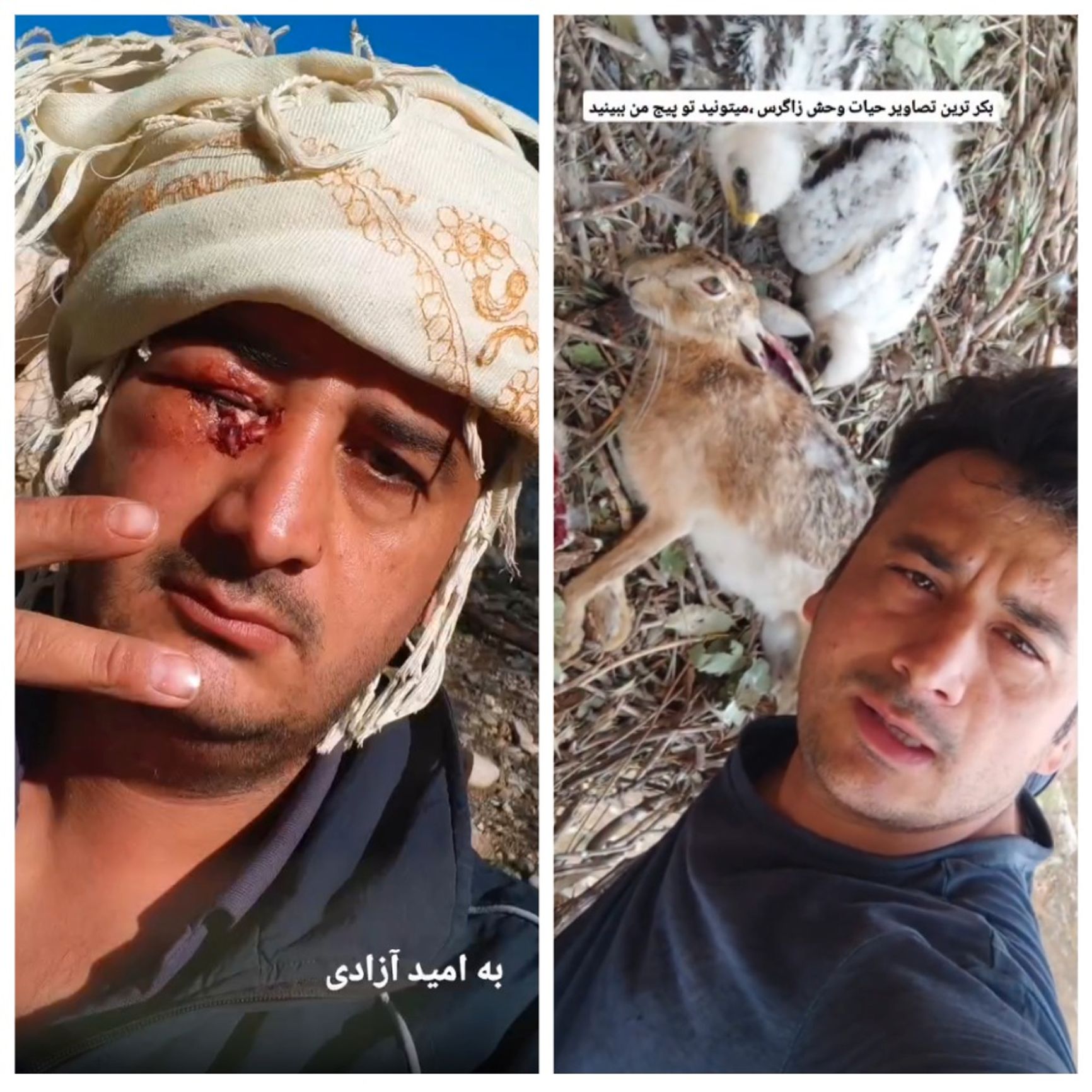
On the same day, photographer Sadegh Parwizzadeh from the city of Ilam (Ilam province) posted a video on Instagram with the caption “I will die for Iran.” In the recording, he sits with a bloody face, wearing a blood-stained T-shirt and shows the shot with which he was shot.
“I am a wildlife photographer and videographer. What I have in my hands now, friends, is shot from a hunting rifle, which hunters usually use to kill wolves and wild boars. With one shot, a lot of shot flies towards the selected target.
The man who shot me was a young guy, under 20 years old. I don’t even want to talk about how you can shoot your compatriot or how after that you can calmly lay your head on the pillow and fall asleep. What really bothers me is the idea that for them killing a person is a game, they think that we are the prey and they are the hunters.
I swear to God, we are also the youth of this country. We are not rebels, not separatists, not spies or soldiers of the enemy. We have pain - pain that no one has heard for more than 30 years, and which has always been suppressed with the last remnants of strength. And those who have power in their hands have plunged their necks into the public treasury, devouring it themselves and together with their entourage, while preaching a simple life and “clean hands” to the poor people. How long are you going to deceive people?
People see with their own eyes that for 47 years you have brought nothing but poverty and misfortune. Since childhood, we were told that the Shah was a six-headed demon, and you were the savior angels. If the Shah really was such a vicious and cruel man, then why are people all over the country calling on him and his son today?
I swear to God, these people have nothing to fear anymore. I reached the last line,” he says in the video.
By January 8–9, the protests had reached an unprecedented scale. According to estimates by Human Rights Activists in Iran, they covered 180 cities in 31 provinces.
Footage from Mashhad (Razavi Khorasan province) dated December 19 (January 9) shows one of the protesters climbing on the roof of a car shouting “Mashallah” as the crowd whistles and applauds. The slogan “Pahlavi is returning!” can be heard everywhere.
In Karazhda (Alborz province), arson of cars and administrative buildings was recorded these days. One video shows a man lying on the sidewalk with gunshot wounds.
In Bandar Abbas (Hormozgan province), cars were on fire , and in Tehran's Saadatabad district, protesters chanted : “We are waiting for Pahlavi, we are not going anywhere, we are here!”
Amid the escalation of protests, NetBlocks, an organization that monitors the state of the network, recorded a complete shutdown of the Internet in the country on January 8. Starlink satellite terminals remained the only way to transmit information, but over time the government began to jam them too ( 1 , 2 ).
The growth of protest activity coincided with the statement of the crown Shahzade Reza Pahlavi, who the day before expressed solidarity with the protesters and called for taking to the streets on January 8 and 9, finally establishing himself as a figure around whom the protest movement began to consolidate.
Starting from the night of January 9, the dispersal of protests by the police and the IRGC became widespread and particularly harsh. Video from Zahedan (Sistan and Baluchistan province) shows shotguns being fired at protesters:
“Video recorded by one of the CCTV cameras on the streets leading to the Makki Mosque in Zahedan shows regime military and security forces - in civilian clothes - directly firing shotguns (shotguns) at protesters on Friday 19th Day. This footage refers to protests after Friday prayers and confirms the use of shotgun ammunition against peaceful civilian protesters,” the video description reads.
A January 13 recording posted on the Political Cafe Telegram channel, which publishes news, videos and commentary on the situation in Iran, shows protesters trying to stop the bleeding of one of the dead by covering the wound with napkins. The video description says:
“<…> Direct shooting at protesters and the death of a person. You see the crimes of the criminal Islamic regime.
Every Iranian, wherever he is, must draw his sword and in this battle not retreat until every mercenary and Islamic criminal is destroyed. This is a full scale war. <…> Everyone who stands on the side of the criminal Islamic regime and is involved in these crimes must be eliminated.”
Despite the complete lack of communication within the country, human rights organizations and the media manage to continue to record and verify what is happening - thanks to video materials received through Starlink or from Iranians abroad with whom relatives were able to contact from inside the country. Judging by anecdotal evidence appearing in chats, protest activity continued even after the brutal massacres.
Thus, a video from December 22 (January 12) shows a crowd of protesters in Tehran chanting at the security forces and authorities: “Shame on you,” and in Isfahan, thousands of protesters set fire to a government building, shouting : “This year is the year of blood, Mushali will be overthrown.”
The day before, December 21 (January 11), videos from the Beshekht-Zahra cemetery in Tehran - from the funeral of the victims - circulated on social networks. The footage shows people carrying bodies and chanting: “Death to Khamenei!” Some participants are holding portraits of men and women. Slogans are heard: “I will kill, I will kill the one who killed my brother!” and “Brave, brave!”
By January 14, the number of shares that human rights activists were able to verify had disappeared . Representatives of Human Rights Activists in Iran noted that this was likely due to severe communication restrictions, including interruptions in the telephone network. At the same time, isolated evidence continued to appear on social networks indicating local outbreaks of activity. Thus, the Telegram channel “Official Channel of Dr. Moezanzadeh” published a video allegedly filmed in Zahedan on January 16. It shows a crowd of protesters chanting: “Death to Khamenei! Death to Basiji!
According to orientalist Ruslan Suleymanov , the lull in the protests is temporary and does not mean their end:
“There will be a protest, and no one can say exactly when and with what intensity it will resume. Key problems, primarily economic, have not been resolved, and the authorities have not offered any way out of the crisis. And until there are serious political and economic transformations in the country, the protests will continue, and the Iranians will definitely not be frightened by repressions and the death penalty,” he noted.
Thousands of dead and hidden bodies
The human rights organization Human Rights Activists in Iran began recording the death toll from the first days of the protests. Already on January 2, it confirmed the deaths of at least eight protesters, and by January 17, the number of verified deaths reached 3,090 people, of which 22 were children. About four thousand more cases were awaiting confirmation at that time.
Another human rights organization, Iran Human Rights, estimates that as of January 14, the death toll was at least 3,428. In turn, the Iranian opposition TV channel Iran International spoke about at least 12 thousand dead. The country's residents themselves are inclined to even higher numbers. In conditions of a complete shutdown and limited access to information within the country, it is not yet possible to determine the exact number of victims. However, on January 17, Iranian leader Ayatollah Ali Khamenei actually acknowledged the scale of the incident, publicly announcing the death of “several thousand people.”
“Those associated with Israel and the United States caused enormous damage and killed several thousand people,” he said in an address to the people, while simultaneously blaming the protesters themselves for what was happening. In turn, on January 17, Reuters, citing an unnamed Iranian official, reported “at least five thousand dead.”
According to the latest data published by The Sunday Times, the number of deaths could be at least 16,500 people.
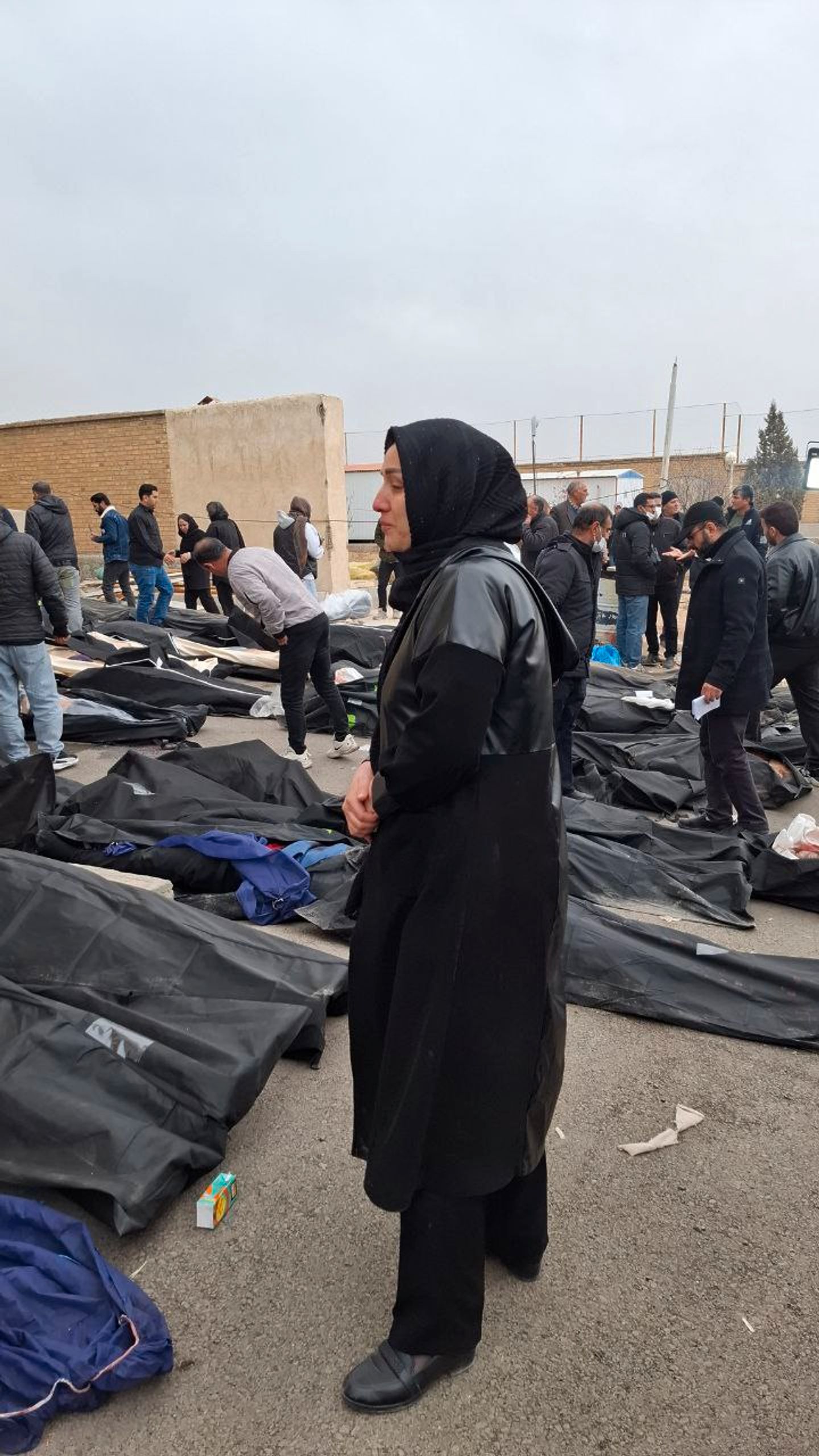
The massive nature of the deaths is also confirmed by a video from a makeshift morgue on the territory of the Forensic Medicine Center in Kahrizak (Tehran province). They were published on January 13 in the Vahid Online Telegram channel. As the author of the channel notes, the footage was filmed on January 10 and sent by a person who traveled almost a thousand kilometers to connect to the Internet. The video description says that a voice message was sent along with the recordings:
“<...> These bodies that you see are being dumped into a container - more than two thousand bodies were dumped on the ground that day alone, and by the time we arrived, the whole container was filled with bodies. Whenever a body was found, the medical examiner would come, record the injuries, issue a permit with a code, and people would line up and carry the bodies into the vehicle for registration, and their number was over two to three thousand that day alone.”
The footage shows how the filmer walks between dozens of bodies lying right on the street, and then enters several rooms where bodies in bags and partly in bloody sheets are laid out on the floor. Some bags are not zipped, and the faces of the dead are visible in them. There are bloody stains and blood-soaked rags on the floor.
Another footage shows people desperately searching for their relatives among the ranks of the dead. Another video from Kahrizak shows relatives viewing photographs of unidentified bodies displayed on a screen. Under each photo there is a serial number.
Users of social networks also talk about a similar identification system, publishing messages received from acquaintances in Iran. Thus, a Twitter user under the nickname Hamidreza provides the following text:
“According to one of the employees of the Behesht-e Saqkineh cemetery in Karaj, until Saturday, thousands of unidentified bodies were stored in Behesht-e Saqkineh. We were offered to bury them in mass graves, but we refused. We photographed the faces of the deceased in groups of ten to make it easier for families to identify them.”
Judging by numerous testimonies, the bodies of the dead are delivered not only to Kahrizak, but also to other morgues, and many of the wounded die right in hospitals. So, one of the messages says:
“There were more than seventy wounded in the Ziyayan hospital in the Yaft Abad district on Thursday night. More than thirty of them died before arriving at the hospital or while there. Among the dead was a thirteen-year-old girl who was shot in the head at close range. The bullet was clearly visible in the forehead and completely exited through the back of the head.”
Iranians themselves talk about the deaths - their testimonies are quoted by relatives and friends outside the country. Thus, Said Shokuhi reports a conversation with his mother:
“Ten days later, I finally heard my mother’s voice. She held on for two minutes, and then burst into tears. And from the news that reached her, and from grief over the death of her sister, who died in her arms these days, she held her head.
She spoke about the deaths of several residents of our city and said that, according to rumors, about 300 people were killed in Lahijan. One of the victims, whom I knew and who was our relative, was a young man who had recently gotten married. He was shot on the roof of his own house. The family buried him in the yard of the house.
At this time, Khamenei's henchmen burst into the house, threatened and demanded 700 million tomans (about $5 thousand at the black market rate), saying that if they did not pay, they would dig up the body and take it with them. Unfortunately, at that moment the connection was lost and I have no more information.”
Human rights activists confirm similar stories: in many cases, authorities demanded that families pay for the release of bodies, and tried to force some to participate in propaganda stories on television. Thus, the body of 17-year-old Kurdish teenager Amirali Heydari from Kermanshah was returned to relatives only after paying one billion tomans.
According to the human rights organization Hengaw, authorities demanded that the cause of death be listed as a “fall from a height.” The family refused, but this is the wording that appeared on the official death certificate.
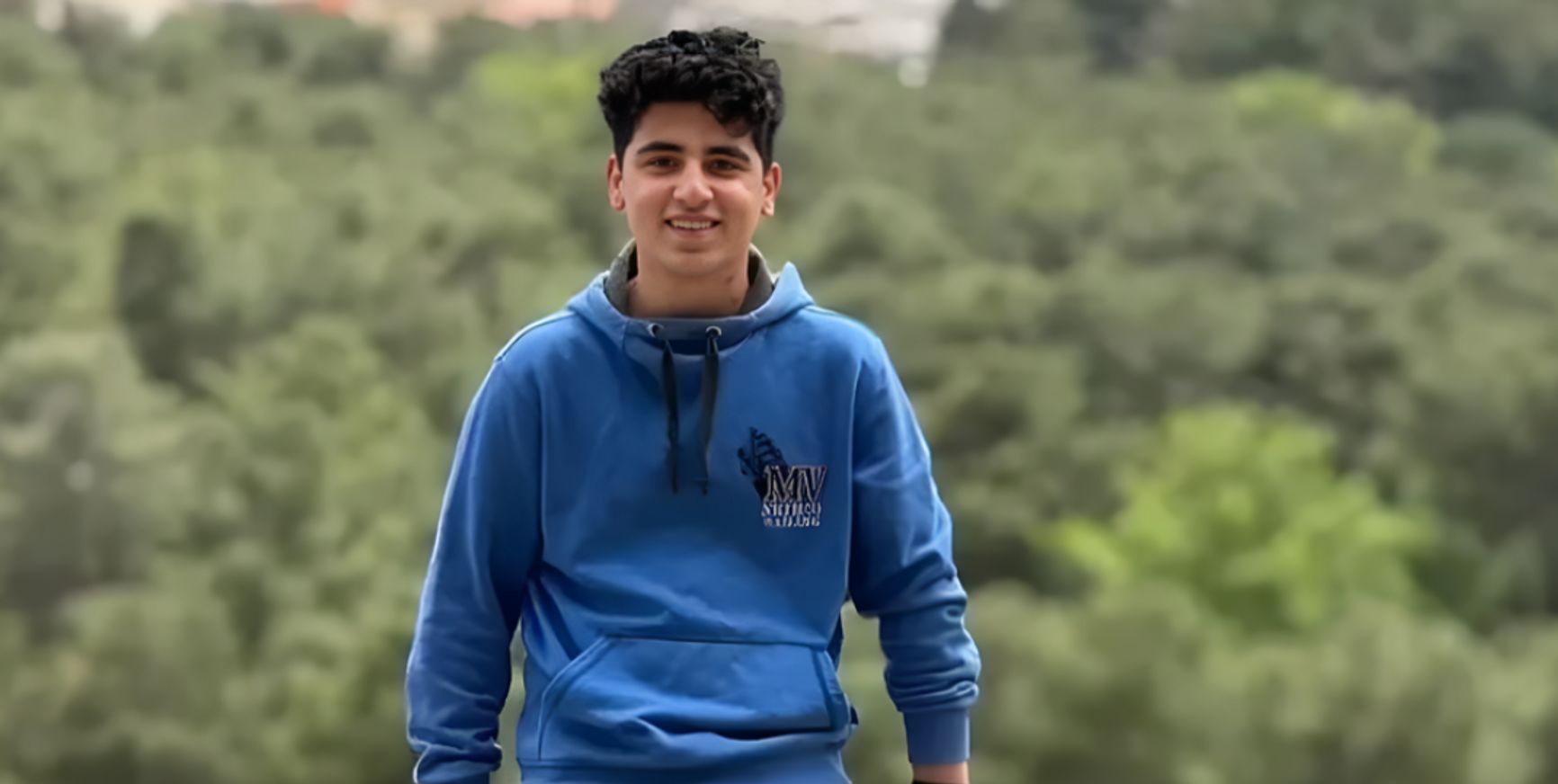
Amirali Heydari was shot dead on January 8 - a bullet from a Kalashnikov assault rifle hit him in the heart area. During the protests, human rights activists confirmed the deaths of several teenagers, including 15–17-year-olds Mobin Yagubzadeh , Taha Safari , Reza Ghanbari , Rasul Kadivarian and Alireza Seydi . At the latter's funeral, a large crowd gathered - mourners chanted: "Death to Khamenei!" and “Death to the principle of Velayat-e-Faqih!” Subsequently, shots began to be fired into the crowd.
Eyewitnesses also talk about the death of loved ones in their own hands. A resident of Shiraz (Fars province) testifies :
“On January 8, they riddled my mother’s body with pellets. I only saw blood. I put her on my lap, she said: “Parisa...” The motorcyclists, chanting: “Heydar, Heydar,” shot her in the head. Her name was Zahra Esmaili. Soon I will be lying next to my mother."
Such evidence is complemented by reports that Iranian residents have begun burying the dead in their courtyards, fearing that authorities might seize the bodies.
Portraits of the dead
While relatives are trying to identify and bury the dead, photographs and stories of those whose deaths have already been confirmed are being circulated on social networks.
Thus, users write about Shayan Asadollahi from the city of Azna (Lorestan province):
“A 28-year-old young man, on Sunday 11 December 1404 (January 1), was killed during protests in the city of Azna - the repressive forces of the Islamic Republic opened fire on him. He was a hairdresser and was into modeling. His Instagram page with his hairdressing work had a lot of followers.”
Relatives of Asadollahi published a video from his funeral. According to human rights organization Hengaw, Shayan was 30 years old.
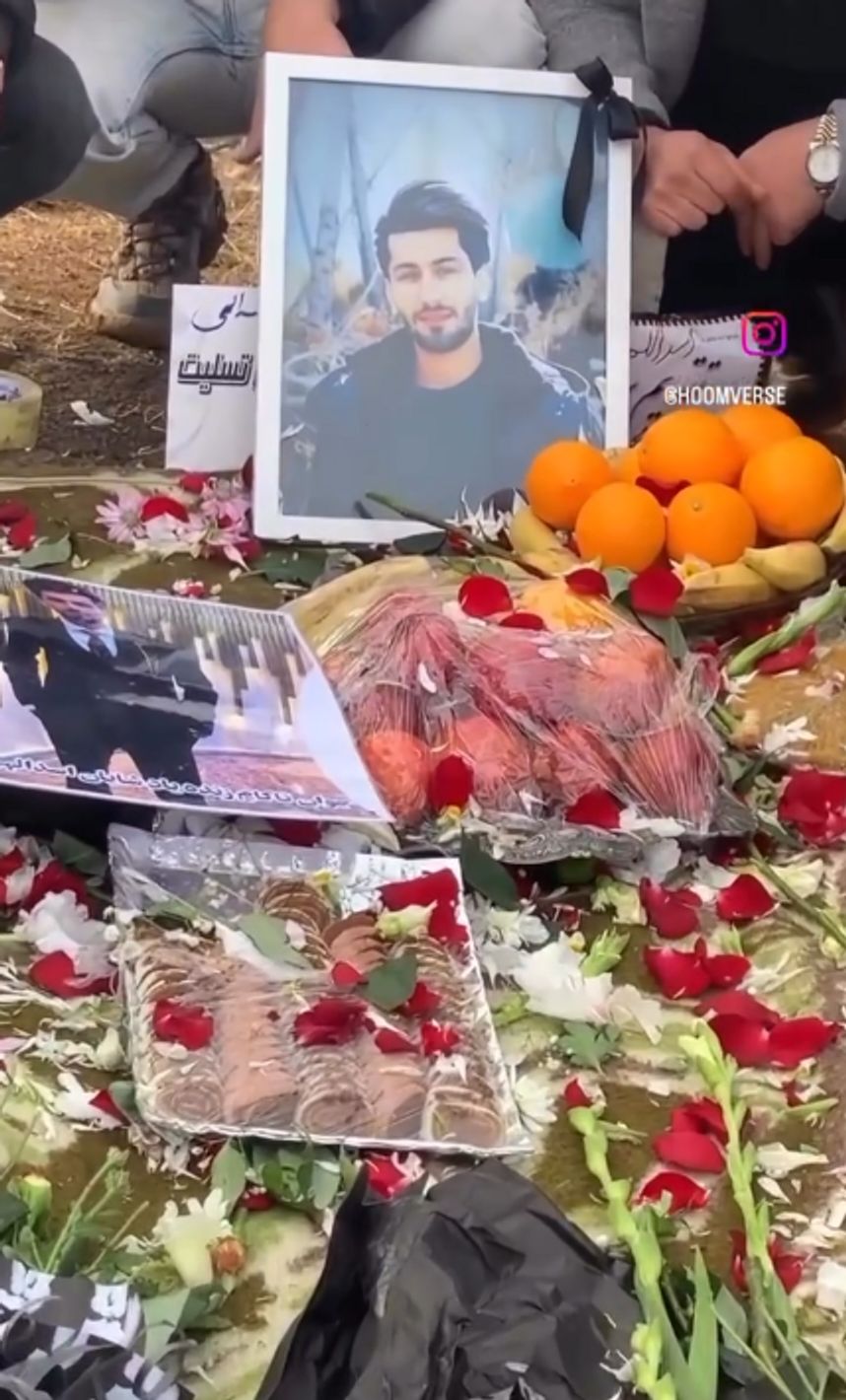
Another hairdresser, 41-year-old Ashkan Torbzadeh , was shot dead on the evening of January 9 in Mashhad. His car on Vakil-Abad Boulevard was riddled with dozens of bullets.
“He took pride in his work, especially the way he worked with grooms, and often showed his passion for the job on Instagram,” people wrote on Twitter.
Ashkan leaves behind a 14-year-old daughter.
In the city of Sari (Mazanderan province), Mohammad Ebrahimi , a cafe owner and professional athlete, was shot dead on January 8. His barista, Fardeen Ghanbari , died along with him.
“<...> He loved nature. The Iranian regime killed him during the January 8 protests. The day before, he decided to close the cafe, telling his friends that this might be their last photograph. Father of a 15 year old daughter. He dedicated his life to family and adventure. His funeral took place under heavy security, but young people laid flowers near his cafe as a sign of protest,” they shared on Twitter.
In Tehran on January 8, Nasim Pourakai , a mother of two children, died.
“Cousin Naseem Pourakai posted a photo of her gravestone and wrote: “My beautiful cousin walked into the streets for freedom on January 8th and was taken from us by the Islamic regime,” the message about her death says .
According to Hengaw, Purakai was shot in the neck. According to relatives, her husband carried Naseem in his arms for more than an hour, fearing that authorities would prevent the body from being handed over to the family.
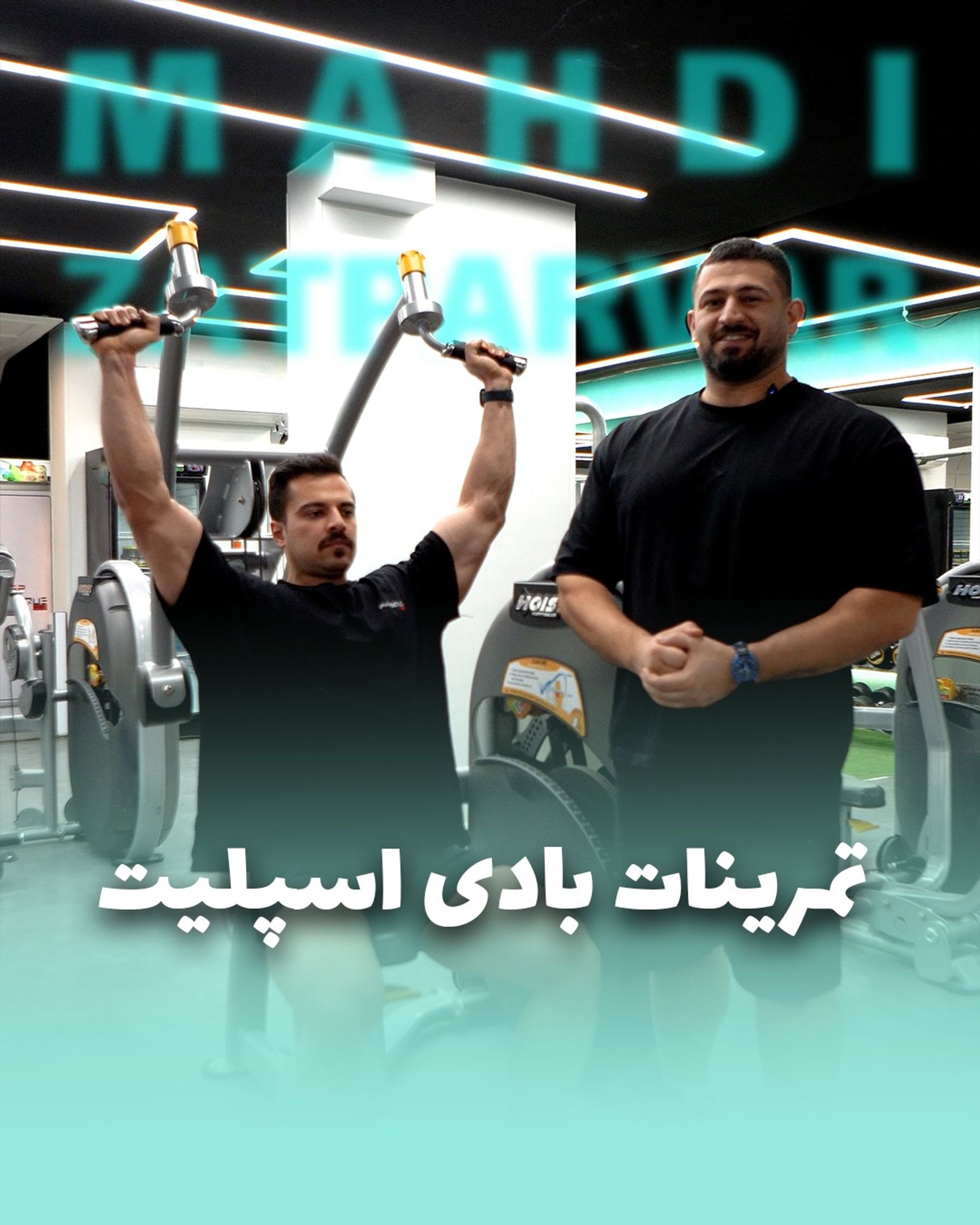
On January 9, Mehdi Zatparvar , an athlete and bodybuilding coach, winner of national and international titles, was shot dead in Gilyak (Gilan province). Four days before his death, he published an appeal on Instagram in which he wrote :
“I am Iranian. I am not a rebel, not a traitor, not an enemy or a foreign agent. I'm Iranian. As a son of this land, more than ten years ago I paid the smallest debt to my land, my homeland, my mother, my Iran when I became world champion. When my country's anthem sounded. When my country's flag was raised high in the sky. Every time I relive this moment, tears flow from my eyes. Do you know why? Because of my homeland. Because of my Iran.
All our problems and protests are caused by the catastrophic situation that you have created for us. Poor decisions, misguided policies and incompetent governance have pushed the youth of my country to protest. You have left us without bread, without peace, without consolation, without dignity and without respect. You have deprived us of hope for a normal life. This is not our right. Even bullets, weapons, threats, arrests and murders are not our right. We are the same nation that proves again and again that our homeland is our life, body and soul.❤️<...>
If you want to arrest me, I'm ready. Do you want to kill me? I swear to God I'm ready. What do you think I have to lose? Nothing. But instead of arrests, murders and humiliations, I would like you to at least once put yourself in the place of a young man. A young man who, in such living conditions, has no hope for tomorrow and does not have any hope for you. Don't be fooled by a few flattering sycophants around you. Hear the voices of youth. 📣 Hear the voices of mothers and fathers. 👩👦Listen to the voices of your compatriots.”
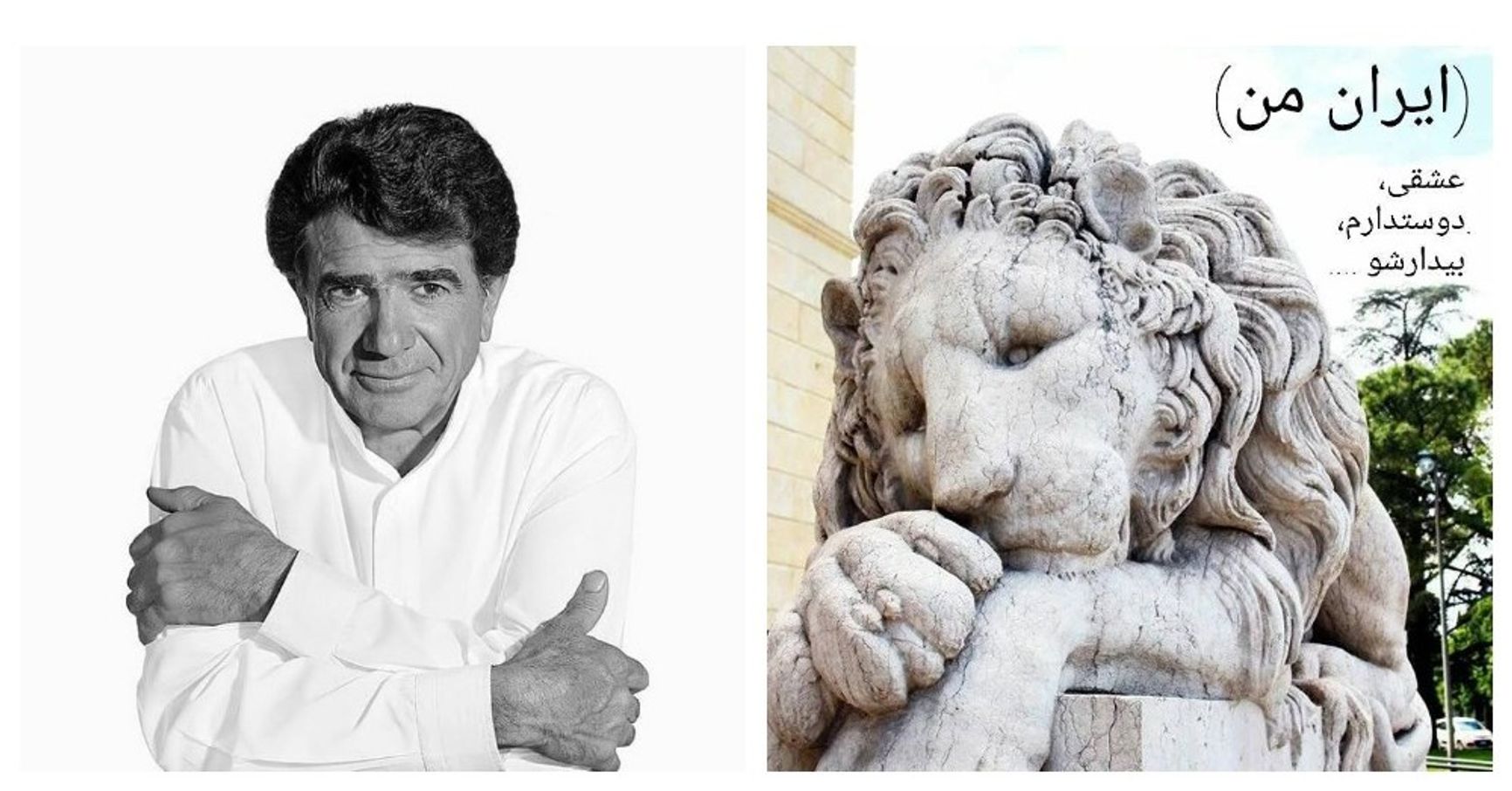
Among the dead was the famous sculptor Mehdi Salahshur, who was killed on January 8 in Mashhad.
“At the funeral of Mehdi Salahshour, next to his lion statue it was written: “My Iran, I love you, wake up...”
Mehdi’s wife wanted us to popularize his name and courage,” social media users reported .
In Karaj on January 9, an entire family was killed during a car attack - Bijan Mostafavi, his wife Zahra Bani-Amerian and their 19-year-old son Daniel Mostafavi.
“<...> All three died. Their eldest son, Davud Mostafavi, was also in the car, but at this time we have no information about his condition. These were not just names and numbers. These were people we knew, who had lives, who had families. I’m sad and angry,” a family friend wrote on Twitter.
According to Hengaw, Bijan and Zahra were retired and their son was a computer science student.
On January 10, Negin Ghadimi was shot dead in Shahsavar.
“She died in her father’s arms moments after being shot by security forces with a military-style weapon,” they wrote on Twitter.
The videos were compiled using the Insider Navigator news monitor's Vox-Harbor search tool (by IonaFlow team).
“They think we're prey”: the progress and evidence of Iranian protests in which at least 5,000 people died • The Insider • RIMA — Russian Independent Media Archive