
Translated material
"Mashenka" in manual mode
A bakery near Moscow that fed Putin with pies is being saved by the entire Kremlin and the government. Other small businesses are less fortunate
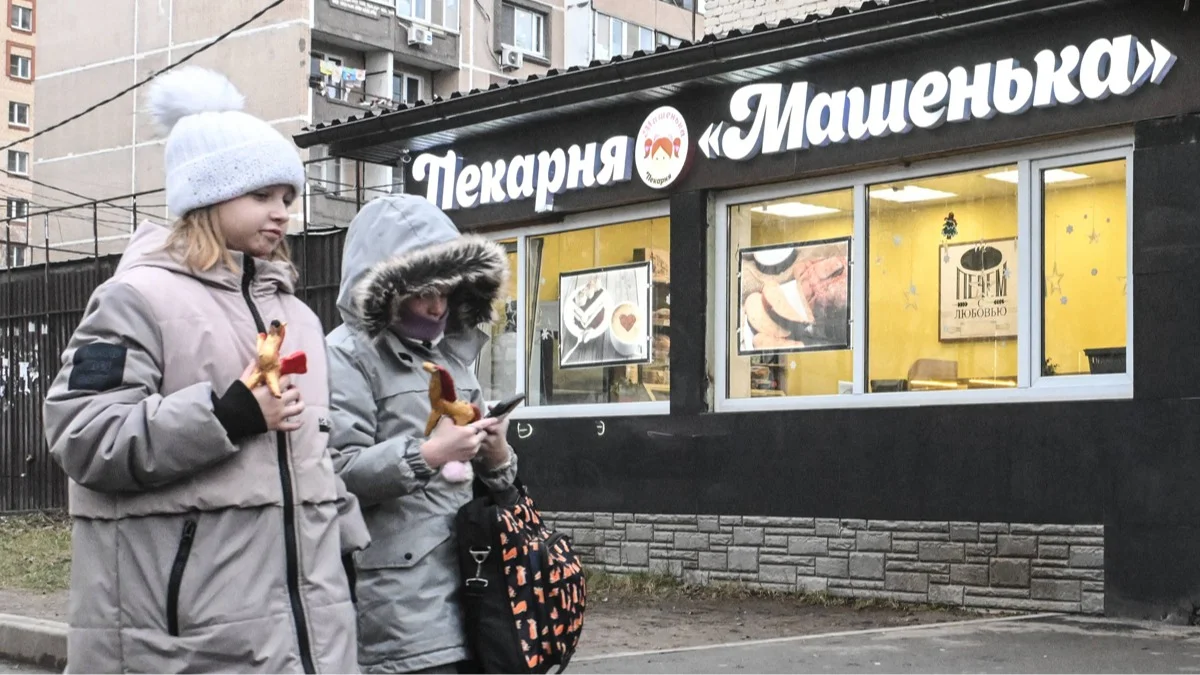
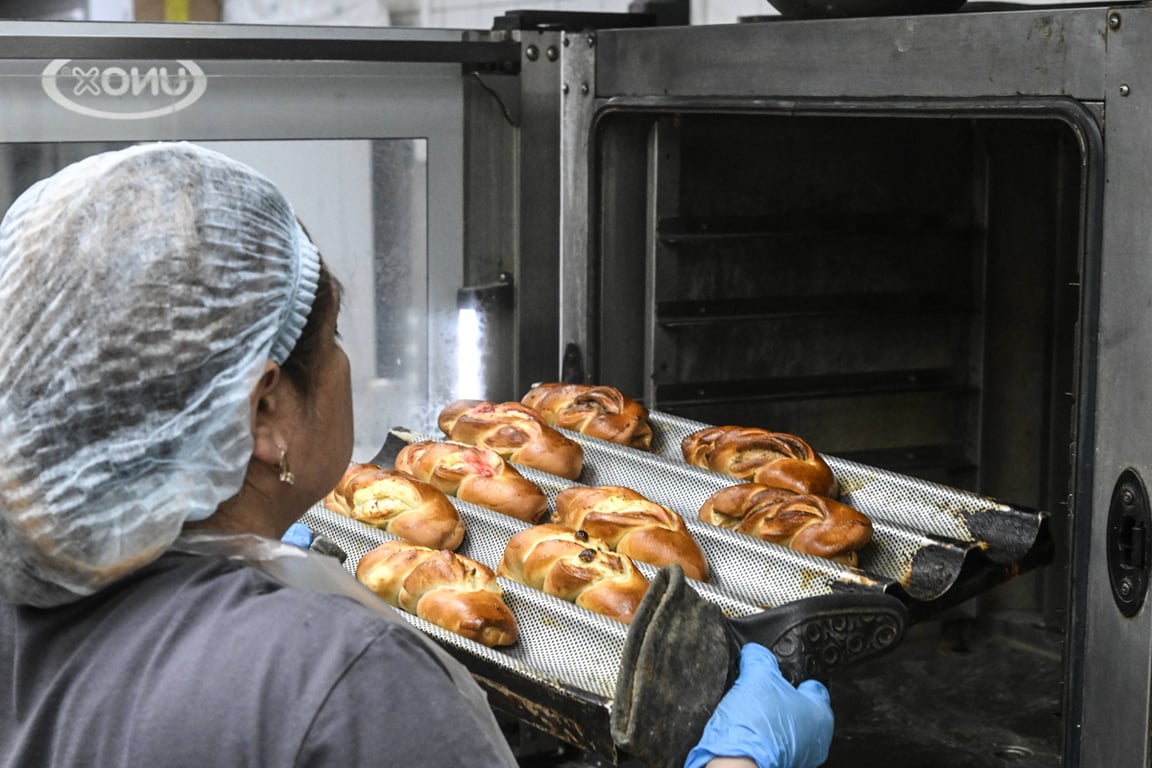
Bakery “Mashenka”, Moscow region, December 21, 2025. Photo: Mikhail Voskresensky / Sputnik / Imago Images / Scanpix / LETA
The Mashenka bakery from the Moscow region became famous when its owner took part in Vladimir Putin’s press conference, fed him pies and complained about the difficulties of small business. He later announced that he was closing the establishment due to losses. The Kremlin has joined the game. And it seems that all officials are now trying to save the bakery from closure. It looks like good times await Mashenka, unlike other small businesses in Russia, which are closing en masse.
On January 20, the owner of the Mashenka bakery from Lyubertsy, near Moscow, announced the closure of the establishment.
“Our low season begins around the end of May. It would probably be logical to close in mid-May - at the end of May,” said Denis Maksimov.
According to him, losses lead to closure, which the fame that fell on the bakery did not help to cope with. “ Mashenka ” suddenly became famous on December 19, 2025, when Maksimov took part in the “ Results of the Year ” program, combined with a press conference by Vladimir Putin.
Then he said that for the past eight years he had benefited from a convenient patent tax system. And now, due to tax innovations, you will have to pay taxes on income and VAT.
“In my opinion, it would be much more useful for the state and for us, individual entrepreneurs, if the cost of a patent were increased by 2, 3, 4, 5 times. Let it depend on the turnover. Now we look to the future without optimism, many will close and go into the shadows,”
- Maksimov said then.
Vladimir Putin responded by saying that today many decisions on benefits and support for small businesses are used as “tools for uncontrolled gray and black imports.” But he said that “manufacturing businesses should not suffer from the transition to the new tax system” and promised to look into this issue. He also asked Maksimov for “something tasty” from his bakery. Later, a video appeared where Putin congratulates Maksimov on the New Year and eats his pies. In response, he sent him wine and an icon.
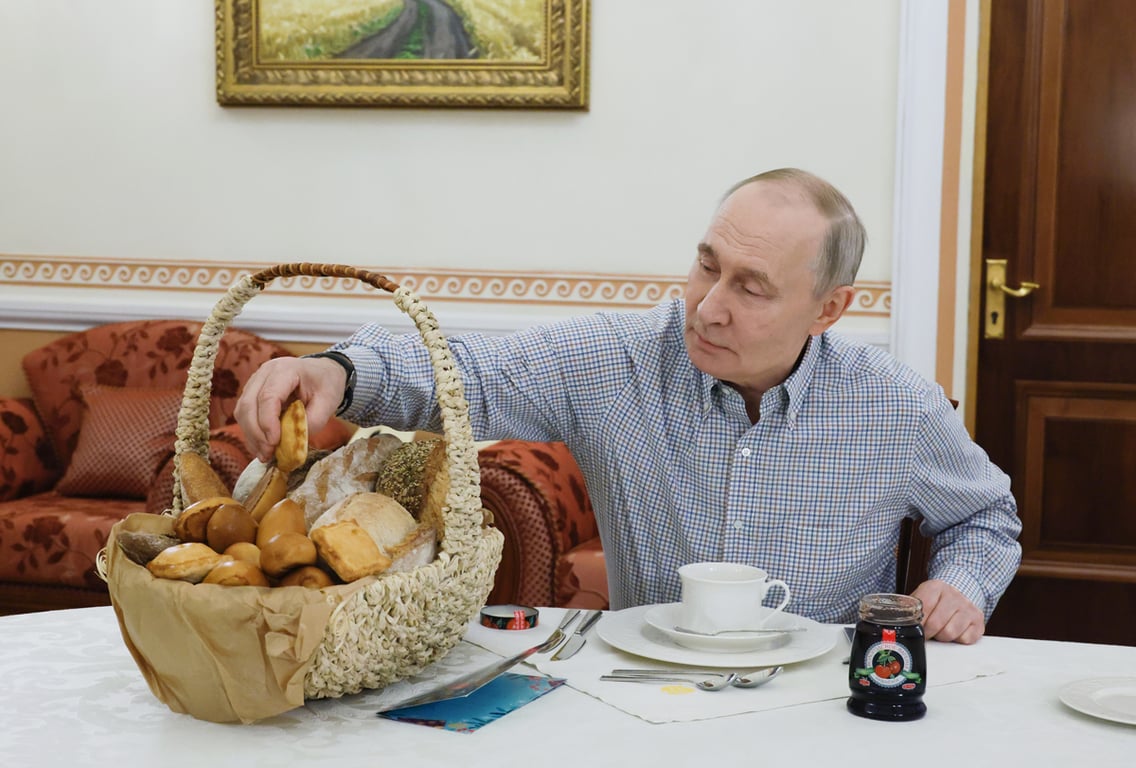
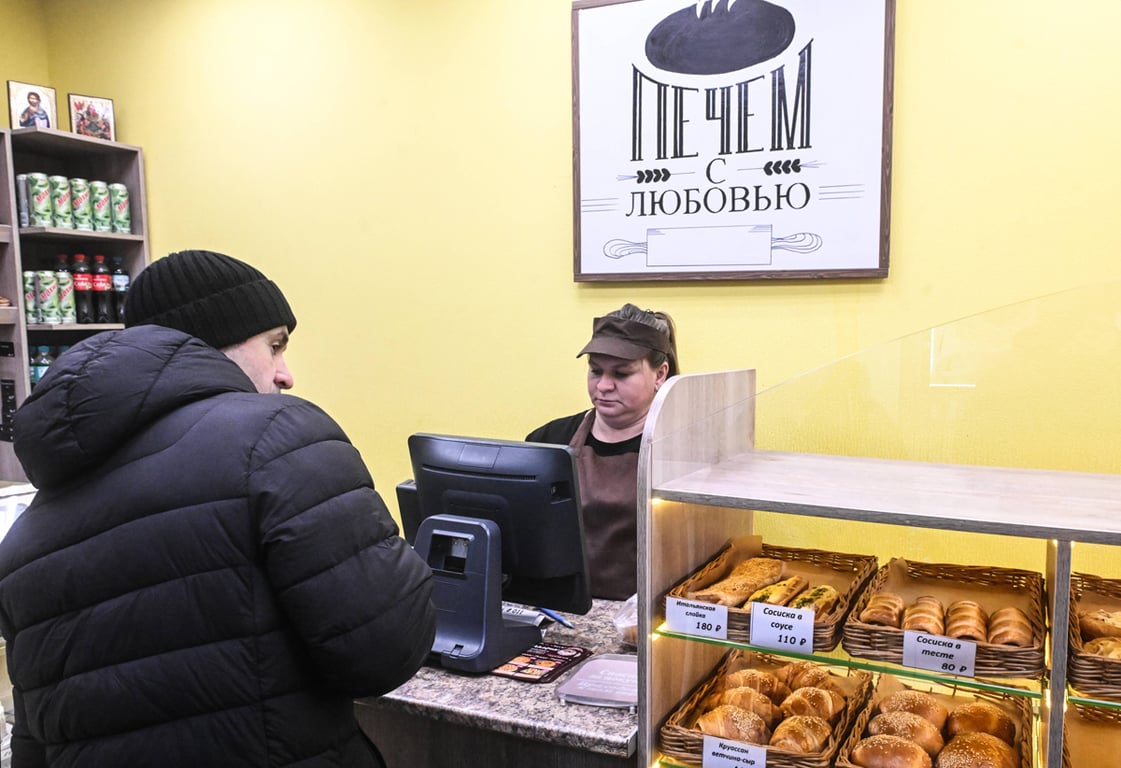
The icon helped for a short time. As Maksimov said , due to the surge in his popularity at the end of December, business really took off. During the New Year holidays and in the first half of January, revenue and traffic were high, which made it possible to close some of the losses and pay off suppliers.
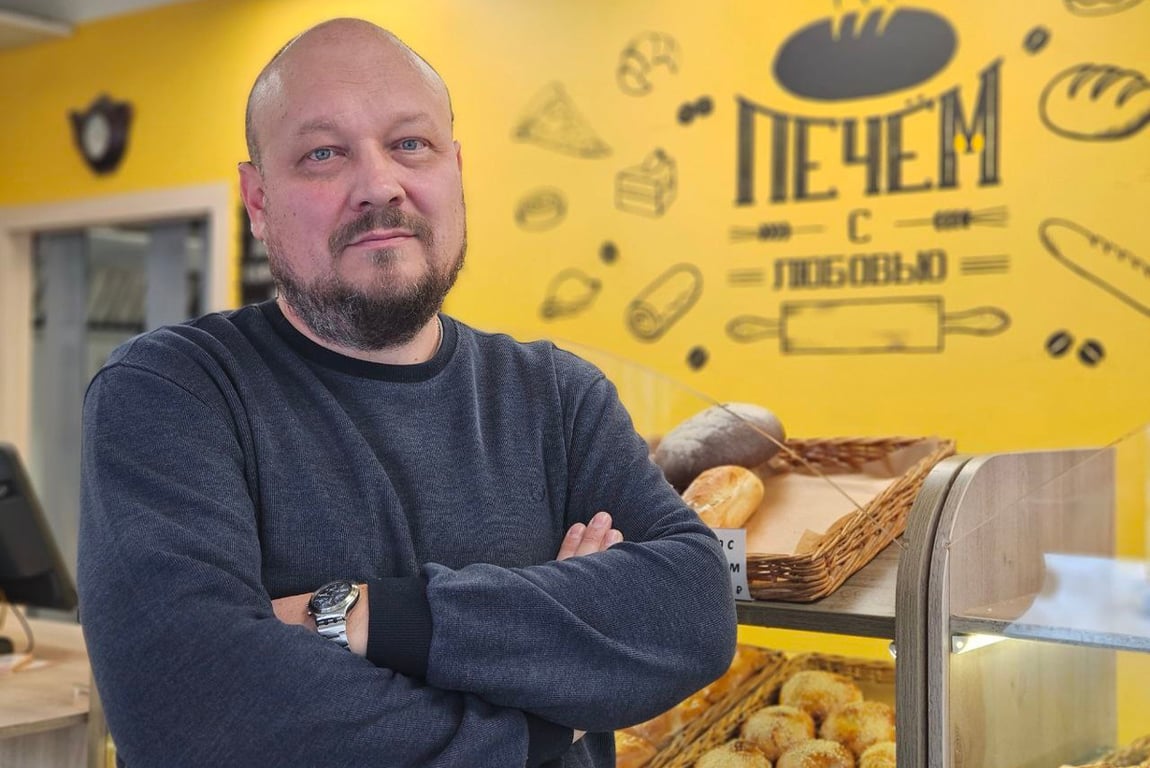
But it was not possible to completely solve the problem with losses. According to Maksimov, federal ministers and government officials of the Moscow region have recently been in touch with him. The entrepreneur received proposals for subsidy programs. However, due to the fact that nothing has changed in the tax system for entrepreneurs, the profitability of his business is only 15–16 percent. At the same time, he must pay 12 percent in the form of taxes, and in the end only 3-4 percent of the profit remains, which is barely enough to live on, so it is easier for him to close the business and go to work for hire.
Maksimov called the only way out the inclusion of bakeries and public catering in the list of industries entitled to a preferential rate under the simplified taxation system. Now such a list exists in the Moscow region, but bakeries are not included in it.
Not everyone will survive
Since 2026, new tax rules have been in force in Russia - the base VAT rate has increased from 20 to 22%. Also, changes to the Tax Code provide for a gradual reduction in the threshold of small business revenue for paying VAT: from 2026 from 60 million to 20 million rubles, from 2027 - to 15 million, from 2028 - to 10 million rubles.
Business is affected by rising taxes, as well as rising prices, declining household incomes, and high rental costs. And already today experts are predicting a massive closure of restaurants in Moscow. The head of the retail real estate department of CMWP, Zulfiya Shilyaeva, reported that 400 catering establishments may close in the capital in 2026. This is 10% more than in 2025. According to the Kommersant newspaper, the number of closed establishments in Moscow could reach five hundred.
Since the end of 2025, Shokoladnitsa has closed about 20 outlets, Rostiks - about 25, and Yakitoria - eight. Many establishments, such as “Daily Bread”, Fornetto and the “Darling, I’ll Call You Back” bar chain, left the market. Since the beginning of the year alone, about 45 catering establishments have already closed in Moscow, the publication writes.
According to the study “Contour. Focus", 35.4 thousand catering enterprises were liquidated in Russia last year, which is almost 10 percent more than a year earlier. These include 27.8 thousand restaurants, 6.25 thousand cafes and about 1.9 thousand bars. That is, there are thousands of establishments similar to the Mashenka bakery in the country.
On January 21, Maksimov was summoned to the government of the Moscow region, where programs to support small businesses were announced. In particular, to develop business, including in the format of non-stationary retail facilities.
Also on January 21, Putin held a meeting in the government, where he once again remembered the bakery near Moscow.
“Of course, this sector of the economy should be able to comfortably transition to new taxation systems. In other words, it is important to avoid an excessive increase in the burden on entrepreneurs, an increase in accounting costs, and so on,”
- Putin said.
The head of the Ministry of Economic Development, Maxim Reshetnikov, said at the meeting that the entrepreneur was offered two options for solving the problem: to increase employee salaries to a level above the industry average, which is necessary to be exempt from VAT in the catering industry, and also to receive a preferential rate on insurance premiums of 15%, since catering is a priority sector of the supply-side economy.
In addition, according to the minister, Maksimov can change OKVED and receive a discount on the insurance premium rate of 7.6% and a tax benefit on the simplified taxation system (STS) from the region.
Maksimov said that he was satisfied with the proposals of the Ministry of Economic Development:
“Now, let’s say, in the first quarter we meet the average salary criterion - and from the second quarter we can already enjoy the VAT benefit. This is a good help, of course. We will also be able to use a preferential rate on insurance premiums - not 30%, but 15. That is, conditionally, if the salary is 100 thousand, we will pay not 30 thousand on top to all funds for an employee, but 15. This will be profitable,” Maksimov said.
In the media, he hastened to declare that the decision to close remains the most extreme option.
This seems to be the end of Mashenka’s rescue. And at a meeting in the government, the Ministry of Economic Development proposed introducing a transition period for small and medium-sized businesses so that entrepreneurs could adapt to new tax requirements and maintain access to support measures.
“Entrepreneurs were faced with the need to choose a tax regime at the end of last year, without actually being able to comply with them. Therefore, we propose to introduce a transition period - not to take into account the parameters of activity for last year in order to access preferential treatment this year. And to take advantage of the reduced rate on insurance premiums, use data on the share of manufacturing in income only for the current year,” the minister explained.
As Maksimov said, we need to act quickly. If innovations are adopted too late, many entrepreneurs will simply not make it.
Entering manual control
The situation with “Mashenka” spread across social networks. Some people sympathize with the bakery owner, while others talk about their problems.
“Today I have already seen a couple of dozen complaints that the business has to be closed,” users write .
“That’s it, I closed two weeks ago with 5.0 and a good place from Yandex, ” people complain.
Users refer to the solution to one particular bakery's problems as "manual management."
“A difficult task for the state, yes. We enter the “manual control” mode,” social network users note.
And someone, like economist Nikita Krichevsky, believes that the situation with the bakery as a whole “looks like a setup”:
“From the publications and videos it follows that the owner of the bakery traded and paid wages in cash, which according to the papers is “significantly below average.” The baker doesn’t know a damn thing about business administration, since Minister Reshetnikov advised him to change OKVED. I understand that it’s not a baker’s job to understand organizational intricacies. There are professional tax consultants for this, whose one-time services are not so expensive. The basket of bread presented to Putin was clearly not made in the Lyubertsy bakery. This conclusion can be drawn based on numerous videos on TV channels. All in all,
looks more like a setup than the real problems of a bread shop with a declared profitability of 15–16%. Which is very good in these times.”
It’s hard to say what effect Vladimir Putin’s advertising will have on a particular bakery.
There is a reminder on the bakery’s website that Putin tried the local pies. And now the bakery prepares baked goods for VIP guests of the Kremlin, in particular, for the special envoy of the US President Steve Witkoff.
The Insider publication analyzed how the fates of brands that received Putin’s advertising turned out. These are producers of milk, kvass, and ice cream.
For example, in 2014, on Direct Line, Putin promised to “help win the market” for the Vyatsky Kvass company. Soon kvass appeared in the Auchan hypermarket chain, and later became the general partner of the tour of rappers Timati and L'One.
In 2018, farmer Oleg Sirota, who produces cheese in the Moscow region, thanked Putin for the sanctions, and his career also took off : in 2020, he became chairman of the Public Chamber Commission for the Development of the Agro-Industrial Complex, and in 2021, co-chairman of the All-Russian Popular Front in the Moscow Region. In 2024, Sirota was Putin's confidant. And today he praises the president’s course and collects money to help the Russian military on behalf of the ONF.
And in 2019, Putin tried the “Cow from Korenovka” ice cream, and then gave a box to Chinese leader Xi Jinping. After this, the Renna Group of Companies has consistently been among the leaders in the Russian market and reports an increase in the export of ice cream and condensed milk abroad.
But the producer of “Ruzskoe Moloko” was less fortunate. Back in 2010, Vladimir Putin and Dmitry Medvedev drank this milk. The owner of the milk producer, Vasily Boyko-Veliky, later said that by 2014, the revenue of his dairy plant was about 1.5 billion rubles, and its products were purchased from the State Duma and the Government of the Russian Federation. But already in 2016, the Moscow Arbitration Court fined the company 100 thousand rubles for posting a photograph of Putin and Medvedev on the facade of the building. And Vasily Boyko-Veliky himself is today serving time in a colony on charges of theft and the creation of a criminal organization.
The founder of the Anderson family cafe chain, Anastasia Tatulova, complained to the president about problems with business during the pandemic in 2020. Soon Tatulova was appointed to the post of public ombudsman in the field of small and medium-sized businesses, but left the position, complaining of pressure and threats from “one of the deputy ministers.”
Tatulova publicly called the “Honest Sign” product labeling system corrupt. After this, mass audits began to be carried out at her establishments; her company received 60 various tax requests. In 2023, Tatulova sold the brand and main assets to VkusVill. Later she was recognized as a foreign agent, and in 2025 Tatulova was put on the wanted list by the Russian authorities. After the start of a full-scale war in Ukraine, the entrepreneur left Russia.