
Translated material
Cross and hammer
Director and member of the Communist Party of the Russian Federation Vladimir Bortko criticized clericalism on the state channel. For this, an entire World Russian Council fell upon him. Another series of fights
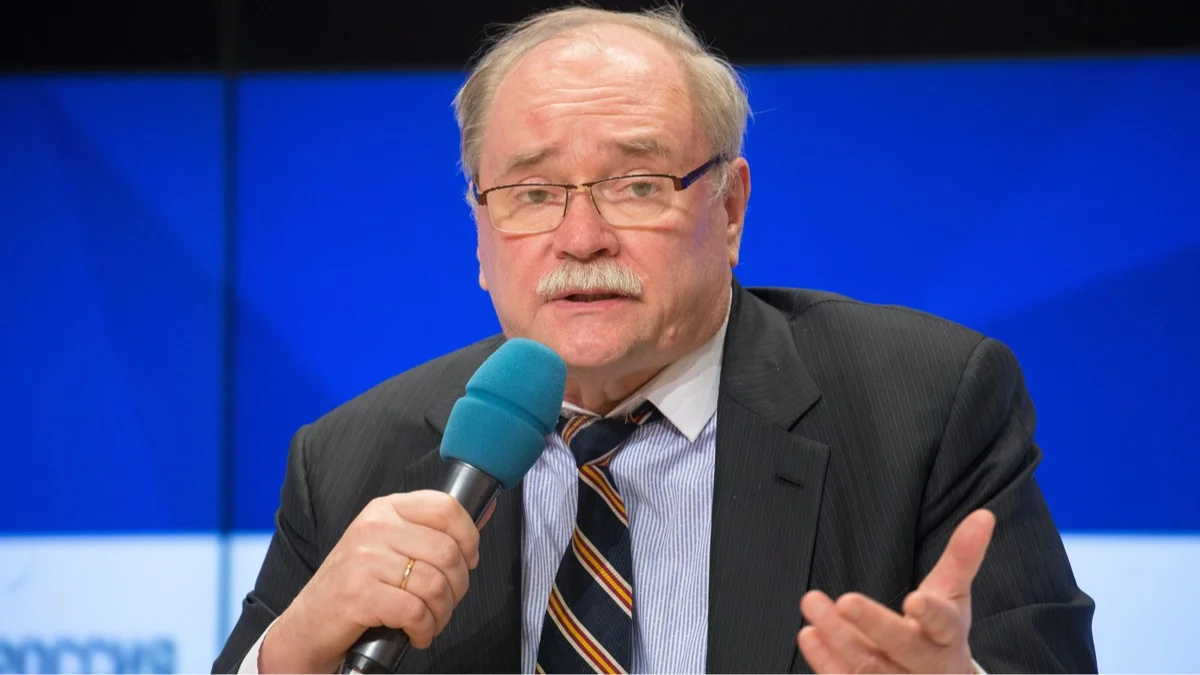
Vladimir Bortko. Photo: Victor Vytolsky / Alamy / Vida Press
The leadership of the Communist Party of the Russian Federation - a completely loyal “system-forming” party of Russia, ensuring loyalty to Putin for a generation that is nostalgic for the USSR - has more than once sworn allegiance to the Russian Orthodox Church. The permanent leader of the party, Gennady Zyuganov, admitted that “it was a big mistake of the CPSU that it quarreled with the Orthodox Church.” In turn, Patriarch Kirill, as a person who is nostalgic for the USSR, regretted its collapse, calling this event “the collapse of historical Russia.” Functionaries of the Communist Party of the Russian Federation are obligatory participants in the World Russian People's Councils (VRNS) and the Christmas educational readings of the Russian Orthodox Church.
However, 2025 was marked by a sharp escalation of the “intraspecific” struggle: representatives of the Communist Party of the Russian Federation “suddenly” began to remember fundamental contradictions with the world of religion. “Novaya Gazeta Europe” wrote about the holiwar that lasted throughout the second half of the year around the Spas TV channel’s film “The Mummy,” which harshly denounced the cult of Lenin. The Moscow City Committee of the Communist Party of the Russian Federation accused Spas of “cultural vandalism,” and some deputies even called for recognizing the channel of the Moscow Patriarchate as a “foreign agent.”
The beginning of this year was marked by a new skirmish on this front. The entire World Russian People's Council - in fact, the main socio-political body of the Russian Orthodox Church - issued a statement against film director Vladimir Bortko, known for the films “Heart of a Dog”, “The Idiot”, “Taras Bulba” and the TV series “Streets of Broken Lanterns” and “Gangster Petersburg”, in fact calling for repressions against him. The occasion was the director’s original program “View from St. Petersburg” on the Rossiya24 channel. In the New Year's edition
Bortko admitted that “religion is becoming a destabilizing factor. For true unity of Russia, what is needed is not religious, but civic unity and a clear awareness of the principle: religion is a private matter of the citizen.”
“Statement of the World Russian People's Council regarding the anti-Orthodox speech of V.V. Bortko” appeared on January 20 on the official website of the Russian Orthodox Church of the Moscow Patriarchate. There is no signature of Kirill himself, who heads the cathedral, on the document, but there are autographs of his deputies - the manager of the patriarchate, Metropolitan Grigory (Petrov) of the Resurrection and Alexander Shchipkov, who has a reputation as the chief political scientist of the Russian Orthodox Church. Although the cathedral did not meet in its entirety “on Bortko’s heresy,” its leaders have the authority to speak on behalf of the cathedral in emergency cases.
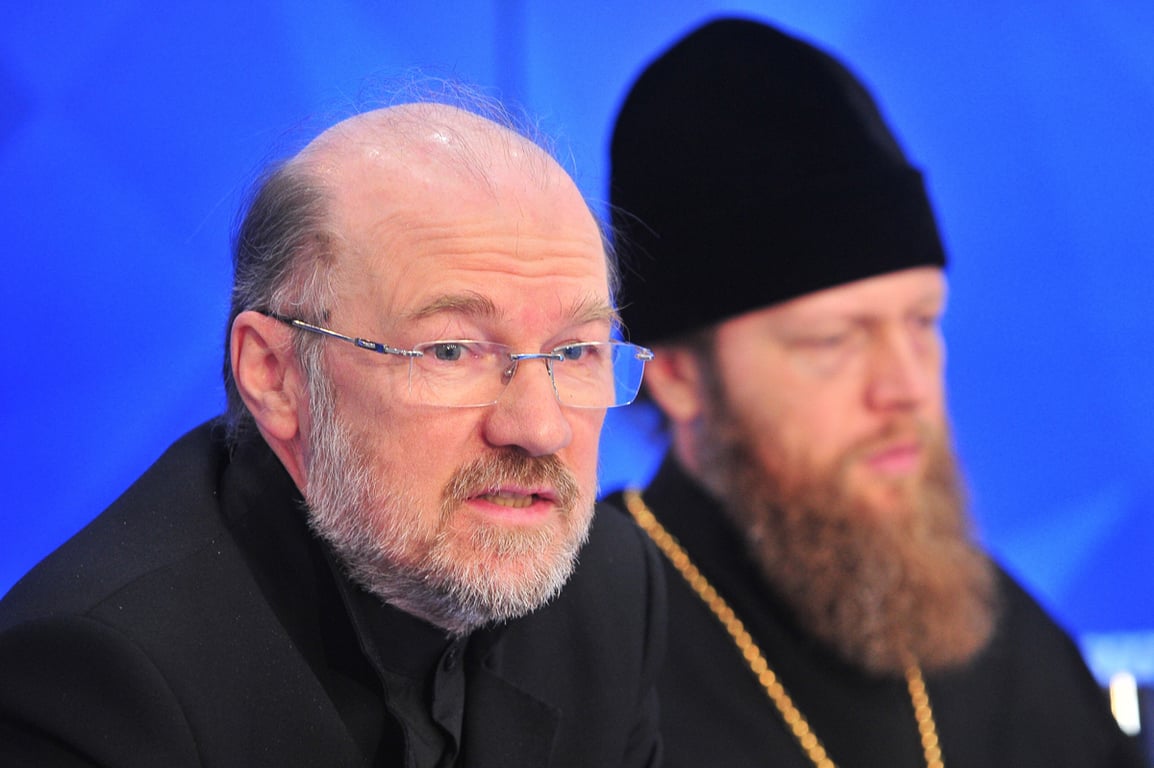
The document is quite voluminous and its style is similar to that of Shchipkov. The Council “strongly condemns Bortko’s anti-Orthodox ideas, which allegedly pose “a serious danger to the consolidation of society at a critical moment for the country.” “In conditions when the collective West is waging a total hybrid war against Russia,” the authors of the statement explain, “calls for the destruction of the traditional spiritual identity of the Russian people are tantamount to ideological sabotage in the rear.” The Council defends the irremovability of V.V. Putin, not recognizing the right of anyone (including Bortko) to even hint at the transit of power, which, moreover, “is closely linked to the need to remove Orthodoxy and other traditional religions from the field of public influence.”
The verdict of the “cathedral members” is harsh: the 79-year-old communist director undermines “the value foundations of national security,” commits “sabotage in the rear,” offends “the feelings of believers,” “distorts historical reality,” “contradicts constitutional norms,” breaks “ties between generations,” engages in “legal fetishism,” and creates “a split in society and a weakening of consolidation.” Just at Christmas, the head of the cathedral threatened those who do not march in line: “If someone falls out of this consensus, then there is this definition: a traitor to the Motherland, with all the ensuing legal consequences.” In fact, the World Council demands that Bortko’s statements be given an “adequate legal assessment,” that is, that the director be repressed.
“A kingdom divided against itself cannot stand” (Matthew 12:25), Jesus Christ predicted.
If Vladimir Bortko’s speech is so “criminal,” how did the main state TV channel air it? VRNS clearly doesn’t say enough...
Knowing how Russian television works, the council’s angry exclamations should have been addressed to the All-Russian State Television and Radio Broadcasting Company and the presidential administration that oversees it. Ultimately, it turns out that they are the ones who “undermine national security” and “split society”?
Let's hear the position of Vladimir Bortko. The starting point of his reasoning is the archaic nature of the Russian state system, where the situation “changes sharply with the departure of a ruler, any one at that,” that is, there are no stable political institutions. But there is no “zrada” (betrayal) at VGTRK - Bortko, quite in a “strong” spirit, argues that Western enemies had a hand in any “trouble” in Russia, and the internal cause of the collapse was a crisis of ideology, therefore the current Russian Federation must urgently attend to the introduction of a universally binding ideology that will ensure the continuity of the system after Putin’s departure. The director also proposes a number of practical steps in this direction: 1) transfer of power to a successor during Putin’s lifetime (Kazakh or Turkmen model); 2) victory in the war in the form of “returning the territory of Little Russia”; 3) preservation of the authoritarian system (ideally a hereditary monarchy), otherwise - civil war.
The presenter himself prefaces the fragment of the program concerning religion with a warning that he will say “a seditious, terrible thing”: “A sharp surge in religious beliefs after the Soviet regime, to be honest, is fraught.” The director’s argument here boils down to the fact that the different religious identities of the peoples within the empire are pitting these peoples against each other, so the Soviet authorities implanted a “united” atheism not out of philosophical, but out of purely pragmatic motives. The current Orthodox fundamentalism, promoted by the Russian Orthodox Church, leads to the “marginalization of non-believers and atheists”, to inequality between believers and non-believers. In Islamic regions, Bortko believes, religion fuels ethnic separatism.
As a conclusion from these arguments, the director proposes to replace religious identity with civil one, strictly ensuring that religious practices do not go beyond the private life of people and do not become part of politics and propaganda. Bortko does not position himself as an unbeliever, but refers to the authority of Christ, who said: “When you pray, go into your room and, having shut your door, pray to your Father who is in secret, and your Father who sees in secret will reward you openly” (Matt. 6:6). Instead of religion, Bortko proposes to consolidate society on the following values: 1) the rule of law; 2) social justice; 3) secular education; 4) scientific worldview. Here membership in the Communist Party of the Russian Federation already makes itself felt: the director is sure that these values were priorities for the USSR, which makes you smile. A smile, but not the sound of shackles.
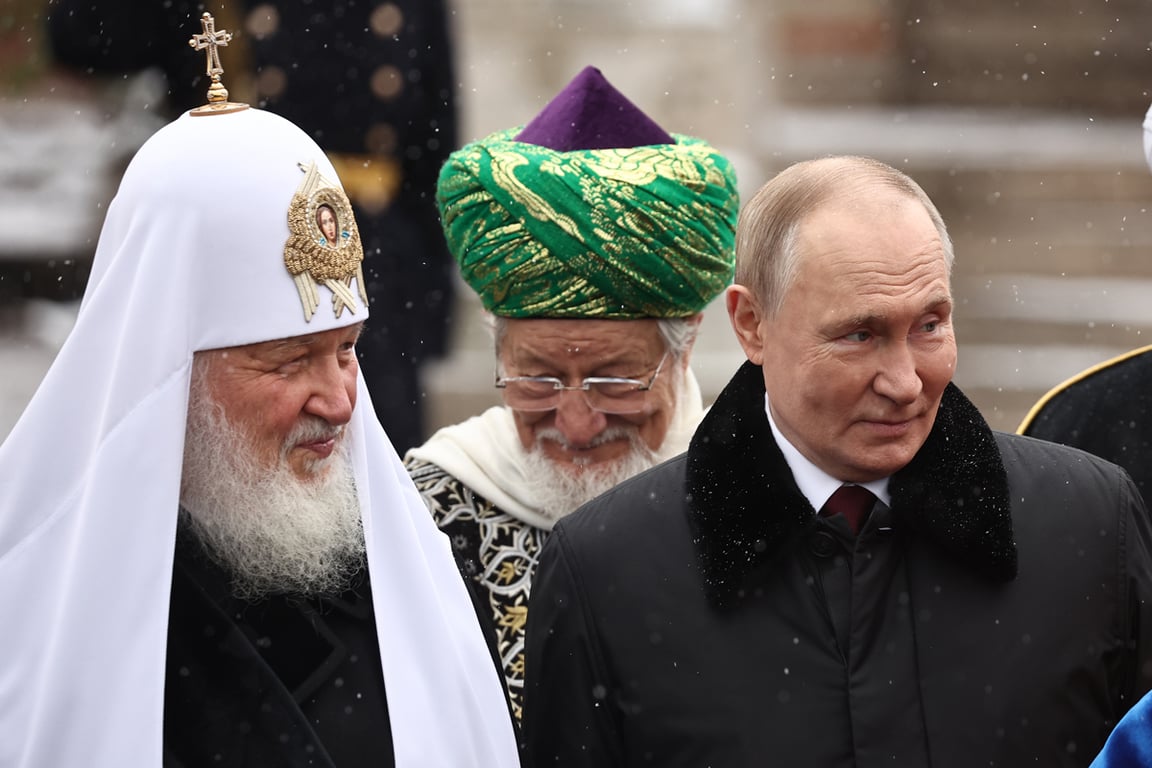
Not otherwise, the patriarch himself watched the “seditious” program, sensing a threat to his exclusive status in the director’s position. At Putin’s meeting with scientists and religious leaders on National Unity Day, November 4, 2022, Kirill formulated this status as follows:
“Who were the patriarchs? The king and the patriarch always sat next to the king. The history of the Russian state and the history of the church are so closely intertwined that it is impossible to separate.”
Literally the next day after the release of the program, the patriarch’s political strategist Alexander Shchipkov issued a warning about “discord between the church and the state” on the “patriotic” website “Vzglyad”. He began “in the Orthodox way” - by getting personal: “View from St. Petersburg” is the antipode of Mikhalkov’s wonderful “Besogon”, since Bortko is supposedly “anti-religious” (this is not at all obvious from his program). Next, the second manipulative technique is used - substitution of the thesis. The author “thinks out” for Bortko that any conversation about a successor is a statement that it’s time for Putin to leave. Although the director directly says that Putin still has a lot to do - in particular, “to win” (and this task, as we understand, is not a quick one). Bortko’s accusation that he allegedly considers the Russian elites to be “separatist” is even more far-fetched, although the director in this context was not talking about the elites, but about radical Islamists. And, finally, criticism of clericalism and the politicization of religion is by no means identical to criticism of faith in God (and the political scientist identifies them), which Bortko himself emphasizes, constantly hinting at his personal faith.
It is difficult not to recognize the reaction of the patriarchal chief political scientist as hysterical. As he writes the text, he winds himself up until he comes to revelations: Orthodoxy is banned in Russia, they force people to worship pagan statues (!), and they promote Zelensky’s ideology (?). According to Shchipkov, Bortko’s program with its microscopic audience will lead—no more and no less—to the beginning of “liberal ideological revenge on the eve of victory in the war” in the Russian Federation.
The excessive reaction reveals the weakness of the ideologists of the “symphony of church and state” - it is obvious to them how fragile this structure is, which can be demolished by a 15-minute performance by a not the most influential (he is now not even a deputy) Russian director, which hardly anyone watched.