
Translated material
Natural sadist
Roman Michurin, a resident of Irkutsk who returned from the war, beat his wife for several months. When she and her son ran away from him to a crisis center, he began to pursue her. And then he kidnapped his wife’s friend and took her hostage. Several hours of negotiations did not help save the woman: Michurin surrendered to the police only after strangling her. Details are in the material “Cold” .
A participant in the war in Ukraine beat his wife. When she left him, he took another woman hostage and killed her. 
On the night of January 28, 2026, police cars with flashing lights and a fire truck arrived in the courtyard in the Raduzhny microdistrict on the outskirts of Irkutsk. About 50 security officials gathered in one of the entrances. Men in uniform stood near the closed door on the fifth floor, but did not go inside.
A resident of this entrance, whose apartment is located on the floor above, filmed what was happening on her smartphone, posted the photo on social networks and wrote : “One idiot who constantly beat his wife decided to stage a whole blockbuster today. Remember how I told you how I called the police on them? So, this time the wife ran away. He took her friend hostage. More than five hours of negotiations.”
Later, a neighbor said that the story ended tragically: the man killed the hostage. In one of her stories, she added : “It’s scary to realize that such monsters live among us, in this case, on the floor below.”
As it turned out later, the hostage was taken by a former participant in the war in Ukraine, 31-year-old Roman Michurin. The victim was a 42-year-old mother of two named Elena (“Takiye Dela” indicates her last name is Kadymova). She was a friend of his wife - they lived together in a sheltra for women, where Michurin’s wife tried to escape from him.
“Naturally, I got pregnant”
In 2020, a woman contacted the Obereg crisis center in Irkutsk. Her name was Elena. She was seven months pregnant and expecting her second child. Before coming to Amulet, she lived in a rehab for several years.
Elena was born in the city of Myski, Kemerovo region, her mother abandoned her, so she grew up in an orphanage. After leaving the orphanage, she and her friends traveled by train to Irkutsk and began to wander. Soon Elena met a man (also an orphan, but he had adoptive parents), and they had a daughter.
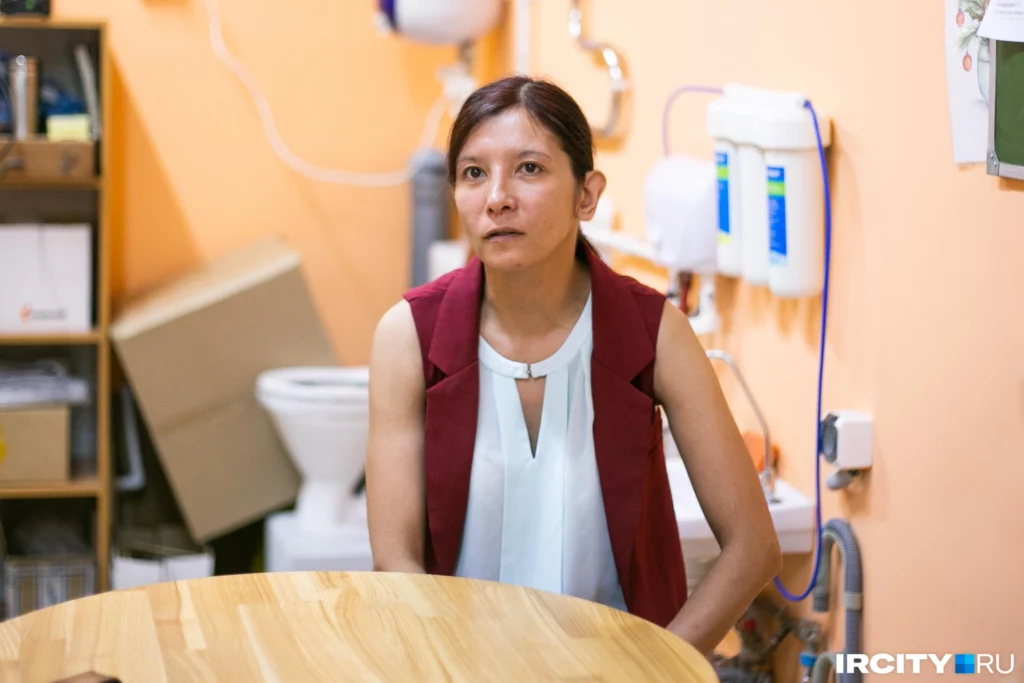
Elena and her partner had nowhere to go (it is unknown why they did not turn to his family) , so for some time they lived near the church, where the priest sheltered them. But this did not last long: “You can’t drink or smoke there, so my husband was kicked out of there. I lived there for some time, because I had nowhere to go, but then I had a fight with my father, so I stayed on the street,” Elena told Irkutsk journalists about that period in 2024, who were interested in her fate.
Elena's partner drank a lot, and she started drinking with him. Then, as the publication “Takie Dela” wrote , his adoptive mother sent her to a commission on juvenile affairs (the journalists did not specify whether the couple lived with her husband’s adoptive parents and what kind of relationship they had). Elena was offered to undergo rehabilitation so as not to be deprived of her parental rights, and she agreed.
According to NTV journalists, in 2009, when he was 15 years old, he stabbed to death the husband of his mistress. So Elena spent more than four years in rehab. But, as Evgenia Kalmykova, director of the Obereg crisis center, later told reporters, they “exploited human labor” and the guests were forced to work “literally for food.” Elena worked as a cleaner, she was not allowed to see her daughter, and she could not leave the rehabilitation center: her partner’s family did not want to take her in with them.
“Kholod” approached the alleged adoptive mother of Elena’s ex-partner for comment, but she refused to answer questions.
In rehab, Elena met a man and briefly moved out to live with him. “Naturally, I became pregnant. And then we had a fight, he told me that the child would not have a father, and then he even said that he had found someone else. I got upset, burst into tears and returned to the same rehabilitation center again,” she told reporters.
But then the staff of the rehabilitation center, as Irkutsk journalists wrote, told her that she could not live there with children, and advised her to contact Obereg. So she did.
"Big Clever Girl"
“Obereg” was founded in 2009 by Alexander Sobolev from Irkutsk. He told Kholod that since 2004 he has been regularly helping women in difficult life situations.
Most often, the fund works with pregnant women or women who already have a child, Sobolev said. Residents of Irkutsk are often referred to this center by psychologists, and they are also contacted by employees of train stations, bus stations, police and hospitals when they find themselves homeless women with children.
How much time do women spend in “Obereg”? On average, women spend about six months at Obereg. Often they send their child to kindergarten, find a job, and after that they can rent an apartment on their own. But it happens that the fund’s wards live in a crisis center longer.
Sobolev described a common scenario of what happens to the foundation’s wards: a girl comes to a big city from a small village. She studies and works, rents an apartment and becomes pregnant by her partner. He leaves her, and the employer fires her. After giving birth, a girl thinks about giving up her child because she has nowhere to go and nothing to feed him. In such cases, the foundation accepts a girl with a newborn.
The foundation provided Elena with temporary housing, and a few months later she gave birth to a daughter. Then they helped her restore her documents and establish contact with her first daughter, who was about six years old at the time.
According to Sobolev, Elena had mental difficulties and problems with socialization. Despite this, she managed to get a job as a cleaner in a store, but she often got lost on the way to work. According to him, the center's employees called there and asked to meet her.
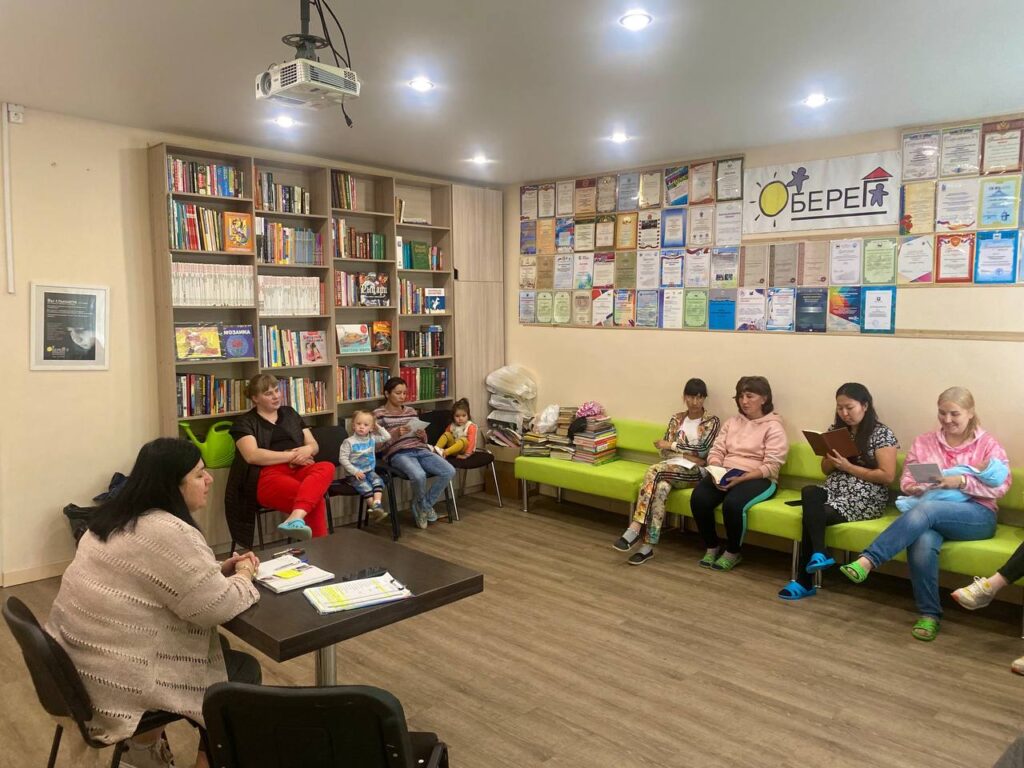
Center workers and friends called her “a great smart girl.” “She was the kind of person who wouldn’t hurt anyone, not mean at all. True, very driven. If she is asked to clean the room, she will do it. She didn’t conflict with anyone, she was nice, calm, helpful, and helped everyone. She loved to read - we have a large library in the center, and our students are required to sometimes learn a poem. Many people mess around and tell something simple, but she memorized complex works, for example, by Goethe,” said Alexander Sobolev in a conversation with Kholod.
Elena’s neighbor and closest friend told the publication “Takiye Dela” that she loved Turkish TV series, always kept things clean and worked a lot in the kitchen. There she prepared food for the homeless - this is one of the areas of the foundation’s work. “When you feed the homeless all the time, you get a little stale. You put a portion in, handed it over and didn’t even look. And Lena will give not one cutlet, but two to a person. He will slip some candy. And if a homeless person gives her another dirty jar, she will definitely fill it with food. She had no disgust, only a kind attitude towards everyone,” social worker Anastasia Afanasyeva said in a conversation with journalists.
"You won't do anything to me"
Around the same period when Elena ended up in the crisis center, Maria Alekseeva (name changed) went there. She was also an orphan with a small child in her arms. Maria told the staff that she had nothing to feed her son because her husband did not work and “starved them,” and she could not find a job.
in April 2024, he received a one and a half year suspended sentence for setting fire to his ex-girlfriend's apartment. Elena and Maria lived in the same room, so they talked a lot and eventually became friends. Alekseeva’s sister told reporters that Elena helped her with her son.
Maria lived in Obereg for several years. She got a job as a nurse in one of the medical institutions in Irkutsk, and in March 2025 she met 31-year-old Roman Michurin . Sobolev told Kholod that Michurin was in the hospital in Irkutsk, recovering from a wound he received during the fighting in Ukraine.
According to Sobolev’s memoirs, Michurin beautifully looked after Maria: he gave flowers and even took her and her son to have fun. Their friends said that she trusted him. Soon she agreed to move in with him, and in the summer of 2025 they got married. However, already in the first days of September, Maria returned to Amulet with traces of a severe beating.
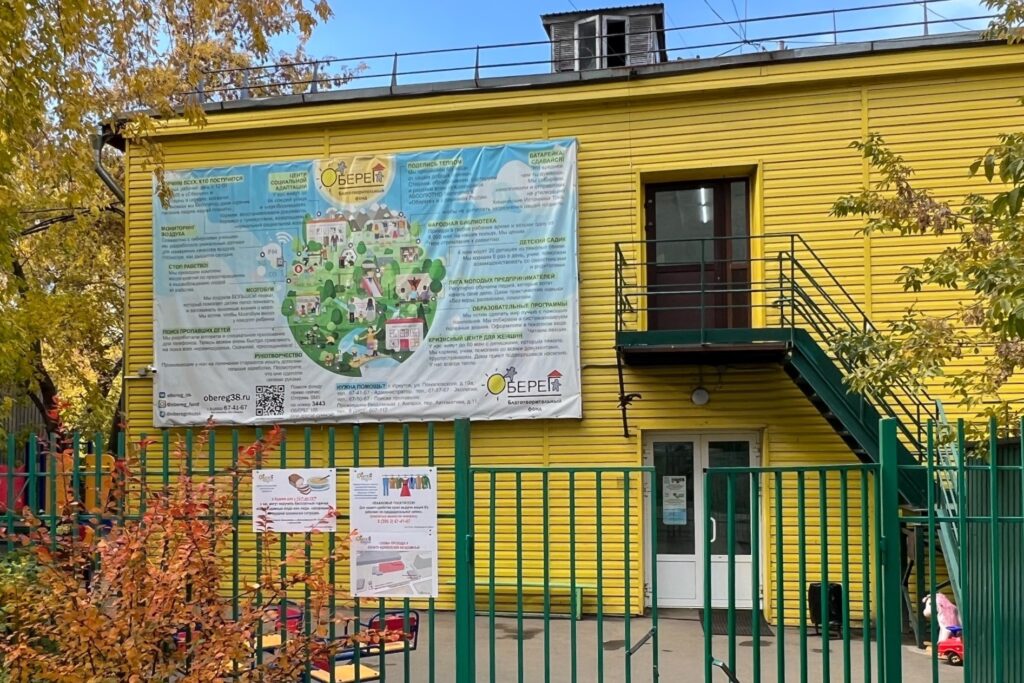
“When they started living, everything was fine. Then, out of jealousy, he began to beat [Alekseeva] very cruelly, simply sadistically. He poked her with a knife and she had stab wounds. We reported to the police, but she decided to stay with her husband and returned to him. Then she came to us a couple more times and told us that she had been subjected to violence,” recalls Alexander Sobolev in a conversation with Kholod.
According to Sobolev, Alekseeva never wrote a statement to the police about beatings and violence. According to the information from Takih Delo, usually her neighbors and Obereg employees called there, but the police answered them every time that in this case only the victim herself should write a statement - otherwise it would not be accepted.
In fact, according to the law, anyone can contact the police with a statement: not only the victim himself, but also a representative of the victim, a witness to the crime, or a person who has information about what happened. The main condition for submitting an application is that it should not be anonymous.
Not for the first time
Roman Michurin was born in the small town of Shelekhov, Irkutsk region, and had previously been prosecuted. According to NTV journalists, in 2009, when he was 15 years old, he stabbed to death the husband of his mistress - he allegedly came to his home and attacked his father. Journalists claimed that he was then found guilty of murder while exceeding the limits of necessary defense and was given a non-custodial sentence.
Kholod cannot confirm this information. In addition, at the time of the events described, Michurin had not reached the age of criminal responsibility under this article and could not be prosecuted under it.
According to media reports , in 2020 he was tried on charges of threatening to kill and destroying property. And in April 2024, he received a one-and-a-half year suspended sentence for setting fire to his ex-girlfriend’s apartment. Court records say Michurin's sister described him as a hot-tempered and jealous person who sometimes behaves inappropriately. His ex-wife called him a “mentally unstable person” and said that they often had scandals in their family.

What is the 74th Motorized Rifle Brigade known for? In July 2025, a petition appeared on behalf of relatives of military personnel from unit No. 21005, which is part of the 74th Motorized Rifle Brigade, complaining about the violence occurring there. The authors of the petition wrote that the commanders “beat, extort money, tie up, torture, put in pits and drive to suicide” the soldiers.
This was not the first time that the 74th Brigade attracted the attention of journalists, the publication “That’s So” noted . According to some reports, contract soldiers of the unit could have been fighting in the occupied territory of Ukraine since 2014. On the very first day of a full-scale invasion of Ukraine, an entire reconnaissance platoon of this brigade surrendered, the media wrote with reference to the post of the head of the Ukrainian Armed Forces, Valery Zaluzhny. In May 2022, Mediazona mentioned the brigade in an investigation into looting: the city of Yurga in the Kemerovo region, where the 74th brigade was stationed , sent the most “suspicious” parcels. Journalists assumed that this was how the Russian military could send home equipment and other things looted from Ukraine.
Having settled in Irkutsk after being wounded, Michurin began to “get rowdy.” As he told the publication “Siberia. Reality” his neighbor, he ran drunk around the entrance and had conflicts with the residents of the house and sellers in a nearby store. According to a neighbor, Michurin often said: “You won’t do anything to me! I just came from SVO. I'll kill you - nothing will happen to me. If you lay a finger on me, you’ll be charged with defamation.”
Random victim
In mid-September, Maria Alekseeva once again came to Obereg and said that her husband had stuck a knife in her leg. In a conversation with “Such Affairs,” social worker Anastasia Afanasyeva recalled that Maria refused to write a statement, otherwise “then she’ll just be ruined.” Also, according to journalists, he forced his wife to delete all social networks and forbade her to communicate even with her sister. Michurin wrote to the staff of the message center asking them not to believe his wife.
“He threatened her, us, the child. Before that, he did terrible things to her: he literally cut her skin, slashed her with a knife, burned her - a natural sadist. We wrote statements against him, and so did the woman’s relatives. [Alekseeva] herself was afraid to write - she was so intimidated and devastated by the attitude of the police,” a shelter employee told the publication “Sibir. Realities."
On January 25, 2026, Maria returned to the center again and, as Sobolev told Kholod, said that she had decided to finally break up with Michurin. Two days later, he came to the center building and began to demand that she come out to him. “We told him: the girl came to us and asked for protection. We explained to the man that there was no need to interfere here, she was under our protection. If you come, we'll press the panic button and call the police. He had a fight and a fight, but left,” recalled the president of the foundation.
As it turned out later, Michurin did not leave. He took up a position a few hundred meters from the crisis center, not far from the bus stop. After some time, Sobolev told Kholod, a nanny from a kindergarten next door called Obereg and said that a certain man had threatened the center’s ward with a knife and taken her in an unknown direction. The woman who was attacked by Michurin turned out to be Elena.
New life
In a few days, Elena was supposed to begin a new life. The center's staff helped her get housing - and the process lasted for many years. At first, they tried to get the state to give her the apartment she was entitled to as an orphan. As an employee of the center explained to journalists of the local publication IrCity in 2024, government services could not contact Elena for a long time, so she ended up “at the very end of the queue,” but in the end, in February 2024, everything worked out.
Maria is very afraid of her husband, hates him and at the same time continues to love him. However, this was not the end of the matter - the state provided Elena with an apartment in the Kemerovo region, where she was from. She, as she said, was “terrified to be there alone with two children.” “My eldest daughter has school and school friends here, my youngest daughter has a kindergarten. I got a job here and arranged my entire life. I don’t want to go anywhere,” she told reporters then.
Therefore, Obereg employees, together with local officials, helped sell the apartment given to Elena and use the money to buy housing in Irkutsk next to the foundation so that she could continue to receive support from it. The journalists who told Elena’s story in 2024, at the end of the article, expressed the hope that with housing in Irkutsk, she would finally be able to “build her own life together with her two daughters.”
On January 28, 2026, Elena was supposed to finally receive the keys to her first separate apartment in her life. “We had already bought curtains, all that remained was to buy a sofa and a TV so that the apartment would be turnkey,” Alexander Sobolev told the MK Irkutsk publication.
However, that day she found herself in a completely different apartment.
Five and a half hours at the door
At the time of Elena’s abduction, there were about 60 people in “Obereg” - wards and employees. But since everything happened outside the territory of the crisis center, none of them knew about what had happened. According to the president of the Obereg foundation, Michurin probably knew that Elena was closely acquainted with his wife - but it is not known for certain whether he deliberately chose her as his victim.
When the center learned that someone had kidnapped Elena, one of the employees called the police, and Alexander Sobolev tried to contact Roman Michurin, but he failed. According to him, similar cases occurred several times with the foundation’s wards, but the staff managed to calm the attackers.
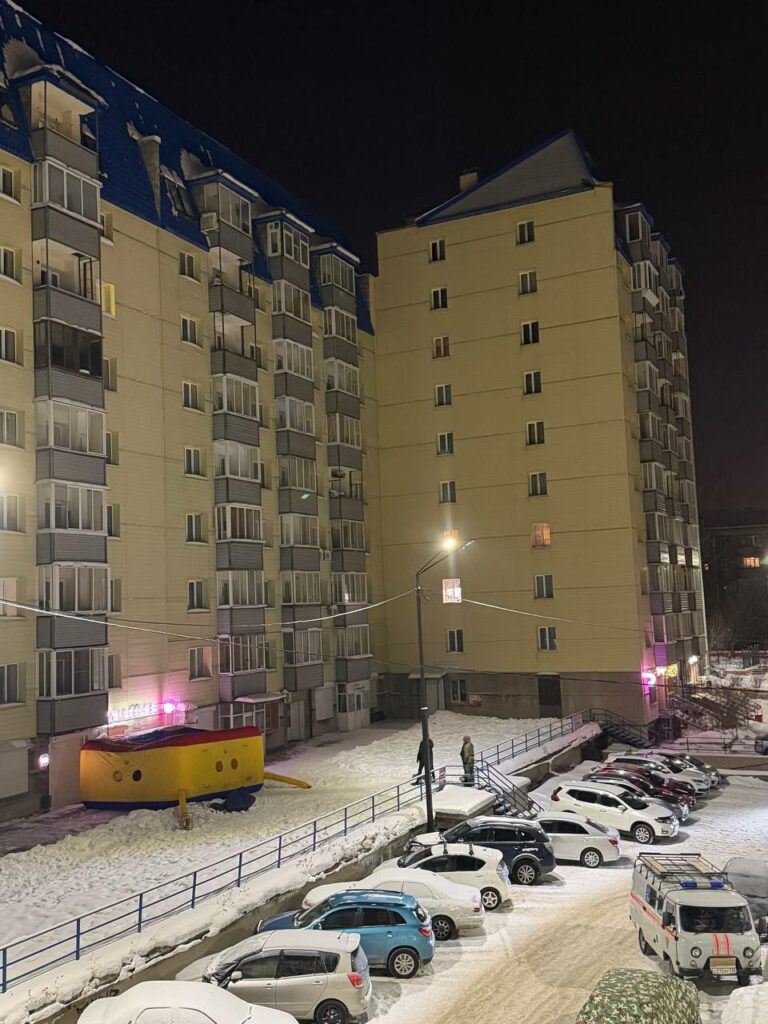
Meanwhile, Michurin brought Elena to an apartment in the Raduzhny microdistrict on the outskirts of Irkutsk. According to Sobolev, he rented it with his wife and was left there alone after she left him for a crisis center. The police came to the call and talked with Michurin through the door for five and a half hours. With them were employees of the Ministry of Emergency Situations, as well as an employee and volunteer of the Obereg center. In total, there were about 50 security officers at the entrance.
Michurin demanded that his wife and the military prosecutor be brought to him, and asked that they bring him food and vodka. The police gave him everything he asked for. For the first few hours, according to the recollections of a center employee, Elena answered from behind the door that she was alive and everything was fine with her.
“His wife is a real hero. At the moment when [Michurin] kidnapped her friend, she was at work. She ran to the door and very bravely said: “Take me, let the hostage go. I’m here, I’m alone, open the door.” She did everything possible,” Sobolev told Kholod, according to an employee of the center.
Obereg social worker Anastasia Afanasyeva recalled that Michurin threatened to throw Elena out the window. Then emergency services deployed a trampoline under the window. But, according to Afanasyeva, they did it “somehow crookedly.”
“These departments could not agree among themselves what to do. They planned the assault and never started. I don’t know why there wasn’t a professional negotiator, why there wasn’t a clear plan... I don’t have answers to these questions. I believe that they could have saved her,” Afanasyeva said .
An Obereg employee recalled that Michurin “became drunker and more inadequate.” At 01:30 at night, Sobolev told Kholod, he said that he was ready to go out and surrender. But then for some reason I changed my mind. An hour later he left the apartment. The policeman who immediately ran inside saw that Elena was already dead. Before surrendering, Michurin strangled her.
Coincidence of chance
After Elena’s death, the president of the Obereg foundation, Alexander Sobolev, published a post on the center’s VKontakte page. In it, he asked police and military commanders to pay attention to “psychopaths, rapists and murderers” who commit crimes and hide behind participation in the war. Sobolev also asked to check how professionally the police acted in this situation.
War veterans and gender-based violence
According to Vestka, since the beginning of the full-scale invasion of Ukraine, at least 551 people have died at the hands of Russian soldiers returning from the front. In addition, at least 465 people were seriously injured. Journalists do not indicate how many of the victims are women. However, it is known that 27 of the more than 160 people who died as a result of grievous bodily harm were women. For another investigation, Vestka analyzed criminal and administrative cases of beatings by former combatants and found that approximately two-thirds of the victims were women.
Maria Alekseeva is now in a crisis center. According to Sobolev, police constantly come to her. He told Kholod that Maria “experiences a wide range of feelings”: she is very afraid of her husband, hates him and at the same time continues to love him. She partly tries to justify Michurin and says that he was worried about their relationship and it was hard for him. The Kholod correspondent approached Alekseeva for comments through Alexander Sobolev, but she refused to talk.

The Obereg crisis center does not hide the addresses of the buildings in which its charges live. Alexander Sobolev told Kholod that it was difficult to prevent such a tragedy, and Elena’s kidnapping was a fatal coincidence. Most often, if the husbands of the center’s wards were aggressive and kept watch over them, Obereg employees sent the women to shelters in another city. But in this case, Sobolev says, there was no “clearly expressed” threat.
“The first two days I also indulged in self-criticism. But speaking objectively, this is a coincidence of accidents. Even if we take a second guard, will he patrol 300 meters around the Amulet?” - says Sobolev.
In her post, the children's ombudsman in the Irkutsk region, Tatyana Afanasyeva, also stated that it was difficult to predict the crime and that no agency has a “magic tool” for this. Afanasyeva did not answer the Kholod correspondent’s questions.
Elena's daughters, now aged 12 and 6, were handed over to their paternal grandmother - the mother of her ex-partner, who previously raised her eldest daughter. According to Sobolev, Elena’s apartment will go to them.
Photo: Shutterstock
Author: Marina Kiryunina